Overview
Clinical Practice 1 is the first in a series of clinical practice units. This unit is designed to provide you with the practice skills required for clinical psychology training specified by the Australian Psychology Accreditation Council (APAC) and the Australian Health Practitioner Registration Agency (AHPRA) competencies necessary to practice as a psychologist in Australia. This training also prepares you to be eligible to apply to commence the Registrar Program post graduation, to gain an Area of Practice Endorsement in clinical psychology with the Psychology Board of Australia. By the completion of Clinical Practice 1, it is expected that you will demonstrate the AHPRA competencies with a small caseload of clients presenting for cognitive and learning assessments and for therapy with low risks.
Details
Pre-requisites or Co-requisites
Co-requisites: PSYC20058 (Interventions 1) and PSYC21001 (Assessment 1)
Important note: Students enrolled in a subsequent unit who failed their pre-requisite unit, should drop the subsequent unit before the census date or within 10 working days of Fail grade notification. Students who do not drop the unit in this timeframe cannot later drop the unit without academic and financial liability. See details in the Assessment Policy and Procedure (Higher Education Coursework).
Offerings For Term 1 - 2026
Attendance Requirements
All on-campus students are expected to attend scheduled classes - in some units, these classes are identified as a mandatory (pass/fail) component and attendance is compulsory. International students, on a student visa, must maintain a full time study load and meet both attendance and academic progress requirements in each study period (satisfactory attendance for International students is defined as maintaining at least an 80% attendance record).
Recommended Student Time Commitment
Each 6-credit Postgraduate unit at CQUniversity requires an overall time commitment of an average of 12.5 hours of study per week, making a total of 150 hours for the unit.
Class Timetable
Assessment Overview
Assessment Grading
This is a pass/fail (non-graded) unit. To pass the unit, you must pass all of the individual assessment tasks shown in the table above.
All University policies are available on the CQUniversity Policy site.
You may wish to view these policies:
- Grades and Results Policy
- Assessment Policy and Procedure (Higher Education Coursework)
- Review of Grade Procedure
- Student Academic Integrity Policy and Procedure
- Academic Progression Policy and Procedure
- Student Refund and Credit Balance Policy and Procedure
- Complaints Policy and Procedure
- Information and Communications Technology Acceptable Use Policy and Procedure
This list is not an exhaustive list of all University policies. The full list of University policies are available on the CQUniversity Policy site.
Feedback, Recommendations and Responses
Every unit is reviewed for enhancement each year. At the most recent review, the following staff and student feedback items were identified and recommendations were made.
Feedback from Sute Unit Comments
Students indicated that, while they loved the clinical practice part of this unit, the workload was heavy.
Review the workload associated with this unit.
Feedback from Sute Unit Comments
Students indicated that they would like more training in the administration, scoring, and interpretation of psychometric assessments used on this placement.
Review how to improve the teaching and learning for assessments used on placement.
Feedback from Sute Unit Comment
Students would like clearer expectations about how to complete placement documentation.
Review the placement documentation so that requirements are clearer.
- Demonstrate achievement of pre-professional competencies before commencing working with real clients on placement, including ethical decision-making, micro-counselling skills, risk assessment and management, and record keeping.
- Demonstrate the core competencies required for registration as a psychologist in Australia, as defined by the Psychology Board of AHPRA, including knowledge of psychology to inform safe and effective practice, ethical practice, professional reflexivity and self-care, assessment, intervention, communication, and culturally responsive practice.
- Demonstrate effective engagement in supervision and skill development, including providing clear work samples for review, being able to accurately reflect on own clinical practice, seeking feedback, and applying supervisors' guidance to improve clinical practice.
- Demonstrate professional skills in case presentation, report writing, and interprofessional practice.
This unit forms part of the Master of Clinical Psychology course, which is accredited by the Australian Psychological Accreditation Council (APAC). This unit addresses the APAC competencies that relate to practice placements: APAC competencies 3.1 - 3.17. The practice placement covers the application of psychological knowledge to practice to demonstrate the APHRA competencies for practice as a provisionally registered psychologist in Australia.
Alignment of Assessment Tasks to Learning Outcomes
| Assessment Tasks | Learning Outcomes | |||
|---|---|---|---|---|
| 1 | 2 | 3 | 4 | |
| 1 - Professional Practice Placement - 0% | ||||
| 2 - Professional Practice Placement - 0% | ||||
| 3 - Professional Practice Placement - 0% | ||||
Alignment of Graduate Attributes to Learning Outcomes
| Graduate Attributes | Learning Outcomes | |||
|---|---|---|---|---|
| 1 | 2 | 3 | 4 | |
| 1 - Knowledge | ||||
| 2 - Communication | ||||
| 3 - Cognitive, technical and creative skills | ||||
| 4 - Research | ||||
| 5 - Self-management | ||||
| 6 - Ethical and Professional Responsibility | ||||
| 7 - Leadership | ||||
| 8 - First Nations Knowledges | ||||
| 9 - Aboriginal and Torres Strait Islander Cultures | ||||
Textbooks
There are no required textbooks.
IT Resources
- CQUniversity Student Email
- Internet
- Unit Website (Moodle)
- Cliniko Client Management System (access provided when Wellness Centre placement commences)
- Wellness Centre Drive (access provided when Wellness Centre placement commences)
All submissions for this unit must use the referencing style: American Psychological Association 7th Edition (APA 7th edition)
For further information, see the Assessment Tasks.
t.depauw@cqu.edu.au
Week 1
Begin Date: 09 Mar 2026Module/Topic
Monday
- Unit Requirements
- Micro-Counselling
Tuesday
- Wellness Centre Familiarisation
- Ethical Decision Making
Wednesday
- Risk Assessment and Management
- Ethics Test
Chapter
Clinical Practice 1 Unit Profile
Placement Manual 2026
Psychology Wellness Centre Manual
Please refer to Moodle for any additional readings
Events and Submissions/Topic
Intensive Training 9 am - 4 pm Monday - Wednesday ROK31/G.09
Lunch is 12 - 1 pm.
Note: Some session days/times may change. An updated schedule will be available at Orientation.
All sessions are in-person unless online is stated.
Week 2
Begin Date: 16 Mar 2026Module/Topic
Monday
- Placement Requirements
- Cultural Responsiveness
Tuesday
- Micro-Counselling Presentations
Wednesday
- Record Keeping (Online)
- Writing Case Notes Competency (Online)
Chapter
Please refer to Moodle for any additional readings
Events and Submissions/Topic
Intensive 9 am - 4 pm Monday - Wednesday ROK31/G.09
Week 3
Begin Date: 23 Mar 2026Module/Topic
No Class this week. Students enrolled in Assessment 1 and Interventions 1 will attend a residential school on the Rockhampton North campus.
.
Chapter
Events and Submissions/Topic
Note: All students in Clinical Practice 1 are required to demonstrate current competency in WISC-V administration before seeing clients.
Week 4
Begin Date: 30 Mar 2026Module/Topic
Monday
- Therapy Intakes
- Reflexivity and Reflective Practice
Tuesday
- Assessment Intakes
- Intake Practice
Wednesday
- WIAT Introduction
- WIAT practice
Chapter
Psychology Wellness Centre Manual
WIAT-4 test manuals
Please refer to Moodle for additional readings
Events and Submissions/Topic
Intensive 9 am - 4 pm Monday - Wednesday ROK31/G.09
Week 5
Begin Date: 06 Apr 2026Module/Topic
No classes on Monday (Public Holiday - Easter Monday)
Tuesday
- Introduction to ADHD
- IPE Preparation
Wednesday
- WIAT Competency
- WIAT Scoring
Chapter
Psychology Wellness Centre Manual
WIAT-4 test manuals
Please refer to Moodle for any additional readings
Events and Submissions/Topic
Intensive 9 am - 4 pm Monday - Wednesday ROK31/G.09
Week 6
Begin Date: 13 Apr 2026Module/Topic
Monday
- Frequently Used Screeners
- E-Health
Tuesday
- Administration Processes
Wednesday
- Group Supervision and Client Preparation
Chapter
Psychology Wellness Centre Manual
Wellness Centre Drive (Placement Agreement, Log of Hours, Record of Supervision Session)
Please refer to Moodle for any additional readings
Events and Submissions/Topic
Intensive 9 am - 4 pm Monday - Wednesday ROK31/G.09
Portfolio 1 due 5pm Wednesday
Placement Portfolio 1: Pre-placement Competencies. Due: Week 6 Wednesday (15 Apr 2026) 5:00 pm AEST
Vacation Week
Begin Date: 20 Apr 2026Module/Topic
No classes this week. Enjoy mid-term break!
Chapter
Events and Submissions/Topic
Week 7
Begin Date: 27 Apr 2026Module/Topic
Monday, Tuesday, Wednesday
- Pre-Clinic Meeting 8:30 am
- Client Appointments, Individual Supervision, and Associated Activities 9 am - 5 pm
Friday
- Group Supervision 1 - 4 pm
Chapter
Events and Submissions/Topic
Placement @ the Wellness Centre 8.30 am - 5 pm Monday - Wednesday
Lunch 12.30 - 1.30 pm on clinic days.
Week 8
Begin Date: 04 May 2026Module/Topic
Monday, Tuesday, Wednesday
Pre-Clinic Meeting 8:30 am
Client Appointments, Individual Supervision, and Associated Activities 9 am - 5 pm
Friday
Group Supervision 1 - 4 pm
Chapter
Events and Submissions/Topic
Placement @ the Wellness Centre 8.30 am - 5 pm Monday - Wednesday
Week 9
Begin Date: 11 May 2026Module/Topic
Monday, Tuesday, Wednesday
Pre-Clinic Meeting 8:30 am
Client Appointments, Individual Supervision, and Associated Activities 9 am - 5 pm
Friday
Group Supervision 1 - 4 pm
Chapter
Events and Submissions/Topic
Placement @ the Wellness Centre 8.30 am - 5 pm Monday - Wednesday
Week 10
Begin Date: 18 May 2026Module/Topic
Monday, Tuesday, Wednesday
Pre-Clinic Meeting 8:30 am
Client Appointments, Individual Supervision, and Associated Activities 9 am - 5 pm
Friday
Group Supervision 1 - 4 pm
Chapter
Events and Submissions/Topic
Placement @ the Wellness Centre 8.30 am - 5 pm Monday - Wednesday
Week 11
Begin Date: 25 May 2026Module/Topic
Monday, Tuesday, Wednesday
Pre-Clinic Meeting 8:30 am
Client Appointments, Individual Supervision, and Associated Activities 9 am - 5 pm
Friday
Group Supervision 1 - 4 pm
Chapter
Events and Submissions/Topic
Placement @ the Wellness Centre 8.30 am - 5 pm Monday - Wednesday
Week 12
Begin Date: 01 Jun 2026Module/Topic
Monday, Tuesday, Wednesday
Pre-Clinic Meeting 8:30 am
Client Appointments, Individual Supervision, and Associated Activities 9 am - 5 pm
Friday
Group Supervision 1 - 4 pm
Chapter
Events and Submissions/Topic
Clinic 8.30 am - 5 pm Monday to Wednesday
Placement 2 Portfolio due 5pm Friday
Placement Portfolio 2: Client Focused Work Due: Week 12 Friday (5 June 2026) 5:00 pm AEST
Exam Week
Begin Date: 08 Jun 2026Module/Topic
No classes or clinic this week
Chapter
Events and Submissions/Topic
Placement 3 Portfolio due 5pm Wednesday
Placement Portfolio 3: Placement Documentation Due: Exam Week Wednesday (10 June 2026) 5:00 pm AEST
Vacation/Exam Week
Begin Date: 15 Jun 2026Module/Topic
University vacation starts Wednesday
Chapter
Events and Submissions/Topic
1 Professional Practice Placement
Placement Portfolio 1 prepares you for your placement at the Wellness Centre. You must complete the portfolio before you start seeing clients. There are several activities you will need to undertake.
1. Intensive Training. You are required to attend compulsory training 3 days/week for 5 weeks (Weeks 1, 2, 4, 5, and 6). During training, you will have an opportunity to learn, observe and practice foundational skills in psychological practice. You will need to use these skills in working with clients at the Wellness Centre.
2. Pre-Placement Competencies. Before being allocated clients, you will need to demonstrate competence in the following domains:
2.1 Ethical Decision Making. You will complete an ethics test. This entails reading case studies, identifying ethical dilemmas, and choosing appropriate courses of action.
2.2 Micro-Counselling. You will record yourself conducting a role play in which you play the psychologist, and a classmate plays your client. The aim of the role play is for you to demonstrate appropriate use of micro-counselling skills. As part of the assessment, you will show the class your video and also present an evaluation of your performance.
2.3 Writing Case Notes. You will watch a video of a simulated intake session and then write up the case notes (see Moodle for Intake Notes template).
2.4 Test Administration. You will administer selected subtests of the WISC-V (IQ test) and WIAT-IV (academic achievement test) to a member of the teaching staff playing the role of child.
3. Placement Agreement. You will complete a Placement Agreement, co-signed by your supervisor and the Placement Coordinator.
Week 6 Wednesday (15 Apr 2026) 5:00 pm AEST
Participate in class activities, complete the associated assessment tasks, then upload your signed forms to Moodle by the due date.
Week 6 Friday (17 Apr 2026)
If you submit your portfolio by 5pm Wednesday 15/04/2026, you are likely to receive confirmation via Moodle by Friday 5pm 17/04/2026 that you have passed and will be able to commence your placement in Week 7.
Placement Portfolio 1 is due in Week 6. It will be marked pass/fail. To obtain a pass, you are required to pass all of the assessment tasks. You will only be permitted to start seeing clients in Week 7 if you have passed the portfolio.
1. Attendance Checklist
You will demonstrate that you have completed Intensive Training by submitting the Intensive Training Attendance Checklist to Moodle by the due date. It is expected that you attend 100% of classes during Intensive Training. This training is integral to ensuring ethical and professional safety whilst you are on placement. A minimum of 80% attendance is required in order to pass.
2. Pre-Placement Competencies
You will need to pass all of the pre-placement competencies to progress to placement. All competencies will be marked pass/fail. If you fail a competency, you will be provided with feedback and given one opportunity to re-submit. Re-submission must be completed within 7 days. To demonstrate that you have passed each competency, ensure that the lecturer/marker has signed your Pre-Placement Verification of Competency form before uploading it to Moodle.
2.1 Ethical Decision Making
The Ethics Test will be completed in class during Intensive Training. You are not permitted to use AI. Instead, you will need to apply your own critical thinking skills. Your performance on the test will be assessed using the following criteria: analysis of the ethical dilemma (2 marks), action plan (3 marks), rationale for the action plan (4 marks), and resources used to inform your response (1 mark). A minimum mark of 7 out of 10 is required to pass the ethics test.
2.2 Micro-Counselling Skills
During Intensive Training, you will be allocated 20 minutes of class time to present your video (first 10 minutes) and self-evaluation (remaining 10 minutes). Before class, you will need to create a 10-minute video recording of your role play, complete the self-evaluation and upload your video recording to the teaching computer. You may use AI to generate examples of micro-counselling skills. However, you must check that you are accessing information from a credible source and be careful to avoid breaching copyright or plagiarising another person's work. To achieve a pass, your performance in the role play does not need to be perfect. It is recognised that your micro-counselling skills are still developing. Instead, you will need to demonstrate use of a range of micro-counselling skills (i.e., score a minimum of 70% on the Micro-Counselling Skills Checklist) and be able to accurately evaluate your skills (i.e., identify two relevant strengths and one area for improvement).
2.3 Writing Case Notes
This assessment task will be completed in class during Intensive Training. You are not permitted to use AI. Instead, you will need to use your own knowledge and skills. Using your notes from viewing the video, you will need to write a comprehensive, professional session note that is suitable for inclusion in a clinical record. Your session note will be assessed using the following criteria: (a) clear and logical structure, (b) includes all relevant domains, (c) information is accurate and clinically relevant, (d) appropriate risk assessment and management, (e) coherent preliminary formulation, (f) clinical reasoning and appropriate intervention plan, (g) professional writing quality (e.g. non-judgemental, concise). To achieve a pass, all criteria will need to be met.
2.4 Test Administration
Most students will complete their WISC administration role play as part of PSYC21001 Assessment 1. If you completed Assessment 1 in 2025, please see the Unit Coordinator in Week 1 to make a time to have your WISC administration skills re-assessed before you commence your placement. All students will complete their WIAT administration role play as part of Intensive Training. During your role play, you will be assessed on: (a) your adherence to the standardised subtest administration instructions and response guidelines (see WISC-V and WISC-III manuals), (b) your adherence to the scoring guidelines (including correct interpretation of cut-off rules), and (c) your professional communication skills. You will need to meet all three of these criteria in order to pass.
3. Practice Agreement
To obtain a pass, you will need to complete the form (with all signatures) and submit it to Moodle by the due date.
- Demonstrate achievement of pre-professional competencies before commencing working with real clients on placement, including ethical decision-making, micro-counselling skills, risk assessment and management, and record keeping.
2 Professional Practice Placement
Placement Portfolio 2 assesses your development of core clinical skills, including the ability to perform psychological assessments, develop formulations and intervention plans, communicate effectively and professionally, work within a multidisciplinary team, and reflect critically upon your knowledge and skills. There are three assessment tasks.
1. Case Presentation. You will select one of your cases from the Wellness Centre and present an integrative formulation and assessment or treatment plan to the class.
2. Case Study. You will use an assessment report you have written at the Wellness Centre to create a detailed case study.
3. IPE Documentation. You will participate in two interprofessional meetings and complete an assessment and intervention plan, along with a reflection on each meeting.
Week 12 Friday (5 June 2026) 5:00 pm AEST
Participate in class activities, complete the associated assessment tasks, then upload your portfolio to Moodle by the due date.
Exam Week Friday (12 June 2026)
You will be notified via Moodle if you have passed Portfolio 2.
Placement Portfolio 2 is due in Week 12. However, you are encouraged to submit your portfolio as soon as you have completed the tasks listed below. The portfolio will be marked pass/fail. To obtain a pass, you are required to pass all three assessment tasks. If you do not pass an assessment task, you will be provided with feedback and given one opportunity to re-submit. Re-Submission must be completed within 7 days. AI must not be used at any point during Portfolio 2 assessment. Instead, you will need to use your own clinical knowledge and communication skills.
1. Case Presentation. You will be allocated a 30-minute timeslot during group supervision in Weeks 8, 9, 10, 11, or 12. You will need to use information you have gathered during sessions with one of your clients at the Wellness Centre to prepare for the presentation. You must obtain informed client consent to use this information for a group discussion, and it must be de-identified. For your case presentation, you are required to prepare the following: (a) 10-minute oral description of the case (including relevant background information and complex needs assessment), (b) 5-minute oral description of your case formulation and treatment plan, and (c) a written summary of all of the information you wish to present. You will need to upload your written summary to Moodle by 12 pm on the day of your presentation. To start your presentation, you will present your description of the case. You will then lead the class in a group discussion (approximately 15 minutes) to develop a formulation using the 5Ps framework (see handout in Moodle) and conduct a differential diagnosis. To finish your presentation, you will briefly (maximum 5 minutes) outline your pre-prepared formulation, diagnosis (if applicable), and intervention plan. Your presentation will be assessed using the following criteria: (a) relevant assessment information, (b) sufficient information to inform discussion, (c) formulation is consistent with assessment, (d) diagnostic issues adequately addressed, (e) intervention plan appropriate, (f) presentation engaging (e.g. audience involvement), and (g) presenter uses professional communication skills (e.g. keeps to time). Your success in meeting these criteria will be rated on a 3-point scale where 0 = not successful, 1 = partially successful, and 2 = successful. To achieve a pass, you will require a minimum score of 10 out of 14.
2. Case Study. You may start writing your case study as soon as you have completed an assessment for one of your clients at the Wellness Centre. You must obtain informed client consent to use their information in a case study, and it must be de-identified. Work with your individual supervisor to ensure that your case study adheres to the format described in AHPRA's Submission Checklist for Assessment Case Report (SCAC-76). You will also need to ensure that the total word count is less than 2000 words. Both you and your supervisor are required to sign the Case Study Cover sheet to verify that your case study contains your own original work, is drawn from your work with a real client, and sufficiently de-identified. To submit your case study, upload a copy (including cover sheet) to Moodle by the due date. The Unit Coordinator will check that your case study is consistent with the professional standard required for a provisional psychologist on placement (i.e., meets SCAC-76 criteria).
3. IPE Documentation. You will be allocated to an IPE group (i.e., a small group of psychology, occupational therapy, speech pathology, and physiotherapy students). You will be required to participate in two interprofessional meetings with your group to discuss a case study and develop a collaborative assessment and intervention plan. For each meeting, you are required to complete: (a) a detailed action plan (using the template available in Moodle) and (b) a 250-word personal reflection (using the checklist available in Moodle). All four documents need to be uploaded to Moodle by Week 11. Assessment criteria for the action plans is as follows: (a) all relevant sections of the plan completed, (b) presenting problems clearly outlined, (c) client/family goals clearly outlined, (d) assessment or treatment goals clearly outlined, and (e) assessment or treatment plan links to goals. Assessment criteria for the personal reflections are as follows: (a) succinct group meeting observations, (b) evidence of critical reflection (including reflexivity), (c) clear connection between reflections and future practice, (d) professional writing style (e.g. within word limit), and (e) adherence to APA formatting and referencing conventions. Your success in meeting these criteria will be rated on a 3-point scale where 0 = not successful, 1 = partially successful, and 2 = successful. To achieve a pass, you will require a minimum score of 14 out of 20 for both meetings.
- Demonstrate the core competencies required for registration as a psychologist in Australia, as defined by the Psychology Board of AHPRA, including knowledge of psychology to inform safe and effective practice, ethical practice, professional reflexivity and self-care, assessment, intervention, communication, and culturally responsive practice.
- Demonstrate effective engagement in supervision and skill development, including providing clear work samples for review, being able to accurately reflect on own clinical practice, seeking feedback, and applying supervisors' guidance to improve clinical practice.
3 Professional Practice Placement
Placement Portfolio 3 documents your practice hours at the Wellness Centre and your development of professional competencies required for registration as a psychologist. There are two assessment tasks.
1. Log of Hours. You are required to keep detailed records of client contact, supervision, and associated activities to demonstrate that you have completed the minimum clinical training hours.
2. End-of-Placement Review. Towards the end of your placement, you will participate in a formal review to discuss and evaluate your development of critical capabilities and attributes for effective psychological practice. This review will help to determine if you are ready to progress to Clinical Practice 2.
Exam Week Wednesday (10 June 2026) 5:00 pm AEST
Participate in the end-of-placement review, complete your placement documentation, then upload your portfolio to Moodle by the due date.
Vacation/Exam Week Tuesday (16 June 2026)
You will be notified via Moodle if you have passed Portfolio 3.
Placement Portfolio 3 is due after your placement ends, in Week 13. The portfolio will be marked pass/fail. To achieve a pass, you are required to pass both of the assessment tasks. AI must not be used at any point during Portfolio 3 assessment. Instead, you will need to use your own clinical knowledge, record-keeping skills, and ability to self-reflect.
1. Log of Hours. You are required to submit all of your weekly Log of Hours, Informed Consent Logbook, and Record of Supervision Session forms. Please ensure that all forms have the relevant signatures before uploading to Moodle. If any forms are incomplete or contain inaccurate information, you will be provided with detailed feedback and given one opportunity to re-submit. Re-submission must be completed within 7 days.
2. End-of-Placement Review. To prepare for your end-of-placement review, conduct a self-appraisal using the Placement Review Form (located in Wellness Drive). Think of examples of when you have demonstrated each of the AHPRA Professional Competencies for Psychologists. By the end of placement, you are expected to demonstrate Level 1 competence (see below). In your review, you will discuss with your supervisor and the Placement Coordinator whether you are "On Track" (passes the end-of-placement review) or "Not on Track" (requires support to pass). If you do not pass, a Placement Support Plan (see Wellness Drive) may be developed and you may be given a maximum of 4 weeks to demonstrate the expected progress. Please note: this is at the discretion of the Unit Coordinator, in consultation with the Head of Course.
1. Psychological science and evidence-based practice. Uses evidence-based sources to guide clinical practice. Consistently seeks client feedback about what is helpful and how they can improve. Uses outcome measures to test hypothesis (e.g. is anxiety decreasing after exposure?).
2. Psychological assessment. Has completed a full comprehensive needs assessment on domains of functioning with more than one participant (e.g., client and parent), including a brief, relevant unstructured written report.
3 Psychological intervention. Demonstrates capacity to plan and conduct at least a brief intervention sequence under supervision. Monitors progress towards treatment goals.
4 Professional, ethical, and legal practice. Maintains adequate, timely records and escalates ethical or legal uncertainties to a supervisor.
5 Reflexivity, deliberate practice, and self-care. Demonstrates how they have implemented actions discussed in supervision. Demonstrates deliberate practice (e.g., targeted skill practice). Engages authentically in reflective practice. Uses self-care strategies to maintain functioning and safe practice.
6 Communication, collaboration, and digital practice. Demonstrates ability to adapt their written and verbal communication based on supervisor feedback.
7 Health equity, human rights, and diversity. Demonstrates consistent use of respectful, inclusive language. Demonstrates a willingness to modify their practice to fit the needs of diverse client groups through self-directed learning with some inconsistency or prompting from a supervisor.
8 Aboriginal and Torres Strait Islander health, equity and cultural safety. Demonstrates willingness to modify their practice to fit the needs of Aboriginal and Torres Strait Islander Peoples, families and communities through self-directed learning with some inconsistency and supervisor prompting. Seeks cultural guidance when relevant.
To complete this assessment task, you will need to upload your Placement Review Form (complete with all signatures) and Placement Support Plan (if applicable) to Moodle by the due date.
- Demonstrate professional skills in case presentation, report writing, and interprofessional practice.
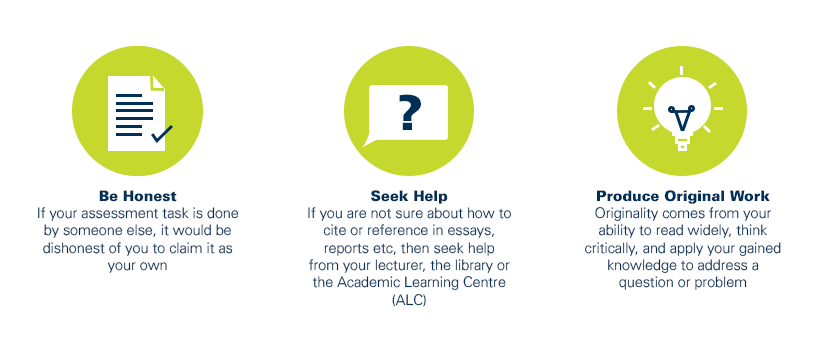
As a CQUniversity student you are expected to act honestly in all aspects of your academic work.
Any assessable work undertaken or submitted for review or assessment must be your own work. Assessable work is any type of work you do to meet the assessment requirements in the unit, including draft work submitted for review and feedback and final work to be assessed.
When you use the ideas, words or data of others in your assessment, you must thoroughly and clearly acknowledge the source of this information by using the correct referencing style for your unit. Using others’ work without proper acknowledgement may be considered a form of intellectual dishonesty.
Participating honestly, respectfully, responsibly, and fairly in your university study ensures the CQUniversity qualification you earn will be valued as a true indication of your individual academic achievement and will continue to receive the respect and recognition it deserves.
As a student, you are responsible for reading and following CQUniversity’s policies, including the Student Academic Integrity Policy and Procedure. This policy sets out CQUniversity’s expectations of you to act with integrity, examples of academic integrity breaches to avoid, the processes used to address alleged breaches of academic integrity, and potential penalties.
What is a breach of academic integrity?
A breach of academic integrity includes but is not limited to plagiarism, self-plagiarism, collusion, cheating, contract cheating, and academic misconduct. The Student Academic Integrity Policy and Procedure defines what these terms mean and gives examples.
Why is academic integrity important?
A breach of academic integrity may result in one or more penalties, including suspension or even expulsion from the University. It can also have negative implications for student visas and future enrolment at CQUniversity or elsewhere. Students who engage in contract cheating also risk being blackmailed by contract cheating services.
Where can I get assistance?
For academic advice and guidance, the Academic Learning Centre (ALC) can support you in becoming confident in completing assessments with integrity and of high standard.
What can you do to act with integrity?