Overview
An understanding of organisational strategy and change is essential in highly uncertain and competitive business environments. In this capstone unit, you will explore major conceptual frameworks in strategy and their relevance to developing a strategic plan for a specific case. You will develop an understanding of the processes used in strategy development and implementation. This will encompass an understanding of how internal and external pressures influence strategic decision making and any consequential changes likely to impact an organisation's business model. You will acquire skills to assess industry forces, undertake scenario analysis, and how to assess an organisation's capabilities and competencies to achieve competitive advantage. In the interconnected world of business, the unit concludes with an examination of how organisations might use alliances and other strategies of cooperation to grow in dynamically changing local and global markets.
Details
Pre-requisites or Co-requisites
Completion of 48 credit points in business units
Important note: Students enrolled in a subsequent unit who failed their pre-requisite unit, should drop the subsequent unit before the census date or within 10 working days of Fail grade notification. Students who do not drop the unit in this timeframe cannot later drop the unit without academic and financial liability. See details in the Assessment Policy and Procedure (Higher Education Coursework).
Offerings For Term 1 - 2026
Attendance Requirements
All on-campus students are expected to attend scheduled classes - in some units, these classes are identified as a mandatory (pass/fail) component and attendance is compulsory. International students, on a student visa, must maintain a full time study load and meet both attendance and academic progress requirements in each study period (satisfactory attendance for International students is defined as maintaining at least an 80% attendance record).
Recommended Student Time Commitment
Each 6-credit Undergraduate unit at CQUniversity requires an overall time commitment of an average of 12.5 hours of study per week, making a total of 150 hours for the unit.
Class Timetable
Assessment Overview
Assessment Grading
This is a graded unit: your overall grade will be calculated from the marks or grades for each assessment task, based on the relative weightings shown in the table above. You must obtain an overall mark for the unit of at least 50%, or an overall grade of 'pass' in order to pass the unit. If any 'pass/fail' tasks are shown in the table above they must also be completed successfully ('pass' grade). You must also meet any minimum mark requirements specified for a particular assessment task, as detailed in the 'assessment task' section (note that in some instances, the minimum mark for a task may be greater than 50%). Consult the University's Grades and Results Policy for more details of interim results and final grades.
All University policies are available on the CQUniversity Policy site.
You may wish to view these policies:
- Grades and Results Policy
- Assessment Policy and Procedure (Higher Education Coursework)
- Review of Grade Procedure
- Student Academic Integrity Policy and Procedure
- Academic Progression Policy and Procedure
- Student Refund and Credit Balance Policy and Procedure
- Complaints Policy and Procedure
- Information and Communications Technology Acceptable Use Policy and Procedure
This list is not an exhaustive list of all University policies. The full list of University policies are available on the CQUniversity Policy site.
Feedback, Recommendations and Responses
Every unit is reviewed for enhancement each year. At the most recent review, the following staff and student feedback items were identified and recommendations were made.
Feedback from In class discussion
Weekly workshops actively included business media coverage of emerging/ongoing strategic activities by companies. This links the value of conceptual frameworks to better understanding, even predicting, how companies might respond or shape competitive advantage.
It is really valuable to use the conceptual frameworks to cut through the complexity of competitive 'noise' in media coverage and annual reports. This critical discussion provides insights that are valuable to career progression.
Feedback from Conversation in workshop
Limited preparation for workshops by some students causes frustration for other students who seek to maximise the value of informed discussion.
Students, particularly those working in industry, are interested in seeing how the conceptual insights might help them understand the complexity of strategic actions taken or proposed by their employers. To achieve this outcome, workshops will draw on current and past industry examples with preparatory discussion questions to highlight potential insights from relevant conceptual frameworks. Discussion questions will be posted on the weekly Tab. The payoff for prior preparation and active participation is typically reflected in improved critical thinking and higher grades.
- Analyse strategy, planning, and decision making processes in organisations
- Evaluate and identify internal and external (PESTEL) pressures that shape strategy, and consequential changes to the business model
- Undertake risk assessment of industry forces, scenario analysis, and assessment of organisational capabilities and competencies to achieve competitive advantage.
- Assess how organisations might use alliances and other strategies of cooperation to grow in dynamically changing local and global markets.
Not relevant
Alignment of Assessment Tasks to Learning Outcomes
| Assessment Tasks | Learning Outcomes | |||
|---|---|---|---|---|
| 1 | 2 | 3 | 4 | |
| 1 - Critical Review - 40% | ||||
| 2 - Case Study - 60% | ||||
Alignment of Graduate Attributes to Learning Outcomes
| Graduate Attributes | Learning Outcomes | |||
|---|---|---|---|---|
| 1 | 2 | 3 | 4 | |
| 1 - Communication | ||||
| 2 - Problem Solving | ||||
| 3 - Critical Thinking | ||||
| 4 - Information Literacy | ||||
| 5 - Team Work | ||||
| 6 - Information Technology Competence | ||||
| 7 - Cross Cultural Competence | ||||
| 8 - Ethical practice | ||||
| 9 - Social Innovation | ||||
| 10 - First Nations Knowledges | ||||
| 11 - Aboriginal and Torres Strait Islander Cultures | ||||
Textbooks
Strategic Management Essentials
- Edition: 1st Asia-Pacific (2021)
- Authors: Grant, R., Murray, P.A., Orr, S., Butler, B., & Bezemer, P.J.
- John Wiley
- Brisbane Brisbane , Queensland , Australia
- ISBN: 9780730385769
IT Resources
- CQUniversity Student Email
- Internet
- Unit Website (Moodle)
All submissions for this unit must use the referencing style: American Psychological Association 7th Edition (APA 7th edition)
For further information, see the Assessment Tasks.
m.n.johnson@cqu.edu.au
Week 1
Begin Date: 09 Mar 2026Module/Topic
Strategy: The big picture
Chapter
Chapter 1. Grant et al. (2021). Strategic Management Essentials. John Wiley Australia.
Plus selected papers in eReading list
Events and Submissions/Topic
Weekly workshop requirements are provided in Moodle
Groups for Assessment 2 need to be formed by Week 4. Please access the group list and put yourself into a Group.
Week 2
Begin Date: 16 Mar 2026Module/Topic
Macro-environmental factors affecting organisational strategy
Chapter
Chapter 2. Grant et al. (2021). Strategic Management Essentials. John Wiley Australia.
Plus selected papers in eReading list
Events and Submissions/Topic
Weekly workshop requirements are provided in Moodle
Week 3
Begin Date: 23 Mar 2026Module/Topic
Capabilities and core competencies
Chapter
Chapter 3. Grant et al. (2021). Strategic Management Essentials. John Wiley Australia.
Plus selected papers in eReading list
Events and Submissions/Topic
Weekly workshop requirements are provided in Moodle
Reminder: Groups for Assessment 2 need to be finalised by next week.
Week 4
Begin Date: 30 Mar 2026Module/Topic
Competitive advantage: sources and sustainability
Chapter
Chapter 4. Grant et al. (2021). Strategic Management Essentials. John Wiley Australia.
Plus selected papers in eReading list
Events and Submissions/Topic
Weekly workshop requirements are provided in Moodle
Group meetings will be incorporated into the Workshop this week.
Week 5
Begin Date: 06 Apr 2026Module/Topic
Business level strategies and models
Chapter
Chapter 5. Grant et al. (2021). Strategic Management Essentials. John Wiley Australia.
Plus selected papers in eReading list
Events and Submissions/Topic
Weekly workshop requirements are provided in Moodle
Week 6
Begin Date: 13 Apr 2026Module/Topic
Corporate strategy and modes of diversification
Chapter
Chapter 6. Grant et al. (2021). Strategic Management Essentials. John Wiley Australia.
Plus selected papers in eReading list
Events and Submissions/Topic
Weekly workshop requirements are provided in Moodle
Business Report: Critical insights for strategy development in turbulent times Due: Week 6 Friday (17 Apr 2026) 5:00 pm AEST
Vacation Week
Begin Date: 20 Apr 2026Module/Topic
VACATION WEEK
Chapter
VACATION WEEK
Events and Submissions/Topic
VACATION WEEK
Week 7
Begin Date: 27 Apr 2026Module/Topic
Strategic alliances and strategies of cooperation
Chapter
Chapter 7. Grant et al. (2021). Strategic Management Essentials. John Wiley Australia.
Plus selected papers in eReading list
Events and Submissions/Topic
Weekly workshop requirements are provided in Moodle
Week 8
Begin Date: 04 May 2026Module/Topic
Globalisation and strategic options
Chapter
Chapter 8. Grant et al. (2021). Strategic Management Essentials. John Wiley Australia.
Plus selected papers in eReading list
Events and Submissions/Topic
Weekly workshop requirements are provided in Moodle
Week 9
Begin Date: 11 May 2026Module/Topic
Evaluating strategies
Chapter
Chapter 9. Grant et al. (2021). Strategic Management Essentials. John Wiley Australia.
Plus selected papers in eReading list
Events and Submissions/Topic
Weekly workshop requirements are provided in Moodle
Week 10
Begin Date: 18 May 2026Module/Topic
Corporate governance and ethics
Chapter
Chapter 11. Grant et al. (2021). Strategic Management Essentials. John Wiley Australia.
Plus selected papers in eReading list
Events and Submissions/Topic
Weekly workshop requirements are provided in Moodle
Week 11
Begin Date: 25 May 2026Module/Topic
Leadership and strategic change
Chapter
Chapter 10. Grant et al. (2021). Strategic Management Essentials. John Wiley Australia.
Plus selected papers in eReading list
Events and Submissions/Topic
Weekly workshop requirements are provided in Moodle
Week 12
Begin Date: 01 Jun 2026Module/Topic
The practice of strategy
Chapter
Chapter 16. Whittington et al., (2019). Exploring Strategy, Text and Cases, 12e, Pearson.
Plus selected papers in eReading list
Events and Submissions/Topic
Conclusions about a career in strategy
Strategic Plan and Group presentation: Recommendations for Exponentia.ai Due: Week 12 Friday (5 June 2026) 5:00 pm AEST
Exam Week
Begin Date: 08 Jun 2026Module/Topic
Chapter
Events and Submissions/Topic
Vacation/Exam Week
Begin Date: 15 Jun 2026Module/Topic
Chapter
Events and Submissions/Topic
1 Critical Review
This individual 1500-word business report requires a critical examination of insights from the latest research (literature published in academic journals) regarding the challenge of developing strategy in turbulent times. The context of your business report enables you to apply these insights and conceptual frameworks to the issues that a CEO (of a publicly listed company in your home country) may be confronting as they endeavour to grow their business internationally.
This critical analysis will require use of key strategic frameworks, including PESTEL and business models, in examining the scope of the issues confronting the listed company.
On successful completion of this assignment task, you will have achieved Unit Learning Outcomes 1 and 2.
Submission and Formatting Conditions:
- Your assignment must be prepared in a business report format and submitted as a single word processing document (file format .doc or .docx)
- Your business report must include a cover page with your full name, CQU Student ID number, and CQU declaration regarding use of AI.
- Format of the business report must use 1.5-line spacing and 12pt size font in Times New Roman. Reference List hanging indent format with 2.0-line spacing.
- TEEL paragraph structures have been used (refer Academic Learning Centre for TEEL paragraph structure).
- Length 1500-words (+/- 10%). (Please edit to ensure the submission avoids a penalty of 1% for every 100-words over the maximum limit).
- Assignments submitted after the deadline are penalised at 5% of the total available marks for each whole- or part-calendar day.
- The assignment must be submitted through the Assignment link on the Moodle site. No email submissions will be accepted. Please contact SDesk (https://sdesk.cqu.edu.au) if you have difficulty accessing the Moodle site.
Week 6 Friday (17 Apr 2026) 5:00 pm AEST
Please submit using the link to Turnitin in the Assessment 1 tab in Moodle. Penalties apply for late submission (5% mark will be deducted from the total mark for Assessment 1 per day (or part of the day) unless an approved extension has been granted)
Week 8 Friday (8 May 2026)
In your application of insights from the latest academic (literature) research, please address the assessment criteria:
1. Provide a brief contextual overview of the organisation, their product/services, and a selected international market they operate in. (20 Marks)
2. Using PESTEL analysis, what key factor(s) confront the organisation and what new insights about shaping strategy in turbulent times might the academic research contribute to that analysis? (30 Marks)
3. In identifying the organisation's strategic options for growth in turbulent international markets, and incorporating insights from the latest academic journals, consider any consequential changes that might be required in their business model. (30 Marks)
5. Business report format with quality of written expression, effective use of TEEL formatted paragraphs, grammar and punctuation, and correct spelling using Australian English. (10 Marks)
7. Referencing of at least 10 peer-reviewed academic papers, including proper in-text citations and reference list using CQU APA (7th edition) referencing style. (10 Marks)
- Analyse strategy, planning, and decision making processes in organisations
- Evaluate and identify internal and external (PESTEL) pressures that shape strategy, and consequential changes to the business model
2 Case Study
This is a 60% group assignment and comprises a strategic plan (40%), recorded presentation (15%) and an opportunity to note individual contributions (5%)
Your task is to strategically consider and present you recommendations regarding if, how and when Exponentia.ai might enter the Australian AI consulting sector.
On successful completion of this assignment task, you will have achieved Unit Learning Outcomes 2, 3, and 4.
Assignment 2A: Strategic Plan
The group is required to prepare a 2500-word strategic plan critically applying relevant conceptual frameworks to the above task. The structure of the strategic plan should address the assessment criteria detailed below.
To demonstrate your ability to apply relevant key strategy and change management concepts, you should read beyond the materials provided in the eReading list. To support the analysis detailed in your strategic plan, the group is required to incorporate insights from at least 10 peer-reviewed papers in relevant academic journals. Please be sure to follow business report format and use APA (7th edition) referencing format.
Late submission and academic misconduct penalties apply as per the university regulations. A penalty applies for submitting a written assignment over the 2500-word limit (+/- 10%); a Penalty of 1% will be deducted for each 100-words over the maximum limit of 2750-words. (The Reference List, Table of Contents, and Appendices are excluded from this calculation).
Assessment 2B: Presentation
The group needs to record a PPT presentation of their strategic plan not exceeding 15-minutes. Every person in the group needs to participate equally in the presentation. Good presentations need to be planned and rehearsed so that they are compelling and engaging to the audience.
Recorded presentations need to be uploaded through Echo 360 by 5:00pm on Friday 5 June, 2026.
Assessment 2C: Self and Peer Review
Each person in the group is provided an opportunity to confidentially advise the extent of contributions by others in preparing and presenting the strategic plan.
Total Assessment Weighting 60%, comprising:
* Assessment 2A: Strategic Plan 40%
* Assessment 2B: Presentation 15%
* Assessment 2C: Self and Peer Review 5%
The assessments will be marked using a rubric in Feedback Studio; accessible in Moodle
Week 12 Friday (5 June 2026) 5:00 pm AEST
Please submit your strategic plan and presentation through Turnitin (link in Assessment 2 tab in Moodle). Penalties apply for late submission (5% mark will be deducted from the total mark for Assessment 2 per day unless an approved extension has been granted)
Results will be released after the grades are finalised by the Faculty Academic Board 8 July, 2026.
Assignment 2A: Strategic Plan: 40%
- Executive Summary of your strategic plan and recommendations (10 Marks)
- Brief introduction of the company's current strategy and situation (10 Marks)
- Demonstrates an understanding and application of strategic management concepts for external strategic audit (15 Marks)
- Demonstrates an understanding and application of strategic management concepts for internal strategic audit (15 Marks)
- Identifies and examines the key strategic issues pertaining to the company's potential expansion into Australia (15 Marks)
- Develops a sound strategic plan that addresses each of the key strategic issues (15 Marks)
- Document follows the business report format with quality of written expression, effective use of paragraphs, grammar, punctuation, and correct spelling using Australian English (10 Marks)
- Integrates insights from at least 10 peer-reviewed academic papers, including proper in-text citations, and reference list using APA (7th edition) referencing format. (10 Marks)
Part 2B: Group Presentation (15%)
- Presentation of Executive Summary (10 Marks)
- Brief presentation introducing the company (10 Marks)
- External strategic audit. (10 Marks)
- Internal strategic audit. (10 Marks)
- Key strategic issues. (20 Marks)
- Strategic recommendations. (20 Marks)
- Presentation quality. (20 Marks)
Part 2C: Individual Contribution (5%)
Each student will also receive a grade out of 5% for the quality and timeliness of their individual contributions to the group submission. This grade is calculated through a Self and Peer Review (SPA) and moderated by the Unit Coordinator. See SPA link in Moodle.
- Evaluate and identify internal and external (PESTEL) pressures that shape strategy, and consequential changes to the business model
- Undertake risk assessment of industry forces, scenario analysis, and assessment of organisational capabilities and competencies to achieve competitive advantage.
- Assess how organisations might use alliances and other strategies of cooperation to grow in dynamically changing local and global markets.
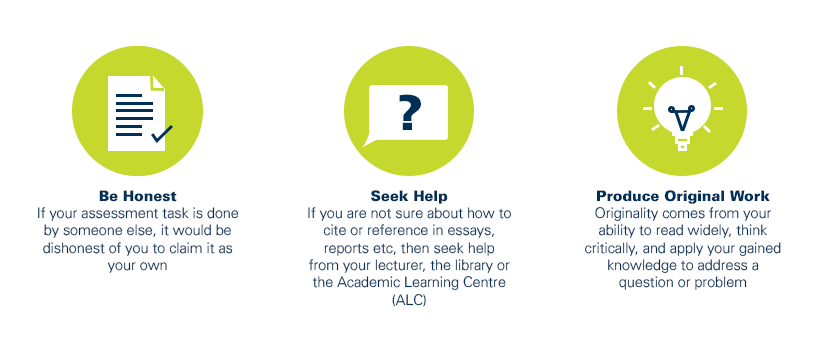
As a CQUniversity student you are expected to act honestly in all aspects of your academic work.
Any assessable work undertaken or submitted for review or assessment must be your own work. Assessable work is any type of work you do to meet the assessment requirements in the unit, including draft work submitted for review and feedback and final work to be assessed.
When you use the ideas, words or data of others in your assessment, you must thoroughly and clearly acknowledge the source of this information by using the correct referencing style for your unit. Using others’ work without proper acknowledgement may be considered a form of intellectual dishonesty.
Participating honestly, respectfully, responsibly, and fairly in your university study ensures the CQUniversity qualification you earn will be valued as a true indication of your individual academic achievement and will continue to receive the respect and recognition it deserves.
As a student, you are responsible for reading and following CQUniversity’s policies, including the Student Academic Integrity Policy and Procedure. This policy sets out CQUniversity’s expectations of you to act with integrity, examples of academic integrity breaches to avoid, the processes used to address alleged breaches of academic integrity, and potential penalties.
What is a breach of academic integrity?
A breach of academic integrity includes but is not limited to plagiarism, self-plagiarism, collusion, cheating, contract cheating, and academic misconduct. The Student Academic Integrity Policy and Procedure defines what these terms mean and gives examples.
Why is academic integrity important?
A breach of academic integrity may result in one or more penalties, including suspension or even expulsion from the University. It can also have negative implications for student visas and future enrolment at CQUniversity or elsewhere. Students who engage in contract cheating also risk being blackmailed by contract cheating services.
Where can I get assistance?
For academic advice and guidance, the Academic Learning Centre (ALC) can support you in becoming confident in completing assessments with integrity and of high standard.
What can you do to act with integrity?