Overview
This unit provides you with an overview of the business and commercial aspects of professional engineering and assists you to develop a specific skill relevant to your intended career. You will be able to evaluate workplace experiences in terms of the Engineers Australia, Stage 2 Competencies for Professional Engineers.
Details
Pre-requisites or Co-requisites
There are no requisites for this unit.
Important note: Students enrolled in a subsequent unit who failed their pre-requisite unit, should drop the subsequent unit before the census date or within 10 working days of Fail grade notification. Students who do not drop the unit in this timeframe cannot later drop the unit without academic and financial liability. See details in the Assessment Policy and Procedure (Higher Education Coursework).
Offerings For Term 1 - 2026
Attendance Requirements
All on-campus students are expected to attend scheduled classes - in some units, these classes are identified as a mandatory (pass/fail) component and attendance is compulsory. International students, on a student visa, must maintain a full time study load and meet both attendance and academic progress requirements in each study period (satisfactory attendance for International students is defined as maintaining at least an 80% attendance record).
Recommended Student Time Commitment
Each 6-credit Undergraduate unit at CQUniversity requires an overall time commitment of an average of 12.5 hours of study per week, making a total of 150 hours for the unit.
Class Timetable
Assessment Overview
Assessment Grading
This is a graded unit: your overall grade will be calculated from the marks or grades for each assessment task, based on the relative weightings shown in the table above. You must obtain an overall mark for the unit of at least 50%, or an overall grade of 'pass' in order to pass the unit. If any 'pass/fail' tasks are shown in the table above they must also be completed successfully ('pass' grade). You must also meet any minimum mark requirements specified for a particular assessment task, as detailed in the 'assessment task' section (note that in some instances, the minimum mark for a task may be greater than 50%). Consult the University's Grades and Results Policy for more details of interim results and final grades.
All University policies are available on the CQUniversity Policy site.
You may wish to view these policies:
- Grades and Results Policy
- Assessment Policy and Procedure (Higher Education Coursework)
- Review of Grade Procedure
- Student Academic Integrity Policy and Procedure
- Academic Progression Policy and Procedure
- Student Refund and Credit Balance Policy and Procedure
- Complaints Policy and Procedure
- Information and Communications Technology Acceptable Use Policy and Procedure
This list is not an exhaustive list of all University policies. The full list of University policies are available on the CQUniversity Policy site.
Feedback, Recommendations and Responses
Every unit is reviewed for enhancement each year. At the most recent review, the following staff and student feedback items were identified and recommendations were made.
Feedback from SUTE
The unit delivers practical and useful knowledge and skills for aspiring project managers, covering relevant processes and topics that enhance both learning and professional development.
This good practice should be continued for student success.
Feedback from SUTE
Some students found parts of the content less relevant to their professional context in relation to the unit's relevance to the degree, which reduced engagement with assignments.
More information should be provided at the start about the unit’s nature, its links to previous units, and how students can build on existing and new knowledge throughout.
Feedback from SUTE
In relation to Clear Unit Requirements, some students noted that the large volume of resources and unclear priorities made it difficult to focus on key content and assessment expectations.
Streamline resources and clearly link lectures to assessment requirements to reduce overload and improve focus.
Feedback from SUTE
In relation to "Clear Unit Requirements", some students indicated that the marking guides and assessment expectations were unclear, making it harder to understand how to meet the required standards.
Marking guides and assessment expectations should be clarified to ensure students understand how their work will be evaluated.
Feedback from SUTE
Regarding 'Useful Learning Materials', some students appreciated the clarity in explaining business cases but noted a lack of real-world examples to better connect theory with practice.
Although assignments use real-world problems, the new delivery should include a clear, early example to better guide students.
- Describe and reflect on commercial and business aspects of professional engineering practice
- Generate professional business documentation suitable for engineering enterprises
- Provide evidence of the continuing development of skills relevant to professional engineering career
- Map and self-evaluate workplace activities in terms of the Engineers Australia Stage 2 Competencies for Professional Engineers.
The Learning Outcomes for this unit are linked with the Engineers Australia Stage 1 Competency Standards for Professional Engineers in the areas of 1. Knowledge and Skill Base, 2. Engineering Application Ability and 3. Professional and Personal Attributes at the following levels:
Introductory
1.4 Discernment of knowledge development and research directions within the engineering discipline. (LO: 1N 2N)
2.1 Application of established engineering methods to complex engineering problem-solving. (LO: 1N 2N 3N)
2.4 Application of systematic approaches to the conduct and management of engineering projects. (LO: 1N 2N)
3.1 Ethical conduct and professional accountability. (LO: 4N)
Intermediate
1.6 Understanding of the scope, principles, norms, accountabilities and bounds of sustainable engineering practice in the specific discipline. (LO: 1N 2N 4I)
3.2 Effective oral and written communication in professional and lay domains. (LO: 1I 2I 3N 4N)
3.4 Professional use and management of information. (LO: 1N 2I 4N)
3.5 Orderly management of self, and professional conduct. (LO: 3N 4I)
Note: LO refers to the Learning Outcome number(s) which link to the competency and the levels: N – Introductory, I – Intermediate and A - Advanced.
Refer to the Engineering Undergraduate Course Moodle site for further information on the Engineers Australia's Stage 1 Competency Standard for Professional Engineers and course level mapping information https://moodle.cqu.edu.au/course/view.php?id=1511
Alignment of Assessment Tasks to Learning Outcomes
| Assessment Tasks | Learning Outcomes | |||
|---|---|---|---|---|
| 1 | 2 | 3 | 4 | |
| 1 - Written Assessment - 60% | ||||
| 2 - Presentation - 10% | ||||
| 3 - Portfolio - 30% | ||||
Alignment of Graduate Attributes to Learning Outcomes
| Graduate Attributes | Learning Outcomes | |||
|---|---|---|---|---|
| 1 | 2 | 3 | 4 | |
| 1 - Communication | ||||
| 2 - Problem Solving | ||||
| 3 - Critical Thinking | ||||
| 4 - Information Literacy | ||||
| 5 - Team Work | ||||
| 6 - Information Technology Competence | ||||
| 7 - Cross Cultural Competence | ||||
| 8 - Ethical practice | ||||
| 9 - Social Innovation | ||||
| 10 - First Nations Knowledges | ||||
| 11 - Aboriginal and Torres Strait Islander Cultures | ||||
Textbooks
There are no required textbooks.
IT Resources
- CQUniversity Student Email
- Internet
- Unit Website (Moodle)
All submissions for this unit must use the referencing style: Harvard (author-date)
For further information, see the Assessment Tasks.
ben.taylor@cqu.edu.au
Week 1
Begin Date: 09 Mar 2026Module/Topic
Introduction to ENEP12007
Chapter
Reference study materials will be provided on Moodle
Events and Submissions/Topic
Week 2
Begin Date: 16 Mar 2026Module/Topic
Business cases and the project assessment framework
Chapter
Reference study materials will be provided on Moodle
Events and Submissions/Topic
Week 3
Begin Date: 23 Mar 2026Module/Topic
Problem identification and options analysis
Chapter
Reference study materials will be provided on Moodle
Events and Submissions/Topic
Week 4
Begin Date: 30 Mar 2026Module/Topic
Commercial justification and economic analysis
Chapter
Reference study materials will be provided on Moodle
Events and Submissions/Topic
Week 5
Begin Date: 06 Apr 2026Module/Topic
Business finance and raising capital
Chapter
Reference study materials will be provided on Moodle
Events and Submissions/Topic
Week 6
Begin Date: 13 Apr 2026Module/Topic
Business risk management
Chapter
Reference study materials will be provided on Moodle
Events and Submissions/Topic
Vacation Week
Begin Date: 20 Apr 2026Module/Topic
Break Week - Enjoy a break or catch up with your studies.
Chapter
Events and Submissions/Topic
Week 7
Begin Date: 27 Apr 2026Module/Topic
Contract management and tnder process
Chapter
Reference study materials will be provided on Moodle
Events and Submissions/Topic
Week 8
Begin Date: 04 May 2026Module/Topic
Engineers Australia Chartered Process
Chapter
Reference study materials will be provided on Moodle
Events and Submissions/Topic
Week 9
Begin Date: 11 May 2026Module/Topic
Graduate development and job applications
Chapter
Reference study materials will be provided on Moodle
Events and Submissions/Topic
Week 10
Begin Date: 18 May 2026Module/Topic
Selection criteria and interviews
Chapter
Reference study materials will be provided on Moodle
Events and Submissions/Topic
Week 11
Begin Date: 25 May 2026Module/Topic
Entrepreneurship
Chapter
Training Videos from Supervisor Development course available on Moodle
Events and Submissions/Topic
Week 12
Begin Date: 01 Jun 2026Module/Topic
Introduction to final-year thesis topics
Personal portfolio work - Developing specific workplace skills
Unit review
Chapter
Events and Submissions/Topic
Exam Week
Begin Date: 08 Jun 2026Module/Topic
Chapter
Events and Submissions/Topic
Vacation/Exam Week
Begin Date: 15 Jun 2026Module/Topic
Chapter
Events and Submissions/Topic
1 Written Assessment
You must prepare a business case that covers the options analysis and the preferred option for the provided project scope on Moodle. The business case must be prepared using the Microsoft Word template and shall include all sections in the template and the marking rubric. The full task description is available on Moodle.
Assessment submission
The assessment must be saved as a single PDF without password protection. No other forms of submission are permitted. The 72-hour submission grace period applies to this assessment.
AI Assessment Scale
AI Planning - You may use AI for planning, idea development, and research. Your final submission should show how you have developed and refined these ideas.
Week 7 Friday (1 May 2026) 10:00 pm AEST
Week 9 Friday (15 May 2026)
A marking rubric is provided on Moodle, including indicators of attainment for each assessment element. It is strongly recommended that you check your progress regularly against the marking rubric.
- Describe and reflect on commercial and business aspects of professional engineering practice
- Generate professional business documentation suitable for engineering enterprises
2 Presentation
You must prepare a short audiovisual presentation that highlights the essential facts of the business idea and the proposed business plan. Consider that the presentation is vital to convincing potential financiers or investors of the project. It should be engaging, informative, but also direct. A maximum time of 6 minutes is recommended.
Assessment submission
The presentation must be submitted as a PowerPoint slideshow with voice annotation or as a recorded video with screen sharing. No other forms of submission are permitted. The 72-hour submission grace period applies to this assessment, since the presentation is not live.
AI Assessment Scale
AI Planning - You may use AI for planning, idea development, and research. Your final submission should show how you have developed and refined these ideas.
Week 10 Friday (22 May 2026) 10:00 pm AEST
Week 12 Friday (5 June 2026)
A marking rubric is provided on Moodle, including indicators of attainment for each assessment element. It is strongly recommended that you check your progress regularly against the marking rubric.
- Describe and reflect on commercial and business aspects of professional engineering practice
- Generate professional business documentation suitable for engineering enterprises
3 Portfolio
You must prepare a portfolio that contains the following mandatory tasks:
- A proposed contract management plan for the implementation of the project as identified in the business case. This is to highlight your understanding of the procurement and contract management process.
- A Statement on the chartered process: The statement should demonstrate your general understanding of Engineers Australia's new application process for Chartered status and include the competency evidence claims
- An application for a graduate position, including a personal resume, a cover letter and a statement addressing job selection criteria.
You will find further details and support materials for these assessment tasks on Moodle.
Assessment submission
The Portfolio must be submitted as a single PDF without password protection. No other forms of submission are permitted. The 72-hour submission grace period applies to this assessment.
AI Assessment Scale
AI Planning - You may use AI for planning, idea development, and research. Your final submission should show how you have developed and refined these ideas.
Week 12 Friday (5 June 2026) 11:45 pm AEST
Within 2 weeks of properly made submissions
A marking rubric is provided on Moodle, including indicators of attainment for each assessment element. It is strongly recommended that you check your progress regularly against the marking rubric.
- Provide evidence of the continuing development of skills relevant to professional engineering career
- Map and self-evaluate workplace activities in terms of the Engineers Australia Stage 2 Competencies for Professional Engineers.
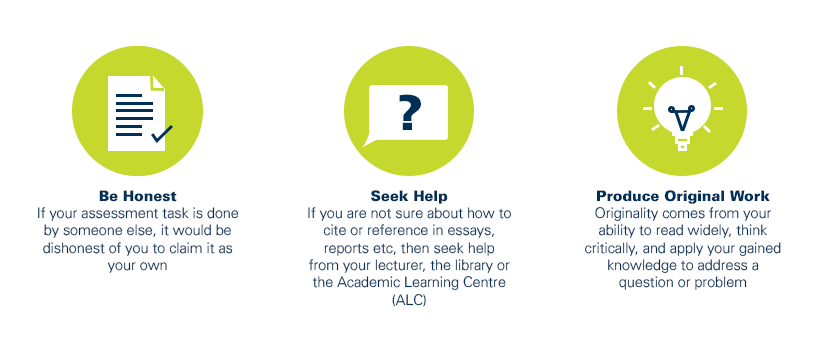
As a CQUniversity student you are expected to act honestly in all aspects of your academic work.
Any assessable work undertaken or submitted for review or assessment must be your own work. Assessable work is any type of work you do to meet the assessment requirements in the unit, including draft work submitted for review and feedback and final work to be assessed.
When you use the ideas, words or data of others in your assessment, you must thoroughly and clearly acknowledge the source of this information by using the correct referencing style for your unit. Using others’ work without proper acknowledgement may be considered a form of intellectual dishonesty.
Participating honestly, respectfully, responsibly, and fairly in your university study ensures the CQUniversity qualification you earn will be valued as a true indication of your individual academic achievement and will continue to receive the respect and recognition it deserves.
As a student, you are responsible for reading and following CQUniversity’s policies, including the Student Academic Integrity Policy and Procedure. This policy sets out CQUniversity’s expectations of you to act with integrity, examples of academic integrity breaches to avoid, the processes used to address alleged breaches of academic integrity, and potential penalties.
What is a breach of academic integrity?
A breach of academic integrity includes but is not limited to plagiarism, self-plagiarism, collusion, cheating, contract cheating, and academic misconduct. The Student Academic Integrity Policy and Procedure defines what these terms mean and gives examples.
Why is academic integrity important?
A breach of academic integrity may result in one or more penalties, including suspension or even expulsion from the University. It can also have negative implications for student visas and future enrolment at CQUniversity or elsewhere. Students who engage in contract cheating also risk being blackmailed by contract cheating services.
Where can I get assistance?
For academic advice and guidance, the Academic Learning Centre (ALC) can support you in becoming confident in completing assessments with integrity and of high standard.
What can you do to act with integrity?