Overview
In this unit, you will develop skills to analyse the stresses in a structural member subjected to various actions such as axial force, torsion, bending moments, and shear force using the principles of mechanics of materials. You will learn how individual structural members resist and transfer the stresses as well as ways in which they can fail. You will document the process of modeling, testing, and analysis and communicate, work and learn, both individually and in teams in a professional manner. In this unit, you must complete compulsory practical activities. Refer to the Engineering Undergraduate Course Moodle site for proposed dates.
Details
Pre-requisites or Co-requisites
Prerequisites: (ENEG11006 Engineering Statics OR ENEC12007 Analysis of Structures) AND (MATH11219 Engineering Mathematics) AND (ENEG11008 Materials for Engineers OR ENEG12005 Materials Science and Engineering)
Important note: Students enrolled in a subsequent unit who failed their pre-requisite unit, should drop the subsequent unit before the census date or within 10 working days of Fail grade notification. Students who do not drop the unit in this timeframe cannot later drop the unit without academic and financial liability. See details in the Assessment Policy and Procedure (Higher Education Coursework).
Offerings For Term 3 - 2026
Attendance Requirements
All on-campus students are expected to attend scheduled classes - in some units, these classes are identified as a mandatory (pass/fail) component and attendance is compulsory. International students, on a student visa, must maintain a full time study load and meet both attendance and academic progress requirements in each study period (satisfactory attendance for International students is defined as maintaining at least an 80% attendance record).
Recommended Student Time Commitment
Each 6-credit Undergraduate unit at CQUniversity requires an overall time commitment of an average of 12.5 hours of study per week, making a total of 150 hours for the unit.
Class Timetable
Assessment Overview
| Assessment Task | Part Weighting (% of assessment) |
Assessment Security Level | Gen AI Guidance Levels |
|---|---|---|---|
| 1. Progressive Tests (10% of unit · 3 parts ) | |||
| Part 1 – Quiz 1 (Online Quiz(zes)) | 40% of 10% | Low | AI-Assisted (Guided Collaboration) |
| Part 2 – Quiz 2 (Online Quiz(zes)) | 30% of 10% | Low | AI-Assisted (Guided Collaboration) |
| Part 3 – Quiz 3 (Online Quiz(zes)) | 30% of 10% | Low | AI-Assisted (Guided Collaboration) |
| 2. Assignment (20% of unit ) | |||
| Assignment (Written Assessment) | 100% of 20% | Medium | AI-Assisted (Guided Collaboration) |
| 3. Practical Report (20% of unit ) | |||
| Practical Report (Practical and Written Assessment) | 100% of 20% | Medium | AI-Assisted (Guided Collaboration) |
| 4. In Class Test (50% of unit ) | |||
| In Class Test (In-class Test(s)) | 100% of 50% | High | No Gen AI Use |
Assessment Grading
This is a graded unit: your overall grade will be calculated from the marks or grades for each assessment task, based on the relative weightings shown in the table above. You must obtain an overall mark for the unit of at least 50%, or an overall grade of 'pass' in order to pass the unit. If any 'pass/fail' tasks are shown in the table above they must also be completed successfully ('pass' grade). You must also meet any minimum mark requirements specified for a particular assessment task, as detailed in the 'assessment task' section (note that in some instances, the minimum mark for a task may be greater than 50%). Consult the University's Grades and Results Policy for more details of interim results and final grades.
All University policies are available on the CQUniversity Policy site.
You may wish to view these policies:
- Grades and Results Policy
- Assessment Policy and Procedure (Higher Education Coursework)
- Review of Grade Procedure
- Student Academic Integrity Policy and Procedure
- Academic Progression Policy and Procedure
- Student Refund and Credit Balance Policy and Procedure
- Complaints Policy and Procedure
- Information and Communications Technology Acceptable Use Policy and Procedure
This list is not an exhaustive list of all University policies. The full list of University policies are available on the CQUniversity Policy site.
Feedback, Recommendations and Responses
Every unit is reviewed for enhancement each year. At the most recent review, the following staff and student feedback items were identified and recommendations were made.
Feedback from Direct student communication via email and Moodle.
Some students requested permission not to attend the residential school and instead use data generated by other students for the practical assessment.
Students were advised that attendance at the residential school is compulsory and that all students must complete the practical activities themselves to generate and use their own data. This requirement should continue to be reinforced to ensure fairness, consistency, and achievement of the unit learning outcomes.
- Apply the fundamental theories and analytical techniques to solve problems in mechanics of materials
- Analyse the behaviour of structural members subjected to axial force, torsion, bending moment and shear force
- Determine principal stresses and discuss failure criteria for a range of engineering materials
- Demonstrate a professional level of communication and teamwork.
The Learning Outcomes for this unit are linked with the Engineers Australia Stage 1 Competency Standards for Professional Engineers in the areas of 1. Knowledge and Skill Base, 2. Engineering Application Ability and 3. Professional and Personal Attributes at the following levels:
Introductory 1.3 In-depth understanding of specialist bodies of knowledge within the engineering discipline. (LO: 2N ) 2.2 Fluent application of engineering techniques, tools, and resources. (LO: 3N 4N ) 3.4 Professional use and management of information. (LO: 4N ) 3.6 Effective team membership and team leadership. (LO: 4N )
Intermediate 1.1 Comprehensive, theory-based understanding of the underpinning natural and physical sciences and the engineering fundamentals applicable to the engineering discipline. (LO: 1I 2I 3I ) 1.2 Conceptual understanding of the mathematics, numerical analysis, statistics, and computer and information sciences which underpin the engineering discipline. (LO: 1I 2I 3I ) 1.4 Discernment of knowledge development and research directions within the engineering discipline. (LO: 2N 3I ) 2.1 Application of established engineering methods to complex engineering problem-solving. (LO: 2I 3I ) 2.3 Application of systematic engineering synthesis and design processes. (LO: 2N 3I ) 3.2 Effective oral and written communication in professional and lay domains. (LO: 4I ) 3.5 Orderly management of self, and professional conduct. (LO: 4I )
Advanced
1.5 Knowledge of engineering design practice and contextual factors impacting the engineering discipline. (LO: 3A )
Note: LO refers to the Learning Outcome number(s) which link to the competency and the levels: N – Introductory, I – Intermediate and A - Advanced.https://moodle.cqu.edu.au/course/view.php?id=1511
Refer to the Engineering Undergraduate Course Moodle site for further information on the Engineers Australia's Stage 1 Competency Standard for Professional Engineers and course level mapping information
Alignment of Assessment Tasks to Learning Outcomes
| Assessment Tasks | Learning Outcomes | |||
|---|---|---|---|---|
| 1 | 2 | 3 | 4 | |
|
1.
Assessment 1
(10% of unit · 3 parts
)
Part 1 -
Online Quiz(zes)
Part 2 -
Online Quiz(zes)
Part 3 -
Online Quiz(zes)
|
||||
|
2.
Assessment 2
(20% of unit )
Written Assessment
|
||||
|
3.
Assessment 3
(20% of unit )
Practical and Written Assessment
|
||||
|
4.
Assessment 4
(50% of unit )
In-class Test(s)
|
||||
Alignment of Graduate Attributes to Learning Outcomes
| Graduate Attributes | Learning Outcomes | |||
|---|---|---|---|---|
| 1 | 2 | 3 | 4 | |
| 1 - Communication | ||||
| 2 - Problem Solving | ||||
| 3 - Critical Thinking | ||||
| 4 - Information Literacy | ||||
| 5 - Team Work | ||||
| 6 - Information Technology Competence | ||||
| 7 - Cross Cultural Competence | ||||
| 8 - Ethical practice | ||||
| 9 - Social Innovation | ||||
| 10 - First Nations Knowledges | ||||
Textbooks
MECHANICS OF MATERIALS
- 11th Edition (SI Units) (2023)
- Authors: R.C. Hibbeler
- Pearson
- London London , UK
- ISBN: 9781292725734
- Binding: Hardcover
IT Resources
- CQUniversity Student Email
- Internet
- Unit Website (Moodle)
All submissions for this unit must use the referencing style: Harvard (author-date)
For further information, see the Assessment Tasks.
h.baji@cqu.edu.au
Week 1
Begin Date: 09 Nov 2026Module/Topic
Concepts of Stress and Strain
Chapter
Chapter 1: Stress
Chapter 2: Strain
Events and Submissions/Topic
Week 2
Begin Date: 16 Nov 2026Module/Topic
Tension/Compression Tests
Stress-Strain Behavior of Ductile and Brittle Materials
Poisson's ratio
Saint-Venant's Principal
Principal of Superposition
Elastic Deformation of Axially Loaded Member
Statically Indeterminate Axially-Loaded Members
Chapter
Chapter 3: Mechanical Properties of Materials
Chapter 4: Axial Load
Events and Submissions/Topic
Week 3
Begin Date: 23 Nov 2026Module/Topic
Torsional Deformation of Circular Shaft
The Torsion Formula
Angle of Twist
Statically Indeterminate Torque-Loaded Members
Solid Noncircular Shafts
Thin-Walled Tubes Having Closed Cross Sections
Chapter
Chapter 5: Torsion
Events and Submissions/Topic
Progressive Test #1: The test opens at 9:00 AM Monday of this week and closes at 9:00 PM Monday of next week.
Week 4
Begin Date: 30 Nov 2026Module/Topic
Shear and Moment Diagrams
Bending Deformation of Straight Member
The Flexural Formula
Chapter
Chapter 6: Bending
Events and Submissions/Topic
Week 5
Begin Date: 07 Dec 2026Module/Topic
Bending in Unsymmetrical Sections
Bending Composite Sections
Chapter
Chapter 6: Bending
Events and Submissions/Topic
Progressive Test #2: The test opens at 9:00 AM Monday of this week and closes at 9:00 PM Monday of next week.
Week 6
Begin Date: 14 Dec 2026Module/Topic
Shear in Straight Members
The Shear Formula
Shear Flow in Built-up Sections
Shear Flow in Thin-Walled Members
Shear Centre for Open Thin-Walled Members
Chapter
Chapter 7: Transverse Shear
Events and Submissions/Topic
Mid-Term Break
Begin Date: 21 Dec 2026Module/Topic
Chapter
Events and Submissions/Topic
Week 7
Begin Date: 04 Jan 2027Module/Topic
Thin-Walled Pressure Vessels
State of Stress Caused by Combined Loadings
Chapter
Chapter 8: Combined Loading
Events and Submissions/Topic
Progressive Test #3: The test opens at 9:00 AM Monday of this week and closes at 9:00 PM Monday of next week.
Week 8
Begin Date: 11 Jan 2027Module/Topic
Plane Stress Transformation
General Equations for Plane-Stress Transformation
Principal Stresses and Maximum In-Plane Shear Stress
Mohr's Circle-Plane Stress
Chapter
Chapter 9: Stress Transformation
Events and Submissions/Topic
Week 9
Begin Date: 18 Jan 2027Module/Topic
Strain Transformation
General Equations for Plane-Strain Transformation
Strain Rosettes
Failure Criteria
Chapter
Chapter 10: Strain Transformation and Failure Criteria
Events and Submissions/Topic
Week 10
Begin Date: 25 Jan 2027Module/Topic
The Elastic Curve
Slope and Displacement by Integration
Chapter
Chapter 12: Deflection of Beams
Events and Submissions/Topic
Week 11
Begin Date: 01 Feb 2027Module/Topic
Critical Load
Ideal Column with Different End Supports
The Secant Formula
Chapter
Chapter 13: Buckling of Columns
Events and Submissions/Topic
Week 12
Begin Date: 08 Feb 2027Module/Topic
Review
Chapter
Events and Submissions/Topic
Exam Week
Begin Date: 15 Feb 2027Module/Topic
Chapter
Events and Submissions/Topic
1. Progressive Tests ( 10% of unit · 3 parts )
Part 1 - Online Quiz(zes)
This assessment task consists of an online test with 4% marks. The consists of a number of numerical questions covering materials taught in week 1.
Important Notes:
- The test is set for 60 minutes. You have 60 minutes from when you start your attempt to submit your answers.
- If you start but leave a test and come back to it later, your 60 min time may have lapsed and you will be scored zero for that attempt.
- You can attempt the test up to three (3) times within the given time frame as specified in the schedule.
- The test will be automatically closed after the end of the given time frame.
- The final mark will be the highest of all the attempts.
- Even though the tests are open for a few days, it is expected that your first attempt would be on the first day.
- The test cannot generally be deferred. However, under exceptional circumstances, if you have valid reasons to defer the test(s), please contact the Unit Coordinator with documents of proof before the due date.
AI Assessment Scale – AI Planning Permitted: You may use AI to support your work during this online quiz, including discussing concepts, exploring approaches and checking your reasoning. You are responsible for critically evaluating AI outputs and ensuring your submitted answers reflect your understanding.
This assessment is exempted from the 72-hour submission grace period and must be completed by the stated submission date/time.
Week 4 Monday (30 Nov 2026) 9:00 am AEST
The test opens on Monday of Week 3 at 9:00 am Brisbane time.
Immediately after the test completion.
- Full marks allocated to a question will be awarded for each correct answer.
- No penalty for wrong answers.
- Apply the fundamental theories and analytical techniques to solve problems in mechanics of materials
- Determine principal stresses and discuss failure criteria for a range of engineering materials
Part 2 - Online Quiz(zes)
This assessment task consists of an online test with 3% marks. The consists of a number of numerical questions covering materials taught in weeks 2 and 3.
Important Notes:
- The test is set for 60 minutes. You have 60 minutes from when you start your attempt to submit your answers.
- If you start but leave a test and come back to it later, your 60 min time may have lapsed and you will be scored zero for that attempt.
- You can attempt the test up to three (3) times within the given time frame as specified in the schedule.
- The test will be automatically closed after the end of the given time frame.
- The final mark will be the highest of all the attempts.
- Even though the tests are open for a few days, it is expected that your first attempt would be on the first day.
- The test cannot generally be deferred. However, under exceptional circumstances, if you have valid reasons to defer the test(s), please contact the Unit Coordinator with documents of proof before the due date.
AI Assessment Scale – AI Planning Permitted: You may use AI to support your work during this online quiz, including discussing concepts, exploring approaches and checking your reasoning. You are responsible for critically evaluating AI outputs and ensuring your submitted answers reflect your understanding.
This assessment is exempted from the 72-hour submission grace period and must be completed by the stated submission date/time.
Week 6 Monday (14 Dec 2026) 9:00 am AEST
The test opens on Monday of Week 5 at 9:00 am Brisbane time.
Immediately after the test completion.
- Full marks allocated to a question will be awarded for each correct answer.
- No penalty for wrong answers.
- Apply the fundamental theories and analytical techniques to solve problems in mechanics of materials
- Determine principal stresses and discuss failure criteria for a range of engineering materials
Part 3 - Online Quiz(zes)
This assessment task consists of an online with 3% marks. The consists of a number of numerical questions covering material taught in weeks 4-6.
Important Notes:
- The test is set for 60 minutes. You have 60 minutes from when you start your attempt to submit your answers.
- If you start but leave a test and come back to it later, your 60 min time may have lapsed and you will be scored zero for that attempt.
- You can attempt the test up to three (3) times within the given time frame as specified in the schedule.
- The test will be automatically closed after the end of the given time frame.
- The final mark will be the highest of all the attempts.
- Even though the tests are open for a few days, it is expected that your first attempt would be on the first day.
- The test cannot generally be deferred. However, under exceptional circumstances, if you have valid reasons to defer the test(s), please contact the Unit Coordinator with documents of proof before the due date.
AI Assessment Scale – AI Planning Permitted: You may use AI to support your work during this online quiz, including discussing concepts, exploring approaches and checking your reasoning. You are responsible for critically evaluating AI outputs and ensuring your submitted answers reflect your understanding.
This assessment is exempted from the 72-hour submission grace period and must be completed by the stated submission date/time.
Week 8 Monday (11 Jan 2027) 9:00 am AEST
The test opens on Monday of Week 7 at 9:00 am Brisbane time.
Immediately after the test completion.
Full marks allocated to a question will be awarded for each correct answer.
No penalty for wrong answers.
- Apply the fundamental theories and analytical techniques to solve problems in mechanics of materials
- Determine principal stresses and discuss failure criteria for a range of engineering materials
2. Assignment ( 20% of unit )
Written Assessment
You are required to complete an individual written assignment demonstrating your understanding and application of the concepts, theories and methods covered in Weeks 7–11 of the unit.
The assignment consists of numerical problems requiring detailed worked solutions. For each question, you must show the relevant equations, calculation steps, units and final answers, supported by clearly labelled diagrams and stated sign conventions where appropriate.
This assessment contributes 20% of the overall unit grade.
The assignment questions will be available on the unit Moodle page by the end of Week 7. Further details, including submission requirements and the due date, will be provided on Moodle.
AI Assessment Scale - AI Planning: You may use AI for planning, idea development, and research. Your final submission should show how you have developed and refined these ideas.
Exam Week Friday (19 Feb 2027) 11:59 pm AEST
Feedback will be returned two weeks after assignment due date.
Each solution should have the following items:
- Accurate drawing of assumed Sign Conventions, Free-Body and other diagrams as required for the solution. [20%]
- Accuracy in Calculations. [80%]
- All the steps should be explained in full detail.
- A single PDF file with clear and readable working should be submitted.
- Analyse the behaviour of structural members subjected to axial force, torsion, bending moment and shear force
3. Practical Report ( 20% of unit )
Practical and Written Assessment
You are required to prepare and submit an individual written report covering three practical activities undertaken during the residential school: biaxial bending, buckling and shear centre. The report should demonstrate your understanding of the structural behaviour investigated and connect experimental observations with relevant theoretical principles.
For each activity, you must:
- State the aim and explain the relevant theory.
- Describe the experimental setup, equipment and procedure.
- Present experimental measurements and results clearly, using labelled tables, graphs and figures where appropriate.
- Provide worked calculations and compare experimental results with theoretical predictions.
- Discuss the findings, including discrepancies between experimental and theoretical results, sources of error and limitations.
- Draw conclusions supported by your analysis.
- Submit a single individual report covering all three activities. All analysis, discussion and written content must be your own work. Your report must be clearly structured, use appropriate technical language and units, and acknowledge all sources used. Include supporting calculations and raw data in appendices where appropriate.
This assessment contributes 20% of the overall unit grade.
Further details, including practical instructions, report formatting requirements, marking criteria and submission arrangements, will be provided on Moodle.
AI Assessment Scale - AI Planning: You may use AI for planning, idea development, and research. Your final submission should show how you have developed and refined these ideas.
Week 12 Friday (12 Feb 2027) 11:59 pm AEST
Feedback will be returned two weeks after assignment due date.
Your individual report covering biaxial bending, buckling and shear centre will be assessed against the following criteria. Percentages indicate the allocation of marks within this assessment.
- Cover sheet (2%): Inclusion of your name, student number, year, term and practical group number.
- Table of contents and organisation (3%): Clear organisation into three parts or chapters, one for each practical activity, with numbered sections and subsections and an accurate table of contents.
- Background and theory (5%): Clear and accurate explanation of the relevant background and theoretical principles for each activity.
- Experimental data (20%): Complete, accurate and clearly organised experimental measurements, with raw data provided in the relevant appendices.
- Calculations and presentation of results (50%): Correct and complete calculations, supported by sample calculations demonstrating the methods used. Results must be presented using appropriate tables and graphs, including all graphs required in the practical instructions. Tables and figures must be numbered, labelled and referenced in the text. Graphs must be appropriately scaled and include axis labels and units.
- Discussion (20%): Clear interpretation of experimental findings, meaningful comparison between experimental results and theoretical predictions, and explanation of potential discrepancies, sources of error and experimental limitations.
This assessment contributes 20% of the overall unit grade. Further activity-specific requirements will be provided on Moodle.
- Demonstrate a professional level of communication and teamwork.
4. In Class Test ( 50% of unit )
In-class Test(s)
You are required to complete an invigilated in-class test during the residential school in Week 9. Attendance in person is compulsory.
The test will assess your understanding and application of the concepts and methods covered in Weeks 1–6 of the unit. You will be required to solve numerical problems and provide clear, detailed written solutions showing the relevant equations, calculation steps, units and final answers.
This assessment contributes 50% of the overall unit grade.
Further details, including the test date, time, duration, permitted materials and specific instructions, will be provided on Moodle before the residential school.
AI Assessment Scale - The test will be invigilated and not AI is allowed.
This assessment is exempted from the 72-hour submission grace period and must be completed by the stated submission date/time.
Week 9 Tuesday (19 Jan 2027) 9:00 am AEST
Class Test will be conducted during the residential school.
Feedback will be returned in two weeks following the assessment due date.
Each solution will be assessed against the following criteria:
- Sign conventions and diagrams (20%): Accurate and clearly labelled diagrams showing assumed sign conventions, free-body diagrams and any other diagrams required for the solution.
- Calculations (80%): Correct selection and application of equations, accurate calculations, appropriate units and correct final answers.
All solution steps must be shown and explained in sufficient detail to demonstrate the method used. Working must be clear, legible and logically organised.
This assessment contributes 50% of the overall unit grade.
The single-PDF submission requirement should only be included if students are required to upload their work after the invigilated test.
- Analyse the behaviour of structural members subjected to axial force, torsion, bending moment and shear force
- Determine principal stresses and discuss failure criteria for a range of engineering materials
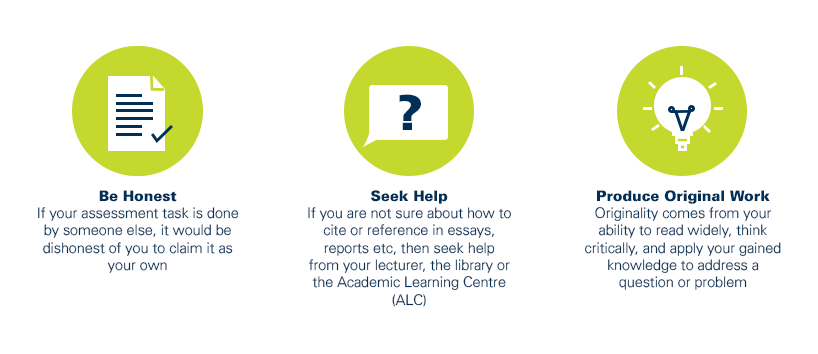
As a CQUniversity student you are expected to act honestly in all aspects of your academic work.
Any assessable work undertaken or submitted for review or assessment must be your own work. Assessable work is any type of work you do to meet the assessment requirements in the unit, including draft work submitted for review and feedback and final work to be assessed.
When you use the ideas, words or data of others in your assessment, you must thoroughly and clearly acknowledge the source of this information by using the correct referencing style for your unit. Using others’ work without proper acknowledgement may be considered a form of intellectual dishonesty.
Participating honestly, respectfully, responsibly, and fairly in your university study ensures the CQUniversity qualification you earn will be valued as a true indication of your individual academic achievement and will continue to receive the respect and recognition it deserves.
As a student, you are responsible for reading and following CQUniversity’s policies, including the Student Academic Integrity Policy and Procedure. This policy sets out CQUniversity’s expectations of you to act with integrity, examples of academic integrity breaches to avoid, the processes used to address alleged breaches of academic integrity, and potential penalties.
What is a breach of academic integrity?
A breach of academic integrity includes but is not limited to plagiarism, self-plagiarism, collusion, cheating, contract cheating, and academic misconduct. The Student Academic Integrity Policy and Procedure defines what these terms mean and gives examples.
Why is academic integrity important?
A breach of academic integrity may result in one or more penalties, including suspension or even expulsion from the University. It can also have negative implications for student visas and future enrolment at CQUniversity or elsewhere. Students who engage in contract cheating also risk being blackmailed by contract cheating services.
Where can I get assistance?
For academic advice and guidance, the Academic Learning Centre (ALC) can support you in becoming confident in completing assessments with integrity and of high standard.
What can you do to act with integrity?