Overview
In this unit, you will focus on examining, diagnosing and managing common sports injury related conditions. You will advance your understanding in a range of management topics related to the athletic population including injury prevention, advice on healthy lifestyles, self-managed care, rehabilitation, and treatment options. This unit will assist you with your clinical development in the student clinic by addressing the importance of integrating knowledge and skills to support clinical decision-making for this special population.
Details
Pre-requisites or Co-requisites
Pre-Requisite: CHIR20009 Clinical Practice 4 and CHIR20010 Advanced Clinical Development 1 Co-requisite: CHIR20011 Clinical Practice 5
Important note: Students enrolled in a subsequent unit who failed their pre-requisite unit, should drop the subsequent unit before the census date or within 10 working days of Fail grade notification. Students who do not drop the unit in this timeframe cannot later drop the unit without academic and financial liability. See details in the Assessment Policy and Procedure (Higher Education Coursework).
Offerings For Term 2 - 2026
Attendance Requirements
All on-campus students are expected to attend scheduled classes - in some units, these classes are identified as a mandatory (pass/fail) component and attendance is compulsory. International students, on a student visa, must maintain a full time study load and meet both attendance and academic progress requirements in each study period (satisfactory attendance for International students is defined as maintaining at least an 80% attendance record).
Recommended Student Time Commitment
Each 6-credit Postgraduate unit at CQUniversity requires an overall time commitment of an average of 12.5 hours of study per week, making a total of 150 hours for the unit.
Class Timetable
Assessment Overview
Assessment Grading
This is a graded unit: your overall grade will be calculated from the marks or grades for each assessment task, based on the relative weightings shown in the table above. You must obtain an overall mark for the unit of at least 50%, or an overall grade of 'pass' in order to pass the unit. If any 'pass/fail' tasks are shown in the table above they must also be completed successfully ('pass' grade). You must also meet any minimum mark requirements specified for a particular assessment task, as detailed in the 'assessment task' section (note that in some instances, the minimum mark for a task may be greater than 50%). Consult the University's Grades and Results Policy for more details of interim results and final grades.
All University policies are available on the CQUniversity Policy site.
You may wish to view these policies:
- Grades and Results Policy
- Assessment Policy and Procedure (Higher Education Coursework)
- Review of Grade Procedure
- Student Academic Integrity Policy and Procedure
- Academic Progression Policy and Procedure
- Student Refund and Credit Balance Policy and Procedure
- Complaints Policy and Procedure
- Information and Communications Technology Acceptable Use Policy and Procedure
This list is not an exhaustive list of all University policies. The full list of University policies are available on the CQUniversity Policy site.
Feedback, Recommendations and Responses
Every unit is reviewed for enhancement each year. At the most recent review, the following staff and student feedback items were identified and recommendations were made.
Feedback from In person
Increase practical sessions and include a sports extremity adjustment component to enhance hands-on learning.
It is recommended that the unit coordinator present a workshop that covers chiropractic sports extremity adjusting in the practical sessions.
- Explain the relationship between normal and abnormal morphology of a clinical condition according to its aetiology, epidemiology, pathophysiology and treatment options
- Interpret findings and formulate a diagnosis, clinical impression, management plan and prognosis from a case history and physical assessment, taking into consideration patient safety and any contraindications
- Apply the appropriate chiropractic approach to treatment (within the scope of practice) that includes technique/skills, exercise/rehabilitation, health promotion, prevention, lifestyle advice and self-managed care in a professional and ethical way in accordance to the chiropractic code of conduct and professional standards
This is a specific exposure unit to assist the student develop their individualised pathway towards strengthening the majority of elements and performance indicators of CCEA’s Accreditation Standards: Unit 6 Patient Assessment, Unit 7 Diagnostic Decision Making, Unit 8 Planning of Patient Care, Unit 9 Implementation of Care, and Unit 3 Professional Interaction. There will be some elements addressed from Unit 10 Disease Prevention and Health Promotion and Unit 11 Professional Scientific Development.
Alignment of Assessment Tasks to Learning Outcomes
| Assessment Tasks | Learning Outcomes | ||
|---|---|---|---|
| 1 | 2 | 3 | |
| 1 - On-campus Activity - 0% | |||
| 2 - Portfolio - 25% | |||
| 3 - Portfolio - 25% | |||
| 4 - In-class Test(s) - 50% | |||
Alignment of Graduate Attributes to Learning Outcomes
| Graduate Attributes | Learning Outcomes | ||
|---|---|---|---|
| 1 | 2 | 3 | |
| 1 - Knowledge | |||
| 2 - Communication | |||
| 3 - Cognitive, technical and creative skills | |||
| 4 - Research | |||
| 5 - Self-management | |||
| 6 - Ethical and Professional Responsibility | |||
| 7 - Leadership | |||
| 8 - First Nations Knowledges | |||
| 9 - Aboriginal and Torres Strait Islander Cultures | |||
Textbooks
There are no required textbooks.
IT Resources
- CQUniversity Student Email
- Internet
- Unit Website (Moodle)
All submissions for this unit must use the referencing style: Vancouver
For further information, see the Assessment Tasks.
m.fernandez@cqu.edu.au
Week 1
Begin Date: 13 Jul 2026Module/Topic
Lecture and Tutorial:
Sport and Exercise Medicine Introduction
Concussion
Neck pain
Chapter
Relevant reading and content will be available on Moodle
Brukner & Khan's Clinical Sports Medicine: Injuries
Events and Submissions/Topic
Week 2
Begin Date: 20 Jul 2026Module/Topic
Lecture and Tutorial:
Upper limb injuries
Chapter
Relevant reading and content will be available on Moodle
Brukner & Khan's Clinical Sports Medicine: Injuries
Events and Submissions/Topic
Week 3
Begin Date: 27 Jul 2026Module/Topic
Lecture and Tutorial:
Trunk, abdominal and thoracic spine injuries
Chapter
Relevant reading and content will be available on Moodle
Brukner & Khan's Clinical Sports Medicine: Injuries
Events and Submissions/Topic
Week 4
Begin Date: 03 Aug 2026Module/Topic
Lecture and Tutorial:
Lumbar spine and pelvic injuries
Chapter
Relevant reading and content will be available on Moodle
Brukner & Khan's Clinical Sports Medicine: Injuries
Events and Submissions/Topic
Week 5
Begin Date: 10 Aug 2026Module/Topic
Lecture and Tutorial:
Lower limb injuries
Chapter
Relevant reading and content will be available on Moodle
Brukner & Khan's Clinical Sports Medicine: Injuries
Events and Submissions/Topic
Assessment 1: Portfolio – Video-based and Research-informed Clinical Reasoning
Portfolio - Video-based and research-informed clinical reasoning assessment Due: Week 5 Friday (14 Aug 2026) 11:59 pm AEST
Week 6
Begin Date: 17 Aug 2026Module/Topic
Lecture and Tutorial:
Return to sport / play
Chapter
Relevant reading and content will be available on Moodle
Brukner & Khan's Clinical Sports Medicine: Injuries
Events and Submissions/Topic
Vacation Week
Begin Date: 24 Aug 2026Module/Topic
Chapter
Events and Submissions/Topic
Week 7
Begin Date: 31 Aug 2026Module/Topic
Lecture and Tutorial:
Heat acclimatisation in (elite) athletes
Chapter
Relevant reading and content will be available on Moodle
Brukner & Khan's Clinical Sports Medicine: Injuries
Events and Submissions/Topic
Week 8
Begin Date: 07 Sep 2026Module/Topic
Lecture and Tutorial:
Mental health in athletes
Chapter
Relevant reading and content will be available on Moodle
Brukner & Khan's Clinical Sports Medicine: Injuries
Events and Submissions/Topic
Week 9
Begin Date: 14 Sep 2026Module/Topic
Lecture and Tutorial:
Paediatric sports injuries
Chapter
Relevant reading and content will be available on Moodle
Brukner & Khan's Clinical Sports Medicine: Injuries
Events and Submissions/Topic
Week 10
Begin Date: 21 Sep 2026Module/Topic
Lecture and Tutorial:
Masters athletes
Chapter
Relevant reading and content will be available on Moodle
Brukner & Khan's Clinical Sports Medicine: Injuries
Events and Submissions/Topic
Assessment 2: Portfolio – Video-Based Clinical Reflection
Portfolio - Video-Based Clinical Reflection Due: Week 10 Friday (25 Sept 2026) 11:59 pm AEST
Week 11
Begin Date: 28 Sep 2026Module/Topic
Lecture and Tutorial:
Disabled athletes
Chapter
Relevant reading and content will be available on Moodle
Brukner & Khan's Clinical Sports Medicine: Injuries
Events and Submissions/Topic
Assessment 3: On-campus activity (Sports Medicine Practical) – Session 1 (2 Oct 2026). Students must attend both sessions. Note: session may be at the student clinic.
Week 12
Begin Date: 05 Oct 2026Module/Topic
Lecture and Tutorial:
Injury prevention
Assessment 3
Chapter
Relevant reading and content will be available on Moodle
Brukner & Khan's Clinical Sports Medicine: Injuries
Events and Submissions/Topic
Assessment 3: On-campus activity (Sports Medicine Practical) – Session 2 (9 Oct 2026). Students must attend both sessions. Note: session may be at the student clinic.
On campus activity Due: Week 12 Friday (9 Oct 2026) 12:00 pm AEST
Exam Week
Begin Date: 12 Oct 2026Module/Topic
In class test
Chapter
Events and Submissions/Topic
Assessment 4: In class test
In class test Due: Exam Week Tuesday (13 Oct 2026) 9:00 am AEST
Vacation/Exam Week
Begin Date: 19 Oct 2026Module/Topic
Chapter
Events and Submissions/Topic
1 Portfolio
Task Description
Students will analyse a video stimulus and supporting research to evaluate a performance-based clinical concept relevant to running durability and apply it to a rehabilitation context.
Students will:
- analyse physiological mechanisms underpinning performance adaptation
- evaluate the clinical applicability of research findings
- develop a staged progression framework for return to running
- reflect on how their clinical reasoning informs future practice
Structure
Q1: Mechanism and performance analysis (300 words)
Q2: External validity and staged progression (300 words)
Q3: Reflective clinical application (150 words)
Total word count: ~750 words
Assessment Focus
- Analysis, evaluation, and synthesis of clinical and performance concepts
- Application to real-world sports medicine scenarios
- Development of clinically justified programming decisions
To help you use Generative AI tools in a transparent, flexible, and responsible way, you are encouraged to explore the following practical framework that guides your ethical and effective AI use in your assessment. For this assessment, descriptor 2 is applied.
AI Assessment scale tool descriptors:
2 AI PLANNING
Al may be used for pre-task activities such as brainstorming, outlining and initial research. This level focuses on the effective use of Al for planning, synthesis, and ideation, but assessments should emphasise the ability to develop and refine these ideas independently.
You may use Al for planning, idea development, and research. Your final submission should show how you have developed and refined these ideas.
Week 5 Friday (14 Aug 2026) 11:59 pm AEST
You are required to upload your assignment on Moodle
Week 7 Friday (4 Sept 2026)
You will receive formative feedback and your final result will be confirmed through Moodle.
Students will be assessed on their ability to:
- Analyse physiological mechanisms of performance adaptation
- Evaluate clinical relevance and risk
- Synthesise staged rehabilitation and performance progression
- Demonstrate reflective clinical reasoning
- Explain the relationship between normal and abnormal morphology of a clinical condition according to its aetiology, epidemiology, pathophysiology and treatment options
2 Portfolio
Task Description
Students will critically reflect on a staged clinical case presented across four videos (assessment, manipulation, soft tissue, and rehabilitation), analysing how clinical decisions are made and applied in practice.
Students will:
- identify and analyse key clinical moments within each stage of care
- interpret clinical reasoning underpinning assessment and treatment decisions
- evaluate the practical application of techniques in real-world settings
- reflect on skill development and future clinical practice
Structure
Q1: Assessment reflection (200 words)
Q2: Adjustment/manipulation reasoning (200 words)
Q3: Soft tissue modification audit (200 words)
Q4: Rehabilitation reflection and practice plan (200 words)
Total word count: 800 words
Assessment Focus
- Clinical reasoning across assessment, treatment, and rehabilitation
- Application of techniques to real-world practice
- Evaluation of clinical decision-making and modification
- Development of reflective and self-directed learning skills
To help you use Generative AI tools in a transparent, flexible, and responsible way, you are encouraged to explore the following practical framework that guides your ethical and effective AI use in your assessment. For this assessment, descriptor 2 is applied.
AI Assessment scale tool descriptors:
2 AI PLANNING
Al may be used for pre-task activities such as brainstorming, outlining and initial research. This level focuses on the effective use of Al for planning, synthesis, and ideation, but assessments should emphasise the ability to develop and refine these ideas independently.
You may use Al for planning, idea development, and research. Your final submission should show how you have developed and refined these ideas.
Week 10 Friday (25 Sept 2026) 11:59 pm AEST
You are required to upload your assignment on Moodle
Week 12 Friday (9 Oct 2026)
You will receive formative feedback and your final result will be confirmed through Moodle.
Students will be assessed on their ability to:
- engage accurately and specifically with video content
- apply clinical reasoning to assessment and treatment decisions
- evaluate practical feasibility and clinical application
- demonstrate reflective insight and professional development
- support responses using relevant evidence where appropriate
- Apply the appropriate chiropractic approach to treatment (within the scope of practice) that includes technique/skills, exercise/rehabilitation, health promotion, prevention, lifestyle advice and self-managed care in a professional and ethical way in accordance to the chiropractic code of conduct and professional standards
3 On-campus Activity
On campus activity will comprise 2 x 4-hour sports medicine practical workshops either on campus or at the CQU Health Clinic, in week 11 and concludes in 12.
AI Assessment scale tool descriptors:
1 No AI
The assessment is completed entirely without Al assistance in a controlled environment, ensuring that students rely solely on their existing knowledge, understanding, and skills
You must not use Al at any point during the assessment. You must demonstrate your core skills and knowledge.
The 72-hour grace period does not apply.
Week 12 Friday (9 Oct 2026) 12:00 pm AEST
Final on-campus assessment occurs during the Week 12 practical session. Attendance and performance across both scheduled sessions are required for completion.
Vacation/Exam Week Friday (23 Oct 2026)
Pass / Fail grade.
This assessment task relates to patient safety, contraindications, diagnostic interpretation, clinical impression, management plan and prognosis from a case history (or histories) and physical assessment(s).
You will be asked to demonstrate skill proficiency at the end of the practical classes (e.g., strapping, concussion assessment).
Final assessment is based on performance across both sessions.
No submission method provided.
- Interpret findings and formulate a diagnosis, clinical impression, management plan and prognosis from a case history and physical assessment, taking into consideration patient safety and any contraindications
4 In-class Test(s)
This in class test will be undertaken in a CQUni computer lab on whichever campus that you are enrolled. The test will involve a mix of question types including multiple choice, true/false and matching styles. There will be short answer questions as well.
The test will assess all theoretical content taught across weeks 1-12.
AI Assessment scale tool descriptor to be adopted:
1 No Gen AI
The assessment is completed entirely without Al assistance in a controlled environment, ensuring that students rely solely on their existing knowledge, understanding, and skills
You must not use Al at any point during the assessment. You must demonstrate your core skills and knowledge.
The 72-hour grace period does not apply.
Exam Week Tuesday (13 Oct 2026) 9:00 am AEST
Vacation/Exam Week Friday (23 Oct 2026)
The assessment criteria comprises all unit learning outcomes and will involve selecting or providing the most accurate and correct answers to the questions posed in this in class test.
For final time and location, refer to the CQUni timetable.
- Explain the relationship between normal and abnormal morphology of a clinical condition according to its aetiology, epidemiology, pathophysiology and treatment options
- Interpret findings and formulate a diagnosis, clinical impression, management plan and prognosis from a case history and physical assessment, taking into consideration patient safety and any contraindications
- Apply the appropriate chiropractic approach to treatment (within the scope of practice) that includes technique/skills, exercise/rehabilitation, health promotion, prevention, lifestyle advice and self-managed care in a professional and ethical way in accordance to the chiropractic code of conduct and professional standards
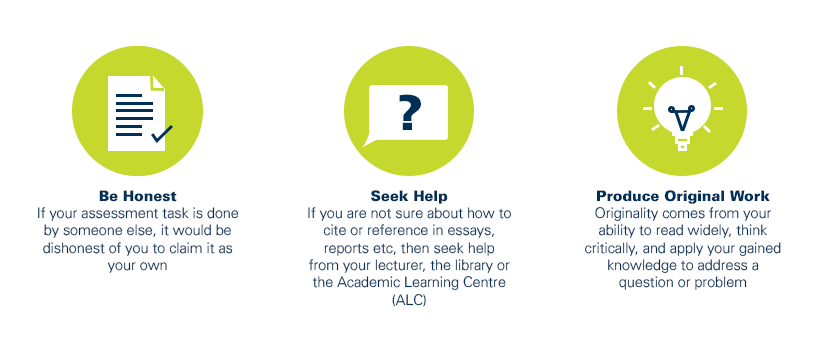
As a CQUniversity student you are expected to act honestly in all aspects of your academic work.
Any assessable work undertaken or submitted for review or assessment must be your own work. Assessable work is any type of work you do to meet the assessment requirements in the unit, including draft work submitted for review and feedback and final work to be assessed.
When you use the ideas, words or data of others in your assessment, you must thoroughly and clearly acknowledge the source of this information by using the correct referencing style for your unit. Using others’ work without proper acknowledgement may be considered a form of intellectual dishonesty.
Participating honestly, respectfully, responsibly, and fairly in your university study ensures the CQUniversity qualification you earn will be valued as a true indication of your individual academic achievement and will continue to receive the respect and recognition it deserves.
As a student, you are responsible for reading and following CQUniversity’s policies, including the Student Academic Integrity Policy and Procedure. This policy sets out CQUniversity’s expectations of you to act with integrity, examples of academic integrity breaches to avoid, the processes used to address alleged breaches of academic integrity, and potential penalties.
What is a breach of academic integrity?
A breach of academic integrity includes but is not limited to plagiarism, self-plagiarism, collusion, cheating, contract cheating, and academic misconduct. The Student Academic Integrity Policy and Procedure defines what these terms mean and gives examples.
Why is academic integrity important?
A breach of academic integrity may result in one or more penalties, including suspension or even expulsion from the University. It can also have negative implications for student visas and future enrolment at CQUniversity or elsewhere. Students who engage in contract cheating also risk being blackmailed by contract cheating services.
Where can I get assistance?
For academic advice and guidance, the Academic Learning Centre (ALC) can support you in becoming confident in completing assessments with integrity and of high standard.
What can you do to act with integrity?