Overview
The global food system faces a range of economic, social, political, and environmental challenges. In this unit you will explore emerging challenges in agricultural systems in Australia and around the world, and assess opportunities for development of sustainable management solutions. Case studies will be drawn from a range of contexts across the globe, with a particular emphasis on resource-limited settings, including low- and middle-income countries. You will explore the effects of resource availability and management actions on primary production and discuss the social, economic, political, and ecological dimensions associated with them. You will undertake an investigation into a current challenge confronting a food or fibre production system and offer practical strategies for sustainable agricultural systems.
Details
Pre-requisites or Co-requisites
Minimum of 72 credit points
Important note: Students enrolled in a subsequent unit who failed their pre-requisite unit, should drop the subsequent unit before the census date or within 10 working days of Fail grade notification. Students who do not drop the unit in this timeframe cannot later drop the unit without academic and financial liability. See details in the Assessment Policy and Procedure (Higher Education Coursework).
Offerings For Term 1 - 2026
Attendance Requirements
All on-campus students are expected to attend scheduled classes - in some units, these classes are identified as a mandatory (pass/fail) component and attendance is compulsory. International students, on a student visa, must maintain a full time study load and meet both attendance and academic progress requirements in each study period (satisfactory attendance for International students is defined as maintaining at least an 80% attendance record).
Recommended Student Time Commitment
Each 6-credit Undergraduate unit at CQUniversity requires an overall time commitment of an average of 12.5 hours of study per week, making a total of 150 hours for the unit.
Class Timetable
Assessment Overview
Assessment Grading
This is a graded unit: your overall grade will be calculated from the marks or grades for each assessment task, based on the relative weightings shown in the table above. You must obtain an overall mark for the unit of at least 50%, or an overall grade of 'pass' in order to pass the unit. If any 'pass/fail' tasks are shown in the table above they must also be completed successfully ('pass' grade). You must also meet any minimum mark requirements specified for a particular assessment task, as detailed in the 'assessment task' section (note that in some instances, the minimum mark for a task may be greater than 50%). Consult the University's Grades and Results Policy for more details of interim results and final grades.
All University policies are available on the CQUniversity Policy site.
You may wish to view these policies:
- Grades and Results Policy
- Assessment Policy and Procedure (Higher Education Coursework)
- Review of Grade Procedure
- Student Academic Integrity Policy and Procedure
- Academic Progression Policy and Procedure
- Student Refund and Credit Balance Policy and Procedure
- Complaints Policy and Procedure
- Information and Communications Technology Acceptable Use Policy and Procedure
This list is not an exhaustive list of all University policies. The full list of University policies are available on the CQUniversity Policy site.
Feedback, Recommendations and Responses
Every unit is reviewed for enhancement each year. At the most recent review, the following staff and student feedback items were identified and recommendations were made.
Feedback from Unit Coordinator Reflections
The unit covers a broad range of topics with limited time spent examining ways that graduates may use the knowledge from the unit to contribute to more sustainable practices.
Some of the content in the unit could be presented as prerecorded material, with more class time spent working through case studies of application of sustainability concepts and principles in the tasks that graduates will perform in roles within industry.
Feedback from SUTE
More practical activities
The possibility of mailed-out resources or a residential school to facilitate more hands-on practical activities should be explored for feasibility and impact.
Feedback from Unit Coordinator Reflections
Change in Assessment
The Quiz Assessment should be changed to a presentation, discussion board or written assessment.
- Evaluate how challenges facing the global food system are impacting agricultural management actions
- Integrate scientific knowledge for the development of sustainable management solutions for the cropping or livestock industry
- Develop solutions to the complex challenges facing agricultural systems.
Alignment of Assessment Tasks to Learning Outcomes
| Assessment Tasks | Learning Outcomes | ||
|---|---|---|---|
| 1 | 2 | 3 | |
| 1 - Online Test - 30% | |||
| 2 - Case Study - 20% | |||
| 3 - Report - 50% | |||
Alignment of Graduate Attributes to Learning Outcomes
| Graduate Attributes | Learning Outcomes | ||
|---|---|---|---|
| 1 | 2 | 3 | |
| 1 - Communication | |||
| 2 - Problem Solving | |||
| 3 - Critical Thinking | |||
| 4 - Information Literacy | |||
| 5 - Team Work | |||
| 6 - Information Technology Competence | |||
| 7 - Cross Cultural Competence | |||
| 8 - Ethical practice | |||
| 9 - Social Innovation | |||
| 10 - First Nations Knowledges | |||
| 11 - Aboriginal and Torres Strait Islander Cultures | |||
Textbooks
There are no required textbooks.
IT Resources
- CQUniversity Student Email
- Internet
- Unit Website (Moodle)
All submissions for this unit must use the referencing styles below:
For further information, see the Assessment Tasks.
s.sinai@cqu.edu.au
Week 1: The global picture: crisis, opportunity and the Sustainable Development Agenda.
Begin Date: 09 Mar 2026Module/Topic
Introduction to Sustainable Agricultural Development: Local and Global
Chapter
Readings will be provided on Moodle
Events and Submissions/Topic
Week 2: International Agricultural Development and Global Food Security
Begin Date: 16 Mar 2026Module/Topic
International Agricultural Development and Global Food Security (including nutrition sensitive agriculture).
Chapter
Readings will be provided on Moodle
Events and Submissions/Topic
Week 3: Biophysical and Socioeconomic Interactions in Agriculture
Begin Date: 23 Mar 2026Module/Topic
The History of Biophysical and Socioeconomic interactions in agriculture, highlighting the evolution of current agricultural system shaped by millennia of these interactions.
Chapter
Readings will be provided on Moodle
Events and Submissions/Topic
Week 4: Biophysical and Socioeconomic Dimensions of Contemporary Agricultural Systems
Begin Date: 30 Mar 2026Module/Topic
Examination of Biophysical and Socioeconomic Dimensions of Contemporary Agricultural Systems using case studies
Chapter
Readings will be provided on Moodle
Events and Submissions/Topic
Week 5: Feeding 10 Billion
Begin Date: 06 Apr 2026Module/Topic
How to achieve food security into the 2080s when the global population will exceed 10 billion people
Chapter
Readings will be provided on Moodle
Events and Submissions/Topic
Assessment 1 Due: The online test will open at 9AM on Monday of Week 5 and close by 5PM on Friday of Week 5.
Week 6: Case Study 1: Boosting northern Australia’s agricultural capacity
Begin Date: 13 Apr 2026Module/Topic
Boosting northern Australia’s agricultural capacity
Chapter
Readings will be provided on Moodle
Events and Submissions/Topic
Assessment 2 Due: Weekly case study participation and discussion board post for Week 6 due by 5PM on Friday of Week 7.
Vacation Week
Begin Date: 20 Apr 2026Module/Topic
Chapter
Readings will be provided on Moodle
Events and Submissions/Topic
Week 7: Case Study 2: Energy Challenges in Australian Agriculture
Begin Date: 27 Apr 2026Module/Topic
Energy Challenges in Australian Agriculture
Chapter
Readings will be provided on Moodle
Events and Submissions/Topic
Assessment 2 Due: Weekly case study participation and discussion board post for Week 7 due by 5PM on Friday of Week 8.
Week 8: Case Study 3: Enhancing Indonesia’s Livestock Sector
Begin Date: 04 May 2026Module/Topic
Growing Indonesia’s Dairy Sector
Chapter
Readings will be provided on Moodle
Events and Submissions/Topic
Assessment 2 Due: Weekly case study participation and discussion board post for Week 8 due by 5PM on Friday of Week 9.
Week 9: Case Study 4: Post flood recovery in Queensland agriculture
Begin Date: 11 May 2026Module/Topic
Post flood recovery in Queensland agriculture
Chapter
Readings will be provided on Moodle
Events and Submissions/Topic
Assessment 2 Due: Weekly case study participation and discussion board post for Week 9 due by 5PM on Friday of Week 10.
Week 10: Case Study 5: Horticulture in the Pacific
Begin Date: 18 May 2026Module/Topic
Supporting commercial horticulture production and marketing in the Indo-Pacific
Chapter
Readings will be provided on Moodle
Events and Submissions/Topic
Assessment 2 Due: Weekly case study participation and discussion board post for Week 10 due by 5PM on Friday of Week 11.
Week 11: Case Study 6: Circular economy models in agriculture
Begin Date: 25 May 2026Module/Topic
Circular economy models in agriculture – making money from waste
Chapter
Readings will be provided on Moodle
Events and Submissions/Topic
Assessment 2 Due: Weekly case study participation and discussion board post for Week 11 due by 5PM on Friday of Week 12.
Week 12: Case Study 7: Improving agricultural water use efficiency in the Middle East and Australia
Begin Date: 01 Jun 2026Module/Topic
Improving agricultural water use efficiency in the Middle East and Australia
Chapter
Readings will be provided on Moodle
Events and Submissions/Topic
Assessment 2 Due: Weekly case study participation and discussion board post for Week 12 due by 5PM on Friday of Exam Week.
Exam Week
Begin Date: 08 Jun 2026Module/Topic
Chapter
Events and Submissions/Topic
Vacation/Exam Week
Begin Date: 15 Jun 2026Module/Topic
Chapter
Events and Submissions/Topic
1 Online Test
Assessment 1: Online Test will assess your understanding of the topics in Weeks 1 - 4. It will be administered as a test through Moodle in Week 5. You will have two hours to complete the test. You will be allowed one attempt at this assessment. There are 30 multiple choice questions each worth one (1) mark.
Use of Generative artificial intelligence (GenAI)
Level 2: AI may be used for pre-task activities such as brainstorming, outlining and initial research. This level focuses on the effective use of AI for planning, synthesis and ideation, but assessments should emphasise the ability to develop and refine these ideas independently. You may use AI for planning, idea development and research. Your final submission should show how you have developed and refined these ideas.
Please note that the 72-hour grace period is not permitted for this assessment. If you require additional time to complete this task you will need to apply for an extension through Moodle.
The online test will open at 9AM on Monday of Week 5 and close by 5PM on Friday of Week 5.
Results of the online test will be returned within 10 working days after the test has closed
You will be assessed on your knowledge of concepts covered in Weeks 1 - 4, as reflected by correct responses in the Online Test.
- Evaluate how challenges facing the global food system are impacting agricultural management actions
2 Case Study
Assessment 2: Agricultural Systems Case Study has two parts.
In Assessment 2 you are to work through the AGRI13009 case studies in weeks 6 to 12 during the weekly tutorial or one of two alternative online sessions.
In Part A of Assessment 2 you are required to participate in the case study discussion during the tutorials or one of two alternative online sessions. These sessions will explore a real or hypothetical account related to the weekly content. You will then analyse the case, respond to questions and provide your personal evaluation of the case. Part A is worth 10/20, with one mark for participation in each of the seven (7) weekly sessions, and additional marks based on discussion leadership.
In Part B of Assessment 2 you will be assigned to a particular regional group (South and Central Asia, Middle East, Sub-Saharan Africa, The Pacific, South East Asia, or Latin America) and post a 200 - 300 word response to a question on that week's case study. The question will draw on how lessons from the case study relate to a challenge in the given region. You will also be required to engage with the responses of other students. These questions will be posted in each relevant week through Moodle. Part B is worth 10/20.
Use of Generative artificial intelligence (GenAI)
Level 2: AI may be used for pre-task activities such as brainstorming, outlining and initial research. This level focuses on the effective use of AI for planning, synthesis and ideation, but assessments should emphasise the ability to develop and refine these ideas independently. You may use AI for planning, idea development and research. Your final submission should show how you have developed and refined these ideas.
Due Weekly in Weeks 6 to 12 - live session participation and weekly discussion board.
Vacation/Exam Week Wednesday (17 June 2026)
You will be assessed on:
- Your understanding of agricultural production systems
- Your research skills and critical analysis of the literature
- Your understanding of how challenges facing the global food system are impacting agricultural management actions
- Your ability to integrate scientific knowledge for the development of sustainable management solutions for the cropping and livestock industries
- Your understanding of political, cultural, social and economic factors related to agricultural production
- Your ability to resolve complex challenges with insightful use of evidence
- Your written communication
- Evaluate how challenges facing the global food system are impacting agricultural management actions
- Integrate scientific knowledge for the development of sustainable management solutions for the cropping or livestock industry
3 Report
In Assessment 3: Agricultural Systems Challenge Report you will select one from a list of global agriculture industry challenges and outline strategies for overcoming the selected challenge. In this assessment, you are required to conduct a desktop review of the academic literature to identify and describe the challenges as well as to provide evidence to support the solutions to the challenge that you have identified.
The word count for Assessment 3 is up to 3000 words, not including headings, subheadings, references, tables, figure legends and appendices.
Use of Generative artificial intelligence (GenAI)
Level 2: AI may be used for pre-task activities such as brainstorming, outlining and initial research. This level focuses on the effective use of AI for planning, synthesis and ideation, but assessments should emphasise the ability to develop and refine these ideas independently. You may use AI for planning, idea development and research. Your final submission should show how you have developed and refined these ideas.
Exam Week Tuesday (9 June 2026) 11:45 pm AEST
- Your description of the relevant production system challenge
- Your analysis of innovations and options for addressing challenges in food production systems
- Your development of viable solutions to overcome the relevant challenges
- Your use of reputable sources of evidence to support your report
- Your written communication skills
A marking rubric will be available on Moodle.
- Integrate scientific knowledge for the development of sustainable management solutions for the cropping or livestock industry
- Develop solutions to the complex challenges facing agricultural systems.
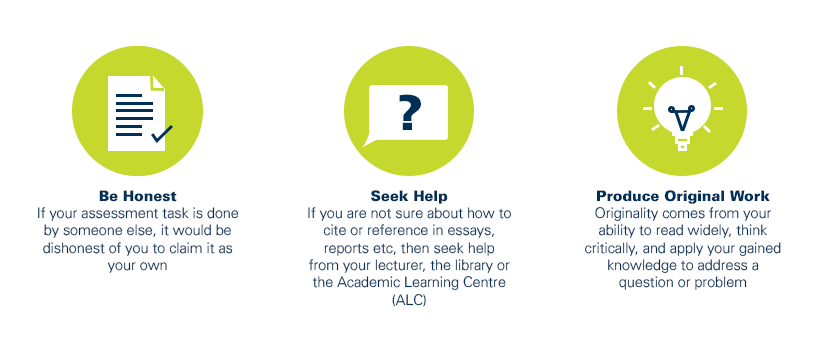
As a CQUniversity student you are expected to act honestly in all aspects of your academic work.
Any assessable work undertaken or submitted for review or assessment must be your own work. Assessable work is any type of work you do to meet the assessment requirements in the unit, including draft work submitted for review and feedback and final work to be assessed.
When you use the ideas, words or data of others in your assessment, you must thoroughly and clearly acknowledge the source of this information by using the correct referencing style for your unit. Using others’ work without proper acknowledgement may be considered a form of intellectual dishonesty.
Participating honestly, respectfully, responsibly, and fairly in your university study ensures the CQUniversity qualification you earn will be valued as a true indication of your individual academic achievement and will continue to receive the respect and recognition it deserves.
As a student, you are responsible for reading and following CQUniversity’s policies, including the Student Academic Integrity Policy and Procedure. This policy sets out CQUniversity’s expectations of you to act with integrity, examples of academic integrity breaches to avoid, the processes used to address alleged breaches of academic integrity, and potential penalties.
What is a breach of academic integrity?
A breach of academic integrity includes but is not limited to plagiarism, self-plagiarism, collusion, cheating, contract cheating, and academic misconduct. The Student Academic Integrity Policy and Procedure defines what these terms mean and gives examples.
Why is academic integrity important?
A breach of academic integrity may result in one or more penalties, including suspension or even expulsion from the University. It can also have negative implications for student visas and future enrolment at CQUniversity or elsewhere. Students who engage in contract cheating also risk being blackmailed by contract cheating services.
Where can I get assistance?
For academic advice and guidance, the Academic Learning Centre (ALC) can support you in becoming confident in completing assessments with integrity and of high standard.
What can you do to act with integrity?