Overview
This unit introduces the principles and practices relevant to the social licence to operate in the agricultural industry. You will explore how agricultural industries are dealing with the increase in global food and fibre demand while facing social and political scrutiny to cease or alter certain practices. In this unit you will examine how the agricultural industry can respond to these pressures to maintain their social licence to operate. You will use case studies to consider a range of current and emerging social licence challenges in agriculture such as animal husbandry practices, water use and contamination, environmental stewardship and the use of agri-chemicals. You will gain an understanding of the levels of the social licence to operate and the tools to measure this. You will also learn how to develop a plan for an agricultural business which will allow them to maintain their social licence to operate in a changing world.
Details
Pre-requisites or Co-requisites
Completion of at least 48 credit points.
Important note: Students enrolled in a subsequent unit who failed their pre-requisite unit, should drop the subsequent unit before the census date or within 10 working days of Fail grade notification. Students who do not drop the unit in this timeframe cannot later drop the unit without academic and financial liability. See details in the Assessment Policy and Procedure (Higher Education Coursework).
Offerings For Term 1 - 2026
Attendance Requirements
All on-campus students are expected to attend scheduled classes - in some units, these classes are identified as a mandatory (pass/fail) component and attendance is compulsory. International students, on a student visa, must maintain a full time study load and meet both attendance and academic progress requirements in each study period (satisfactory attendance for International students is defined as maintaining at least an 80% attendance record).
Recommended Student Time Commitment
Each 6-credit Undergraduate unit at CQUniversity requires an overall time commitment of an average of 12.5 hours of study per week, making a total of 150 hours for the unit.
Class Timetable
Assessment Overview
Assessment Grading
This is a graded unit: your overall grade will be calculated from the marks or grades for each assessment task, based on the relative weightings shown in the table above. You must obtain an overall mark for the unit of at least 50%, or an overall grade of 'pass' in order to pass the unit. If any 'pass/fail' tasks are shown in the table above they must also be completed successfully ('pass' grade). You must also meet any minimum mark requirements specified for a particular assessment task, as detailed in the 'assessment task' section (note that in some instances, the minimum mark for a task may be greater than 50%). Consult the University's Grades and Results Policy for more details of interim results and final grades.
All University policies are available on the CQUniversity Policy site.
You may wish to view these policies:
- Grades and Results Policy
- Assessment Policy and Procedure (Higher Education Coursework)
- Review of Grade Procedure
- Student Academic Integrity Policy and Procedure
- Academic Progression Policy and Procedure
- Student Refund and Credit Balance Policy and Procedure
- Complaints Policy and Procedure
- Information and Communications Technology Acceptable Use Policy and Procedure
This list is not an exhaustive list of all University policies. The full list of University policies are available on the CQUniversity Policy site.
Feedback, Recommendations and Responses
Every unit is reviewed for enhancement each year. At the most recent review, the following staff and student feedback items were identified and recommendations were made.
Feedback from SUTE feedback
A text to accompany the podcast resource
A script or accompanying text should be made available for the podcast resource for those students who prefer text-based resources.
Feedback from SUTE feedback
Adjustments to Assessment 1 - Discussion Board
The discussion board activity in Assessment 1 should be adjusted to allow for more in-depth discussions/debates. This could take the form of less frequent (fortnightly) discussions with additional requirements (such as the requirement for student to post multiple posts), thus allowing the discussions to be more conversational.
- Debate the social implications of contentious agricultural practices
- Explain the principles of a social licence to operate
- Evaluate the social obligations of individuals and businesses in the agricultural supply chain
- Apply the concepts and principles of a social licence to operate to a business case in agriculture
- Develop a plan for an agricultural business to maintain their social licence to operate.
Alignment of Assessment Tasks to Learning Outcomes
| Assessment Tasks | Learning Outcomes | ||||
|---|---|---|---|---|---|
| 1 | 2 | 3 | 4 | 5 | |
| 1 - Group Discussion - 40% | |||||
| 2 - Essay - 30% | |||||
| 3 - Presentation - 30% | |||||
Alignment of Graduate Attributes to Learning Outcomes
| Graduate Attributes | Learning Outcomes | ||||
|---|---|---|---|---|---|
| 1 | 2 | 3 | 4 | 5 | |
| 1 - Communication | |||||
| 2 - Problem Solving | |||||
| 3 - Critical Thinking | |||||
| 4 - Information Literacy | |||||
| 5 - Team Work | |||||
| 6 - Information Technology Competence | |||||
| 7 - Cross Cultural Competence | |||||
| 8 - Ethical practice | |||||
| 9 - Social Innovation | |||||
| 10 - First Nations Knowledges | |||||
| 11 - Aboriginal and Torres Strait Islander Cultures | |||||
Textbooks
There are no required textbooks.
IT Resources
- CQUniversity Student Email
- Internet
- Unit Website (Moodle)
- Wordprocessing, spreadsheeting and powerpoint software; access to audio or video recording technology
All submissions for this unit must use the referencing styles below:
For further information, see the Assessment Tasks.
s.sinai@cqu.edu.au
Week 1
Begin Date: 09 Mar 2026Module/Topic
Introduction & History of the Social Licence to Operate in Agriculture
Chapter
Reading: How to Feed the World. Eise, J., Foster K. 2018. Washington: Island Press. Chapter 11. (Link to be provided via Moodle)
Events and Submissions/Topic
Assessment 1: Participation in discussion board
Week 2
Begin Date: 16 Mar 2026Module/Topic
The Urban Rural Divide in Social Licence
Chapter
Reading: Woodward (2017). "The Urban Rural Divide: How can the New Zealand Dairy Industry protect and better its social licence with New Zealand’s Urban Populations?" (Link to be provided via Moodle)
Events and Submissions/Topic
Assessment 1: Participation in discussion board
Week 3
Begin Date: 23 Mar 2026Module/Topic
Measuring the Social Licence to Operate
Chapter
Reading: Boutilier and Thomson (2011). “Modelling and measuring the social license to operate: Fruits of a dialogue between theory and practice.” (Link to be provided via Moodle)
Events and Submissions/Topic
Assessment 1: Participation in discussion board
Week 4
Begin Date: 30 Mar 2026Module/Topic
Losing Social Licence: Part 1
Chapter
Reading: Eckard and Clark (2018). "Potential solutions to the major greenhouse-gas issues facing Australasian dairy farming." (Link to be provided via Moodle)
Events and Submissions/Topic
Assessment 1: Participation in discussion board
Week 5
Begin Date: 06 Apr 2026Module/Topic
Losing Social Licence: Part 2
Chapter
Reading: Introduction Chapter of Ansell, Gibson and Salt (2016). "Learning from agri-environment schemes in Australia: Investing in biodiversity and other ecosystem services on farms." (Link to be provided via Moodle)
Events and Submissions/Topic
Assessment 1: Participation in discussion board
Week 6
Begin Date: 13 Apr 2026Module/Topic
The Role of Media: Part 1
Chapter
Reading: Grafton (2019). "Policy review of water reform in the Murray–Darling Basin, Australia: the “do's” and “do'nots”." (Link to be provided via Moodle)
Events and Submissions/Topic
Assessment 1: Participation in discussion board
Vacation Week
Begin Date: 20 Apr 2026Module/Topic
Chapter
Events and Submissions/Topic
Week 7
Begin Date: 27 Apr 2026Module/Topic
The Role of Media: Part 2
Chapter
Reading: Erica Hellerstein and Ken Fine: "A million tons of feces and an unbearable stench: life near industrial pig farms" in The Guardian Newspaper, 2017. (Link to be provided via Moodle)
Events and Submissions/Topic
Assessment 1: Participation in discussion board
Social Licence to Operate Article Due: Week 7 Friday (1 May 2026) 11:45 pm AEST
Week 8
Begin Date: 04 May 2026Module/Topic
Building Trust: Part 1
Chapter
Reading Cornish, Ashton, Raubenheimer and McGreevy. (2019). "Australian Consumers’ Knowledge and Concern for Animal Welfare in Food Production: Influences on Purchasing Intentions." (Link to be provided via Moodle)
Events and Submissions/Topic
Assessment 1: Participation in discussion board
Week 9
Begin Date: 11 May 2026Module/Topic
Building Trust: Part 2
Chapter
Bastian B, Loughnan S. Resolving the Meat-Paradox: A Motivational Account of Morally Troublesome Behavior and Its Maintenance. Personality and Social Psychology Review. 2017;21(3):278-299. doi:10.1177/1088868316647562
Events and Submissions/Topic
Assessment 1: Participation in discussion board
Week 10
Begin Date: 18 May 2026Module/Topic
Managing Crises: Case Studies in Live Export
Chapter
Reading: "Live Export - a chronology" - Parliament of Australia (Link to be provided via Moodle)
Events and Submissions/Topic
Assessment 1: Participation in discussion board
Week 11
Begin Date: 25 May 2026Module/Topic
Managing Crises: Case Studies in Labour Rights
Chapter
Reading: International Labour Organization (2019). "Activists welcome progress towards eradication of forced labour, child labour in Uzbekistan" (Link to be provided via Moodle)
Events and Submissions/Topic
Assessment 1: Participation in discussion board
Week 12
Begin Date: 01 Jun 2026Module/Topic
The Future of the Social Licence to Operate in Agriculture
Chapter
Reading: Portier, Armstrong, Baguley, et al (2016). "Differences in the carcinogenic evaluation of glyphosate between the International Agency for Research on Cancer (IARC) and the European Food Safety Authority (EFSA)" (Link to be provided via Moodle)
Events and Submissions/Topic
Assessment 1: Participation in discussion board
Assessment 3: Slides for Part A must be submitted at 11:45PM on Monday of Week 12. Presentations must be delivered live at an agreed day and time in Week 12 (see Moodle for more details). Part B will be completed at the end of the group presentation. Part C is due on Saturday of Week 12 at 11:45PM.
Exam Week
Begin Date: 08 Jun 2026Module/Topic
Chapter
Events and Submissions/Topic
Vacation/Exam Week
Begin Date: 15 Jun 2026Module/Topic
Chapter
Events and Submissions/Topic
1 Group Discussion
Assessment 1 (40%) is based on discussions with your peers. In weeks 1 - 3 you will participate in weekly whole-of-unit discussions on introductory topics related to the social licence to operate. In weeks 5 - 12 you will be placed into small discussion groups to participate in fortnightly debates based on statements relating to a topic covered in that fortnight (each fortnight will correspond to: weeks 5 and 6; weeks 7 and 8; weeks 9 and 10; and weeks 11 and 12). You will be assigned a position (for or against) the statement and must argue for your assigned position, even if you personally disagree with it. This assessment will allow you to gain a variety of perspectives on contentious agricultural issues. You must participate in the discussion boards by posting at least one 300 - 500 word post in each week's discussion thread. You may post more than once in order to advance the debate and discussion with your peers.
Use of Generative artificial intelligence (GenAI)
Level 2: AI may be used for pre-task activities such as brainstorming, outlining and initial research. This level focuses on the effective use of AI for planning, synthesis and ideation, but assessments should emphasise the ability to develop and refine these ideas independently. You may use AI for planning, idea development and research. Your final submission should show how you have developed and refined these ideas.
Please note that the 72-hour grace period is not permitted for this assessment. If you require additional time to complete this task you will need to apply for an extension through Moodle.
Due Weekly
Students will receive progressive feedback in weeks 3, 7 and 10, with final marks distributed in Exam Week.
In this assessment you will be marked on:
- Effective representation of your assigned position with respect to the statement
- The quality of your written communication, including persuasive writing and maintaining a respectful dialogue with your peers
- Use of evidence to support your statements (which must be referenced appropriately)
- Debate the social implications of contentious agricultural practices
2 Essay
Assessment 2 is a written assessment in the form of a 2000-word condensed journal article. In this assessment you will be provided with mock data results in the form of survey responses to questions related to the social licence to operate in agriculture. Using this mock data set, you are to write a paper in the form of a condensed journal article. You will need to provide an introduction, including a literature review to establish the context, relevance, and importance of the study within the existing academic landscape; usefully present this data in a results section; and provide a discussion to explain the significance of the data with respect to current academic understanding. Your paper should be structured as follows, with suggested word counts provided in parentheses:
1. Introduction (700 - 800 words)
2. Results (this is largely informed by the data set you are provided) (250 - 350 words)
3. Discussion (900 - 1000 words)
4. References
The word limit does not include headings, tables, figure legends and references. The word count of your paper should remain within 10% of the word limit (1800 to 2200 words).
The mock data will be emailed to you individually in week 3.
Use of Generative artificial intelligence (GenAI)
Level 3: AI may be used to help complete the task, including idea generation, drafting, feedback and refinement. Students should critically evaluate and modify the AI suggested outputs, demonstrating their understanding. You may use AI to assist with specific tasks such as drafting text, refining and evaluating your work. You must critically evaluate and modify any AI-generated content you use.
Week 7 Friday (1 May 2026) 11:45 pm AEST
Week 9 Friday (15 May 2026)
You will be marked on:
- Clear and professional written communication
- Ability to define the social licence to operate
- Strength of the introduction in establishing the context, relevance, and importance of the study within the existing academic landscape
- Meaningful and professional presentation of the results
- Analysis of the mock data
- Depth and strength of the discussion
- Ability to formulate conclusions
- Formatting and Referencing
A marking rubric will be available to you on Moodle
- Explain the principles of a social licence to operate
- Evaluate the social obligations of individuals and businesses in the agricultural supply chain
3 Presentation
Task Description
Assessment 3 is based on one of a selection of four scenarios. Each scenario contains details of a crisis facing an agribusiness or agricultural industry, which you will be representing. You will be provided with all of the specifications of the scenario.
Assessment 3 (30%) is comprised of three components: live presentation (group task: 20/30), response to questions (individual task: 5/30) and a self and peer assessment (individual task: 5/30). Only one member of the group should submit the slides for the presentation, but all students will need to be involved in the delivery of the live presentation. All students will need to submit their individual written report and self and peer assessment (SPA).
Part A: Group Presentation
Part A is worth 20 out of the total 30 marks available for this assessment.
Based on the selected scenario, you are to work in small groups (3-4 people) to develop a 20-minute presentation recommending the steps that the relevant agribusiness or industry should take to respond to the crisis, build trust and be granted a social licence to operate once again. You will be provided with all of the specifications of the scenario.
In the scenario provided, the corporation or industry you are presenting the recommendations to takes social licence very seriously and recognises that regaining a social licence is a vital part of their obligations to the community. As such, that corporation’s leadership team are willing to implement all of the measures that you and your team recommend in order to ensure that the crisis is managed, trust is rebuilt and a social licence is granted once more. They have issued you with a budget of $500 000 over the next three years to achieve this. They have asked your team to prepare a 20-minute presentation that must be presented in the following format:
1. Title.
2. Introduction to the presentation and summary of the crisis. Here you should also explain the concept of a social licence to operate.
3. Identify key stakeholder groups and the impacts of the crisis on them.
4. Strategy for measuring the impact of the crisis on the social licence to operate.
5. Suggestions on how the corporation will respond to the crisis in the short term (next 24 - 200 hours), medium term (1 to 6 months), and long term (6 to 24 months) to manage the crisis, rebuild trust and regain a social licence to operate, including any innovative strategies.
6. A budget for achieving what you have outlined
7. Conclusion.
8. References.
9. Statement of Contribution (Here you must outline the contributions of each group member to the presentation).
You may reference information from a variety of sources including peer-reviewed journal articles, survey data (gathered by others), government reports, consultant reports, media sources and other reliable sources. You must include at least 10 references.
You may present your presentation in first person plural (i.e. “we” “us”) or in third person. You must remain within 1 minute of the time limit (19 to 21 minutes).
Your presentation will be delivered live during an agreed upon time in Week 12, and will be recorded for marking and review purposes. All group members must be present during the presentation and each must contribute to the delivery of the presentation.
Part B: Individual Assessment, Response to Questions
Part B of Assessment 3 is an individual task based on the presentation. Each member of the group will be required to respond to at least two questions after the conclusion of the presentation. The questions may relate to any aspect of the presentation.
Part B is worth 5 out of the total 30 marks available for this assessment
Part C: Self and Peer Assessment
You will also be required to submit a Self and Peer Assessment for this assessment (Details on conducting the Self and Peer Assessment will be provided on Moodle). Part C is due on Saturday of Week 12 at 11:45PM.
Part C is worth 5 out of the total 30 marks available for this assessment.
Use of Generative artificial intelligence (GenAI)
Part A: Level 2: AI may be used for pre-task activities such as brainstorming, outlining and initial research. This level focuses on the effective use of AI for planning, synthesis and ideation, but assessments should emphasise the ability to develop and refine these ideas independently. You may use AI for planning, idea development and research. Your final submission should show how you have developed and refined these ideas.
Parts B and C: Level 1: The assessment is completed entirely without AI assistance in a controlled environment, ensuring that students rely solely on their existing knowledge, understanding, and skills. You must not use AI at any point during the assessment. You must demonstrate your core skills and knowledge.
Please note that the 72-hour grace period is not permitted for this assessment. If you require additional time to complete this task you will need to apply for an extension through Moodle.
Assessment 3: Slides for Part A must be submitted at 11:45PM on Monday of Week 12. Presentations must be delivered live at an agreed day and time in Week 12 (see Moodle for more details). Part B will be completed at the end of the group presentation. Part C is due on Saturday of Week 12 at 11:45PM.
Marking Rubrics will be available via Moodle.
For the presentation (Part A) you will be marked on:
- Clear, professional and appropriate oral communication
- Ability to define the social licence to operate
- Identification and discussion of relevant social licence to operate issues
- Effective explanation and justification of your farm's activities
- The quality of the various proposed community-related strategies
- Appropriate and clear budgeting
- Formatting and Presentation
For the individual task (Part B) you will be marked on:
-
Your ability to insightfully and clearly answer the questions
-
Clear and professional communication
-
The use of references to support your claims where necessary
- Explain the principles of a social licence to operate
- Evaluate the social obligations of individuals and businesses in the agricultural supply chain
- Apply the concepts and principles of a social licence to operate to a business case in agriculture
- Develop a plan for an agricultural business to maintain their social licence to operate.
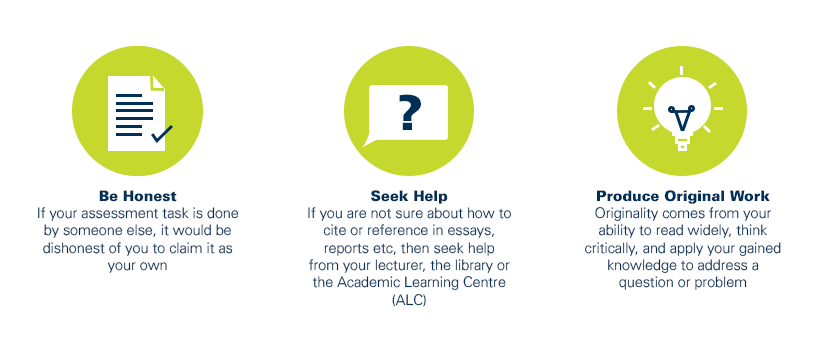
As a CQUniversity student you are expected to act honestly in all aspects of your academic work.
Any assessable work undertaken or submitted for review or assessment must be your own work. Assessable work is any type of work you do to meet the assessment requirements in the unit, including draft work submitted for review and feedback and final work to be assessed.
When you use the ideas, words or data of others in your assessment, you must thoroughly and clearly acknowledge the source of this information by using the correct referencing style for your unit. Using others’ work without proper acknowledgement may be considered a form of intellectual dishonesty.
Participating honestly, respectfully, responsibly, and fairly in your university study ensures the CQUniversity qualification you earn will be valued as a true indication of your individual academic achievement and will continue to receive the respect and recognition it deserves.
As a student, you are responsible for reading and following CQUniversity’s policies, including the Student Academic Integrity Policy and Procedure. This policy sets out CQUniversity’s expectations of you to act with integrity, examples of academic integrity breaches to avoid, the processes used to address alleged breaches of academic integrity, and potential penalties.
What is a breach of academic integrity?
A breach of academic integrity includes but is not limited to plagiarism, self-plagiarism, collusion, cheating, contract cheating, and academic misconduct. The Student Academic Integrity Policy and Procedure defines what these terms mean and gives examples.
Why is academic integrity important?
A breach of academic integrity may result in one or more penalties, including suspension or even expulsion from the University. It can also have negative implications for student visas and future enrolment at CQUniversity or elsewhere. Students who engage in contract cheating also risk being blackmailed by contract cheating services.
Where can I get assistance?
For academic advice and guidance, the Academic Learning Centre (ALC) can support you in becoming confident in completing assessments with integrity and of high standard.
What can you do to act with integrity?