Overview
In Environmental Physiology of Animals, you will learn about the limits placed on organisms by their physiology in both aquatic and terrestrial habitats, how organisms respond to environmental challenges, and how organisms have evolved to and are adapted to their ecological niche. This unit will cover topics such as the central nervous system and sensory system design, metabolism, respiration and energy supply, locomotion and allometric scaling, stress and the effects of capture and release, conservation physiology and extreme habitats. There is a strong focus on experimental physiology and incorporating theory and hands-on experience into practical classes during the Residential School, where you will conduct your own experiments. A fundamental knowledge of statistical design and analyses is assumed.
Details
Pre-requisites or Co-requisites
BIOL11100 or BIOL12112
Important note: Students enrolled in a subsequent unit who failed their pre-requisite unit, should drop the subsequent unit before the census date or within 10 working days of Fail grade notification. Students who do not drop the unit in this timeframe cannot later drop the unit without academic and financial liability. See details in the Assessment Policy and Procedure (Higher Education Coursework).
Offerings For Term 1 - 2026
Attendance Requirements
All on-campus students are expected to attend scheduled classes - in some units, these classes are identified as a mandatory (pass/fail) component and attendance is compulsory. International students, on a student visa, must maintain a full time study load and meet both attendance and academic progress requirements in each study period (satisfactory attendance for International students is defined as maintaining at least an 80% attendance record).
Recommended Student Time Commitment
Each 6-credit Undergraduate unit at CQUniversity requires an overall time commitment of an average of 12.5 hours of study per week, making a total of 150 hours for the unit.
Class Timetable
Assessment Overview
Assessment Grading
This is a graded unit: your overall grade will be calculated from the marks or grades for each assessment task, based on the relative weightings shown in the table above. You must obtain an overall mark for the unit of at least 50%, or an overall grade of 'pass' in order to pass the unit. If any 'pass/fail' tasks are shown in the table above they must also be completed successfully ('pass' grade). You must also meet any minimum mark requirements specified for a particular assessment task, as detailed in the 'assessment task' section (note that in some instances, the minimum mark for a task may be greater than 50%). Consult the University's Grades and Results Policy for more details of interim results and final grades.
All University policies are available on the CQUniversity Policy site.
You may wish to view these policies:
- Grades and Results Policy
- Assessment Policy and Procedure (Higher Education Coursework)
- Review of Grade Procedure
- Student Academic Integrity Policy and Procedure
- Academic Progression Policy and Procedure
- Student Refund and Credit Balance Policy and Procedure
- Complaints Policy and Procedure
- Information and Communications Technology Acceptable Use Policy and Procedure
This list is not an exhaustive list of all University policies. The full list of University policies are available on the CQUniversity Policy site.
Feedback, Recommendations and Responses
Every unit is reviewed for enhancement each year. At the most recent review, the following staff and student feedback items were identified and recommendations were made.
Feedback from T1, 2025 SUTE Teacher Evaluations
More allocated time on quizzes in the future would be advantageous.
Review the time allocated to complete online quizzes and adjust accordingly.
Feedback from T1, 2025 SUTE Teacher Evaluations
The unit provided great real world examples and excelled in challenging students to think in an inclusive environment during the residential school.
Continue to explore Environmental Physiology within a real-world context, and provide the opportunity for increased student participation, teamwork, and engagement.
- Examine the functioning and control of physiological systems in a range of animals and habitats
- Apply knowledge of physiological responses of animals to a range of environmental challenges
- Present, analyse and interpret physiological data
- Design experiments and apply a range of practical skills relevant to the study of environmental physiology.
Alignment of Assessment Tasks to Learning Outcomes
| Assessment Tasks | Learning Outcomes | |||
|---|---|---|---|---|
| 1 | 2 | 3 | 4 | |
| 1 - Online Quiz(zes) - 40% | ||||
| 2 - Presentation - 10% | ||||
| 3 - Practical Assessment - 50% | ||||
Alignment of Graduate Attributes to Learning Outcomes
| Graduate Attributes | Learning Outcomes | |||
|---|---|---|---|---|
| 1 | 2 | 3 | 4 | |
| 1 - Communication | ||||
| 2 - Problem Solving | ||||
| 3 - Critical Thinking | ||||
| 4 - Information Literacy | ||||
| 5 - Team Work | ||||
| 6 - Information Technology Competence | ||||
| 7 - Cross Cultural Competence | ||||
| 8 - Ethical practice | ||||
| 9 - Social Innovation | ||||
| 10 - First Nations Knowledges | ||||
| 11 - Aboriginal and Torres Strait Islander Cultures | ||||
Alignment of Assessment Tasks to Graduate Attributes
| Assessment Tasks | Graduate Attributes | ||||||||||
|---|---|---|---|---|---|---|---|---|---|---|---|
| 1 | 2 | 3 | 4 | 5 | 6 | 7 | 8 | 9 | 10 | 11 | |
| 1 - Online Quiz(zes) - 40% | |||||||||||
| 2 - Presentation - 10% | |||||||||||
| 3 - Practical Assessment - 50% | |||||||||||
Textbooks
There are no required textbooks.
IT Resources
- CQUniversity Student Email
- Internet
- Unit Website (Moodle)
All submissions for this unit must use the referencing style: Harvard (author-date)
For further information, see the Assessment Tasks.
a.carton@cqu.edu.au
Week 1
Begin Date: 09 Mar 2026Module/Topic
The Fundamentals of Environmental Physiology: Animals and Environments.
Chapter
Events and Submissions/Topic
Week 2
Begin Date: 16 Mar 2026Module/Topic
Energy, Metabolism and Temperature.
Chapter
Events and Submissions/Topic
Week 3
Begin Date: 23 Mar 2026Module/Topic
Stress.
Chapter
Events and Submissions/Topic
Week 4
Begin Date: 30 Mar 2026Module/Topic
The Curious Case of the Loss of Hemoglobin in Antarctic Icefish.
Chapter
Events and Submissions/Topic
Week 6
Begin Date: 06 Apr 2026Module/Topic
Residential School Recap and Data Analysis.
Chapter
Events and Submissions/Topic
Online Theory Quiz 1 closes 23:55 Sunday Week 6 (AEST).
Week 5
Begin Date: 06 Apr 2026Module/Topic
Residential School.
Chapter
Events and Submissions/Topic
Residential School, Wednesday to Friday Week 5 (08:00 - 17:00, Nth ROK campus).
Selection and approval of research topic for Student presentation in Week 11.
Online Theory Quiz 1 (covering Weeks 1-4), opens 06:00 Wednesday Week 5 (AEST).
Vacation Week
Begin Date: 20 Apr 2026Module/Topic
Chapter
Events and Submissions/Topic
Week 7
Begin Date: 27 Apr 2026Module/Topic
Why Marine Fish are Drinkers and Freshwater Fish Aren't.
Chapter
Events and Submissions/Topic
Week 8
Begin Date: 04 May 2026Module/Topic
Diving: Marine mammals.
Chapter
Events and Submissions/Topic
Week 9
Begin Date: 11 May 2026Module/Topic
Fast Fish: Understanding the Physiological Responses of Animals in the Environment.
Chapter
Events and Submissions/Topic
Week 10
Begin Date: 18 May 2026Module/Topic
The Nocturnal Killers: Bats and Owls.
Chapter
Events and Submissions/Topic
Online Theory Quiz 2 (covering Weeks 7, 8, 9, and 10), opens 06:00 Wednesday Week 10 (AEST).
Video Presentation Due: Week 10 Friday (22 May 2026) 11:55 pm AEST
Week 11
Begin Date: 25 May 2026Module/Topic
Student research presentations.
Chapter
Events and Submissions/Topic
Week 12
Begin Date: 01 Jun 2026Module/Topic
Unit recap and synthesis.
Chapter
Events and Submissions/Topic
Online Theory Quiz 2 closes 23:55 Sunday Week 12 (AEST).
1 Online Quiz(zes)
There are two (2) online theory quizzes held in Weeks 5-6 and 10-12. Each quiz is worth 20% of the final grade.
Online theory quiz 1 opens at 06:00 Wednesday of Week 5 (AEST) and closes at 23:55 Sunday of Week 6 (AEST). Online theory quiz 2 opens at 06:00 Wednesday of Week 10 (AEST) and closes at 23:55 Sunday of Week 12 (AEST).
Questions are based on lecture and study material from previous weeks (please revise the lecture and reading material associated with the weeks covered by the quiz). Questions are a mix of true/false, multiple choice, mix-and-match, data interpretation and other formats. Because the questions are drawn at random from a question bank, you will most likely receive different questions from your peers. You are asked that you not share your quiz questions or answers with other students as this may disadvantage other students and it will be considered academic misconduct. Once a quiz is opened it must be completed within the allocated time, if it is not submitted in the allocated time the quiz will automatically self-submit.
Level of GenAI use allowed:
Level 1: The use of Generative Artificial Intelligence (Gen AI) in this assessment is not permitted and is thus unacceptable, if you use Gen AI in this assessment it will be considered Academic Misconduct.
The 72-hour grace period does not apply to this assessment.
There are two (2) online theory quizzes held in Weeks 5-6 and 11-12. Online theory quiz 1 opens at 06:00 Wednesday of Week 5 (AEST) and closes at 23:55 Sunday of Week 6 (AEST). Online theory quiz 2 opens at 06:00 Wednesday of Week 11 (AEST) and closes at 23:55 Sunday of Week 12 (AEST).
On completion
Questions are a mix of true/false, multiple choice, mix-and-match, data interpretation and other formats. Because the questions are drawn at random from a question bank, you will most likely receive different questions from your peers. Answers will be marked based on the completeness, relevance and correctness of answers.
- Examine the functioning and control of physiological systems in a range of animals and habitats
- Apply knowledge of physiological responses of animals to a range of environmental challenges
- Problem Solving
- Critical Thinking
- Information Literacy
- Information Technology Competence
2 Presentation
This presentation will require you to use your research, critical thinking, analytical and communication skill sets to create a 10-minute video presentation of an environmental physiological topic of your choice. The topic can cover any physiological system or process (examples being sensory systems, metabolism and energy supply, osmoregulation and excretion, respiration and circulation, stress) and any vertebrate animal residing in any environment (marine, freshwater, terrestrial). Your presentation must explain and highlight the evolution, functioning and adaptive value that the particular physiological system conveys within the context of the animal’s environment and evolution. The video presentation needs to engage and effectively communicate your research topic to your audience.
Presentation topics must be approved by the unit coordinator during the residential school Presentation Workshop in Week 5 and the presentation submitted by 23:55 Friday Week 10 (AEST).
Level of GenAI use allowed:
Level 2: You may use Al for planning, idea development, and initial research. Your final submission should show how you have developed and refined these ideas beyond GenAI. You may not use GenAI to generate imagery or graphics. If you use GenAI you must include the GenAI model and GenAI prompts used in a separate document when submitting your assessment. When using references you must include the the relevant page and line number within the referenced document.
Week 10 Friday (22 May 2026) 11:55 pm AEST
Upload your presentation to the drop box on the unit Moodle site.
Exam Week Friday (12 June 2026)
Assessment, feedback and marking rubric returned via the unit Moodle site
This assessment provides a platform for students to demonstrate their ability to research, synthesize information and communicate scientific concepts effectively and concisely.
Presentations will be assessed against the following criteria.
Content
- Inclusion of relevant content and research papers/findings
- Demonstration of a thorough understanding/knowledge of the subject matter and sufficient depth
- Accuracy of the information presented and credibility of the source(s)
- Originality of the ideas presented (original, innovative, insightful)
Organisation
- Well-organised presentation with a clear introduction, body, and conclusion
- Presentation flow and logical transitions between ideas/paradigms
- Cohesion and connectedness of ideas
Delivery
- Clarity of speech, with appropriate pace and volume
- Confidence and poise during delivery
- Effective engagement of the audience
- Time management and ability to complete the presentation within the allotted time
Visual Aids
- Appropriate visual layout, design and organisation of slides/diagrams/graphs
- Relevance of visual aids and the capacity to enhance the audiences understanding and support the presenter's points
- Integration of visual aids into the presentation
Engagement
- Audience/presenter interaction and engagement
- Memorability and impression of the presentation/presenter
- Contribution of the presentation to new insights, perspectives, or knowledge to the audience
- Overall effectiveness of the presentation to achieve its intended purpose/objective
Additional information regarding assessment, topic suggestions, recording/editing software, and presentation development will be provided on the Moodle and during the Presentation Workshop held during the Residential School in Week 5.
- Examine the functioning and control of physiological systems in a range of animals and habitats
- Apply knowledge of physiological responses of animals to a range of environmental challenges
- Present, analyse and interpret physiological data
- Communication
- Problem Solving
- Critical Thinking
- Information Literacy
- Team Work
- Information Technology Competence
3 Practical Assessment
During the residential school you will undertake experimental activities that require the application of scientific knowledge, techniques and methodologies.
Following the residential school, you will use the data collected to construct a scientific report. The report will be formatted according to the guidelines of the scientific journal 'Conservation Physiology'. The report should be 2000 words (+/- 10%) and have the following sections: Abstract, Introduction, Materials and Methods, Results, Discussion, References.
General assistance with the interpretation and analysis of data will be provided during the residential school and more in-depth during Week 6.
Level of GenAI use allowed:
Level 2: You may use Al for planning, idea development, and initial research. Your final submission should show how you have developed and refined these ideas beyond GenAI. You may not use GenAI to generate imagery or graphics. If you use GenAI you must include the GenAI model and GenAI prompts used in a separate document when submitting your assessment. When using references you must include the the relevant page and line number within the referenced document.
Week 11 Friday (29 May 2026) 11:55 pm AEST
Upload to the drop box on the unit Moodle site
Exam Week Friday (12 June 2026)
Assessment, feedback and marking rubric returned via the unit Moodle site
The scientific report will be assessed against the following criteria:
Abstract
- Summary of the key findings and their implications
- Clear statement of the research question or objective
- Suggestions for future research or the practical applications
Introduction
- Clarity and relevance of the research question or objective
- Background information providing context for the study
- Clear statement of the purpose and scope of the report
- Critical analysis of existing research and identification of gaps
Materials and Methods
- Description of the research design, materials, and procedures
- Appropriateness and rigor of the methodology
- Justification for chosen methods and potential limitations
Results
- Clear presentation of the findings and inclusion of publication ready and relevant data, tables, or figures
- Accuracy and completeness of the results
- Use of appropriate data/statistical analysis where applicable
Discussion
- Interpretation of the results in relation to the research question or objective
- Critical analysis of the findings, including strengths and limitations
- Inclusion of relevant previous publications/research findings
- Discussion of implications and significance of the results
References
- All intext citations are included
- Follows Harvard referencing style
General assessment criteria
Writing Style and Presentation
- Clarity, coherence, and organization of the report
- Correct use of scientific terminology and citation style (Harvard)
- Proper grammar, spelling, and punctuation
Critical Thinking and Analysis
- Evidence of critical thinking and analytical skills throughout the report
- Ability to evaluate and synthesize information from multiple sources
- Logical reasoning and sound argumentation.
Adherence to Guidelines
- Adherence to specified word count and formatting guidelines
A comprehensive assessment rubric and manuscript formatting guidelines will be available at the commencement of term on the units Moodle site and covered during the residential school.
- Present, analyse and interpret physiological data
- Design experiments and apply a range of practical skills relevant to the study of environmental physiology.
- Communication
- Problem Solving
- Team Work
- Ethical practice
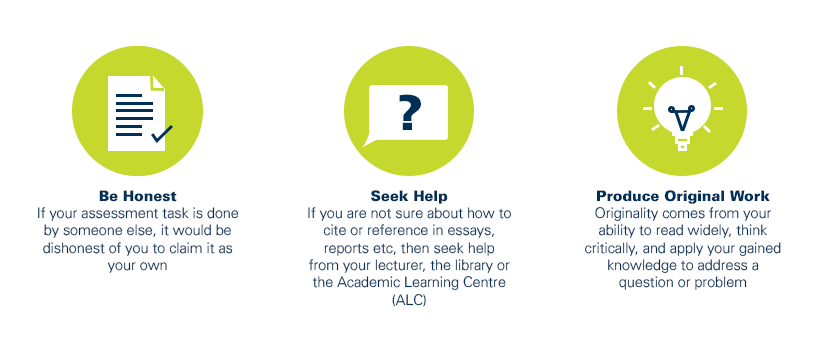
As a CQUniversity student you are expected to act honestly in all aspects of your academic work.
Any assessable work undertaken or submitted for review or assessment must be your own work. Assessable work is any type of work you do to meet the assessment requirements in the unit, including draft work submitted for review and feedback and final work to be assessed.
When you use the ideas, words or data of others in your assessment, you must thoroughly and clearly acknowledge the source of this information by using the correct referencing style for your unit. Using others’ work without proper acknowledgement may be considered a form of intellectual dishonesty.
Participating honestly, respectfully, responsibly, and fairly in your university study ensures the CQUniversity qualification you earn will be valued as a true indication of your individual academic achievement and will continue to receive the respect and recognition it deserves.
As a student, you are responsible for reading and following CQUniversity’s policies, including the Student Academic Integrity Policy and Procedure. This policy sets out CQUniversity’s expectations of you to act with integrity, examples of academic integrity breaches to avoid, the processes used to address alleged breaches of academic integrity, and potential penalties.
What is a breach of academic integrity?
A breach of academic integrity includes but is not limited to plagiarism, self-plagiarism, collusion, cheating, contract cheating, and academic misconduct. The Student Academic Integrity Policy and Procedure defines what these terms mean and gives examples.
Why is academic integrity important?
A breach of academic integrity may result in one or more penalties, including suspension or even expulsion from the University. It can also have negative implications for student visas and future enrolment at CQUniversity or elsewhere. Students who engage in contract cheating also risk being blackmailed by contract cheating services.
Where can I get assistance?
For academic advice and guidance, the Academic Learning Centre (ALC) can support you in becoming confident in completing assessments with integrity and of high standard.
What can you do to act with integrity?