Overview
This unit builds on the writing techniques and experience acquired in Beginning Creative Writing. In this unit you will undertake a writing project which may take the form of a short story, play, suite of poems or any approved mixture of these, using experimental writing techniques. The unit is suitable for intending teachers and students interested in advancing their knowledge in creative writing practice, however, is beneficial for students of all disciplines who are interested in furthering their writing skills and experimenting with writing as a form of communication.
Details
Pre-requisites or Co-requisites
WRIT11023
Important note: Students enrolled in a subsequent unit who failed their pre-requisite unit, should drop the subsequent unit before the census date or within 10 working days of Fail grade notification. Students who do not drop the unit in this timeframe cannot later drop the unit without academic and financial liability. See details in the Assessment Policy and Procedure (Higher Education Coursework).
Offerings For Term 1 - 2026
Attendance Requirements
All on-campus students are expected to attend scheduled classes - in some units, these classes are identified as a mandatory (pass/fail) component and attendance is compulsory. International students, on a student visa, must maintain a full time study load and meet both attendance and academic progress requirements in each study period (satisfactory attendance for International students is defined as maintaining at least an 80% attendance record).
Recommended Student Time Commitment
Each 6-credit Undergraduate unit at CQUniversity requires an overall time commitment of an average of 12.5 hours of study per week, making a total of 150 hours for the unit.
Class Timetable
Assessment Overview
Assessment Grading
This is a graded unit: your overall grade will be calculated from the marks or grades for each assessment task, based on the relative weightings shown in the table above. You must obtain an overall mark for the unit of at least 50%, or an overall grade of 'pass' in order to pass the unit. If any 'pass/fail' tasks are shown in the table above they must also be completed successfully ('pass' grade). You must also meet any minimum mark requirements specified for a particular assessment task, as detailed in the 'assessment task' section (note that in some instances, the minimum mark for a task may be greater than 50%). Consult the University's Grades and Results Policy for more details of interim results and final grades.
All University policies are available on the CQUniversity Policy site.
You may wish to view these policies:
- Grades and Results Policy
- Assessment Policy and Procedure (Higher Education Coursework)
- Review of Grade Procedure
- Student Academic Integrity Policy and Procedure
- Academic Progression Policy and Procedure
- Student Refund and Credit Balance Policy and Procedure
- Complaints Policy and Procedure
- Information and Communications Technology Acceptable Use Policy and Procedure
This list is not an exhaustive list of all University policies. The full list of University policies are available on the CQUniversity Policy site.
Feedback, Recommendations and Responses
Every unit is reviewed for enhancement each year. At the most recent review, the following staff and student feedback items were identified and recommendations were made.
Feedback from UC Reflection / Student Performance Data / SUTE Feedback
Assessment Scaffolding and Clarity of Expectations
Continue refining the scaffolding of assessments and ensure expectations are clearly communicated to students, the Unit Coordinator, and any external markers. This will support consistency in marking and help maintain strong student outcomes.
Feedback from UC Reflection / Tutorial Engagement Data
Platform Consolidation for Tutorial Access
Return to Moodle-only delivery for tutorials and content to reduce platform confusion and improve access. This change is expected to support higher engagement and ensure students can easily locate and interact with learning materials.
Feedback from SUTE Feedback / UC Reflection
Interdisciplinary Relevance and Reading Expansion
Continue expanding reading materials and examples to support student understanding and engagement with creative writing techniques. Consider incorporating content that bridges creative writing with psychological science, such as modules on character psychology, to better support students from non-Arts disciplines.
- Design and justify an experimental writing concept and publication strategy that demonstrates awareness of audience, genre, and ethical considerations
- Apply experimental literary techniques to produce creative works that challenge conventional narrative forms and aesthetics
- Integrate relevant research (craft scholarship, genre studies, publication contexts) to inform creative decisions and ethical practice
- Critically reflect on creative practice with reference to theory and evidence, articulating how experimentation, research and feedback shape revision toward publication readiness
- Plan and manage a staged creative project (milestones, time management, feedback processes), demonstrating a coherent pathway from concept to draft.
Alignment of Assessment Tasks to Learning Outcomes
| Assessment Tasks | Learning Outcomes | ||||
|---|---|---|---|---|---|
| 1 | 2 | 3 | 4 | 5 | |
| 1 - Written Assessment - 20% | |||||
| 2 - Written Assessment - 35% | |||||
| 3 - Written Assessment - 45% | |||||
Alignment of Graduate Attributes to Learning Outcomes
| Graduate Attributes | Learning Outcomes | ||||
|---|---|---|---|---|---|
| 1 | 2 | 3 | 4 | 5 | |
| 1 - Communication | |||||
| 2 - Problem Solving | |||||
| 3 - Critical Thinking | |||||
| 4 - Information Literacy | |||||
| 5 - Team Work | |||||
| 6 - Information Technology Competence | |||||
| 7 - Cross Cultural Competence | |||||
| 8 - Ethical practice | |||||
| 9 - Social Innovation | |||||
| 10 - First Nations Knowledges | |||||
| 11 - Aboriginal and Torres Strait Islander Cultures | |||||
Textbooks
There are no required textbooks.
IT Resources
- CQUniversity Student Email
- Internet
- Unit Website (Moodle)
- Students must have necessary equipment/accessories to attend online tutorials via Zoom or Microsoft Teams, or to watch the video recordings
- Zoom app on your smart phone or access to Zoom on your laptop Zoom (both microphone and webcam capability)
All submissions for this unit must use the referencing style: Harvard (author-date)
For further information, see the Assessment Tasks.
a.hickling@cqu.edu.au
Week 1
Begin Date: 09 Mar 2026Module/Topic
Introduction
Chapter
Week 1 Study Guide via the Moodle unit site, readings mentioned in study guide will be available in the e-reading list.
Students are expected to review the study material before attending any tutorials so that they can engage in the tutorial activities.
Events and Submissions/Topic
Students should:
- contribute an entry to the 'Introductions' discussion,
- familiarise themselves with the assessments via the Assessments Tile,
- begin drafting/notes for assessment 1
add the assessment due dates to their personal calendar or schedule, and - make note of the "Assessment Extension Request" form in the Support Menu.
Tutorials will be as per the unit timetable.
Week 2
Begin Date: 16 Mar 2026Module/Topic
Throwing out the rulebook
Chapter
Week 2 study guide via Moodle, readings mentioned in study guide will be available in the e-reading list.
Events and Submissions/Topic
1) Continue drafting Assessment Item 1.
2) Commence work on your writing project.
Week 3
Begin Date: 23 Mar 2026Module/Topic
Stream of consciousness
Chapter
Week 3 study guide via Moodle, readings mentioned in study guide will be available in the e-reading list.
Events and Submissions/Topic
Finalise and submit Assessment Item 1 (due this week). Double check the assessment item criteria to ensure your submission meets the item requirements.
The Proposal Due: Week 3 Friday (27 Mar 2026) 11:59 pm AEST
Week 4
Begin Date: 30 Mar 2026Module/Topic
Experimental writing
Chapter
Week 4 study guide via Moodle, readings mentioned in study guide will be available in the e-reading list.
Events and Submissions/Topic
Students should begin to work on Assessment 2.
Week 5
Begin Date: 06 Apr 2026Module/Topic
Multiple Viewpoint
Chapter
Week 5 Study guide via Moodle, readings mentioned in study guide will be available in the e-reading list.
Events and Submissions/Topic
A1 feedback released by the end of week 5: Review feedback from assessment 1 to inform next steps in assessments 2 & 3.
Week 6
Begin Date: 13 Apr 2026Module/Topic
Modernist-era experimentalism
Chapter
Week 6 study guide via Moodle site, readings mentioned in study guide will be available in the e-reading list.
Events and Submissions/Topic
Continue working on A2 - due in two weeks.
Vacation Week
Begin Date: 20 Apr 2026Module/Topic
Chapter
Events and Submissions/Topic
Week 7
Begin Date: 27 Apr 2026Module/Topic
Post-modernist experimentalism, incl. Metafiction, and onwards
Chapter
Week 7 study guide via Moodle, readings mentioned in study guide will be available in the e-reading list.
Events and Submissions/Topic
Continue working on assessment 2, due week 8 (next week).
Week 8
Begin Date: 04 May 2026Module/Topic
Creative Nonfiction
Chapter
Week 8 study guide via Moodle, readings mentioned in study guide will be available in the e-reading list.
Events and Submissions/Topic
Assessment 2 is due Friday 11:59 pm.
Draft + Critical Reflection Due: Week 8 Friday (8 May 2026) 11:59 pm AEST
Week 9
Begin Date: 11 May 2026Module/Topic
Experiments with Language + Experiments with Form and Design
Chapter
Week 9 study guide via Moodle, readings mentioned in study guide will be available in the e-reading list.
Events and Submissions/Topic
Continue to work on your writing project (assessment 3).
Week 10
Begin Date: 18 May 2026Module/Topic
Beyond the page
Chapter
Week 10 study guide via Moodle, readings mentioned in study guide will be available in the e-reading list.
Events and Submissions/Topic
Feedback on A2 will be available at the end of this week -- Students should review this for feedback that may enhance their final project.
Week 11
Begin Date: 25 May 2026Module/Topic
Editing + Publishing
Chapter
Week 11 study guide via Moodle, readings mentioned in study guide will be available in the e-reading list.
Events and Submissions/Topic
Continue revising and fine-tuning your writing project, it is due next week.
Week 12
Begin Date: 01 Jun 2026Module/Topic
Conclusion
Chapter
No new readings.
Events and Submissions/Topic
Finalise and submit Written Assessment 3 - Final Creative Artefact. Remember to match your submission against the assessment criteria to ensure your work meets the requirements for the item.
Final Creative Piece Due: Week 12 Friday (5 June 2026) 11:59 pm AEST
Exam Week
Begin Date: 08 Jun 2026Module/Topic
Chapter
Events and Submissions/Topic
Vacation/Exam Week
Begin Date: 15 Jun 2026Module/Topic
Chapter
Events and Submissions/Topic
1 Written Assessment
Length: 750 words
The word count excludes the cover page and reference list. It includes in-text references and direct quotations.
Task: Submit a publication-ready proposal that outlines your experimental fiction project. This proposal should demonstrate your understanding of both publication requirements and experimental writing techniques, showing how you will challenge and innovate traditional narrative conventions while meeting professional submission standards.
There are three Key Components to address in this task:
- Publication Analysis: Understanding your Publication
Discuss where you want to publish your work. Look at the publication website or recent issues to find out:- Detailed analysis of chosen publication's style and audience (What kind of experimental writing they publish, how long their stories usually are, and what their readers seem to enjoy)
- Their specific submission guidelines, formatting requirements and deadlines
- Your Story Concept
Explain your experimental piece, including:- What makes it experimental (are you using: unusual formatting, multiple viewpoints, or incorporating visual elements?)
- Why you chose this experimental approach for your story
- How the experimental elements help tell your story (For example, if you're writing about memory loss, you might tell the story in fragments)
- Which writers or stories inspired you (For example, if you're playing with multiple endings, you might mention "Choose Your Own Adventure" books)
- Your Writing Plan
How will you develop your story:
- What you need to read or research
- How you'll practice your experimental technique
- When you'll write and edit
- Who will give you feedback
- Which issue of the magazine you plan to submit to
Remember: The experimental elements should enhance your story's meaning, not just look different for the sake of being different. Your unusual format or structure should have a purpose that connects to what your story is about.
REFERENCES
Your submission must include a minimum of two (2) scholarly/discipline-specific references plus the reference details for your chosen publication, with at least one scholarly/discipline-specific reference drawn from the unit materials.
Use of Generative Artificial Intelligence agents (Gen AI)
AI Assessment Scale: Level 2: AI for Planning and Research
You may use AI for planning, idea development, and research. Your final submission should show how you have developed and refined these ideas. Any misuse or lack of disclosure regarding AI tools will be considered a breach of academic integrity.
Week 3 Friday (27 Mar 2026) 11:59 pm AEST
Upload via Moodle.
Week 5 Friday (10 Apr 2026)
Feedback provided via Moodle.
- Publication Understanding: Demonstrates thorough research of the chosen publication and clear understanding of its market requirements, audience, and submission guidelines.
- Experimental Innovation: Shows a developing understanding of the chosen experimental technique and articulates its purposeful application within the proposed creative work.
- Technical Planning: Presents a realistic and clearly structured development strategy, including a research and reading strategy and timeline that demonstrates forward planning.
- Creative Vision: Articulates a clear and considered connection between the chosen experimental form and the intended content, demonstrating purposeful creative decision-making.
- Presentation and Referencing: Adherence to submission guidelines, including proper formatting, meeting word count requirements, evidence of editing and proofreading, and a minimum of two (2) scholarly/discipline-specific references plus the reference details for the chosen publication, with at least one scholarly/discipline-specific reference drawn from unit materials, in Harvard (author-date) style.
- Design and justify an experimental writing concept and publication strategy that demonstrates awareness of audience, genre, and ethical considerations
- Integrate relevant research (craft scholarship, genre studies, publication contexts) to inform creative decisions and ethical practice
- Plan and manage a staged creative project (milestones, time management, feedback processes), demonstrating a coherent pathway from concept to draft.
2 Written Assessment
Length: 2000 words (1500 words draft, 500 words critical reflection)
The word count excludes the cover page and reference list. It includes in-text references and direct quotations.
Task: Submit a substantial draft of your experimental piece alongside a critical reflection that demonstrates your understanding of both publication requirements and your chosen experimental technique. This draft should showcase your development from proposal to draft stage, preparing you for your final submission while allowing for valuable feedback to come during workshopping activities and from the feedback to this assessment.
Components
Part A: Draft Submission (1500 words)
Your draft should include:
- Opening section demonstrating your chosen experimental technique
- At least one pivotal scene or section
- Integration of research elements
- Clear progression from your proposal
Part B: Critical Reflection (500 words)
Critically reflect on your draft and the experience so far, and discuss:
- How effectively you've implemented your experimental technique
- Ways your piece meets (or doesn't meet) publication requirements
- Challenges encountered with the experimental form
- Elements that have evolved from the draft and why
- Development plans for final submission
This assessment builds upon your proposal's market research and experimental focus while preparing you for the final submission and potential publication.
References: Your Critical Reflection (Part B) must include a minimum of three (3) scholarly/discipline-specific references. At least ONE of these MUST come from the unit materials.
Use of Generative Artificial Intelligence agents (Gen AI)
AI Assessment Scale: Level 2: AI for Planning and Research
You may use AI for planning, idea development, and research. Your final submission should show how you have developed and refined these ideas. Any misuse or lack of disclosure regarding AI tools will be considered a breach of academic integrity.
Week 8 Friday (8 May 2026) 11:59 pm AEST
Upload to Moodle
Week 10 Friday (22 May 2026)
Feedback via Moodle.
- Experimental Craft: Demonstrates a developing yet purposeful understanding and application of the chosen experimental technique within the creative work.
- Technical Development: Exhibits clear progression from the proposal stage, including the implementation of research findings and experimental elements into the draft.
- Creative Innovation: Presents an original approach to form and content while maintaining suitability for the chosen publication.
- Critical Analysis: Provides thoughtful and evidence-informed reflection on the experimental writing process, addressing the effectiveness of the chosen technique, challenges encountered with the experimental form, alignment with publication requirements, and plans for development in the final submission.
- Presentation and Referencing: Adherence to submission guidelines, including proper formatting, meeting word count requirements, evidence of editing and proofreading, and
a minimum of three (3) scholarly/discipline-specific references in the critical reflection, with at least one drawn from unit materials, in Harvard (author-date) style.
- Apply experimental literary techniques to produce creative works that challenge conventional narrative forms and aesthetics
- Critically reflect on creative practice with reference to theory and evidence, articulating how experimentation, research and feedback shape revision toward publication readiness
- Plan and manage a staged creative project (milestones, time management, feedback processes), demonstrating a coherent pathway from concept to draft.
3 Written Assessment
Length: 3000 words (Part A: up to 2500* words creative piece, Part B: 500 words critical reflection)
The word count excludes the cover page and reference list. It includes in-text references and direct quotations.
*NOTE about Word Count Variation:
The word count of the PART A: CREATIVE COMPONENT is negotiable depending on the genre of the writing and the publication requirements of the chosen publication, it may be anywhere from 1800-2500 words, however, must not exceed 2500 words. Your project may be in the form of two-three-four pieces totalling 1800-2500 words (depending on the publication), or one complete piece. This MUST be discussed/negotiated with your unit coordinator before final submission.
Task: Submit your polished experimental piece (Part A) ready for publication submission, accompanied by a critical reflection (Part B) that analyses your creative development. Your work should demonstrate sophisticated implementation of your chosen experimental technique while meeting professional publication standards.
Part A: Creative Component (up to 2500 words)
Your final piece should showcase:
- Refined experimental technique as outlined in your proposal
- Professional presentation meeting publication requirements
- Clear development from draft stage
- Integration of peer/assessment feedback
- Original contribution to your chosen experimental form
Part B: Critical Reflection (500 words)
Critically reflect on your creative journey, discussing:
- Evolution of your experimental technique from proposal through draft to final piece
- How feedback shaped your development
- Technical and creative challenges encountered and resolved
- Publication preparation process
- Your growth as an experimental writer
References: Your Critical Reflection (Part B) must include a minimum of three (3) scholarly/discipline-specific references. At least TWO of these MUST come from the unit materials.
Use of Generative Artificial Intelligence agents (Gen AI)
AI Assessment Scale: Level 2: AI for Planning and Research
You may use AI for planning, idea development, and research. Your final submission should show how you have developed and refined these ideas. Any misuse or lack of disclosure regarding AI tools will be considered a breach of academic integrity.
Week 12 Friday (5 June 2026) 11:59 pm AEST
Upload to Moodle.
Vacation/Exam Week Friday (19 June 2026)
Grade released in Moodle.
- Publication Readiness: Demonstrates a professional standard of writing that meets the chosen publication's requirements and guidelines. Where a publication does not specify formatting requirements, work should meet standard industry guidelines as outlined in the unit materials.
- Experimental Craft: Shows sophisticated, purposeful, and original control of the chosen experimental technique, demonstrating that creative decisions are intentional, serve the work's meaning, and make a considered contribution to the chosen experimental form.
- Creative Development: Exhibits clear progression from proposal through draft to polished work, demonstrating responsiveness to feedback and revision.
- Technical Excellence: Demonstrates accomplished and intentional control of language, structure, and form, used in ways that are purposefully suited to the chosen experimental approach.
- Critical Understanding: Provides insightful and evidence-informed reflection that traces the evolution of the experimental technique from proposal through draft to final piece, demonstrating how feedback, research, and revision have shaped creative and technical growth toward publication readiness.
- Presentation and Referencing: Adherence to submission guidelines, including proper formatting, meeting word count requirements, evidence of editing and proofreading, and a minimum of three (3) scholarly/discipline-specific references in the critical reflection, with at least two drawn from unit materials, in Harvard (author-date) style. Where a publication does not specify formatting requirements, work should meet standard industry guidelines as outlined in the unit materials.
- Design and justify an experimental writing concept and publication strategy that demonstrates awareness of audience, genre, and ethical considerations
- Apply experimental literary techniques to produce creative works that challenge conventional narrative forms and aesthetics
- Integrate relevant research (craft scholarship, genre studies, publication contexts) to inform creative decisions and ethical practice
- Critically reflect on creative practice with reference to theory and evidence, articulating how experimentation, research and feedback shape revision toward publication readiness
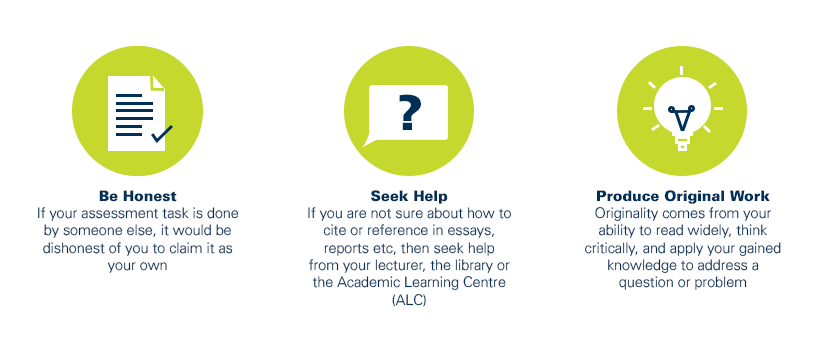
As a CQUniversity student you are expected to act honestly in all aspects of your academic work.
Any assessable work undertaken or submitted for review or assessment must be your own work. Assessable work is any type of work you do to meet the assessment requirements in the unit, including draft work submitted for review and feedback and final work to be assessed.
When you use the ideas, words or data of others in your assessment, you must thoroughly and clearly acknowledge the source of this information by using the correct referencing style for your unit. Using others’ work without proper acknowledgement may be considered a form of intellectual dishonesty.
Participating honestly, respectfully, responsibly, and fairly in your university study ensures the CQUniversity qualification you earn will be valued as a true indication of your individual academic achievement and will continue to receive the respect and recognition it deserves.
As a student, you are responsible for reading and following CQUniversity’s policies, including the Student Academic Integrity Policy and Procedure. This policy sets out CQUniversity’s expectations of you to act with integrity, examples of academic integrity breaches to avoid, the processes used to address alleged breaches of academic integrity, and potential penalties.
What is a breach of academic integrity?
A breach of academic integrity includes but is not limited to plagiarism, self-plagiarism, collusion, cheating, contract cheating, and academic misconduct. The Student Academic Integrity Policy and Procedure defines what these terms mean and gives examples.
Why is academic integrity important?
A breach of academic integrity may result in one or more penalties, including suspension or even expulsion from the University. It can also have negative implications for student visas and future enrolment at CQUniversity or elsewhere. Students who engage in contract cheating also risk being blackmailed by contract cheating services.
Where can I get assistance?
For academic advice and guidance, the Academic Learning Centre (ALC) can support you in becoming confident in completing assessments with integrity and of high standard.
What can you do to act with integrity?