Overview
In this unit you will examine statistics, with particular focus on applications to managerial decision making. You will use statistics techniques to make informed decisions in uncertain environments within the fields of business and accounting. You will analyse and interpret data, trends and patterns as well as make inferences and use probability theory to estimate risks. Other important topics of this unit include probability and forecasting.
Details
Pre-requisites or Co-requisites
Anti-requisite: STAT20028.
Important note: Students enrolled in a subsequent unit who failed their pre-requisite unit, should drop the subsequent unit before the census date or within 10 working days of Fail grade notification. Students who do not drop the unit in this timeframe cannot later drop the unit without academic and financial liability. See details in the Assessment Policy and Procedure (Higher Education Coursework).
Offerings For Term 3 - 2026
Attendance Requirements
All on-campus students are expected to attend scheduled classes - in some units, these classes are identified as a mandatory (pass/fail) component and attendance is compulsory. International students, on a student visa, must maintain a full time study load and meet both attendance and academic progress requirements in each study period (satisfactory attendance for International students is defined as maintaining at least an 80% attendance record).
Recommended Student Time Commitment
Each 6-credit Postgraduate unit at CQUniversity requires an overall time commitment of an average of 12.5 hours of study per week, making a total of 150 hours for the unit.
Class Timetable
Assessment Overview
Assessment Grading
This is a graded unit: your overall grade will be calculated from the marks or grades for each assessment task, based on the relative weightings shown in the table above. You must obtain an overall mark for the unit of at least 50%, or an overall grade of 'pass' in order to pass the unit. If any 'pass/fail' tasks are shown in the table above they must also be completed successfully ('pass' grade). You must also meet any minimum mark requirements specified for a particular assessment task, as detailed in the 'assessment task' section (note that in some instances, the minimum mark for a task may be greater than 50%). Consult the University's Grades and Results Policy for more details of interim results and final grades.
All University policies are available on the CQUniversity Policy site.
You may wish to view these policies:
- Grades and Results Policy
- Assessment Policy and Procedure (Higher Education Coursework)
- Review of Grade Procedure
- Student Academic Integrity Policy and Procedure
- Academic Progression Policy and Procedure
- Student Refund and Credit Balance Policy and Procedure
- Complaints Policy and Procedure
- Information and Communications Technology Acceptable Use Policy and Procedure
This list is not an exhaustive list of all University policies. The full list of University policies are available on the CQUniversity Policy site.
Feedback, Recommendations and Responses
Every unit is reviewed for enhancement each year. At the most recent review, the following staff and student feedback items were identified and recommendations were made.
Feedback from Student evaluation data and teaching team reflection
Student evaluations and teaching team reflections indicate that some students would benefit from clearer weekly guidance to help them navigate Moodle resources, weekly learning activities, and expected preparation.
Strengthen weekly Moodle guidance by providing a short weekly overview, clearer instructions for learning activities, and a simple checklist of what students should complete before and after each class.
Feedback from Student evaluation data and teaching team reflection
To further support student learning, more real-world examples should be included in learning materials
Use applied business datasets and Excel-based examples to provide additional resources that demonstrate how to interpret statistical results and not just perform calculations.
- Analyse and work with data in a statistical framework
- Interpret data to make informed decisions
- Estimate the probabilities of various scenarios using statistics techniques
- Make statistical inferences based on sample observations
- Capture trends and make future projections
- Compare the implications of alternative strategies in terms of risks and expectations.
Alignment of Assessment Tasks to Learning Outcomes
| Assessment Tasks | Learning Outcomes | |||||
|---|---|---|---|---|---|---|
| 1 | 2 | 3 | 4 | 5 | 6 | |
|
1.
Assessment 1
(10% of unit )
Online Quiz(zes)
|
||||||
|
2.
Assessment 2
(30% of unit )
Written Assessment
|
||||||
|
3.
Examination
(60% of unit )
Examination
|
||||||
Alignment of Graduate Attributes to Learning Outcomes
| Graduate Attributes | Learning Outcomes | |||||
|---|---|---|---|---|---|---|
| 1 | 2 | 3 | 4 | 5 | 6 | |
| 1 - Knowledge | ||||||
| 2 - Communication | ||||||
| 3 - Cognitive, technical and creative skills | ||||||
| 4 - Research | ||||||
| 5 - Self-management | ||||||
| 6 - Ethical and Professional Responsibility | ||||||
| 7 - Leadership | ||||||
| 8 - First Nations Knowledges | ||||||
| 9 - Aboriginal and Torres Strait Islander Cultures | ||||||
Textbooks
Business Analytics and Statistics
- 2nd Edition (2024)
- Authors: Ken Black, John Asafu-Adjaye, Paul Burke, Nazim Khan, Gerard King, Nelson Perera, Andrew Papadimos, Carl Sherwood, Saleh Wasimi
- Wiley
- ISBN: 9781394189670
IT Resources
- CQUniversity Student Email
- Internet
- Unit Website (Moodle)
- Microsoft Excel (or equivalent)
- Zoom access
- • Access to a document scanner and/or pdf converter (all assessments submitted electronically as pdf files)
- • Access to a printer (for printing assessment and tutorial materials)
- • Access to a webcam, speaker and microphone or a headset. (To participate in Zoom lectures and tutorials.)
All submissions for this unit must use the referencing style: Harvard (author-date)
For further information, see the Assessment Tasks.
m.hossain@cqu.edu.au
Week 1
Begin Date: 09 Nov 2026Module/Topic
Introduction to Statistics
Chapter
Study Guide (SG) Module 1; Set Text (ST) Chapter 1
Events and Submissions/Topic
Week 2
Begin Date: 16 Nov 2026Module/Topic
Presenting Data
Chapter
SG 2; ST Chapter 2, KaddStat is optional and will not be examined in this unit.
Events and Submissions/Topic
Week 3
Begin Date: 23 Nov 2026Module/Topic
Numerical Descriptive Measures
Chapter
SG 3; ST Chapter 3
Events and Submissions/Topic
Fortnightly Quiz 1
Week 4
Begin Date: 30 Nov 2026Module/Topic
Probability
Chapter
SG 4; ST Chapter 4
Events and Submissions/Topic
Week 5
Begin Date: 07 Dec 2026Module/Topic
Discrete Distributions
Chapter
SG 5; ST Chapter 5
Events and Submissions/Topic
Fortnightly Quiz 2
Week 6
Begin Date: 14 Dec 2026Module/Topic
Continuous Distributions
Chapter
SG 6; ST Chapter 6
Events and Submissions/Topic
Mid-Term Break
Begin Date: 21 Dec 2026Module/Topic
Chapter
Events and Submissions/Topic
Week 7
Begin Date: 04 Jan 2027Module/Topic
Sampling Distributions
Chapter
SG 7; ST Chapter 7, Sampling has been covered earlier.
Events and Submissions/Topic
Fortnightly Quiz 3
Week 8
Begin Date: 11 Jan 2027Module/Topic
Confidence interval estimation
Chapter
SG 8; ST Chapter 8 (exclude section 8.4 which is not in syllabus).
Events and Submissions/Topic
Week 9
Begin Date: 18 Jan 2027Module/Topic
Hypothesis Testing
Chapter
SG 9; ST Chapter 9 (exclude sections 9.6 and 9.7) and Chapter 10 (exclude section 10.5)
Events and Submissions/Topic
Fortnightly Quiz 4
Week 10
Begin Date: 25 Jan 2027Module/Topic
Chi-square tests
Chapter
SG 10; ST Chapter 12
Events and Submissions/Topic
Week 11
Begin Date: 01 Feb 2027Module/Topic
Linear regression
Chapter
SG 11; ST Chapter 13 but exclude 13.6 and 13.7
Events and Submissions/Topic
Fortnightly Quiz 5
Written Assessment Due: Week 11 Monday (1 Feb 2027) 11:45 pm AEST
Week 12
Begin Date: 08 Feb 2027Module/Topic
Time series forecasting and index numbers
Chapter
SG 12; ST Chapter 15 but exclude 15.4
Events and Submissions/Topic
Exam Week
Begin Date: 15 Feb 2027Module/Topic
Review/Exam Week
Chapter
Events and Submissions/Topic
Vacation/Exam Week
Begin Date: 22 Feb 2027Module/Topic
Chapter
Events and Submissions/Topic
Unit Coordinator: Dr Rahat Hossain
Building 30/1.12, Rockhampton Campus
Email: m.hossain@cqu.edu.au
1 Online Quiz(zes)
Five online quizzes will take place in weeks 3, 5, 7, 9, and 11, and will be accessible on the Moodle Unit Website.
Each quiz will begin at 8:00 a.m. (AEST) on Monday of the respective week and close on Sunday of the same week at 11:00 p.m. (AEST).
No extensions will be granted under any circumstances. Each quiz is worth 4 marks and comprises eight questions.
A maximum of three attempts is allowed for each question, with no penalty for multiple attempts.
Quizzes will be held in weeks 3, 5, 7, 9 and 11
Marks will be released immediately after each quiz
Each quiz is valued at four marks and comprises eight questions. A maximum of three attempts is allowed per question, and there is no penalty for multiple attempts. Only correct answers will receive full marks, and no marks are awarded for the procedure.
- Analyse and work with data in a statistical framework
- Interpret data to make informed decisions
- Knowledge
- Cognitive, technical and creative skills
- Self-management
2 Written Assessment
This is a written assessment task. There will be five questions, and you are required to provide written answers to all of them.
The answers must be typed, and where output from Microsoft Excel (or similar) is asked, you must use Microsoft Excel (or similar).
No marks will be given for answers and graphs that are hand-drawn. Answers to all assignment questions must be submitted as a single file in .doc, .docx, .pdf, or .rtf format only, and the total file size must not exceed 100 MB.
Files submitted in zipped form or any other format will not be accepted. Excel output can be copied and pasted into a single document.
Week 11 Monday (1 Feb 2027) 11:45 pm AEST
Assignment must be submitted through Moodle website.
Exam Week Monday (15 Feb 2027)
Part marks will be awarded for conceptual understanding and correct procedures. Full marks cannot be achieved without a proper description and execution of the procedure.
- Analyse and work with data in a statistical framework
- Interpret data to make informed decisions
- Estimate the probabilities of various scenarios using statistics techniques
- Make statistical inferences based on sample observations
- Capture trends and make future projections
- Compare the implications of alternative strategies in terms of risks and expectations.
- Knowledge
- Communication
- Cognitive, technical and creative skills
- Research
- Self-management
- Ethical and Professional Responsibility
- Leadership
Examination
Calculator - all non-communicable calculators, including scientific, programmable and graphics calculators are authorised
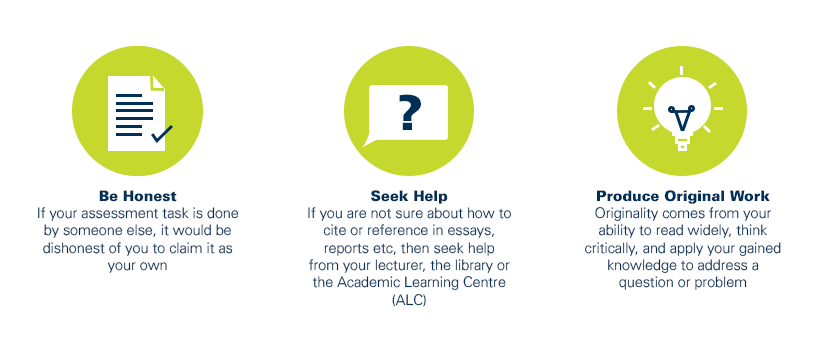
As a CQUniversity student you are expected to act honestly in all aspects of your academic work.
Any assessable work undertaken or submitted for review or assessment must be your own work. Assessable work is any type of work you do to meet the assessment requirements in the unit, including draft work submitted for review and feedback and final work to be assessed.
When you use the ideas, words or data of others in your assessment, you must thoroughly and clearly acknowledge the source of this information by using the correct referencing style for your unit. Using others’ work without proper acknowledgement may be considered a form of intellectual dishonesty.
Participating honestly, respectfully, responsibly, and fairly in your university study ensures the CQUniversity qualification you earn will be valued as a true indication of your individual academic achievement and will continue to receive the respect and recognition it deserves.
As a student, you are responsible for reading and following CQUniversity’s policies, including the Student Academic Integrity Policy and Procedure. This policy sets out CQUniversity’s expectations of you to act with integrity, examples of academic integrity breaches to avoid, the processes used to address alleged breaches of academic integrity, and potential penalties.
What is a breach of academic integrity?
A breach of academic integrity includes but is not limited to plagiarism, self-plagiarism, collusion, cheating, contract cheating, and academic misconduct. The Student Academic Integrity Policy and Procedure defines what these terms mean and gives examples.
Why is academic integrity important?
A breach of academic integrity may result in one or more penalties, including suspension or even expulsion from the University. It can also have negative implications for student visas and future enrolment at CQUniversity or elsewhere. Students who engage in contract cheating also risk being blackmailed by contract cheating services.
Where can I get assistance?
For academic advice and guidance, the Academic Learning Centre (ALC) can support you in becoming confident in completing assessments with integrity and of high standard.
What can you do to act with integrity?