Overview
This unit introduces you to the concepts and applications of probability and statistical modelling involving questions of estimation, inference, regression, and correlation. Topics covered include descriptive statistics, measures of central tendency and dispersion, probability and probability distributions (binomial, Poisson, normal), confidence intervals, one and two-sample hypothesis tests, one-way analysis of variance, chi-square tests, linear regression, and correlation. The use of a calculator and a statistical/spreadsheet computer package for data analysis are covered.
Details
Pre-requisites or Co-requisites
There are no requisites for this unit.
Important note: Students enrolled in a subsequent unit who failed their pre-requisite unit, should drop the subsequent unit before the census date or within 10 working days of Fail grade notification. Students who do not drop the unit in this timeframe cannot later drop the unit without academic and financial liability. See details in the Assessment Policy and Procedure (Higher Education Coursework).
Offerings For Term 1 - 2026
Attendance Requirements
All on-campus students are expected to attend scheduled classes - in some units, these classes are identified as a mandatory (pass/fail) component and attendance is compulsory. International students, on a student visa, must maintain a full time study load and meet both attendance and academic progress requirements in each study period (satisfactory attendance for International students is defined as maintaining at least an 80% attendance record).
Recommended Student Time Commitment
Each 6-credit Undergraduate unit at CQUniversity requires an overall time commitment of an average of 12.5 hours of study per week, making a total of 150 hours for the unit.
Class Timetable
Assessment Overview
Assessment Grading
This is a graded unit: your overall grade will be calculated from the marks or grades for each assessment task, based on the relative weightings shown in the table above. You must obtain an overall mark for the unit of at least 50%, or an overall grade of 'pass' in order to pass the unit. If any 'pass/fail' tasks are shown in the table above they must also be completed successfully ('pass' grade). You must also meet any minimum mark requirements specified for a particular assessment task, as detailed in the 'assessment task' section (note that in some instances, the minimum mark for a task may be greater than 50%). Consult the University's Grades and Results Policy for more details of interim results and final grades.
All University policies are available on the CQUniversity Policy site.
You may wish to view these policies:
- Grades and Results Policy
- Assessment Policy and Procedure (Higher Education Coursework)
- Review of Grade Procedure
- Student Academic Integrity Policy and Procedure
- Academic Progression Policy and Procedure
- Student Refund and Credit Balance Policy and Procedure
- Complaints Policy and Procedure
- Information and Communications Technology Acceptable Use Policy and Procedure
This list is not an exhaustive list of all University policies. The full list of University policies are available on the CQUniversity Policy site.
Feedback, Recommendations and Responses
Every unit is reviewed for enhancement each year. At the most recent review, the following staff and student feedback items were identified and recommendations were made.
Feedback from Unit Evaluation
Students believed the unit was well-structured overall and particularly liked the multiple ways to engage with the content.
Maintain the current teaching and learning approach and continue offering multiple engagement options.
Feedback from Unit Coordinator
Students progress at different paces, and some may fall behind without regular check-ins.
Communicate regularly with students about the pace of their studies during lectures and tutorials, and follow up with students who are falling behind with studies.
- Apply the concepts of elementary statistics to analyse data
- Demonstrate knowledge of introductory probability theory to predict the likelihood of occurrence of an event
- Formulate solutions to statistics problems using statistical analysis and sampling theory
- Identify an appropriate probability distribution for a given scenario and use its properties to calculate probabilities
- Draw statistical conclusions about a population based on a sample of data using one sample, two sample, and ANOVA tests
- Use a calculator and computer software to perform statistical calculations.
This unit is designed to provide a foundation in statistical thinking as applied to decision making in life.
Alignment of Assessment Tasks to Learning Outcomes
| Assessment Tasks | Learning Outcomes | |||||
|---|---|---|---|---|---|---|
| 1 | 2 | 3 | 4 | 5 | 6 | |
| 1 - Online Quiz(zes) - 40% | ||||||
| 2 - Examination - 60% | ||||||
Alignment of Graduate Attributes to Learning Outcomes
| Graduate Attributes | Learning Outcomes | |||||
|---|---|---|---|---|---|---|
| 1 | 2 | 3 | 4 | 5 | 6 | |
| 1 - Communication | ||||||
| 2 - Problem Solving | ||||||
| 3 - Critical Thinking | ||||||
| 4 - Information Literacy | ||||||
| 5 - Team Work | ||||||
| 6 - Information Technology Competence | ||||||
| 7 - Cross Cultural Competence | ||||||
| 8 - Ethical practice | ||||||
| 9 - Social Innovation | ||||||
| 10 - First Nations Knowledges | ||||||
| 11 - Aboriginal and Torres Strait Islander Cultures | ||||||
Alignment of Assessment Tasks to Graduate Attributes
| Assessment Tasks | Graduate Attributes | ||||||||||
|---|---|---|---|---|---|---|---|---|---|---|---|
| 1 | 2 | 3 | 4 | 5 | 6 | 7 | 8 | 9 | 10 | 11 | |
| 1 - Online Quiz(zes) - 40% | |||||||||||
| 2 - Examination - 60% | |||||||||||
Textbooks
There are no required textbooks.
Additional Textbook Information
The Learning Resources can be found on the Moodle page, under the Unit Introduction\Study Guide.
IT Resources
- CQUniversity Student Email
- Internet
- Unit Website (Moodle)
- Access to a printer (for printing assessment and tutorial materials)
- Access to a webcam, speaker and microphone or a headset. (To participate in Zoom lectures and tutorials.)
All submissions for this unit must use the referencing style: Harvard (author-date)
For further information, see the Assessment Tasks.
d.tanna@cqu.edu.au
Week 1
Begin Date: 09 Mar 2026Module/Topic
Introduction to Statistics
Chapter
Study Guide - Chapter 1
Selvanathan Textbook - Chapters 1 & 3, plus Chapter 2 (Sections 2.1 & 2.2 only)
Events and Submissions/Topic
Watch the lecture videos and complete the Week 1 tutorial exercises.
Week 2
Begin Date: 16 Mar 2026Module/Topic
Data Distributions
Chapter
Study Guide - Chapter 2
Selvanathan Textbook - Chapter 4 (Section 4.1 only)
Events and Submissions/Topic
Watch the lecture videos and complete the Week 2 tutorial exercises.
Week 3
Begin Date: 23 Mar 2026Module/Topic
Central Tendency and Dispersion
Chapter
Study Guide - Chapter 3
Selvanathan Textbook - Chapter 5 (all Sections except 5.5)
Events and Submissions/Topic
Watch the lecture videos and complete the Week 3 tutorial exercises.
Quiz 1: due Friday, 1st August at 11.45 pm.
Week 4
Begin Date: 30 Mar 2026Module/Topic
Counting Principles and Probability
Chapter
Study Guide - Chapter 4
Selvanathan Textbook - Chapter 6 (all Sections except 6.5)
Events and Submissions/Topic
Watch the lecture videos and complete the Week 4 tutorial exercises.
Week 5
Begin Date: 06 Apr 2026Module/Topic
Discrete Probability Distributions
Chapter
Study Guide - Chapter 5
Selvanathan Textbook - Chapter 7 (all Sections except 7.4 & 7.5)
Events and Submissions/Topic
Watch the lecture videos and complete the Week 5 tutorial exercises.
Quiz 2: due Friday, 15th August at 11.45 pm.
Week 6
Begin Date: 13 Apr 2026Module/Topic
Continuous Probability Distributions
Chapter
Study Guide - Chapter 6
Selvanathan Textbook - Chapter 8 (all Sections except 8.4)
Events and Submissions/Topic
Watch the lecture videos and complete the Week 6 tutorial exercises.
Vacation Week
Begin Date: 20 Apr 2026Module/Topic
Chapter
Events and Submissions/Topic
Week 7
Begin Date: 27 Apr 2026Module/Topic
Sampling and Sampling Distributions
Chapter
Study Guide - Chapter 7
Selvanathan Textbook - Chapter 2 (Sections 2.3 to 2.5), plus Chapter 9 (Sections 9.1 to 9.4 & 9.6)
Events and Submissions/Topic
Watch the lecture videos and complete the Week 7 tutorial exercises.
Quiz 3: due Friday, 5th September at 11.45 pm.
Week 8
Begin Date: 04 May 2026Module/Topic
Estimation
Chapter
Study Guide - Chapter 8
Selvanathan Textbook - Chapter 10 (all Sections)
Events and Submissions/Topic
Watch the lecture videos and complete the Week 8 tutorial exercises.
Week 9
Begin Date: 11 May 2026Module/Topic
Hypothesis Tests for a Population Mean or Proportion
Chapter
Study Guide - Chapter 9
Selvanathan Textbook - Chapter 12 (all Sections except 12.5)
Events and Submissions/Topic
Watch the lecture videos and complete the Week 9 tutorial exercises.
Quiz 4: due Friday, 19th September at 11.45 pm.
Week 10
Begin Date: 18 May 2026Module/Topic
Hypothesis Tests for Two or More Population Means
Chapter
Study Guide - Chapter 10
Selvanathan Textbook - Chapter 13 (Sections 13.1 & 13.2 only)
Events and Submissions/Topic
Watch the lecture videos and complete the Week 10 tutorial exercises.
Week 11
Begin Date: 25 May 2026Module/Topic
Linear Regression and Correlation
Chapter
Study Guide - Chapter 12
Selvanathan Textbook - Chapter 4 (Section 4.3 only), plus Chapter 15 (Sections 15.1 to 15.3, & read parts of 15.4 & 15.6)
Events and Submissions/Topic
Watch the lecture videos and complete the Week 11 tutorial exercises.
Week 12
Begin Date: 01 Jun 2026Module/Topic
Chi-Square Tests
Chapter
Study Guide - Chapter 11
Selvanathan Textbook - Chapter 14 (all Sections)
Events and Submissions/Topic
Watch the lecture videos and complete the Week 12 tutorial exercises.
Vacation/Exam Week
Begin Date: 08 Jun 2026Module/Topic
Chapter
Events and Submissions/Topic
Vacation/Exam Week
Begin Date: 15 Jun 2026Module/Topic
Chapter
Events and Submissions/Topic
1 Online Quiz(zes)
There are four quizzes, and each quiz is worth 10%. These quizzes are available on the STAT11048 Moodle site, along with their due dates. The purpose of these quizzes is to monitor your progress throughout the term, allowing you to identify any concepts that require further review. The quizzes also provide a basis for communication between you and your Lecturer/Unit Coordinator.
Below is the guideline for AI (Artificial Intelligence) usage
AI ASSESSMENT SCALE - AI COLLABORATION.
You are encouraged to use computer software, or similar, or online AI tools to verify and validate any aspects of your solutions to the posed assessment problems.
This assessment is exempt from the 72-hour submission grace period and must be completed by the stated submission date/time.
Due date for each quiz and be found in the unit schedule. Full details about the quizzes are available on the STAT11048 Moodle website.
Results will be available to students two weeks after the submission date. Consequently extension requests greater than 14 days will be denied except under exceptional circumstances.
There are 4 quizzes and each quiz is worth 10%. Marks will be awarded for finding the correct answer.
- Apply the concepts of elementary statistics to analyse data
- Demonstrate knowledge of introductory probability theory to predict the likelihood of occurrence of an event
- Formulate solutions to statistics problems using statistical analysis and sampling theory
- Identify an appropriate probability distribution for a given scenario and use its properties to calculate probabilities
- Use a calculator and computer software to perform statistical calculations.
- Communication
- Problem Solving
- Critical Thinking
- Information Literacy
- Information Technology Competence
Examination
Calculator - all non-communicable calculators, including scientific, programmable and graphics calculators are authorised
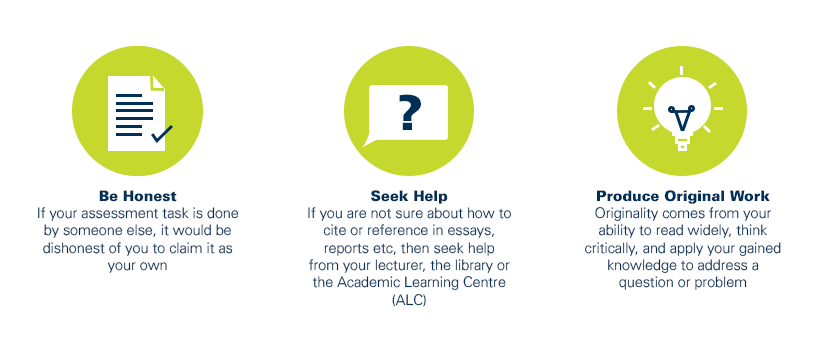
As a CQUniversity student you are expected to act honestly in all aspects of your academic work.
Any assessable work undertaken or submitted for review or assessment must be your own work. Assessable work is any type of work you do to meet the assessment requirements in the unit, including draft work submitted for review and feedback and final work to be assessed.
When you use the ideas, words or data of others in your assessment, you must thoroughly and clearly acknowledge the source of this information by using the correct referencing style for your unit. Using others’ work without proper acknowledgement may be considered a form of intellectual dishonesty.
Participating honestly, respectfully, responsibly, and fairly in your university study ensures the CQUniversity qualification you earn will be valued as a true indication of your individual academic achievement and will continue to receive the respect and recognition it deserves.
As a student, you are responsible for reading and following CQUniversity’s policies, including the Student Academic Integrity Policy and Procedure. This policy sets out CQUniversity’s expectations of you to act with integrity, examples of academic integrity breaches to avoid, the processes used to address alleged breaches of academic integrity, and potential penalties.
What is a breach of academic integrity?
A breach of academic integrity includes but is not limited to plagiarism, self-plagiarism, collusion, cheating, contract cheating, and academic misconduct. The Student Academic Integrity Policy and Procedure defines what these terms mean and gives examples.
Why is academic integrity important?
A breach of academic integrity may result in one or more penalties, including suspension or even expulsion from the University. It can also have negative implications for student visas and future enrolment at CQUniversity or elsewhere. Students who engage in contract cheating also risk being blackmailed by contract cheating services.
Where can I get assistance?
For academic advice and guidance, the Academic Learning Centre (ALC) can support you in becoming confident in completing assessments with integrity and of high standard.
What can you do to act with integrity?