Overview
In this unit, you will learn about the development of feeding and the progression of swallowing across the lifespan. You will advance your competency in the assessment, analysis, planning and treatment of swallowing and feeding difficulties across the lifespan. You will consider the aetiology, diagnosis and management of swallowing and feeding in the context of the International Classification of Functioning, Disability and Health (ICF) framework. Evidence based practice will provide the foundation for your learning in all stages of diagnosis and management.
Details
Pre-requisites or Co-requisites
Pre-Requisites SPCH13011 Applied Evidence Based Practice for Speech Pathology SPCH12003 Functional Anatomy of the Head, Neck, and Thorax SPCH12007 Speech Pathology Work Integrated Learning 1 SPCH13004 Language, Literacy, and Hearing in School-Aged Children
Important note: Students enrolled in a subsequent unit who failed their pre-requisite unit, should drop the subsequent unit before the census date or within 10 working days of Fail grade notification. Students who do not drop the unit in this timeframe cannot later drop the unit without academic and financial liability. See details in the Assessment Policy and Procedure (Higher Education Coursework).
Offerings For Term 1 - 2026
Attendance Requirements
All on-campus students are expected to attend scheduled classes - in some units, these classes are identified as a mandatory (pass/fail) component and attendance is compulsory. International students, on a student visa, must maintain a full time study load and meet both attendance and academic progress requirements in each study period (satisfactory attendance for International students is defined as maintaining at least an 80% attendance record).
Recommended Student Time Commitment
Each 6-credit Undergraduate unit at CQUniversity requires an overall time commitment of an average of 12.5 hours of study per week, making a total of 150 hours for the unit.
Class Timetable
Assessment Overview
Assessment Grading
This is a graded unit: your overall grade will be calculated from the marks or grades for each assessment task, based on the relative weightings shown in the table above. You must obtain an overall mark for the unit of at least 50%, or an overall grade of 'pass' in order to pass the unit. If any 'pass/fail' tasks are shown in the table above they must also be completed successfully ('pass' grade). You must also meet any minimum mark requirements specified for a particular assessment task, as detailed in the 'assessment task' section (note that in some instances, the minimum mark for a task may be greater than 50%). Consult the University's Grades and Results Policy for more details of interim results and final grades.
All University policies are available on the CQUniversity Policy site.
You may wish to view these policies:
- Grades and Results Policy
- Assessment Policy and Procedure (Higher Education Coursework)
- Review of Grade Procedure
- Student Academic Integrity Policy and Procedure
- Academic Progression Policy and Procedure
- Student Refund and Credit Balance Policy and Procedure
- Complaints Policy and Procedure
- Information and Communications Technology Acceptable Use Policy and Procedure
This list is not an exhaustive list of all University policies. The full list of University policies are available on the CQUniversity Policy site.
Feedback, Recommendations and Responses
Every unit is reviewed for enhancement each year. At the most recent review, the following staff and student feedback items were identified and recommendations were made.
Feedback from Student Unit Evaluation
Student comments indicated that some video content contained significant gaps, freezing, or delays that affected playback quality.
It is recommended that the unit coordinator perform a quality assurance check to identify any recorded lecture issues such as gaps, freezing, or playback delays.
Feedback from Student Unit Evaluation and Unit Coordinator Reflection
Student feedback and instructor reflection suggested that hands-on learning experiences during tutorials enhance student engagement and support deeper understanding of course content.
It is recommended that tutorials continue to be designed to apply knowledge from lectures in a practical, hands-on manner.
- Describe the mechanism of a safe swallow and its variation across the lifespan
- Analyse swallowing and feeding behaviour using both formal and informal assessment techniques, and make appropriate recommendations for the management and rehabilitation of swallowing and feeding difficulties
- Adapt communication to provide information and counselling to clients and others about swallowing and feeding difficulties and implications for safety, nutrition, and hydration
- Demonstrate ethical practice while making independent holistic decisions
Alignment of Assessment Tasks to Learning Outcomes
| Assessment Tasks | Learning Outcomes | |||
|---|---|---|---|---|
| 1 | 2 | 3 | 4 | |
| 1 - Online Quiz(zes) - 20% | ||||
| 2 - Case Study - 40% | ||||
| 3 - Objective Structured Clinical Examinations (OSCEs) - 40% | ||||
Alignment of Graduate Attributes to Learning Outcomes
| Graduate Attributes | Learning Outcomes | |||
|---|---|---|---|---|
| 1 | 2 | 3 | 4 | |
| 1 - Communication | ||||
| 2 - Problem Solving | ||||
| 3 - Critical Thinking | ||||
| 4 - Information Literacy | ||||
| 5 - Team Work | ||||
| 6 - Information Technology Competence | ||||
| 7 - Cross Cultural Competence | ||||
| 8 - Ethical practice | ||||
| 9 - Social Innovation | ||||
| 10 - First Nations Knowledges | ||||
| 11 - Aboriginal and Torres Strait Islander Cultures | ||||
Textbooks
Assessing and treating dysphagia: A lifespan perspective
- Edition: First (2019)
- Authors: Debra M. Suiter and Memorie M. Gosa
- Thieme
- New York New York , New York , USA
- ISBN: 9781626232143
Dysphagia: clinical management in adults and children
- Edition: Third (2021)
- Authors: Michael E. Groher and Michael A. Crary
- Elsevier Health Sciences.
- St. Louis St. Louis , Missouri , USA
- ISBN: 9780323636490
Pediatric swallowing and feeding: Assessment and management
- Edition: Third (2020)
- Authors: Joan Avedson, Linda C. Brodsky and Maureen A. Lefton-Greif
- Plural Publishing
- San Diego San Diego , California , USA
- ISBN: 1-944883-52-5
Additional Textbook Information
'Assessing and Treating Dysphagia: A Lifespan Perspective' is available through library loan only. The online version is not accessible via the CQUniversity library website.
IT Resources
- CQUniversity Student Email
- Internet
- Unit Website (Moodle)
All submissions for this unit must use the referencing style: American Psychological Association 7th Edition (APA 7th edition)
For further information, see the Assessment Tasks.
s.charania@cqu.edu.au
Week 1
Begin Date: 09 Mar 2026Module/Topic
Overview of Swallowing and Feeding Across the Lifespan
Chapter
Readings will be posted in Moodle.
Events and Submissions/Topic
Week 2
Begin Date: 16 Mar 2026Module/Topic
Adult Screening and Clinical Assessment
Chapter
Readings will be posted in Moodle.
Events and Submissions/Topic
Week 3
Begin Date: 23 Mar 2026Module/Topic
Paediatric Screening and Clinical Assessment
Chapter
Readings will be posted in Moodle.
Events and Submissions/Topic
Week 4
Begin Date: 30 Mar 2026Module/Topic
Bolus Modification
Chapter
Readings will be posted in Moodle.
Events and Submissions/Topic
Week 5
Begin Date: 06 Apr 2026Module/Topic
Instrumental Assessment
Chapter
Readings will be posted in Moodle.
Events and Submissions/Topic
Week 6
Begin Date: 13 Apr 2026Module/Topic
Swallowing Intervention 1 - Lecture only
Chapter
Readings will be posted in Moodle.
Events and Submissions/Topic
Vacation Week
Begin Date: 20 Apr 2026Module/Topic
No lecture, tutorial or assessment this week.
Chapter
Events and Submissions/Topic
Week 7
Begin Date: 27 Apr 2026Module/Topic
Intervention 2 - Extended tutorial this week.
Chapter
Readings will be posted in Moodle.
Events and Submissions/Topic
Week 8
Begin Date: 04 May 2026Module/Topic
Environmental Supports - Extended tutorial this week.
Chapter
Readings will be posted in Moodle.
Events and Submissions/Topic
Week 9
Begin Date: 11 May 2026Module/Topic
Ethics, Counselling and Cultural Considerations
Chapter
Readings will be posted in Moodle.
Events and Submissions/Topic
Week 10
Begin Date: 18 May 2026Module/Topic
Endotracheal Intubation, Tracheostomy and Tube Feeding
Chapter
Readings will be posted in Moodle.
Events and Submissions/Topic
Week 11
Begin Date: 25 May 2026Module/Topic
Specific Populations - Paediatric
Chapter
Readings will be posted in Moodle.
Events and Submissions/Topic
Week 12
Begin Date: 01 Jun 2026Module/Topic
Specific Populations - Adult
Chapter
Readings will be posted in Moodle.
Events and Submissions/Topic
Exam Week
Begin Date: 08 Jun 2026Module/Topic
No classes or assessments this week.
Chapter
Events and Submissions/Topic
Vacation/Exam Week
Begin Date: 15 Jun 2026Module/Topic
Chapter
Events and Submissions/Topic
Students should visit the CB87 Speech Pathology Course site in Moodle for information that is relevant across all units, including information that will support completion of assessments.
The unit content will be delivered via online lectures and activities, and on campus face-to-face tutorials. Students are required to attend tutorials and are expected to contribute actively and meaningfully to discussions and activities. Please ensure that you review the weekly Moodle tile prior to attending the class to ensure that you are prepared.
Assessment Cupboard Access
Students will require access to the CQU Speech Pathology assessment cupboard to prepare for their OSCEs. The Term 1 Assessment Cupboard schedule will be posted in the CB87 Speech Pathology Moodle site.
Office Hours
For any questions relating to content in this unit, please reach out to the Unit Coordinator Salma Charania at s.charania@cqu.edu.au or Lecturer Jodie Anderson at j.anderson3@cqu.edu.au and a mutually agreeable time will be arranged.
1 Online Quiz(zes)
The purpose of the online quiz is to consolidate and challenge your knowledge of content covered in the first 4 weeks of the unit. This content focuses on the nature of feeding and swallowing conditions, clinical assessment of these conditions and bolus modification. The online quiz will include a range of question types, such as single choice, multiple choice, matching, short answer, true/false, etc.
Level of GenAI use allowed:
- Level 1: The assessment is completed entirely without artificial intelligence (AI) assistance in a controlled environment, ensuring that students rely solely on their existing knowledge, understanding, and skills. You must not use AI at any point during the assessment. You must demonstrate your core skills and knowledge.
There are no documents to submit for this assessment task. As this assessment involves a quiz, the 72-hour grace period does not apply to this assessment.
Week 5 Friday (10 Apr 2026) 6:00 pm AEST
Vacation Week Friday (24 Apr 2026)
Grades will be uploaded to Moodle. Feedback will be provided upon request.
Quiz questions will include closed-type questions (e.g., multiple choice, matching etc.) and/or short answer questions. Points assigned are identified for each question. You will attain points for questions answered correctly.
- Describe the mechanism of a safe swallow and its variation across the lifespan
2 Case Study
This written assessment task is based on a case study of a child with swallowing and feeding needs. The case study will include a case history, assessment results, and other pertinent clinical and personal information. You are working as a speech pathologist in a community private practice setting. You will need to review all the information, analyse the assessment results, and complete the following three parts. Please note that the case study you have been allocated will be provided on Moodle in the Assessment Tile.
Part A
Write two long-term goals (LTG) and four short-term goals (STG) using the SMART goal format. All goals must address the pertinent aspects of the case information and assessment results, demonstrating a clear understanding of child and family needs, and consideration of the child’s swallowing and feeding needs that impact on safety, nutrition, hydration, and wellbeing.
Part B
Choose two STGs from Part A and justify why your goals are appropriate for your allocated case study. Your justification should reference the case information, the assessment results, and evidence-based practice.
Part B has a word limit of 800 words, including in-text references but excluding your reference list. Adherence to the word count is not included in the marking rubric however the marker will only read and assess content up to the stated word limit.
Part C
To address the two STGs that you did not choose in Part B, create one parent handout per STG (two parent handouts in total). The purpose of each handout is to provide an informative resource to the parent/caregiver to support their child in achieving the identified STG. Each parent handout must be at least one and no more than two A4 pages in length.
Careful consideration and planning should be given to the content included in each handout. The handouts should therefore:
- Clearly outline the intervention procedure addressing the STG (i.e., positioning, environment, equipment, diet modification, exercises, parent education).
- State how the procedure can be implemented by the parent/caregiver in the home environment.
- Be tailored to the specific needs of the case study whilst reflecting evidence-based practice.
- Use parent-friendly language and images.
Level of GenAI use allowed:
- Level 2: Artificial intelligence (AI) may be used for pre-task activities such as brainstorming, outlining and initial research. This level focuses on the effective use of AI for planning, synthesis and ideation, but assessments should emphasise the ability to develop and refine these ideas independently. You may use AI for planning, idea development and research. Your final submission should show how you have developed and refined these ideas.
Week 9 Friday (15 May 2026) 9:00 am AEST
Assessment must be uploaded to Moodle.
Week 11 Friday (29 May 2026)
Grades and feedback will be uploaded to Moodle.
There are four (4) marking criteria that will be used to assess Assessment 2 for SPCH13010:
- The first criterion focuses on your analysis and interpretation of case information to inform the development of appropriate and effective goals that align with evidence-based practice and client needs. This criterion is worth 20% of the case study grade.
- The second criterion focuses on your clinical reasoning and justification of your chosen STGs, which connect the identified needs in the case information, assessment results, evidence-based practice, ethical considerations, and a holistic view of child and family needs. This criterion is worth 35% of the case study grade.
- The third criterion focuses on your development of informative therapy resources that directly contribute to the achievement of the corresponding STG, integrate evidence-based practice, and are customised to the family’s needs. This criterion is worth 35% of the case study grade.
- The fourth criterion focuses on the quality of your writing including your use of appropriate writing style and conventions and use of APA-7 referencing. This criterion is worth 10% of the case study grade.
Please see the CB87 Academic Integrity handout for information on paraphrasing, source quality, and artificial intelligence use across units in the speech pathology course.
- Analyse swallowing and feeding behaviour using both formal and informal assessment techniques, and make appropriate recommendations for the management and rehabilitation of swallowing and feeding difficulties
- Adapt communication to provide information and counselling to clients and others about swallowing and feeding difficulties and implications for safety, nutrition, and hydration
- Demonstrate ethical practice while making independent holistic decisions
3 Objective Structured Clinical Examinations (OSCEs)
In this assessment, you will be required to complete an objective structured clinical examination (OSCE) based on a clinical scenario of an adult with swallowing needs. This assessment task requires you to complete the OSCE in the role of a clinician. This OSCE includes preparatory time followed by two (2) stations. Each station of your OSCE is timed with the OSCE totaling 25 minutes.
OSCE Preparation
Your assigned assessment time will be provided to you on Moodle at least two weeks prior the OSCE.
The case information will be released in Moodle 24 hours prior to your OSCE start time. The case will provide assessment results, and other clinical and personal information for an adult with swallowing needs. In preparation for the OSCE, you must analyse the provided information and use clinical reasoning to:
- Choose 1 (one) current evidence-based rehabilitative intervention to help improve the strength/coordination/speed of the individual’s swallowing function,
- Choose 1 (one) current evidence-based compensatory intervention to help improve the safety and/or efficiency of the individual’s current swallowing function,
- Choose 1 (one) alteration to food texture or liquid viscosity to help improve the safety and/or efficiency of the individual’s current swallowing function, and
- Create and print out a clinical record template that is maximum 2 (two) pages long, which you will use in Station 1 to document by hand all procedures implemented, and all outcomes achieved by the simulated individual.
STATION 1 (20 minutes)
Station 1 of the OSCE will be completed first. You will have 20 minutes to complete Station 1, including time to address the individual's questions and concerns. Ensure that you allocate sufficient time to respond to questions and concerns when you are planning prior to the OSCE. You do not need to use the full 20 minutes if you have effectively demonstrated all requirements in less time. You will be alerted when there are 5 minutes remaining. Station 1 will be stopped at the 20-minute mark, regardless of how far you have progressed with supporting your client's understanding and use of the selected intervention strategies. You will only be marked on performance demonstrated up until the 20-minute mark.
In Station 1, you will meet with the simulated adult client (with swallowing needs) outlined in the case information provided earlier.
- Effectively explain and demonstrate your chosen rehabilitative intervention,
- Effectively explain and demonstrate your chosen compensatory intervention,
- Effectively explain the rationale for the food texture or liquid viscosity modification* and clearly and accurately address any questions or concerns raised by the individual, and
- Document the individual's performance on the clinical record form you developed and printed. You do not need to complete all documentation from the session in Station 1 as you will have additional time in Station 2 for this purpose. However, you will find it helpful to at least partially document the individual's performance as it happens in Station 1.
* You are not required to demonstrate or explain methods to alter diet textures (e.g., how to thicken liquids, how to test IDDSI levels). You are only required to explain the rationale for changing the texture/viscosity.
STATION 2 (5 minutes)
Station 2 of the OSCE will be completed immediately after Station 1 on campus. You will be required to use the clinical record form you developed to finish accurately and concisely documenting the procedures implemented and the outcomes achieved. You will be provided 5 minutes to finish filling in your clinical record form. You do not need to use the full 5 minutes if you have effectively documented all procedures and outcomes in less time. Station 2 of the OSCE will be stopped at the 5-minute mark, whether or not you have completed filling in your form.
The only items you may bring into the OSCE room are:
- Any tools/materials/handouts** required to support your demonstration and/or explanations (NOTE: If you require an item from the storage room, you must book the item a minimum of one (1) day in advance by contacting the Unit Coordinator. Multiple items may be requested),
- The printed clinical record template you created (on which you will document the procedures and outcomes of the session), and
- A pen or pencil to document on the clinical record template.
The completed clinical record form and any handouts utilised during the OSCE must be handed in at the end of Station 2 of the OSCE. These forms part of the marking criteria for this assessment. Ensure all forms and handouts have your first and last names on them.
**Handouts should not exceed two (2) back-to-back A4 pages of material. Excessive reliance on the handout to explain your chosen interventions will impact flow of your conversation and therefore impact marks, per the rubric.
You should aim to arrive 15 minutes prior to the official assessment commencement time. In the extraordinary circumstance you are late, you will be permitted late entry to your assessment of up to 5 minutes after the assessment commencement time. The period of lost time due to lateness will be deducted from your overall assessment time. If you are denied access to the assessment due to lateness (i.e., arriving beyond the permitted late entry period), you should submit an online application for a deferred assessment. If your application for deferred assessment is denied, you will receive a fail grade; however, you may be eligible for a supplementary assessment per CQU policy.
Level of GenAI (Generative Artificial Intelligence) use allowed:
Level 2:
- Artificial intelligence (AI) may be used for pre-task activities such as brainstorming, outlining and initial research. This level focuses on the effective use of AI for planning, synthesis and ideation, but assessments should emphasise the ability to develop and refine these ideas independently. You may use AI for planning, idea development and research. Your final submission should show how you have developed and refined these ideas.
There are no documents to submit for this assessment task. As this assessment involves an OSCE, the 72-hour grace period does not apply to this assessment.
Vacation/Exam Week Monday (15 June 2026) 5:00 pm AEST
The OSCE schedule will be posted at least 2 weeks before the OSCE. OSCEs will be scheduled between 9:00am and 5:00pm on 15th and 16th June 2026.
Vacation/Exam Week Friday (19 June 2026)
Grades and feedback will be uploaded to Moodle.
There are marking four (4) criteria that will be used to assess Assessment 3 for SPCH13010:
- The first criterion focuses on how well your choices of rehabilitative and compensatory interventions and food/fluid modification are supported in the evidence and how well they map to the individual’s needs. This criterion is worth 25% of the OSCE grade.
- The second criterion focuses on the accuracy of the rehabilitation and intervention procedures you teach and the person-centredness of your explanations/instructions/demonstrations. This criterion is worth 30% of the OSCE grade.
- The third criterion focuses on the person-centredness of your explanation of the food/liquid modification recommendation and how accurately and ethically you respond to the individual’s questions/concerns. This criterion is 30% of the OSCE grade.
- The fourth criterion focuses on the clarity and organisation of the headings/sections in your clinical record template and the accuracy of the procedures and outcomes you documented within the template. This criterion is worth 15% of the OSCE grade.
Please note that per section 5.50 in the Higher Education Assessment Policy, late penalties do not apply to this assessment task. If you do not attend or complete this assessment task at the specified date/time, you will receive a mark of zero. In the event that you are unable to attend or complete the assessment task for reasons outlined in the Higher Education Assessment Policy, you must submit an extension request through Moodle.
No submission method provided.
- Describe the mechanism of a safe swallow and its variation across the lifespan
- Analyse swallowing and feeding behaviour using both formal and informal assessment techniques, and make appropriate recommendations for the management and rehabilitation of swallowing and feeding difficulties
- Adapt communication to provide information and counselling to clients and others about swallowing and feeding difficulties and implications for safety, nutrition, and hydration
- Demonstrate ethical practice while making independent holistic decisions
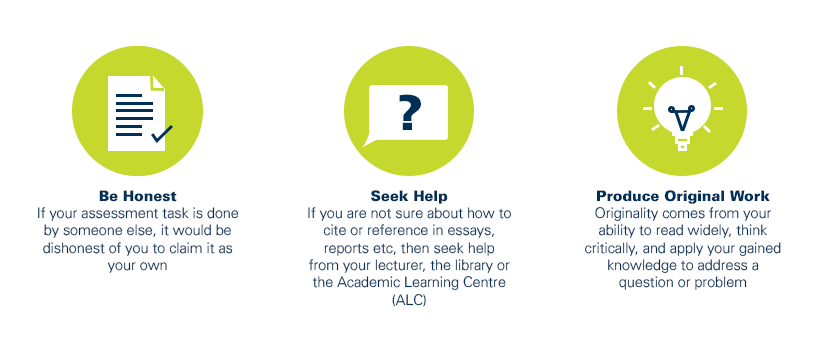
As a CQUniversity student you are expected to act honestly in all aspects of your academic work.
Any assessable work undertaken or submitted for review or assessment must be your own work. Assessable work is any type of work you do to meet the assessment requirements in the unit, including draft work submitted for review and feedback and final work to be assessed.
When you use the ideas, words or data of others in your assessment, you must thoroughly and clearly acknowledge the source of this information by using the correct referencing style for your unit. Using others’ work without proper acknowledgement may be considered a form of intellectual dishonesty.
Participating honestly, respectfully, responsibly, and fairly in your university study ensures the CQUniversity qualification you earn will be valued as a true indication of your individual academic achievement and will continue to receive the respect and recognition it deserves.
As a student, you are responsible for reading and following CQUniversity’s policies, including the Student Academic Integrity Policy and Procedure. This policy sets out CQUniversity’s expectations of you to act with integrity, examples of academic integrity breaches to avoid, the processes used to address alleged breaches of academic integrity, and potential penalties.
What is a breach of academic integrity?
A breach of academic integrity includes but is not limited to plagiarism, self-plagiarism, collusion, cheating, contract cheating, and academic misconduct. The Student Academic Integrity Policy and Procedure defines what these terms mean and gives examples.
Why is academic integrity important?
A breach of academic integrity may result in one or more penalties, including suspension or even expulsion from the University. It can also have negative implications for student visas and future enrolment at CQUniversity or elsewhere. Students who engage in contract cheating also risk being blackmailed by contract cheating services.
Where can I get assistance?
For academic advice and guidance, the Academic Learning Centre (ALC) can support you in becoming confident in completing assessments with integrity and of high standard.
What can you do to act with integrity?