Overview
In this unit you will commence your study of neurogenic communication conditions in children and adults. You will learn about the aetiology, symptomatology and prognosis of neurogenic communication conditions that result in speech, language and cognitive communication difficulties. You will assess and classify neurogenic communication conditions using holistic decision making. You will apply the principles of evidence-based practice and the International Classification of Functioning, Disability and Health framework throughout the unit.
Details
Pre-requisites or Co-requisites
Pre-requisites: SPCH12003 Functional Anatomy of the Head, Neck and Thorax SPCH13004 Communication Goals and Needs Across the School Years SPCH12007 Speech Pathology Work-Integrated Learning 1 SPCH13011 Applied Evidence Based Practice for Speech Pathology
Important note: Students enrolled in a subsequent unit who failed their pre-requisite unit, should drop the subsequent unit before the census date or within 10 working days of Fail grade notification. Students who do not drop the unit in this timeframe cannot later drop the unit without academic and financial liability. See details in the Assessment Policy and Procedure (Higher Education Coursework).
Offerings For Term 1 - 2026
Attendance Requirements
All on-campus students are expected to attend scheduled classes - in some units, these classes are identified as a mandatory (pass/fail) component and attendance is compulsory. International students, on a student visa, must maintain a full time study load and meet both attendance and academic progress requirements in each study period (satisfactory attendance for International students is defined as maintaining at least an 80% attendance record).
Recommended Student Time Commitment
Each 6-credit Undergraduate unit at CQUniversity requires an overall time commitment of an average of 12.5 hours of study per week, making a total of 150 hours for the unit.
Class Timetable
Assessment Overview
Assessment Grading
This is a graded unit: your overall grade will be calculated from the marks or grades for each assessment task, based on the relative weightings shown in the table above. You must obtain an overall mark for the unit of at least 50%, or an overall grade of 'pass' in order to pass the unit. If any 'pass/fail' tasks are shown in the table above they must also be completed successfully ('pass' grade). You must also meet any minimum mark requirements specified for a particular assessment task, as detailed in the 'assessment task' section (note that in some instances, the minimum mark for a task may be greater than 50%). Consult the University's Grades and Results Policy for more details of interim results and final grades.
All University policies are available on the CQUniversity Policy site.
You may wish to view these policies:
- Grades and Results Policy
- Assessment Policy and Procedure (Higher Education Coursework)
- Review of Grade Procedure
- Student Academic Integrity Policy and Procedure
- Academic Progression Policy and Procedure
- Student Refund and Credit Balance Policy and Procedure
- Complaints Policy and Procedure
- Information and Communications Technology Acceptable Use Policy and Procedure
This list is not an exhaustive list of all University policies. The full list of University policies are available on the CQUniversity Policy site.
Feedback, Recommendations and Responses
Every unit is reviewed for enhancement each year. At the most recent review, the following staff and student feedback items were identified and recommendations were made.
Feedback from SUTE feedback, lecturer self-reflection
The volume of content across the unit is high.
It is recommended that some foundational content be shifted to SPCH12003 (Functional Anatomy) in the prior term to allow more time to be spent on applied content in SPCH13003.
Feedback from SUTE feedback, lecturer self-reflection
The clear division across categories of neurogenic communication conditions supported learning.
It is recommended that the weekly content schedule continue to reflect a clear division across neurogenic communication conditions.
- Select evidence-based assessments relevant to the given neurogenic communication condition and interpret the results of such assessments
- Analyse and synthesise assessment findings of the presenting neurogenic communication condition to provide a differential diagnosis
- Justify clinical decisions using the International Classification of Functioning, Disability and Health framework and evidence-based practice
Alignment of Assessment Tasks to Learning Outcomes
| Assessment Tasks | Learning Outcomes | ||
|---|---|---|---|
| 1 | 2 | 3 | |
| 1 - In-class Test(s) - 25% | |||
| 2 - Practical Assessment - 25% | |||
| 3 - Oral Examination - 50% | |||
Alignment of Graduate Attributes to Learning Outcomes
| Graduate Attributes | Learning Outcomes | ||
|---|---|---|---|
| 1 | 2 | 3 | |
| 1 - Communication | |||
| 2 - Problem Solving | |||
| 3 - Critical Thinking | |||
| 4 - Information Literacy | |||
| 5 - Team Work | |||
| 6 - Information Technology Competence | |||
| 7 - Cross Cultural Competence | |||
| 8 - Ethical practice | |||
| 9 - Social Innovation | |||
| 10 - First Nations Knowledges | |||
| 11 - Aboriginal and Torres Strait Islander Cultures | |||
Textbooks
There are no required textbooks.
IT Resources
- CQUniversity Student Email
- Internet
- Unit Website (Moodle)
All submissions for this unit must use the referencing style: American Psychological Association 7th Edition (APA 7th edition)
For further information, see the Assessment Tasks.
s.charania@cqu.edu.au
Week 1
Begin Date: 09 Mar 2026Module/Topic
Assessment Frameworks
Chapter
Readings will be posted in the eReading List in Moodle
Events and Submissions/Topic
Week 2
Begin Date: 16 Mar 2026Module/Topic
Motor Speech Disorders - Part 1
Chapter
Readings will be posted in the eReading List in Moodle
Events and Submissions/Topic
Week 3
Begin Date: 23 Mar 2026Module/Topic
Motor Speech Disorders - Part 2
Chapter
Readings will be posted in the eReading List in Moodle
Events and Submissions/Topic
Week 4
Begin Date: 30 Mar 2026Module/Topic
Chapter
Events and Submissions/Topic
Week 5
Begin Date: 06 Apr 2026Module/Topic
Public Holiday - No Classes
Chapter
Events and Submissions/Topic
Week 6
Begin Date: 13 Apr 2026Module/Topic
Aphasia - Part 1
Chapter
Readings will be posted in the eReading List in Moodle
Events and Submissions/Topic
Vacation Week
Begin Date: 20 Apr 2026Module/Topic
No Classes - Mid-Term Break
Chapter
Events and Submissions/Topic
Week 7
Begin Date: 27 Apr 2026Module/Topic
Aphasia - Part 2
Chapter
Readings will be posted in the eReading List in Moodle
Events and Submissions/Topic
Week 8
Begin Date: 04 May 2026Module/Topic
Public Holiday - No Classes
Chapter
Events and Submissions/Topic
Week 9
Begin Date: 11 May 2026Module/Topic
Chapter
Events and Submissions/Topic
Week 10
Begin Date: 18 May 2026Module/Topic
Cognitive Communication - Part 1
Chapter
Readings will be posted in the eReading List in Moodle
Events and Submissions/Topic
Week 11
Begin Date: 25 May 2026Module/Topic
Cognitive Communication - Part 1
Chapter
Readings will be posted in the eReading List in Moodle
Events and Submissions/Topic
Week 12
Begin Date: 01 Jun 2026Module/Topic
Review and Case Studies - No Lectures
Chapter
Readings will be posted in the eReading List in Moodle
Events and Submissions/Topic
Exam Week
Begin Date: 08 Jun 2026Module/Topic
Chapter
Events and Submissions/Topic
Vacation/Exam Week
Begin Date: 15 Jun 2026Module/Topic
Chapter
Events and Submissions/Topic
Students should visit the CB87 Speech Pathology Course site in Moodle for information that is relevant across all units, including information that will support completion of assessments.
Throughout the term, students will require access to the Assessment Cupboard to review speech pathology tests relating to neurogenic communication conditions in order to prepare for assessments in this unit. The Term 1 Assessment Cupboard schedule will be posted in the Clinical Assessment and Intervention Resources tile in the CB87 Speech Pathology Moodle site.
Please note that the course content is condensed from 10 weeks into 8 weeks, resulting in 3-hour tutorials and longer recorded lectures.
In Weeks 4 and 9, there is a one (1) hour in-class test. On these weeks, the test will begin at 1pm. No tutorial will be held afterwards.
For any questions relating to content in this unit, please reach out to Unit Coordinator Salma Charania at s.charania@cqu.edu.au or Lecturer Justine Hamilton at j.l.hamilton@cqu.edu.au
1 Practical Assessment
In this this assessment, you will be required to analyse and interpret the communication characteristics and needs demonstrated by four (4) different individuals who present with features associated with motor speech disorders. Each individual’s presentation will be heard and/or shown in an audio and/or video segment.
For each segment, you will respond to questions requiring you to:
- Apply the International Classification of Functioning, Disability and Health (ICF) framework
- Identify visual and/or perceptual characteristics of motor speech disorders
- Draw on your knowledge and understanding of underlying aetiologies/diagnoses
- Consider appropriate additional assessments, and/or
- Identify potential areas for goals
Your responses will be graded based on the accuracy of your perceptual analysis, your application of the ICF framework, your use of appropriate clinical terminology, the depth and clarity of your clinical reasoning and/or your ability to integrate relevant knowledge into your responses.
You may bring one printed double-sided A4 page of notes into the assessment. This notes page must be typed in 11-point Calibri or Arial font, with margins set at 2.54 cm, and may be single spaced. The notes page must be handed in at the end of the assessment but will not be graded. Other than this page, no additional materials are permitted.
You must bring your own fully charged laptop, your laptop charger, and functioning headphones or ear buds. Only the Moodle audio and/or video files and the Word response document may be open on your laptop during the assessment. The instructor will monitor student laptops for the duration of the assessment. Accessing any additional digital or physical materials is a breach of academic integrity and will result in a referral to the Academic Integrity Office.
At 1:00pm on 30th March 2026, the four (4) audio and/or videos files and a Word response document will be released in Moodle. These files will remain accessible for the duration of the assessment period, and you may replay them as often as needed. You are expected to access these materials only through Moodle during the assessment time.
You should aim to arrive at least 10 minutes prior to your scheduled assessment start time. In the extraordinary circumstance that you are late, you will be permitted late entry of up to 15 minutes after the assessment commencement time. The period of lost time due to lateness will be deducted from your overall assessment time. If you are denied access to the assessment due to lateness (i.e., arriving beyond the permitted late entry period), you should submit an online application for a deferred assessment. If your application for deferred assessment is denied, you will receive a fail grade; however, you may be eligible for a supplementary assessment per CQU policy.
Level of GenAI use allowed:
Level 1
The assessment is completed entirely without AI assistance in a controlled environment, ensuring that students rely solely on their existing knowledge, understanding, and skills. You must not use AI at any point during the assessment. You must demonstrate your core skills and knowledge.
The 72-hour grace period does not apply to this assessment.
Week 4 Monday (30 Mar 2026) 2:00 pm AEST
This assessment task must be uploaded to Moodle by the due date/time.
Week 6 Monday (13 Apr 2026)
Grades will be uploaded to Moodle. Feedback will be provided upon request.
Marks are assigned to each question on the Word response document. The approximate distribution of marks across all questions in the assessment is as follows:
- 30% for accuracy of visual and perceptual descriptions
- 30% for accuracy and justification of diagnoses
- 25% for appropriateness and justification of options for further assessment
- 15% for appropriateness and justification of potential goal areas
Please see the CB87 Academic Integrity handout for information on paraphrasing, source quality, and artificial intelligence use across units in the speech pathology course. As this is a timed in-class task, references do not need to be included in your response.
Please note that per section 5.50 in the Higher Education Assessment Policy, late penalties do not apply to this assessment task. If you do not attend or complete this assessment task at the specified date/time, you will receive a mark of zero. In the event that you are unable to attend or complete the assessment task for reasons outlined in the Higher Education Assessment Policy, you must submit an extension request through Moodle.
This assessment will be completed in-class from 1:00pm to 2:00pm on 30th March 2026. Students will upload their completed Word response document to Moodle no later than 2:00pm on 30th March 2026.
- Analyse and synthesise assessment findings of the presenting neurogenic communication condition to provide a differential diagnosis
- Justify clinical decisions using the International Classification of Functioning, Disability and Health framework and evidence-based practice
2 In-class Test(s)
In this this assessment, you will be required to answer case-based multiple-choice and short-answer questions related to acquired language conditions that may require intervention. You will be required to apply the International Classification of Functioning, Disability, and Health (ICF) framework as you draw on your knowledge of:
- Underlying aetiologies/diagnoses and their associated characteristics,
- Options for additional assessment, and
- Key areas to consider when developing intervention goals
Your responses will be graded based on how effectively you apply clinical reasoning, integrate relevant theoretical knowledge, and interpret case information using the ICF framework.
You may bring one printed double-sided A4 page of notes into the assessment. This notes page must be typed in 11-point Calibri or Arial font, with margins set at 2.54 cm, and may be single spaced. The notes page must be handed in at the end of the assessment but will not be graded. Other than this page, no additional materials are permitted.
At 1:00pm on 11th May 2026, the test will be released in Moodle. You must bring your own fully charged laptop and your laptop charger. Only the Moodle quiz may be open on your laptop during the assessment. The instructor will monitor student laptops for the duration of the assessment. Accessing any additional digital or physical materials is a breach of academic integrity and will result in a referral to the Academic Integrity Office.
You should aim to arrive at least 10 minutes prior to your scheduled assessment start time. In the extraordinary circumstance that you are late, you will be permitted late entry of up to 15 minutes after the assessment commencement time. The period of lost time due to lateness will be deducted from your overall assessment time. If you are denied access to the assessment due to lateness (i.e., arriving beyond the permitted late entry period), you should submit an online application for a deferred assessment. If your application for deferred assessment is denied, you will receive a fail grade; however, you may be eligible for a supplementary assessment per CQU policy.
Level of GenAI use allowed:
Level 1
The assessment is completed entirely without AI assistance in a controlled environment, ensuring that students rely solely on their existing knowledge, understanding, and skills. You must not use AI at any point during the assessment. You must demonstrate your core skills and knowledge.
The 72-hour grace period does not apply to this assessment.
Week 9 Monday (11 May 2026) 2:00 pm AEST
This assessment task must be uploaded to Moodle by the due date/time.
Week 11 Monday (25 May 2026)
Grades will be uploaded to Moodle. Feedback will be provided upon request
Marks are assigned to each question on the test. The approximate distribution of marks across all questions in the assessment is as follows:
- 50% for accuracy and justification of diagnoses
- 25% for appropriateness and justification of options for further assessment
- 25% for appropriateness and justification of potential goal areas
Please see the CB87 Academic Integrity handout for information on paraphrasing, source quality, and artificial intelligence use across units in the speech pathology course. As this is a timed, in-class task, references are not required in your responses. However, all short answers questions must be written in your own words and must not be plagiarised from any other sources.
Please note that per section 5.50 in the Higher Education Assessment Policy, late penalties do not apply to this assessment task. If you do not attend or complete this assessment task at the specified date/time, you will receive a mark of zero. In the event that you are unable to attend or complete the assessment task for reasons outlined in the Higher Education Assessment Policy, you must submit an extension request through Moodle.
- Justify clinical decisions using the International Classification of Functioning, Disability and Health framework and evidence-based practice
3 Oral Examination
In this this assessment, you will be required to analyse and interpret clinical information relating to acquired speech, language, and/or cognitive conditions and answer questions about your conclusions and your justification. There are two (2) stations for this assessment:
- Station 1: You must analyse and interpret a collection of formal and informal assessment results to select and justify a diagnosis.
- Station 2: You must analyse case information to propose and justify your selection of standardised assessments.
The specific timing and requirements of both stations of the Viva are as follows:
Station 1
Part A: Preparation (not assessed):
- Three (3) hours prior to your scheduled assessment time, the results of speech, language, and/or cognitive assessments for your assigned case will be released on Moodle. You must review, analyse, and interpret the results prior to arriving for your Viva.
- You are permitted to bring in one (1) printed double-sided page of A4 paper of notes. Notes must be typed in 11-point Calibri or Arial font with 2.54cm margins and may be single-spaced. No additional materials are permitted. Your notes page must be handed in at the end of Station 1B, but it will not be graded.
- You will also have access to the assessment cupboard 15 minutes before Station 1B begins.
Part B: Evaluation (10 minutes; assessed):
- At the designated start time for Station 1B, the examiner will ask you to:
- Summarise the individual’s communication characteristics,
- Identify any inconsistencies in assessment results and what could account for them
- Identify any gaps in assessment information and how you would go about obtaining this information, and
- Propose and justify the likely diagnosis/es.
- You may refer to your notes page during the Viva; however, excessive reliance on notes will impact your professional communication and therefore impact marks, per the rubric.
Station 2 takes place in a separate room with a separate examiner. You will have one (1) minute to move between rooms.
Station 2
Part A: Preparation (10 minutes; not assessed)
- At the designated start time for Station 2A, you will be provided with case information for a different individual, including an estimate of how much time is available to administer standardised assessments at the clinic the individual attends.
- You will review the case information to select and justify the standardised assessments you would like to administer.
- The Assessment Cupboard will be open during the 10-minute preparation time should you wish to briefly consult any assessments stored there.
- One (1) piece of A4 paper will be provided to you for rough notes, and you may write on both sides of the paper. Any rough notes must be handed in at the end of Station 2B, but they will not be graded.
Part B: Evaluation (8 minutes; assessed):
- At the designated start time for Station 2B, the examiner will ask you to explain and justify your choice of standardised assessments.
- The examiner will then ask you two (2) follow-up questions. These questions may relate to:
- How you considered the International Classification of Functioning, Disability, and Health (ICF) in your selection of assessments
- How you would prioritise assessments if additional time constraints were present
- What alternatives to standardised tests you might consider, and
- How each standardised assessment would contribute to developing a functional intervention plan for this individual.
- You may refer to your notes page during the Viva; however, excessive reliance on notes will impact your professional communication and therefore impact marks, per the rubric.
You should aim to arrive at least 15 minutes prior to your scheduled assessment start time for Station 1B. In the extraordinary circumstance that you are late, you will be permitted late entry of up to 5 minutes after the assessment commencement time. The period of lost time due to lateness will be deducted from your overall assessment time. If you are denied access to the assessment due to lateness (i.e., arriving beyond the permitted late entry period), you should submit an online application for a deferred assessment. If your application for deferred assessment is denied, you will receive a fail grade; however, you may be eligible for a supplementary assessment per CQU policy.
The 72-hour grace period does not apply to this assessment.
Level of GenAI use allowed:
Level 2
- Artificial intelligence (AI) may be used for pre-task activities such as brainstorming, outlining and initial research. This level focuses on the effective use of AI for planning, synthesis and ideation, but assessments should emphasise the ability to develop and refine these ideas independently. You may use AI for planning, idea development and research. Your final submission should show how you have developed and refined these ideas.
You may use any resources you wish to assist during Station 1A of this Viva, including AI tools. However, you should carefully review the risks and limitations of artificial intelligence described in the Academic Integrity Expectations document linked above. You are cautioned against relying on the accuracy of AI-generated information and are advised to complete your own analyses based on information provided via readings, lectures, and tutorials throughout SPCH13003.
AI tools may not be accessed once Station 1B has begun, and they are not permitted at any time during Station 2.
As this is a live, in-person Viva, there are no submission or referencing requirements.
Exam Week Monday (8 June 2026) 6:00 pm AEST
The Viva schedule will be posted at least 2 weeks before the Viva. Vivas will be scheduled between 10am and 6pm on 8th and 9th June 2026.
Vacation/Exam Week Friday (19 June 2026)
Grades and feedback will be uploaded to Moodle.
There are three (3) marking criteria that will be used to assess Assessment 3 for SPCH13003:
- Criterion one (1) focuses on your analysis of assessment results, including the integration of all provided assessment information, the identification of any gaps or inconsistencies, and the selection and justification of the likely diagnosis/es. This criterion is worth 50% of this assessment grade.
- Criterion two (2) focuses on your selection and justification of standardised assessments, including how the chosen assessments will efficiently allow you to create an intervention plan that meets the individual’s functional needs. This criterion is worth 40% of this assessment grade.
- Criterion three (3) focuses on your professionalism and spoken communication skills in Station 1B and Station 2B. This criterion is worth 10% of this assessment grade.
Please note that per section 5.50 in the Higher Education Assessment Policy, late penalties do not apply to this assessment task. If you do not attend or complete this assessment task at the specified date/time, you will receive a mark of zero. In the event that you are unable to attend or complete the assessment task for reasons outlined in the Higher Education Assessment Policy, you must submit an extension request through Moodle.
No submission method provided.
- Select evidence-based assessments relevant to the given neurogenic communication condition and interpret the results of such assessments
- Analyse and synthesise assessment findings of the presenting neurogenic communication condition to provide a differential diagnosis
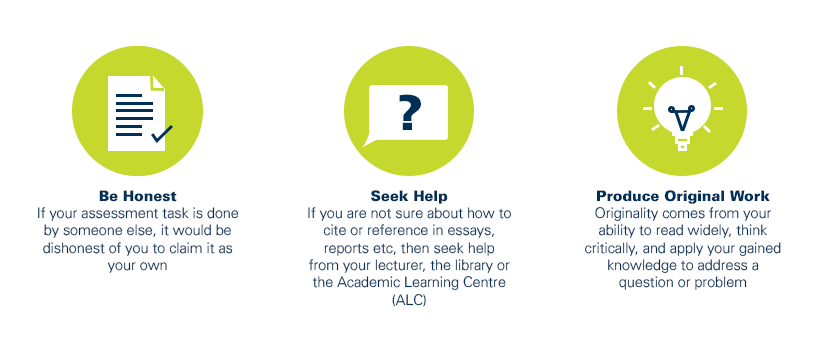
As a CQUniversity student you are expected to act honestly in all aspects of your academic work.
Any assessable work undertaken or submitted for review or assessment must be your own work. Assessable work is any type of work you do to meet the assessment requirements in the unit, including draft work submitted for review and feedback and final work to be assessed.
When you use the ideas, words or data of others in your assessment, you must thoroughly and clearly acknowledge the source of this information by using the correct referencing style for your unit. Using others’ work without proper acknowledgement may be considered a form of intellectual dishonesty.
Participating honestly, respectfully, responsibly, and fairly in your university study ensures the CQUniversity qualification you earn will be valued as a true indication of your individual academic achievement and will continue to receive the respect and recognition it deserves.
As a student, you are responsible for reading and following CQUniversity’s policies, including the Student Academic Integrity Policy and Procedure. This policy sets out CQUniversity’s expectations of you to act with integrity, examples of academic integrity breaches to avoid, the processes used to address alleged breaches of academic integrity, and potential penalties.
What is a breach of academic integrity?
A breach of academic integrity includes but is not limited to plagiarism, self-plagiarism, collusion, cheating, contract cheating, and academic misconduct. The Student Academic Integrity Policy and Procedure defines what these terms mean and gives examples.
Why is academic integrity important?
A breach of academic integrity may result in one or more penalties, including suspension or even expulsion from the University. It can also have negative implications for student visas and future enrolment at CQUniversity or elsewhere. Students who engage in contract cheating also risk being blackmailed by contract cheating services.
Where can I get assistance?
For academic advice and guidance, the Academic Learning Centre (ALC) can support you in becoming confident in completing assessments with integrity and of high standard.
What can you do to act with integrity?