Overview
This unit will focus on phonetics and phonetic transcription of speech. You will apply this theoretical knowledge to practice across culturally and linguistically diverse settings. You will form an understanding of the relationship between the vocal tract, speech sounds produced, and speech sounds perceived. You will develop an appreciation of the interface between phonetics, phonology, speech rate, suprasegmentals, acoustics, and intelligibility. You will be required to listen to and transcribe speech samples using the International Phonetic Alphabet (IPA) and Australian-English vowel symbols. This unit will provide you with fundamental foundation skills required in speech pathology.
Details
Pre-requisites or Co-requisites
There are no requisites for this unit.
Important note: Students enrolled in a subsequent unit who failed their pre-requisite unit, should drop the subsequent unit before the census date or within 10 working days of Fail grade notification. Students who do not drop the unit in this timeframe cannot later drop the unit without academic and financial liability. See details in the Assessment Policy and Procedure (Higher Education Coursework).
Offerings For Term 2 - 2026
Attendance Requirements
All on-campus students are expected to attend scheduled classes - in some units, these classes are identified as a mandatory (pass/fail) component and attendance is compulsory. International students, on a student visa, must maintain a full time study load and meet both attendance and academic progress requirements in each study period (satisfactory attendance for International students is defined as maintaining at least an 80% attendance record).
Recommended Student Time Commitment
Each 6-credit Undergraduate unit at CQUniversity requires an overall time commitment of an average of 12.5 hours of study per week, making a total of 150 hours for the unit.
Class Timetable
Assessment Overview
Assessment Grading
This is a graded unit: your overall grade will be calculated from the marks or grades for each assessment task, based on the relative weightings shown in the table above. You must obtain an overall mark for the unit of at least 50%, or an overall grade of 'pass' in order to pass the unit. If any 'pass/fail' tasks are shown in the table above they must also be completed successfully ('pass' grade). You must also meet any minimum mark requirements specified for a particular assessment task, as detailed in the 'assessment task' section (note that in some instances, the minimum mark for a task may be greater than 50%). Consult the University's Grades and Results Policy for more details of interim results and final grades.
All University policies are available on the CQUniversity Policy site.
You may wish to view these policies:
- Grades and Results Policy
- Assessment Policy and Procedure (Higher Education Coursework)
- Review of Grade Procedure
- Student Academic Integrity Policy and Procedure
- Academic Progression Policy and Procedure
- Student Refund and Credit Balance Policy and Procedure
- Complaints Policy and Procedure
- Information and Communications Technology Acceptable Use Policy and Procedure
This list is not an exhaustive list of all University policies. The full list of University policies are available on the CQUniversity Policy site.
Feedback, Recommendations and Responses
Every unit is reviewed for enhancement each year. At the most recent review, the following staff and student feedback items were identified and recommendations were made.
Feedback from SUTE comments and instructor feedback
Intermittent transcription errors were made in lecture slides, which related to the change in Australian vowel transcription protocols from the previous year.
It is recommended that the unit coordinator review the lecture slides to ensure vowels are consistent across the unit.
Feedback from SUTE comments
Students suggested to assign transcription practice as homework to allow tutorials to focus more on phoneme production and articulation.
It is recommended that the unit coordinator adjust lecture and tutorial content to strengthen focus on phoneme production and assign transcription exercises as homework instead of using tutorials for this purpose.
Feedback from SUTE comments and instructor feedback
Students commented that opportunities for feedback and practice in tutorial reinforced the theory in the weekly lecture content.
It is recommended that feedback and opportunities to practice applying knowledge continue to be provided throughout the unit.
Feedback from UC reflection
The nature of assessments in this unit places them at risk for use of artificial intelligence, yet transcription remains an important skill for which students need to develop independent competence.
It is recommended that the Unit Coordinator review the quizzes and the final assessment to minimise potential for artificial intelligence use while ensuring authenticity.
- Apply anatomical knowledge of the vocal tract and auditory system to describe production and perception of speech.
- Apply knowledge of Australia’s linguistic diversity to identify how language background may influence communication needs in clinical contexts.
- Describe how the domains of phonetics, phonology, speech rate, suprasegmentals, and acoustics interact to influence speech intelligibility.
- Phonetically/ phonemically transcribe connected speech using the International Phonetic Alphabet symbols and Australian English vowel symbols.
Alignment of Assessment Tasks to Learning Outcomes
| Assessment Tasks | Learning Outcomes | |||
|---|---|---|---|---|
| 1 | 2 | 3 | 4 | |
| 1 - Online Quiz(zes) - 45% | ||||
| 2 - Practical Assessment - 55% | ||||
Alignment of Graduate Attributes to Learning Outcomes
| Graduate Attributes | Learning Outcomes | |||
|---|---|---|---|---|
| 1 | 2 | 3 | 4 | |
| 1 - Communication | ||||
| 2 - Problem Solving | ||||
| 3 - Critical Thinking | ||||
| 4 - Information Literacy | ||||
| 5 - Team Work | ||||
| 6 - Information Technology Competence | ||||
| 7 - Cross Cultural Competence | ||||
| 8 - Ethical practice | ||||
| 9 - Social Innovation | ||||
| 10 - First Nations Knowledges | ||||
| 11 - Aboriginal and Torres Strait Islander Cultures | ||||
Textbooks
Australian English pronunciation and transcription
- Edition: 2nd edn (2018)
- Authors: Cox, F., & Fletcher, J.
- Cambridge University Press
- Cambridge Cambridge , UK
- ISBN: 9781316639269
Additional Textbook Information
Paper copies (if preferred) can be purchased at the University Shop here: https://shop.cqu.edu.au/ (search on the Unit code)
IT Resources
- CQUniversity Student Email
- Internet
- Unit Website (Moodle)
All submissions for this unit must use the referencing style: American Psychological Association 7th Edition (APA 7th edition)
For further information, see the Assessment Tasks.
j.zussino@cqu.edu.au
Week 1
Begin Date: 13 Jul 2026Module/Topic
Introduction to phonetics and speech anatomy.
Chapter
Please see e-Reading list in moodle.
Events and Submissions/Topic
Week 2
Begin Date: 20 Jul 2026Module/Topic
English consonants.
Chapter
Please see e-Reading list in moodle.
Events and Submissions/Topic
Week 3
Begin Date: 27 Jul 2026Module/Topic
Australian English vowels.
Chapter
Please see e-Reading list in moodle.
Events and Submissions/Topic
Week 4
Begin Date: 03 Aug 2026Module/Topic
Stress and intonation in Australian English.
Chapter
Please see e-Reading list in moodle.
Events and Submissions/Topic
Week 5
Begin Date: 10 Aug 2026Module/Topic
Broad vs narrow transcription.
Chapter
Please see e-Reading list in moodle.
Events and Submissions/Topic
Week 6
Begin Date: 17 Aug 2026Module/Topic
Review of concepts from week 1-5 and transcription application.
Chapter
Please see e-Reading list in moodle.
Events and Submissions/Topic
Vacation Week
Begin Date: 24 Aug 2026Module/Topic
Break week.
Chapter
No readings this week.
Events and Submissions/Topic
Week 7
Begin Date: 31 Aug 2026Module/Topic
Phonetics and linguistics.
Chapter
Please see e-Reading list in moodle.
Events and Submissions/Topic
Week 8
Begin Date: 07 Sep 2026Module/Topic
Australian Aboriginal languages and dialectical variation.
Chapter
Please see e-Reading list in moodle.
Events and Submissions/Topic
Week 9
Begin Date: 14 Sep 2026Module/Topic
Practical application of phonetics.
Chapter
Please see e-Reading list in moodle.
Events and Submissions/Topic
Week 10
Begin Date: 21 Sep 2026Module/Topic
Transcription of disordered speech.
Chapter
Please see e-Reading list in moodle.
Events and Submissions/Topic
Week 11
Begin Date: 28 Sep 2026Module/Topic
Introduction to Work Integrated Learning (WIL), placement information, and introduction to Year 2 Speech Pathology.
Chapter
No readings this week.
Events and Submissions/Topic
Week 12
Begin Date: 05 Oct 2026Module/Topic
No classes this week.
Chapter
No readings this week.
Events and Submissions/Topic
Exam Week
Begin Date: 12 Oct 2026Module/Topic
Chapter
Events and Submissions/Topic
Vacation/Exam Week
Begin Date: 19 Oct 2026Module/Topic
Chapter
Events and Submissions/Topic
Tutorials will be 1.5 hours.
1 Online Quiz(zes)
This assessment task requires you to complete three online quizzes throughout the term. Each quiz will contain multiple choice and short answer questions. The number and type of questions for each quiz is posted on moodle. Once you enter/commence each quiz, you will have 60 minutes to answer all questions i.e., complete the quiz.
Level of GenAI use allowed:
Level 1: The assessment is completed entirely without AI assistance in a controlled environment, ensuring that students rely solely on their existing knowledge, understanding and skills. You must not use Al at any point during the assessment. You must demonstrate your core skills and knowledge.
Grace period:
As this assessment involves online quizzes, the 72-hour grace period does not apply.
A timetable outlining the opening and closing of each quiz has been outlined below:
Online Quiz 1:Content assessed: weeks 1-3
Opens: Monday, 3 August 2026, 7:00 AM
Closes: Wednesday, 5 August 2026, 7:00 AM
Online Quiz 2:
Content assessed: weeks 4-6
Opens: Monday, 31 August 2026, 7:00 AM
Closes: Wednesday, 2 September 2026, 7:00 AM
Online Quiz 3:
Content assessed: weeks 7-9
Opens: Monday, 21 September 2026, 7:00 AM
Closes: Wednesday, 23 September 2026, 7:00 AM
The date and time each quiz will be open has been included under 'task description'. This information will also be provided on the Moodle page.The due time is in Queensland time (AEST).
Feedback will be provided to students within two weeks of each quiz closing
Students will be assessed on their ability to apply anatomical knowledge of the vocal tract and auditory system to describe production and perception of speech, and apply knowledge of Australia’s linguistic diversity to identify how language background may influence communication needs in clinical contexts. Students will demonstrate this knowledge through correct responses to multiple choice and short answer questions on online quizzes.
- Apply anatomical knowledge of the vocal tract and auditory system to describe production and perception of speech.
- Apply knowledge of Australia’s linguistic diversity to identify how language background may influence communication needs in clinical contexts.
2 Practical Assessment
There are 2 parts to this assessment. First, you will be required to transcribe 30 utterances of a child’s speech. You will then identify primary stress in each word. Second, you will list two (2) ways that you could assess the child’s intelligibility, and then indicate which method you would use for this child and why. You will then provide an explanation for how two (2) domains positively or negatively influence intelligibility. For this assessment task, you are required to use phonemic (BROAD) transcription. Your emphasis should be on clearly identifying the phonemes used by the child in the video rather than subtle variations on the phonemes. For example, if the child was trying to say “bit” but used a /p/ at the beginning (a different phoneme), you would transcribe as /pɪt/.
You do not need to use diacritics or stress markers.
Part 1: Phonemic transcription
1. A video will be released on Moodle on Tuesday 6th October at 7am (Week 12). You will have 48 hours to listen to the video and submit your assessment.
2. You must complete your transcription on the provided form, called “Assessment 2 Response Form.” To aid in your transcription, the orthographic (spelled) transcription of the utterances has been included on this form for you. This form will be released in Moodle when the video is released.
3. You must transcribe the child’s speech using phonemic (broad) transcription, using the IPA symbols covered in class and in your textbook. You will use Harrington, Cox and Evans (HCE) Australian vowels.
4. Once you have transcribed the sample, you will need to indicate primary stress in each word that you have transcribed using the ‘ mark. Each word has only one primary stress.
5. You may transcribe by hand initially. Once you are happy with your transcriptions, you will convert them to a typed transcription in the Word document using the IPA phonetic symbols program https://ipa.typeit.org/full/ or https://aptct.auburn.edu/. You must upload the typed version.
Part 2: Intelligibility.
6. You will list two (2) ways that you could assess intelligibility, and indicate which method would be suitable for this child and why. You will then explain how two (2) domains of phonology, speech rate, suprasegmentals, and/ or acoustics is positively or negatively influencing the child’s intelligibility. You will write this on the “Assessment 2 Response Form”.
As this assessment involves a timed take-home test, the 72- hour grace period does not apply.
Level 1 AI:
The assessment is completed entirely without AI assistance, in a controlled environment, ensuring that students rely solely on their existing knowledge, understanding and skills. You must not use AI at any point doing this assessment. You must demonstrate your core skills and knowledge.
Week 12 Thursday (8 Oct 2026) 7:00 am AEST
Vacation/Exam Week Thursday (22 Oct 2026)
Feedback will be uploaded to moodle
This is a must pass assessment task. Student must receive a minimum grade of 50% to pass this assessment task.
Criterion 1: Phonemic transcription There are 109 words to be transcribed across the 30 utterances. Your grade will be determined by the total number of words transcribed correctly. For example, if you made 3 transcription errors on one word and 1 transcription error on another word, your grade would be 107/109 because only 2 words had errors. This criterion will be worth 60% of your grade for this assessment.
Criterion 2: There are 109 words, therefore 109 indicators of primary stress. Your grade will be determined by the total number of correct primary stress indicator marks. This criterion will be worth 15% of your grade for this assessment.
Criterion 3: You will list two (2) ways that you could assess the child’s intelligibility, and then indicate which method you would use for this child any why. You will then choose two (2) domains out of phonology, speech rate, suprasegmentals, and/ or acoustics and describe how the domains positively or negatively influence the child’s intelligibility. This criterion will be worth 25% of your grade for this assessment.
- Describe how the domains of phonetics, phonology, speech rate, suprasegmentals, and acoustics interact to influence speech intelligibility.
- Phonetically/ phonemically transcribe connected speech using the International Phonetic Alphabet symbols and Australian English vowel symbols.
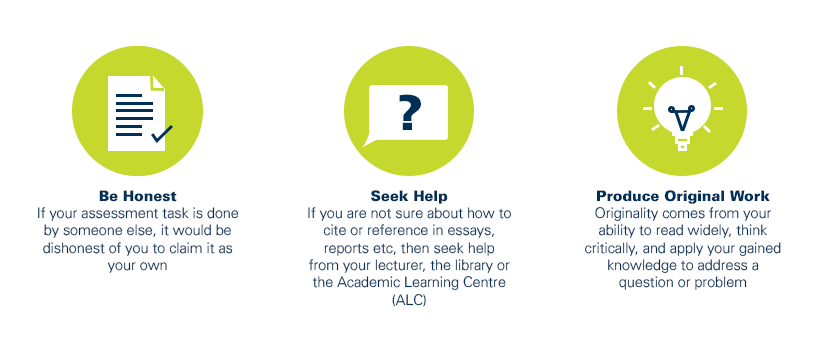
As a CQUniversity student you are expected to act honestly in all aspects of your academic work.
Any assessable work undertaken or submitted for review or assessment must be your own work. Assessable work is any type of work you do to meet the assessment requirements in the unit, including draft work submitted for review and feedback and final work to be assessed.
When you use the ideas, words or data of others in your assessment, you must thoroughly and clearly acknowledge the source of this information by using the correct referencing style for your unit. Using others’ work without proper acknowledgement may be considered a form of intellectual dishonesty.
Participating honestly, respectfully, responsibly, and fairly in your university study ensures the CQUniversity qualification you earn will be valued as a true indication of your individual academic achievement and will continue to receive the respect and recognition it deserves.
As a student, you are responsible for reading and following CQUniversity’s policies, including the Student Academic Integrity Policy and Procedure. This policy sets out CQUniversity’s expectations of you to act with integrity, examples of academic integrity breaches to avoid, the processes used to address alleged breaches of academic integrity, and potential penalties.
What is a breach of academic integrity?
A breach of academic integrity includes but is not limited to plagiarism, self-plagiarism, collusion, cheating, contract cheating, and academic misconduct. The Student Academic Integrity Policy and Procedure defines what these terms mean and gives examples.
Why is academic integrity important?
A breach of academic integrity may result in one or more penalties, including suspension or even expulsion from the University. It can also have negative implications for student visas and future enrolment at CQUniversity or elsewhere. Students who engage in contract cheating also risk being blackmailed by contract cheating services.
Where can I get assistance?
For academic advice and guidance, the Academic Learning Centre (ALC) can support you in becoming confident in completing assessments with integrity and of high standard.
What can you do to act with integrity?