Overview
In this unit, you will study aspects of language form, content, and use to develop an understanding of morphology, syntax, semantics, and pragmatics. You will learn how these subsystems of language help us to understand and express meaning in communication and will apply your learning to analyse English words and sentences. You will study how people acquire language, and how language varies across individuals, communities, social environments, and cultures.
Details
Pre-requisites or Co-requisites
There are no requisites for this unit.
Important note: Students enrolled in a subsequent unit who failed their pre-requisite unit, should drop the subsequent unit before the census date or within 10 working days of Fail grade notification. Students who do not drop the unit in this timeframe cannot later drop the unit without academic and financial liability. See details in the Assessment Policy and Procedure (Higher Education Coursework).
Offerings For Term 2 - 2026
Attendance Requirements
All on-campus students are expected to attend scheduled classes - in some units, these classes are identified as a mandatory (pass/fail) component and attendance is compulsory. International students, on a student visa, must maintain a full time study load and meet both attendance and academic progress requirements in each study period (satisfactory attendance for International students is defined as maintaining at least an 80% attendance record).
Recommended Student Time Commitment
Each 6-credit Undergraduate unit at CQUniversity requires an overall time commitment of an average of 12.5 hours of study per week, making a total of 150 hours for the unit.
Class Timetable
Assessment Overview
Assessment Grading
This is a graded unit: your overall grade will be calculated from the marks or grades for each assessment task, based on the relative weightings shown in the table above. You must obtain an overall mark for the unit of at least 50%, or an overall grade of 'pass' in order to pass the unit. If any 'pass/fail' tasks are shown in the table above they must also be completed successfully ('pass' grade). You must also meet any minimum mark requirements specified for a particular assessment task, as detailed in the 'assessment task' section (note that in some instances, the minimum mark for a task may be greater than 50%). Consult the University's Grades and Results Policy for more details of interim results and final grades.
All University policies are available on the CQUniversity Policy site.
You may wish to view these policies:
- Grades and Results Policy
- Assessment Policy and Procedure (Higher Education Coursework)
- Review of Grade Procedure
- Student Academic Integrity Policy and Procedure
- Academic Progression Policy and Procedure
- Student Refund and Credit Balance Policy and Procedure
- Complaints Policy and Procedure
- Information and Communications Technology Acceptable Use Policy and Procedure
This list is not an exhaustive list of all University policies. The full list of University policies are available on the CQUniversity Policy site.
Feedback, Recommendations and Responses
Every unit is reviewed for enhancement each year. At the most recent review, the following staff and student feedback items were identified and recommendations were made.
Feedback from SUTE
Students requested fewer quizzes in the constellation of assessments
It is recommended that the Unit Coordinator review alternative assessment formats.
Feedback from Lecturer/Unit Coordinator
Student engagement during tutorials appeared low
It is recommended that the Unit Coordinator liaise with Learning Design to investigate engagement options for hybrid delivery modalities.
- Identify and analyse aspects of form, content, and use in simple and complex English words and sentences
- Describe how language develops and varies across time, speakers, communities, environments, and cultures
- Integrate a variety of evidence-based sources to support a claim related to language learning or diversity
- Cohesively and coherently communicate ideas using academic writing conventions
Alignment of Assessment Tasks to Learning Outcomes
| Assessment Tasks | Learning Outcomes | |||
|---|---|---|---|---|
| 1 | 2 | 3 | 4 | |
| 1 - Online Quiz(zes) - 60% | ||||
| 2 - Essay - 40% | ||||
Alignment of Graduate Attributes to Learning Outcomes
| Graduate Attributes | Learning Outcomes | |||
|---|---|---|---|---|
| 1 | 2 | 3 | 4 | |
| 1 - Communication | ||||
| 2 - Problem Solving | ||||
| 3 - Critical Thinking | ||||
| 4 - Information Literacy | ||||
| 5 - Team Work | ||||
| 6 - Information Technology Competence | ||||
| 7 - Cross Cultural Competence | ||||
| 8 - Ethical practice | ||||
| 9 - Social Innovation | ||||
| 10 - First Nations Knowledges | ||||
| 11 - Aboriginal and Torres Strait Islander Cultures | ||||
Textbooks
An Introduction to Language with Student Resource Access 12 Months
- Edition: 8 (2014)
- Authors: Victoria Fromkin, Robert Rodman, Nina Hyams, Mengistu Amberber, Felicity Cox, and Rosalind Thornton
- Cengage Learning Australia
- Melbourne Melbourne , Victoria , Australia
- ISBN: 9780170261197
IT Resources
- CQUniversity Student Email
- Internet
- Unit Website (Moodle)
- CQUniveristy Library Resources
All submissions for this unit must use the referencing style: American Psychological Association 7th Edition (APA 7th edition)
For further information, see the Assessment Tasks.
s.charania@cqu.edu.au
Week 1
Begin Date: 13 Jul 2026Module/Topic
What is Language?
Introduction to Words and Sentences
Chapter
Readings will be posted in the eReading List in Moodle.
Events and Submissions/Topic
Week 2
Begin Date: 20 Jul 2026Module/Topic
Parts of Speech: Content Words
Chapter
Readings will be posted in the eReading List in Moodle.
Events and Submissions/Topic
Week 3
Begin Date: 27 Jul 2026Module/Topic
Parts of Speech: Function Words
Chapter
Readings will be posted in the eReading List in Moodle.
Events and Submissions/Topic
Week 4
Begin Date: 03 Aug 2026Module/Topic
Morphemes
Chapter
Readings will be posted in the eReading List in Moodle.
Events and Submissions/Topic
Quiz 1 opens at 8:00am 6 August (Thursday). Quiz 1 closes at 6:00pm 7 August (Friday).
Week 5
Begin Date: 10 Aug 2026Module/Topic
Sentence Patterns of Language
Chapter
Readings will be posted in the eReading List in Moodle.
Events and Submissions/Topic
Week 6
Begin Date: 17 Aug 2026Module/Topic
Phrases and Clauses
Chapter
Readings will be posted in the eReading List in Moodle.
Events and Submissions/Topic
Vacation Week
Begin Date: 24 Aug 2026Module/Topic
Chapter
Events and Submissions/Topic
Week 7
Begin Date: 31 Aug 2026Module/Topic
Deixis and Reference
Speech Acts
Maxims of Conversation
Chapter
Readings will be posted in the eReading List in Moodle.
Events and Submissions/Topic
Week 8
Begin Date: 07 Sep 2026Module/Topic
Academic Learning Center (ALC) Presentation
Chapter
Readings will be posted in the eReading List in Moodle.
Events and Submissions/Topic
Quiz 2 opens at 8:00am 10 September (Thursday). Quiz 2 closes at 6:00pm 11 September (Friday).
Week 9
Begin Date: 14 Sep 2026Module/Topic
Frames and Scripts
Coherence and Cohesion in Discourse
Narrative in Text
Chapter
Readings will be posted in the eReading List in Moodle.
Events and Submissions/Topic
Week 10
Begin Date: 21 Sep 2026Module/Topic
Language Learning and Change
Chapter
Readings will be posted in the eReading List in Moodle.
Events and Submissions/Topic
Quiz 3 opens at 8:00am 24 September (Thursday). Quiz 3 closes at 6:00pm 25 September (Friday).
Week 11
Begin Date: 28 Sep 2026Module/Topic
Language, Culture, and Identity
Chapter
Readings will be posted in the eReading List in Moodle.
Events and Submissions/Topic
Week 12
Begin Date: 05 Oct 2026Module/Topic
Clinical Linguistics
Chapter
Readings will be posted in the eReading List in Moodle.
Events and Submissions/Topic
Quiz 4 opens at 8:00am 8 October (Thursday). Quiz 4 closes at 6:00pm 9 October (Friday).
Exam Week
Begin Date: 12 Oct 2026Module/Topic
Chapter
Events and Submissions/Topic
Vacation/Exam Week
Begin Date: 19 Oct 2026Module/Topic
Chapter
Events and Submissions/Topic
1 Online Quiz(zes)
You will have 4 online quizzes across the term, each worth 25% of your Assessment 1 grade. Note that while quizzes may have different point totals, they are all weighted equally.
Each quiz will cover content from your recorded lecture material, your tutorials, interactive online content (i.e., H5P activities) and your readings. There are 4 quizzes in total. These quizzes are scheduled for Week 4, Week 8, Week 10, and Week 12. The quizzes will open at 8 am on Thursday of the week for which it is scheduled and close at 11 pm on Friday. A schedule is provided for you on Moodle.
Once you start the quiz, you will have one (1) hour to complete it.
As this assessment involves online quizzes, the 72-hour grace period does not apply.
Level or Generative AI (Gen AI) use allowed:
- Level 1: The assessment is completed entirely without AI assistance in a controlled environment, ensuring that students rely solely on their existing knowledge, understanding and skills. You must not use AI at any point during the assessment. You must demonstrate your core skills and knowledge.
Week 4, Week 8, Week 10 and Week 12. Your quizzes are available via Moodle.
Results will be returned within two weeks after the closure of each quiz.
Quiz questions will include closed-type questions (e.g., multiple choice, matching) and short answer questions. Points assigned are identified for each question. You will attain points for questions answered correctly.
- Identify and analyse aspects of form, content, and use in simple and complex English words and sentences
- Describe how language develops and varies across time, speakers, communities, environments, and cultures
2 Essay
You are required to submit a formal descriptive essay (i.e., written paper) on linguistic characteristics in relation to one of the four topics outlined below. The main goal of your essay is to persuade readers of a particular position or perspective (i.e., your thesis statement) using scholarly evidence to support your reasoning.
Essay topic choices:
- Assessing the language capabilities of Aboriginal and Torres Strait Islander Peoples (choose to focus on either children or adults)
- Assessing the language capabilities of Culturally and Linguistically Diverse individuals (choose to focus on either children or adults)
- Language difference versus language disorder in children who are multilingual
- Language differences based on gender
The full task description including a detailed rubric will be provided on Moodle.
Level or Generative AI (Gen AI) use allowed:
- Level 1: The assessment is completed entirely without AI assistance in a controlled environment, ensuring that students rely solely on their existing knowledge, understanding and skills. You must not use AI at any pint during the assessment. You must demonstrate your core skills and knowledge.
Exam Week Monday (12 Oct 2026) 8:00 am AEST
Review/Exam Week (12 Oct 2025) 8:00 am AEST. Your essay needs to be submitted via Moodle.
Vacation/Exam Week Friday (23 Oct 2026)
Results and feedback will be released within 2 weeks of submission.
Your essay will be graded according to two criteria.
1. The first criterion focuses on the content of the written essay in relation to linguistic characteristics, including:
- The strength of the thesis statement and the context of the introductory paragraph.
- The strength of the claims/ideas used to support your thesis statement in the body paragraphs.
- The ability to analyse and integrate quality information to form a comprehensive and cohesive argument.
- This criterion is worth 60% of the written assessment grade.
2. The second criterion focuses on academic writing style and conventions including:
- The overall structure of the essay (e.g., sequencing of ideas across and within the paragraphs of the essay).
- The application of learned class information related to language content (e.g., word choice), form (e.g., syntax, proper use of morphemes such as plural versus possessive ‘s’; proper use of verb tense), and use (e.g.,
coherence and cohesion in narrative text). - The appropriate application of the outlined referencing format.
- This criterion is worth 40% of the written assessment grade.
- Integrate a variety of evidence-based sources to support a claim related to language learning or diversity
- Cohesively and coherently communicate ideas using academic writing conventions
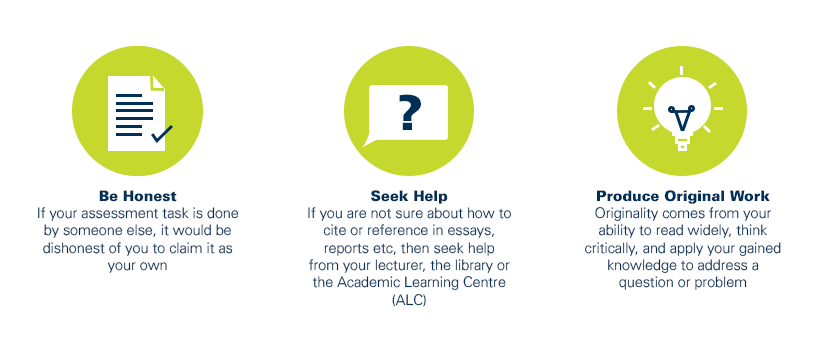
As a CQUniversity student you are expected to act honestly in all aspects of your academic work.
Any assessable work undertaken or submitted for review or assessment must be your own work. Assessable work is any type of work you do to meet the assessment requirements in the unit, including draft work submitted for review and feedback and final work to be assessed.
When you use the ideas, words or data of others in your assessment, you must thoroughly and clearly acknowledge the source of this information by using the correct referencing style for your unit. Using others’ work without proper acknowledgement may be considered a form of intellectual dishonesty.
Participating honestly, respectfully, responsibly, and fairly in your university study ensures the CQUniversity qualification you earn will be valued as a true indication of your individual academic achievement and will continue to receive the respect and recognition it deserves.
As a student, you are responsible for reading and following CQUniversity’s policies, including the Student Academic Integrity Policy and Procedure. This policy sets out CQUniversity’s expectations of you to act with integrity, examples of academic integrity breaches to avoid, the processes used to address alleged breaches of academic integrity, and potential penalties.
What is a breach of academic integrity?
A breach of academic integrity includes but is not limited to plagiarism, self-plagiarism, collusion, cheating, contract cheating, and academic misconduct. The Student Academic Integrity Policy and Procedure defines what these terms mean and gives examples.
Why is academic integrity important?
A breach of academic integrity may result in one or more penalties, including suspension or even expulsion from the University. It can also have negative implications for student visas and future enrolment at CQUniversity or elsewhere. Students who engage in contract cheating also risk being blackmailed by contract cheating services.
Where can I get assistance?
For academic advice and guidance, the Academic Learning Centre (ALC) can support you in becoming confident in completing assessments with integrity and of high standard.
What can you do to act with integrity?