Overview
You will develop an understanding of the functional anatomy and physiology relevant to communication and swallowing. Topics covered include surface anatomy and the anatomical relationships of bones, muscles, blood vessels and nerves within each of the pertinent body regions. You will be required to demonstrate your understanding of the application of these topics to speech pathology practice.
Details
Pre-requisites or Co-requisites
Prerequisites BMSC11010 Human Anatomy and Physiology 1 OR BMSC11007 Medical Anatomy and Physiology 1 and BMSC11008 Medical Anatomy and Physiology 2 SPCH11001 Introduction to Communication and Swallowing SPCH12008 Phonetics OR SPCH13005 Acoustics and Phonetics
Important note: Students enrolled in a subsequent unit who failed their pre-requisite unit, should drop the subsequent unit before the census date or within 10 working days of Fail grade notification. Students who do not drop the unit in this timeframe cannot later drop the unit without academic and financial liability. See details in the Assessment Policy and Procedure (Higher Education Coursework).
Offerings For Term 2 - 2026
Attendance Requirements
All on-campus students are expected to attend scheduled classes - in some units, these classes are identified as a mandatory (pass/fail) component and attendance is compulsory. International students, on a student visa, must maintain a full time study load and meet both attendance and academic progress requirements in each study period (satisfactory attendance for International students is defined as maintaining at least an 80% attendance record).
Recommended Student Time Commitment
Each 6-credit Undergraduate unit at CQUniversity requires an overall time commitment of an average of 12.5 hours of study per week, making a total of 150 hours for the unit.
Class Timetable
Assessment Overview
Assessment Grading
This is a graded unit: your overall grade will be calculated from the marks or grades for each assessment task, based on the relative weightings shown in the table above. You must obtain an overall mark for the unit of at least 50%, or an overall grade of 'pass' in order to pass the unit. If any 'pass/fail' tasks are shown in the table above they must also be completed successfully ('pass' grade). You must also meet any minimum mark requirements specified for a particular assessment task, as detailed in the 'assessment task' section (note that in some instances, the minimum mark for a task may be greater than 50%). Consult the University's Grades and Results Policy for more details of interim results and final grades.
All University policies are available on the CQUniversity Policy site.
You may wish to view these policies:
- Grades and Results Policy
- Assessment Policy and Procedure (Higher Education Coursework)
- Review of Grade Procedure
- Student Academic Integrity Policy and Procedure
- Academic Progression Policy and Procedure
- Student Refund and Credit Balance Policy and Procedure
- Complaints Policy and Procedure
- Information and Communications Technology Acceptable Use Policy and Procedure
This list is not an exhaustive list of all University policies. The full list of University policies are available on the CQUniversity Policy site.
Feedback, Recommendations and Responses
Every unit is reviewed for enhancement each year. At the most recent review, the following staff and student feedback items were identified and recommendations were made.
Feedback from SUTE Staff reflection
Students reported that having specific learning outcomes for recorded lectures helped to support and direct their independent study.
It is recommended that learning outcomes be added to any lectures that do not currently have them.
Feedback from In class feedback Staff reflection SUTE
Lecturer reflection indicated that students without prior experience in an anatomy lab require more time to apply functional anatomy to speech pathology.
It is recommended that the balance of time and content across recorded lectures and in-person tutorials be reviewed to ensure sufficient time for discussion and functional application of knowledge.
- Define the skeletal structures, innervation and musculature serving respiration, phonation, mastication and swallowing, articulation and resonance, and hearing.
- Describe the functional importance of each structure/muscle/nerve relative to respiration, phonation, mastication and swallowing, articulation and resonance, and hearing.
- Explain the relationship between structure and function of the speech, hearing and swallowing mechanism as it pertains to clinical practice in speech pathology.
Alignment of Assessment Tasks to Learning Outcomes
| Assessment Tasks | Learning Outcomes | ||
|---|---|---|---|
| 1 | 2 | 3 | |
| 1 - Online Quiz(zes) - 20% | |||
| 2 - Case Study - 40% | |||
| 3 - Practical Assessment - 40% | |||
Alignment of Graduate Attributes to Learning Outcomes
| Graduate Attributes | Learning Outcomes | ||
|---|---|---|---|
| 1 | 2 | 3 | |
| 1 - Communication | |||
| 2 - Problem Solving | |||
| 3 - Critical Thinking | |||
| 4 - Information Literacy | |||
| 5 - Team Work | |||
| 6 - Information Technology Competence | |||
| 7 - Cross Cultural Competence | |||
| 8 - Ethical practice | |||
| 9 - Social Innovation | |||
| 10 - First Nations Knowledges | |||
| 11 - Aboriginal and Torres Strait Islander Cultures | |||
Textbooks
There are no required textbooks.
IT Resources
- CQUniversity Student Email
- Internet
- Unit Website (Moodle)
All submissions for this unit must use the referencing style: American Psychological Association 7th Edition (APA 7th edition)
For further information, see the Assessment Tasks.
s.charania@cqu.edu.au
Week 1
Begin Date: 13 Jul 2026Module/Topic
The Nervous System - Part 1
Chapter
Readings will be posted in the eReading List in Moodle.
Events and Submissions/Topic
Week 2
Begin Date: 20 Jul 2026Module/Topic
The Nervous System - Part 2
Chapter
Readings will be posted in the eReading List in Moodle.
Events and Submissions/Topic
Week 3
Begin Date: 27 Jul 2026Module/Topic
The Nervous System - Part 3
Chapter
Readings will be posted in the eReading List in Moodle.
Events and Submissions/Topic
Week 4
Begin Date: 03 Aug 2026Module/Topic
Motor (Speech) System
Chapter
Readings will be posted in the eReading List in Moodle.
Events and Submissions/Topic
Week 5
Begin Date: 10 Aug 2026Module/Topic
Speech Subsystems: Respiratory System - Part 1
Chapter
Readings will be posted in the eReading List in Moodle.
Events and Submissions/Topic
Quiz 1 opens at 9:00 am August 14th (Thursday) and closes at 5:00pm August 15th (Friday).
Week 6
Begin Date: 17 Aug 2026Module/Topic
Speech Subsystems: Respiratory System - Part 2
Chapter
Readings will be posted in the eReading List in Moodle.
Events and Submissions/Topic
Vacation Week
Begin Date: 24 Aug 2026Module/Topic
Chapter
Events and Submissions/Topic
Week 7
Begin Date: 31 Aug 2026Module/Topic
Speech Subsystems: Phonatory System - Part 1
Chapter
Readings will be posted in the eReading List in Moodle.
Events and Submissions/Topic
Week 8
Begin Date: 07 Sep 2026Module/Topic
Speech Subsystems: Phonatory System - Part 2
Chapter
Readings will be posted in the eReading List in Moodle.
Events and Submissions/Topic
Quiz 2 opens at 9:00 am September 10th (Thursday) and closes at 5:00pm September 11th (Friday).
Week 9
Begin Date: 14 Sep 2026Module/Topic
Speech Subsystems: Articulatory and Resonatory Systems/ Mastication - Part 1
Chapter
Readings will be posted in the eReading List in Moodle.
Events and Submissions/Topic
Week 10
Begin Date: 21 Sep 2026Module/Topic
Speech Subsystems: Articulatory and Resonatory Systems/ Mastication - Part 2
Chapter
Readings will be posted in the eReading List in Moodle.
Events and Submissions/Topic
Week 11
Begin Date: 28 Sep 2026Module/Topic
Swallowing
Chapter
Readings will be posted in the eReading List in Moodle.
Events and Submissions/Topic
Quiz 3 opens at 9:00 am October 1st (Thursday) and closes at 5:00pm October 2nd (Friday).
Week 12
Begin Date: 05 Oct 2026Module/Topic
Revision Week (No Lecture or Tutorial)
Chapter
Readings will be posted in the eReading List in Moodle.
Events and Submissions/Topic
Exam Week
Begin Date: 12 Oct 2026Module/Topic
Chapter
Events and Submissions/Topic
Vacation/Exam Week
Begin Date: 19 Oct 2026Module/Topic
Chapter
Events and Submissions/Topic
The unit coordinator this term is Dr Salma Charania. You can contact the unit coordinator using the forums on the Moodle site; through email: s.charania@cqu.edu.au or via telephone on (07) 7 4923 9884.
Unit Content:
The learning materials for each week are located within each of the weekly tiles. The following information and links will be provided each week:
- Selected weekly readings (as required)
- Pre-recorded weekly lectures and associated lecture slides. These will be released progressively throughout the term and it is expected that students will review the weekly content prior to attending tutorials.
- Tutorial information and resources.
Tutorials:
The weekly tutorial will provide students with an opportunity to interact with the anatomy models and to ask questions of their lecturer and/or tutor. All students are strongly encouraged to attend and participate in the weekly tutorials so that they can apply their learning from the lectures.
Student Communication:
Open discussions of functional anatomy as it relates to speech pathology is important when learning this content and for being able to communicate this information. It is expected that you will use reputable sources for your information, respect your fellow students, maintain a polite, respectful dialogue, and at all times communicate in the professional manner expected in the speech pathology profession. Any NON-PERSONAL communications (e.g., questions relating to the lectures, tutorials, assessments, etc.) should be conducted via the relevant forums on the Moodle site. Any PERSONAL communications (e.g., personal illness, life events, etc.) should be held with the unit coordinator via email. Please ensure that all emails contain your name, contact details and unit code, as sometimes
we are coordinating more than one unit at a time.
Assessment extension requests:
All extension requests must meet policy requirements and be made via the Assessment Extension Request link found at the top of the SPCH12003 Moodle site as part of the Support tab. Please ensure that you provide the appropriate documentation with your extension request (e.g., medical certificate, statutory declaration). If you have any questions about this process, please contact the unit coordinator for further advice.
Study Requirements:
As per Australian educational standards, you are expected to commit 150 hours of engagement to your study of this unit. A recommended breakdown of study hours is given below:
- 2-3 hours per week watching recorded lectures and completing weekly readings or workbooks
- 2-3 hours per week attending the weekly tutorials and completing relevant tasks.
- 2-3 hours per week revising content and study notes from this week and previous weeks.
- 2-3 hours per week preparing for your assessments.
1 Online Quiz(zes)
You will have 3 online quizzes across the term. Each quiz may have a different total number of points, but all quizzes will contribute equally to your Assessment 1 grade, with each quiz being worth 33.33% of the total Assessment 1 grade.
Each quiz will cover content from your recorded lecture material, your tutorials, interactive online content (i.e., H5P activities) and your readings. There are 3 quizzes in total. These quizzes are scheduled for Week 5, Week 8, and Week 11. The quizzes will open at 9 am on Thursday and close at 9 am Friday of the week for which it is scheduled. A schedule is provided for you on Moodle.
Once you start the quiz, you will have one (1) hour to complete it.
As the assessment involves online quizzes, the 72-hour grace period does not apply to this assessment.
Level of GenAI use allowed:
Level 1
- The assessment is completed entirely without AI assistance in a controlled environment, ensuring that students rely solely on their existing knowledge, understanding, and skills. You must not use AI at any point during the assessment. You must demonstrate your core skills and knowledge.
Week 5, Week 8, and Week 11. Your quizzes are available via Moodle.
Results will be returned within two weeks after the closure of each quiz.
Quiz questions will include closed-type questions (e.g., multiple choice, matching) and short answer questions. Points assigned are identified for each question. You will attain points for questions answered correctly.
- Define the skeletal structures, innervation and musculature serving respiration, phonation, mastication and swallowing, articulation and resonance, and hearing.
2 Case Study
You will be provided with a clinical case study, which will include will be a series of questions related to a health condition/s and their functional impacts. Impacted systems may include neurology, respiration, phonation, resonance, and/or articulation, along with the underlying structures (e.g., bones, cartilage), muscles, nerves and blood supply.
Questions will require specific identification of impacted structures, explanation of the physiology connecting the impaired structures with the functional symptoms, and reasoning through alternatives and consequences.
This assessment requires application of your learning from Week 1 through to Week 9. The full task description will be provided on Moodle.
Level of GenAI use allowed:
- Level 2: You may use AI for planning, idea development, and research. Your final submission should show how you have developed and refined these ideas.
Week 10 Friday (25 Sept 2026) 9:00 am AEST
Week 11 Friday (2 Oct 2026)
Assessment feedback and marks will be returned via Moodle within 2 weeks of assessment submission.
For this assessment, students will be provided with a specific clinical case study and be required to answer a mixture of anatomy, physiology and reasoning-based questions.
Each of the anatomy, physiology, and/or reasoning-based questions will be assessed according to the following types of criteria, but may not be limited to this:
- Accuracy, relevance, clarity and completeness of the written response, including correct use and spelling of anatomical and physiological terminology, and correct referencing;
- Accuracy and clarity in linking anatomical structures to associated physiological functions;
- Accuracy and clarity in reasoning through the relationship between anatomy/physiology and functional speech pathology signs and symptoms.
- Describe the functional importance of each structure/muscle/nerve relative to respiration, phonation, mastication and swallowing, articulation and resonance, and hearing.
- Explain the relationship between structure and function of the speech, hearing and swallowing mechanism as it pertains to clinical practice in speech pathology.
3 Practical Assessment
Speech pathology students need a strong understanding of the anatomical structures and their functions in the head, neck, and thorax. This practical assessment allows students an opportunity to demonstrate that knowledge by engaging with anatomical models and simulated clinical scenarios, with a focus on anatomy and physiology associated with communication and swallowing.
By completing this assessment, students will demonstrate the ability to:
- Identify anatomical structures of the head, neck, and thorax,
- Describe physiological mechanisms relevant to communication and swallowing, and
- Explain the relationship between anatomy and physiology
Assessable structures include (but are not limited to): the brain, muscles, bones, cartilage, joints, nerves, blood vessels, viscera, and supporting structures.
The practical assessment consists of two (2) parts and is worth 40% of the overall mark for the unit.
Part 1:
Part 1 takes place in an assessment room, which will be set up with 10–20 stations, each featuring anatomical specimens such as models, bones and/or cartilage with clearly labelled structures. You will begin at an assigned station, read the questions listed on the station identifier, and record your answers on your provided answer sheet. When time is called, you will rotate to the next station and repeat this process until all stations are completed. This portion of the assessment is closed book. The only items permitted in the laboratory are pens (blue or black ink only), your answer sheet, and photo ID such as a student ID or driver's license.
Part 2:
Part 2 takes place after a short break following the laboratory component. Students will return to an assessment room to complete a series of short written response questions covering functional anatomy and physiology content from the term.
As this assessment is a timed in-class test, the 72-hour grace period does not apply.
Level of GenAI use allowed:
Level 1
- The assessment is completed entirely without AI assistance in a controlled environment, ensuring that students rely solely on their existing knowledge, understanding, and skills. You must not use AI at any point during the assessment. You must demonstrate your core skills and knowledge.
Exam Week Tuesday (13 Oct 2026) 9:00 am AEST
Vacation/Exam Week Friday (23 Oct 2026)
Grades will be uploaded Moodle within 2 weeks of assessment submission.
Each of the anatomy, physiology, and/or reasoning-based questions will be assessed according to the following types of criteria, but may not be limited to this:
- Accuracy, relevance, clarity and completeness of the written response, including correct use and spelling of anatomical and physiological terminology;
- Accuracy and clarity in linking anatomical structures to associated physiological functions;
- Accuracy and clarity in reasoning through the relationship between anatomy/physiology and functional speech pathology signs and symptoms.
- Define the skeletal structures, innervation and musculature serving respiration, phonation, mastication and swallowing, articulation and resonance, and hearing.
- Describe the functional importance of each structure/muscle/nerve relative to respiration, phonation, mastication and swallowing, articulation and resonance, and hearing.
- Explain the relationship between structure and function of the speech, hearing and swallowing mechanism as it pertains to clinical practice in speech pathology.
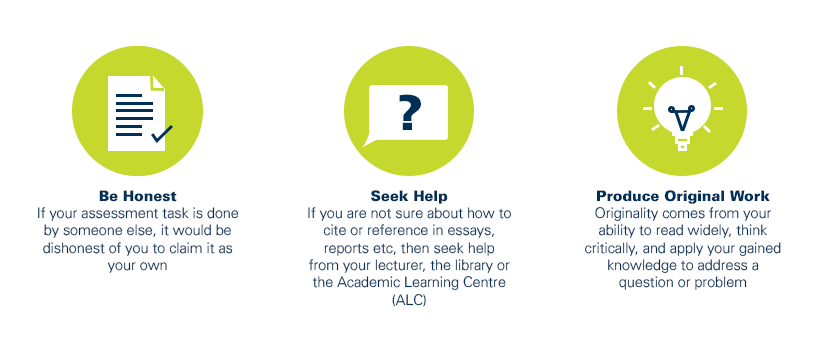
As a CQUniversity student you are expected to act honestly in all aspects of your academic work.
Any assessable work undertaken or submitted for review or assessment must be your own work. Assessable work is any type of work you do to meet the assessment requirements in the unit, including draft work submitted for review and feedback and final work to be assessed.
When you use the ideas, words or data of others in your assessment, you must thoroughly and clearly acknowledge the source of this information by using the correct referencing style for your unit. Using others’ work without proper acknowledgement may be considered a form of intellectual dishonesty.
Participating honestly, respectfully, responsibly, and fairly in your university study ensures the CQUniversity qualification you earn will be valued as a true indication of your individual academic achievement and will continue to receive the respect and recognition it deserves.
As a student, you are responsible for reading and following CQUniversity’s policies, including the Student Academic Integrity Policy and Procedure. This policy sets out CQUniversity’s expectations of you to act with integrity, examples of academic integrity breaches to avoid, the processes used to address alleged breaches of academic integrity, and potential penalties.
What is a breach of academic integrity?
A breach of academic integrity includes but is not limited to plagiarism, self-plagiarism, collusion, cheating, contract cheating, and academic misconduct. The Student Academic Integrity Policy and Procedure defines what these terms mean and gives examples.
Why is academic integrity important?
A breach of academic integrity may result in one or more penalties, including suspension or even expulsion from the University. It can also have negative implications for student visas and future enrolment at CQUniversity or elsewhere. Students who engage in contract cheating also risk being blackmailed by contract cheating services.
Where can I get assistance?
For academic advice and guidance, the Academic Learning Centre (ALC) can support you in becoming confident in completing assessments with integrity and of high standard.
What can you do to act with integrity?