Overview
This final field education unit requires you to complete 500 hours of onsite, agency-based interactions and learning activities under the supervision of an approved social worker. You will apply theoretical knowledge, professional ethics, values and skills in real-world settings, meaningfully participate in the agency's operations, and collaborate with colleagues in diverse work contexts and across service agencies. You will develop your practice framework as a professional social worker, critically reflect on your practice, and integrate coursework learning with your field placement experiences. Upon completing this unit, you will demonstrate the ability to integrate theoretical knowledge with practical skills, critically reflect on practice, formulate a practice framework, and meet the Australian Association of Social Workers' practice standards for professional social workers.
Details
Pre-requisites or Co-requisites
Pre-requisites: SOWK29002 Working with Families, Groups and Communities SOWK29003 Contemporary Social Policy and Social Work SOWK29006 Social Work Research for Practice SOWK29004 Family and Structural Violence SOWK28005 Social Work Field Education 1 The co-requisite: SOWK29005 Social Work Theories and the Practice Context
Important note: Students enrolled in a subsequent unit who failed their pre-requisite unit, should drop the subsequent unit before the census date or within 10 working days of Fail grade notification. Students who do not drop the unit in this timeframe cannot later drop the unit without academic and financial liability. See details in the Assessment Policy and Procedure (Higher Education Coursework).
Offerings For Term 2 - 2026
Attendance Requirements
All on-campus students are expected to attend scheduled classes - in some units, these classes are identified as a mandatory (pass/fail) component and attendance is compulsory. International students, on a student visa, must maintain a full time study load and meet both attendance and academic progress requirements in each study period (satisfactory attendance for International students is defined as maintaining at least an 80% attendance record).
Recommended Student Time Commitment
Each 18-credit Postgraduate unit at CQUniversity requires an overall time commitment of an average of 37.5 hours of study per week, making a total of 450 hours for the unit.
Class Timetable
Assessment Overview
Assessment Grading
This is a pass/fail (non-graded) unit. To pass the unit, you must pass all of the individual assessment tasks shown in the table above.
All University policies are available on the CQUniversity Policy site.
You may wish to view these policies:
- Grades and Results Policy
- Assessment Policy and Procedure (Higher Education Coursework)
- Review of Grade Procedure
- Student Academic Integrity Policy and Procedure
- Academic Progression Policy and Procedure
- Student Refund and Credit Balance Policy and Procedure
- Complaints Policy and Procedure
- Information and Communications Technology Acceptable Use Policy and Procedure
This list is not an exhaustive list of all University policies. The full list of University policies are available on the CQUniversity Policy site.
- Demonstrate the integration of professional social work knowledge, skills, and values within the placement context in alignment with the AASW Code of Ethics. AASW Practice Standards and organisational context for practice, including adherence to legislative and policy frameworks.
- Critically reflect on your professional practice, incorporating self-care strategies, complex problem-solving skills, and cross-cultural competency.
- Conduct comprehensive assessments of client's needs and design, implement, and evaluate appropriate intervention strategies using social work theoretical frameworks.
- Construct and justify a professional practice framework relevant to your social work practice and demonstrate its application in various contexts.
Field Education is a key component of a social work course. All students studying social work must complete 1000 hours of placement time in an agency over two placements as required by the Australian Social Work Education and Accreditation Standards (ASWEAS) (2023). This unit is the first placement for students within a human service or social work organisation.
Alignment of Assessment Tasks to Learning Outcomes
| Assessment Tasks | Learning Outcomes | |||
|---|---|---|---|---|
| 1 | 2 | 3 | 4 | |
| 1 - Written Assessment - 0% | ||||
| 2 - Written Assessment - 0% | ||||
| 3 - Presentation - 0% | ||||
Alignment of Graduate Attributes to Learning Outcomes
| Graduate Attributes | Learning Outcomes | |||
|---|---|---|---|---|
| 1 | 2 | 3 | 4 | |
| 1 - Knowledge | ||||
| 2 - Communication | ||||
| 3 - Cognitive, technical and creative skills | ||||
| 4 - Research | ||||
| 5 - Self-management | ||||
| 6 - Ethical and Professional Responsibility | ||||
| 7 - Leadership | ||||
| 8 - First Nations Knowledges | ||||
| 9 - Aboriginal and Torres Strait Islander Cultures | ||||
Textbooks
Making the most of field placement
- Edition: 5th (2022)
- Authors: Cleak, H., & Wilson, J.
- Cengage Learning Australia.
- Melbourne Melbourne , Victoria , Australia
- ISBN: ISBN : 0-17-029255-X ISBN : 9780170457606
Additional Textbook Information
The library license only allows 3 students t access at the same time, it is preferable that you purchase this book
IT Resources
- CQUniversity Student Email
- Internet
- Unit Website (Moodle)
- Academic Learning Centre services
- Microsoft Word 2010 or 2013
- SONIA
- Zoom access (via smartphone/device app or laptop): microphone and webcam required
All submissions for this unit must use the referencing style: American Psychological Association 7th Edition (APA 7th edition)
For further information, see the Assessment Tasks.
m.g.parker@cqu.edu.au
Week 1
Begin Date: 13 Jul 2026Module/Topic
Getting Started:
Revisit your Learning Agreement from Field Education 1 or your RPL application.
Placement orientation and induction
OH&S Assessment of Placement
Review the Field Education Manual 2026
Chapter
Read Cleak, H., & Wilson, J. (2022). Making the most of field placement. Cengage AU.
You may use older or newer versions if you have these; this is the copy that you can view through the library.
Chapter 3: Getting Started - Student pp. 26 -34
Chapter 5: The Learning Agreement p. 44
Ensure you have explored the Moodle site for this unit.
Events and Submissions/Topic
Attend 2 day teaching intensive on campus 13 & 14 July 2026
Supervision Record and Action Plan: Your first supervision session will occur in Week 1 or 2 of placement. You will commence recording and feedback in the supplied proforma area as per the unit profile after each weekly supervision session and share with your social work supervisor before the next session.
Placement OH&S Assessment Form DUE
Please note:
Assessment submissions are based on weeks at placement, not term weeks.
For example, the learning plan is due at the end of your fourth week of placement, commence writing your goals now
Check your student email at least twice per week for important communications
You will need to create your timetable based on your start date and the days you will be at the placement.
Week 2
Begin Date: 20 Jul 2026Module/Topic
Review: Establishing a supervisory relationship
What is critically reflective practice?
Work readiness - Effective communication
Chapter
Read Cleak and Wilson (2022);
- Chapter 3: Getting Started - Student pp. 26 -34
- Chapter 5: The Learning Agreement p. 44
Morley & Dunstan (2016). Critical Reflection: Ch. 2
Events and Submissions/Topic
Supervision Record and Action Plan, emailed to your supervisor for review and feedback.
Review the Field Education Manual, CQU, 2026.
Check your student email at least twice per week for important communications
Week 3
Begin Date: 27 Jul 2026Module/Topic
Learning Agreement meeting arranged - Schedule your MPR at this meeting!
Facilitated by: Placement Liaison Officer (PLO)
Attended by: Student, Field Educator or Onsite Supervisor and External Supervisor as possible.
Purpose: To develop the working relationship, to explore any concerns about the Learning Plan and schedule the Mid Placement Review.
Chapter
Cleak and Wilson (2022);
- Part 2: Beginning placement Chapter 5: Charting the course for placement - contracts and agreements
- In the work-ready series tile - Watch; Week 3 - Learning Styles
- Revisit "netiquette" rules
Events and Submissions/Topic
Hold Learning Agreement Meeting
Supervision Record and Action Plan
Discussion Forum 1: Disrupting the Taken-for-Granted (Week 3 or 4)
Prompt:
Describe a routine practice or policy in your placement setting that you initially accepted as standard. After reflection or supervision, did you begin to question its purpose, equity, or impact?
What assumptions were you holding—and what changed? Whose voices are included or excluded in this practice? How might your evolving social work values respond?
Census date is next week. If you are struggling, please contact your Unit Coordinator for help
Check your student email at least twice per week for important communications
Week 4
Begin Date: 03 Aug 2026Module/Topic
Attending to Sonia Tasks
- OH&S form
- Timesheets - Make sure your field educator/onsite supervisor has access to sign these off.
Chapter
Cleak and Wilson (2022);
- Part 2: Beginning placement - Chapter 5: Charting the course for placement - contracts and agreements
Events and Submissions/Topic
Census Date: Tuesday Week 4
A1 - Learning Agreement is due for submission via Moodle.
Supervision Record and Action Plan
Check your student email at least twice per week for important communications
Week 5
Begin Date: 10 Aug 2026Module/Topic
Settling into placement
Chapter
Revisit:
Cleak and Wilson (2022); Part 3: Teaching and Learning on placement
Noble, C., & Irwin, J. (2009). Social work supervision: An exploration of the current challenges in a rapidly changing social, economic and political environment. Journal of Social Work, 9(3), 345–358.
Events and Submissions/Topic
Supervision Record and Action Plan
Check your student email at least twice per week for important communications
Week 6
Begin Date: 17 Aug 2026Module/Topic
Planning ahead for your Mid Placement Review
Chapter
Cleak and Wilson (2018/22);
Part 6: Evaluation, assessing and finishing placement - Chapter 16: Assessment and evaluation - student and supervisors
In the Mid Placement Review tile -Read "What is a Mid Placement Review"
Events and Submissions/Topic
Supervision Record and Action Plan
Check your student email at least twice per week for important communications
Vacation Week (Week 7 of placement)
Begin Date: 24 Aug 2026Module/Topic
Preparing for your Mid Placement Review
Chapter
Cleak and Wilson (2018); Part 6: Evaluation, assessing and finishing placement - Chapter 16: Assessment and evaluation - student and supervisors
In the Mid Placement Review tile - Read "What is a Mid Placement Review"
Events and Submissions/Topic
Supervision Record and Action Plan
Discussion Forum 2: Power and Positioning in Practice (Week 6 or 7)
Prompt:
Describe a moment in placement where your positionality (e.g., age, race, gender, education, class) influenced how you engaged with a service user, colleague, or system. How did this shape the outcome? How might you use relational reflexivity to navigate such dynamics ethically and effectively in future practice?
Check your student email at least twice per week for important communications
Week 7 (Week 8 of placement)
Begin Date: 31 Aug 2026Module/Topic
- Prepare for Mid Placement Review and/or attend Mid Placement Review
- Challenging issues in supervision
Chapter
Cleak and Wilson (2018/22);
Chapter 13: Challenging issues in supervision pp. 138 - 149
Events and Submissions/Topic
Supervision Record and Action Plan
A2 - Mid Placement Review within the Learning Agreement Proforma, due at your midpoint of placement following your MPR.
Check your student email at least twice per week for important communications
Week 8 (Week 9 of placement)
Begin Date: 07 Sep 2026Module/Topic
Mid Placement Reviews
Chapter
In the Self Care tile - Watch - Self Care Video
Events and Submissions/Topic
Supervision Record and Action Plan
A2 - Mid Placement Review documentation due
Check your student email at least twice per week for important communications
Week 9 (Week 10 of placement)
Begin Date: 14 Sep 2026Module/Topic
Working with Difference
Chapter
Cleak and Wilson (2018);
- Chapter 9: Linking learning and practice in placement
- Chapter 14: Working with cultural and power differences
Events and Submissions/Topic
All Mid Placement Reviews should be completed by now!
Supervision Record and Action Plan
Check your student email at least twice per week for important communications
Week 10 (Week 11 of placement)
Begin Date: 21 Sep 2026Module/Topic
Ethics and Legal Issues
Chapter
Cleak and Wilson (2018);
Chapter 15: Ethical and Legal issues pp. 158 - 165
Events and Submissions/Topic
Supervision Record and Action Plan
Check your student email at least twice per week for important communications
Week 11 (Week 12 of placement)
Begin Date: 28 Sep 2026Module/Topic
Ending well, plan ahead!
Chapter
Review A3 - readings and links
Events and Submissions/Topic
Supervision Record and Action Plan
Capstone Discussion Forum: Embodying Practice – Frameworks, Endings, and Sustainability (Week 12 or 13)
Prompt: As your placement draws to a close, reflect on how your social work practice framework has taken shape during this experience.
What moment or situation challenged or clarified your framework?
What values, theories, or approaches felt most relevant—and why?
What have you learned about yourself as a social worker, especially in how you manage endings, transitions, and sustainability?
Consider the relational, systemic, and emotional elements of the work.
You may wish to include a metaphor or image (e.g., river, weaving, seed, mirror, thread) to express how your framework has developed and what you will carry forward into your professional life.
Check your student email at least twice per week for important communications
Student Unit and Teaching Evaluation survey – We encourage you to provide feedback about your unit and teaching experience in this unit. The survey opens Week 11 and closes one week before release of grades.
Week 12 (Week 13 of placement)
Begin Date: 05 Oct 2026Module/Topic
Ending Placements Well
Chapter
Cleak and Wilson (2018);
- Chapter 17: Finishing Well pp. 179-182
Events and Submissions/Topic
A3 - End of Placement Reflections and Report, drawing on your forum posts and supervision notes.
Check your student email at least twice per week for important communications
Student Unit and Teaching Evaluation survey – Please complete the unit evaluation survey
Week 13 (Week 14 of placement)
Begin Date: 12 Oct 2026Module/Topic
- End of Placement Report due two weeks after placement completion
- Check log of hours are accurate and signed off
Chapter
Watch Ending Placements Well presentation under the communication Tile
Events and Submissions/Topic
Supervision Record and Action Plan
Check your student email at least twice per week for important communications
Week 15/16 of placement
Begin Date: 19 Oct 2026Module/Topic
End of placement (depending on how many days you have been doing a week)
Chapter
Watch 'Ending Placements Well' presentation under the communication Tile
Events and Submissions/Topic
Supervision Record and Action Plan
Congratulations on completing this unit
Check the log of hours are accurate and signed off
End of Placement Report due two weeks after placement completion
This unit commences with a two day intensive followed by self-directed study and engagement throughout the term while on placement. A key to your success is a strategic self-directed approach to learning and regular contact with your Unit Coordinator/s. Please check the Announcements and Discussion forums at least twice a week – there will be regular announcements about assessments and unit resources throughout the term and reviewing this information is essential to unit knowledge and your success. CQUniversity communicates with students through CQUniversity email. We recommend that you access your CQUniversity email at least twice a week so that you do not miss vital information about your studies.
1 Written Assessment
The aim of the Learning Agreement (LA) is for you to demonstrate your ability to develop clear, meaningful, and assessable learning goals that support your progression toward entry-level professional social work practice. These goals reflect a shared commitment between you, your agency, and CQUniversity to ensure that your placement aligns with the Australian Association of Social Workers (AASW) Practice Standards (2023), Code of Ethics (2020), and Graduate Attributes.
The Learning Agreement provides a foundation for self-directed learning, critical reflection, and the integration of knowledge, skills, and values within your practice. It supports your ongoing professional development and emerging professional identity as a social worker.
This Learning Agreement forms the first of three linked assessment tasks in Field Education 2. It will be followed by:
· Assessment 2: Mid Placement Review (MPR)
· Assessment 3: End of Placement Review (EPR)
Instructions
Please refer to the assessment task instructions on the unit Moodle site.
Academic Integrity
You must abide by the principles of academic integrity (see Student Academic Integrity Policy and Procedure). Completion of this assessment with another party or sharing of responses is not permitted at any time.
The use of any generative artificial intelligence is not permitted as per Level 1 (No AI) in the AI Assessment scale tool indicators.
Extensions
Available as per policy
The 72-hour grace period may apply to this assessment
Minimum Pass Criteria
You must pass all assessments to pass this unit.
Supplementary assessment is not available for this assessment and unit.
The Learning Agreement is due for submission by Friday of Week 4 of your placement timeline (pro rata for part time)
Students will be notified when assessments have been marked via Moodle
Refer to the marking rubric on the Moodle site for more detail
- Demonstrate the integration of professional social work knowledge, skills, and values within the placement context in alignment with the AASW Code of Ethics. AASW Practice Standards and organisational context for practice, including adherence to legislative and policy frameworks.
- Conduct comprehensive assessments of client's needs and design, implement, and evaluate appropriate intervention strategies using social work theoretical frameworks.
2 Presentation
The Mid-Placement Review (MPR) is a key assessment that enables you, your field educator(s), and the CQUniversity liaison to critically evaluate your development in practice midway through your placement. It provides a structured opportunity to assess your progress against the learning goals established in your Learning Agreement, with a focus on the integration of knowledge, skills, and values within your practice context.
The MPR supports reflection on your emerging professional identity, use of supervision and feedback, and progression toward entry-level professional social work practice.
The Mid Placement Review (Assessment 2) forms the second of three linked assessment tasks in Field Education 2. It will be followed by:
· Assessment 3: End of Placement Review (EPR)
Instructions
Please refer to the assessment task instructions on the unit Moodle site.
Academic Integrity
You must abide by the principles of academic integrity (see Student Academic Integrity Policy and Procedure). Completion of this assessment with another party or sharing of responses is not permitted at any time.
The use of any generative artificial intelligence is not permitted as per Level 1 (No AI) in the AI Assessment scale tool indicators.
Extensions
Available as per policy
The 72-hour grace period may apply to this assessment
Minimum Pass Criteria
You must pass all assessments to pass this unit.
Supplementary assessment is not available for this assessment and unit.
Due During weeks 6-9 in alignment with the Mid Placement Review meeting
Feedback to be discussion with Liaison Visitor
Refer to the marking rubric on the Moodle site for more detail
- Demonstrate the integration of professional social work knowledge, skills, and values within the placement context in alignment with the AASW Code of Ethics. AASW Practice Standards and organisational context for practice, including adherence to legislative and policy frameworks.
- Critically reflect on your professional practice, incorporating self-care strategies, complex problem-solving skills, and cross-cultural competency.
- Construct and justify a professional practice framework relevant to your social work practice and demonstrate its application in various contexts.
3 Written Assessment
The aim of this assessment is for you to demonstrate your ability to integrate and apply learning from this unit within Field Education 2. The End of Placement Review (EPR) is the final assessment for Field Education 2 and provides an opportunity for students, field educators, and university liaisons to reflect on learning achieved across the placement and to evaluate readiness for entry-level professional social work practice.
This assessment supports a final, critically reflective conversation that considers your development of professional values, ethical awareness, knowledge-informed practice, engagement within organisational and relational contexts, and commitment to ongoing professional learning. The EPR is a capstone task that consolidates and integrates placement learning, rather than assessing progress toward individual goals.
Instructions
Please refer to the assessment task instructions on the unit Moodle site.
Academic Integrity
You must abide by the principles of academic integrity (see Student Academic Integrity Policy and Procedure). Completion of this assessment with another party or sharing of responses is not permitted at any time.
The use of any generative artificial intelligence is not permitted as per Level 1 (No AI) in the AI Assessment scale tool indicators.
Extensions
Not available as per policy.
The 72-hour grace period does not apply to this assessment
Minimum Pass Criteria
You must pass all assessments to pass this unit.
Supplementary assessment is not available for this assessment and unit.
Within two weeks of the completion of your placement hours
Students will be notified when assessments have been marked via Moodle
Refer to the marking rubric on the Moodle site for more detail
- Demonstrate the integration of professional social work knowledge, skills, and values within the placement context in alignment with the AASW Code of Ethics. AASW Practice Standards and organisational context for practice, including adherence to legislative and policy frameworks.
- Critically reflect on your professional practice, incorporating self-care strategies, complex problem-solving skills, and cross-cultural competency.
- Conduct comprehensive assessments of client's needs and design, implement, and evaluate appropriate intervention strategies using social work theoretical frameworks.
- Construct and justify a professional practice framework relevant to your social work practice and demonstrate its application in various contexts.
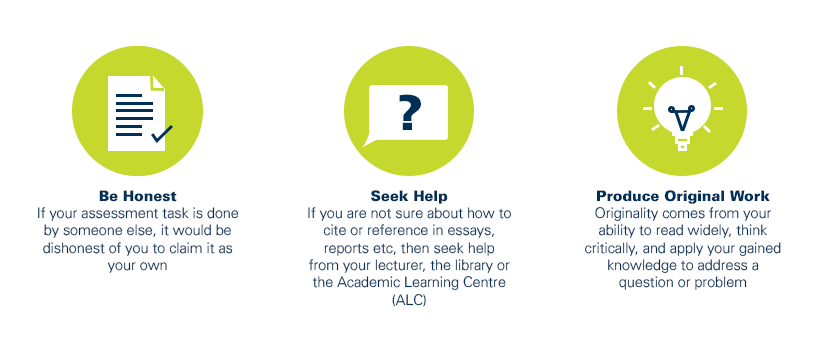
As a CQUniversity student you are expected to act honestly in all aspects of your academic work.
Any assessable work undertaken or submitted for review or assessment must be your own work. Assessable work is any type of work you do to meet the assessment requirements in the unit, including draft work submitted for review and feedback and final work to be assessed.
When you use the ideas, words or data of others in your assessment, you must thoroughly and clearly acknowledge the source of this information by using the correct referencing style for your unit. Using others’ work without proper acknowledgement may be considered a form of intellectual dishonesty.
Participating honestly, respectfully, responsibly, and fairly in your university study ensures the CQUniversity qualification you earn will be valued as a true indication of your individual academic achievement and will continue to receive the respect and recognition it deserves.
As a student, you are responsible for reading and following CQUniversity’s policies, including the Student Academic Integrity Policy and Procedure. This policy sets out CQUniversity’s expectations of you to act with integrity, examples of academic integrity breaches to avoid, the processes used to address alleged breaches of academic integrity, and potential penalties.
What is a breach of academic integrity?
A breach of academic integrity includes but is not limited to plagiarism, self-plagiarism, collusion, cheating, contract cheating, and academic misconduct. The Student Academic Integrity Policy and Procedure defines what these terms mean and gives examples.
Why is academic integrity important?
A breach of academic integrity may result in one or more penalties, including suspension or even expulsion from the University. It can also have negative implications for student visas and future enrolment at CQUniversity or elsewhere. Students who engage in contract cheating also risk being blackmailed by contract cheating services.
Where can I get assistance?
For academic advice and guidance, the Academic Learning Centre (ALC) can support you in becoming confident in completing assessments with integrity and of high standard.
What can you do to act with integrity?