Overview
Social Work Field Education 1 offers a practice-focused learning experience that allows you to integrate theory and practice and develop a sense of professional identity and proficiency by applying your classroom-based learning in a supervised social work setting. Throughout this placement, you will develop your direct practice skills and critically reflect on your use of self to gain insight into the collaborative nature of social work. Additionally, you will deepen your knowledge of the interface between policy, law, ethics, and practice in your agency setting and consider the organisational and legal constraints placed on the social work role in this context. Critical reflection is a key component of this unit and social work practice, facilitating the ongoing evaluation and improvement of practice. You will engage in regular reflective exercises to assess your interactions, decisions, and the impact of your practice. This process will deepen your understanding of your professional identity and enhance your work with diverse communities. This placement is the first of two compulsory Field Education placements. Students are required to attend the placement for a total of 500 hours.
Details
Pre-requisites or Co-requisites
Prerequisites: SOWK28001 Understanding Social Work: Foundational Knowledge and Skills for Practice SOWK28002 First Nations Knowledge and Social Work Practice with Aboriginal and Torres Strait Islander Peoples SOWK28003 Psychosocial Health and Wellbeing Across the Lifespan SOWK28004 Intersectionality and Social Justice in Social Work Practice Corequisite: SOWK29001 Ethical and Legal Issues in Practice
Important note: Students enrolled in a subsequent unit who failed their pre-requisite unit, should drop the subsequent unit before the census date or within 10 working days of Fail grade notification. Students who do not drop the unit in this timeframe cannot later drop the unit without academic and financial liability. See details in the Assessment Policy and Procedure (Higher Education Coursework).
Offerings For Term 3 - 2025
Attendance Requirements
All on-campus students are expected to attend scheduled classes - in some units, these classes are identified as a mandatory (pass/fail) component and attendance is compulsory. International students, on a student visa, must maintain a full time study load and meet both attendance and academic progress requirements in each study period (satisfactory attendance for International students is defined as maintaining at least an 80% attendance record).
Recommended Student Time Commitment
Each 18-credit Postgraduate unit at CQUniversity requires an overall time commitment of an average of 37.5 hours of study per week, making a total of 450 hours for the unit.
Class Timetable
Assessment Overview
Assessment Grading
This is a pass/fail (non-graded) unit. To pass the unit, you must pass all of the individual assessment tasks shown in the table above.
All University policies are available on the CQUniversity Policy site.
You may wish to view these policies:
- Grades and Results Policy
- Assessment Policy and Procedure (Higher Education Coursework)
- Review of Grade Procedure
- Student Academic Integrity Policy and Procedure
- Monitoring Academic Progress (MAP) Policy and Procedure - Domestic Students
- Monitoring Academic Progress (MAP) Policy and Procedure - International Students
- Student Refund and Credit Balance Policy and Procedure
- Student Feedback - Compliments and Complaints Policy and Procedure
- Information and Communications Technology Acceptable Use Policy and Procedure
This list is not an exhaustive list of all University policies. The full list of University policies are available on the CQUniversity Policy site.
- Develop and demonstrate the integration of professional social work knowledge, skills, and values within the placement context aligning with the AASW Code of Ethics, AASW Practice Standards, and organisational context for practice, including adherence to legislative and policy frameworks.
- Reflect on your professional practice, incorporating self-care strategies and use of self in the organisational context along with problem-solving skills and cross-cultural competency.
- Create opportunities to develop your skills in assessing service users’ needs and evaluating appropriate intervention strategies using social work theoretical frameworks and ethics.
- Construct a professional practice framework relevant to your emerging social work practice and demonstrate its application in various contexts.
Field Education is a key component of a social work course. All students studying social work must complete 1000 hours of placement time in an agency over two placements as required by the Australian Social Work Education and Accreditation Standards (ASWEAS) (2023). This unit is the first placement for students within a human service or social work organisation.
Alignment of Assessment Tasks to Learning Outcomes
| Assessment Tasks | Learning Outcomes | |||
|---|---|---|---|---|
| 1 | 2 | 3 | 4 | |
| 1 - Written Assessment - 0% | ||||
| 2 - Written Assessment - 0% | ||||
| 3 - Presentation - 0% | ||||
Alignment of Graduate Attributes to Learning Outcomes
| Graduate Attributes | Learning Outcomes | |||
|---|---|---|---|---|
| 1 | 2 | 3 | 4 | |
| 1 - Knowledge | ||||
| 2 - Communication | ||||
| 3 - Cognitive, technical and creative skills | ||||
| 4 - Research | ||||
| 5 - Self-management | ||||
| 6 - Ethical and Professional Responsibility | ||||
| 7 - Leadership | ||||
| 8 - First Nations Knowledges | ||||
| 9 - Aboriginal and Torres Strait Islander Cultures | ||||
Textbooks
There are no required textbooks.
Additional Textbook Information
Making the Most of Field Placement
Edition: 5th (2022)
Authors: Helen Cleak and Jill Wilson
Cengage
Melbourne, Victoria, Australia
ISBN: 9780170417006
The eBook is accessible at the Library website. If you are having issues gaining access, both paper and eBook copies can be purchased at the CQUni Bookshop here: http://bookshop.cqu.edu.au (search on the Unit code)
Binding: Paperback
The eBook is accessible at the Library website. If you are having issues gaining access, both paper and eBook copies can be purchased at the CQUni Bookshop here: http://bookshop.cqu.edu.au (search on the Unit code)
IT Resources
- CQUniversity Student Email
- Internet
- Unit Website (Moodle)
- Academic Learning Centre services
- Zoom
- Australian Standards (through CQU library)
- CQ University Library resources
All submissions for this unit must use the referencing style: American Psychological Association 7th Edition (APA 7th edition)
For further information, see the Assessment Tasks.
m.g.parker@cqu.edu.au
Week 1 - Learning Agreement, H& S Orientation Form, Supervision - 10 Nov 2025
Begin Date: 10 Nov 2025Module/Topic
PLEASE NOTE: These weeks align with the university term weeks
but may not align with YOUR placement weeks.
Getting Started:
• What is a learning agreement?
• Placement orientation and induction
• Health and Safety Orientation Form
(Sonia form)
• Work Readiness: Time Management
• Review Log of Hours information in Moodle
Chapter
1. Cleak and Wilson (2019, 2022)
⚬ Chapter 3: Getting
Started—Students, p. 26–34
⚬ Chapter 5: The Learning
Agreement, p. 44
2. Review the Field Education Manual
(CQU, 2025)
3. Ensure you have explored the Moodle site for this unit.
Events and Submissions/Topic
Supervision record: Your first supervision session will occur in week 1 or 2 of placement. You will
commence writing up your supervision sessions in the proforma provided (or similar), which will be completed after each weekly supervision session.
Placement H&S Orientation Form DUE - to be completed via SONIA form.
Start logging your hours in SONIA and ensure your supervisor is able to sign off in SONIA.
Week 2 - Supervision, Critical Reflection Learning Agreement Meeting - 17 Nov 2025
Begin Date: 17 Nov 2025Module/Topic
Establishing a supervisory relationship
What is critically reflective practice?
Work readiness: effective
communication.
Chapter
1. Cleak and Wilson (2019, 2022)
• Chapter 3: Getting
Started—Students, p. 26-34
• Chapter 5: The Learning Agreement, p. 44
2. Review the Field Education Manual
(CQU, 2025)
Events and Submissions/Topic
Supervision Record and action
plan—shared with supervisor before your following supervision session for review and feedback.
Week 3 - Learning Agreement Meeting - 24 Nov
Begin Date: 24 Nov 2025Module/Topic
The Learning Agreement meeting was completed or arranged.
Facilitated by: Field Education Liaison Officer
Attended by: student, field educator or onsite supervisor, and/or external supervisor as is required/possible.
Purpose: To develop the working relationship, to explore any concerns
about the learning plan, and to schedule the Mid-Placement Review
(MPR).
Chapter
1. Review the Field Education Manual
(CQU, 2025).
2. In the work-ready series tile, Watch; week 3 Learning Styles
Events and Submissions/Topic
Assessment 1: By now you should have met
with your FE learning team and have a completed or almost completed Learning Agreement. which is due for submission via Moodle by your week
4.
Supervision Record and action plan - weekly
Week 4 - Learning Agreement Meeting - 1 Dec 2025
Begin Date: 01 Dec 2025Module/Topic
The Learning Agreement meeting was completed or arranged.
Facilitated by: Field Education
Liaison Officer
Attended by: student, field educator or onsite supervisor, and external
supervisor as is required/possible.
Purpose: To develop the working relationship, to explore any concerns
about the learning plan, and schedule the Mid-Placement Review
Chapter
1. Bassot (2020, 2024) The Reflective Journal - Theme 2 - Starting to Write Reflectively
2. Cleak and Wilson (2019, 2022) Part 2: Beginning placement Chapter 5 - Charting the course for placement -
contracts and agreements.
Events and Submissions/Topic
Supervision Record and Action Plan
1st online forum due this week
Week 5 - Assessing Your Learning - 08 Dec 2025
Begin Date: 08 Dec 2025Module/Topic
Models and Tools for Reflection.
Organisation of Mid-Placement
Review.
Chapter
1. Bassot (2020, 2024) The Reflective Journal, Theme 2: Starting to Write
Reflectively
2. Cleak and Wilson (2019, 2022), Part
3: Teaching and Learning on Placement.
Events and Submissions/Topic
Supervision Record and action plan
Week 6 - Preparing for your mid placement review - 15 Dec 2025
Begin Date: 15 Dec 2025Module/Topic
Preparing for your Mid-Placement Review
In the Mid Placement Review tile, read "What is a Mid-Placement Review."
Chapter
1. Bassot (2020, 2024), The Reflective Journal, Theme 3: Learning from Experience.
2. Cleak and Wilson (2019, 2022), Part 6: Evaluation, assessing, and finishing placement; Chapter 16: Assessment
and evaluation—students and supervisors.
Events and Submissions/Topic
Supervision Record and action plan
2nd online forum due this week
Vacation Week - 22 Dec 2025
Begin Date: 22 Dec 2025Module/Topic
Chapter
Events and Submissions/Topic
Vacation Week - 29 Dec 2025
Begin Date: 29 Dec 2025Module/Topic
Chapter
Events and Submissions/Topic
Week 7 - Mid Placement Reviews - 5 Jan 2026
Begin Date: 05 Jan 2026Module/Topic
Mid-Placement Review
• Facilitated by: Field Education
Liaison Officer
• Attended by: Students, Field
Educator and/or Onsite Supervisor
and/or External Supervisor
• Purpose: Review and assess your
progress on placement and meeting
the goals set in your learning plan
• Scheduled your Assessment
following your MPR
Chapter
1. Bassot (2020, 2024), The Reflective
Journal, Theme 5: Building Resilience.
2. Cleak and Wilson (2019, 2022), Part
5: Keeping on Course.
Events and Submissions/Topic
• A2: Complete your Mid-Placement Review
• Supervision Record and action
plan
Presentation - Mid Placement Review Due: Week 7 Friday (9 Jan 2026) 11:45 pm AEST
Week 8 - Mid Placement Reviews - 12 Jan 2026
Begin Date: 12 Jan 2026Module/Topic
Mid-Placement Review
• Facilitated by: Field Education
Liaison Officer
• Attended by: Students, Field
Educator and/or Onsite Supervisor and/or External Supervisor
• Purpose: Review and assess your
progress on placement and meeting
the goals set in your learning plan
• Scheduled your Assessment
following your MPR
Chapter
1. Bassot (2020, 2024), The Reflective Journal, Theme 6: Working with Assumptions.
2. Cleak and Wilson (2019, 2022), Part 4: Methods and Contexts of Practice.
Events and Submissions/Topic
- A2: Complete your Mid-Placement Review
- Supervision Record and action plan
- 2nd online forum due this week
Week 9 Ethics & Values
Begin Date: 19 Jan 2026Module/Topic
Working with Difference
Ethical Issues
Chapter
1. Bassot (2020, 2024), The Reflective Journal, Theme 7: Ethics and Values.
2. Cleak and Wilson (2019, 2022), Chapter 9: Linking learning and
practice in placement, & Chapter 14: Working with cultural and power
differences.
Events and Submissions/Topic
• Supervision Record and action
plan
Week 10 - Self Care practices - 26 Jan 2026
Begin Date: 26 Jan 2026Module/Topic
Review your self-care goal/plan with your supervisor. In the self-care tile, review "Managing Stress" & watch the self-care recording.
Chapter
Bassot (2020, 2024), The Reflective Journal, Theme 8: Reflecting with others.
Events and Submissions/Topic
Supervision Record and action plan
Week 11 - Preparing to end placement well - 2 Feb 2026
Begin Date: 02 Feb 2026Module/Topic
• Preparing for the final part of your placement journey
Chapter
1. Bassot (2020, 2024), The Reflective Journal, Theme 9: Creativity in
reflective practice
2. Cleak and Wilson (2019, 2022),
Chapter 17: Finishing Well.
Events and Submissions/Topic
Supervision Record and action
plan
A3: End of Placement Review,
Reflection and Report
Week 12 - Preparing for ending placement well
Begin Date: 09 Feb 2026Module/Topic
• Ending placement well
• Ensure you arrange and attend a final supervision session to reflect on your placement overall.
Chapter
1. Bassot (2020, 2024), The Reflective Journal, Theme 10: Reflective practice for personal and professional wellbeing.
2. Cleak and Wilson (2019, 2022),
Chapter 17: Finishing Well.
Events and Submissions/Topic
• A3: End of Placement Review,
Reflection and Report
• Supervision Record and action
plan
• 3rd online forum
The Learning Agreement – Goals Achieved Due: Week 12 Friday (13 Feb 2026) 12:00 am AEST
Week 13 of Placement - 16 Feb 2026
Begin Date: 16 Feb 2026Module/Topic
• Checking all tasks have been
completed.
• Taking some time to explore all
requirements within Moodle.
Chapter
• Bassot (2020, 2024), The Reflective Journal—Parts 2 and 3—More space for reflection & Career development.
Events and Submissions/Topic
• Final Part of Assessment Three: Field Educators Report is due within two weeks following the end of your placement hours.
• Ensure you have explored all
requirements and finalised all tasks.
Week 14 of Placement - 23 Feb 2026
Begin Date: 23 Feb 2026Module/Topic
Checking all tasks have been
completed.
Taking some time to explore all
requirements within Moodle.
Chapter
Events and Submissions/Topic
Have you completed all
your log of hours?
• Final Assessment:
⚬ Field Educators Report
is due within two weeks
following the end of your
placement hours.
⚬ Final reflections completed by you for each standard; please review all your supervision notes and forums for this section.
As this unit is offered face-to-face, students are asked to incorporate self-led and self-directed study throughout the term. A key to your success is a strategic self-directed approach to learning and regular contact with your Unit Coordinator/s. Please check the Announcements and Discussion forums at least twice a week – there will be regular announcements about assessments and unit resources throughout the term and reviewing this information is essential to unit knowledge and your success. CQUniversity communicates with students through CQUniversity email. We recommend that you access your CQUniversity email at least twice a week so that you do not miss vital information about your studies.
1 Written Assessment
Task Description:
You will complete a Learning Agreement to demonstrate clear and meaningful learning goals. These goals are a commitment between you, your placement agency, and CQUniversity to ensure that your completion of SOWK28005 meets the Australian Association of Social Workers (AASW) Graduate Attributes.
Instructions:
Please refer to the assessment task instructions on the Moodle site.
Academic Integrity:
You must abide by the principles of academic integrity (see Student Academic Integrity Policy and Procedure). Completion of this assessment with another party or sharing of responses is not permitted at any time. This assessment requires students to adhere to the guidelines on the use of artificial intelligence tools as specified in the Artificial Intelligence Assessment Scale (AIAS). Any misuse or lack of disclosure regarding the use of AI tools will be considered a breach of academic integrity. No Generative AI use is permitted in the completion of this assignment. You must not use AI tools or technology to produce substantive content. You are permitted to use technology or tools that assist with spelling, grammar or formatting.
Level of GenAI Use Allowed: Level 1: You must not use AI at any point during the assessment. You must demonstrate your core skills and knowledge.
Extensions:
Not available as per policy. The 72-hour grace period does not apply to this assessment
Minimum Pass Criteria:
You must pass all components of this assessment to satisfactorily pass this assessment.
You must pass all assessments to satisfactorily pass this unit.
Supplementary assessment is not available for this assessment and unit.
Weighting
Pass/Fail
Due by week 4 of your placement
To be discussed in the Liaison Visit
Assessment criteria will be available on the Moodle site
- Develop and demonstrate the integration of professional social work knowledge, skills, and values within the placement context aligning with the AASW Code of Ethics, AASW Practice Standards, and organisational context for practice, including adherence to legislative and policy frameworks.
- Create opportunities to develop your skills in assessing service users’ needs and evaluating appropriate intervention strategies using social work theoretical frameworks and ethics.
2 Presentation
Instructions:
Please see the assessment task instructions on the Moodle site.
Academic Integrity:
You must abide by the principles of academic integrity (see Student Academic Integrity Policy and Procedure). Completion of this assessment with another party or sharing of responses is not permitted at any time. This assessment requires students to adhere to the guidelines on the use of artificial intelligence tools as specified in the Artificial Intelligence Assessment Scale (AIAS). Any misuse or lack of disclosure regarding the use of AI tools will be considered a breach of academic integrity. No Generative AI use is permitted in the completion of this assignment. You must not use AI tools or technology to produce substantive content. You are permitted to use technology or tools that assist with spelling, grammar or formatting.
Level of GenAI Use Allowed: Level 1: You must not use AI at any point during the assessment. You must demonstrate your core skills and knowledge.
Extensions: Not available as per policy. The 72-hour grace period does not apply to this assessment
Minimum Pass Criteria:
You must pass both the presentation and Mid-Placement Review to pass this assessment.
You must pass all assessments to satisfactorily pass this unit.
Supplementary assessment is not available for this assessment and unit.
Week 7 Friday (9 Jan 2026) 11:45 pm AEST
Due During weeks 6-9 in alignment with the Mid Placement Review meeting
Week 9 Friday (23 Jan 2026)
Assessment criteria will be available on the Moodle site
- Develop and demonstrate the integration of professional social work knowledge, skills, and values within the placement context aligning with the AASW Code of Ethics, AASW Practice Standards, and organisational context for practice, including adherence to legislative and policy frameworks.
- Reflect on your professional practice, incorporating self-care strategies and use of self in the organisational context along with problem-solving skills and cross-cultural competency.
- Construct a professional practice framework relevant to your emerging social work practice and demonstrate its application in various contexts.
3 Written Assessment
Instructions:
Please see the assessment task instructions on the Moodle site.
Academic Integrity:
You must abide by the principles of academic integrity (see Student Academic Integrity Policy and Procedure). Completion of this assessment with another party or sharing of responses is not permitted at any time. This assessment requires students to adhere to the guidelines on the use of artificial intelligence tools as specified in the Artificial Intelligence Assessment Scale (AIAS). Any misuse or lack of disclosure regarding the use of AI tools will be considered a breach of academic integrity. No Generative AI use is permitted in the completion of this assignment. You must not use AI tools or technology to produce substantive content. You are permitted to use technology or tools that assist with spelling, grammar or formatting.
Level of GenAI Use Allowed: Level 1: You must not use AI at any point during the assessment. You must demonstrate your core skills and knowledge.
Extensions: Not available as per policy. The 72-hour grace period does not apply to this assessment
Minimum Pass Criteria:
You must pass at least four (4) of the five (5) criteria with no Unsatisfactory rating in ‘Critical Reflection on AASW Practice Standards’.
You must pass all assessments to satisfactorily pass this unit.
Supplementary assessment is not available for this assessment and unit.
In accordance with policy, any marks and/or grades for assessments released to students prior to Certification of Grades are provisional and are subject to moderation and confirmation through the relevant Program and Divisional Assessment Committees.
Week 12 Friday (13 Feb 2026) 12:00 am AEST
Due within two weeks of completing placement hours
Exam Week Friday (20 Feb 2026)
Assessment criteria will be available on the Moodle site
- Develop and demonstrate the integration of professional social work knowledge, skills, and values within the placement context aligning with the AASW Code of Ethics, AASW Practice Standards, and organisational context for practice, including adherence to legislative and policy frameworks.
- Reflect on your professional practice, incorporating self-care strategies and use of self in the organisational context along with problem-solving skills and cross-cultural competency.
- Create opportunities to develop your skills in assessing service users’ needs and evaluating appropriate intervention strategies using social work theoretical frameworks and ethics.
- Construct a professional practice framework relevant to your emerging social work practice and demonstrate its application in various contexts.
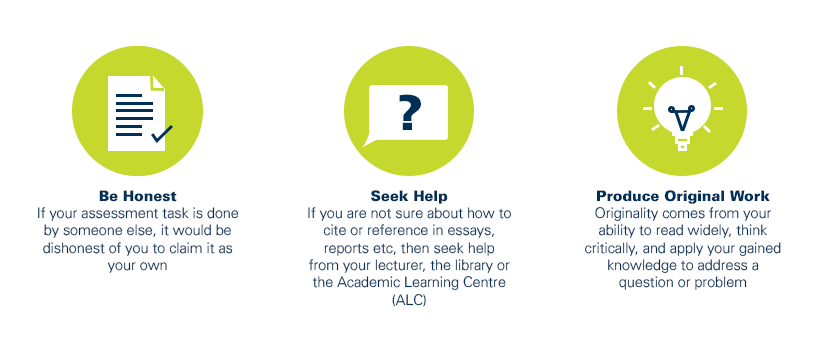
As a CQUniversity student you are expected to act honestly in all aspects of your academic work.
Any assessable work undertaken or submitted for review or assessment must be your own work. Assessable work is any type of work you do to meet the assessment requirements in the unit, including draft work submitted for review and feedback and final work to be assessed.
When you use the ideas, words or data of others in your assessment, you must thoroughly and clearly acknowledge the source of this information by using the correct referencing style for your unit. Using others’ work without proper acknowledgement may be considered a form of intellectual dishonesty.
Participating honestly, respectfully, responsibly, and fairly in your university study ensures the CQUniversity qualification you earn will be valued as a true indication of your individual academic achievement and will continue to receive the respect and recognition it deserves.
As a student, you are responsible for reading and following CQUniversity’s policies, including the Student Academic Integrity Policy and Procedure. This policy sets out CQUniversity’s expectations of you to act with integrity, examples of academic integrity breaches to avoid, the processes used to address alleged breaches of academic integrity, and potential penalties.
What is a breach of academic integrity?
A breach of academic integrity includes but is not limited to plagiarism, self-plagiarism, collusion, cheating, contract cheating, and academic misconduct. The Student Academic Integrity Policy and Procedure defines what these terms mean and gives examples.
Why is academic integrity important?
A breach of academic integrity may result in one or more penalties, including suspension or even expulsion from the University. It can also have negative implications for student visas and future enrolment at CQUniversity or elsewhere. Students who engage in contract cheating also risk being blackmailed by contract cheating services.
Where can I get assistance?
For academic advice and guidance, the Academic Learning Centre (ALC) can support you in becoming confident in completing assessments with integrity and of high standard.
What can you do to act with integrity?