Overview
Social Work Field Education 1 is the first of two fieldwork placements that you are required to complete. You will complete onsite, agency-based interactions and learning tasks in a practice context supervised by an approved agency worker. You will participate in the range of activities, tasks, and processes that the agency encompasses by negotiation with the supervisor and subject to agency rules and procedures. During the first placement you are invited to consolidate and apply your learning from the first two years of study within an agency placement context. You will observe other workers, participate in the operations of the agency and should be able to critically analyse and articulate your developing professional practice framework within the context of the field placement. A Field Education Manual will guide you through the placement process, providing a detailed framework and administrative arrangements, including attendance and assessment requirements, as well as roles and responsibilities of all parties. The manual outlines the inherent requirements and performance expectations based on the Australian Association of Social Workers (AASW) Practice Standards and ASWEAS General and Profession-Specific Graduate Attributes. You are required to attend the compulsory residential school associated with the co-requisite unit, SOWK13010, and participate in designated call-back sessions.
Details
Pre-requisites or Co-requisites
Prerequisites: Students must have completed all first and second year units before attempting SOWK13009. Corequisite: SOWK13010 Integrating Theory and Practice I.
Important note: Students enrolled in a subsequent unit who failed their pre-requisite unit, should drop the subsequent unit before the census date or within 10 working days of Fail grade notification. Students who do not drop the unit in this timeframe cannot later drop the unit without academic and financial liability. See details in the Assessment Policy and Procedure (Higher Education Coursework).
Offerings For Term 1 - 2026
Attendance Requirements
All on-campus students are expected to attend scheduled classes - in some units, these classes are identified as a mandatory (pass/fail) component and attendance is compulsory. International students, on a student visa, must maintain a full time study load and meet both attendance and academic progress requirements in each study period (satisfactory attendance for International students is defined as maintaining at least an 80% attendance record).
Recommended Student Time Commitment
Each 18-credit Undergraduate unit at CQUniversity requires an overall time commitment of an average of 37.5 hours of study per week, making a total of 450 hours for the unit.
Class Timetable
Assessment Overview
Assessment Grading
This is a pass/fail (non-graded) unit. To pass the unit, you must pass all of the individual assessment tasks shown in the table above.
All University policies are available on the CQUniversity Policy site.
You may wish to view these policies:
- Grades and Results Policy
- Assessment Policy and Procedure (Higher Education Coursework)
- Review of Grade Procedure
- Student Academic Integrity Policy and Procedure
- Academic Progression Policy and Procedure
- Student Refund and Credit Balance Policy and Procedure
- Complaints Policy and Procedure
- Information and Communications Technology Acceptable Use Policy and Procedure
This list is not an exhaustive list of all University policies. The full list of University policies are available on the CQUniversity Policy site.
Feedback, Recommendations and Responses
Every unit is reviewed for enhancement each year. At the most recent review, the following staff and student feedback items were identified and recommendations were made.
Feedback from SUTE
appreciated Robyns feedback/comments of my learning agreement and her responses felt encouraging and helped me feel like I was on the right track. Robyn also helped me feel prepared for placement by providing relevant information and explaining the different processes and requirements. Thank you!
We will continue to provide relational support and clear guidance in feedback, with a focus on ensuring students feel encouraged and well-prepared for field education.
- Develop and demonstrate the integration of professional social work knowledge, skills, and values within the placement context, in alignment with the AASW Code of Ethics and AASW Practice Standards, and organisational context for practice, including adherence to legislative and policy frameworks.
- Reflect on your professional practice, incorporating self-care strategies, use of self in the organisational context along with problem-solving skills, and cross-cultural competency.
- Create opportunities to develop your skills in the assessment of clients' needs, evaluating appropriate intervention strategies using social work theoretical frameworks.
- Construct a professional practice framework relevant to your emerging social work practice and demonstrate its application in various contexts.
All of the learning outcomes are linked to the AASW Practice Standards.
Alignment of Assessment Tasks to Learning Outcomes
| Assessment Tasks | Learning Outcomes | |||
|---|---|---|---|---|
| 1 | 2 | 3 | 4 | |
| 1 - Professional Practice Plans (learning plans) - 0% | ||||
| 2 - Learning logs / diaries / Journal / log books - 0% | ||||
| 3 - Presentation - 0% | ||||
Alignment of Graduate Attributes to Learning Outcomes
| Graduate Attributes | Learning Outcomes | |||
|---|---|---|---|---|
| 1 | 2 | 3 | 4 | |
| 1 - Communication | ||||
| 2 - Problem Solving | ||||
| 3 - Critical Thinking | ||||
| 4 - Information Literacy | ||||
| 5 - Team Work | ||||
| 6 - Information Technology Competence | ||||
| 7 - Cross Cultural Competence | ||||
| 8 - Ethical practice | ||||
| 9 - Social Innovation | ||||
| 10 - First Nations Knowledges | ||||
| 11 - Aboriginal and Torres Strait Islander Cultures | ||||
Textbooks
Making the Most of Field Placement
- Edition: 5th (2022)
- Authors: Helen Cleak and Jill Wilson
- Cengage
- Melbourne Melbourne , Victoria , Australia
- ISBN: 9780170417006
Please allow students to have up-to-date online access.
- Binding: Paperback
The Reflective Journal
- Edition: 4th (2024)
- Authors: Barbara Bassot
- MacMillan Education UK
- London London , United Kingdom
- ISBN: 9781352010299
- Binding: Paperback
IT Resources
- CQUniversity Student Email
- Internet
- Unit Website (Moodle)
- Microsoft Word
- SONIA
- Telephone
- Students must have necessary equipment/accessories to attend online lectures via Zoom or Microsoft Teams
All submissions for this unit must use the referencing style: American Psychological Association 7th Edition (APA 7th edition)
For further information, see the Assessment Tasks.
r.kemble@cqu.edu.au
Week 1 Getting Started: Learning Agreement, Orientation & Supervision
Begin Date: 09 Mar 2026Module/Topic
Please Note:
This schedule is based on University Term Weeks.
Follow the learning sequence in order and adjust the timing to suit your own placement start date.
Getting Started:
• Understanding the Learning Agreement
• Beginning your placement orientation
• Developing early supervision routines
• Reviewing log-of-hours expectations and safety requirements
Placement Ready Modules in Moodle
Throughout the term, students will engage with a series of short online modules designed to support learning in placement. These modules focus on key aspects of professional formation in field education, including learning in practice, managing emotional and organisational demands, ethical and relational practice, supervision, and responding to concerns.
The modules are intended to be used flexibly across placement to support reflection, supervision, and assessment tasks, rather than as a strict week-by-week sequence.
Chapter
• Cleak & Wilson (2019/2022): Ch. 3 & 5
• Field Education Manual (CQU, 2026)
Events and Submissions/Topic
• Health & Safety Orientation Form (via SONIA) due this week
• Begin logging hours in SONIA
• Attend/arrange first supervision session
Weekly requirement: Students are expected to prepare and submit supervision notes each week to their primary social work supervisor. Supervision notes are not individually assessed but form part of the evidence considered in the final placement assessment, with completion confirmed by the Field Educator.
Week 2 - Critical Reflection, Supervision & Communication
Begin Date: 16 Mar 2026Module/Topic
• Strengthening the supervisory relationship
• Understanding critically reflective practice
• Developing communication skills for practice
Chapter
• Cleak & Wilson (2019/2022): Ch. 3 & 5
• Field Education Manual (CQU, 2026)
Events and Submissions/Topic
• Complete your weekly Supervision Record & Action Plan and share with your supervisor (or prorata if placement if part time)
• Begin drafting Learning Agreement goals
Week 3 - Learning Agreement Meeting
Begin Date: 23 Mar 2026Module/Topic
• Formalising the Learning Agreement meeting (student + supervisor + Liaison Visitor)
• Identifying learning goals and ensuring alignment with Australian Association of Social Workers Practice Standards
Chapter
• Field Education Manual
Events and Submissions/Topic
• Learning Agreement (Goals) Meeting completed or booked
• A1 Learning Agreement (Goals) should be mostly drafted
• Supervision record
Online Forum #1 – Optional peer reflection
This forum is available as an optional space to share early placement reflections or questions, if helpful. Participation is not assessed and there is no expectation that you post. You are also welcome to read along quietly.
Week 4 - Finalising the Learning Agreement
Begin Date: 30 Mar 2026Module/Topic
• Reviewing and refining goals
• Understanding the role of reflection in professional learning
Chapter
• Bassot (2024): Reflective Writing
• Cleak & Wilson: Learning Agreements
Events and Submissions/Topic
• Assessment 1 (Learning Agreement - Goals) due your week 4 of placement
• Supervision record
Week 5 - Assessing Your Learning
Begin Date: 06 Apr 2026Module/Topic
• Models and tools of reflection
• Preparing for the Mid-Placement Review
Chapter
• Bassot (Theme 2)
• Cleak & Wilson (Teaching & Learning on Placement)
Events and Submissions/Topic
• Supervision record
Week 6 - Mid-Placement Reviews Begin
Begin Date: 13 Apr 2026Module/Topic
• Purpose, structure and expectations of the Mid Placement Review
• Reviewing progress against the Learning Agreement
Chapter
• Bassot (Theme 4)
• Cleak & Wilson (Assessment & Evaluation)
Events and Submissions/Topic
• Assessment 2 (MPR) preparation begins
• Supervision Record
University Vacation Week - Preparing for Your Mid Placement Review
Begin Date: 20 Apr 2026Module/Topic
• Deepening reflective practice
• Preparing your documentation
Chapter
Events and Submissions/Topic
• Ensure Learning Agreement is current
• Supervision record
Online Forum #2 – Optional reflection space
As placement progresses, some students find it helpful to use the forum to reflect on challenges, learning moments, or experiences of supervision. Participation is optional and not assessed. Please maintain confidentiality at all times.
Week 7 - Mid-Placement Reviews Continue
Begin Date: 27 Apr 2026Module/Topic
• Conducting your Mid Placement Review meeting
• Reviewing goal progress
• Planning the next stage of placement
Chapter
• Bassot Themes 5 & 6
• Cleak & Wilson (Practice contexts & methods)
Events and Submissions/Topic
• Assessment 2 due one week after your Mid Placement Review meeting
• Supervision record
Week 8 - Mid Placement Reviews
Begin Date: 04 May 2026Module/Topic
• Conducting your Mid Placement Review meeting
• Reviewing goal progress
• Planning the next stage of placement
Chapter
• Bassot Themes 5 & 6
• Cleak & Wilson (Practice contexts & methods)
Events and Submissions/Topic
• Assessment 2 due one week after your Mid Placement Review meeting
• Supervision record
Week 9 - Ethics, Difference & Professional Identity
Begin Date: 11 May 2026Module/Topic
• Cross-cultural practice
• Ethical challenges in practice
• Revisiting your self-care plan
Chapter
• Bassot (Theme 7)
• Cleak & Wilson (Ethics, culture, power)
Events and Submissions/Topic
• Supervision record
Week 10 - Self-Care Strategies in Professional Practice
Begin Date: 18 May 2026Module/Topic
• Reviewing your self-care plan with your supervisor
• Managing stress during placement
Chapter
• Bassot (Theme 8)
Events and Submissions/Topic
• Supervision record
Online Forum #3 – Optional peer reflection
This forum is an optional space to reflect on learning, professional identity, or what has shifted for you as placement continues. There is no requirement to post, and participation is not assessed.
Week 11 - Preparing for Ending Placement Well
Begin Date: 25 May 2026Module/Topic
• Planning for closure
• Consolidating learning
Chapter
• Bassot (Theme 9)
• Cleak & Wilson (Finishing Well)
Events and Submissions/Topic
• Assessment 3 (End of Placement Review, Reflection & Report) due soon
• Supervision record
Student Unit and Teaching Evaluation survey – We encourage you to provide feedback about your unit and teaching experiences in this unit. The survey opens Week 11 and closes one week before release of grades.
Week 12 - Final Reflections & Completion Tasks
Begin Date: 01 Jun 2026Module/Topic
• Final supervision session
• Reviewing placement learning overall
Chapter
• Bassot (Theme 10)
• Cleak & Wilson (Finishing Well)
Events and Submissions/Topic
• Assessment 3 due 2 weeks after your final day
• Supervision record
• Online Forum #3 due
Student Unit and Teaching Evaluation survey – Please complete the unit evaluation survey.
Week 13 and 14 of Placement
Begin Date: 08 Jun 2026Module/Topic
• Ensuring all documentation is complete
Chapter
Events and Submissions/Topic
• Confirm the log of hours is completed
• Ensure your supervisor signed off on all hours
• Final assessment documents submitted (End of Placement Review, Reflection & Report)
Vacation/Exam Week
Begin Date: 15 Jun 2026Module/Topic
Chapter
Events and Submissions/Topic
Important Note About Weekly Scheduling and Placement Timing
Students commence placement at different times and may be enrolled on either a full-time or part-time basis. For this reason, the weekly content in the e-Unit Profile is aligned to University Term Weeks, rather than individual placement week numbers.
Please follow the sequence of learning activities in order, but adjust the timing to suit your own placement commencement date and weekly pattern. Your Liaison Visitor (LV) will support you to map these expectations to your personal placement timeline.
If you have any questions about how the schedule aligns with your placement, please contact your Liaison Visitor.
Supervision and Reflective Engagement
Supervision Notes
Supervision notes are a core component of placement learning and professional accountability in field education. While supervision notes are not assessed as a standalone assessment item, they contribute to the evidence considered in the final placement assessment.
Students are required to:
- Prepare and submit supervision notes weekly (or pro rata) to their primary social work supervisor
- Use supervision notes to support reflective discussion, learning, and professional development
- Maintain supervision documentation in line with placement and organisational expectations
As part of the End of Placement Review (EPR), the Field Educator will confirm that supervision notes were completed and submitted regularly throughout placement. Consistent engagement in supervision and supervision documentation is an expectation of professional practice in field education.
Online Discussion Forums (Optional)
Optional online discussion forums are available to support connection and reflective learning during placement. Participation in online forums is not assessed and is not a requirement for placement completion. Students may choose to use these spaces for peer connection and reflection alongside supervision.
If you have any questions, please contact the Field Education Team.
1 Professional Practice Plans (learning plans)
The aim of the Learning Agreement (LA) is for you to demonstrate your ability to successfully develop clear, meaningful, and assessable learning goals for your field education placement. These goals reflect a shared commitment between you, your agency, and CQUniversity to ensure that your placement meets the Australian Association of Social Workers (AASW) Practice Standards (2023), Code of Ethics (2020), and Graduate Attributes.
The Learning Agreement also provides a foundation for self-directed learning and reflective practice and supports your professional development as a future social worker.
This Learning Agreement forms the first of three linked assessment tasks in Field Education 1. It will be followed by:
Assessment 2: Mid Placement Review (MPR)
Assessment 3: End of Placement Review (EPR)
Instructions:
Please refer to the assessment task instructions on the Moodle site.
Academic Integrity:
You must abide by the principles of academic integrity (see Student Academic Integrity Policy and Procedure). Completion of this assessment with another party or sharing of responses is not permitted at any time. This assessment requires students to adhere to the guidelines on the use of artificial intelligence tools as specified in the Artificial Intelligence Assessment Scale (AIAS). Any misuse or lack of disclosure regarding the use of AI tools will be considered a breach of academic integrity. No Generative AI use is permitted in the completion of this assignment. You must not use AI tools or technology to produce substantive content. You are permitted to use technology or tools that assist with spelling, grammar or formatting.
Level of GenAI Use Allowed: Level 1: You must not use AI at any point during the assessment. You must demonstrate your core skills and knowledge.
Extensions:
Not available as per policy. The 72-hour grace period does not apply to this assessment
Minimum Pass Criteria:
You must pass all assessments to pass this unit.
Supplementary assessment is not available for this assessment and unit.
The Learning Agreement is due for submission by Friday of Week 4 of your placement timeline (pro rata for part time)
Three weeks following submission
Refer to the marking rubric on the Moodle site for more detail on how marks will be assigned.
- Develop and demonstrate the integration of professional social work knowledge, skills, and values within the placement context, in alignment with the AASW Code of Ethics and AASW Practice Standards, and organisational context for practice, including adherence to legislative and policy frameworks.
- Reflect on your professional practice, incorporating self-care strategies, use of self in the organisational context along with problem-solving skills, and cross-cultural competency.
- Create opportunities to develop your skills in the assessment of clients' needs, evaluating appropriate intervention strategies using social work theoretical frameworks.
2 Presentation
The Mid-Placement Review (MPR) is a key assessment that allows you, your field educator(s), and the CQUniversity liaison to assess your progress midway through your placement. It provides a structured checkpoint to evaluate your development against the learning goals established in your Learning Agreement and ensures you are on track to meet the unit and professional requirements.
The Mid Placement Review (Assessment 2) forms the second of three linked assessment tasks in Field Education 1. It will be followed by:
Assessment 3: End of Placement Review (EPR)
Instructions:
Please refer to the assessment task instructions on the Moodle site.
Academic Integrity:
You must abide by the principles of academic integrity (see Student Academic Integrity Policy and Procedure). Completion of this assessment with another party or sharing of responses is not permitted at any time. This assessment requires students to adhere to the guidelines on the use of artificial intelligence tools as specified in the Artificial Intelligence Assessment Scale (AIAS). Any misuse or lack of disclosure regarding the use of AI tools will be considered a breach of academic integrity. No Generative AI use is permitted in the completion of this assignment. You must not use AI tools or technology to produce substantive content. You are permitted to use technology or tools that assist with spelling, grammar or formatting.
Level of GenAI Use Allowed: Level 1: You must not use AI at any point during the assessment. You must demonstrate your core skills and knowledge.
Extensions:
Not available as per policy. The 72-hour grace period does not apply to this assessment
Minimum Pass Criteria:
You must pass all assessments to pass this unit.
Supplementary assessment is not available for this assessment and unit.
The meeting will take place mid way through your placement and your MPR must be submitted one week following this meeting
Three week following submission
Refer to the marking rubric on the Moodle site for more detail on how marks will be assigned.
- Create opportunities to develop your skills in the assessment of clients' needs, evaluating appropriate intervention strategies using social work theoretical frameworks.
- Construct a professional practice framework relevant to your emerging social work practice and demonstrate its application in various contexts.
3 Learning logs / diaries / Journal / log books
The aim of this assessment is for you to demonstrate your ability to successfully embed learning from this unit into Field Education 1. The End of Placement Review (EPR) is the final assessment for Field Education 1. It provides an opportunity for students, field educators, and university liaisons to reflect on learning achieved across the placement and to evaluate the student’s readiness to progress to Field Education 2.
This assessment supports a final, reflective conversation that considers the student’s development of professional values, ethical awareness, knowledge-informed practice, engagement within organisational and relational contexts, and commitment to ongoing professional learning. The EPR is a capstone task that consolidates placement learning rather than assessing progress toward goals.
Instructions:
Please refer to the assessment task instructions on the Moodle site.
Academic Integrity:
You must abide by the principles of academic integrity (see Student Academic Integrity Policy and Procedure). Completion of this assessment with another party or sharing of responses is not permitted at any time. This assessment requires students to adhere to the guidelines on the use of artificial intelligence tools as specified in the Artificial Intelligence Assessment Scale (AIAS). Any misuse or lack of disclosure regarding the use of AI tools will be considered a breach of academic integrity. No Generative AI use is permitted in the completion of this assignment. You must not use AI tools or technology to produce substantive content. You are permitted to use technology or tools that assist with spelling, grammar or formatting.
Level of GenAI Use Allowed: Level 1: You must not use AI at any point during the assessment. You must demonstrate your core skills and knowledge.
Extensions:
Not available as per policy. The 72-hour grace period does not apply to this assessment
Minimum Pass Criteria:
You must pass all assessments to pass this unit.
Supplementary assessment is not available for this assessment and unit.
Within two weeks of the completion of your placement hours
Three weeks following submission
Refer to the marking rubric on the Moodle site for more detail on how marks will be assigned.
- Develop and demonstrate the integration of professional social work knowledge, skills, and values within the placement context, in alignment with the AASW Code of Ethics and AASW Practice Standards, and organisational context for practice, including adherence to legislative and policy frameworks.
- Reflect on your professional practice, incorporating self-care strategies, use of self in the organisational context along with problem-solving skills, and cross-cultural competency.
- Construct a professional practice framework relevant to your emerging social work practice and demonstrate its application in various contexts.
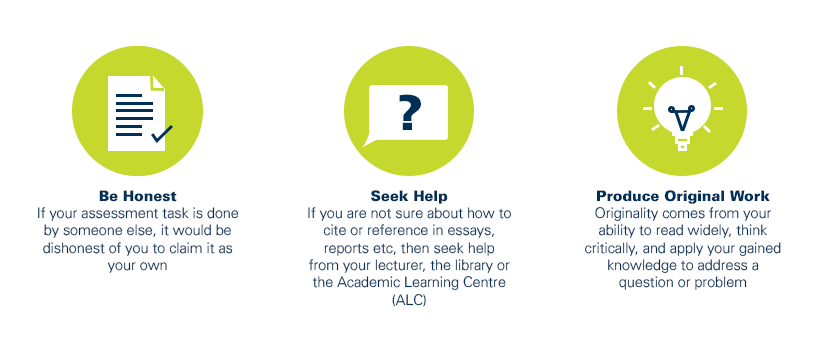
As a CQUniversity student you are expected to act honestly in all aspects of your academic work.
Any assessable work undertaken or submitted for review or assessment must be your own work. Assessable work is any type of work you do to meet the assessment requirements in the unit, including draft work submitted for review and feedback and final work to be assessed.
When you use the ideas, words or data of others in your assessment, you must thoroughly and clearly acknowledge the source of this information by using the correct referencing style for your unit. Using others’ work without proper acknowledgement may be considered a form of intellectual dishonesty.
Participating honestly, respectfully, responsibly, and fairly in your university study ensures the CQUniversity qualification you earn will be valued as a true indication of your individual academic achievement and will continue to receive the respect and recognition it deserves.
As a student, you are responsible for reading and following CQUniversity’s policies, including the Student Academic Integrity Policy and Procedure. This policy sets out CQUniversity’s expectations of you to act with integrity, examples of academic integrity breaches to avoid, the processes used to address alleged breaches of academic integrity, and potential penalties.
What is a breach of academic integrity?
A breach of academic integrity includes but is not limited to plagiarism, self-plagiarism, collusion, cheating, contract cheating, and academic misconduct. The Student Academic Integrity Policy and Procedure defines what these terms mean and gives examples.
Why is academic integrity important?
A breach of academic integrity may result in one or more penalties, including suspension or even expulsion from the University. It can also have negative implications for student visas and future enrolment at CQUniversity or elsewhere. Students who engage in contract cheating also risk being blackmailed by contract cheating services.
Where can I get assistance?
For academic advice and guidance, the Academic Learning Centre (ALC) can support you in becoming confident in completing assessments with integrity and of high standard.
What can you do to act with integrity?