Overview
This unit provides students with an introduction to case management, how case work integrates within the framework of case management, and the structured steps in the case management process across a range of practice fields. The history, the policy and political framework and the implementation of case management across a range of practice fields will be critically analysed. Students' will explore the lived experience of service users and the co-design of care plans using the case management process and demonstrate social work professional skills to achieve this at residential school. Students will develop knowledge and skills in undertaking holistic social assessment, developing care plans, coordinating services for service users and family member and monitoring and evaluating care plans.
Details
Pre-requisites or Co-requisites
pre-requisite SOWK11015 Professional Communication in Human Services Co-requisite SOWK12008 Theories of Change for Professional Practice 1
Important note: Students enrolled in a subsequent unit who failed their pre-requisite unit, should drop the subsequent unit before the census date or within 10 working days of Fail grade notification. Students who do not drop the unit in this timeframe cannot later drop the unit without academic and financial liability. See details in the Assessment Policy and Procedure (Higher Education Coursework).
Offerings For Term 1 - 2026
Attendance Requirements
All on-campus students are expected to attend scheduled classes - in some units, these classes are identified as a mandatory (pass/fail) component and attendance is compulsory. International students, on a student visa, must maintain a full time study load and meet both attendance and academic progress requirements in each study period (satisfactory attendance for International students is defined as maintaining at least an 80% attendance record).
Recommended Student Time Commitment
Each 6-credit Undergraduate unit at CQUniversity requires an overall time commitment of an average of 12.5 hours of study per week, making a total of 150 hours for the unit.
Class Timetable
Assessment Overview
Assessment Grading
This is a graded unit: your overall grade will be calculated from the marks or grades for each assessment task, based on the relative weightings shown in the table above. You must obtain an overall mark for the unit of at least 50%, or an overall grade of 'pass' in order to pass the unit. If any 'pass/fail' tasks are shown in the table above they must also be completed successfully ('pass' grade). You must also meet any minimum mark requirements specified for a particular assessment task, as detailed in the 'assessment task' section (note that in some instances, the minimum mark for a task may be greater than 50%). Consult the University's Grades and Results Policy for more details of interim results and final grades.
All University policies are available on the CQUniversity Policy site.
You may wish to view these policies:
- Grades and Results Policy
- Assessment Policy and Procedure (Higher Education Coursework)
- Review of Grade Procedure
- Student Academic Integrity Policy and Procedure
- Academic Progression Policy and Procedure
- Student Refund and Credit Balance Policy and Procedure
- Complaints Policy and Procedure
- Information and Communications Technology Acceptable Use Policy and Procedure
This list is not an exhaustive list of all University policies. The full list of University policies are available on the CQUniversity Policy site.
Feedback, Recommendations and Responses
Every unit is reviewed for enhancement each year. At the most recent review, the following staff and student feedback items were identified and recommendations were made.
Feedback from email communication
I really appreciated the feedback on my assignment and all the support offered this term. I am so grateful to be studying with CQU and its student focused approach.
Continue to maintain the student focused approach.
Feedback from SUTE data
Better organization and aim of objectives throughout residential component.
This was the first time that the five day residential is part of the unit. This change was made to enhance accessibility and participation in the course for the students. We aim to incorporate feedback from this year to enhance the student learning experience into the future.
Feedback from SUTE data
As someone who has no prior understanding of completing assessments and care plans, I found assessments 2/3 to be hard. I do not necessary think it is fair to base a large amount of a grade on something some of us have never done.
Review the assessment tasks in relation of their appropriateness around learning objectives. Continue to explore and utilise different strategies to support student learning.
- Conceptually map the major features, principles, structures, processes and roles of case management practice and systems relevant to diverse contexts
- Critically analyse the functions of case management in service delivery and its relevance for social work and human services policy and practice
- Demonstrate case management processes and skills undertaking an assessment with a service user.
- Apply appropriate cross cultural awareness skills and knowledge to case work and case management contexts with indigenous peoples
- Generate an evidence-informed intervention plan for complex and high need service users.
This unit addresses the AASW Practice Standards Objectives 3, 4, 5, 6 & 7.
Alignment of Assessment Tasks to Learning Outcomes
| Assessment Tasks | Learning Outcomes | ||||
|---|---|---|---|---|---|
| 1 | 2 | 3 | 4 | 5 | |
| 1 - Written Assessment - 20% | |||||
| 2 - Practical Assessment - 40% | |||||
| 3 - Report - 40% | |||||
Alignment of Graduate Attributes to Learning Outcomes
| Graduate Attributes | Learning Outcomes | ||||
|---|---|---|---|---|---|
| 1 | 2 | 3 | 4 | 5 | |
| 1 - Communication | |||||
| 2 - Problem Solving | |||||
| 3 - Critical Thinking | |||||
| 4 - Information Literacy | |||||
| 5 - Team Work | |||||
| 6 - Information Technology Competence | |||||
| 7 - Cross Cultural Competence | |||||
| 8 - Ethical practice | |||||
| 9 - Social Innovation | |||||
| 10 - First Nations Knowledges | |||||
| 11 - Aboriginal and Torres Strait Islander Cultures | |||||
Textbooks
There are no required textbooks.
IT Resources
- CQUniversity Student Email
- Internet
- Unit Website (Moodle)
- Academic Learning Centre services
- Access to MIMS through the university library
- CQUniversity library literature search tools
- Microsoft Word 2010 or 2013
- Wordprocessing, spreadsheeting and powerpoint software
- Zoom account (Free)
- Zoom app on your smart phone or access to Zoom on your laptop
- Endnote bibliographic software. This is optional for formatting references.
- Online access Australian Standards (through CQU Library)
- Zoom (both microphone and webcam capability)
- CQU Library search engines for research articles
- CQU Library Resources
- e-Unit Profile guide
All submissions for this unit must use the referencing style: American Psychological Association 7th Edition (APA 7th edition)
For further information, see the Assessment Tasks.
p.cesare@cqu.edu.au
e.cleary@cqu.edu.au
Week 1
Begin Date: 09 Mar 2026Module/Topic
Introduction to Casework and Case Management
Chapter
Visit the study module on the unit Moodle site for weekly recorded lecture, content, readings, and learning activities
Reading each week's e-Reading is required to successfully complete the unit.
Please contact TASAC if you are unable to access or locate the readings.
Events and Submissions/Topic
ORIENTATION: Take some time to carefully read the unit profile and the assessment task descriptions, and orient yourself to the unit Moodle site, beginning with the welcome video or written introduction. This recording provides an overview of learning and teaching activities, residential school, assessment tasks, and lecture/tutorial times.
LIVE SESSIONS ONLINE
- Virtual Classroom - Monday 9th March, 3:00-4:00 pm (AEST)
If you would like to meet with the Unit Coordinator to discuss teaching and learning, provide feedback, or ask questions about the assessment tasks, please attend the classroom.
- Live Zoom Tutorial - Wednesday 11th March, 12:30-2:00 pm (AEST) - Introduction to the unit, casework, and case management.
These tutorials are activity-based sessions where you can practice skills.
RESIDENTIAL SCHOOL
- Please check the Residential tile and register your attendance. This is a mandatory requirement for meeting the unit's learning outcomes.
- Please review the information about travel and accommodation to the residential school in the Residential tile.
- It is recommended that you book travel and accommodation as soon as possible. Travel insurance is also recommended in the event of a weather event that requires the residence to be cancelled (which occurs infrequently).
- If you have any questions, please post them in the Residential Forum, General section on Moodle.
ANNOUNCEMENTS AND DISCUSSION FORUMS: Check for posts and updates each week.
STUDENT EMAIL: Check your student email at least twice per week for important communications.
CHECKLIST
- Orient yourself to the unit Moodle site.
- Completed your annual Academic Integrity program.
- Created a study plan for the term, including participation in Zoom tutorials, residential school, and assessment tasks.
- Reviewed content in Week 1.
- Read e-Reading in Week 1.
- Participated in an online forum about week 1 content.
- Checked the Moodle forum posts and the student emails.
Week 2
Begin Date: 16 Mar 2026Module/Topic
The Pre-Planning and Beginning Stage of Case Management
Chapter
Visit the study module on the unit Moodle site for the weekly recorded lecture, content, readings, and learning activities
Events and Submissions/Topic
LIVE SESSIONS ONLINE
- Virtual Classroom - Monday 16th March, 3:00-4:00 pm (AEST)
- Live Zoom Tutorial - Wednesday 18th March, 12:30 – 2:00 pm (AEST)
This week, we will practice the intake and pre-planning stage for a hypothetical case study.
Week 3
Begin Date: 23 Mar 2026Module/Topic
Assessment Frameworks for Case Management
Chapter
Visit the study module on the unit Moodle site for the weekly recorded lecture, content, readings, and learning activities.
Events and Submissions/Topic
LIVE SESSIONS ONLINE
- Virtual Classroom - Monday 23rd March, 3:00-4:00 pm (AEST)
- Live Zoom Tutorial - No tutorial this week. The Week 2 content will be included in next week's tutorial.
Week 4
Begin Date: 30 Mar 2026Module/Topic
Assessment Formulation
Chapter
Visit the study module on the unit Moodle site for the weekly recorded lecture, content, readings, and learning activities.
Events and Submissions/Topic
LIVE SESSIONS ONLINE
- Virtual Classroom - Monday 30th March, 3:00-4:00 pm (AEST)
- Live Zoom Tutorial - Wednesday 1st April,12:30 -3:00 pm (AEST)
This week, we will explore and practice using a range of assessment tools based on hypothetical case studies. We will also learn the ABCD of writing a formulation.
Week 5
Begin Date: 06 Apr 2026Module/Topic
Care and intervention plans, reviews, and termination.
Chapter
Visit the study module on the unit Moodle site for the weekly recorded lecture, content, readings, and learning activities.
Events and Submissions/Topic
LIVE SESSIONS ONLINE
- Virtual Classroom - Monday 6th April, 3:00-4:00 pm (AEST)
- Zoom Residential School Overview - Tuesday 7th April 12:00 pm -1:00 pm
- Live Zoom Tutorial - Wednesday 8th April, 12:30 -2:00 pm (AEST)
This week, we will practice writing care plans using the assessment case examples from last week.
PREPARATION FOR RESIDENTIAL SCHOOL
Have you:
- Reviewed the preparation material for the residential school. The Preparation for the Residential School is located before the Week 6 tile.
Week 6
Begin Date: 13 Apr 2026Module/Topic
Critical Reflection and Positionality for Case Management
Chapter
Visit the study module on the unit Moodle site for the weekly recorded lecture, content, readings, and learning activities.
Events and Submissions/Topic
LIVE SESSIONS ONLINE
- Virtual Classroom - Monday 13th April, 3:00-4:00 pm (AEST)
- Live Zoom Tutorial - Wednesday 15th April, 12:30 -2:00 pm (AEST)
This week, we will engage in and practice critical reflection on a range of issues.
CASE STUDIES/GROUP ASSIGNMENT FOR RESIDENTIAL SCHOOL: The case studies for each group will be available on Monday, 13th April, in the Assessment Block.
RESIDENTIAL PROGRAM: The residential program will be available on Monday, 13th April, in the residential tile.
PREPARATION FOR RESIDENTIAL SCHOOL:
Have you:
- Reviewed the preparation material for the residential school. The Preparation for the Residential School is located before the Week 6 tile.
- Practiced the skills with friends and family in preparation for the residential school.
Vacation Week
Begin Date: 20 Apr 2026Module/Topic
Vacation Week
Chapter
This is an opportunity to read any reading you have missed.
Events and Submissions/Topic
ACTIVITIES: This is an opportunity for you to catch up on or review any teaching and learning activities you have missed or need a refresher on.
APPOINTMENTS WITH THE UC:
If you would like to meet with the UC to discuss any learning and teaching matters, you can contact the UC via email to organise an appointment this week.
RESIDENTIAL PREPARATION CHECKLIST
Have you:
- Located your group details and group case study?
- Printed or saved the residential program for next week?
Week 7
Begin Date: 27 Apr 2026Module/Topic
Residential School
All enrolled distance/online education students in the unit must attend the residential school.
Chapter
There are no readings this week.
Events and Submissions/Topic
Residential School
- CQUniversity North Rockhampton campus, Building 18
- Tuesday 28th April - 2nd May 2026
- See the residential program for the start and finish times for each day.
Assessment
- You will get the opportunity to record your assessment at the residential school.
- The assessment is due next week on Wednesday, 13th May at 400pm (AEST).
Week 8
Begin Date: 04 May 2026Module/Topic
Working with Critical Theories, Epistemic Injustice and Intersectionality in Case Management
Chapter
Visit the study module on the unit Moodle site for the weekly recorded lecture, content, readings, and learning activities.
Events and Submissions/Topic
LIVE SESSIONS ONLINE
- Virtual Classroom - Monday 4th May, 3:00 - 4:00 pm (AEST)
- Live Zoom Tutorial - There are no live tutorials this week.
- Live Zoom Assessment 2 Overview - Tuesday 5th May, 12:30-1:30 pm (AEST)
ASSESSMENT CHECKLIST
Have you:
- Created a share drive link to the audiovisual. Please contact TASAC if you don’t know how to do this.
- Allowed access to the shared drive for all CQU staff.
- Checked the link is working.
- Started Assessment 2, which is due next Wednesday, 13th May at 400pm (AEST), and is an audio recording and a written assessment.
Audio-Visual Recording of Case Work (15 minutes) Due: Week 8 Wednesday (6 May 2026) 4:00 pm AEST
Week 9
Begin Date: 11 May 2026Module/Topic
Professional Writing and Written Reports
Chapter
Visit the study module on the unit Moodle site for the weekly recorded lecture, content, readings, and learning activities.
Events and Submissions/Topic
LIVE SESSIONS ONLINE
- Virtual Classroom- Monday 11th May, 3:00 - 4:00 pm (AEST)
- Live Zoom Tutorial- Wednesday 13th May. 12:30 – 2:00 pm (AEST)
This week, will practice writing case notes and report writing using hypothetical videos and case studies.
ASSESSMENT CHECKLIST
Have you:
- Created a share drive link to the audio recording.
- Contacted TASAC if you don’t know how to do this.
- Allowed access to all CQU staff.
- Checked the audio recording link is working.
- Start the final assessment- Assessment 3.
Part A: Casework Practice Critical Reflection Report (1000 words) and My Positionality Statement Audio Recording (10 Minutes) Due: Week 9 Tuesday (12 May 2026) 4:00 pm AEST
Week 10
Begin Date: 18 May 2026Module/Topic
Working with Indigenous Australians & Diverse Populations
Chapter
Visit the study module on the unit Moodle site for the weekly recorded lecture, content, readings, and learning activities.
Events and Submissions/Topic
LIVE SESSIONS ONLINE
- Virtual Classroom - Monday 18th May, 3:00 - 4:00 pm (AEST)
- Live Zoom - Assessment 3 Overview - Monday 18th May, 12:30 -1:30 pm (AEST)
- Live Zoom Tutorial - Wednesday 20th May, 12:30 – 2:00 pm (AEST)
This week, we will explore a range of anti-oppressive practices for case management with Indigenous and diverse populations.
ASSESSMENT CHECKLIST
Have you:
- Commenced the final assessment.
- Checked your unit enrolments for next term.
Week 11
Begin Date: 25 May 2026Module/Topic
Working with People with a Lived Experience, Families & Carers in Case Management
Chapter
Visit the study module on the unit Moodle site for the weekly recorded lecture, content, readings, and learning activities.
Events and Submissions/Topic
LIVE SESSIONS ONLINE
- Virtual Classroom - Monday 25th May, 300 - 400pm (AEST)
- Live Zoom Tutorial - Wednesday 27th May, 12:30 – 2:00 pm (AEST)
This week, we will explore a range of methods for engaging with and working effectively with stakeholders.
ASSESSMENT CHECKLIST
Have you:
- Commenced the final assessment. It is due in Week 12.
STUDENT UNIT AND TEACHING EVALUATION SURVEY: We encourage you to provide feedback about your unit and teaching experiences in this unit. The survey opens in Week 11 and closes a week before grades are released.
Week 12
Begin Date: 01 Jun 2026Module/Topic
Case Management Practice Contexts and Statutory Contexts
Chapter
Visit the study module on the unit Moodle site for the weekly recorded lecture, content, readings, and learning activities.
Events and Submissions/Topic
LIVE SESSIONS ONLINE
- Virtual Classroom - Monday 1st June, 3:00 - 4:00 pm (AEST)
- Live Zoom Tutorial Wednesday 3rd June, 12:30 – 2:00 pm (AEST)
We will explore different approaches and best practices for working in statutory contexts.
STUDENT UNIT AND TEACHING EVALUATION SURVEY: We encourage you to provide feedback about your unit and teaching experiences in this unit. The survey closes a week before the release of grades.
END OF TERM
- Congratulations on completing this unit and for your hard work!
- Don’t forget to check your unit enrolments for next term.
BioPsychosocial-Political Report Due: Week 12 Wednesday (3 June 2026) 4:00 pm AEST
Exam Week
Begin Date: 08 Jun 2026Module/Topic
Chapter
Events and Submissions/Topic
Vacation/Exam Week
Begin Date: 15 Jun 2026Module/Topic
Chapter
Events and Submissions/Topic
As this unit is offered online and face-to-face at the residential school, students are asked to prepare their own individual study plan to undertake self-led and self-directed study throughout the term. A key to your success is a strategic self-directed approach to learning and regular contact with your Unit Coordinator/s. Please check the Announcements and Discussion forums at least twice a week – there will be regular announcements about assessments and unit resources throughout the term, and reviewing this information is essential to unit knowledge and your success. CQUniversity communicates with students through the CQUniversity email. We recommend that you access your CQUniversity email at least twice a week so that you do not miss vital information about your studies.
This unit has a face-to-face 5-day residential school that will be held on Tuesday, 28th April at 930am - Saturday, 2nd May at 200pm. ALL students, including online students, must attend. This is a minimum requirement of the Australian Association of Social Workers to become an accredited social worker. Please refer to Assessment 1 for further information.
1 Practical Assessment
Residential School Attendance
The residential school will be held in Week 7 from Tuesday, 28th April at 930am – 2nd May 2026 at 200pm. Please note that you must attend the entire duration of the residential school.
You will need evidence of your attendance at the residential school. A sign-in sheet will be available for every session. You need to ensure that you sign in and out of every session. This will be verified each day by the Unit Coordinator.
To meet the course accreditation requirements of the Australian Association of Social Workers (AASW), a student cannot miss any more than two hours of the residential school and must provide a reason and sufficient supporting documentation to do so, for example, if there is a significant unforeseen event or illness. The AASW requires that all social work students complete at least 20 days of face-to-face learning activities across the accredited social work program.
Aim
You will demonstrate the case work process in a 15-minute audio-visual recording from beginning to end using a range of skills.
Instructions
Please refer to the assessment task instructions on the Moodle site.
Academic Integrity
- You must abide by the principles of academic integrity (see Student Academic Integrity Policy and Procedure). Completion of this assessment with another party or sharing of responses is not permitted at any time.
- The use of any generative artificial intelligence is not permitted as per Level 1 (No AI) in the AI Assessment scale tool indicators. You must complete the declaration of Gen AI use on the title page of your assessment.
Extensions
Available as per policy
The 72-hour grace period does not apply to this assessment.
Week 8 Wednesday (6 May 2026) 4:00 pm AEST
Submit your audio-visual OneDrive or Google Drive link on your cover sheet.
Week 11 Wednesday (27 May 2026)
Students will be advised of release of assessment marking via an announcement posted to the Announcement's Board on the Unit Moodle site. Please note, the 'Return to Students Information’ is an approximate date
Please refer to the marking rubric in the Assessment tile.
- Conceptually map the major features, principles, structures, processes and roles of case management practice and systems relevant to diverse contexts
- Critically analyse the functions of case management in service delivery and its relevance for social work and human services policy and practice
- Critically analyse the functions of case management in service delivery and its relevance for social work and human services policy and practice
- Demonstrate case management processes and skills undertaking an assessment with a service user.
- Apply appropriate cross cultural awareness skills and knowledge to case work and case management contexts with indigenous peoples
- Generate an evidence-informed intervention plan for complex and high need service users.
2 Report
Aim Part A
The aim of this assessment is to provide you with an opportunity to critically reflect on your casework skills demonstrated in the audio-visual and the feedback you received during the residential school.
Instructions Part A
Please refer to the assessmenet task instructions on the Unit Moodle site.
Literature and References Part A
You can refer to Fook & Gardner’s critical reflection model (2007) or academic literature about the use of self and positionality. However, most of the content will be reflective in nature and not require significant reference to the literature.
PART B
Aim Part B
The positionality statement aims to help you critically reflect on your personal position. As part of this examination, you are considering how your social location grants you privilege, creates barriers, or marginalisation, and how these dynamics influence relationships with clients, communities, and institutions.
Instructions Part B
Please refer to the assessment task on the instructions on the Unit Moodle site.
Literature and references Part B
You can refer to Fook & Gardner’s critical reflection model (2007) or academic literature about the use of self and positionality. However, most of the content will be reflective in nature and not require significant reference to the literature.
Academic Integrity
- You must abide by the principles of academic integrity (see Student Academic Integrity Policy and Procedure). Completion of this assessment with another party or sharing of responses is not permitted at any time.
- The use of any generative artificial intelligence is not permitted as per Level 1 (No AI) Assessment scale tool indicators.
- You must complete the declaration of Gen AI use on the title page of your assessment. Must be referenced as per APA 7th guidelines.
Extensions
Available as per policy
The 72-hour grace period does not apply to this assessment.
Week 9 Tuesday (12 May 2026) 4:00 pm AEST
The 72-hour grace period does not apply to this assessment.
Week 11 Friday (29 May 2026)
Students will be advised of release of assessment marking via an announcement posted to the Announcement's Board on the Unit Moodle site. Please note, the 'Return to Students Information’ is an approximate date
Refer to the marking rubric on the Moodle site for more details on how marks will be assigned.
Submission
Submit Part A and Part B via the Assessment 2 submission portal on the Moodle site.
- Conceptually map the major features, principles, structures, processes and roles of case management practice and systems relevant to diverse contexts
- Demonstrate case management processes and skills undertaking an assessment with a service user.
- Apply appropriate cross cultural awareness skills and knowledge to case work and case management contexts with indigenous peoples
- Generate an evidence-informed intervention plan for complex and high need service users.
3 Written Assessment
Aim
The aim is to complete a biopsychosocial-political assessment of the audio-visual and client assigned to you at the residential school, including the care and intervention plan. You must use the assessment template provided on Moodle.
Instructions
Please refer to the assessment task instructions on the unit Moodle site.
Literature and references
- Do not use any references for this assessment, as it is a professional social work report about a client from the case study.
- Submit a draft before the due date to review your Turnitin Similarity Score before making a final submission. Instructions are available here.
Academic Integrity
- You must abide by the principles of academic integrity (see Student Academic Integrity Policy and Procedure). Completion of this assessment with another party or sharing of responses is not permitted at any time.
- The use of any generative artificial intelligence is not permitted as per Level 1 (No AI) Assessment scale tool indicators.
- You must complete the declaration of Gen AI use on the title page of your assessment.
- Must be referenced as per APA 7th guidelines.
Submission
Submit your assessment via the Assessment 3 portal on the unit Moodle site.
Extensions
Available as per policy
The 72-hour grace period may apply to this assessment.
Week 12 Wednesday (3 June 2026) 4:00 pm AEST
Submit your assessment in Microsoft format only.
Week 12 Wednesday (3 June 2026)
24th June at 400pm (AEST)
Refer to the marking rubric on the Moodle site for more detail on how marks will be assigned.
- Conceptually map the major features, principles, structures, processes and roles of case management practice and systems relevant to diverse contexts
- Critically analyse the functions of case management in service delivery and its relevance for social work and human services policy and practice
- Apply appropriate cross cultural awareness skills and knowledge to case work and case management contexts with indigenous peoples
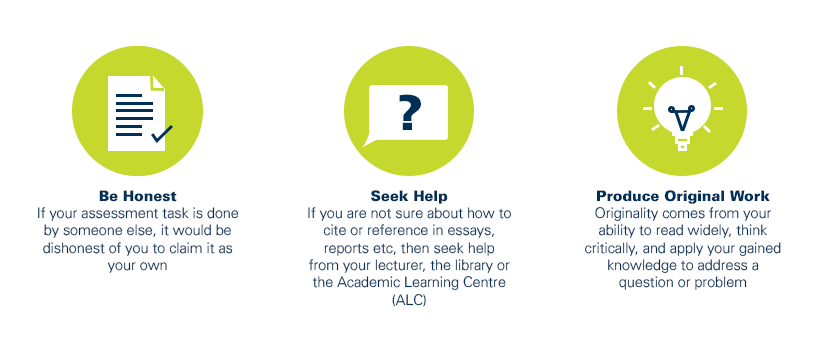
As a CQUniversity student you are expected to act honestly in all aspects of your academic work.
Any assessable work undertaken or submitted for review or assessment must be your own work. Assessable work is any type of work you do to meet the assessment requirements in the unit, including draft work submitted for review and feedback and final work to be assessed.
When you use the ideas, words or data of others in your assessment, you must thoroughly and clearly acknowledge the source of this information by using the correct referencing style for your unit. Using others’ work without proper acknowledgement may be considered a form of intellectual dishonesty.
Participating honestly, respectfully, responsibly, and fairly in your university study ensures the CQUniversity qualification you earn will be valued as a true indication of your individual academic achievement and will continue to receive the respect and recognition it deserves.
As a student, you are responsible for reading and following CQUniversity’s policies, including the Student Academic Integrity Policy and Procedure. This policy sets out CQUniversity’s expectations of you to act with integrity, examples of academic integrity breaches to avoid, the processes used to address alleged breaches of academic integrity, and potential penalties.
What is a breach of academic integrity?
A breach of academic integrity includes but is not limited to plagiarism, self-plagiarism, collusion, cheating, contract cheating, and academic misconduct. The Student Academic Integrity Policy and Procedure defines what these terms mean and gives examples.
Why is academic integrity important?
A breach of academic integrity may result in one or more penalties, including suspension or even expulsion from the University. It can also have negative implications for student visas and future enrolment at CQUniversity or elsewhere. Students who engage in contract cheating also risk being blackmailed by contract cheating services.
Where can I get assistance?
For academic advice and guidance, the Academic Learning Centre (ALC) can support you in becoming confident in completing assessments with integrity and of high standard.
What can you do to act with integrity?