Overview
In this unit, you will examine the relationship between human services and the legal context in which they operate, with a focus on how law, statutory frameworks, and professional ethics intersect to inform legally accountable and ethical professional practice. The unit introduces the historical development and contemporary applications of statutory frameworks relevant to human service work in Australia, including their role in promoting human rights and socially just outcomes. You will analyse how the statutory framework informs the legal roles, responsibilities, and obligations of human service workers across a range of practice contexts, with particular attention to statutory authority, the ethical use of power, professional decision-making, and responses to the needs of marginalised groups.
Details
Pre-requisites or Co-requisites
There are no requisites for this unit.
Important note: Students enrolled in a subsequent unit who failed their pre-requisite unit, should drop the subsequent unit before the census date or within 10 working days of Fail grade notification. Students who do not drop the unit in this timeframe cannot later drop the unit without academic and financial liability. See details in the Assessment Policy and Procedure (Higher Education Coursework).
Offerings For Term 2 - 2026
Attendance Requirements
All on-campus students are expected to attend scheduled classes - in some units, these classes are identified as a mandatory (pass/fail) component and attendance is compulsory. International students, on a student visa, must maintain a full time study load and meet both attendance and academic progress requirements in each study period (satisfactory attendance for International students is defined as maintaining at least an 80% attendance record).
Recommended Student Time Commitment
Each 6-credit Undergraduate unit at CQUniversity requires an overall time commitment of an average of 12.5 hours of study per week, making a total of 150 hours for the unit.
Class Timetable
Assessment Overview
Assessment Grading
This is a graded unit: your overall grade will be calculated from the marks or grades for each assessment task, based on the relative weightings shown in the table above. You must obtain an overall mark for the unit of at least 50%, or an overall grade of 'pass' in order to pass the unit. If any 'pass/fail' tasks are shown in the table above they must also be completed successfully ('pass' grade). You must also meet any minimum mark requirements specified for a particular assessment task, as detailed in the 'assessment task' section (note that in some instances, the minimum mark for a task may be greater than 50%). Consult the University's Grades and Results Policy for more details of interim results and final grades.
All University policies are available on the CQUniversity Policy site.
You may wish to view these policies:
- Grades and Results Policy
- Assessment Policy and Procedure (Higher Education Coursework)
- Review of Grade Procedure
- Student Academic Integrity Policy and Procedure
- Academic Progression Policy and Procedure
- Student Refund and Credit Balance Policy and Procedure
- Complaints Policy and Procedure
- Information and Communications Technology Acceptable Use Policy and Procedure
This list is not an exhaustive list of all University policies. The full list of University policies are available on the CQUniversity Policy site.
Feedback, Recommendations and Responses
Every unit is reviewed for enhancement each year. At the most recent review, the following staff and student feedback items were identified and recommendations were made.
Feedback from Student evaluation
Two lectures were difficult to engage with.
Review lectures to identify ways to increase student engagement.
Feedback from Student evaluation
The unit Moodle site was easy to navigate, and there was a great range of resources. I was surprised at my enjoyment of this subject.
Retain the Moodle site format and the interactive elements of Assessments 1 and 2, and continually review and update unit resources.
- Explain the historical development, purpose and contemporary use of legal systems and statutory frameworks relevant to human service work in Australia, including recognition of First Nations systems of law, and their role in promoting human rights and socially just outcomes
- Examine and apply statutory frameworks to human service practice, including the roles, responsibilities, obligations and limits that shape practice across diverse practice contexts
- Analyse how statutory authority and legal processes inform professional decision making in human service pratice, including responses to lived experience, need, strengths and risk, and the protection of the rights, safety and wellbeing of human service users consistent with professional and ethical responsiblities
- Evaluate the impact of statutory systems and legal processes on service users, human service workers, organisations, and the community, with consideration of their differential effects on marginalised populations
- Explore how statutory systems and legal processes interact with professional codes of ethics to support legally accountable, ethical and socially just human service practice.
The revised learning outcomes align with the ASWEAS (2024) as follows:
Domain 1: Readiness for Professional Practice
Standard 1 – Knowledge, skills and attributes and Standard 2 – Professional identity
The learning outcomes support the development of foundational legal knowledge, ethical understanding, accountability, and emerging professional identity required for safe, ethical, and socially just entry‑level practice.
Domain 2: Alignment of Theory and Practice
Standard 3 – Knowledge for practice
The learning outcomes emphasise understanding, analysis, and application of statutory frameworks, legal processes, and professional ethics to human service practice, ensuring students can integrate theory, law, and values across diverse practice contexts.
Domain 2: Alignment of Theory and Practice
Standard 5 – Assessment
The learning outcomes support the progressive demonstration of learning, including the analysis, application, and evaluation of the statutory and ethical dimensions of practice, consistent with AQF Level 7 expectations.
The learning outcomes also align with the ASWEAS (2024) new directions:
The learning outcomes aim to prepare students to navigate the increasing complexity of contemporary human service practice. They emphasise statutory accountability, safety, risk mitigation, and the protection of marginalised people, while supporting ethical and socially just practice across diverse and evolving service contexts.
Alignment of Assessment Tasks to Learning Outcomes
| Assessment Tasks | Learning Outcomes | ||||
|---|---|---|---|---|---|
| 1 | 2 | 3 | 4 | 5 | |
| 1 - Group Discussion - 50% | |||||
| 2 - Written Assessment - 50% | |||||
Alignment of Graduate Attributes to Learning Outcomes
| Graduate Attributes | Learning Outcomes | ||||
|---|---|---|---|---|---|
| 1 | 2 | 3 | 4 | 5 | |
| 1 - Communication | |||||
| 2 - Problem Solving | |||||
| 3 - Critical Thinking | |||||
| 4 - Information Literacy | |||||
| 5 - Team Work | |||||
| 6 - Information Technology Competence | |||||
| 7 - Cross Cultural Competence | |||||
| 8 - Ethical practice | |||||
| 9 - Social Innovation | |||||
| 10 - First Nations Knowledges | |||||
| 11 - Aboriginal and Torres Strait Islander Cultures | |||||
Textbooks
There are no required textbooks.
IT Resources
- CQUniversity Student Email
- Internet
- Unit Website (Moodle)
- Academic Learning Centre services
- Zoom account (Free)
- Zoom app on your smart phone or access to Zoom on your laptop
- Micorsoft word
- CQUniveristy Library Resources
- CQUniversity Library Nursing/Midwifery/Social Work Resources
- Australian Standards (through CQU library)
- Zoom ( both microphone and webcam capability)
- CQU library search tools
- CQU Library search engines for research articles
All submissions for this unit must use the referencing style: American Psychological Association 7th Edition (APA 7th edition)
For further information, see the Assessment Tasks.
m.chesham@cqu.edu.au
Week 1
Begin Date: 13 Jul 2026Module/Topic
Introduction to the Law and Human Services
Chapter
Visit the Week 1 study week schedule on Moodle for lectures, readings, and learning activities.
Events and Submissions/Topic
Orientation: Take some time to carefully read the unit profile and the assessment task descriptions, and orient yourself to the unit Moodle site, beginning with the Welcome and Introduction section.
Activity: Access the General Discussion forum and introduce
yourself to your peers.
Assessments: Review the assessment tasks and make a study plan. Ensure you attend all Assessment Zoom sessions.
Weekly Virtual Classes section: Visit this section for the weekly tutorial schedule and Assessment Zoom sessions.
Foundations of Academic Integrity Program: Complete your annual program.
Announcements and Discussion Forums: Check for posts and updates each week.
Student email – Check your student email at least twice per week for important communications.
Recorded presentations: Weekly lecture
Assessment 1 Group Discussion 1: Start your
literature searching and preparing
assessment.
Week 2
Begin Date: 20 Jul 2026Module/Topic
The Australian legal System, First Nations Perspectives and Social Justice
Chapter
Visit the study week schedule on Moodle for the Week 2 lecture, readings and learning activities.
Events and Submissions/Topic
Attend the weekly tutorial.
Assessment 1 Group Discussion 1 Preparation: Read the literature to identify the credibility of the evidence and continue preparing your assessment. You might wish
to seek assessment preparation help from the Academic Learning Centre and/or Studiosity.
Check your student email at least twice per week for important communications
Week 3
Begin Date: 27 Jul 2026Module/Topic
Law, Ethics and Decision-Making
Chapter
Visit the study week schedule on Moodle for the Week 3 lecture, readings and learning activities.
Events and Submissions/Topic
Assessment 1 Group Discussion Topic 1 due @ 4 pm Wednesday, 29 July 2026.
Attend the weekly tutorial.
Census date is next week. If you are struggling, please contact your Unit Coordinator.
Check your student email at least twice per week for important communications
Group Discussion Due: Week 3 Wednesday (29 July 2026) 4:00 pm AEST
Week 4
Begin Date: 03 Aug 2026Module/Topic
Professionals and Agencies as Legal Entities
Chapter
Visit the study week schedule on Moodle for the Week 4 set readings and activities.
Events and Submissions/Topic
Attend the weekly tutorial.
Census Date – Tuesday Week 4
Assessment 1 Group Discussion 2: Familiarise yourself with the next Group Discussion Topic.
Check your student email at least twice per week for important communications
Week 5
Begin Date: 10 Aug 2026Module/Topic
Legal Obligations I: Consent, Capacity and Working in Involuntary Contexts
Chapter
Visit the study week schedule on Moodle for the Week 5 lecture, readings and learning activities.
Events and Submissions/Topic
Attend the weekly tutorial.
Assessment Group Discussion 2: Start reading and preparing for this topic due in week 7.
Check your student email at least twice per week for important communications
Week 6
Begin Date: 17 Aug 2026Module/Topic
Legal Obligations II: Privacy, Confidentiality and Duty of Care
Chapter
Visit the study week schedule on Moodle for the Week 6 lecture, readings and learning activities.
Events and Submissions/Topic
Attend the weekly tutorial.
Assessment 1 Group Discussion 2: In preparation for this topic, carefully read the feedback provided on Group Discussion 1.
Check your student email at least twice per week for important communications
Vacation Week
Begin Date: 24 Aug 2026Module/Topic
Vacation Week
Chapter
Please use this mid-term break as an opportunity to rest and recover. Enjoy your break!
Events and Submissions/Topic
No timetabled learning activities.
Please use this week to progress your Assessment 1 Group Discussion 2 due in week 7.
Week 7
Begin Date: 31 Aug 2026Module/Topic
Legal Processes, Courts and Giving Evidence
Chapter
Visit the study week schedule on Moodle for the Week 7 set readings and activities.
Events and Submissions/Topic
Attend the weekly tutorial.
Assessment 1 Group Discussion Topic 2 due @ 4 pm Wednesday, 2nd September 2026.
Check your student email at least twice per week for important communications
Week 8
Begin Date: 07 Sep 2026Module/Topic
Crimes and Victims
Chapter
Visit the study week schedule on Moodle for the Week 8 lecture, readings and activities.
Events and Submissions/Topic
Attend the weekly tutorial.
Assessment 1 Group Discussion Topic 3: Familiarise yourself with the final discussion topic and commence your research.
Check your student email at least twice per week for important communications
Week 9
Begin Date: 14 Sep 2026Module/Topic
Families, Children and Domestic and Family Violence
Chapter
Visit the study week schedule on Moodle for the Week 9 lecture, readings and activities.
Events and Submissions/Topic
Attend the weekly tutorial.
Assessment 1 Group Discussion 3 due @ 4 pm Wednesday 16 September 2026.
Check your student email at least twice per week for important communications
Week 10
Begin Date: 21 Sep 2026Module/Topic
Disability, Mental Health and Aged Care
Chapter
Visit the study week schedule on Moodle for the Week 10 set readings and activities.
Events and Submissions/Topic
Attend the weekly tutorial.
Assessment 2: Engage in reading and research in the preparation of the final assessment task due in Week 12.
Check your student email at least twice per week for important communications.
Don’t forget – Check your unit enrolments for next term.
Week 11
Begin Date: 28 Sep 2026Module/Topic
Migration, Refugees and Asylum Seekers
Chapter
Visit the study week schedule on Moodle for the Week 11 set readings and activities.
Events and Submissions/Topic
Attend the weekly tutorial.
Assessment 2: Continue preparing for your assessment.
Student Unit and Teaching Evaluation survey – We encourage you to provide feedback on your unit and teaching experiences. The survey opens in Week 11 and closes one week before the release of grades.
Check your student email at least twice per week for important communications
Week 12
Begin Date: 05 Oct 2026Module/Topic
Housing and Income Support
Chapter
Visit the study week schedule on Moodle for the Week 12 set readings and activities.
Events and Submissions/Topic
Student Unit and Teaching Evaluation survey – Please complete the unit evaluation survey.
Congratulations on completing this unit. Don’t forget to check your unit enrolments for next term.
Check your student email at least twice per week for important communications
Written Assessment Due: Week 12 Wednesday (7 Oct 2026) 4:00 pm AEST
Exam Week
Begin Date: 12 Oct 2026Module/Topic
Chapter
Events and Submissions/Topic
Vacation/Exam Week
Begin Date: 19 Oct 2026Module/Topic
Chapter
Events and Submissions/Topic
As this unit is offered online, students are asked to prepare an individual study plan to undertake self-led, self-directed study throughout the term. A key to your success is a strategic self-directed approach to learning and regular contact with your Unit Coordinator/s. Please check the Announcements and Discussion forums at least twice a week – there will be regular announcements about assessments and unit resources throughout the term, and reviewing this information is essential for your understanding of the unit and success. CQUniversity communicates with students through CQUniversity email. We recommend that you access your CQUniversity email at least twice a week so that you do not miss vital information about your studies
1 Group Discussion
Task Description
You will complete three online group discussion topics designed to support your understanding and application of key legal concepts relevant to social work practice, develop informed and respectful professional communication, and deepen your learning through reflective and meaningful dialogue with your peers.
Instructions
Please refer to the assessment task instructions on the unit Moodle site.
Academic Integrity
1. You must abide by the principles of academic integrity (see Student Academic Integrity Policy and Procedure). Completion of this assessment with another party or sharing of responses is not permitted at any time.
2. The use of any generative artificial intelligence is permitted as per Level 2 (AI planning) AI Assessment scale tool indicators:
- Gen AI content editing and proofreading.
- Checking spelling and grammar.
- CQUniversity’s Gen AI tools approved for use in this assessment are Microsoft Copilot (protected version), Studiosity and Grammarly.
3. Any use of Gen AI software:
- Must be cited in the relevant sections.
- Must be referenced as per APA 7th guidelines.
You must complete the declaration of Gen AI use on the title page of your assessment.
Extensions:
Available as per policy
The 72-hour grace period may apply to this assessment.
Minimum Pass Criteria
- You must achieve a cumulative grade of at least 49.5% across all assessments to pass this unit.
- In the event you are eligible for a supplementary assessment, all assessment tasks must be reasonably attempted in this unit.
Week 3 Wednesday (29 July 2026) 4:00 pm AEST
A full schedule of due dates for the remaining Group Discussion is in the Task Description on the Moodle unit site
Week 6 Wednesday (19 Aug 2026)
Students will be advised of release of results and feedback marking via an announcement posted to the Announcement's forum on the Unit Moodle site.
Assessment criteria will be available on the Moodle unit site.
- Explain the historical development, purpose and contemporary use of legal systems and statutory frameworks relevant to human service work in Australia, including recognition of First Nations systems of law, and their role in promoting human rights and socially just outcomes
- Examine and apply statutory frameworks to human service practice, including the roles, responsibilities, obligations and limits that shape practice across diverse practice contexts
- Analyse how statutory authority and legal processes inform professional decision making in human service pratice, including responses to lived experience, need, strengths and risk, and the protection of the rights, safety and wellbeing of human service users consistent with professional and ethical responsiblities
- Evaluate the impact of statutory systems and legal processes on service users, human service workers, organisations, and the community, with consideration of their differential effects on marginalised populations
- Explore how statutory systems and legal processes interact with professional codes of ethics to support legally accountable, ethical and socially just human service practice.
2 Written Assessment
Task Description
Social workers and human service workers commonly work with people experiencing issues/problems that have legal elements. While social workers and human service workers cannot provide legal advice, they must have knowledge of various legal frameworks and how they impact service users' lives. Drawing on the unit material for weeks one to twelve and sources identified through your independent research, analyse the legal frameworks that a human service or social worker must understand to effectively support the service user in the case study. The case study is located in Appendix A at the end of the assessment task sheet.
Instructions
Please refer to the assessment task instructions on the unit Moodle site.
Academic Integrity
1. You must abide by the principles of academic integrity (see Student Academic Integrity Policy and Procedure). Completion of this assessment with another party or sharing of responses is not permitted at any time.
2. The use of any generative artificial intelligence is permitted as per Level 2 (AI planning) AI Assessment scale tool indicators:
- Gen AI content editing and proofreading.
- Checking spelling and grammar.
- CQUniversity’s Gen AI tools approved for use in this assessment are Microsoft Copilot (protected version), Studiosity and Grammarly.
3. Any use of Gen AI software:
- Must be cited in the relevant sections.
- Must be referenced as per APA 7th guidelines.
You must complete the declaration of Gen AI use on the title page of your assessment.
Extensions
Available as per policy.
The 72-hour grace period may apply to this assessment.
Minimum Pass Criteria
- You must achieve a cumulative grade of at least 49.5% across all assessments to pass this unit.
- In the event you are eligible for a supplementary assessment, all assessment tasks must be reasonably attempted in this unit.
Week 12 Wednesday (7 Oct 2026) 4:00 pm AEST
Submit your assessment via the unit Moodle site in Microsoft Word format only.
Wednesday, 28th October 2026. Students will be advised of release of results and feedback marking via an announcement posted to the Announcement's forum on the Unit Moodle site.
Assessment critieria will be available on the Moodle site.
- Explain the historical development, purpose and contemporary use of legal systems and statutory frameworks relevant to human service work in Australia, including recognition of First Nations systems of law, and their role in promoting human rights and socially just outcomes
- Examine and apply statutory frameworks to human service practice, including the roles, responsibilities, obligations and limits that shape practice across diverse practice contexts
- Analyse how statutory authority and legal processes inform professional decision making in human service pratice, including responses to lived experience, need, strengths and risk, and the protection of the rights, safety and wellbeing of human service users consistent with professional and ethical responsiblities
- Evaluate the impact of statutory systems and legal processes on service users, human service workers, organisations, and the community, with consideration of their differential effects on marginalised populations
- Explore how statutory systems and legal processes interact with professional codes of ethics to support legally accountable, ethical and socially just human service practice.
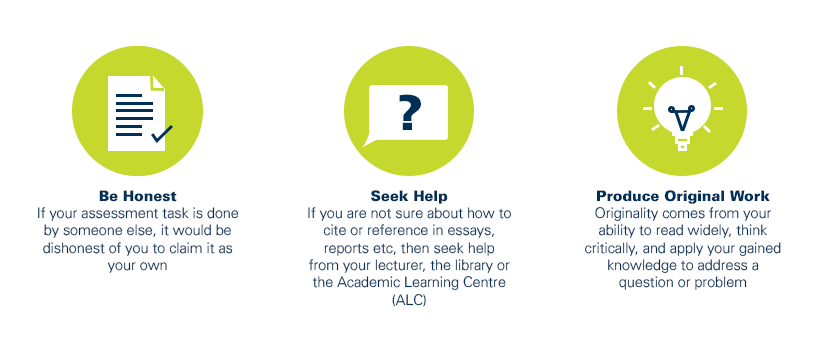
As a CQUniversity student you are expected to act honestly in all aspects of your academic work.
Any assessable work undertaken or submitted for review or assessment must be your own work. Assessable work is any type of work you do to meet the assessment requirements in the unit, including draft work submitted for review and feedback and final work to be assessed.
When you use the ideas, words or data of others in your assessment, you must thoroughly and clearly acknowledge the source of this information by using the correct referencing style for your unit. Using others’ work without proper acknowledgement may be considered a form of intellectual dishonesty.
Participating honestly, respectfully, responsibly, and fairly in your university study ensures the CQUniversity qualification you earn will be valued as a true indication of your individual academic achievement and will continue to receive the respect and recognition it deserves.
As a student, you are responsible for reading and following CQUniversity’s policies, including the Student Academic Integrity Policy and Procedure. This policy sets out CQUniversity’s expectations of you to act with integrity, examples of academic integrity breaches to avoid, the processes used to address alleged breaches of academic integrity, and potential penalties.
What is a breach of academic integrity?
A breach of academic integrity includes but is not limited to plagiarism, self-plagiarism, collusion, cheating, contract cheating, and academic misconduct. The Student Academic Integrity Policy and Procedure defines what these terms mean and gives examples.
Why is academic integrity important?
A breach of academic integrity may result in one or more penalties, including suspension or even expulsion from the University. It can also have negative implications for student visas and future enrolment at CQUniversity or elsewhere. Students who engage in contract cheating also risk being blackmailed by contract cheating services.
Where can I get assistance?
For academic advice and guidance, the Academic Learning Centre (ALC) can support you in becoming confident in completing assessments with integrity and of high standard.
What can you do to act with integrity?