Overview
The impacts of human populations on the natural environment have been extensively studied but little progress has been made to improve the sustainability of our lifestyle due to the complex interactions among social, economic and environmental imperatives. In Sustainability Issues and Solutions you will investigate the impact of human activities on a range of living and non-living, renewable and non-renewable natural resources. By applying 'Systems Thinking' you will practice developing solutions that are economically, socially and environmentally sustainable. On completion of this unit you will have a broad appreciation of the balances underpinning both temporal and spatial variation in sustainability and human efforts to control these.
Details
Pre-requisites or Co-requisites
Undergraduate Courses: Completion of 72 credit points. Postgraduate Courses: nil prerequisites.
Important note: Students enrolled in a subsequent unit who failed their pre-requisite unit, should drop the subsequent unit before the census date or within 10 working days of Fail grade notification. Students who do not drop the unit in this timeframe cannot later drop the unit without academic and financial liability. See details in the Assessment Policy and Procedure (Higher Education Coursework).
Offerings For Term 1 - 2026
Attendance Requirements
All on-campus students are expected to attend scheduled classes - in some units, these classes are identified as a mandatory (pass/fail) component and attendance is compulsory. International students, on a student visa, must maintain a full time study load and meet both attendance and academic progress requirements in each study period (satisfactory attendance for International students is defined as maintaining at least an 80% attendance record).
Recommended Student Time Commitment
Each 6-credit Postgraduate unit at CQUniversity requires an overall time commitment of an average of 12.5 hours of study per week, making a total of 150 hours for the unit.
Class Timetable
Assessment Overview
Assessment Grading
This is a graded unit: your overall grade will be calculated from the marks or grades for each assessment task, based on the relative weightings shown in the table above. You must obtain an overall mark for the unit of at least 50%, or an overall grade of 'pass' in order to pass the unit. If any 'pass/fail' tasks are shown in the table above they must also be completed successfully ('pass' grade). You must also meet any minimum mark requirements specified for a particular assessment task, as detailed in the 'assessment task' section (note that in some instances, the minimum mark for a task may be greater than 50%). Consult the University's Grades and Results Policy for more details of interim results and final grades.
All University policies are available on the CQUniversity Policy site.
You may wish to view these policies:
- Grades and Results Policy
- Assessment Policy and Procedure (Higher Education Coursework)
- Review of Grade Procedure
- Student Academic Integrity Policy and Procedure
- Academic Progression Policy and Procedure
- Student Refund and Credit Balance Policy and Procedure
- Complaints Policy and Procedure
- Information and Communications Technology Acceptable Use Policy and Procedure
This list is not an exhaustive list of all University policies. The full list of University policies are available on the CQUniversity Policy site.
- Discuss the economic, ethical and ecological issues associated with the sustainable utilisation of the earth's renewable and non-renewable natural resources
- Explain the importance of systems thinking and an understanding of temporal and spatial scales and feedback loops in determining solutions to sustainable management of resources
- Discuss the shortcomings in our understanding and acceptance of the processes that lead to sustainability
- Develop a range of possible strategies that would help to ensure the sustainable utilisation of natural resources.
Alignment of Assessment Tasks to Learning Outcomes
| Assessment Tasks | Learning Outcomes | |||
|---|---|---|---|---|
| 1 | 2 | 3 | 4 | |
| 1 - Group Discussion - 20% | ||||
| 2 - Written Assessment - 30% | ||||
| 3 - Written Assessment - 50% | ||||
Alignment of Graduate Attributes to Learning Outcomes
| Graduate Attributes | Learning Outcomes | |||
|---|---|---|---|---|
| 1 | 2 | 3 | 4 | |
| 1 - Knowledge | ||||
| 2 - Communication | ||||
| 3 - Cognitive, technical and creative skills | ||||
| 4 - Research | ||||
| 5 - Self-management | ||||
| 6 - Ethical and Professional Responsibility | ||||
| 7 - Leadership | ||||
| 8 - First Nations Knowledges | ||||
| 9 - Aboriginal and Torres Strait Islander Cultures | ||||
Textbooks
There are no required textbooks.
IT Resources
- CQUniversity Student Email
- Internet
- Unit Website (Moodle)
All submissions for this unit must use the referencing styles below:
For further information, see the Assessment Tasks.
s.hawkins@cqu.edu.au
Week 1
Begin Date: 09 Mar 2026Module/Topic
Introduction and Foundations
Chapter
See Moodle for prescribed tasks.
Events and Submissions/Topic
Week 2
Begin Date: 16 Mar 2026Module/Topic
Earth Systems and Interdependence
Chapter
See Moodle for prescribed tasks.
Events and Submissions/Topic
Week 3
Begin Date: 23 Mar 2026Module/Topic
Climate Change and Biodiversity Loss
Chapter
See Moodle for prescribed tasks.
Events and Submissions/Topic
Week 4
Begin Date: 30 Mar 2026Module/Topic
Sustainability Governance and Policy
Chapter
See Moodle for prescribed tasks.
Events and Submissions/Topic
Week 5
Begin Date: 06 Apr 2026Module/Topic
Complexity, Trade-offs and Systems Thinking in Action
Chapter
See Moodle for prescribed tasks.
Events and Submissions/Topic
Week 6
Begin Date: 13 Apr 2026Module/Topic
Sustainability Goals and Visions
Chapter
See Moodle for prescribed tasks.
Events and Submissions/Topic
Vacation Week
Begin Date: 20 Apr 2026Module/Topic
Chapter
Events and Submissions/Topic
Week 7
Begin Date: 27 Apr 2026Module/Topic
Indicators and Monitoring
Chapter
See Moodle for prescribed tasks.
Events and Submissions/Topic
Week 8
Begin Date: 04 May 2026Module/Topic
Linking Vision to Action: Integrated Approaches
Chapter
See Moodle for prescribed tasks.
Events and Submissions/Topic
Week 9
Begin Date: 11 May 2026Module/Topic
Rewilding and Nature-Based Solutions
Chapter
See Moodle for prescribed tasks.
Events and Submissions/Topic
Week 10
Begin Date: 18 May 2026Module/Topic
Green Infrastructure and Energy Transitions
Chapter
See Moodle for prescribed tasks.
Events and Submissions/Topic
Week 11
Begin Date: 25 May 2026Module/Topic
Social Innovation and Culture Change
Chapter
See Moodle for prescribed tasks.
Events and Submissions/Topic
Week 12
Begin Date: 01 Jun 2026Module/Topic
Integration and Reflection
Chapter
See Moodle for prescribed tasks.
Events and Submissions/Topic
Exam Week
Begin Date: 08 Jun 2026Module/Topic
Chapter
See Moodle for prescribed tasks.
Events and Submissions/Topic
Vacation/Exam Week
Begin Date: 15 Jun 2026Module/Topic
Chapter
See Moodle for prescribed tasks.
Events and Submissions/Topic
1 Group Discussion
Topic:
Who should decide what is ‘sustainable’ - scientists, policymakers, communities, or the market?
Word limit: 600 words (maximum)
Task Requirements:
This early discussion forum invites you to critically examine who should have the authority and responsibility to define and guide sustainability priorities, and how those decisions affect broader systems over time.
Should sustainability decisions be driven primarily by scientific expertise, political leadership, community values, or market forces? Or should these groups share responsibility? And if so, how?
As you develop your post, consider how decisions made by different groups might shape ecological, social, and economic systems at different temporal and spatial scales, and how feedbacks may influence future sustainability outcomes.
You are required to post at least one contribution to the discussion forum (maximum 600 words). Your post should:
Take a clear position, supported by relevant references.
Integrate concepts from the unit lectures, readings and/or tutorial material.
Use concise and respectful language.
Either initiate a new discussion thread or respond thoughtfully to an existing post.
If responding to others, extend or challenge ideas constructively using evidence to support your view.
Level of GenAI use allowed:
Level 4: You may use AI extensively throughout your work either as you wish, or as specifically directed in your assessment. Focus on directing AI to achieve your goals while demonstrating your critical thinking.
AI Declaration:
You must include a brief AI use declaration at the end of your forum post. This should state whether and how you used generative AI tools to complete the task.
For example:
“I used ChatGPT to help generate an outline and refine the language in my forum post. All analysis and conclusions are my own.”
“I did not use generative AI in the preparation of this assessment.”
Week 5 Friday (10 Apr 2026) 11:00 pm AEST
Vacation Week Wednesday (22 Apr 2026)
Assessment criteria:
- The post demonstrates critical thinking and originality (40%)
- The post integrates concepts from the unit lectures, reading and/or tutorial material (30%)
- The post is supported by relevant references that are correctly cited (20%)
- The post is clear, uses appropriate language and is engaging (10%)
- Discuss the economic, ethical and ecological issues associated with the sustainable utilisation of the earth's renewable and non-renewable natural resources
- Discuss the shortcomings in our understanding and acceptance of the processes that lead to sustainability
2 Written Assessment
Using skills developed in the unit lectures and tutorials (problem framing, stakeholder mapping, systems mapping) you are required to describe (in approximately 1500 words, plus diagrams) the context for a given case study system and reflect on its sustainability challenges. This assessment provides the foundation for designing a Theory of Change for the case study system in Assessment 3. Detailed instructions and information on the case study will be provided on the unit Moodle.
Level of GenAI use allowed:
Level 4: You may use AI extensively throughout your work either as you wish, or as specifically directed in your assessment. Focus on directing AI to achieve your goals while demonstrating your critical thinking.
AI Declaration:
You must include a brief AI use declaration at the end of your forum post. This should state whether and how you used generative AI tools to complete the task.
For example:
“I used ChatGPT to help generate an outline and refine the language in my forum post. All analysis and conclusions are my own.”
“I did not use generative AI in the preparation of this assessment.”
Week 9 Friday (15 May 2026) 11:00 pm AEST
Week 11 Monday (25 May 2026)
- The context and problem framing demonstrates depth of analysis and clearly integrates economic, social and ecological dimensions (30%).
- The stakeholder analysis identifies relevant actors and provides clear insight into their roles, interests and influence (20%).
- The systems map and leverage point analysis show strong systems thinking, including accurate loops, well‑chosen variables, and clear justification of leverage points (35%).
- The reflection demonstrates awareness of knowledge gaps and cultural or behavioural barriers that may affect sustainability efforts (10%).
- The submission is well‑structured, clearly written, uses appropriate visuals, and includes correct academic referencing (5%).
- Discuss the economic, ethical and ecological issues associated with the sustainable utilisation of the earth's renewable and non-renewable natural resources
- Explain the importance of systems thinking and an understanding of temporal and spatial scales and feedback loops in determining solutions to sustainable management of resources
- Discuss the shortcomings in our understanding and acceptance of the processes that lead to sustainability
- Develop a range of possible strategies that would help to ensure the sustainable utilisation of natural resources.
3 Written Assessment
For this assessment, you will be required to design a Theory of Change (ToC) for a case study system, mapping the pathway from the current context (analysed in Assessment 2) to a desired future vision. You will integrate systems thinking and strategic planning to propose interventions that support long-term sustainability. The ToC diagrams will be developed through group activities during class tutorials. However, this is NOT a group project and the ToC diagram is the only component of the assessment that can be shared. You are required to prepare individual assessments that will include the ToC along with your own narratives and reflections. Detailed instructions and information on the case study will be provided on the unit Moodle.
Level of GenAI use allowed:
Level 4: You may use AI extensively throughout your work either as you wish, or as specifically directed in your assessment. Focus on directing AI to achieve your goals while demonstrating your critical thinking.
AI Declaration:
You must include a brief AI use declaration at the end of your forum post. This should state whether and how you used generative AI tools to complete the task.
For example:
“I used ChatGPT to help generate an outline and refine the language in my forum post. All analysis and conclusions are my own.”
“I did not use generative AI in the preparation of this assessment.”
Week 12 Friday (5 June 2026) 11:00 pm AEST
Vacation/Exam Week Monday (15 June 2026)
- The vision statement is clear, compelling and aligned with a sustainable future for the case study (15%).
- The Theory of Change diagram is complete, logical and clearly communicates inputs, activities, outputs, outcomes and impact (15%).
- The narrative explanation demonstrates depth of analysis, integrating interventions, indicators, assumptions, risks and systems thinking (40%).
- The critical reflection shows insight into how systems thinking informed the design and acknowledges remaining limitations or uncertainties (15%).
- The submission is well‑structured, clearly communicated, appropriately referenced and uses high‑quality visuals (15%)
- Explain the importance of systems thinking and an understanding of temporal and spatial scales and feedback loops in determining solutions to sustainable management of resources
- Develop a range of possible strategies that would help to ensure the sustainable utilisation of natural resources.
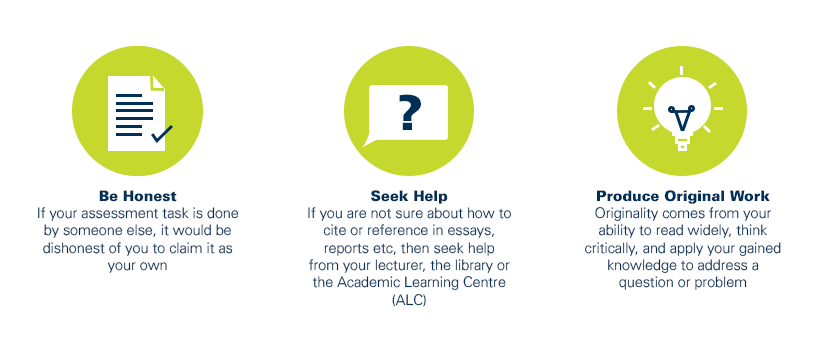
As a CQUniversity student you are expected to act honestly in all aspects of your academic work.
Any assessable work undertaken or submitted for review or assessment must be your own work. Assessable work is any type of work you do to meet the assessment requirements in the unit, including draft work submitted for review and feedback and final work to be assessed.
When you use the ideas, words or data of others in your assessment, you must thoroughly and clearly acknowledge the source of this information by using the correct referencing style for your unit. Using others’ work without proper acknowledgement may be considered a form of intellectual dishonesty.
Participating honestly, respectfully, responsibly, and fairly in your university study ensures the CQUniversity qualification you earn will be valued as a true indication of your individual academic achievement and will continue to receive the respect and recognition it deserves.
As a student, you are responsible for reading and following CQUniversity’s policies, including the Student Academic Integrity Policy and Procedure. This policy sets out CQUniversity’s expectations of you to act with integrity, examples of academic integrity breaches to avoid, the processes used to address alleged breaches of academic integrity, and potential penalties.
What is a breach of academic integrity?
A breach of academic integrity includes but is not limited to plagiarism, self-plagiarism, collusion, cheating, contract cheating, and academic misconduct. The Student Academic Integrity Policy and Procedure defines what these terms mean and gives examples.
Why is academic integrity important?
A breach of academic integrity may result in one or more penalties, including suspension or even expulsion from the University. It can also have negative implications for student visas and future enrolment at CQUniversity or elsewhere. Students who engage in contract cheating also risk being blackmailed by contract cheating services.
Where can I get assistance?
For academic advice and guidance, the Academic Learning Centre (ALC) can support you in becoming confident in completing assessments with integrity and of high standard.
What can you do to act with integrity?