Overview
In this unit, you will focus on management of municipal and household waste streams. You will learn about product lifecycles, from design through end of use, and the related environmental impacts, including the conduct of waste audits. Specific lifecycle studies might focus on council or local government recycling initiatives, or composting at a household, community, or industrial scale. You will explore how social innovation initiatives such as makers spaces, men's and women's sheds and other similar enterprises keep materials in use longer while also benefitting social capital.
Details
Pre-requisites or Co-requisites
Undergraduate Courses: Completion of 72 credit points. Postgraduate Courses: nil prerequisites.
Important note: Students enrolled in a subsequent unit who failed their pre-requisite unit, should drop the subsequent unit before the census date or within 10 working days of Fail grade notification. Students who do not drop the unit in this timeframe cannot later drop the unit without academic and financial liability. See details in the Assessment Policy and Procedure (Higher Education Coursework).
Offerings For Term 1 - 2026
Attendance Requirements
All on-campus students are expected to attend scheduled classes - in some units, these classes are identified as a mandatory (pass/fail) component and attendance is compulsory. International students, on a student visa, must maintain a full time study load and meet both attendance and academic progress requirements in each study period (satisfactory attendance for International students is defined as maintaining at least an 80% attendance record).
Recommended Student Time Commitment
Each 6-credit Postgraduate unit at CQUniversity requires an overall time commitment of an average of 12.5 hours of study per week, making a total of 150 hours for the unit.
Class Timetable
Assessment Overview
Assessment Grading
This is a graded unit: your overall grade will be calculated from the marks or grades for each assessment task, based on the relative weightings shown in the table above. You must obtain an overall mark for the unit of at least 50%, or an overall grade of 'pass' in order to pass the unit. If any 'pass/fail' tasks are shown in the table above they must also be completed successfully ('pass' grade). You must also meet any minimum mark requirements specified for a particular assessment task, as detailed in the 'assessment task' section (note that in some instances, the minimum mark for a task may be greater than 50%). Consult the University's Grades and Results Policy for more details of interim results and final grades.
All University policies are available on the CQUniversity Policy site.
You may wish to view these policies:
- Grades and Results Policy
- Assessment Policy and Procedure (Higher Education Coursework)
- Review of Grade Procedure
- Student Academic Integrity Policy and Procedure
- Academic Progression Policy and Procedure
- Student Refund and Credit Balance Policy and Procedure
- Complaints Policy and Procedure
- Information and Communications Technology Acceptable Use Policy and Procedure
This list is not an exhaustive list of all University policies. The full list of University policies are available on the CQUniversity Policy site.
- Critically analyse varying forms of information relevant to global waste issues
- Evaluate and transform global solutions to be relevant at a local scale
- Generate suggested solutions to complex waste problems
- Transmit knowledge and ideas to others through outcomes of waste audits.
Alignment of Assessment Tasks to Learning Outcomes
| Assessment Tasks | Learning Outcomes | |||
|---|---|---|---|---|
| 1 | 2 | 3 | 4 | |
| 1 - Written Assessment - 50% | ||||
| 2 - Presentation - 50% | ||||
Alignment of Graduate Attributes to Learning Outcomes
| Graduate Attributes | Learning Outcomes | |||
|---|---|---|---|---|
| 1 | 2 | 3 | 4 | |
| 1 - Knowledge | ||||
| 2 - Communication | ||||
| 3 - Cognitive, technical and creative skills | ||||
| 4 - Research | ||||
| 5 - Self-management | ||||
| 6 - Ethical and Professional Responsibility | ||||
| 7 - Leadership | ||||
| 8 - First Nations Knowledges | ||||
| 9 - Aboriginal and Torres Strait Islander Cultures | ||||
Textbooks
Design for a Better World Meaningful, Sustainable, Humanity Centered
- (2023)
- Authors: Don Norman
- MIT Press
- ISBN: 9780262373845
Waste
- (2019)
- Authors: Kate O'Neill
- Wiley
- ISBN: 978-0-745-68743-8
Waste: The Basics
- Edition: 1st (2025)
- Authors: Myra J. Hird
- Routledge
- London London
- ISBN: 9781003398424
IT Resources
- CQUniversity Student Email
- Internet
- Unit Website (Moodle)
- Access to a spreadsheet program such as Excel
- Access to webcam or other recording device for presentation (assessment piece)
- Microsoft PowerPoint or other program designed to produce presentation slides.
- Digital camera or smartphone with good quality camera
- Access to data analysis software may be required.
All submissions for this unit must use the referencing styles below:
For further information, see the Assessment Tasks.
e.bryson@cqu.edu.au
Week 1
Begin Date: 09 Mar 2026Module/Topic
What is waste? Contemporary definitions and concepts
Chapter
Events and Submissions/Topic
Week 2
Begin Date: 16 Mar 2026Module/Topic
Waste Management and Sustainability
Chapter
Events and Submissions/Topic
Week 3
Begin Date: 23 Mar 2026Module/Topic
Waste Hierarchy and Circular Economy
Chapter
Events and Submissions/Topic
Week 4
Begin Date: 30 Mar 2026Module/Topic
Designing Materials for Disposal, Recovery and Reuse
Chapter
Events and Submissions/Topic
Week 5
Begin Date: 06 Apr 2026Module/Topic
Solutions for Waste Reduction
Chapter
Events and Submissions/Topic
Week 6
Begin Date: 13 Apr 2026Module/Topic
Solutions for Waste Recovery, Recycling and Reuse
Chapter
Events and Submissions/Topic
Vacation Week
Begin Date: 20 Apr 2026Module/Topic
Chapter
Events and Submissions/Topic
Week 7
Begin Date: 27 Apr 2026Module/Topic
Focus on Plastic Waste
Chapter
Events and Submissions/Topic
Video Presentation and Oral Defence: Part A and Part B due Wednesday, 29 April, 11:00 pm AEST; 72-hour grace period does not apply
Week 8
Begin Date: 04 May 2026Module/Topic
Focus on Textile Waste
Chapter
Events and Submissions/Topic
Video Presentation and Oral Defence: Part C will take place in Week 8; 72-hour grace period does not apply
Week 9
Begin Date: 11 May 2026Module/Topic
Focus on Agricultural and Organic Waste
Chapter
Events and Submissions/Topic
Week 10
Begin Date: 18 May 2026Module/Topic
Focus on Electronic Waste
Chapter
Events and Submissions/Topic
Week 11
Begin Date: 25 May 2026Module/Topic
Focus on Building and Construction Waste
Chapter
Events and Submissions/Topic
Week 12
Begin Date: 01 Jun 2026Module/Topic
The Future of Waste
Chapter
Events and Submissions/Topic
Exam Week
Begin Date: 08 Jun 2026Module/Topic
Chapter
Events and Submissions/Topic
Vacation/Exam Week
Begin Date: 15 Jun 2026Module/Topic
Chapter
Events and Submissions/Topic
1 Written Assessment
You will produce a 3,000 - 3500 word research report that critically evaluates socially innovative approaches addressing two priority waste types within your chosen locations. Apply lifecycle thinking and systems thinking to assess the local context, evaluate real initiatives, and propose practical, evidence‑based recommendations for local implementation or scaling.
In your report, you will:
- Choose two waste types from the types that are covered in detail within this unit:
-
- Plastic waste
- Textile waste
- Agricultural and organic waste
- Electronic waste (e‑waste)
- Building and construction waste
- Focus on one specific location for each waste type. Your chosen locations may be a state/province, city, local council area, or community. You must select 2 separate geographic locations. For example, you might explore e-waste in Accra, Ghana and plastic waste in Delhi, India.
- For each location and waste type, investigate socially innovative solutions that reduce, recover, or reuse these wastes (for example, social enterprises, repair and reuse programs, community initiatives).
- Use data and evidence to show how these solutions improve environmental, social, and economic outcomes at the local scale.
Word count
The 3000 - 3500 words exclude the cover page, headings, and the reference list. Calculate your word count minus exclusions before submission and include this on the cover page.
Report Requirements
Introduce your two locations and their respective waste types. Briefly outline why these were selected and how they relate to broader global waste challenges.
For each location:
- Provide a concise description of the selected waste type and explain its relevance and scale in the chosen location (e.g. prevalence in kerbside streams, local industries, or community concerns). Explain why it matters in this location (e.g., volumes, litter/illegal dumping, local industries, vulnerable communities, environmental sensitivities).
- Using credible academic and industry sources, analyse the environmental (e.g., pollution, emissions, land use, resource use), social (e.g., government policies/bans, health, equity, community wellbeing), and economic (e.g., costs, jobs, value of materials) impacts of each selected waste type in the chosen location or a closely comparable context. Where possible, include data or examples (e.g. waste audit results, diversion rates, contamination data, service usage data, employment figures, or cost estimates) to support your analysis. Briefly comment on the quality and limitations of the information sources, noting uncertainties, gaps and potential biases.
- Identify socially innovative initiatives relevant to your chosen waste type. These may include social enterprises, repair and reuse initiatives, community programs, circular business models, makerspaces, or community composting hubs. Explain how each social innovation addresses or could address, the specific waste challenges you have identified (e.g., activities, stakeholders, business or governance model). Provide evidence of the initiatives’ outcomes, including any available data or documented results.
- Discuss how the identified solutions could be adapted, integrated, or scaled up in your chosen location to support reduction, reuse, recycling and/or recovery of materials. Demonstrate critical and systems thinking by considering interactions between policy and regulation, physical infrastructure and collection/recycling systems, community behaviours and expectations, and local industry, or market dynamics.
- Propose clear, feasible recommendations for your location. Explain how and why these solutions are likely to improve environmental, social and economic outcomes, and what barriers or trade‑offs might arise.
Across all sections of the report, students are expected to use a formal structure that follows postgraduate level academic writing conventions, including both in-text citations and a detailed reference list.
Referencing
All sources must be cited and referenced appropriately throughout this task in the correct style (Harvard or APA 7th). Please follow the CQUniversity Library guides for either Harvard or APA 7th referencing style. All use of Generative AI tools must also be included within in-text citations and the reference list. If you need help with referencing or academic writing, please consult the Academic Learning Centre as soon as possible for guidance.
Generative AI
You are permitted Level 3 use (AI collaboration) of GenAI tools in Part 1 of this assessment. You may use AI to assist with specific tasks such as drafting text, refining and evaluating your work. You must critically evaluate and modify any AI-generated content you use.
Students must submit a Generative AI Use Declaration form with this assessment, even if you did not use AI. Please use the declaration form template in Moodle.
Week 12 Thursday (4 June 2026) 11:00 pm AEST
Vacation/Exam Week Friday (19 June 2026)
Waste Overview (15%)
Clarity and relevance of location descriptions; adequate explanations of each waste type; rationale for local significance.
Impact Analysis (20%)
Depth and accuracy of environmental, social, and economic analysis; effective use of examples and data; consideration of information quality and limitations.
Evaluation of Socially Innovative Solutions (25%)
Clear articulation of how solutions address waste problems; robustness of outcome evidence; critical evaluation of solutions’ strengths and limitations.
Application of Solution to Local Context & Recommendations (25%)
Systems thinking across policy, infrastructure, community expectations, and environmental impacts; feasibility and specificity of recommendations; consideration of barriers/trade‑offs.
Academic Writing & Referencing (15%)
Structure, coherence, academic writing style; correct and consistent referencing; use of credible sources, and appropriate use/declaration of GenAI tools.
- Critically analyse varying forms of information relevant to global waste issues
- Evaluate and transform global solutions to be relevant at a local scale
- Generate suggested solutions to complex waste problems
- Transmit knowledge and ideas to others through outcomes of waste audits.
2 Presentation
This assessment has three parts. Across these parts, you will complete a 7‑day personal waste audit, analyse your data, and present your findings in the context of the waste policies and systems where you live.
Part 1: Seven‑Day Personal Waste Audit (20%)
For 7 days, you will keep a digital or paper logbook of all items you use or consume that become waste.
Examples include takeaway coffee cups, paper receipts, plastic carry bags, kitchen scraps, and food packaging.
Please note:
- Record individual items by quantity, not by weight, where possible.
- Pay attention to composite items, such as plastic‑lined cups or multilayer packaging, as these often have special recycling or recovery challenges.
- Note any Australian Recycling Label (ARL) logos on packaging (e.g., chasing arrows, bin).
- Photograph examples of your waste items, including ARL logos
After the 7 days, you will:
- Categorise your waste (e.g., plastic packaging, paper, food scraps, textiles, electronics).
- Record how each item was disposed of (e.g., general waste bin, recycling bin, organics/FOGO bin, home compost, sink).
- Analyse your data using descriptive statistics (for example: totals, percentages, or simple graphs).
Your logbook and data analyses (e.g., spreadsheet(s)) must be submitted in Week 7 along with your pre-recorded slide presentation video (see below).
Generative AI
You are permitted Level 3 use (AI collaboration) of GenAI tools in Part 1 of this assessment. You may use AI to assist with specific tasks such as drafting text, refining and evaluating your work. You must critically evaluate and modify any AI-generated content you use.
You must submit a declaration of your use of GenAI tools in Part 1 of this assessment, via Moodle, in Week 7. This is required whether you used these tools or not; please refer to the template in Moodle.
Part 2: Video Presentation (10 minutes) (20%)
You will create a 10‑minute video presentation with slides. Your presentation must:
- summarise and explain your waste audit results,
- include graphs created from your waste data,
- include some photographic examples of your waste items, and
- connect your findings to:
- principles of the circular economy and/or waste hierarchy,
- government policies and regulations (e.g., national, state/territory, and local government/council regulations, circular economy targets, and waste reduction, recycling, and reuse plans), and
- local waste systems, including resource recovery and recycling services and infrastructure in your area (e.g., council FOGO bin rules, container deposit schemes, repair cafes, recycling facilities).
You should also discuss:
- the likely end‑of‑life pathway for your items (e.g., landfill, recycling, waste‑to‑energy), and
- the barriers and opportunities you identified for reducing, reusing, or recycling your waste.
Your slides must include in‑text citations and a reference list.
Submit your video and slides via Moodle in Week 7.
Generative AI
You are permitted Level 3 use (AI collaboration) of GenAI tools in Part 2 of this assessment. You may use AI to assist with specific tasks such as drafting text, refining and evaluating your work. You must critically evaluate and modify any AI-generated content you use.
You should submit a declaration of your use of GenAI tools in Part 2 of this assessment, via Moodle, in Week 7. This is required whether you used these tools or not; please refer to the template in Moodle.
Part 3: Oral Defence (10 minutes) (10%)
In Week 8, you will complete a 10‑minute live oral defence with the Unit Coordinator.
You will be asked questions about:
- your experience conducting the audit,
- your interpretation of your results, and
- your understanding of circular economy, waste hierarchy, and material life cycle content from the unit.
You may refer to a printed copy of your slides, but you cannot use GenAI tools or any additional digital or analogue materials.
Generative AI
You are permitted Level 1 use (no AI) of GenAI tools in Part 3 of this assessment. You must not use AI at any point during the assessment. You must demonstrate your core skills and knowledge.
Please note:
This is a timed assessment, so the 72-hour grace period does not apply.
Part A and Part B due Wednesday, 29 April, 11:00pm AEST; Part C will take place in Week 8
Week 9 Friday (15 May 2026)
1. Quality and Accuracy of Waste Audit Data (20%)
Assesses the student’s ability to accurately collect, categorise, and analyse waste items; apply descriptive statistics; and demonstrate understanding of material characteristics (e.g., composite items, ARL labels) and disposal pathways.
2. Interpretation and Application of Unit Concepts (20%)
Evaluates the student’s capacity to interpret their audit findings using concepts such as the circular economy, waste hierarchy, product lifecycles, and relevant waste policies/regulations at national, state/territory, and local levels.
3. Evaluation of Barriers and Opportunities for Waste Reduction (20%)
Assesses the student’s ability to effectively identify, analyse, and discuss challenges and opportunities for reducing, reusing, repairing, or recycling waste within their local context, including likely end-of-life outcomes.
4. Communication, Structure, and Visual Quality of Video Presentation (20%)
Assesses clarity, professionalism, accuracy of in-text citations and references, effectiveness of visual communication (graphs, images), and correct declaration and citation of GenAI use according to unit requirements.
5. Oral Defence: Depth of Understanding and Responsiveness (20%)
Evaluates the student’s ability to clearly articulate their audit process, defend their interpretations, answer questions accurately, and demonstrate knowledge of circular economy principles, waste systems, and lifecycle concepts without external assistance.
- Evaluate and transform global solutions to be relevant at a local scale
- Generate suggested solutions to complex waste problems
- Transmit knowledge and ideas to others through outcomes of waste audits.
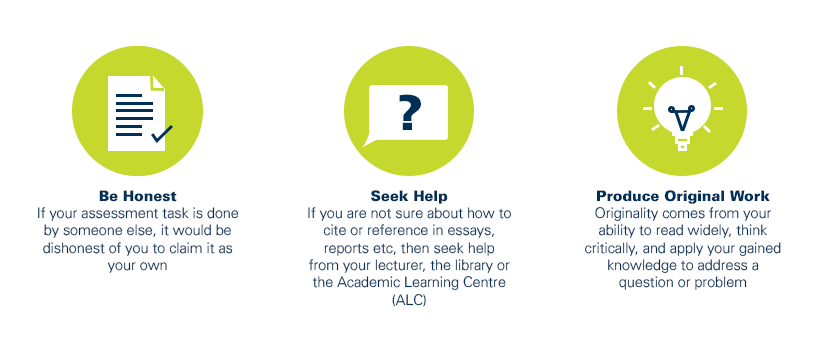
As a CQUniversity student you are expected to act honestly in all aspects of your academic work.
Any assessable work undertaken or submitted for review or assessment must be your own work. Assessable work is any type of work you do to meet the assessment requirements in the unit, including draft work submitted for review and feedback and final work to be assessed.
When you use the ideas, words or data of others in your assessment, you must thoroughly and clearly acknowledge the source of this information by using the correct referencing style for your unit. Using others’ work without proper acknowledgement may be considered a form of intellectual dishonesty.
Participating honestly, respectfully, responsibly, and fairly in your university study ensures the CQUniversity qualification you earn will be valued as a true indication of your individual academic achievement and will continue to receive the respect and recognition it deserves.
As a student, you are responsible for reading and following CQUniversity’s policies, including the Student Academic Integrity Policy and Procedure. This policy sets out CQUniversity’s expectations of you to act with integrity, examples of academic integrity breaches to avoid, the processes used to address alleged breaches of academic integrity, and potential penalties.
What is a breach of academic integrity?
A breach of academic integrity includes but is not limited to plagiarism, self-plagiarism, collusion, cheating, contract cheating, and academic misconduct. The Student Academic Integrity Policy and Procedure defines what these terms mean and gives examples.
Why is academic integrity important?
A breach of academic integrity may result in one or more penalties, including suspension or even expulsion from the University. It can also have negative implications for student visas and future enrolment at CQUniversity or elsewhere. Students who engage in contract cheating also risk being blackmailed by contract cheating services.
Where can I get assistance?
For academic advice and guidance, the Academic Learning Centre (ALC) can support you in becoming confident in completing assessments with integrity and of high standard.
What can you do to act with integrity?