Overview
This Unit is intended to provide you with advanced knowledge in health psychology and the components that encompass health psychology. The Unit will provide knowledge on behavioural medicine, rehabilitation practice, health prevention, health promotion, and well-being principles necessary for working as a Clinical Psychologist. The unit aims to build your competency in assessment, treatment planning and intervention for health and wellness within clinical psychology practice, using a culturally-responsive and reflective practice approach.
Details
Pre-requisites or Co-requisites
There are no requisites for this unit.
Important note: Students enrolled in a subsequent unit who failed their pre-requisite unit, should drop the subsequent unit before the census date or within 10 working days of Fail grade notification. Students who do not drop the unit in this timeframe cannot later drop the unit without academic and financial liability. See details in the Assessment Policy and Procedure (Higher Education Coursework).
Offerings For Term 2 - 2026
Attendance Requirements
All on-campus students are expected to attend scheduled classes - in some units, these classes are identified as a mandatory (pass/fail) component and attendance is compulsory. International students, on a student visa, must maintain a full time study load and meet both attendance and academic progress requirements in each study period (satisfactory attendance for International students is defined as maintaining at least an 80% attendance record).
Recommended Student Time Commitment
Each 6-credit Postgraduate unit at CQUniversity requires an overall time commitment of an average of 12.5 hours of study per week, making a total of 150 hours for the unit.
Class Timetable
Assessment Overview
Assessment Grading
This is a pass/fail (non-graded) unit. To pass the unit, you must pass all of the individual assessment tasks shown in the table above.
All University policies are available on the CQUniversity Policy site.
You may wish to view these policies:
- Grades and Results Policy
- Assessment Policy and Procedure (Higher Education Coursework)
- Review of Grade Procedure
- Student Academic Integrity Policy and Procedure
- Academic Progression Policy and Procedure
- Student Refund and Credit Balance Policy and Procedure
- Complaints Policy and Procedure
- Information and Communications Technology Acceptable Use Policy and Procedure
This list is not an exhaustive list of all University policies. The full list of University policies are available on the CQUniversity Policy site.
Feedback, Recommendations and Responses
Every unit is reviewed for enhancement each year. At the most recent review, the following staff and student feedback items were identified and recommendations were made.
Feedback from Student Feedback (Student Evaluations)
Students reported that they were not confident with the expectations of assessments.
It is recommended that assessment information sheets and marking criteria are reviewed to increase clarity.
Feedback from Student Feedback (Student Evaluations)
Students reported that they struggled to apply the feedback given for the Motivational Interviewing videos (Assessment 2) in the required timeframes.
It is recommended that the due dates for Assessment 2 are reviewed to ensure students are given enough time to apply the feedback provided to scaffolded assessments.
Feedback from Student Feedback (Student Evaluations)
Students reported that they enjoyed the learning content.
It is recommended that the learning materials, teaching content and schedule remain consistent for future deliveries of this unit.
- Apply biopsychosocial models of health for person-centred and culturally responsive evidenced-based practice
- Demonstrate clinical skills and reflective practice in evidence-based health behaviour change interventions including motivational interviewing and relapse prevention
- Critically appraise and integrate recent and relevant literature into clinical practice specific to health psychology and rehabilitation in oral and written format.
These learning outcomes are intended to link with the CG17 Master of Clinical Psychology course Learning Outcome "Apply advanced knowledge of psychological, developmental, and biopsychosocial models of health, with consideration of culturally and linguistically diverse populations including Aboriginal and Torres Strait Islander peoples" (Learning Outcome number 2).
The PSYC22002 Learning Outcomes align with the 2019 Australian Psychology Accreditation Council (APAC) accreditation guidelines for Level 4 Graduate Competencies (4.2.1.i, 4.2.1.ii, 4.2.2.i, 4.2.3.i, 4.2.3.iii,and 4.2.3.iv.), which are specific to culturally responsive biopsychosocial models of health and health rehabilitation in clinical psychology.
Alignment of Assessment Tasks to Learning Outcomes
| Assessment Tasks | Learning Outcomes | ||
|---|---|---|---|
| 1 | 2 | 3 | |
| 1 - Written Assessment - 0% | |||
| 2 - Direct observation of procedural skills (DOPs) - 0% | |||
| 3 - Presentation - 0% | |||
Alignment of Graduate Attributes to Learning Outcomes
| Graduate Attributes | Learning Outcomes | ||
|---|---|---|---|
| 1 | 2 | 3 | |
| 1 - Knowledge | |||
| 2 - Communication | |||
| 3 - Cognitive, technical and creative skills | |||
| 4 - Research | |||
| 5 - Self-management | |||
| 6 - Ethical and Professional Responsibility | |||
| 7 - Leadership | |||
| 8 - First Nations Knowledges | |||
| 9 - Aboriginal and Torres Strait Islander Cultures | |||
Textbooks
There are no required textbooks.
IT Resources
- CQUniversity Student Email
- Internet
- Unit Website (Moodle)
- CQUniversity Library
- Zoom access: microphone and webcam required
All submissions for this unit must use the referencing style: American Psychological Association 7th Edition (APA 7th edition)
For further information, see the Assessment Tasks.
a.m.carter@cqu.edu.au
a.gerace@cqu.edu.au
Week 1: Overview and Theories of Health
Begin Date: 13 Jul 2026Module/Topic
What is health? Overview and Theories of the concept of Health.
Chapter
Callahan, D. (1973). The WHO definition of 'health'. The Concept of Health: The Hastings Center Studies, 1(3), 77-87.
Lerner, H., & Berg, C. (2015). The concept of health in One Health and some practical implications for research and education: what is One Health?. Infection ecology & epidemiology, 5(1), 25300.
Maher, P. (1999). A review of ‘traditional’ Aboriginal health beliefs. Australian journal of rural health, 7(4), 229-236.
Additional material on Moodle in e-reading list
Events and Submissions/Topic
Live Lectures on Thursday, 9.00am to 12.00pm (AEST) on Zoom.
Week 2: Health and Stress/Traumatic Stress
Begin Date: 20 Jul 2026Module/Topic
Health Psychology: main theories and field of practice.
Chapter
Miller, G., Chen, E., & Cole, S. W. (2009). Health psychology: Developing biologically plausible models linking the social world and physical health. Annual review of psychology, 60, 501-524.
Leventhal, H., Weinman, J., Leventhal, E. A., & Phillips, L. A. (2008). Health psychology: The search for pathways between behavior and health. Annual review of psychology, 59, 477-505.
Hepworth, J. (2006). The emergence of critical health psychology: Can it contribute to promoting public health?. Journal of Health Psychology, 11(3), 331-341.
Additional material on Moodle in e-reading list
Events and Submissions/Topic
Live Lectures on Thursday, 9.00am to 12.00pm (AEST) on Zoom.
Week 3: Identity and Health Behaviour
Begin Date: 27 Jul 2026Module/Topic
Identity, Motivation, Health Behaviours and Medication adherence.
Chapter
Hagger, M. S., Anderson, M., Kyriakaki, M., & Darkings, S. (2007). Aspects of identity and their influence on intentional behavior: Comparing effects for three health behaviors. Personality and Individual Differences, 42(2), 355-367.
Oyserman, D., Fryberg, S. A., & Yoder, N. (2007). Identity-based motivation and health. Journal of personality and social psychology, 93(6), 1011.
Oyserman, D., Smith, G. C., & Elmore, K. (2014). Identity‐based motivation: Implications for health and health disparities. Journal of Social Issues, 70(2), 206-225.
Mehany, O., Artner, A., Sebők, S., Hankó, B., & Zelkó, R. (2026). Multilevel Interventions to Improve Medication Adherence in Older Adults: A Systematic Review and Meta-Analysis of Cognitive, Digital, Behavioral, and Socioeconomic Strategies (2015–2025). Journal of Clinical Medicine, 15(5), 2069.
Refer to Moodle for readings
Events and Submissions/Topic
Live Lectures on Thursday, 9.00am to 12.00pm (AEST) on Zoom.
Week 4: Motivational Interviewing & Intervention - Part 1
Begin Date: 03 Aug 2026Module/Topic
Chapter
Part I - Chapters 1 & 2: Motivational Interviewing in Healthcare: Helping patients change behaviour.
Additional material on Moodle in e-reading list
Events and Submissions/Topic
Live Lectures on Thursday, 9.00am to 12.00pm (AEST) on Zoom.
Week 5: Motivational Interviewing & Mental Skill Intervention - Part 2
Begin Date: 10 Aug 2026Module/Topic
Motivational Interviewing Part 2: Practicing Motivational Interviewing, asking, listening, informing
Chapter
Chapter 2-6 Motivational Interviewing in Healthcare: Helping patients change behaviour.
Additional material on Moodle in e-reading list
Events and Submissions/Topic
Live Lectures on Thursday, 9.00am to 12.00pm (AEST) on Zoom.
Treatment Manual Due: Week 5 Monday (10 Aug 2026) 5:00 pm AEST
Week 6: Habit theory and interventions
Begin Date: 17 Aug 2026Module/Topic
Habit theory and interventions in health-related behaviours.
The use of e-health in heath psychology
Chapter
Gardner, B. (2015). A review and analysis of the use of ‘habit’ in understanding, predicting and influencing health-related behaviour. Health psychology review, 9(3), 277-295.
Hawlader, M. D. H., Mozid, N. E., Sharmin, S., Monju, I. H., Ahmed, S. B., Sarker, W., ... & Dalal, K. (2023). The art of forming habits: applying habit theory in changing physical activity behaviour. Journal of Public Health, 31(12), 2045-2057.
Brown, A., Cant, A., Wolfgang, R., Ramsden, R., Heaney, S., & Brown, L. J. (2025). Investigation of primary health care service delivery models used in allied health practice in rural and remote areas of Australia: a systematic review. BMC health services research, 25(1), 573.
Additional sources of information available on Moodle in e-reading list
Events and Submissions/Topic
Live Lectures on Thursday, 9.00am to 12.00pm (AEST) on Zoom.
MID-TERM BREAK
Begin Date: 24 Aug 2026Module/Topic
No lecture this week
Chapter
Events and Submissions/Topic
No Live Sessions
Week 7: Chronic Disease, Chronic Pain and Cancer
Begin Date: 31 Aug 2026Module/Topic
Health behaviours to facilitate wellbeing in Chronic Diseases - Diabetes, Cancer and Chronic Pain.
Chapter
Seib, C., Parkinson, J., McDonald, N., Fujihira, H., Zietek, S., & Anderson, D. (2018). Lifestyle interventions for improving health and health behaviours in women with type 2 diabetes: A systematic review of the literature 2011–2017. Maturitas, 111, 1-14.
Pinto, B. M., Eakin, E., & Maruyama, N. C. (2000). Health behavior changes after a cancer diagnosis: what do we know and where do we go from here?. Annals of Behavioral Medicine, 22(1), 38-52.
Anderson, R. J., Hurley, R. W., Staud, R., & Robinson, M. E. (2016). Cognitive-motivational influences on health behavior change in adults with chronic pain. Pain Medicine, 17(6), 1079-1093.
Additional sources of information available on Moodle in e-reading list
Events and Submissions/Topic
Live Lectures on Thursday, 9.00am to 12.00pm (AEST) on Zoom.
Week 8: Eating disorders
Begin Date: 07 Sep 2026Module/Topic
Health Behaviours in Eating Disorders: Obesity and Anorexia Nervosa
Chapter
Teixeira, P. J., & Marques, M. M. (2018). Health behavior change for obesity management. Obesity facts, 10(6), 666-673.
Kleifield, E. I., Wagner, S., & Halmi, K. A. (1996). Cognitive-behavioral treatment of anorexia nervosa. Psychiatric Clinics of North America, 19(4), 715-737.
Additional material on Moodle in e-reading list
Events and Submissions/Topic
Live Lectures on Thursday, 9.00am to 12.00pm (AEST) on Zoom.
Week 9: Sexual Health
Begin Date: 14 Sep 2026Module/Topic
Sexual Health - Compulsive Sexual Behaviour, Consent and Sexual Harm Awareness, and Safe Sex Practices.
Chapter
Blycker, G. R., & Potenza, M. N. (2018). A mindful model of sexual health: A review and implications of the model for the treatment of individuals with compulsive sexual behavior disorder. Journal of Behavioral Addictions, 7(4), 917-929.
Vickerman, K. A., & Margolin, G. (2009). Rape treatment outcome research: Empirical findings and state of the literature. Clinical psychology review, 29(5), 431-448.
Lou, J. H., & Chen, S. H. (2009). Relationships among sexual knowledge, sexual attitudes, and safe sex behaviour among adolescents: A structural equation model. International journal of nursing studies, 46(12), 1595-1603.
Refer to Moodle for readings
Events and Submissions/Topic
Live Lectures on Thursday, 9.00am to 12.00pm (AEST) on Zoom.
Motivational Interviewing Skills E-Health Video Due: Week 9 Monday (14 Sept 2026) 5:00 pm AEST
Healthy Behaviours - Factors, Predictors and Efficacy.
Begin Date: 21 Sep 2026Module/Topic
Healthy Behaviours - Factors, Predictors and Efficacy.
Chapter
Von Ah, D., Ebert, S., Ngamvitroj, A., Park, N., & Kang, D. H. (2004). Predictors of health behaviours in college students. Journal of advanced nursing, 48(5), 463-474.
Walters, R., Leslie, S. J., Polson, R., Cusack, T., & Gorely, T. (2020). Establishing the efficacy of interventions to improve health literacy and health behaviours: a systematic review. BMC public health, 20, 1-17.
Aboud, F. E., & Singla, D. R. (2012). Challenges to changing health behaviours in developing countries: a critical overview. Social science & medicine, 75(4), 589-594.
Additional material on Moodle in e-reading list
Events and Submissions/Topic
Live Lectures on Thursday, 9.00am to 12.00pm (AEST) on Zoom.
Week 11: Assessment Task 3: Presentation of Treatment Manual or Prevention Plan
Begin Date: 28 Sep 2026Module/Topic
Oral Presentations
Chapter
No assigned readings for this week.
Events and Submissions/Topic
ASSESSMENT TASK 3: Presentation of prevention plan.
Live Presentations on Thursday, 9.00am to 12.00pm (AEST) on Zoom.
Week 12: Presentations of Treatment Manual
Begin Date: 05 Oct 2026Module/Topic
Oral Presentations
Chapter
No assigned readings for this week.
Events and Submissions/Topic
ASSESSMENT TASK 3: Presentation of prevention plan
Live Presentations on Thursday, 9.00am to 12.00pm (AEST) on Zoom.
Oral Presentation: Prevention Plan Due: Week 12 Thursday (8 Oct 2026) 9:00 am AEST
Exam Week
Begin Date: 12 Oct 2026Module/Topic
Chapter
Events and Submissions/Topic
No Live Sessions
Vacation/Exam Week
Begin Date: 19 Oct 2026Module/Topic
Chapter
Events and Submissions/Topic
1 Written Assessment
Purpose: Treatment manuals are used by psychologists to support the delivery of evidence-based interventions. When working with clients/patients in a Health Psychology context, psychologists are required to understand the impact of physical health challenges on mental health. Treatment manuals must consider the additional challenges that influence client presentation, treatment adherence, and recovery. In Assessment 1, you are required to develop a treatment manual that is appropriate for use in a Health Psychology context. This assessment is designed to develop your ability to apply biopsychosocial models of health and integrate research evidence into practical clinical tools.
Aim: For this assessment the treatment manual must:
- Provide an overview of the selected issue, including aetiology and problem maintenance
- Describe relevant evidence-based therapeutic interventions
- Provide a rationale for the treatment protocol, including potential challenges and solutions
- Include appropriate therapist tools that supports the implementation of the treatment plan, demonstrating culturally responsive practice, including consideration of Aboriginal and Torres Strait Islander health contexts.
- Apply a biopsychosocial approach, including consideration of factors that may affect presentation, engagement, and treatment outcomes. This should include the impact of any medications that are commonly prescribed for the treatment of the chosen health condition.
Format and style: References and formatting are to adhere to APA 7 standards and guidelines. All information provided must be supported by recent (published in the last 5 years), relevant, peer-reviewed literature.
The word limit for this assignment is between 1500-1750 words (excluding appendices).
AI use: The ethical use of Gen AI is approved at Level 2. AI Planning: You may use AI for planning, idea development and research. Your final submission should show how you have developed and refined these ideas. For this assessment however caution is advised due to level of critical evaluation and analysis required for this assessment. Gen AI may not provide the level of accuracy, detail and understanding required for student success. A copy of the ALC guidelines for the ethical use of AI can be found on Moodle under the Assessment Tile.
Week 5 Monday (10 Aug 2026) 5:00 pm AEST
In accordance with CQUniversity’s Assessment Policy and Procedure (Higher Education Coursework), a 72-hour grace period applies to this assessment. This grace period is exactly 72-hours (3 days) following the original assessment due date and time. No extension is required for submissions during this grace period. If the assessment is submitted after the 72-hour grace period without an approved extension, a 5% penalty of the total available marks for the assessment will be deducted for each full or part calendar day that the assessment task is overdue after 72-hour grace period has lapsed. Please note the 72-hour grace period only applies to the original due date of the assessment item as published in the unit profile. There is no grace period after a formal extension request has been approved on the assessment item.
Vacation Week Friday (28 Aug 2026)
The expected return date may vary based on the moderation process and the date that the assessment piece is submitted. Assessments that are submitted after the due date might not be able to be returned at the same time as the assessments submitted on the official due date. Assessments will only be returned during CQUniversity’s operating hours of Monday – Friday 9am – 5pm (AEST).
This is a pass/fail assessment. You have to pass each of the six (6) components to pass this assessment.
You will be assessed on:
- Quality and effectiveness of the evidence-based therapy plan, supported by current research.
- Application of biopsychosocial understanding to the selected issue.
- Strength of the treatment rationale, including potential challenges.
- Appropriateness and relevance of therapist tools and support information.
- Application of culturally responsive practice, including Aboriginal and Torres Strait Islander contexts.
- Quality of written communication, including APA 7, adherence to word count (1500 wds +/- 10%), accurate use of citations and referencing.
- Apply biopsychosocial models of health for person-centred and culturally responsive evidenced-based practice
- Critically appraise and integrate recent and relevant literature into clinical practice specific to health psychology and rehabilitation in oral and written format.
2 Direct observation of procedural skills (DOPs)
Motivational interviewing is a client-centred, evidence-based approach used to support behaviour change by helping clients explore and resolve ambivalence. It is often used to support clients who are experiencing chronic health conditions and can be implemented through telehealth services. In Assessment 2, you are required to demonstrate your motivational interviewing (MI) skills in a simulated telehealth context and critically reflect on your clinical practice.
For this assessment you will submit two (2) simulated telehealth sessions (20 - 30 minutes each) demonstrating Motivational Interviewing skills. You will take on the role of the therapist in the videos that you submit for this assessment. You will also take on the role as the client a student in the class. When you are in the role as the client, you will present as a client within a health psychology context. In your role as a therapist, you will demonstrate your ability to:
- apply the core principles of Motivational Interviewing;
- use specific Motivational Interviewing techniques to assist behavioural change;
- work with clients who experience ambivalence and resistance;
- adhere to therapeutic structure as it relates to Motivational Interviewing techniques (i.e., rapport building, agenda setting, checking in on homework, goal setting).
In addition to the 2 (two) video submissions, you are required to submit a single reflection and critique (1000 words). This critical reflection requires you to identify your strengths, areas of improvement, and critically evaluate teleheatlh delivery for clients presenting within the same context as your simulated session. All aspects of this piece must use recent peer-reviewed literature.
The first video will be due in Week 7. The second video and critical reflection will be due in Week 9.
Format and style: two (2) x 20-30minute video recording (zoom), simulated telehealth session. References and formatting are to adhere to APA 7 standards and guidelines. The reflection and critique must be supported by recent (published in the last 5 years), relevant, peer-reviewed literature.
The video must be submitted via Echo360.
The ethical use of Gen AI is approved at Level 2. AI Planning: You may use AI for planning, idea development and research. Your final submission should show how you have developed and refined these ideas. For this assessment however caution is advised due to level of critical evaluation and analysis required for this assessment. Gen AI may not provide the level of accuracy, detail and understanding required for student success. Gen AI is not approved for the video component of this assessment (i.e., you personally must be seen demonstrating the skills assessed, not an avatar). A copy of the ALC guidelines for the ethical use of AI can be found on Moodle under the Assessment Tile.
Week 9 Monday (14 Sept 2026) 5:00 pm AEST
Video 1 is due in Week 7 on Monday the 31st of August at 5:00pm (AEST). Video 2 and the written component is due in Week 9 on Monday the 14th of September, 5:00pm (AEST), Week 9. The video must be submitted via Echo360. In accordance with CQUniversity’s Assessment Policy and Procedure (Higher Education Coursework), due to the scaffolding nature of this assessment, this assessment does not meet the requirements for a 72-hour grace period to be applied. All components of Assessment 2 must be submitted by the nominated due date (and time).
Week 11 Friday (2 Oct 2026)
The expected return date may vary based on the moderation process and the date that the assessment piece is submitted. Assessments that are submitted after the official due date might not be able to be returned at the same time as the assessments submitted on the official due date.
This is a pass/fail assessment. You have to pass each of the five (5) components of the video criteria for both video submissions and each of the three (3) components of the reflective critique in order to pass this assessment.
For the videos you will be assessed on:
- Demonstration of the core principals of Motivational Interviewing.
- Use of Motivational Interviewing techniques to assist behaviour change.
- Application of Motivational Interviewing techniques in response to ambivalence and resistance.
- Competency in following Motivational Interviewing session structure.
- Application of MI skills in a telehealth/digital context
For the reflective critique you will be assessed on:
- Depth of reflection and insight
- Quality of critical evaluation of telehealth
- Use of evidence-based literature
- Apply biopsychosocial models of health for person-centred and culturally responsive evidenced-based practice
- Demonstrate clinical skills and reflective practice in evidence-based health behaviour change interventions including motivational interviewing and relapse prevention
3 Presentation
In Assessment 3, you are required to develop a prevention plan suitable for use by a clinical psychologist working in a health context and present this plan to a professional audience. This task is designed for you to understand the development and trajectory of health conditions and how clinical treatment can be used to prevent long-term health consequences. This task will require you to showcase your ability to communicate psychological knowledge effectively in an online delivery setting.
For this assessment, you will:
- Present an overview of the health issue, including aetiology and potential consequences (including mental health impacts and trajectory).
- Apply relevant theoretical frameworks within a biopsychosocial context including considerations for pharmacological factors.
- Design an evidence-based prevention plan, including consideration of digital or e-health strategies where appropriate.
- Provide a rationale and implementation considerations including potential challenges and solutions.
- Apply culturally responsive practice, including considerations of Aboriginal and Torres Strait Islander populations and contexts.
- Use recent peer-reviewed literature.
- Present information in an engaging and professional manner.
Style and Format: Your oral presentation will be presented live and supported by an engaging PowerPoint. All elements of the presentation must be supported by recent (published in the last 5 years), relevant, peer-reviewed literature.
AI use: The ethical use of Gen AI is approved at Level 2. AI Planning: You may use AI for planning, idea development and research. Your final submission should show how you have developed and refined these ideas. For this assessment however caution is advised due to level of critical evaluation and analysis required for this assessment. GenAI may not provide the level of accuracy, detail and understanding required for student success. Gen AI is not approved for the video component of this assessment (i.e., you personally must be seen demonstrating the skills assessed, not an avatar). A copy of the ALC guidelines for the ethical use of AI can be found on Moodle under the Assessment Tile.
The 72-hour grace period does not apply to this assessment. Due to the assessment style, extensions are not available for this assessment.
Week 12 Thursday (8 Oct 2026) 9:00 am AEST
All students will submit their PowerPoint to Moodle by 9:00 am (AEST) on Thursday, October 1st (Week 11). Students will complete the oral presentation during class time in either Week 11 (Thursday, October 1st, between 9:00am -12:00pm [AEST]) or Week 12 (Thursday, October 8th, between 9:00am - 12:00pm [AEST]).
Vacation/Exam Week Friday (23 Oct 2026)
23rd of October 2026
This is a pass/fail assessment. You have to pass each of the seven (7) components in order to pass this assessment.
- Understanding of the selected issue and its determinants
- Application of theoretical frameworks
- Quality and appropriateness of the prevention plan
- Strength of the rationale and consideration of challenges
- Application of culturally responsive practice, including Aboriginal and Torres Strait Islander contexts
- Consideration of digital or e-health approaches
- Consideration of broader biopsychosocial factors (including pharmacological and multidisciplinary influences)
- Professional communication and audience engagement
- Integration of evidence-based literature
- Demonstrate clinical skills and reflective practice in evidence-based health behaviour change interventions including motivational interviewing and relapse prevention
- Critically appraise and integrate recent and relevant literature into clinical practice specific to health psychology and rehabilitation in oral and written format.
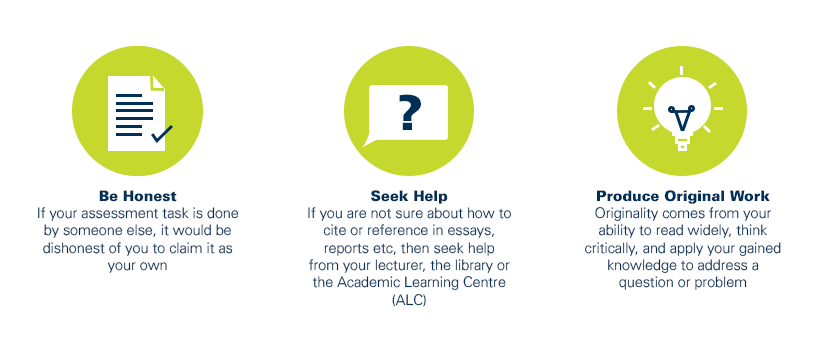
As a CQUniversity student you are expected to act honestly in all aspects of your academic work.
Any assessable work undertaken or submitted for review or assessment must be your own work. Assessable work is any type of work you do to meet the assessment requirements in the unit, including draft work submitted for review and feedback and final work to be assessed.
When you use the ideas, words or data of others in your assessment, you must thoroughly and clearly acknowledge the source of this information by using the correct referencing style for your unit. Using others’ work without proper acknowledgement may be considered a form of intellectual dishonesty.
Participating honestly, respectfully, responsibly, and fairly in your university study ensures the CQUniversity qualification you earn will be valued as a true indication of your individual academic achievement and will continue to receive the respect and recognition it deserves.
As a student, you are responsible for reading and following CQUniversity’s policies, including the Student Academic Integrity Policy and Procedure. This policy sets out CQUniversity’s expectations of you to act with integrity, examples of academic integrity breaches to avoid, the processes used to address alleged breaches of academic integrity, and potential penalties.
What is a breach of academic integrity?
A breach of academic integrity includes but is not limited to plagiarism, self-plagiarism, collusion, cheating, contract cheating, and academic misconduct. The Student Academic Integrity Policy and Procedure defines what these terms mean and gives examples.
Why is academic integrity important?
A breach of academic integrity may result in one or more penalties, including suspension or even expulsion from the University. It can also have negative implications for student visas and future enrolment at CQUniversity or elsewhere. Students who engage in contract cheating also risk being blackmailed by contract cheating services.
Where can I get assistance?
For academic advice and guidance, the Academic Learning Centre (ALC) can support you in becoming confident in completing assessments with integrity and of high standard.
What can you do to act with integrity?