Overview
This unit is intended to provide you with advanced knowledge and skill acquisition at the Australian Psychology Accreditation Council (APAC) Accreditation Standards Level 4, which represents professional and specialised areas of practice competencies necessary for working as a Clinical Psychologist. Specifically, this unit aims to build your competency in assessment research, theory, and practice of more complex psychological pathology and presentations. This will include a specific focus on memory and personality assessments, and neuropsychological assessment in clinical practice. You will build knowledge and skills specific to culturally-responsive reflective practice approaches to psychological assessment, which will be integrated throughout the teaching, learning, and assessment within this unit.
Details
Pre-requisites or Co-requisites
For students enrolled in CG17 Master of Clinical Psychology, the units PSYC21001 Assessment 1 and PSYC21008 Clinical Practice 2 are prerequisites. For students enrolled in CM49 Master of Clinical Psychology Advanced Entry, the unit PSYC21008 Clinical Practice 2 is a prerequisite.
Important note: Students enrolled in a subsequent unit who failed their pre-requisite unit, should drop the subsequent unit before the census date or within 10 working days of Fail grade notification. Students who do not drop the unit in this timeframe cannot later drop the unit without academic and financial liability. See details in the Assessment Policy and Procedure (Higher Education Coursework).
Offerings For Term 1 - 2026
Attendance Requirements
All on-campus students are expected to attend scheduled classes - in some units, these classes are identified as a mandatory (pass/fail) component and attendance is compulsory. International students, on a student visa, must maintain a full time study load and meet both attendance and academic progress requirements in each study period (satisfactory attendance for International students is defined as maintaining at least an 80% attendance record).
Recommended Student Time Commitment
Each 6-credit Postgraduate unit at CQUniversity requires an overall time commitment of an average of 12.5 hours of study per week, making a total of 150 hours for the unit.
Class Timetable
Assessment Overview
Assessment Grading
This is a pass/fail (non-graded) unit. To pass the unit, you must pass all of the individual assessment tasks shown in the table above.
All University policies are available on the CQUniversity Policy site.
You may wish to view these policies:
- Grades and Results Policy
- Assessment Policy and Procedure (Higher Education Coursework)
- Review of Grade Procedure
- Student Academic Integrity Policy and Procedure
- Academic Progression Policy and Procedure
- Student Refund and Credit Balance Policy and Procedure
- Complaints Policy and Procedure
- Information and Communications Technology Acceptable Use Policy and Procedure
This list is not an exhaustive list of all University policies. The full list of University policies are available on the CQUniversity Policy site.
Feedback, Recommendations and Responses
Every unit is reviewed for enhancement each year. At the most recent review, the following staff and student feedback items were identified and recommendations were made.
Feedback from In class. SUTE comments.
Assessment instruments need to be made readily available to students for completion of the neuropsychology report
Ensure that assessment instruments can be accessed by students.
Feedback from In class. SUTE comments.
Submission of Assessment 2 and Assessment 3 were too close together and at the end of term.
Spread out the assessments across the term.
- Demonstrate use of assessment tools and processes, including psychometric tests, structured or semi-structured interview data, behavioural observations, measures of functionality, and processes that enable the collection of collateral information from multiple sources.
- Integrate, interpret, and synthesise clinical psychological assessment data with knowledge of psychopathology to inform case formulation, diagnosis, and intervention.
- Apply advanced psychology knowledge to culturally responsive assessment in the area of clinical psychology.
These Learning Outcomes are intended to link with the CG17 Master of Clinical Psychology course Learning Outcome "Conduct culturally responsive assessment of psychological disorders to meet the needs of culturally and linguistically diverse populations, including Aboriginal and Torres Strait Islander peoples" (Learning Outcome number 3).
The PSYC21002 Learning Outcomes align with the 2019 Australian Psychology Accreditation Council (APAC) accreditation guidelines for Level 4 Graduate Competencies specific to assessment in clinical psychology, specifically Guidelines 4.2.1 Apply advanced psychological knowledge to their practice of clinical psychology and 4.2.2 Apply advanced psychological knowledge to culturally responsive assessment in the area of clinical psychology.
Alignment of Assessment Tasks to Learning Outcomes
| Assessment Tasks | Learning Outcomes | ||
|---|---|---|---|
| 1 | 2 | 3 | |
| 1 - Written Assessment - 0% | |||
| 2 - Direct observation of procedural skills (DOPs) - 0% | |||
| 3 - Written Assessment - 0% | |||
Alignment of Graduate Attributes to Learning Outcomes
| Graduate Attributes | Learning Outcomes | ||
|---|---|---|---|
| 1 | 2 | 3 | |
| 1 - Knowledge | |||
| 2 - Communication | |||
| 3 - Cognitive, technical and creative skills | |||
| 4 - Research | |||
| 5 - Self-management | |||
| 6 - Ethical and Professional Responsibility | |||
| 7 - Leadership | |||
| 8 - First Nations Knowledges | |||
| 9 - Aboriginal and Torres Strait Islander Cultures | |||
Textbooks
There are no required textbooks.
IT Resources
- CQUniversity Student Email
- Internet
- Unit Website (Moodle)
All submissions for this unit must use the referencing style: American Psychological Association 7th Edition (APA 7th edition)
For further information, see the Assessment Tasks.
t.depauw@cqu.edu.au
Week 1
Begin Date: 09 Mar 2026Module/Topic
There will be no lecture in week 1
Chapter
Events and Submissions/Topic
Week 2
Begin Date: 16 Mar 2026Module/Topic
Assessment of acute and complex mental health clients
Types of presentations and tailoring assessments
Evaluating risk - client and others
Staying safe
Chapter
Please see weekly Moodle tiles for readings and resources.
Events and Submissions/Topic
Week 3
Begin Date: 23 Mar 2026Module/Topic
Personality Assessment Inventory
- Administration and scoring
- Evaluatian and interpretation
Chapter
Please see weekly Moodle tiles for readings and resources.
Events and Submissions/Topic
Week 4
Begin Date: 30 Mar 2026Module/Topic
Residential school
Chapter
Please see weekly Moodle tiles for readings and resources.
Events and Submissions/Topic
Week 5
Begin Date: 06 Apr 2026Module/Topic
Neuropsychological assessment
Chapter
Please see weekly Moodle tiles for readings and resources.
Events and Submissions/Topic
Week 6
Begin Date: 13 Apr 2026Module/Topic
Neuropsychological assessment
Chapter
Please see weekly Moodle tiles for readings and resources.
Events and Submissions/Topic
Vacation Week
Begin Date: 20 Apr 2026Module/Topic
Chapter
Events and Submissions/Topic
Week 7
Begin Date: 27 Apr 2026Module/Topic
A critical look at assessments
Last lecture for this unit
Chapter
Please see weekly Moodle tiles for readings and resources.
Events and Submissions/Topic
Exam Week
Begin Date: 08 Jun 2026Module/Topic
Chapter
Events and Submissions/Topic
Vacation/Exam Week
Begin Date: 15 Jun 2026Module/Topic
Chapter
Events and Submissions/Topic
This is a non-graded (Pass/Fail) unit and therefore, in accordance with CQUniversity's Assessment Policy and Procedure (Higher Education Coursework), all assessment tasks must be passed in order to pass this unit. Students who have made a reasonable attempt to complete an assessment task initially will have one opportunity to re-attempt a failed assessment task. The mark achieved for the re-attempted assessment task will be recorded as the final mark.
1 Direct observation of procedural skills (DOPs)
During the on-campus residential school, you will be required to administer the WMS to a simulated client. You will receive a client vignette, including the subtests from the WMS that need to be administered.
If you do not pass, you are able to re-sit this assessment once during the residential school in week 4.
Week 4 Thursday (2 Apr 2026) 4:59 pm AEST
The test will take place in the residential school.
Week 6 Thursday (16 Apr 2026)
Feedback will be provided in-person on the day and a marking rubric will be available in Moodle.
This is a pass/fail assessment. Students have to pass each of the three components (administration, scoring, professional manner) to receive a Passing grade for this assessment.
- Administration: Students will adhere to the standardised subtest instructions, while maintaining a professional manner (WMS manual). Additionally, adherence to the standardised responses guidelines for the administrator is required. Students will follow the guidelines regarding age-appropriate items and the correct order of item and subtest administration.
- Scoring: Students will adhere to the scoring guidelines in the WMS manual. Correct interpretation of cut-off rules and expected further questioning of items in a subtest is required for a passing grade.
- Professional manner: students will employ professional communication skills, in a culturally responsive manner.
Students have to pass each of the three components (administration, scoring, professional manner) to receive a Passing grade for this assessment.
This assessment task is exempt from the 72-hour grace period, as the assessment takes place in the residential school with a lecturer as the assessor/fictional client.
- Demonstrate use of assessment tools and processes, including psychometric tests, structured or semi-structured interview data, behavioural observations, measures of functionality, and processes that enable the collection of collateral information from multiple sources.
2 Written Assessment
The written report will be completed for a client who has a Personality disorder.
- Students will be provided with a client including background information, test-taking behaviour, and raw scores from neuropsychology tests.
- Students are required to complete the scoring and normative comparisons necessary for interpretation.
Your assessment report will include:
- Summary of demographic details, reasons for referral, procedures / instruments used.
- Background history and presenting complaint.
- Relevant observations of test-taking behaviour.
- Test data results and interpretation.
- Summary, opinion and primary diagnosis.
- Consideration of differential diagnoses and comorbidities.
- Recommendations for intervention and treatment planning.
- Cultural considerations and unique client characteristics will be incorporated throughout.
You are not required to include references unless references are required to support a statement made in the report. If references are used in the report, they should be listed in an appendix in APA-7 format.
Use Arial 12-point font and line spacing of 1.5. The word limit does not include the title page or any appendices.
Use of artificial intelligence
- You may use artificial intelligence to generate ideas and check spelling, grammar, and syntax.
- However you may not use artificial intelligence to write this assessment.
- It is plagiarism to directly copy and paste material produced by Generative AI tools into assessments.
Week 7 Wednesday (29 Apr 2026) 4:59 pm AEST
Upload through Assessment portal on Moodle
Week 9 Friday (15 May 2026)
Feedback will be uploaded through assessment portal on Moodle
Marks are allocated according to the criteria below:
Summary of demographic details, reasons for referral, procedures / instruments used (2 marks).
Background history and presenting complaint (3 marks)
Relevant observations of test-taking behaviour (5 marks)
Test data results and interpretation (10 marks)
Summary, opinion and primary (possibly provisional) diagnosis (10 marks)
Consideration of differential diagnoses and comorbidities (5 marks)
Recommendations for intervention and treatment planning (5 marks)
Cultural considerations and unique client characteristics (5 marks)
Detailed marking criteria will be available in Moodle.
- Demonstrate use of assessment tools and processes, including psychometric tests, structured or semi-structured interview data, behavioural observations, measures of functionality, and processes that enable the collection of collateral information from multiple sources.
- Integrate, interpret, and synthesise clinical psychological assessment data with knowledge of psychopathology to inform case formulation, diagnosis, and intervention.
- Apply advanced psychology knowledge to culturally responsive assessment in the area of clinical psychology.
3 Written Assessment
The written report will be completed for a client who has a neuropsychological condition.
- Students will be provided with a client including background information, test-taking behaviour, and raw scores from neuropsychology tests.
- Students are required to complete the scoring and normative comparisons necessary for interpretation.
Your neuropsychology report will include:
- Summary of demographic details, reasons for referral, procedures / instruments used.
- Background history and presenting complaint.
- Relevant observations of test-taking behaviour.
- Test data results and interpretation.
- Summary, opinion and primary diagnosis.
- Consideration of differential diagnoses and comorbidities.
- Recommendations for intervention and treatment planning.
- Cultural considerations and unique client characteristics will be incorporated throughout.
You are not required to include references unless references are required to support a statement made in the report. If references are used in the report, they should be listed in an appendix in APA-7 format.
Your report should will be between 2250 - 2750 words. Use Arial 12-point font and line spacing of 1.5. The word limit does not include the title page or any appendices.
Use of artificial intelligence
You may use artificial intelligence to generate ideas and check spelling, grammar, and syntax.
However you may not use artificial intelligence to write this assessment.
It is plagiarism to directly copy and paste material produced by Generative AI tools into assessments.
Week 12 Wednesday (3 June 2026) 4:59 pm AEST
Upload through Assessment portal on Moodle
Vacation/Exam Week Friday (19 June 2026)
Feedback will be uploaded through assessment portal on Moodle
Marks are allocated according to the criteria below:
Summary of demographic details, reasons for referral, procedures / instruments used (2 marks).
Background history and presenting complaint (3 marks)
Relevant observations of test-taking behaviour (5 marks)
Test data results and interpretation (10 marks)
Summary, opinion and primary (possibly provisional) diagnosis (10 marks)
Consideration of differential diagnoses and comorbidities (5 marks)
Recommendations for intervention and treatment planning (5 marks)
Cultural considerations and unique client characteristics (5 marks)
Detailed marking criteria will be available in Moodle.
- Integrate, interpret, and synthesise clinical psychological assessment data with knowledge of psychopathology to inform case formulation, diagnosis, and intervention.
- Apply advanced psychology knowledge to culturally responsive assessment in the area of clinical psychology.
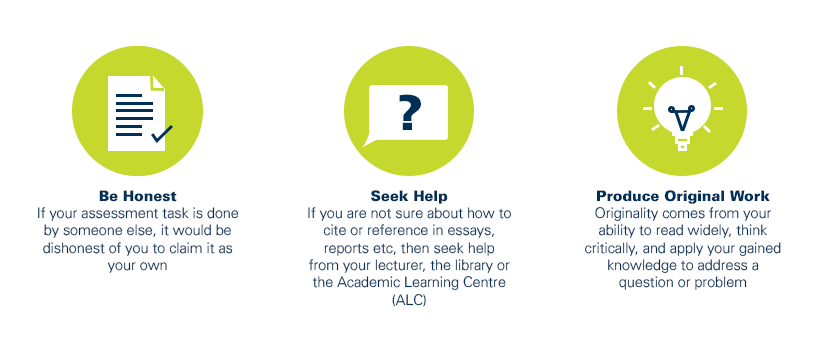
As a CQUniversity student you are expected to act honestly in all aspects of your academic work.
Any assessable work undertaken or submitted for review or assessment must be your own work. Assessable work is any type of work you do to meet the assessment requirements in the unit, including draft work submitted for review and feedback and final work to be assessed.
When you use the ideas, words or data of others in your assessment, you must thoroughly and clearly acknowledge the source of this information by using the correct referencing style for your unit. Using others’ work without proper acknowledgement may be considered a form of intellectual dishonesty.
Participating honestly, respectfully, responsibly, and fairly in your university study ensures the CQUniversity qualification you earn will be valued as a true indication of your individual academic achievement and will continue to receive the respect and recognition it deserves.
As a student, you are responsible for reading and following CQUniversity’s policies, including the Student Academic Integrity Policy and Procedure. This policy sets out CQUniversity’s expectations of you to act with integrity, examples of academic integrity breaches to avoid, the processes used to address alleged breaches of academic integrity, and potential penalties.
What is a breach of academic integrity?
A breach of academic integrity includes but is not limited to plagiarism, self-plagiarism, collusion, cheating, contract cheating, and academic misconduct. The Student Academic Integrity Policy and Procedure defines what these terms mean and gives examples.
Why is academic integrity important?
A breach of academic integrity may result in one or more penalties, including suspension or even expulsion from the University. It can also have negative implications for student visas and future enrolment at CQUniversity or elsewhere. Students who engage in contract cheating also risk being blackmailed by contract cheating services.
Where can I get assistance?
For academic advice and guidance, the Academic Learning Centre (ALC) can support you in becoming confident in completing assessments with integrity and of high standard.
What can you do to act with integrity?