Overview
This unit is intended to provide you with knowledge and skill acquisition at Australian Psychology Accreditation Council (APAC) Accreditation Standards Level 3, which represents professional and specialised areas of practice competencies necessary for working as a psychologist. Specifically, this unit aims to build your competency in theoretically informed selection, administration, interpretation, and integration of standardised psychological testing into broader assessment of cognition, intelligence, and learning. You will build knowledge and skills specific to culturally-responsive reflective practice approaches to psychological assessment.
Details
Pre-requisites or Co-requisites
Students must be enrolled in CG17 Master of Clinical Psychology or CL68 Master of Professional Psychology. Anti-req PSCY20055
Important note: Students enrolled in a subsequent unit who failed their pre-requisite unit, should drop the subsequent unit before the census date or within 10 working days of Fail grade notification. Students who do not drop the unit in this timeframe cannot later drop the unit without academic and financial liability. See details in the Assessment Policy and Procedure (Higher Education Coursework).
Offerings For Term 1 - 2026
Attendance Requirements
All on-campus students are expected to attend scheduled classes - in some units, these classes are identified as a mandatory (pass/fail) component and attendance is compulsory. International students, on a student visa, must maintain a full time study load and meet both attendance and academic progress requirements in each study period (satisfactory attendance for International students is defined as maintaining at least an 80% attendance record).
Recommended Student Time Commitment
Each 6-credit Postgraduate unit at CQUniversity requires an overall time commitment of an average of 12.5 hours of study per week, making a total of 150 hours for the unit.
Class Timetable
Assessment Overview
Assessment Grading
This is a pass/fail (non-graded) unit. To pass the unit, you must pass all of the individual assessment tasks shown in the table above.
All University policies are available on the CQUniversity Policy site.
You may wish to view these policies:
- Grades and Results Policy
- Assessment Policy and Procedure (Higher Education Coursework)
- Review of Grade Procedure
- Student Academic Integrity Policy and Procedure
- Academic Progression Policy and Procedure
- Student Refund and Credit Balance Policy and Procedure
- Complaints Policy and Procedure
- Information and Communications Technology Acceptable Use Policy and Procedure
This list is not an exhaustive list of all University policies. The full list of University policies are available on the CQUniversity Policy site.
Feedback, Recommendations and Responses
Every unit is reviewed for enhancement each year. At the most recent review, the following staff and student feedback items were identified and recommendations were made.
Feedback from SUTE Unit comments
Students appreciated the video resources and the tutorials to aid them in learning psychometric assessments.
The tutorials will continue to be taught live, while the video resources continue to be offered on Moodle.
Feedback from SUTE Unit comments
Students would like to receive video resources, specifically for learning the WIAT-III assessment
The unit coordinator will develop video resources, with a focus on administration and scoring of the WIAT-III assessment.
- Critically apply theoretical knowledge and a culturally-responsive scientist-practitioner approach to standardised psychological testing, as situated within the context of comprehensive psychological assessment.
- Justify and effectively communicate evidence-based interpretation, integration and synthesis of assessment data in oral and written formats.
- Apply critically reflective and culturally-sensitive practice in standardised psychological assessment processes.
Learning outcomes are based on Australian Qualification Framework (AQF) level 9 criteria and level 3 core competencies specified by the Australian Psychology Accreditation Council (APAC):
3.2 Apply evidence-based and scientific methods to professional practice across the lifespan in empirically valid and culturally responsive ways,
3.4 Perform appropriate standardised psychological testing, as part of broader assessment, to assess and interpret aspects of functioning,
3.5 Identify psychological disorders using a recognised taxonomy,
3.6 Conduct professional interviews and assessments and synthesise information from multiple sources, including assessment of risk, to formulate a conceptualisation of the presenting issues to determine the most appropriate interventions, including management of risk, and
3.8 Interpret and communicate findings in oral and written formats, including formal psychological reports, using culturally appropriate language (APAC, 2019, p.13-14).
Alignment of Assessment Tasks to Learning Outcomes
| Assessment Tasks | Learning Outcomes | ||
|---|---|---|---|
| 1 | 2 | 3 | |
| 1 - Practical Assessment - 0% | |||
| 2 - Written Assessment - 0% | |||
| 3 - Direct observation of procedural skills (DOPs) - 0% | |||
| 4 - Learning logs / diaries / Journal / log books - 0% | |||
Alignment of Graduate Attributes to Learning Outcomes
| Graduate Attributes | Learning Outcomes | ||
|---|---|---|---|
| 1 | 2 | 3 | |
| 1 - Knowledge | |||
| 2 - Communication | |||
| 3 - Cognitive, technical and creative skills | |||
| 4 - Research | |||
| 5 - Self-management | |||
| 6 - Ethical and Professional Responsibility | |||
| 7 - Leadership | |||
| 8 - First Nations Knowledges | |||
| 9 - Aboriginal and Torres Strait Islander Cultures | |||
Textbooks
There are no required textbooks.
IT Resources
- CQUniversity Student Email
- Internet
- Unit Website (Moodle)
All submissions for this unit must use the referencing style: American Psychological Association 7th Edition (APA 7th edition)
For further information, see the Assessment Tasks.
j.a.martin@cqu.edu.au
Week 1 Overview and Introduction to Wechsler Cognitive Assessments
Begin Date: 09 Mar 2026Module/Topic
Chapter
Chapter 1
Events and Submissions/Topic
Lecture: 1 pm – 4 pm Friday
Week 2 WISC-V Administration and Scoring
Begin Date: 16 Mar 2026Module/Topic
Wechsler Intelligence Test for Children: 5th Edition
WISC-V: Administration & Scoring
Chapter
There are no specified chapters for this week. Additional readings will be placed on Moodle as required.
Events and Submissions/Topic
Lecture: 1 pm - 4 pm Friday
Week 3 Residential School
Begin Date: 23 Mar 2026Module/Topic
WISC-V: Demonstration, Administration Practice
WISC-V: Administration & Scoring Assessment
Personality Assessment Inventory (PAI): Administration, Scoring & Interpretation.
Depression, Anxiety and Stress Scale (DASS)
Kessler Psychological Distress Scale (K10)
Strengths and Difficulties Questionnaire (SDQ)
Chapter
There are no specified chapters for this week. Additional readings will be placed on Moodle as required.
Events and Submissions/Topic
Residential School for Assessment 1 and Interventions 1 Units: 9am- 4pm Monday to Friday.
Assessment 1 sessions will be on Monday and Tuesday 9am – 4pm, Wednesday 1-4pm, and Thursday 9am – 12pm.
Practical Assessment Due: Week 3 Thursday (26 Mar 2026) 5:00 pm AEST
Week 4 No Class (Good Friday Public Holiday)
Begin Date: 30 Mar 2026Module/Topic
Chapter
Events and Submissions/Topic
Week 5 Report Writing
Begin Date: 06 Apr 2026Module/Topic
Professional Report Writing
Chapter
Supplementary: Sattler, Dumont & Coalson (2016) - Chapter 8
Essentials of Assessment Report Writing (Schneider et al., 2004)
Events and Submissions/Topic
Lecture: 1pm - 4pm Friday
Week 6 Functional Assessment and Common Screeners
Begin Date: 13 Apr 2026Module/Topic
Functional Assessment and Common Screeners
Adaptive Behavior Assessment System (ABAS)
Beck Depression Inventory (BDI)
State Trait Anxiety Inventory (STAI)
World Health Organisation Disability Assessment Scale (WHO-DAS)
World Health Organisation Quality of Life Scale (WHO-QOL)
Outcome Rating Scale (ORS)
Patient Health Questionnaire 9 Item (PHQ-9)
Achenbach Child Behaviour Checklist and Teacher/Youth reports - ASEBA
Child Behaviour Checklist (CBCL)
Chapter
There are no specified chapters for this week. Additional readings will be placed on Moodle as required.
Events and Submissions/Topic
Lecture: 9am - 12pm Thursday
Term Break
Begin Date: 20 Apr 2026Module/Topic
Chapter
Events and Submissions/Topic
Week 7 Cognitive and Achievement Assessments
Begin Date: 27 Apr 2026Module/Topic
Cognitive and Achievement Assessments
Wechsler Individual Achievement Test: 3rd Edition (WIAT-III)
Wechsler Preschool and Primary Scale of Intelligence (WPPSI)
Stanford-Binet Intelligence Scales
Wechsler Abbreviated Scales of Intelligence (WASI)
Woodcock-Johnson Test of Cognitive Abilities
Raven's Standard Progressive Matrices
Chapter
There are no specified chapters for this week. Additional readings will be placed on Moodle as required.
Wechsler Individual Achievement Test: 3rd Edition manual
Additional readings will be placed on Moodle as required.
Events and Submissions/Topic
Lecture: 9am - 12pm Thursday
Written Assessment Due: Week 7 Thursday (30 Apr 2026) 12:00 am AEST
Week 8 Personality, Mental Health and Career Assessments
Begin Date: 04 May 2026Module/Topic
Personality, Mental Health and Career Assessments
NEO Personality Inventory Revised (NEO-PI-R)
Sixteen Personality Factor Questionnaire (16PF)
Self Directed Search (SDS)
Strong Interest Inventory (Strong)
Global Assessment of Functioning (GAF)
Minnesota Multiphasic Personality Inventory (MMPI)
Structured Clinical Interview for DSM (SCID)
Chapter
There are no specified chapters for this week. Additional readings will be placed on Moodle as required.
NEO Personality Inventory Revised (NEO-PI-R) manual
Personality Assessment Inventory (PAI) manual
Events and Submissions/Topic
Lecture: 9am - 12pm Thursday
Week 9 Memory Assessment and Providing Assessment Feedback
Begin Date: 11 May 2026Module/Topic
Memory Assessment
- Wechsler Memory Scale (WMS-IV)
- Wide Range Assessment of Memory and Learning (WRAML)
- Rey Auditory Verbal Learning Test (RAVLT)
Chapter
There are no specified chapters for this week. Additional readings will be placed on Moodle as required.
- Wechsler Memory Scale (WMS-IV) manual
Events and Submissions/Topic
Lecture: 9am - 12pm Thursday
Week 10 No Class
Begin Date: 18 May 2026Module/Topic
Chapter
Events and Submissions/Topic
Week 11 No Class
Begin Date: 25 May 2026Module/Topic
Chapter
Events and Submissions/Topic
Week 12 No Class
Begin Date: 01 Jun 2026Module/Topic
Chapter
Events and Submissions/Topic
Exam Week
Begin Date: 08 Jun 2026Module/Topic
Chapter
Events and Submissions/Topic
Vacation/Exam Week
Begin Date: 15 Jun 2026Module/Topic
Chapter
Events and Submissions/Topic
1 Practical Assessment
Wechsler Intelligence Scale for Children (WISC-IV) Administration & Scoring
During the on-campus residential school, you will be required to administer the WISC-V to a simulated client. You will receive a client vignette, including the subtests from the WISC-IV that need to be administered.
If you do not pass this assessment, you are able to re-sit this assessment once during the residential school in week 3.
The 72-hour grace period does not apply to this in-class assessment. You must not use AI at any point during this assessment. You must demonstrate your skills and knowledge.
Week 3 Thursday (26 Mar 2026) 5:00 pm AEST
Submit to Moodle
Week 5 Friday (10 Apr 2026)
Results available in Moodle
This is an ungraded pass/fail assessment. You have to pass each of the three components (administration, scoring, professional communication) to receive a Passing grade for this assessment.
- Administration: You will adhere to the standardised subtest instructions, while maintaining a professional manner (WISC-V manual). Additionally, adherence to the standardised responses guidelines for the administrator is required. You will follow the guidelines regarding age-appropriate items and the correct order of item and subtest administration.
- Scoring: You will adhere to the scoring guidelines in the WISC-V manual. Correct interpretation of cut-off rules and expected further questioning of items in a subtest is required for a passing grade.
- Professional communication: You will administer the subtests in a professional manner, adhering to the WISC-V subtest administration guidelines in the WISC-V manual. Additionally, you will employ professional communication skills, in a culturally responsive manner.
Students have to pass each of the three components (administration, scoring, professional manner) to receive a Passing grade for this assessment.
- Critically apply theoretical knowledge and a culturally-responsive scientist-practitioner approach to standardised psychological testing, as situated within the context of comprehensive psychological assessment.
2 Written Assessment
Wechsler Intelligence Scale for Children (WISC-V) assessment report
This report requires you to respond to a hypothetical case study and demonstrate competency in knowledge and skills related to psychological assessment and evaluation, which are required for generation of a psychological assessment report. Specifically, you will be required to interpret WISC-V scores, integrate test results and client history into a formulation, present differential diagnosis, and provide an opinion and recommendations for the client based on the testing outcomes in the form of a psychological report.
You will be provided with a case study during the first 5 weeks. The case information will include background information, test behaviour, and test scores. Following the 7 Step Model of Formulation (Flanagan & Alfonso, 2017) students will be required to prepare a well-written integrated assessment report based on the case information and their test score interpretation. The is a 3000-word limit for your report (excluding Appendices) to ensure the end product is a concise and cohesive narrative.
The 72-hour grace period applies to submission of this assessment. You must not use AI at any point during this assessment. You must demonstrate your skills and knowledge.
Week 7 Thursday (30 Apr 2026) 12:00 am AEST
Submit to Moodle
Week 9 Friday (15 May 2026)
Results available in Moodle
This written report is an ungraded Pass/Fail assessment.
To pass, you must demonstrate:
- Accurate and responsible interpretation of WISC-V data
- Integration of cognitive findings, behavioural observations, and history into a coherent formulation
- Logical and defensible diagnostic reasoning
- Clear, appropriate, and evidence-informed recommendations
- Professional-standard written communication that is logically structured
A detailed marking rubric and further information will be available on Moodle.
- Critically apply theoretical knowledge and a culturally-responsive scientist-practitioner approach to standardised psychological testing, as situated within the context of comprehensive psychological assessment.
- Justify and effectively communicate evidence-based interpretation, integration and synthesis of assessment data in oral and written formats.
3 Direct observation of procedural skills (DOPs)
Feedback assessment
Clear and accurate communication of assessment outcomes in an engaging and client-centred manner is a key competency that completes the psychological assessment process. The purpose of this assessment is to assess your competency in delivering feedback of standardised assessment outcomes, opinions and recommendations to a client.
You are required to record a video with one of your colleagues, who will be playing a client or parent of a client. In this video, you will deliver professional feedback regarding their assessment. You will receive a client vignette and assessment scores to interpret.
Week 11 Thursday (28 May 2026) 12:00 am AEST
You will share your video with the nominated marker for this assessment
Exam Week Friday (12 June 2026)
Results available in Moodle
Assessment criteria for this task are:
- Session opening: form professional rapport with the client, respecting their emotions towards the feedback process
- Results: deliver the result in a culturally appropriate manner, in language that is clear for the client
- Formulation and diagnosis: synthesise the results to a case formulation and diagnosis, with respect towards the client. The information needs to be comprehensible and non-threatening to the client
- Recommendations: Offer evidence-based solution to the clients, explaining the rationale behind these recommendations and the expected impact on their functioning.
A more detailed marking criteria is available in Moodle.
No submission method provided.
- Justify and effectively communicate evidence-based interpretation, integration and synthesis of assessment data in oral and written formats.
- Apply critically reflective and culturally-sensitive practice in standardised psychological assessment processes.
4 Learning logs / diaries / Journal / log books
You are required to submit a 1,500-word reflective piece that addresses three key areas. First, you will articulate your understanding of the purpose and use of the psychological assessment tools covered in this unit. Second, you will reflect on how clients may experience the assessment process, including consideration of the potential personal, interpersonal, and broader impacts of the use of assessment tools with clients and assessment outcomes. Finally, you will reflect on the learning and insights you have gained over the past four weeks and discuss how these will inform and shape your future professional practice.
The 72-hour grace period applies to submission of this assessment. You must not use AI at any point during this assessment. You must demonstrate your skills and knowledge.
Week 12 Thursday (4 June 2026) 12:00 am AEST
Submit to Moodle
Vacation/Exam Week Friday (19 June 2026)
Results available in Moodle
You will write a 3-page reflection piece (1500 words), covering the following:
1. Your understanding the purpose and use of psychology assessment tools covered across this unit (500 words).
2. Your reflection of how clients may experience the assessment process, and the broader impacts of assessments for clients (500 words).
3. Your reflection on how the learning and insights you have gained over the last 4 weeks, will impact your practice (500 words).
- Justify and effectively communicate evidence-based interpretation, integration and synthesis of assessment data in oral and written formats.
- Apply critically reflective and culturally-sensitive practice in standardised psychological assessment processes.
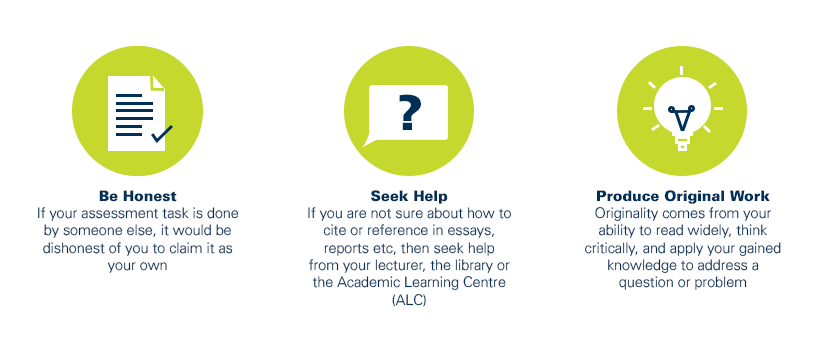
As a CQUniversity student you are expected to act honestly in all aspects of your academic work.
Any assessable work undertaken or submitted for review or assessment must be your own work. Assessable work is any type of work you do to meet the assessment requirements in the unit, including draft work submitted for review and feedback and final work to be assessed.
When you use the ideas, words or data of others in your assessment, you must thoroughly and clearly acknowledge the source of this information by using the correct referencing style for your unit. Using others’ work without proper acknowledgement may be considered a form of intellectual dishonesty.
Participating honestly, respectfully, responsibly, and fairly in your university study ensures the CQUniversity qualification you earn will be valued as a true indication of your individual academic achievement and will continue to receive the respect and recognition it deserves.
As a student, you are responsible for reading and following CQUniversity’s policies, including the Student Academic Integrity Policy and Procedure. This policy sets out CQUniversity’s expectations of you to act with integrity, examples of academic integrity breaches to avoid, the processes used to address alleged breaches of academic integrity, and potential penalties.
What is a breach of academic integrity?
A breach of academic integrity includes but is not limited to plagiarism, self-plagiarism, collusion, cheating, contract cheating, and academic misconduct. The Student Academic Integrity Policy and Procedure defines what these terms mean and gives examples.
Why is academic integrity important?
A breach of academic integrity may result in one or more penalties, including suspension or even expulsion from the University. It can also have negative implications for student visas and future enrolment at CQUniversity or elsewhere. Students who engage in contract cheating also risk being blackmailed by contract cheating services.
Where can I get assistance?
For academic advice and guidance, the Academic Learning Centre (ALC) can support you in becoming confident in completing assessments with integrity and of high standard.
What can you do to act with integrity?