Overview
This unit is the first of two units in which you will learn how professional knowledge of research and theory can be applied to practice related to high-prevalence psychological disorders across the lifespan, inclusive of culturally diverse populations. As a result, you will learn to conceptualise contemporary psychology cases and to formulate a treatment plan to help your clients. Specifically, this unit uses case-based learning to develop competency in self-reflective practices and the application of diagnostic classification systems to high prevalence psychological disorders, including the critical evaluation of diagnostic systems of taxonomy.
Details
Pre-requisites or Co-requisites
Students must be enrolled in CG17 Master of Clinical Psychology or CL68 Master of Professional Psychology. Anti-req PSYC21005.
Important note: Students enrolled in a subsequent unit who failed their pre-requisite unit, should drop the subsequent unit before the census date or within 10 working days of Fail grade notification. Students who do not drop the unit in this timeframe cannot later drop the unit without academic and financial liability. See details in the Assessment Policy and Procedure (Higher Education Coursework).
Offerings For Term 1 - 2026
Attendance Requirements
All on-campus students are expected to attend scheduled classes - in some units, these classes are identified as a mandatory (pass/fail) component and attendance is compulsory. International students, on a student visa, must maintain a full time study load and meet both attendance and academic progress requirements in each study period (satisfactory attendance for International students is defined as maintaining at least an 80% attendance record).
Recommended Student Time Commitment
Each 6-credit Postgraduate unit at CQUniversity requires an overall time commitment of an average of 12.5 hours of study per week, making a total of 150 hours for the unit.
Class Timetable
Assessment Overview
Assessment Grading
This is a pass/fail (non-graded) unit. To pass the unit, you must pass all of the individual assessment tasks shown in the table above.
All University policies are available on the CQUniversity Policy site.
You may wish to view these policies:
- Grades and Results Policy
- Assessment Policy and Procedure (Higher Education Coursework)
- Review of Grade Procedure
- Student Academic Integrity Policy and Procedure
- Academic Progression Policy and Procedure
- Student Refund and Credit Balance Policy and Procedure
- Complaints Policy and Procedure
- Information and Communications Technology Acceptable Use Policy and Procedure
This list is not an exhaustive list of all University policies. The full list of University policies are available on the CQUniversity Policy site.
Feedback, Recommendations and Responses
Every unit is reviewed for enhancement each year. At the most recent review, the following staff and student feedback items were identified and recommendations were made.
Feedback from Student Evaluations
Students stated that recording the live lectures would allow them to review the lectures if further clarity is needed or to deepen their understanding of content.
It is recommended that the live lectures are recorded.
Feedback from Student Evaluations
Students suggested that examples of how psychopathologies present, through video format, would be useful for their learning and understanding.
It is recommended that the current learning materials are expanded on, and videos are used to aid students learning of the presenting features of the covered psychopathologies.
Feedback from Student Evaluations
Students questioned the relevance of developing a pamphlet for their future professional practice, suggesting a review of Assessment 1.
It is recommended that the teaching team review Assessment 1 to ensure that the modality chosen aligns practically with the skills needed in practice.
- Synthesise and apply psychological knowledge and relevant international taxonomies (i.e. Diagnostic and Statistical Manual of Mental Disorders and International Classification of Diseases) to evaluate and classify high prevalence psychological disorders.
- Interpret and synthesise psychological data to inform case formulation, diagnosis and intervention to guide evidence-based treatment planning in a culturally responsive manner.
- Apply advanced psycho-developmental knowledge to biopsychosocialspiritual models of mental health as they apply to the conceptualisation and communication of high prevalence psychological disorders in a culturally responsive manner.
Learning outcomes are drawn from specifications for study at level 9 as indicated by the Australian Qualifications Framework (AQF), program of study criteria as stated by the Psychology Board of Australia (PsychBA), and the following core competencies stated by the Australian Psychology Accreditation Council (APAC):
- 3.2 Apply evidence-based and scientific methods to professional practice across the lifespan in empirically valid and culturally responsive ways,
- 3.3 Employ professional communication skills, in a culturally responsive manner, with a range of socially and culturally diverse clients,
- 3.5 Identify psychological disorders using a recognised taxonomy,
- 3.6 Conduct professional interviews and assessments and synthesise information from multiple sources, including assessment of risk, to formulate a conceptualisation of the presenting issues to determine the most appropriate interventions, including management of risk, and
- 3.14 Engage in self-reflective professional practice, taking account of the impact of their own values and beliefs, and taking appropriate actions as a result (APAC, 2019, p.13-14).
Alignment of Assessment Tasks to Learning Outcomes
| Assessment Tasks | Learning Outcomes | ||
|---|---|---|---|
| 1 | 2 | 3 | |
| 1 - Portfolio - 0% | |||
| 2 - Project (applied) - 0% | |||
| 3 - Online Test - 0% | |||
Alignment of Graduate Attributes to Learning Outcomes
| Graduate Attributes | Learning Outcomes | ||
|---|---|---|---|
| 1 | 2 | 3 | |
| 1 - Knowledge | |||
| 2 - Communication | |||
| 3 - Cognitive, technical and creative skills | |||
| 4 - Research | |||
| 5 - Self-management | |||
| 6 - Ethical and Professional Responsibility | |||
| 7 - Leadership | |||
| 8 - First Nations Knowledges | |||
| 9 - Aboriginal and Torres Strait Islander Cultures | |||
Textbooks
Diagnostic and Statistical Manual of Mental Disorders
- Edition: 5-TR (2022)
- American Psychiatric Association
- US
- ISBN: 9780890425763
The Diagnostic and Statistical Manual of Mental Disorders, Fifth Edition, Text Revision (DSM-5-TR), is the most comprehensive, current, and critical resource for clinical practice available to todays mental health clinicians and researchers. DSM-5-TR includes the fully revised text and references, updated diagnostic criteria and ICD-10-CM codes since DSM-5 was published in 2013. It features a new disorder, Prolonged Grief Disorder, as well as codes for suicidal behavior available to all clinicians of any discipline without the requirement of any other diagnosis.
With contributions from over 200 subject matter experts, this updated volume boasts the most current text updates based on the scientific literature. Now in four-color and with the ability to authenticate each printed copy, DSM-5-TR provides a cohesive, updated presentation of criteria, diagnostic codes, and text. This latest volume offers a common language for clinicians involved in the diagnosis and study of mental disorders and facilitates an objective assessment of symptom presentations across a variety of clinical settings—inpatient, outpatient, partial hospital, consultation-liaison, clinical, private practice, and primary care.
Stay current with these important updates in DSM-5-TR:
- Fully revised text for each disorder with updated sections on associated features, prevalence, development and course, risk and prognostic factors, culture, diagnostic markers, suicide, differential diagnosis, and more.
- Addition of Prolonged Grief Disorder (PGD) to Section II—a new disorder for diagnosis
- Over 70 modified criteria sets with helpful clarifications since publication of DSM-5
- Fully updated Introduction and Use of the Manual to guide usage and provide context for important terminology
- Considerations of the impact of racism and discrimination on mental disorders integrated into the text
- New codes to flag and monitor suicidal behavior, available to all clinicians of any discipline and without the requirement of any other diagnosis
- Fully updated ICD-10-CM codes implemented since 2013, including over 50 coding updates new to DSM-5-TR for substance intoxication and withdrawal and other disorders
- Updated and redesigned Diagnostic Classification
- This manual is a valuable resource for other physicians and health professionals, including psychologists, counselors, nurses, and occupational and rehabilitation therapists, as well as social workers and forensic and legal specialists. The new DSM-5-TR is the most definitive resource for the diagnosis and classification of mental disorders.
IT Resources
- CQUniversity Student Email
- Internet
- Unit Website (Moodle)
- Webcam
All submissions for this unit must use the referencing style: American Psychological Association 7th Edition (APA 7th edition)
For further information, see the Assessment Tasks.
a.m.carter@cqu.edu.au
Week 1
Begin Date: 09 Mar 2026Module/Topic
Introduction, Diagnosis and Case Formulation
Chapter
- DSM-5-TR Introduction.
Check Moodle for any additional required readings that have been assigned for this week.
Events and Submissions/Topic
Lecture Friday March 13th, 9 am - 12 pm (AEST)
Assessment 3: Online weekly quiz. Week 1 quiz opens Friday March 13th at 12:00pm (AEST).
Week 2
Begin Date: 16 Mar 2026Module/Topic
Biopsychosocial Framework & Attachment
Chapter
Check Moodle for the required readings that have been assigned for this week.
Events and Submissions/Topic
Lecture Friday March 20th, 9 am - 12 pm (AEST)
Assessment 3: Online weekly quiz. Week 1 quiz closes Monday March 16th at 9:00am (AEST)
Assessment 3: Online weekly quiz. Week 2 quiz opens Friday March 20th at 12:00pm (AEST).
Week 3
Begin Date: 23 Mar 2026Module/Topic
Chapter
Events and Submissions/Topic
No class due to Residential School
Assessment 3: Online weekly quiz. Week 2 quiz closes Monday 23rd of March at 9:00am (AEST).
Week 4
Begin Date: 30 Mar 2026Module/Topic
Chapter
Events and Submissions/Topic
No lecture due to Public Holiday
Week 5
Begin Date: 06 Apr 2026Module/Topic
Depressive Disorders & Bipolar and Related Disorders.
Chapter
- DSM-5-TR Depressive Disorders.
- DSM-5-TR Bipolar & Related Disorders.
Check Moodle for any additional required readings that have been assigned to the learning content for this week.
Events and Submissions/Topic
Lecture Friday April 10th, 9 am - 12 pm (AEST)
Assessment 3: Online weekly quiz. Week 5 quiz opens Friday April 10th at 12:00pm (AEST).
Week 6
Begin Date: 13 Apr 2026Module/Topic
Anxiety Disorders & Somatic Disorders
Chapter
- DSM-5-TR Anxiety Disorders
- DSM-5-TR Somatic Disorders
Check Moodle for any additional required readings that have been assigned for this week.
Events and Submissions/Topic
Lecture Friday April 17th, 9 am - 12 pm (AEST)
Assessment 3: Online weekly quiz. Week 5 quiz closes Monday 13th at 9:00am (AEST)
Assessment 3: Online weekly quiz. Week 6 quiz opens Friday 17th at 12:00pm (AEST)
Vacation Week
Begin Date: 20 Apr 2026Module/Topic
Chapter
Events and Submissions/Topic
No lecture due to vacation week
Week 7
Begin Date: 27 Apr 2026Module/Topic
Substance Use Disorders
Chapter
- DSM-5-TR Substance-Related and Addictive Disorders.
Check Moodle for any additional required readings that have been assigned for this week.
Events and Submissions/Topic
Lecture Friday May 1st, 9 am - 12 pm (AEST)
Assessment 3: Online weekly quiz. Week 6 quiz closes Monday April 27th at 9:00am (AEST)
Assessment 3: Online weekly quiz. Week 7 quiz opens Friday May 1st at 12:00pm (AEST)
Week 8
Begin Date: 04 May 2026Module/Topic
Neuro-Developmental Disorders
Chapter
- DSM-5-TR Neurodevelopmental Disorders.
Check Moodle for any additional required readings that have been assigned for this week.
Events and Submissions/Topic
Lecture Friday May 8th, 9 am - 12 pm (AEST)
Assessment 3: Online weekly quiz. Week 7 quiz closes Monday May 4th at 9:00am (AEST)
Assessment 3: Online weekly quiz. Week 8 quiz opens Friday May 8th at 12:00pm (AEST)
Week 9
Begin Date: 11 May 2026Module/Topic
Disruptive, Impulse-Control and Conduct Disorders
Chapter
- DSM-5-TR Disruptive, Impulse-Control and Conduct Disorders.
Check Moodle for any additional required readings that have been assigned for this week.
Events and Submissions/Topic
Lecture Friday May 15th, 9 am - 12 pm (AEST)
Assessment 3: Online weekly quiz. Week 8 quiz closes Monday May 11th at 9:00am (AEST)
Assessment 3: Online weekly quiz. Week 9 quiz opens Friday May 15th at 12:00pm (AEST)
Week 10
Begin Date: 18 May 2026Module/Topic
Neuro-cognitive disorders
Chapter
- DSM-5-TR Neurocognitive Disorders.
Check Moodle for any additional required readings that have been assigned for this week.
Events and Submissions/Topic
Lecture Friday May 22nd, 9 am - 12 pm (AEST)
Assessment 3: Online weekly quiz. Week 9 quiz closes Monday May 18th at 9:00am (AEST)
Assessment 3: Online weekly quiz. Week 10 quiz opens Friday May 22nd at 12:00pm (AEST)
Assessment 1: Diagnostic Handouts Due: Week 10 Monday (18 May 2026) 9:00 am AEST
Week 11
Begin Date: 25 May 2026Module/Topic
Trauma and Stressor-Related Disorders
Chapter
- DSM-5-TR Trauma- and Stressor-Related Disorders.
Check Moodle for any additional required readings that have been assigned for this week.
Events and Submissions/Topic
Lecture Friday May 29th, 9 am - 12 pm (AEST)
Assessment 3: Online weekly quiz. Week 10 quiz closes Monday May 25th at 9:00am (AEST)
Assessment 3: Online weekly quiz. Week 11 quiz opens Friday May 29th at 12:00pm (AEST)
Assessment 2: Case formulation Due: Week 11 Monday (25 May 2026) 9:00 am AEST
Week 12
Begin Date: 01 Jun 2026Module/Topic
Review of content and Where to next?
Chapter
Check Moodle for the required readings that have been assigned for this week.
Events and Submissions/Topic
Lecture Friday June 5th, 9 am - 12 pm (AEST)
Assessment 3: Online weekly quiz. Week 11 quiz closes Monday June 1st at 9:00am (AEST)
Assessment 3 is completed.
Assessment 3: Online Test Due: Week 12 Monday (1 June 2026) 9:00 am AEST
Exam Week
Begin Date: 08 Jun 2026Module/Topic
Chapter
Events and Submissions/Topic
Vacation/Exam Week
Begin Date: 15 Jun 2026Module/Topic
Chapter
Events and Submissions/Topic
1 Portfolio
Requirement: You are required to create two (2) handouts. One (1) handout is designed for a client (child or adolescent) and the other is tailored for their parent or carer. The client you choose will be one you are working with on placement and have obtained consent to use their deidentified information for your coursework assignment. You are required to submit this assessment with a cover sheet, signed by yourself and your placement supervisor to verify that this is your own work and is based on a de-identified client (with appropriate consent provided) seen on your placement. NB* The focus of the task is on the ability to communicate information to different audiences. Consider how the communication style as well as the content might differ depending on the context (i.e., age, education, diagnosis).
Format and style: Each handout needs to be a maximum of four (4) pages, one-sided. Max 1000wds.
Re-attempt: You will be provided with one (1) opportunity to re-attempt this assessment if you do not receive a pass mark for the original attempt. In the case of a re-attempt, the re-attempt is due seven (7) days after the date that the mark for the first attempt is released. As per Central Queensland University Assessment Policy and Procedure for Higher Education Course Work, the 72-hour grace period and extensions cannot be applied to re-attempts. It is recommended that students need to re-attempt the assessment arrange a time to meet with the Unit Coordinator to check their understanding of the feedback provided.
AI use: The ethical use of Gen AI is approved at Level 3. AI Collaboration for this assessment however caution is advised due to level of critical evaluation and analysis required for this assessment. Gen AI may not provide the level of accuracy, detail and understanding required for student success. You may use AI to assist with specific tasks such as drafting text, refining and evaluating your work. You must critically evaluate and modify any AI-generated content you use. A copy of the ALC guidelines for the ethical use of AI can be found on Moodle under the Assessment Tile.
Week 10 Monday (18 May 2026) 9:00 am AEST
Both handouts are due by 9:00am (AEST) on Monday the 18th of May (Week 10) via Moodle. In accordance with CQUniversity’s Assessment Policy and Procedure (Higher Education Coursework), a 72-hour grace period applies to this assessment. This grace period is exactly 72-hours (3 days) following the original assessment due date and time. No extension is required for submissions during this grace period. If the assessment is submitted after the 72-hour grace period without an approved extension, a 5% penalty of the total available marks for the assessment will be deducted for each full or part calendar day that the assessment task is overdue after 72-hour grace period has lapsed.
Week 12 Monday (1 June 2026)
9am (AEST), Monday, June 1st (Week 12). The expected return date may vary based on the moderation process and the date that the assessment piece is submitted. Assessments that are submitted after the due date might not be able to be returned at the same time as the assessments submitted on the official due date. Assessments will only be returned during CQUniversity’s operating hours of Monday – Friday 9am – 5pm (AEST).
This is a pass/fail assessment. You have to pass each of the seven (7) components (communication, organisation, cultural responsiveness, interpretation & synthesis, and format & referencing) in order to pass this assessment.
In alignment with Learning Outcome 1 and Learning Outcome 2, you will be assessed on the following criterion:
1. Communication: Communication must be appropriate for the audience.
2. Organisation (layout & visual design): There is a logical structure (clear headings, sections) and readable layout (white space, contrast, consistent styles). Visual elements (icons, tables, diagrams) are included and used to enhance understanding.
3. Cultural Responsiveness: Content and examples reflect cultural responsiveness (language sensitivity, family/contextual awareness, access considerations).
4. Ethical Practice: De-identification and consent are confirmed via a signed cover sheet (signed by yourself and your supervisor). Tone is strength based and not stigmatising.
5. Interpretation & synthesis of client data to inform practice: Handouts show a clear line of reasoning from presenting concerns -> formulation-relevant ideas -> actionable strategies (e.g., coping steps, routines). Content is concise yet integrates key data (symptoms, triggers, maintaining factors) into meaningful explanations for each audience.
6. International Taxonomies: Accurate use of relevant international taxonomies (i.e., Diagnostic and Statistical Manual of Mental Disorders and International Classification of Diseases), diagnostic coding and symptoms of psychopathology.
7. Format & Referencing: Word limit, referencing and page limit is adhered to.
Each handout must include the following:
- Communicate a clear purpose (for example explaining a diagnosis, symptom or behaviour, supporting parents/carers in managing specific behaviours)
- Use communication appropriate to the audience
- Child/adolescent: simple language, visuals, examples, metaphors, step-by-step guidance.
- Parent/carer: clear explanations and reference to relevant psychological theory.
- Include evidence-based information to assist the client/parent to understand the psychopathology, while being sensitive to culture and individual differences.
- It is expected that you will demonstrate appropriate interpretation and synthesis of psychology informed concepts (e.g., CBT principles, DSM5-TR symptom features, evidence-based strategies), with references where appropriate (APA 7th) to assist the client/parent to understand the rational for the diagnosis or interventions.
- Be visually engaging (e.g., use of headings, diagram, icons, infographics, simple tables and colour, as appropriate).
- Submitted with a coversheet that is a) signed by yourself and your supervisor confirming that the work is your own, de-identified and consent has been obtained.
A detailed marking rubric is provided on Moodle under the Assessment Tile (PSYC20054 Assessment 1 Marking Criteria).
- Synthesise and apply psychological knowledge and relevant international taxonomies (i.e. Diagnostic and Statistical Manual of Mental Disorders and International Classification of Diseases) to evaluate and classify high prevalence psychological disorders.
- Interpret and synthesise psychological data to inform case formulation, diagnosis and intervention to guide evidence-based treatment planning in a culturally responsive manner.
2 Project (applied)
Requirement: You are required to write a case formulation using the biopsychosocial-spiritual framework based on a case you have discussed with your supervisor, as part of our practicum placement. This can be the same case you used for Assessment 1, however it does not have to be. In addition to submitting your assessment, you must submit a signed document. You are required to submit this assessment with a cover sheet, signed by yourself and your placement supervisor to verify that this is your own work and is based on a de-identified client (with appropriate consent provided) seen on your placement.
Re-attempt: You will be provided with one (1) opportunity to re-attempt this assessment if they do not receive a pass mark for the original attempt. In the case of a re-attempt, the re-attempt is due seven (7) days after the date marks are released. The 72-hour grace period does not apply for re-attempts. It is recommended that students who are required to re-attempt with assessment arrange a time to meet with the Unit Coordinator to check their understanding of the feedback provided.
Format and style: You can use the Assessment 2 template on Moodle titled PSYC20054 Assessment 2 Template. A word limit of 1800wds will be applied with a 10%+ and – leigh way. You will need to provide a coversheet and a reference sheet.
AI use: The ethical use of Gen AI is approved at Level 2. AI Planning for this assessment however caution is advised due to level of critical evaluation and analysis required for this assessment. Gen AI may not provide the level of accuracy, detail and understanding required for student success. You may use AI for planning, idea development and research. Your final submission should show how you have developed and refined these ideas. A copy of the ALC guidelines for the ethical use of AI can be found on Moodle under the Assessment Tile.
Week 11 Monday (25 May 2026) 9:00 am AEST
9 am (AEST), Monday 25th of May (Week 11). A 72-hour grace period applies for this assessment. In accordance with Central Queensland University Assessment Policy and Procedure, a 5% late penalty for each full or part calendar day the assessment task is overdue will be applied for assessments submitted outside of the grace period, without an extension. This penalty will be applied based on the total available marks for the assessment.
Exam Week Monday (8 June 2026)
The expected return date may vary based on the moderation process and the date that the assessment piece is submitted. Assessments that are submitted after the due date might not be able to be returned at the same time as the assessments submitted on the official due date. Assessments will only be returned during CQUniversity’s operating hours of Monday – Friday 9am – 5pm (AEST).
This is a pass/fail assessment. You have to pass each of the five (5) components (interpretation and synthesis of psychological data, biopsychosocial-spiritual formulation, cultural responsiveness and contextual sensitivity, evidence-based practice, written communication & referencing) in order to pass this assessment.
In alignment with Learning Outcome 2 and Learning Outcome 3, you will be assessed on the following criterion:
- Interpretation and synthesis of psychological data: Interpret and synthesise psychological data to inform case formulation, diagnosis and intervention.
- Biopsychosocial-spiritual formulation: Comprehensive formulation across biological, psychological, social and spiritual domains are provided. Advanced psycho-developmental understanding is shown by linking developmental history to current functioning and demonstrates clear sophisticated articulation of interacting causal and maintaining factors. Reflects a whole-person conceptualisation consistent with the assessment aim.
- Cultural responsiveness and contextual sensitivity: A high-level cultural responsiveness is shown by considering identity influences (e.g., cultural, community, gender, spirituality). Clearly explains how cultural/contextual factors influence case presentation, formulation, and intervention planning. Demonstrates awareness of ethical obligations (e.g., appropriate consent, de‑identification).
- Evidence-based practice: An intervention approach is suggested that logically and explicitly flows from the formulation. Recommendations are provided that are evidence-based, contemporary and clinically appropriate. Treatment/intervention approach matches with the identified mechanisms. De-identification and consent are confirmed via a signed cover sheet (signed by yourself and your supervisor)
- Written communication: Writing is clear, cohesive and demonstrates advance clinical communication (i.e., voids redundancy). Logical structure that integrates information smoothy. APA 7 is accurate. Tone is appropriate for professional clinical documentation.
To meet the assessment criteria, you must include:
- A brief synopsis of the client that includes their presenting problem and information gathered at intake (i.e., age, gender, history etc).
- A case formulation that considers the following factors: biological (medical history, family history, current health, substance use), psychological (Mental Health history, current symptoms, cognitive patterns, coping strategies), social (relationships, work/study, stressors, support network), spiritual (beliefs, meaning and purpose), cultural (cultural identity, cultural influences on mental health, acculturation factors, cultural strengths).
- Acknowledgement of the relevant cultural considerations for practice with Australia.
- Integration of factors included in the synopsis with those broken down in the biopsychosocial-spiritual model in order to create an integrated formulation.
- A written commentary on how the factors impact the current presentation and how this can be used to inform appropriate treatment pathways.
- Considerations for the presented psychopathology leading to a possible diagnosis with reference to differential diagnosis and any competing considerations.
A detailed marking rubric will be provided on Moodle (PSYC20054 Assessment 2 Marking Criteria). A template is provided on Moodle (PSYC20054 Assessment 2 template) to assist you to complete each section.
- Interpret and synthesise psychological data to inform case formulation, diagnosis and intervention to guide evidence-based treatment planning in a culturally responsive manner.
- Apply advanced psycho-developmental knowledge to biopsychosocialspiritual models of mental health as they apply to the conceptualisation and communication of high prevalence psychological disorders in a culturally responsive manner.
3 Online Test
Specifications: You will complete an online quiz each week following the online lecture. There will be 9 online quizzes in total. The quiz will comprise of questions based on the weekly learning content (lecture and assigned readings). You will be given 10 minutes to complete each online quiz. The online quiz will be open between 12pm (AEST) every Friday following the online lecture and will close at the start of the next teaching week, Monday 9am (AEST). There will be no online quiz when there is no lecture (i.e., Week 4, Week 5 and in vacation week). Questions will be designed for short answer responses. Marks will be released each week prior to the weekly lecture. Marks will accumulate towards a final pass/fail mark. 1 mark will be awarded for each quiz question. The final mark will be released after class in Week 12. Students must genuinely attempt all questions. There will be 9 marks total.
Re-attempt: Students will be given the opportunity to re-attempt the quiz if they do not receive a pass in their total mark. In the case where students are required to re-attempt the assessment as per Central Queensland University Assessment Policy and Procedures, they will re-attempt the assessment within seven (7) days of the mark release (total mark) and will re-attempt the whole assessment task (i.e., will be expected to complete the whole quiz again).
Content: All teaching content covered in the lecture and assigned readings will be assessable.
AI use: Due to the assessment style, the use of Gen AI is not approved for this assessment. You must not use AI at any point during the assessment. You must demonstrate your core skills and knowledge.
Week 12 Monday (1 June 2026) 9:00 am AEST
This is a rolling assessment piece designed to support your learning throughout the teaching term. Each online weekly quiz will open after the weekly lecture at 12:00pm (AEST) and will close the following Monday at 9:00am (AEST). The first quiz will open after the lecture in Week 1. The final quiz will close on the Monday of Week 12 (June 1st) at 9:00am (AEST). As per Central Queensland University Assessment Policy and Procedure, the 72-hour grace period does not apply to this assessment nor does a 5% penalty. In the case where a student does not complete the quiz by the due date and time, without an approved extension (submitted prior to the due date of the weekly quiz), the student will receive a mark of 0 for that quiz.
Week 12 Monday (1 June 2026)
The marks for each weekly online quiz will be released by 5pm Thursday, prior to the following Lecture. The Unit Coordinator will allocate time in each lecture for students to discuss the previous week’s quiz. The final mark for the overall quiz will be released by 5pm (AEST) on Monday the 8th of June, (Week 13). Assessments will only be returned during CQUniversity’s operating hours of Monday – Friday 9am – 5pm (AEST).
This is a pass/fail assessment. You must complete all of the quizzes and pass 7 of the 9 quizzes to pass this assessment. If you do not complete a quiz by the due date and time nominated for that quiz and you do not have an approve extension, you will receive a mark of 0 for that quiz question. You will still be required to complete that quiz prior to moving on to the following quiz. The mark of 0 will still be applied to the total grade. The quizes will require the application of the four (4) components (concept mastery & application to high-prevalence disorders, advanced knowledge of diagnostic taxonomies, biopsychosocial-spiritual & psycho-developmental integration, cultural responsiveness and contextual sensitivity) however not all components will be covered in each weekly quiz.
In alignment with Learning Outcome 1 and Learning Outcome 3, you will be assessed on the following criterion:
- Concept mastery & application to high-prevalence disorders: respond to quiz questions pertaining to topics covered in the weekly teaching schedule and assigned readings. Responses will show advanced, accurate understanding of relevant psychopathologies. Application of precise, discipline-appropriate justifications what integrate key presentation features (onset, course, severity, impairment, symptomology) will be used to inform conclusions.
- Advanced knowledge of diagnostic taxonomies (DSM 5 – TR and ICD) & differential reasoning: accurate references to DSM 5-TR/ICD criteria and operationalises criteria in context. Accurately identifying credible differential diagnosis and succinct, evidence-based reasons for inclusions/exclusions where required. Threshold logic (symptom counts, duration, distress/impairment) is understood based on presentation, classification and impact.
- Biopsychosocial-spiritual & psycho-developmental integration: Concisely links biological, psychological, social, and spiritual factors to the presenting concerns; integrates developmental history (risk, protection, trajectories) to explain onset/maintenance; reasoning shows systems‑level insight appropriate to practice settings.
- Cultural responsiveness & contextual sensitivity: culturally responsive reasoning is provided recognising how culture, community, identity, and contextual determinants influence presentation, help‑seeking, and classification. Avoids stereotyping and articulates practical implications for formulation or classification
To meet the assessment criteria, you must include:
- Provide a short answer response to each question that addresses the specified component.
- Pass 7 out of the 9 quizzes.
- Integrate the required reading of the week and or lecture content into the responses given.
- Provide a response that demonstrates your knowledge and learning from the course content.
- Synthesise and apply psychological knowledge and relevant international taxonomies (i.e. Diagnostic and Statistical Manual of Mental Disorders and International Classification of Diseases) to evaluate and classify high prevalence psychological disorders.
- Apply advanced psycho-developmental knowledge to biopsychosocialspiritual models of mental health as they apply to the conceptualisation and communication of high prevalence psychological disorders in a culturally responsive manner.
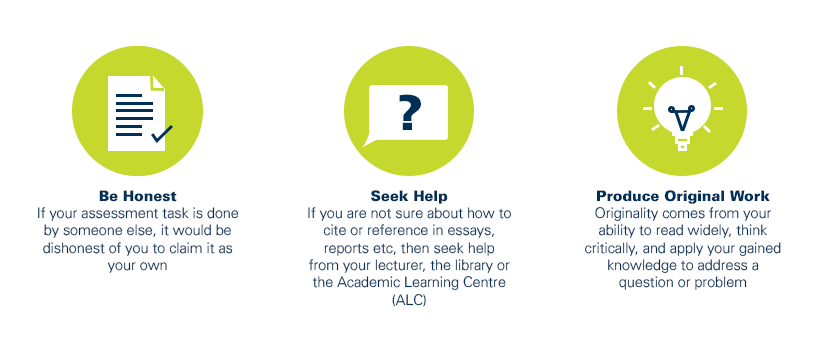
As a CQUniversity student you are expected to act honestly in all aspects of your academic work.
Any assessable work undertaken or submitted for review or assessment must be your own work. Assessable work is any type of work you do to meet the assessment requirements in the unit, including draft work submitted for review and feedback and final work to be assessed.
When you use the ideas, words or data of others in your assessment, you must thoroughly and clearly acknowledge the source of this information by using the correct referencing style for your unit. Using others’ work without proper acknowledgement may be considered a form of intellectual dishonesty.
Participating honestly, respectfully, responsibly, and fairly in your university study ensures the CQUniversity qualification you earn will be valued as a true indication of your individual academic achievement and will continue to receive the respect and recognition it deserves.
As a student, you are responsible for reading and following CQUniversity’s policies, including the Student Academic Integrity Policy and Procedure. This policy sets out CQUniversity’s expectations of you to act with integrity, examples of academic integrity breaches to avoid, the processes used to address alleged breaches of academic integrity, and potential penalties.
What is a breach of academic integrity?
A breach of academic integrity includes but is not limited to plagiarism, self-plagiarism, collusion, cheating, contract cheating, and academic misconduct. The Student Academic Integrity Policy and Procedure defines what these terms mean and gives examples.
Why is academic integrity important?
A breach of academic integrity may result in one or more penalties, including suspension or even expulsion from the University. It can also have negative implications for student visas and future enrolment at CQUniversity or elsewhere. Students who engage in contract cheating also risk being blackmailed by contract cheating services.
Where can I get assistance?
For academic advice and guidance, the Academic Learning Centre (ALC) can support you in becoming confident in completing assessments with integrity and of high standard.
What can you do to act with integrity?