Overview
In this unit, you will develop professional skills, knowledge, and competencies to successfully facilitate groups. You will learn how to plan, deliver, and evaluate group programs suitable for adults. You will learn ethical and inclusive approaches to group facilitation. These foundational skills in group facilitation will support the creation of well-structured group environments which foster adult learning.
Details
Pre-requisites or Co-requisites
There are no requisites for this unit.
Important note: Students enrolled in a subsequent unit who failed their pre-requisite unit, should drop the subsequent unit before the census date or within 10 working days of Fail grade notification. Students who do not drop the unit in this timeframe cannot later drop the unit without academic and financial liability. See details in the Assessment Policy and Procedure (Higher Education Coursework).
Offerings For Term 1 - 2026
Attendance Requirements
All on-campus students are expected to attend scheduled classes - in some units, these classes are identified as a mandatory (pass/fail) component and attendance is compulsory. International students, on a student visa, must maintain a full time study load and meet both attendance and academic progress requirements in each study period (satisfactory attendance for International students is defined as maintaining at least an 80% attendance record).
Recommended Student Time Commitment
Each 6-credit Postgraduate unit at CQUniversity requires an overall time commitment of an average of 12.5 hours of study per week, making a total of 150 hours for the unit.
Class Timetable
Assessment Overview
Assessment Grading
This is a graded unit: your overall grade will be calculated from the marks or grades for each assessment task, based on the relative weightings shown in the table above. You must obtain an overall mark for the unit of at least 50%, or an overall grade of 'pass' in order to pass the unit. If any 'pass/fail' tasks are shown in the table above they must also be completed successfully ('pass' grade). You must also meet any minimum mark requirements specified for a particular assessment task, as detailed in the 'assessment task' section (note that in some instances, the minimum mark for a task may be greater than 50%). Consult the University's Grades and Results Policy for more details of interim results and final grades.
All University policies are available on the CQUniversity Policy site.
You may wish to view these policies:
- Grades and Results Policy
- Assessment Policy and Procedure (Higher Education Coursework)
- Review of Grade Procedure
- Student Academic Integrity Policy and Procedure
- Academic Progression Policy and Procedure
- Student Refund and Credit Balance Policy and Procedure
- Complaints Policy and Procedure
- Information and Communications Technology Acceptable Use Policy and Procedure
This list is not an exhaustive list of all University policies. The full list of University policies are available on the CQUniversity Policy site.
Feedback, Recommendations and Responses
Every unit is reviewed for enhancement each year. At the most recent review, the following staff and student feedback items were identified and recommendations were made.
Feedback from SUTE responses.
Some students faced difficulties in finding a group to complete Assessment 2 with.
The Unit Coordinator and teaching team will investigate alternative strategies for allocating students to groups.
Feedback from SUTE responses.
Some students requested clearer guidance on how to reduce the one-hour facilitation plan (Assessment 1) into a 20-minute recording for Assessment 2.
The Unit Coordinator will add additional learning materials to aid students in condensing facilitation programs around time limits.
Feedback from SUTE responses.
Students found the previous example assessments a useful guide to apply to their own work.
The teaching team will continue to provide students with previous assessments as examples.
Feedback from SUTE responses.
Videos in learning materials were useful.
The teaching team will continue to source video learning materials to include in the unit's content.
- Design a group program
- Deliver a group program
- Evaluate group program design and delivery.
Alignment of Assessment Tasks to Learning Outcomes
| Assessment Tasks | Learning Outcomes | ||
|---|---|---|---|
| 1 | 2 | 3 | |
| 1 - Written Assessment - 40% | |||
| 2 - Practical Assessment - 40% | |||
| 3 - Reflective Practice Assignment - 20% | |||
Alignment of Graduate Attributes to Learning Outcomes
| Graduate Attributes | Learning Outcomes | ||
|---|---|---|---|
| 1 | 2 | 3 | |
| 1 - Knowledge | |||
| 2 - Communication | |||
| 3 - Cognitive, technical and creative skills | |||
| 4 - Research | |||
| 5 - Self-management | |||
| 6 - Ethical and Professional Responsibility | |||
| 7 - Leadership | |||
| 8 - First Nations Knowledges | |||
| 9 - Aboriginal and Torres Strait Islander Cultures | |||
Alignment of Assessment Tasks to Graduate Attributes
| Assessment Tasks | Graduate Attributes | ||||||||
|---|---|---|---|---|---|---|---|---|---|
| 1 | 2 | 3 | 4 | 5 | 6 | 7 | 8 | 9 | |
| 1 - Written Assessment - 40% | |||||||||
| 2 - Practical Assessment - 40% | |||||||||
| 3 - Reflective Practice Assignment - 20% | |||||||||
Textbooks
There are no required textbooks.
IT Resources
- CQUniversity Student Email
- Internet
- Unit Website (Moodle)
All submissions for this unit must use the referencing style: American Psychological Association 7th Edition (APA 7th edition)
For further information, see the Assessment Tasks.
s.irwin@cqu.edu.au
Week 1
Begin Date: 09 Mar 2026Module/Topic
Introduction to group facilitation
Chapter
Please see selected readings and activities on Moodle
Events and Submissions/Topic
Week 2
Begin Date: 16 Mar 2026Module/Topic
Planning a group for adult learners
Chapter
Please see selected readings and activities on Moodle
Events and Submissions/Topic
Workshop 1: Planning a group for adult learners
Thursday 19 March 6:30-8pm AEST
Week 3
Begin Date: 23 Mar 2026Module/Topic
Beginning a group
Chapter
Please see selected readings and activities on Moodle
Events and Submissions/Topic
Week 4
Begin Date: 30 Mar 2026Module/Topic
Ending a group
Chapter
Please see selected readings and activities on Moodle
Events and Submissions/Topic
Workshop 2: Running a group
Thursday 3 April 6:30-8pm AEST
Week 5
Begin Date: 06 Apr 2026Module/Topic
Principles of adult learning
Chapter
Please see selected readings and activities on Moodle
Events and Submissions/Topic
Drop-in session:
Wednesday 8 April 2026 9:30-10:30am AEST
Week 6
Begin Date: 13 Apr 2026Module/Topic
Creating a supportive group climate
Chapter
Please see selected readings and activities on Moodle
Events and Submissions/Topic
Assessment 1:
Wednesday 15 April 5:00pm AEST
Writing a group facilitation program Due: Week 6 Wednesday (15 Apr 2026) 5:00 pm AEST
Vacation Week
Begin Date: 20 Apr 2026Module/Topic
No classes or materials this week
Chapter
Events and Submissions/Topic
Week 7
Begin Date: 27 Apr 2026Module/Topic
Group facilitation in online environments
Chapter
Please see selected readings and activities on Moodle
Events and Submissions/Topic
Week 8
Begin Date: 04 May 2026Module/Topic
Group facilitation and diversity
Chapter
Please see selected readings and activities on Moodle
Events and Submissions/Topic
Drop-in session:
Wednesday 6 May 9:30-10:30am AEST
Week 9
Begin Date: 11 May 2026Module/Topic
Values and ethics in group facilitation
Chapter
Please see selected readings and activities on Moodle
Events and Submissions/Topic
Assessment 2:
Wednesday 13 May 5:00pm AEST
Facilitating a group Due: Week 9 Wednesday (13 May 2026) 5:00 pm AEST
Week 10
Begin Date: 18 May 2026Module/Topic
Challenges in group facilitation
Chapter
Please see selected readings and activities on Moodle
Events and Submissions/Topic
Workshop 3: Challenges in group facilitation
Thursday 21 May 6:30-8pm AEST
Week 11
Begin Date: 25 May 2026Module/Topic
Group facilitation and reflective practice
Chapter
Please see selected readings and activities on Moodle
Events and Submissions/Topic
Week 12
Begin Date: 01 Jun 2026Module/Topic
Review and revision
Chapter
Please see selected readings and activities on Moodle
Events and Submissions/Topic
Assessment 3:
Friday 5 June 5:00pm AEST
Reflecting on group facilitation practice Due: Week 12 Wednesday (3 June 2026) 5:00 pm AEST
Exam Week
Begin Date: 08 Jun 2026Module/Topic
There are no examinations for this unit
Chapter
Events and Submissions/Topic
Vacation/Exam Week
Begin Date: 15 Jun 2026Module/Topic
Chapter
Events and Submissions/Topic
1 Written Assessment
For this assessment you will write a group facilitation program for adults. This program will include:
- A 15-to-20-minute positive psychology activity
- Key elements demonstrating successful group facilitation (introduction, icebreaker, ending)
The full group program with activity and key elements will run for 60 minutes (1 hour).
Your program will be written as though another facilitator will run your program and will need facilitation directions. You will write facilitation directions to instruct the facilitator on what they will need to do and say to successfully facilitate the program.
The group facilitation plan will demonstrate skills and knowledge in optimal learning environments for an adult learner, leveraging group dynamics, and applying goal setting and motivation theory and skills. Workshops and Moodle content will help you develop this knowledge.
Your group facilitation program will include:
- The name of your group session and a brief statement of its purpose
- Brief outline of who the group is targeting as participants (age, circumstances, number of people)
- Facilities: room/online environment, media, required resources
- Three (3) program Learning Outcomes which meet the best practice criteria for these
- Directions to your facilitator for:
- Preparing for the group (i.e., what do they need to have ready in order to run the group well)
- Introducing themselves and the program and Acknowledging Country
- Running an icebreaker which
- meets the criteria for effective icebreakers (see the ‘Checklist for a good icebreaker’ on Moodle)
- enhances one of the ten positive emotions identified by Barbara Fredrickson
- Offering psychoeducation on the topic which is evidence-based yet translated into accessible language in a compelling narrative
- Running an activity which meets all four criteria for the definition for a positive psychology activity (see your Moodle workbook ‘Positive Psychology Activities’) and is appropriate for your intended audience
- Ending the session:
- An exercise to check one Learning Outcome is met
- An exercise to consolidate and transfer learning using effective goal-setting and motivation strategies
- Accurate and realistic timings for each element in the program
- A reference list citing the evidence-base of the positive psychology activity you are planning to deliver
- You will also develop and submit an evaluation form for your participants to complete which gathers information that you can use to reflect on your practice.
Word count
There is no specific word-count for the group facilitation guide, but for usability by the group facilitator you should aim for between 3 to 5 pages maximum.
Similarly, there is no specific word-count for the participant evaluation form. For usability for the participant, you should aim for two pages maximum.
We will be undertaking an exercise in the first workshop using existing group facilitation programs. The exercise and the examples will give you a good idea of how much information you need to provide and how to set it out well.
What to submit:
- The group facilitation program.
- A list of references in APA style for the positive psychology activity you are planning to deliver.
- A participant evaluation form.
Level of GenAI use allowed:
Level 3: AI may be used to help complete the task, including idea generation, drafting, feedback and refinement. Students should critically evaluate and modify the AI suggested outputs, demonstrating their understanding. You may use AI to assist with specific tasks such as drafting text, refining and evaluating your work. You must critically evaluate and modify any AI-generated content you use
Please refer to the unit Moodle site for further details on permissible uses of Generative-AI tools for this assessment task.
Week 6 Wednesday (15 Apr 2026) 5:00 pm AEST
Week 7 Wednesday (29 Apr 2026)
Assessment feedback will be provided within 2 weeks of submission.
The work will be assessed on:
- Effectiveness of program for delivering positive psychology skills to adults in a group environment. Elements of the program which will be evaluated for their effectiveness are:
- Learning Outcomes - realistic, accurate, experiential, clear
- Icebreaker - meets effective icebreaker checklist, enhances positive emotions, innovation
- Psychoeducation - accurate evidence, use of narrative and storytelling
- Positive Psychology Activity - meets the criteria for these and is appropriate to the intended audience
- Ending - quality of evaluation of one Learning Outcome and transfer of learning applying goal-setting theory
- Quality of facilitation directions - clarity and useability
- Usability and quality of participant feedback evaluation form.
- Design a group program
- Evaluate group program design and delivery.
- Communication
- Cognitive, technical and creative skills
- Research
2 Practical Assessment
For this assessment, you will deliver part of the group facilitation program (the psychoeducation and the positive psychology activity) you developed for Assessment 1. You will deliver this online to a group of students enrolled in this unit. You will also use the participant feedback form developed in Assessment 1 to gather feedback from your session.
Zoom and recordings
These sessions will be run online using Zoom at a time that suits all the members of your group. Groups will be assigned by the Unit Coordinator early in the term.
Length
The session length is a minimum of 15 minutes and a maximum of 20 minutes. Appropriate timing is included in your marking rubric as a marking criteria.
What to submit:
- An unedited recording of the group facilitation session which clearly shows you, the other participants and your slides at all times.
- The completed feedback forms from your participants.
Level of GenAI use allowed:
Level 1: The assessment is completed entirely without AI assistance in a controlled environment, ensuring that students rely solely on their existing knowledge, understanding, and skills. You must not use AI at any point during the assessment. You must demonstrate your core skills and knowledge.
Please refer to the unit Moodle site for further details on permissible uses of Generative-AI tools for this assessment task.
Week 9 Wednesday (13 May 2026) 5:00 pm AEST
Week 11 Wednesday (27 May 2026)
Assessment feedback will be returned 2 weeks from the date of assessment submission.
The work will be assessed on:
- Preparation and delivery using Zoom (professional background, quiet environment, appropriate volume, positioning of self on screen for optimum visibility)
- Delivery of psychoeducation and positive psychology activity (translation of research into accessible lay terms, skilful use of research to support experiential learning, use of storytelling and visuals)
- Quality of verbal and non-verbal communication throughout demonstrating inclusivity, empathy, focus and flexibility with challenges
- Timely and clear guidance of the activity
- Use of PowerPoint slides (clarity, supports visual learning style)
- Design a group program
- Deliver a group program
- Communication
- Cognitive, technical and creative skills
- Ethical and Professional Responsibility
3 Reflective Practice Assignment
For this assessment you will reflect on the process of planning and running a group. Your reflection will include three (3) sections:
- One aspect of the group facilitation that you felt went particularly well
- One aspect of the group facilitation that you felt did not go to plan/was challenging/unexpected (this could include a reflection on how well the group functioned in meeting diverse needs)
- How you will address the challenging element in future group facilitation, through changing your practice and developing new skills.
In sections 1 and 2 you will include:
- What you observed to support your reflection that an element worked/didn’t work as well as hoped, and
- An analysis of why an element worked/didn’t work so well.
For section 3, based on your reflection, you will consider:
- How might you run this group differently in future?
- What specific goal/s will you set for yourself?
- What specific skills do you need to set these goals?
Word count
Each section should be 350-400 words in length, for a total of 1050 to 1200 words. The maximum word count is 1,200 words. Meeting the word count is included as a part of the marking criteria in your marking rubric on Moodle. See the Psychology Word Count Information document on Moodle for a rationale for using this type of word limit restriction.
What to submit:
- Your personal reflection on group facilitation covering the three sections as outlined above.
Level of GenAI use allowed:
Level 2: AI may be used for pre-task activities such as brainstorming, outlining and initial research. This level focuses on the effective use of AI for planning, synthesis and ideation, but assessments should emphasise the ability to develop and refine these ideas independently. You may use AI for planning, idea development and research. Your final submission should show how you have developed and refined these ideas.
Please refer to the unit Moodle site for further details on permissible uses of Generative-AI tools for this assessment task.
Week 12 Wednesday (3 June 2026) 5:00 pm AEST
Vacation/Exam Week Wednesday (17 June 2026)
Assessment feedback will be returned 2 weeks from the date of assessment submission.
The work will be assessed on:
- The depth, quality and balance of critical insight in reflecting on the group, including skilful and accurate use of feedback from observation and evaluation forms
- The development of a clear, achievable and relevant goal and future steps for improvement
- Quality of literacy and written communication including purpose, integration, and persuasion in the structure and word use, including adherence to word limit
- Deliver a group program
- Evaluate group program design and delivery.
- Communication
- Research
- Ethical and Professional Responsibility
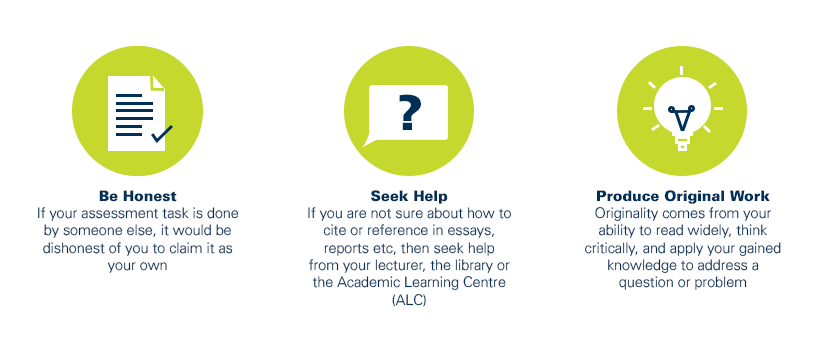
As a CQUniversity student you are expected to act honestly in all aspects of your academic work.
Any assessable work undertaken or submitted for review or assessment must be your own work. Assessable work is any type of work you do to meet the assessment requirements in the unit, including draft work submitted for review and feedback and final work to be assessed.
When you use the ideas, words or data of others in your assessment, you must thoroughly and clearly acknowledge the source of this information by using the correct referencing style for your unit. Using others’ work without proper acknowledgement may be considered a form of intellectual dishonesty.
Participating honestly, respectfully, responsibly, and fairly in your university study ensures the CQUniversity qualification you earn will be valued as a true indication of your individual academic achievement and will continue to receive the respect and recognition it deserves.
As a student, you are responsible for reading and following CQUniversity’s policies, including the Student Academic Integrity Policy and Procedure. This policy sets out CQUniversity’s expectations of you to act with integrity, examples of academic integrity breaches to avoid, the processes used to address alleged breaches of academic integrity, and potential penalties.
What is a breach of academic integrity?
A breach of academic integrity includes but is not limited to plagiarism, self-plagiarism, collusion, cheating, contract cheating, and academic misconduct. The Student Academic Integrity Policy and Procedure defines what these terms mean and gives examples.
Why is academic integrity important?
A breach of academic integrity may result in one or more penalties, including suspension or even expulsion from the University. It can also have negative implications for student visas and future enrolment at CQUniversity or elsewhere. Students who engage in contract cheating also risk being blackmailed by contract cheating services.
Where can I get assistance?
For academic advice and guidance, the Academic Learning Centre (ALC) can support you in becoming confident in completing assessments with integrity and of high standard.
What can you do to act with integrity?