Overview
The discipline of psychology has a long history of using research and theory to provide explanations for the complexities of human behaviour. Yet, we live in a world that is rapidly changing – environmentally, socially, politically, and technologically. In this unit, you will learn how psychology is responding to contemporary challenges, particularly when it comes to diverse and vulnerable groups in our society. You will be exposed to critical and emerging issues in the study of psychology. Drawing on a scientist-practitioner approach, you will examine how psychological theory and research can be applied to the identification and evaluation of solutions to these challenges.
Details
Pre-requisites or Co-requisites
Students must be enrolled in CC42 Bachelor of Psychological Science (Honours)
Important note: Students enrolled in a subsequent unit who failed their pre-requisite unit, should drop the subsequent unit before the census date or within 10 working days of Fail grade notification. Students who do not drop the unit in this timeframe cannot later drop the unit without academic and financial liability. See details in the Assessment Policy and Procedure (Higher Education Coursework).
Offerings For Term 2 - 2026
Attendance Requirements
All on-campus students are expected to attend scheduled classes - in some units, these classes are identified as a mandatory (pass/fail) component and attendance is compulsory. International students, on a student visa, must maintain a full time study load and meet both attendance and academic progress requirements in each study period (satisfactory attendance for International students is defined as maintaining at least an 80% attendance record).
Recommended Student Time Commitment
Each 6-credit Undergraduate unit at CQUniversity requires an overall time commitment of an average of 12.5 hours of study per week, making a total of 150 hours for the unit.
Class Timetable
Assessment Overview
Assessment Grading
This is a graded unit: your overall grade will be calculated from the marks or grades for each assessment task, based on the relative weightings shown in the table above. You must obtain an overall mark for the unit of at least 50%, or an overall grade of 'pass' in order to pass the unit. If any 'pass/fail' tasks are shown in the table above they must also be completed successfully ('pass' grade). You must also meet any minimum mark requirements specified for a particular assessment task, as detailed in the 'assessment task' section (note that in some instances, the minimum mark for a task may be greater than 50%). Consult the University's Grades and Results Policy for more details of interim results and final grades.
All University policies are available on the CQUniversity Policy site.
You may wish to view these policies:
- Grades and Results Policy
- Assessment Policy and Procedure (Higher Education Coursework)
- Review of Grade Procedure
- Student Academic Integrity Policy and Procedure
- Academic Progression Policy and Procedure
- Student Refund and Credit Balance Policy and Procedure
- Complaints Policy and Procedure
- Information and Communications Technology Acceptable Use Policy and Procedure
This list is not an exhaustive list of all University policies. The full list of University policies are available on the CQUniversity Policy site.
Feedback, Recommendations and Responses
Every unit is reviewed for enhancement each year. At the most recent review, the following staff and student feedback items were identified and recommendations were made.
Feedback from SUTE
Some students perceived the unit as not directly relevant to their future role as psychologists.
In tutorials make the connection between the practical application of psychological knowledge to societal issues and students’ potential future professional roles more explicit.
Feedback from SUTE
Guest lectures were enjoyable and engaging.
Continue to incorporate guest lectures from engaging and knowledgeable researchers and presenters.
Feedback from SUTE
Practical application of psychological knowledge was valuable.
Continue to examine how psychological knowledge can be effectively applied to real‑life contemporary issues.
- Critically analyse how psychological theory and research has been applied to understand contemporary issues and challenges of human behaviour
- Apply an evidence-based psychological solution to a contemporary societal or global issue or challenge
- Effectively communicate to academic and non-academic audiences how psychological theory and research can be used to understand and provide solutions for contemporary societal or global issues
Learning outcomes fulfil the level 2 pre-professional core competencies required by the updated Australian Psychology Accreditation Council (APAC) guidelines. The learning outcomes also meet the study criteria as specified by the Psychology Board of Australia (PsyBA) and as appropriate for study at level 8 as stated by the Australian Qualifications Framework (AQF).
Alignment of Assessment Tasks to Learning Outcomes
| Assessment Tasks | Learning Outcomes | ||
|---|---|---|---|
| 1 | 2 | 3 | |
| 1 - Written Assessment - 50% | |||
| 2 - Presentation - 50% | |||
Alignment of Graduate Attributes to Learning Outcomes
| Graduate Attributes | Learning Outcomes | ||
|---|---|---|---|
| 1 | 2 | 3 | |
| 1 - Communication | |||
| 2 - Problem Solving | |||
| 3 - Critical Thinking | |||
| 4 - Information Literacy | |||
| 5 - Team Work | |||
| 6 - Information Technology Competence | |||
| 7 - Cross Cultural Competence | |||
| 8 - Ethical practice | |||
| 9 - Social Innovation | |||
| 10 - First Nations Knowledges | |||
| 11 - Aboriginal and Torres Strait Islander Cultures | |||
Textbooks
There are no required textbooks.
IT Resources
- CQUniversity Student Email
- Internet
- Unit Website (Moodle)
- Zoom and a web camera
All submissions for this unit must use the referencing style: American Psychological Association 7th Edition (APA 7th edition)
For further information, see the Assessment Tasks.
m.sprajcer@cqu.edu.au
What does it mean to apply psychology?
Begin Date: 13 Jul 2026Module/Topic
What does it mean to apply psychology?
Chapter
Relevant resources are available on Moodle.
Events and Submissions/Topic
What types of problems can be solved with psychology?
Begin Date: 20 Jul 2026Module/Topic
What types of problems can be solved with psychology?
Chapter
Relevant resources are available on Moodle.
Events and Submissions/Topic
Written communication in funding applications
Begin Date: 27 Jul 2026Module/Topic
Written communication in funding applications
Chapter
Relevant resources are available on Moodle.
Events and Submissions/Topic
Designing applied research and projects
Begin Date: 03 Aug 2026Module/Topic
Designing applied research and projects
Chapter
Relevant resources are available on Moodle.
Events and Submissions/Topic
Feasibility in applied psychology projects
Begin Date: 10 Aug 2026Module/Topic
Feasibility in applied psychology projects
Chapter
Relevant resources are available on Moodle.
Events and Submissions/Topic
The funding landscape in Australia
Begin Date: 17 Aug 2026Module/Topic
The funding landscape in Australia
Chapter
Relevant resources are available on Moodle.
Events and Submissions/Topic
Vacation Week
Begin Date: 24 Aug 2026Module/Topic
Take some time out.
Chapter
Events and Submissions/Topic
Communicating applied psychological work to stakeholders and decision makers
Begin Date: 31 Aug 2026Module/Topic
Communicating applied psychological work to stakeholders and decision‑makers
Chapter
Relevant resources are available on Moodle.
Events and Submissions/Topic
Applying psychology in First Nations contexts: roles, limits, and responsibility
Begin Date: 07 Sep 2026Module/Topic
Applying psychology in First Nations contexts: roles, limits, and responsibility
Chapter
Relevant resources are available on Moodle.
Events and Submissions/Topic
Researching with others: collaboration and co production
Begin Date: 14 Sep 2026Module/Topic
Researching with others: collaboration and co‑production
Chapter
Relevant resources are available on Moodle.
Events and Submissions/Topic
Digital technologies in an applied psychology and research context
Begin Date: 21 Sep 2026Module/Topic
Digital technologies in an applied psychology and research context
Chapter
Relevant resources are available on Moodle.
Events and Submissions/Topic
Assessment 2: Funding Pitch Presentation due (depending on your allocated time slot)
Translating and disseminating your project findings
Begin Date: 28 Sep 2026Module/Topic
Translating and disseminating your project findings
Chapter
Relevant resources are available on Moodle.
Events and Submissions/Topic
Assessment 2: Funding Pitch Presentation due (depending on your allocated time slot)
Career paths in psychology beyond clinical work
Begin Date: 05 Oct 2026Module/Topic
Career paths in psychology beyond clinical work
Chapter
Relevant resources are available on Moodle.
Events and Submissions/Topic
Assessment 2: Funding Pitch Presentation due (depending on your allocated time slot)
Exam Week
Begin Date: 12 Oct 2026Module/Topic
Chapter
Events and Submissions/Topic
Vacation/Exam Week
Begin Date: 19 Oct 2026Module/Topic
Chapter
Events and Submissions/Topic
1 Written Assessment
The discipline of psychology has a long history of using research and theory to provide explanations for the complexities of human behaviour. Yet, we live in a world that is rapidly changing – environmentally, socially, politically, and technologically. This assessment will allow you to apply your knowledge of how psychology is responding to contemporary challenges, particularly when it comes to diverse and vulnerable groups in our society. Drawing on a scientist-practitioner approach, you will demonstrate how psychological theory and research can be applied to the identification and evaluation of solutions to these challenges.
A call for applications for funding has been put out by philanthropic group, The Community Benefit Foundation. The Foundation is offering a grant of $50,000 for a community organisation to create and implement an intervention that will address an issue related to a contemporary challenge experienced by a group in our society. The issue and intervention must be informed by the academic evidence base.
A grant application template has been provided (plus an annotated template with guiding comments). You are to complete this grant application as an employee of a grassroots community organisation. You will need to ‘make up’ this organisation and its mission/purpose. E.g., Thorne Thought is a not-for-profit dedicated to improving the mental health and wellbeing of young people in South Australia. You are free to choose the contemporary challenge (and potentially a diverse/vulnerable group) that you address. It is a good idea to peruse the topics that we are covering in this unit and consider using one of these or the resources provided. Your grassroots organisation will have one year to complete this project so please ensure your timeline is appropriate.
Assessment word count: Each section has a maximum word or page limit (specified on the grant application template). There is no minimum word count.
Overall Weighting: 50%
More detailed information is available in the Assessment tab of Moodle.
Level of GenAI use allowed:
Level 2: AI PLANNING. You may use Al for planning, idea development, and research. Your final submission should show how you have developed and refined these ideas.
The 72-hour grace period is permitted for this assessment.
Week 6 Friday (21 Aug 2026) 11:59 pm AEST
Please submit to Moodle
Week 9 Monday (14 Sept 2026)
Marks and individual feedback will be available on Moodle
- Identification of the problem and background information (how common is this problem? Any historical reasons for this problem, etc.) (worth 25%)
- Proposed intervention (and explanations/evidence from the literature for why you think that this would work) (worth 25%)
- Evaluation plan (how are you going to demonstrate to the funder that this intervention has worked) (worth 20%)
- Budget and timeline (worth 10%)
- Ethical considerations (worth 10%)
- Written style (worth 10%)
A more detailed marking rubric will be available on Moodle.
- Critically analyse how psychological theory and research has been applied to understand contemporary issues and challenges of human behaviour
- Apply an evidence-based psychological solution to a contemporary societal or global issue or challenge
- Effectively communicate to academic and non-academic audiences how psychological theory and research can be used to understand and provide solutions for contemporary societal or global issues
2 Presentation
The discipline of psychology has a long history of using research and theory to provide explanations for the complexities of human behaviour. Yet, we live in a world that is rapidly changing – environmentally, socially, politically, and technologically. This assessment will allow you to apply your knowledge of how psychology is responding to contemporary challenges, particularly when it comes to diverse and vulnerable groups in our society. Drawing on a scientist-practitioner approach, you will demonstrate how psychological theory and research can be applied to the identification and evaluation of solutions to these challenges.
This assessment will take the form of an oral presentation to a panel of potential funders. In this task, you will assume the role of a psychology-trained advisor supporting an existing First Nations–led initiative or program. Rather than designing a new intervention, you will critically engage with an initiative that is already being led by First Nations communities or organisations and develop a persuasive case for funding support.
The presentation will be 10 minutes duration (+/- 10%), with approximately 5 minutes of questions afterwards.
Overall Weighting: 50%
This will take the form of an oral presentation to a panel of potential funders. In this task, you will assume the role of a psychology-trained advisor supporting an existing First Nations–led initiative or program. Rather than designing a new intervention, you will critically engage with an initiative that is already being led by First Nations communities or organisations and develop a persuasive case for funding support. You will need to present information clearly and persuasively to a non-academic audience.
Immediately after your presentation (within 1 hour), you must submit the following to Moodle:
- Your PowerPoint (or equivalent) slides
- A brief written summary of the issue and funding case (250 words +/- 10%)
- A one-page proposed budget
- A reference list
- A statement as to how you have used GenAI
PLEASE NOTE: This must be a different funding pitch and topic to the one you addressed for Assessment 1 (Grant Application).
Level of GenAI use allowed:
Level 2: AI PLANNING. You may use Al for planning, idea development, and research. Your final submission should show how you have developed and refined these ideas.
The 72-hour grace period does not apply to this assessment.
Individual presentations will be scheduled in Weeks 10, 11, and 12
Marks and individual feedback will be provided to students once all presentations have been viewed and marked, end of Week 14.
- Identification of the problem and Background info (20%)
- Analysis of the initiative and its psychological foundations (20%)
- Evaluation plan (20%)
- Budget and timeline (10%)
- Ethical and cultural safety considerations (15%)
- Spoken style, summary, budget, and reference list (15%)
A more detailed marking rubric will be available on Moodle.
- Critically analyse how psychological theory and research has been applied to understand contemporary issues and challenges of human behaviour
- Apply an evidence-based psychological solution to a contemporary societal or global issue or challenge
- Effectively communicate to academic and non-academic audiences how psychological theory and research can be used to understand and provide solutions for contemporary societal or global issues
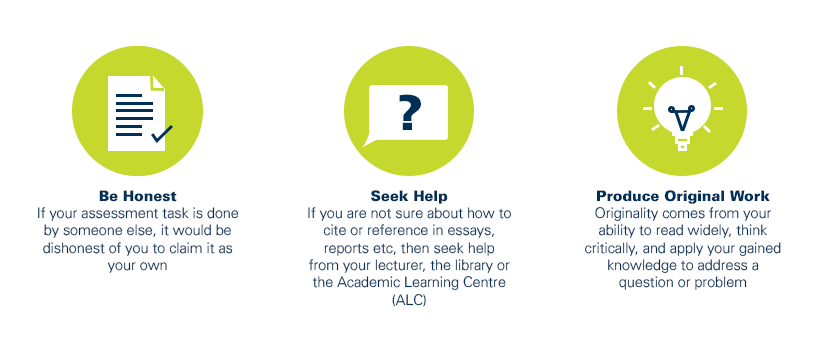
As a CQUniversity student you are expected to act honestly in all aspects of your academic work.
Any assessable work undertaken or submitted for review or assessment must be your own work. Assessable work is any type of work you do to meet the assessment requirements in the unit, including draft work submitted for review and feedback and final work to be assessed.
When you use the ideas, words or data of others in your assessment, you must thoroughly and clearly acknowledge the source of this information by using the correct referencing style for your unit. Using others’ work without proper acknowledgement may be considered a form of intellectual dishonesty.
Participating honestly, respectfully, responsibly, and fairly in your university study ensures the CQUniversity qualification you earn will be valued as a true indication of your individual academic achievement and will continue to receive the respect and recognition it deserves.
As a student, you are responsible for reading and following CQUniversity’s policies, including the Student Academic Integrity Policy and Procedure. This policy sets out CQUniversity’s expectations of you to act with integrity, examples of academic integrity breaches to avoid, the processes used to address alleged breaches of academic integrity, and potential penalties.
What is a breach of academic integrity?
A breach of academic integrity includes but is not limited to plagiarism, self-plagiarism, collusion, cheating, contract cheating, and academic misconduct. The Student Academic Integrity Policy and Procedure defines what these terms mean and gives examples.
Why is academic integrity important?
A breach of academic integrity may result in one or more penalties, including suspension or even expulsion from the University. It can also have negative implications for student visas and future enrolment at CQUniversity or elsewhere. Students who engage in contract cheating also risk being blackmailed by contract cheating services.
Where can I get assistance?
For academic advice and guidance, the Academic Learning Centre (ALC) can support you in becoming confident in completing assessments with integrity and of high standard.
What can you do to act with integrity?