Overview
In this unit, you will develop practical skills and deepen your knowledge relevant to the professional practice of psychology as an evidence‑based scientific discipline. You will explore how social, historical, professional, and cultural factors shape psychology, and apply this understanding across diverse contexts. You will learn the appropriate administration, scoring, and interpretation of psychological tests under supervision, supported by psychometric theory applied to varied assessment scenarios. Ethical and legal frameworks are emphasised, with a focus on cultural responsiveness, professional communication, and interviewing skills, alongside awareness of how psychological practices may be misused. By completing this unit, you will demonstrate competencies in interpersonal communication, psychological assessment, and intervention strategies consistent with APAC pre‑professional practice requirements.
Details
Pre-requisites or Co-requisites
Students must be enrolled in CC42 Bachelor of Psychological Science (Honours).
Important note: Students enrolled in a subsequent unit who failed their pre-requisite unit, should drop the subsequent unit before the census date or within 10 working days of Fail grade notification. Students who do not drop the unit in this timeframe cannot later drop the unit without academic and financial liability. See details in the Assessment Policy and Procedure (Higher Education Coursework).
Offerings For Term 1 - 2026
Attendance Requirements
All on-campus students are expected to attend scheduled classes - in some units, these classes are identified as a mandatory (pass/fail) component and attendance is compulsory. International students, on a student visa, must maintain a full time study load and meet both attendance and academic progress requirements in each study period (satisfactory attendance for International students is defined as maintaining at least an 80% attendance record).
Recommended Student Time Commitment
Each 6-credit Undergraduate unit at CQUniversity requires an overall time commitment of an average of 12.5 hours of study per week, making a total of 150 hours for the unit.
Class Timetable
Assessment Overview
Assessment Grading
This is a graded unit: your overall grade will be calculated from the marks or grades for each assessment task, based on the relative weightings shown in the table above. You must obtain an overall mark for the unit of at least 50%, or an overall grade of 'pass' in order to pass the unit. If any 'pass/fail' tasks are shown in the table above they must also be completed successfully ('pass' grade). You must also meet any minimum mark requirements specified for a particular assessment task, as detailed in the 'assessment task' section (note that in some instances, the minimum mark for a task may be greater than 50%). Consult the University's Grades and Results Policy for more details of interim results and final grades.
All University policies are available on the CQUniversity Policy site.
You may wish to view these policies:
- Grades and Results Policy
- Assessment Policy and Procedure (Higher Education Coursework)
- Review of Grade Procedure
- Student Academic Integrity Policy and Procedure
- Academic Progression Policy and Procedure
- Student Refund and Credit Balance Policy and Procedure
- Complaints Policy and Procedure
- Information and Communications Technology Acceptable Use Policy and Procedure
This list is not an exhaustive list of all University policies. The full list of University policies are available on the CQUniversity Policy site.
Feedback, Recommendations and Responses
Every unit is reviewed for enhancement each year. At the most recent review, the following staff and student feedback items were identified and recommendations were made.
Feedback from Student Feedback
Students enjoyed the practical application of assessments and felt that they could apply the skills learnt moving forward.
Continue to integrate applied learning components within assessments.
Feedback from Student Feedback
Students found the learning resources helpful for completing the assessments, and they felt that the assessment information sheets and marking criteria were clear and easy to follow.
Continue to maintain the quality of learning resources and clear assessment documentation.
Feedback from Student Feedback
Students found that the online quiz (Assessment 3) was not an appropriate assessment of their learning outcomes. The feedback provided suggested that given the amount of content covered in the unit, the duration of the online quiz (35 minutes) may not be sufficient to assess everything required.
A review of Assessment 3 (quiz) is recommended and adjustments made to the design (i.e., the amount of content covered, number of questions, and time frame).
- Apply appropriate professional judgment in the selection, administration, scoring, and interpretation of psychological assessments, ensuring ethical practice across diverse client populations.
- Critically evaluate the selection, adaptation, and implementation of psychological interventions within diverse cultural and community contexts, ensuring ethical awareness and responsiveness to individual and systemic factors.
- Apply appropriate interpersonal and interviewing skills in contexts relevant to psychological practice, integrating professional communication and ethical sensitivity.
- Evaluate and integrate cultural responsiveness in the administration and interpretation of psychometric assessments and the delivery of psychological interventions.
Learning outcomes have been designed to address the level 2 pre-professional competencies required by the Australian Psychology Accreditation Council (APAC). The learning outcomes also meet the study criteria as specified by the Psychology Board of Australia (PsyBA) and are appropriate for study at Australian Qualifications Framework (AQF) level 8. The specific 2025 APAC competencies which will be met by students completing this unit are:
2.1. Demonstrate appropriate interpersonal communication, interview skills and cultural responsiveness in situations appropriate to psychological practice and research.
2.2. Demonstrate basic understanding of culturally safe assessment strategies in situations appropriate to psychological practice.
2.3. Explain how basic psychological intervention strategies can be applied across a range of contexts.
Alignment of Assessment Tasks to Learning Outcomes
| Assessment Tasks | Learning Outcomes | |||
|---|---|---|---|---|
| 1 | 2 | 3 | 4 | |
| 1 - Practical Assessment - 30% | ||||
| 2 - Practical Assessment - 30% | ||||
| 3 - Critical Review - 40% | ||||
Alignment of Graduate Attributes to Learning Outcomes
| Graduate Attributes | Learning Outcomes | |||
|---|---|---|---|---|
| 1 | 2 | 3 | 4 | |
| 1 - Communication | ||||
| 2 - Problem Solving | ||||
| 3 - Critical Thinking | ||||
| 4 - Information Literacy | ||||
| 5 - Team Work | ||||
| 6 - Information Technology Competence | ||||
| 7 - Cross Cultural Competence | ||||
| 8 - Ethical practice | ||||
| 9 - Social Innovation | ||||
| 10 - First Nations Knowledges | ||||
| 11 - Aboriginal and Torres Strait Islander Cultures | ||||
Textbooks
There are no required textbooks.
IT Resources
- CQUniversity Student Email
- Internet
- Unit Website (Moodle)
- Zoom account (Free)
- Zoom access: microphone and webcam required
All submissions for this unit must use the referencing style: American Psychological Association 7th Edition (APA 7th edition)
For further information, see the Assessment Tasks.
a.m.carter@cqu.edu.au
Week 1
Begin Date: 09 Mar 2026Module/Topic
Introduction to PSYC14053
Chapter
Please refer to Moodle for assigned readings
Events and Submissions/Topic
Guest appearance by the Head of Course - Honours and ALC representative.
Live lecture: Friday 1pm - 3pm (AEST)
Week 2
Begin Date: 16 Mar 2026Module/Topic
The intake assessment: Interpersonal and interviewing skills.
Chapter
Please refer to Moodle for assigned readings
Events and Submissions/Topic
Live lecture: Friday 1pm - 3pm (AEST)
Week 3
Begin Date: 23 Mar 2026Module/Topic
Hypothesis testing: Administration of psychometric assessments and scoring.
Chapter
Please refer to Moodle for assigned readings
Events and Submissions/Topic
Residential School.
Live Lecture: 9 am - 5 pm (AEST) on Tuesday, March 24th.
*Amendments to the usual lecture time have been made due to Residential School.
Week 4
Begin Date: 30 Mar 2026Module/Topic
Reflexivity and providing feedback
Chapter
Please refer to Moodle for assigned readings
Events and Submissions/Topic
Live lecture: Thursday 2pm - 4pm (AEST)
*Amendments to the usual lecture time have been made due to the public holiday.
Week 5
Begin Date: 06 Apr 2026Module/Topic
Cultural considerations in psychometric testing and clinical interviews.
Chapter
Please refer to Moodle for assigned readings
Events and Submissions/Topic
Live lecture: Friday 1pm - 3pm (AEST)
Practical Assessment 1 Due: Week 5 Tuesday (7 Apr 2026) 5:00 pm AEST
Week 6
Begin Date: 13 Apr 2026Module/Topic
Writing reports & providing written feedback. The ethical (mis)use of assessments.
Chapter
Please refer to Moodle for assigned readings
Events and Submissions/Topic
Live lecture: Friday 1pm - 3pm (AEST)
Vacation Week
Begin Date: 20 Apr 2026Module/Topic
No class due to Vacation Week
Chapter
Events and Submissions/Topic
Vacation Week
Week 7
Begin Date: 27 Apr 2026Module/Topic
Using psychometric assessment to support psychotherapy
Chapter
Please refer to Moodle for assigned readings
Events and Submissions/Topic
Live lecture: Friday 1pm - 3pm (AEST)
Week 8
Begin Date: 04 May 2026Module/Topic
Psychological interventions and applications: Part 1
Chapter
Please refer to Moodle for assigned readings
Events and Submissions/Topic
Live lecture: Friday 1pm - 3pm (AEST)
Practical Assessment 2 Due: Week 8 Tuesday (5 May 2026) 5:00 pm AEST
Week 9
Begin Date: 11 May 2026Module/Topic
Psychological interventions and applications: Part 2
Chapter
Please refer to Moodle for assigned readings
Events and Submissions/Topic
Live lecture: Friday 1pm - 3pm (AEST)
Week 10
Begin Date: 18 May 2026Module/Topic
Working in a Multi-disciplinary Team
Chapter
Please refer to Moodle for assigned readings
Events and Submissions/Topic
Live lecture: Friday 1pm - 3pm (AEST)
Week 11
Begin Date: 25 May 2026Module/Topic
Diversity of practice
Chapter
Please refer to Moodle for assigned readings
Events and Submissions/Topic
Guest lecturer
Live lecture: Friday 1pm - 3pm (AEST)
Week 12
Begin Date: 01 Jun 2026Module/Topic
Where to now? Review of content and reflection
Chapter
Events and Submissions/Topic
Live lecture: Friday 1pm - 3pm (AEST)
Critical Review Due: Week 12 Tuesday (2 June 2026) 5:00 pm AEST
Exam Week
Begin Date: 08 Jun 2026Module/Topic
Chapter
Events and Submissions/Topic
Vacation/Exam Week
Begin Date: 15 Jun 2026Module/Topic
Chapter
Events and Submissions/Topic
1 Practical Assessment
Aim: The aim of this assessment piece is for you to competently apply relevant interview and interpersonal skills, as well as demonstrate ethical practice and cultural sensitivity in a situation that mirrors psychological practice.
Specifications: This assessment piece involves two parts. Part A is 10% and Part B is 20%:
Part A) You will record a 45 - 60 minute stimulated therapy session. This session will be set up as an initial intake session (i.e., the first session you have with your client/patient). This video will also be submitted for Assessment 2 Part A. The allocated time of the recorded video includes the aspects of the video that will be assessed in Assessment 2. For Assessment 1 Part A, you will completely apply relevant interpersonal and interviewing skills:
-
- Welcome your client/patient,
- Discuss consent, confidentiality and the limits to confidentiality,
- Gain an understanding of presenting factors and;
- Use the presenting factors (symptoms) and clinical observations to inform the professional judgment in the administration and selection of psychological assessments.
This requires you to take on the role of the therapist in the video recording that you submit. You will also take on the role of the client for your allocated classmate. This is an individually marked assessment piece. The classmate that you will be working with for this assessment will be allocated to you in Week 3 at Residential School. Assessment 2 Part A will assess the additional components that are included in the video (assessment administration, scoring and interpretation).
Part B) After the video is recorded, you will complete the PSYC14053 Assessment 1 Practical Assessment Part B Reflection Document. This document asks you to reflect on specific components of the video relating to your micro-skills, a rationale of your professional judgement in the test you chose to use, as well as cultural sensitivity considerations. You will complete this document based on the first part of the video (the second part of the video relates to Assessment 2).
The video must be submitted through Echo360.
Format: one (1) 45 – 60 minute video recording and PSYC14053 Assessment 1 Practical Assessment Part B Reflection Document. Word limit is 400wds for the first section and 600wds for the second section. The 10%+/- can be applied to each section. References are not included in the word count. A title page is required for written assessments. The title page must follow APA 7 guidelines.
AI use: The ethical use of Gen AI is approved at Level 2. AI Planning: You may use AI for planning, idea development and research. Your final submission should show how you have developed and refined these ideas. For this assessment however caution is advised due to level of critical evaluation and analysis required for this assessment. Gen AI may not provide the level of accuracy, detail and understanding required for student success. A copy of the ALC guidelines for the ethical use of AI can be found on Moodle under the Assessment Tile. Gen AI is not approved for the video component (Part A) of this assessment (i.e., you personally must be seen demonstrating the skills assessed, not an avatar).
Week 5 Tuesday (7 Apr 2026) 5:00 pm AEST
This assessment is due at 17:00 (AEST) in Week 5 on Tuesday the 7th of April. In accordance with CQUniversity’s Assessment Policy and Procedure (Higher Education Coursework), a 72-hour grace period applies to this assessment. This grace period is exactly 72-hours (3 days) following the original assessment due date and time. No extension is required for submissions during this grace period. If the assessment is submitted after the 72-hour grace period without an approved extension, a 5% penalty of the total available marks for the assessment will be deducted for each full or part calendar day that the assessment task is overdue after 72-hour grace period has lapsed.
Vacation Week Friday (24 Apr 2026)
The expected return date may vary based on the moderation process and the date that the assessment piece is submitted. Assessments that are submitted after the due date might not be able to be returned at the same time as the assessments submitted on the official due date. Assessments will only be returned during CQUniversity’s operating hours of Monday – Friday 9am – 5pm (AEST).
Part A
- Ethical practice (2 mark)
- Interpersonal skills (4 mark)
- Session structure. (2 mark)
- Video submission follows CQUniversity guidelines (submitted via Echo 360). (2 mark)
Total mark out of 10
Part B
- High-level analysis (2 marks)
- Critical thinking (2 marks)
- Well-developed judgement (1 mark)
- Cultural sensitivity (2 marks)
- Written communication (2 marks)
- Synthesis (5 marks)
- Empirical evidence (4 marks)
- APA 7 (2 marks)
Total mark out of 10
- Apply appropriate professional judgment in the selection, administration, scoring, and interpretation of psychological assessments, ensuring ethical practice across diverse client populations.
- Apply appropriate interpersonal and interviewing skills in contexts relevant to psychological practice, integrating professional communication and ethical sensitivity.
2 Practical Assessment
Aim: The aim of this assessment piece is for you to demonstrate your competence in the administration, scoring and interpretation of a commonly used psychometric test. You will show your understanding of cultural sensitivity as it relates to the ethical practice and professional judgement of appropriate test selection by providing a commentary on the test selected.
Specifications: This assessment piece involves two parts. Part A is 10% and Part B is 20%:
Part A) You will record a 45 - 60 minute stimulated therapy session of an initial intake session with a simulated client (this will be the same video that you submitted for Assessment 1 Part A). In the second part of this video, you will administer an appropriate psychometric assessment, based on your professional judgement of the presenting factors. You will score the assessment, interpret the results and provide feedback. For this assessment, Assessment 2 Part A, in addition to competently applying relevant interpersonal and interviewing skills you will completely demonstrate:
-
- Professional judgement in the selection of a test,
- Administration of the selected test,
- Scoring of the selected test,
- Interpretation of the selected test, and;
- Feedback of the test.
The session will conclude with the client identifying the area that they would like to focus on in future appointments and their therapeutic goal.
Part B) In this section you will complete the PSYC14053 Assessment 2 Practical Assessment Part B Reflection Document. This document asks you to provide a written commentary on the assessment components of the video, a rationale of your professional judgement in the test you chose to use as well as cultural sensitivity considerations.
Format: The same video submitted for Assessment 1 will be used for Assessment 2. There is no need to submit an additional video. Word limit is 1,800wds in total with 10%+/- applied to the total word count if required. References are not included in the word count. A title page is required for written assessments. The title page must follow APA 7 guidelines.
AI use: The ethical use of Gen AI is approved at Level 2. AI Planning: You may use AI for planning, idea development and research. Your final submission should show how you have developed and refined these ideas. For this assessment however caution is advised due to level of critical evaluation and analysis required for this assessment. Gen AI may not provide the level of accuracy, detail and understanding required for student success. A copy of the ALC guidelines for the ethical use of AI can be found on Moodle under the Assessment Tile. Gen AI is not approved for the video component (Part A) of this assessment (i.e., you personally must be seen demonstrating the skills assessed, not an avatar).
Week 8 Tuesday (5 May 2026) 5:00 pm AEST
Part A of this assessment is due at the same time as Assessment 1 Part A (17:00 (AEST) in Week 5 on Tuesday the 7th of April). Part B of this assessment is due at 17:00 (AEST) in Week 8 on Tuesday the 5th of May. In accordance with CQUniversity’s Assessment Policy and Procedure (Higher Education Coursework), a 72-hour grace period applies to this assessment. This grace period is exactly 72-hours (3 days) following the original assessment due date and time. No extension is required for submissions during this grace period. If the assessment is submitted after the 72-hour grace period without an approved extension, a 5% penalty of the total available marks for the assessment will be deducted for each full or part calendar day that the assessment task is overdue after 72-hour grace period has lapsed.
Week 10 Friday (22 May 2026)
The expected return date may vary based on the moderation process and the date that the assessment piece is submitted. Assessments that are submitted after the official due date might not be able to be returned at the same time as the assessments submitted on the official due date. Assessments will only be returned during CQUniversity’s operating hours of Monday – Friday 9am – 5pm (AEST).
You will be assessed in the following domains:
Part A:
- Accurate selection of psychometric assessment. (1 mark)
- Administration of the psychometric assessment. (1 mark)
- Accuracy in scoring of the psychometric assessment. (1 mark)
- The interpretation of the results is accurate. (1 mark)
- Feedback is provided that is useful and accurate (communicated in a way that the client can understand; relates to the symptoms). (2 mark)
- Informed consent is obtained regarding the administration of the psychometric assessment and use of the psychometric assessment. (1 mark)
- Understanding of the results and confirmation of the results is confirmed with the client. (1 mark)
- Therapy goal is established. (1 mark)
- The session is completed in a way that enhances the therapeutic rapport. (1 mark)
Total mark out of 10
Part B:
- The accurate interpretation of psychometric assessments in practice. (2 marks)
- In-depth knowledge. (2 marks)
- Advanced knowledge in culturally sensitive practice. (3 marks)
- Written communication. (2 marks)
- Synthesis of information. (5 marks)
- Use of empirical evidence. (4 marks)
- APA-7. (2 marks)
Total mark out of 20
A more detailed marking rubric is provided on Moodle under the Assessment Tile (PSYC14053 Assessment 2 Practical Assessment Part A Simulated Video. Marking Criteria. 2026 & PSYC14053 Assessment 2 Practical Assessment Part B Simulated Therapy Reflection. Marking Criteria. 2026).
- Apply appropriate professional judgment in the selection, administration, scoring, and interpretation of psychological assessments, ensuring ethical practice across diverse client populations.
- Critically evaluate the selection, adaptation, and implementation of psychological interventions within diverse cultural and community contexts, ensuring ethical awareness and responsiveness to individual and systemic factors.
- Apply appropriate interpersonal and interviewing skills in contexts relevant to psychological practice, integrating professional communication and ethical sensitivity.
- Evaluate and integrate cultural responsiveness in the administration and interpretation of psychometric assessments and the delivery of psychological interventions.
3 Critical Review
Aim: The aim of this assessment piece is for you to critically evaluate the selection, adaption, and implementation of psychological interventions within diverse context and communities. You will do this by selecting a psychological intervention and critically evaluate its application, with particular attention to its appropriateness within a cultural context.
Specifications: This assessment piece is a critical review style assessment. Word limit is 1,800wds in total with 10%+/- applied to the total word count if required. References are not included in the word count. A title page is required for written assessments. The title page must follow APA 7 guidelines.
AI use: The ethical use of Gen AI is approved at Level 2. AI Planning: You may use AI for planning, idea development and research. Your final submission should show how you have developed and refined these ideas. For this assessment however caution is advised due to level of critical evaluation and analysis required for this assessment. Gen AI may not provide the level of accuracy, detail and understanding required for student success. A copy of the ALC guidelines for the ethical use of AI can be found on Moodle under the Assessment Tile.
Week 12 Tuesday (2 June 2026) 5:00 pm AEST
This assessment is due at 17:00 (AEST) in Week 12 on Tuesday the 2nd of June. In accordance with CQUniversity’s Assessment Policy and Procedure (Higher Education Coursework), a 72-hour grace period applies to this assessment. This grace period is exactly 72-hours (3 days) following the original assessment due date and time. No extension is required for submissions during this grace period. If the assessment is submitted after the 72-hour grace period without an approved extension, a 5% penalty of the total available marks for the assessment will be deducted for each full or part calendar day that the assessment task is overdue after 72-hour grace period has lapsed.
Vacation/Exam Week Friday (19 June 2026)
The expected return date may vary based on the moderation process and the date that the assessment piece was submitted. Assessments that were submitted after the official due date might not be able to be returned at the same time as the assessments submitted on the official due date. Assessments will only be returned during CQUniversity’s operating hours of Monday – Friday 9am – 5pm (AEST).
You will be assessed in the following domains:
- Intervention selection & rationale (4 marks)
- Evidence base & critical appraisal (8 marks)
- Cultural context analysis & community understanding (6 marks)
- Adaption of intervention for cultural responsiveness (8 marks)
- Implementation plan in diverse settings (6 marks)
- Critical evaluation of psychometrics & outcome (cultural sensitivity) (4 marks)
- Written communication (2 marks)
- APA 7 (2 marks)
Total mark out of 40
A more detailed marking rubric is provided on Moodle under the Assessment Tile (PSYC14053 Assessment 3 Critical Review. Marking Criteria. 2026).
- Critically evaluate the selection, adaptation, and implementation of psychological interventions within diverse cultural and community contexts, ensuring ethical awareness and responsiveness to individual and systemic factors.
- Evaluate and integrate cultural responsiveness in the administration and interpretation of psychometric assessments and the delivery of psychological interventions.
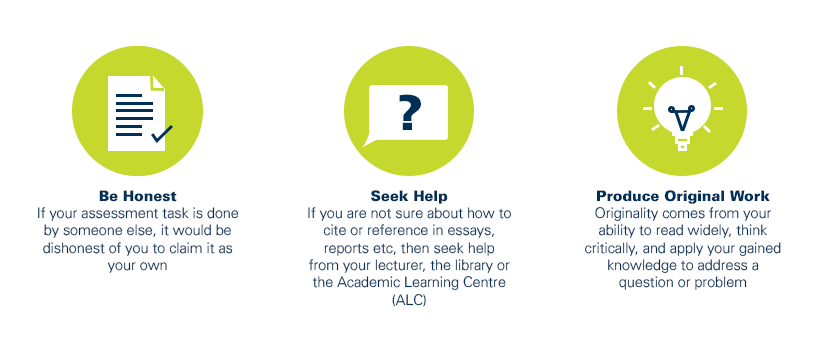
As a CQUniversity student you are expected to act honestly in all aspects of your academic work.
Any assessable work undertaken or submitted for review or assessment must be your own work. Assessable work is any type of work you do to meet the assessment requirements in the unit, including draft work submitted for review and feedback and final work to be assessed.
When you use the ideas, words or data of others in your assessment, you must thoroughly and clearly acknowledge the source of this information by using the correct referencing style for your unit. Using others’ work without proper acknowledgement may be considered a form of intellectual dishonesty.
Participating honestly, respectfully, responsibly, and fairly in your university study ensures the CQUniversity qualification you earn will be valued as a true indication of your individual academic achievement and will continue to receive the respect and recognition it deserves.
As a student, you are responsible for reading and following CQUniversity’s policies, including the Student Academic Integrity Policy and Procedure. This policy sets out CQUniversity’s expectations of you to act with integrity, examples of academic integrity breaches to avoid, the processes used to address alleged breaches of academic integrity, and potential penalties.
What is a breach of academic integrity?
A breach of academic integrity includes but is not limited to plagiarism, self-plagiarism, collusion, cheating, contract cheating, and academic misconduct. The Student Academic Integrity Policy and Procedure defines what these terms mean and gives examples.
Why is academic integrity important?
A breach of academic integrity may result in one or more penalties, including suspension or even expulsion from the University. It can also have negative implications for student visas and future enrolment at CQUniversity or elsewhere. Students who engage in contract cheating also risk being blackmailed by contract cheating services.
Where can I get assistance?
For academic advice and guidance, the Academic Learning Centre (ALC) can support you in becoming confident in completing assessments with integrity and of high standard.
What can you do to act with integrity?