Overview
Forensic Psychology is the area of behavioural science concerned with psychology and the law. In this unit, you will discuss how psychological principles and practices can be applied to topics such as personality and crime, suspect interviewing, pathways to offending, courtroom practices and witness reliability, understanding criminal behaviour, mental competency, and justice. You will also discuss general psychological principles as they relate to the legal systems within Australia and other countries as well as specific case studies.
Details
Pre-requisites or Co-requisites
96 credit points
Important note: Students enrolled in a subsequent unit who failed their pre-requisite unit, should drop the subsequent unit before the census date or within 10 working days of Fail grade notification. Students who do not drop the unit in this timeframe cannot later drop the unit without academic and financial liability. See details in the Assessment Policy and Procedure (Higher Education Coursework).
Offerings For Term 2 - 2026
Attendance Requirements
All on-campus students are expected to attend scheduled classes - in some units, these classes are identified as a mandatory (pass/fail) component and attendance is compulsory. International students, on a student visa, must maintain a full time study load and meet both attendance and academic progress requirements in each study period (satisfactory attendance for International students is defined as maintaining at least an 80% attendance record).
Recommended Student Time Commitment
Each 6-credit Undergraduate unit at CQUniversity requires an overall time commitment of an average of 12.5 hours of study per week, making a total of 150 hours for the unit.
Class Timetable
Assessment Overview
Assessment Grading
This is a graded unit: your overall grade will be calculated from the marks or grades for each assessment task, based on the relative weightings shown in the table above. You must obtain an overall mark for the unit of at least 50%, or an overall grade of 'pass' in order to pass the unit. If any 'pass/fail' tasks are shown in the table above they must also be completed successfully ('pass' grade). You must also meet any minimum mark requirements specified for a particular assessment task, as detailed in the 'assessment task' section (note that in some instances, the minimum mark for a task may be greater than 50%). Consult the University's Grades and Results Policy for more details of interim results and final grades.
All University policies are available on the CQUniversity Policy site.
You may wish to view these policies:
- Grades and Results Policy
- Assessment Policy and Procedure (Higher Education Coursework)
- Review of Grade Procedure
- Student Academic Integrity Policy and Procedure
- Academic Progression Policy and Procedure
- Student Refund and Credit Balance Policy and Procedure
- Complaints Policy and Procedure
- Information and Communications Technology Acceptable Use Policy and Procedure
This list is not an exhaustive list of all University policies. The full list of University policies are available on the CQUniversity Policy site.
Feedback, Recommendations and Responses
Every unit is reviewed for enhancement each year. At the most recent review, the following staff and student feedback items were identified and recommendations were made.
Feedback from Student Unit and Teaching Evaluation report.
It was suggested that the marking criteria could be more comprehensive and provide clearer guidance for students.
Develop a more detailed marking criteria document and enhance the grading rubric to include more specific descriptors for each performance level.
Feedback from Student feedback during lectures.
Students enjoyed discussions about real-world cases that are presented during weekly lectures, and some stated this helped them understand the content.
Continue to present real-world cases during weekly lectures.
- Describe the similarities and differences underlying the disciplines of psychology and the legal system.
- Describe and critically evaluate how psychological theory and research have been applied to the legal system.
- Identify challenges that psychologists face when interacting with the legal system.
This unit addresses Foundational Competencies as specified by the Australian Psychology Accreditation Council (APAC) and specifically aligns to:
1.1 Comprehend and apply a broad and coherent body of knowledge of psychology, with depth of understanding of underlying principles, theories and concepts in the discipline, using a scientific approach, including the following topics: (i) the history and philosophy underpinning the science of psychology and the social, cultural, historical and professional influences on the practice of psychology; (ii) individual differences in capacity, behaviour and personality; (iv) psychological disorders and evidence-based interventions; (xi) culturally appropriate psychological assessment and measurement.
1.2 Apply knowledge and skills of psychology in a manner that is reflexive, culturally appropriate and sensitive to the diversity of individuals
1.3 Analyse and critique theory and research in the discipline of psychology and communicate these in written and oral formats.
1.4 Demonstrate an understanding of appropriate values and ethics in psychology.
1.5 Demonstrate interpersonal skills and teamwork.
1.6 Demonstrate self-directed pursuit of scholarly inquiry in psychology.
Alignment of Assessment Tasks to Learning Outcomes
| Assessment Tasks | Learning Outcomes | ||
|---|---|---|---|
| 1 | 2 | 3 | |
| 1 - Group Work - 40% | |||
| 2 - Written Assessment - 45% | |||
| 3 - Online Test - 15% | |||
Alignment of Graduate Attributes to Learning Outcomes
| Graduate Attributes | Learning Outcomes | ||
|---|---|---|---|
| 1 | 2 | 3 | |
| 1 - Communication | |||
| 2 - Problem Solving | |||
| 3 - Critical Thinking | |||
| 4 - Information Literacy | |||
| 5 - Team Work | |||
| 6 - Information Technology Competence | |||
| 7 - Cross Cultural Competence | |||
| 8 - Ethical practice | |||
| 9 - Social Innovation | |||
| 10 - First Nations Knowledges | |||
| 11 - Aboriginal and Torres Strait Islander Cultures | |||
Textbooks
Forensic Psychology: Crime, Justice, Law, Interventions
- 4th Edition (2024)
- Authors: Davies, Graham M., Beech, Anthony, R., and Colloff, Melissa, F. (Eds).
- John Wiley & Sons Ltd
- ISBN: E-Book ISBN: 978-1-119-89202-1 Print ISBN: 978-1-119-89200-7
IT Resources
- CQUniversity Student Email
- Internet
- Unit Website (Moodle)
All submissions for this unit must use the referencing style: American Psychological Association 7th Edition (APA 7th edition)
For further information, see the Assessment Tasks.
r.wilcoxson@cqu.edu.au
Week 1
Begin Date: 13 Jul 2026Module/Topic
The Intersection of Psychology and Law
Chapter
Nolan, M., & Goodman-Delahunty, J. (2015). Introduction. In M. Nolan & J. Goodman-Delahunty, Legal psychology in Australia (pp. 1-28). Thomas Reuters.
Events and Submissions/Topic
Week 2
Begin Date: 20 Jul 2026Module/Topic
Risk Assessment
Chapter
Beech, A. R. & Hatcher, R. M. (2024). Risk assessment. In Davies, G. M., Beech, A. R., & Colloff, M. F. (Eds). Forensic psychology: Crime, justice, law, interventions (4th Ed.) (pp. 539 - 568). John Wiley & Sons Ltd.
Events and Submissions/Topic
Week 3
Begin Date: 27 Jul 2026Module/Topic
Offender Profiling
Chapter
Woodhams, J., Tonkin, M., & Burrell, A. (2024). Offender profiling and crime linkage. In G. M. Davies, A. R. Beech, & M. F. Colloff (Eds). Forensic psychology: Crime, justice, law, interventions (4th Ed.) (pp. 313 - 336). John Wiley & Sons Ltd.
Events and Submissions/Topic
Week 4
Begin Date: 03 Aug 2026Module/Topic
Psychopathy
Chapter
Gillespie, S. M., & Garofalo, C. (2024). Psychopathy. In G. M. Davies, A. R. Beech, & M. F. Colloff (Eds). Forensic psychology: Crime, justice, law, interventions (4th Ed.) (pp. 78 - 102). John Wiley & Sons.
Events and Submissions/Topic
Week 5
Begin Date: 10 Aug 2026Module/Topic
Mental Disorder and Law
Chapter
Nolan, M., & Goodman-Delahunty, J. (2015). Mental disorder and law. In M. Nolan & J. Goodman-Delahunty, Legal psychology in Australia (pp. 155 - 219). Thomas Reuters.
Events and Submissions/Topic
Week 6
Begin Date: 17 Aug 2026Module/Topic
Personality Disorders & Offending
Chapter
McMurran, M., & Howard, R. (2019). Personality disorders and offending. In The Wiley international handbook of correctional psychology (pp. 265 - 281). John Wiley & Sons.
Events and Submissions/Topic
Vacation Week
Begin Date: 24 Aug 2026Module/Topic
Vacation week
Chapter
Events and Submissions/Topic
Week 7
Begin Date: 31 Aug 2026Module/Topic
Interviewing and Interrogation
Chapter
Nolan, M., & Goodman-Delahunty, J. (2015). Investigative interviewing. In M. Nolan & J. Goodman-Delahunty, Legal psychology in Australia (pp. 89 - 126). Thompson Reuters.
Events and Submissions/Topic
Week 8
Begin Date: 07 Sep 2026Module/Topic
Eyewitness Evidence
Chapter
Colloff, M. F., Lowe, H. D., & Bennett, T. C. (2024). Eyewitness evidence. In G. M. Davies, A. R. Beech, & M. F. Colloff (Eds). Forensic psychology: Crime, justice, law, interventions (4th Ed.) (pp. 199 - 232). John Wiley & Sons.
Events and Submissions/Topic
Week 9
Begin Date: 14 Sep 2026Module/Topic
Interpersonal Violence and Stalking
Chapter
Dixon, L., & Bowen, E. (2024). Interpersonal violence and stalking. In Davies, G. M., Beech, A. R., and Colloff, M. F. (Eds). Forensic psychology: Crime, justice, law, interventions (4th Ed.) (pp. 337 - 366). John Wiley & Sons.
Events and Submissions/Topic
Week 10
Begin Date: 21 Sep 2026Module/Topic
Children in the Criminal Justice System
Chapter
Nolan, M., & Goodman-Delahunty, J. (2015). Children in the criminal justice system. In M. Nolan & J. Goodman-Delahunty, Legal psychology in Australia, (pp. 221 - 261). Thomas Reuters.
Events and Submissions/Topic
Week 11
Begin Date: 28 Sep 2026Module/Topic
Detecting Deception
Chapter
Granhag, P. A. & Hartwig, M. (2024). Detecting deception. In G. M. Davies, A. R. Beech, & M. F. Colloff (Eds). Forensic psychology: Crime, justice, law, interventions (4th Ed.) (pp. 289 - 312). John Wiley & Sons.
Events and Submissions/Topic
Week 12
Begin Date: 05 Oct 2026Module/Topic
Miscarriages of Justice
Chapter
Dioso-Villa, R., Julian, R., Kebbell, M., Weathered, L. & Westera, N. (2016). Investigation to exoneration: A systemic review of wrongful conviction in Australia. Current Issues in Criminal Justice, 28(2), 157-172.
Stratton, G., & Sigamoney, A. (2020). Why we don’t see race: How Australia has overlooked race as an influence on miscarriages of justice. Race and Justice, 1- 16.
Events and Submissions/Topic
Exam Week
Begin Date: 12 Oct 2026Module/Topic
Chapter
Events and Submissions/Topic
Vacation/Exam Week
Begin Date: 19 Oct 2026Module/Topic
Chapter
Events and Submissions/Topic
1 Group Work
This task involves self-selection to a four-person study group, completing a memorandum of understanding with your group members to determine how the group will operate and the responsibility of members, performing a risk assessment of a real individual (to be advised) and providing a rationale for your chosen risk level and a personal reflection on your contribution to the group.
Group members will collaboratively assess the individual's likelihood of future violence/risk to the community using an HCR-20-V3 form. The HCR-20-V3 is a widely used tool among forensic practitioners to assess the level of risk posed by individuals in the forensic system (Douglas et al., 2013), for example, before a parole hearing. An explanation of the HCR-20-V3 will be provided in week 2. Group members will also provide a brief individual rationale for the level of risk that was decided upon, including their personal opinions on the risk level (i.e., did you agree or disagree with the group on all the chosen items and why?). The group members will also provide a self-reflection on their adherence to the MOU and how their contribution to the group likely affected the group process.
The group will present the HCR form, MOU, rationale, personal opinions on risk level and personal reflection as a pre-recorded Zoom presentation not exceeding 50 minutes which is broken down by: approximately 10 minutes to present the HCR form and approximately 5 - 7 minutes of talk time for each member to provide their rationale and personal opinions on the risk level and their reflection on their adherence to the MOU and how their contribution to the group likely affected the group process.
Level of GenAI use allowed:
Level 2 AI Planning: You may use AI for planning, idea development, and research. Your final submission should show how you have developed and refined these ideas.
Week 7 Monday (31 Aug 2026) 11:45 pm AEST
Submit via Moodle
Week 9 Monday (14 Sept 2026)
Online feedback
The assignment will be marked according to the following:
Total 100 Marks comprised of:
Group Mark (80 marks)
HCR-20-V3 form and MOU (weighting 10%)
The HCR and or the MOU form is not submitted (0 – 2)
The forms are submitted, but the items scored on the HCR form do not relate to the individual and are not defensible (2 – 4.5)
The forms are submitted, and many of the items scored on the HCR form relate well to the individual and are defensible (5 – 6)
The forms are submitted, and most of the items scored on the HCR form relate very well to the individual and are defensible (6.5 – 7)
The forms are submitted, and all items scored on the HCR form relate entirely to the individual and are defensible (7.5 - 8)
The forms are submitted, all items scored on the HCR form relate entirely to the individual, and all items that can be defended via peer-reviewed research (incorporated in the readings) are included (8.5 - 10)
Coherence and quality of the group rationale provided (weighting 30%)
The group shows potential for formulating a coherent rationale, but some relevant factors are missing from the argument (0 - 4.5)
The group mostly provides a coherent rationale that includes some relevant factors (5 - 6)
The group provides a coherent rationale that includes many relevant factors (6.5 - 7)
The group provides a coherent rationale that includes pertinent factors (7.5 - 8)
The group provides a professional standard, coherent, concise yet detailed rationale that includes pertinent factors (8.5 - 10)
The clarity and quality of oral communication skills (weighting 10%)
Group members show potential to be effective communicators; oral communication skills could be improved to enhance coherence and clearness of language (0 - 4.5)
Group members mostly speak clearly and coherently (5 - 6)
Group members all speak clearly and coherently (6.5 -7)
Group members all display high-quality communication skills, speaking clearly, coherently and precisely (7.5 - 8)
Group members all display professional-standard communication skills, speaking clearly, coherently, concisely, and precisely (8.5 - 10)
Incorporation of relevant weekly readings into the rationale (weighting 30%)
Zero weekly readings utilised (0)
One weekly reading details incorporated and explained, or more than one incorporated, though how they relate to the rationale is unclear (1 - 4.5)
Two weekly readings details incorporated and explained coherently (5 -6)
Three or more weekly readings details incorporated and explained coherently (6.5 - 7)
Three or more weekly readings details incorporated and explained coherently and meticulously (7.5 - 8)
Three or more weekly readings details incorporated and explained in a professional manner that is clear, concise and meticulous (8.5 - 10)
Individual Mark (20 marks)
Articulation of areas of agreement and disagreement with the group assessment (weighting 10%)
Group member does not articulate well areas of agreement and disagreement with the group (0 - 4.5)
Group member provides adequate (more than three minutes and no more than seven) and coherent information regarding areas of agreement and disagreement with the group (5 - 6)
Group member provides concise and coherent information regarding areas of agreement and disagreement with the group that does not exceed seven minutes (6.5 - 7)
Group member provides concise, coherent, and persuasive arguments regarding areas of agreement and disagreement with the group that does not exceed seven minutes (7.5 - 8)
Group member provides concise, coherent, persuasive, and precise information delivered in a professional style regarding areas of agreement and disagreement with the group that does not exceed seven minutes (8.5 - 10)
Personal reflection on the individual's adherence to the memorandum of understanding and commitment to the group project (weighting 10%)
Group member does not provide, or provides very little information regarding their adherence to the MOU and personal contribution (0 - 4.5)
Group member provides a personal reflection regarding their adherence to the MOU and reflections on their commitment to the group, which includes a focus on their contributions (5 - 6)
Group member provides a personal reflection regarding their adherence to the MOU and reflections on their commitment to the group that focuses primarily on their contributions (6.5 - 7)
Group member provides a personal reflection regarding their adherence to the MOU and reflections on their commitment to the group, which focuses entirely on their contributions, and shows insight into how their behaviour impacted the group and the output (7.5 - 8)
Group member provides a personal reflection regarding their adherence to the MOU and reflections on their commitment to the group, which focuses entirely on their contributions and shows deep insight into how their behaviour impacted the group work and the output (8.5 - 10)
Late submission penalty: - 5% per day
The 72-hour grace period does not apply to this assessment.
- Describe the similarities and differences underlying the disciplines of psychology and the legal system.
- Identify challenges that psychologists face when interacting with the legal system.
2 Written Assessment
This assessment involves evaluating the quality of information provided by generative artificial intelligence (AI) on a forensic psychology topic (the lecturer will provide you with the GenAI report in Week 1) and preparing an essay that presents evidence to support or dispute the accuracy of the AI report. Only peer-reviewed academic articles, a minimum of ten, can be used to prepare the essay. The topic will be provided through Moodle.
The maximum word count is 1200 words.
Level of GenAI use allowed:
Level 1: You must not use AI at any point during the assessment. You must demonstrate your core skills and knowledge.
Week 10 Friday (25 Sept 2026) 11:45 pm AEST
Submit via Moodle
Week 12 Friday (9 Oct 2026)
Return via Moodle
Assessment criteria (100 marks)
The required word count is a maximum of 1200 words (including in-text references but excluding the reference list).
Essay argument and critical analysis (weighting 40%)
The argument is present, improvement could be made with coherence, clarity or relevance (0 - 4.5)
The argument is coherent and clear, but somewhat limited in either its display of a strong understanding of the topic or in its critical analysis (5 - 6)
The argument is coherent, clear and somewhat insightful, demonstrating a strong understanding of the topic. Good critical analysis applied (6.5 - 7)
The argument is coherent, clear and insightful, demonstrating a strong understanding of the topic. Very good critical analysis applied (7.5 - 8)
The argument is exceptionally well-articulated and insightful, demonstrating a deep understanding of the topic. Excellent critical analysis applied (8.5 - 10)
Peer-reviewed evidence (weighting 40%)
No or little peer-reviewed evidence is provided, with non-academic sources mainly utilised (0 - 4.5)
Peer-reviewed evidence is provided and integrated (5 - 6)
Peer-reviewed evidence is well-integrated, forming a clear and coherent argument (6.5 - 7)
Peer-reviewed evidence is well-integrated, forming a precise, persuasive, and cohesive argument (7.5 - 8)
Peer-reviewed evidence is thoroughly and professionally evaluated and integrated to an excellent standard, forming a compelling argument (8.5 - 10)
Essay structure and formatting (weighting 10%)
The essay is structured somewhat well, though some paragraphs do not flow or are not formatted well (0 - 4.5)
The essay structure is logical, and the paragraphs mostly flow and are formatted well (5 - 6)
The essay is well-structured and formatted with paragraphs that flow well (6.5 - 7)
The essay is very well-organised and formatted with paragraphs that flow very well (7.5 - 8)
The essay is professionally organised and formatted with paragraphs that flow seamlessly (8.5 - 10)
Writing style, word count and APA referencing (weighting 10%)
Writing shows promise, but is challenging to follow in most sections, and/or word count is not adhered to and/or APA referencing is mistake-laden (0 - 4.5)
Writing is primarily academic, and APA 7th referencing style is mostly adhered to. Maximum word count adhered to (5 - 6)
Writing is academic and clear, with referencing that contains few errors. Maximum word count adhered to (6.5 - 7)
Writing is academic, concise, and flows very well. Referencing errors, if present, are minor. Clarity is very good. Maximum word count adhered to (7.5 - 8)
Writing is of a professional academic standard, concise, and flows exceptionally well, with no referencing errors. Clarity is excellent. Maximum word count adhered to (8.5 - 10)
Late submission penalty: - 5% per day
- Describe the similarities and differences underlying the disciplines of psychology and the legal system.
- Describe and critically evaluate how psychological theory and research have been applied to the legal system.
- Identify challenges that psychologists face when interacting with the legal system.
3 Online Test
The end-of-term online test will consist of 'long-answer' responses (maximum 300 words) to three questions related to the textbook assigned chapter readings (Forensic Psychology: Crime, justice, law, interventions, 4th Ed.) for the unit. Students will be required to answer all three questions. These responses require a reference from the textbook that includes the page number. Responses to items can be written on Moodle, or if you prefer to write in Word, you can upload an attachment as an alternative. Once you open the test, you will have two hours to complete it.
Level of GenAI use allowed:
Level 1: You must not use AI at any point during the assessment. You must demonstrate your core skills and knowledge.
Week 12 Friday (9 Oct 2026) 11:45 pm AEST
Vacation/Exam Week Friday (23 Oct 2026)
Online grading provided via Moodle
Students will be marked for each of the three short-answer questions that they complete (weighting 15%)
Marks for each question (5% weighting each) will be awarded as follows:
- A response that does not relate to the readings or does not provide a reference to the relevant chapter, or does not include a page number (0 - 4.5)
- A direct or almost direct quote drawn from the readings with a reference to the relevant chapter that includes the page number (5 - 6)
- A paraphrased response drawn from the readings, with a reference to the relevant chapter that includes the page number (6.5 - 7)
- A very well-paraphrased and written response drawn from the readings, with a reference to the relevant chapter that includes the page number (7.5 - 8)
- A professionally paraphrased and written response drawn from the readings, with a reference to the relevant chapter that includes the page number (8.5 - 10)
The 72-hour grace period does not apply to this assessment.
- Describe and critically evaluate how psychological theory and research have been applied to the legal system.
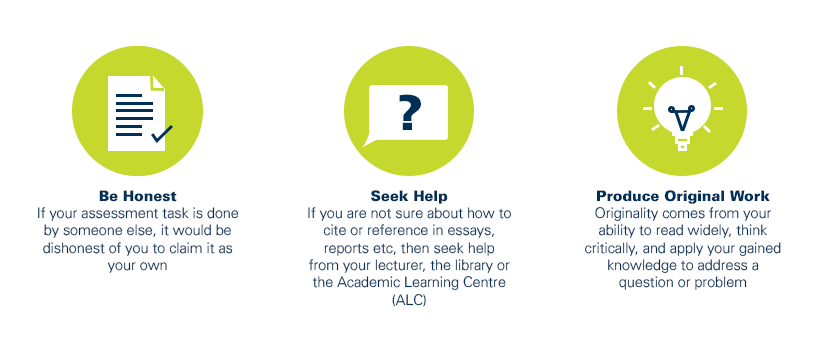
As a CQUniversity student you are expected to act honestly in all aspects of your academic work.
Any assessable work undertaken or submitted for review or assessment must be your own work. Assessable work is any type of work you do to meet the assessment requirements in the unit, including draft work submitted for review and feedback and final work to be assessed.
When you use the ideas, words or data of others in your assessment, you must thoroughly and clearly acknowledge the source of this information by using the correct referencing style for your unit. Using others’ work without proper acknowledgement may be considered a form of intellectual dishonesty.
Participating honestly, respectfully, responsibly, and fairly in your university study ensures the CQUniversity qualification you earn will be valued as a true indication of your individual academic achievement and will continue to receive the respect and recognition it deserves.
As a student, you are responsible for reading and following CQUniversity’s policies, including the Student Academic Integrity Policy and Procedure. This policy sets out CQUniversity’s expectations of you to act with integrity, examples of academic integrity breaches to avoid, the processes used to address alleged breaches of academic integrity, and potential penalties.
What is a breach of academic integrity?
A breach of academic integrity includes but is not limited to plagiarism, self-plagiarism, collusion, cheating, contract cheating, and academic misconduct. The Student Academic Integrity Policy and Procedure defines what these terms mean and gives examples.
Why is academic integrity important?
A breach of academic integrity may result in one or more penalties, including suspension or even expulsion from the University. It can also have negative implications for student visas and future enrolment at CQUniversity or elsewhere. Students who engage in contract cheating also risk being blackmailed by contract cheating services.
Where can I get assistance?
For academic advice and guidance, the Academic Learning Centre (ALC) can support you in becoming confident in completing assessments with integrity and of high standard.
What can you do to act with integrity?