Overview
In this unit you will examine the relationships between cultural contexts and human behaviour. You will gain understanding of the similarities and differences in behaviour as influenced by various cultures, particularly perspectives of First Nations Peoples. You will learn about key cross-cultural theories, common research methods used in cross-cultural psychology and examine how these are relevant in research and applied settings. In this unit you will learn how to apply your psychological knowledge and skills in a manner that is culturally appropriate and sensitive to the diversity of others.
Details
Pre-requisites or Co-requisites
96 credit points in CC43, CF59, CL51, CL55, CM62, CC13, CG85, CG93 or CA10, OR admission to CC10 and completion of PSYC11010.
Important note: Students enrolled in a subsequent unit who failed their pre-requisite unit, should drop the subsequent unit before the census date or within 10 working days of Fail grade notification. Students who do not drop the unit in this timeframe cannot later drop the unit without academic and financial liability. See details in the Assessment Policy and Procedure (Higher Education Coursework).
Offerings For Term 1 - 2026
Attendance Requirements
All on-campus students are expected to attend scheduled classes - in some units, these classes are identified as a mandatory (pass/fail) component and attendance is compulsory. International students, on a student visa, must maintain a full time study load and meet both attendance and academic progress requirements in each study period (satisfactory attendance for International students is defined as maintaining at least an 80% attendance record).
Recommended Student Time Commitment
Each 6-credit Undergraduate unit at CQUniversity requires an overall time commitment of an average of 12.5 hours of study per week, making a total of 150 hours for the unit.
Class Timetable
Assessment Overview
Assessment Grading
This is a graded unit: your overall grade will be calculated from the marks or grades for each assessment task, based on the relative weightings shown in the table above. You must obtain an overall mark for the unit of at least 50%, or an overall grade of 'pass' in order to pass the unit. If any 'pass/fail' tasks are shown in the table above they must also be completed successfully ('pass' grade). You must also meet any minimum mark requirements specified for a particular assessment task, as detailed in the 'assessment task' section (note that in some instances, the minimum mark for a task may be greater than 50%). Consult the University's Grades and Results Policy for more details of interim results and final grades.
All University policies are available on the CQUniversity Policy site.
You may wish to view these policies:
- Grades and Results Policy
- Assessment Policy and Procedure (Higher Education Coursework)
- Review of Grade Procedure
- Student Academic Integrity Policy and Procedure
- Academic Progression Policy and Procedure
- Student Refund and Credit Balance Policy and Procedure
- Complaints Policy and Procedure
- Information and Communications Technology Acceptable Use Policy and Procedure
This list is not an exhaustive list of all University policies. The full list of University policies are available on the CQUniversity Policy site.
Feedback, Recommendations and Responses
Every unit is reviewed for enhancement each year. At the most recent review, the following staff and student feedback items were identified and recommendations were made.
Feedback from Student Unit Evaluation
Clearer marking rubric including examples of successful assignments.
Simplify marking rubrics by including clearer criteria and excluding any requirements that are not taught in the unit (e.g., philosophical stances).
Feedback from Student Unit Evaluation and In Class Feedback
Change the time of assessment due dates to allow students to include feedback from prior assessments into the next.
Review assessment dates so that feedback provided can be implemented by students in their subsequent assessment pieces.
Feedback from Student Unit Evaluation and In Class Feedback
Change the Unit's delivery format.
Replace the weekly 3-hour live sessions with pre-recorded lectures and provide weekly Zoom tutorials.
- Critically apply cross-cultural perspectives to key theories and concepts in psychology.
- Critically evaluate psychological research for appropriate acknowledgement of sociocultural influences and perspectives on diversity and inclusion.
- Apply perspectives of cross-cultural psychology in a manner that is reflexive, culturally appropriate and sensitive to the diversity of individuals.
This unit addresses Foundational Competencies as specified by the Australian Psychology Accreditation Council (APAC). The unit specifically aligns to the following APAC graduate competencies:
1.1 Comprehend and apply a broad and coherent body of knowledge of psychology, with depth of understanding of underlying principles, theories and concepts in the discipline, using a scientific approach, including the following topics: i. the history and philosophy underpinning the science of psychology and the social, cultural, historical and professional influences on the practice of psychology; ii. individual differences in capacity, behaviour and personality; iv. psychological disorders and evidence-based interventions; v. learning and memory; vi. cognition, language and perception; vii. motivation and emotion; viii. neuroscience and the biological bases of behaviour; ix. lifespan developmental psychology; x. social psychology and xii. research methods and statistics.
1.2 Apply knowledge and skills of psychology in a manner that is reflexive, culturally appropriate and sensitive to the diversity of individuals.
1.3 Analyse and critique theory and research in the discipline of psychology and communicate these in written and oral formats.
1.4 Demonstrate an understanding of appropriate values and ethics in psychology.
1.6 Demonstrate self-directed pursuit of scholarly inquiry in psychology.
Alignment of Assessment Tasks to Learning Outcomes
| Assessment Tasks | Learning Outcomes | ||
|---|---|---|---|
| 1 | 2 | 3 | |
| 1 - Portfolio - 40% | |||
| 2 - Written Assessment - 40% | |||
| 3 - Presentation - 20% | |||
Alignment of Graduate Attributes to Learning Outcomes
| Graduate Attributes | Learning Outcomes | ||
|---|---|---|---|
| 1 | 2 | 3 | |
| 1 - Communication | |||
| 2 - Problem Solving | |||
| 3 - Critical Thinking | |||
| 4 - Information Literacy | |||
| 5 - Team Work | |||
| 6 - Information Technology Competence | |||
| 7 - Cross Cultural Competence | |||
| 8 - Ethical practice | |||
| 9 - Social Innovation | |||
| 10 - First Nations Knowledges | |||
| 11 - Aboriginal and Torres Strait Islander Cultures | |||
Textbooks
Cross-cultural psychology: Critical thinking and contemporary applications.
- 8th Edition (2024)
- Authors: Shiraev, E. B., & Levy, D. A.
- Routledge
- New York New York , NY , United States of America
- ISBN: 9781003354567
This textbook is essential for this unit, which justifies the request for the CQUniversity Library to acquire, preferably in a digital format.
IT Resources
- CQUniversity Student Email
- Internet
- Unit Website (Moodle)
All submissions for this unit must use the referencing style: American Psychological Association 7th Edition (APA 7th edition)
For further information, see the Assessment Tasks.
a.filgueirasgoncalves@cqu.edu.au
Week 1
Begin Date: 09 Mar 2026Module/Topic
Critical Cross-Cultural Psychology, Cultural Sensitivity, Awareness and Professional Practice
Chapter
Chapter 1 & 3. Shiraev, E. B., & Levy, D. A. (2020). Cross-cultural psychology: Critical thinking and contemporary applications. Routledge. Available at: Authors' Link
Psychology Board of Australia. (2025). Code of conduct for psychologists. Australian Health Practitioner Regulation Agency. Link for the Code of Conduct.
Psychology Board of Australia. (2025). Understanding Competency 8: Demonstrates a health equity and human rights approach when working with Aboriginal and Torres Strait Islander Peoples, families and communities (Fact sheet). Australian Health Practitioner Regulation Agency. Link for the Psychology Board Fact Sheet.
Events and Submissions/Topic
Week 2
Begin Date: 16 Mar 2026Module/Topic
Indigenous Psychology, Aboriginal and Torres Strait Island People's Cross-Cultural Framework: The Social and Emotional Well-Being (SEWB) framework.
Chapter
Bullen, J., & Flavell, H. (2017). Measuring the ‘gift’: Epistemological and ontological differences between the academy and Indigenous Australia. Higher Education Research & Development, 36(3), 583–596. Link for the article here
Kelly, K., Dudgeon, P., Gee, G., & Glaskin, B. (2009). Living on the edge: Social and emotional wellbeing and risk and protective factors for serious psychological distress among Aboriginal and Torres Strait Islander people (Discussion Paper No. 10). Cooperative Research Centre for Aboriginal Health. Link for the document here
Dudgeon, P., Agung‑Igusti, R., Derry, K., & Gibson, C. (2025). Australian Aboriginal and Torres Strait Islander social and emotional well‑being. American Psychologist, 80(8), 1137–1149. Link to the article
Events and Submissions/Topic
Week 3
Begin Date: 23 Mar 2026Module/Topic
Cross-cultural differences in Perception and Attention
Chapter
Chapter 4. Shiraev, E. B., & Levy, D. A. (2020). Cross-cultural psychology: Critical thinking and contemporary applications. Routledge. Available at: Authors' Link
Freire, M. R., & Pammer, K. (2020). Influence of culture on visual working memory: Evidence of a cultural response bias for remote Australian Indigenous children. Journal of Cultural Cognitive Science, 4, 323–341. https://doi.org/10.1007/s41809-020-00063-4
Events and Submissions/Topic
Week 4
Begin Date: 30 Mar 2026Module/Topic
Cross-cultural dimensions of Intelligence and Psychological Assessment
Chapter
Chapter 5. Shiraev, E. B., & Levy, D. A. (2020). Cross-cultural psychology: Critical thinking and contemporary applications. Routledge. Available at: Authors' Link
Nile, E., & Van Bergen, P. (2015). Not all semantics: Similarities and differences in reminiscing function and content between Indigenous and non‑Indigenous Australians. Memory, 23(1), 83–98. https://doi.org/10.1080/09658211.2014.931973
Dingwall, K. M., & Cairney, S. (2010). Psychological and cognitive assessment of Indigenous Australians. Australian & New Zealand Journal of Psychiatry, 44, 20–30. https://doi.org/10.3109/00048670903393670
Events and Submissions/Topic
Week 5
Begin Date: 06 Apr 2026Module/Topic
Cross-cultural dimensions of Emotions and Emotional Expression
Chapter
Chapter 6. Shiraev, E. B., & Levy, D. A. (2020). Cross-cultural psychology: Critical thinking and contemporary applications. Routledge. Available at: Authors' Link
Meldrum, K., Andersson, E., Sagigi, B., Webb, T., Wapau, C., Quigley, R., Strivens, E., & Russell, S. (2022). How Australian First Nations peoples living in the Torres Strait and Northern Peninsula Area of Australia describe and discuss social and emotional well‑being: A qualitative study protocol. BMJ Open, 12, e067052. https://doi.org/10.1136/bmjopen-2022-067052
Events and Submissions/Topic
Week 6
Begin Date: 13 Apr 2026Module/Topic
Cross-cultural and Indigenous motivations, behaviours and behavioural expressions
Chapter
Chapter 7. Shiraev, E. B., & Levy, D. A. (2020). Cross-cultural psychology: Critical thinking and contemporary applications. Routledge. Available at: Authors' Link
Canuto, K., Spagnoletti, B., McDermott, R. A., & Cargo, M. (2013). Factors influencing attendance in a structured physical activity program for Aboriginal and Torres Strait Islander women in an urban setting: A mixed methods process evaluation. International Journal for Equity in Health, 12, 11. https://doi.org/10.1186/1475-9276-12-11
Ramamoorthi, R., Jayaraj, R., Notaras, L., & Thomas, M. (2015). Epidemiology, etiology, and motivation of alcohol misuse among Australian Aboriginal and Torres Strait Islanders of the Northern Territory: A descriptive review. Journal of Ethnicity in Substance Abuse, 14(1), 1–11. https://doi.org/10.1080/15332640.2014.958642
Waterworth, P., Dimmock, J., Pescud, M., Braham, R., & Rosenberg, M. (2015). Factors affecting Indigenous West Australians’ health behavior: Indigenous perspectives. Qualitative Health Research, 25(4), 1–14. https://doi.org/10.1177/1049732315580301
Events and Submissions/Topic
Vacation Week
Begin Date: 20 Apr 2026Module/Topic
Chapter
Events and Submissions/Topic
Week 7
Begin Date: 27 Apr 2026Module/Topic
Cross-cultural differences in Human Development
Chapter
Chapter 8. Shiraev, E. B., & Levy, D. A. (2020). Cross-cultural psychology: Critical thinking and contemporary applications. Routledge. Available at: Authors' Link
Marmor, A., & Harley, D. (2018). What promotes social and emotional wellbeing in Aboriginal and Torres Strait Islander children? Lessons in measurement from the Longitudinal Study of Indigenous Children. Family Matters, 100, 4–18. Link for the article here
Freire, M. R., & Pammer, K. (2022). Reading as a cultural tool for neurocognitive development: A complex interactive relationship between reading acquisition and visuospatial development for Indigenous and non‑Indigenous Australians. Journal of Cognition and Development. https://doi.org/10.1080/15248372.2022.2037606
Events and Submissions/Topic
Week 8
Begin Date: 04 May 2026Module/Topic
Culture-bound and Australian Indigenous and First Nations Peoples Psychological Syndromes: Cross-cultural perspectives on Psychological Disorders
Chapter
Chapter 9. Shiraev, E. B., & Levy, D. A. (2020). Cross-cultural psychology: Critical thinking and contemporary applications. Routledge. Available at: Authors' Link
Page, I. S., Ferrari, A. J., Slade, T., Anderson, M., Santomauro, D., & Diminic, S. (2022). Estimating the difference in prevalence of common mental disorder diagnoses for Aboriginal and Torres Strait Islander peoples compared to the general Australian population. Epidemiology and Psychiatric Sciences, 31, e44, 1–8. https://doi.org/10.1017/S2045796022000233
Meldrum, K., Andersson, E., Webb, T., Quigley, R., Strivens, E., & Russell, S. (2023). Screening depression and anxiety in Indigenous peoples: A global scoping review. Transcultural Psychiatry, 62(2), 289–304. https://doi.org/10.1177/13634615231187257
Events and Submissions/Topic
Week 9
Begin Date: 11 May 2026Module/Topic
Cross-cultural Clinical Psychology and Well-Being of Australian First Nations Peoples.
Chapter
Hays, P. A. (1996). Addressing the complexities of culture and gender in counseling. Journal of Counseling & Development, 74, 332–338. https://doi.org/10.1002/j.1556-6676.1996.tb01876.x
Kilcullen, M., Swinbourne, A., & Cadet‑James, Y. (2018). Aboriginal and Torres Strait Islander health and wellbeing: Social emotional wellbeing and strengths‑based psychology. Clinical Psychologist, 22(1), 16–26. https://doi.org/10.1111/cp.12112
Events and Submissions/Topic
Week 10
Begin Date: 18 May 2026Module/Topic
Cross-cultural dimensions of Social Perception, Social Cognition and Social Interaction
Chapter
Chapter 10 & 11. Shiraev, E. B., & Levy, D. A. (2020). Cross-cultural psychology: Critical thinking and contemporary applications. Routledge. Available at: Authors' Link
Hunter, B., & Jordan, K. (2010). Explaining social exclusion: towards social inclusion for Indigenous Australians. Australian Journal of Social Issues, 45(2), 243-265. https://doi.org/10.1002/j.1839-4655.2010.tb00177.x
McCormick, K. M., Ribeiro Santiago, P. H., Sethi, S., Zimet, G. D., Jamieson, L., & Hedges, J. (2025). A network cross‑cultural validation of the Multidimensional Scale of Perceived Social Support (MSPSS) among Aboriginal and Torres Strait Islander and non‑Indigenous Australian adults. Australian Psychologist, 60(4), 348–362. https://doi.org/10.1080/00050067.2025.2517184
Events and Submissions/Topic
Week 11
Begin Date: 25 May 2026Module/Topic
Cultural Sensitivity and Awareness in Psychology Practice
Chapter
Deo, M. E. (2023). Better than BIPOC. Minn. Journal of Law & Inequality, 41, 71. Link to the article here
Mental Health in Multicultural Australia. (2014). Framework for mental health in multicultural Australia: Towards culturally inclusive service delivery. https://www.mhima.org.au/framework
O’Shea, M., Klas, A., Hardy, T., Stone, J., Frangos, T., Jacobs, T., Mitchell, F., Charles, J., Jones, S., Thomas, J., & Ryan, K. (2024). Weaving Wayapa and cognitive behaviour therapy: Applying research topic yarning to explore a cultural interface between Western and Indigenous psychology practice in Australia. Australian Psychologist, 59(3), 228–244. https://doi.org/10.1080/00050067.2024.2322710
Dudgeon, P., Milroy, H., & Walker, R. (Eds.). (2014). Working together: Aboriginal and Torres Strait Islander mental health and wellbeing principles and practice (2nd ed.). Commonwealth of Australia. Link to the text here
Events and Submissions/Topic
Week 12
Begin Date: 01 Jun 2026Module/Topic
Research in Cross-cultural and Indigenous Psychology: methods in Australian non-Indigenous, Indigenous, Aboriginal and Torres Strait Island Peoples research.
Chapter
Chapter 2. Shiraev, E. B., & Levy, D. A. (2020). Cross-cultural psychology: Critical thinking and contemporary applications. Routledge. Available at: Authors' Link
Lillemyr, O. F., Søbstad, F., Marder, K., & Flowerday, T. (2010). Indigenous and non-Indigenous primary school students’ attitudes on play, humour, learning and self-concept: A comparative perspective. European Early Childhood Education Research Journal, 18(2), 243–267. https://doi.org/10.1080/13502931003784396
Bullen, J., & Flavell, H. (2017). Measuring the ‘gift’: Epistemological and ontological differences between the academy and Indigenous Australia. Higher Education Research & Development, 36(3), 583–596. https://doi.org/10.1080/07294360.2017.1290588
International Test Commission. (2017). The ITC guidelines for translating and adapting tests (2nd ed.). https://www.intestcom.org
Events and Submissions/Topic
Exam Week
Begin Date: 08 Jun 2026Module/Topic
Chapter
Events and Submissions/Topic
Vacation/Exam Week
Begin Date: 15 Jun 2026Module/Topic
Chapter
Events and Submissions/Topic
1 Presentation
This is your first assessment in PSYC13018, Cross-cultural Psychology. In this task, you will be asked to select one film from the list available on Moodle about Indigenous Australians, Aboriginal and Torres Strait Islands People. Then, you will be asked to self-reflect on your cultural biases using the critical cross-cultural psychology framework, reasoning on your perceptions and reactions towards the chosen film. You will record a short presentation (≤ 5 minutes) in which you will identify your potential biases and propose antidotes to bias to your future self. This is a way to reflect and behave culturally appropriately, especially towards First Nations People.
The films are (links available here):
Instructions for video preparation and upload via Echo360 can be found here: https://moodle.cqu.edu.au/pluginfile.php/7797610/mod_forum/post/2114856/uploading%20to%20echo360.pdf
The video content
- Brief presentation of your cultural background and heritage (e.g., "I was born in..., my parents/grandparents are from..., I identify myself as...")
- Brief description of the media chosen (e.g., "I watched the movie Last Cab to Darwin about an Anglo-Celtic Australian taxi driver, widow to an Aboriginal woman, who drives across Australia to end his life legally. His memories and recollections of his marriage show strong connections with the Australian identity while depicting trauma and racism.")
- Brief self-reflection based on what you have seen so far in this unit regarding culture, critical psychology, and biases (e.g., "I caught myself feeling familiar emotions while I watched this movie because I compared Indigenous Brazilians experiences with Aboriginal experiences of racism. This is Assimilation Bias, because, instead of looking to the Australian context by itself, I tried to accommodate it using my previous experiences.")
- Brief proposition of antidote for future self (e.g. "I should not underestimate the power of prior experiences; I need to be aware and respectful of cultural differences as traumas, even though they might seem the same, they can vary significantly in shape, intensity and direction. Thus, becoming aware of my schema influences is critical to develop better cultural sensitivity to issues unique to Australia.")
Video format
- You need to show yourself at some point in the video (for identification purposes).
- If any part of the video utilises Generative AI (including the script or narration), please, explicitly state in the video.
- The video length should not be longer than 5 minutes.
- You can edit your video (if needed) and use your creativity to make the presentation clear and impactful.
Generative AI use - Level 3 (AI Collaboration)
Al may be used to help complete the task, including idea generation, drafting, feedback, and refinement. Students should critically evaluate and modify the Al suggested outputs, demonstrating their understanding.
You may use Al to assist with specific tasks such as drafting text, refining and evaluating your work. You must critically evaluate and modify any Al-generated content you use.
You can utilise AI to assist with this task if explicitly stated in the video. Please refer to the respective section on this Unit's Moodle site to understand how to utilise AI tools ethically and responsibly. Remember that it is plagiarism to directly copy and paste material produced by Generative AI tools into assessments. Beyond the "AI tools for research and study" section on this Unit's Moodle site, if you need further guidance on using Generative AI in assessments, please access the resources developed by the Academic Learning Centre (ALC): GenAI Student Resources (ALC) and Referencing Guidelines for Large Language Models or AI in Assignments (ALC). If you have questions about Generative AI material and plagiarism, please speak with your unit coordinator and/or contact an ALC advisor.
Week 4 Friday (3 Apr 2026) 11:59 pm AEST
Students should submit via Moodle the link to Echo360 where their video can be edited and hosted.
Week 7 Friday (1 May 2026)
Assessment #1 marking with feedback will be returned by Friday 11:59 pm of week 7 (01/05/2026)
The following marking criteria will be applied:
Mark sums up to 20%
- Proper description of your cultural self-identity (2%)
- Proper description of the motion picture (2%)
- Self-reflection of self-identity in relation to the motion picture (4%)
- Identification of self-biases (6%)
- Antidotes for biases for your future self (6%)
No submission method provided.
- Critically apply cross-cultural perspectives to key theories and concepts in psychology.
- Apply perspectives of cross-cultural psychology in a manner that is reflexive, culturally appropriate and sensitive to the diversity of individuals.
2 Written Assessment
This is your second assessment in PSYC13018, Cross-cultural Psychology. In this task, you will be asked to reflect upon three descriptions of real-world simulated situations that will be made available on Moodle. Each situation will have multiple cultural perspectives and problems associated with it. Your task will be to use this Unit's content to analyse each situation and propose a culturally sensitive and rational solution. This task will require you to practice Shiraev and Levy's (2010) switching lenses antidote (phenomenological perspective-taking). This is a way to show cultural sensitivity and responsiveness, while demonstrating cultural awareness towards three different cultural identities: (1) Anglo-Celtic and European Australians, (2) First Nations People, Aboriginal and Torres Strait Islanders, and (3) Overseas Immigrants.
Requisites of the task
Each situation will require:
- A Critical Cross-Cultural Analysis with clear description of each character's biases
- A deep rationale on the cross-cultural dimensions of the problem
- A culturally sensitive and rational solution based on this Unit's content
Format of the task
Each situation will have:
- Between 400 (minimum) and 500 (maximum) words
- Text in academic and formal English
- At least two in-text citations with their respective references--beyond the main Textbook (APA format)
Generative AI use - Level 3 (AI Collaboration)
Al may be used to help complete the task, including idea generation, drafting, feedback, and refinement. Students should critically evaluate and modify the Al suggested outputs, demonstrating their understanding.
You may use Al to assist with specific tasks such as drafting text, refining and evaluating your work. You must critically evaluate and modify any Al-generated content you use.
You can utilise AI to assist with this task. Please refer to the respective section on this Unit's Moodle site to understand how to utilise AI tools ethically and responsibly. Remember that it is plagiarism to directly copy and paste material produced by Generative AI tools into assessments. Beyond the "AI tools for research and study" section on this Unit's Moodle site, if you need further guidance on using Generative AI in assessments, please access the resources developed by the Academic Learning Centre (ALC): GenAI Student Resources (ALC) and Referencing Guidelines for Large Language Models or AI in Assignments (ALC). If you have questions about Generative AI material and plagiarism, please speak with your unit coordinator and/or contact an ALC advisor.
Week 8 Friday (8 May 2026) 11:59 pm AEST
Week 11 Friday (29 May 2026)
Assessment #2 marking with feedback will be returned by Friday 11:59 pm of week 11 (29/05/2026).
The following marking criteria will be applied:
Mark sums up to 40%
- Analysis of the problem from cross-cultural standpoints of all parties involved--applying Shiraev and Levy's (2010) switching lenses antidote (12%)
- At least three appropriate sources of evidence to support the rationale regarding all cultural dilemmas (12%)--at least one source for each situation (they need to be distinct from each other)
- Clarity and applicability of the proposed solution for all three situations (12%)
- Written expression and grammar (2%)
- APA formatting (2%)
- Critically evaluate psychological research for appropriate acknowledgement of sociocultural influences and perspectives on diversity and inclusion.
- Apply perspectives of cross-cultural psychology in a manner that is reflexive, culturally appropriate and sensitive to the diversity of individuals.
3 Portfolio
This is your third assessment in PSYC13018, Cross-cultural Psychology. In this task, you will be asked to make a portfolio of critical reflections towards this Unit's sessions (from Week 1 to Week 10). Every week, a question regarding the Unit's content will be presented. You will answer the question, using the critical cross-cultural and indigenous Social and Emotional Wellbeing (SEWB) psychology frameworks to discuss multicultural scenarios within the chosen topic, self-reflect on your biases and propose appropriate antidotes. This is a way to increase your cultural sensitivity and awareness, improve your ability to apply psychological knowledge and skills in a manner that is culturally appropriate to the diversity of others, and increasing your ability to support Aboriginal and Torres Strait Islanders within psychology research and practice.
Requisites of the task
Each reflection will require:
- Evidence-based rationale on critical cross-cultural psychology to answer the question
- A Critical Cross-Cultural Analysis of the topic (with respective in-text citations and references)
- Self-reflection on your biases
- Proposition of an antidote for your future self
Format of the task
Each reflection will have:
- Between 200 (minimum) and 300 (maximum) words
- Text in academic and formal English
- At least one in-text citation with its respective reference (APA format)
- There will be 10 questions and reflections, one for each session, from Week 1 to Week 10.
Generative AI use - Level 3 (AI Collaboration)
Al may be used to help complete the task, including idea generation, drafting, feedback, and refinement. Students should critically evaluate and modify the Al suggested outputs, demonstrating their understanding.
You may use Al to assist with specific tasks such as drafting text, refining and evaluating your work. You must critically evaluate and modify any Al-generated content you use.
You can utilise AI to assist with this task if explicitly stated in the video. Please refer to the respective section on this Unit's Moodle site to understand how to utilise AI tools ethically and responsibly. Remember that it is plagiarism to directly copy and paste material produced by Generative AI tools into assessments. Beyond the "AI tools for research and study" section on this Unit's Moodle site, if you need further guidance on using Generative AI in assessments, please access the resources developed by the Academic Learning Centre (ALC): GenAI Student Resources (ALC) and Referencing Guidelines for Large Language Models or AI in Assignments (ALC). If you have questions about Generative AI material and plagiarism, please speak with your unit coordinator and/or contact an ALC advisor.
Week 11 Friday (29 May 2026) 11:59 pm AEST
Vacation/Exam Week Friday (19 June 2026)
Mark sums up to 40%
- Properly answering the question with a clear rationale (9%)
- Evidence (from literature specific to the topic) to support the rationale (9%)
- Self-reflection on your biases (9%)
- Antidote for your future self to avoid biases (9%)
- Written expression and grammar (2%)
- APA formatting (2%)
- Critically apply cross-cultural perspectives to key theories and concepts in psychology.
- Critically evaluate psychological research for appropriate acknowledgement of sociocultural influences and perspectives on diversity and inclusion.
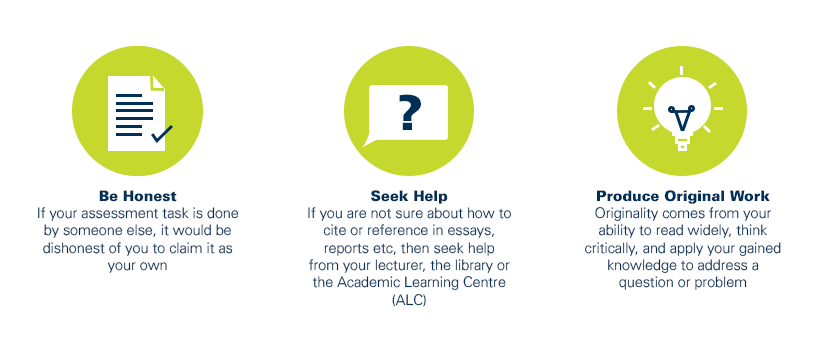
As a CQUniversity student you are expected to act honestly in all aspects of your academic work.
Any assessable work undertaken or submitted for review or assessment must be your own work. Assessable work is any type of work you do to meet the assessment requirements in the unit, including draft work submitted for review and feedback and final work to be assessed.
When you use the ideas, words or data of others in your assessment, you must thoroughly and clearly acknowledge the source of this information by using the correct referencing style for your unit. Using others’ work without proper acknowledgement may be considered a form of intellectual dishonesty.
Participating honestly, respectfully, responsibly, and fairly in your university study ensures the CQUniversity qualification you earn will be valued as a true indication of your individual academic achievement and will continue to receive the respect and recognition it deserves.
As a student, you are responsible for reading and following CQUniversity’s policies, including the Student Academic Integrity Policy and Procedure. This policy sets out CQUniversity’s expectations of you to act with integrity, examples of academic integrity breaches to avoid, the processes used to address alleged breaches of academic integrity, and potential penalties.
What is a breach of academic integrity?
A breach of academic integrity includes but is not limited to plagiarism, self-plagiarism, collusion, cheating, contract cheating, and academic misconduct. The Student Academic Integrity Policy and Procedure defines what these terms mean and gives examples.
Why is academic integrity important?
A breach of academic integrity may result in one or more penalties, including suspension or even expulsion from the University. It can also have negative implications for student visas and future enrolment at CQUniversity or elsewhere. Students who engage in contract cheating also risk being blackmailed by contract cheating services.
Where can I get assistance?
For academic advice and guidance, the Academic Learning Centre (ALC) can support you in becoming confident in completing assessments with integrity and of high standard.
What can you do to act with integrity?