Overview
The human brain is a marvelous and complex organ that allows us to perceive the environment, plan courses of action, and engage in adaptive behaviours. Most of the time, these processes are carried out smoothly and efficiently allowing us to function optimally. However, there are times and circumstances where the brain does not operate as it should. In this unit you will examine mental health disorders which frequently have significant adverse impacts. Mental illness will be explored in the context of major diagnostic systems and treatment models. Using a bio-psycho-social approach, you will explore the aetiology and course of psychopathology and consider evidence-based treatments used to facilitate recovery.
Details
Pre-requisites or Co-requisites
96 credit points in CC43, CF59, CL51, CL55, CM62, CC13, CG85, CB66, CG93 or CA10, OR admission to CC10 and completion of PSYC11010.
Important note: Students enrolled in a subsequent unit who failed their pre-requisite unit, should drop the subsequent unit before the census date or within 10 working days of Fail grade notification. Students who do not drop the unit in this timeframe cannot later drop the unit without academic and financial liability. See details in the Assessment Policy and Procedure (Higher Education Coursework).
Offerings For Term 1 - 2026
Attendance Requirements
All on-campus students are expected to attend scheduled classes - in some units, these classes are identified as a mandatory (pass/fail) component and attendance is compulsory. International students, on a student visa, must maintain a full time study load and meet both attendance and academic progress requirements in each study period (satisfactory attendance for International students is defined as maintaining at least an 80% attendance record).
Recommended Student Time Commitment
Each 6-credit Undergraduate unit at CQUniversity requires an overall time commitment of an average of 12.5 hours of study per week, making a total of 150 hours for the unit.
Class Timetable
Assessment Overview
Assessment Grading
This is a graded unit: your overall grade will be calculated from the marks or grades for each assessment task, based on the relative weightings shown in the table above. You must obtain an overall mark for the unit of at least 50%, or an overall grade of 'pass' in order to pass the unit. If any 'pass/fail' tasks are shown in the table above they must also be completed successfully ('pass' grade). You must also meet any minimum mark requirements specified for a particular assessment task, as detailed in the 'assessment task' section (note that in some instances, the minimum mark for a task may be greater than 50%). Consult the University's Grades and Results Policy for more details of interim results and final grades.
All University policies are available on the CQUniversity Policy site.
You may wish to view these policies:
- Grades and Results Policy
- Assessment Policy and Procedure (Higher Education Coursework)
- Review of Grade Procedure
- Student Academic Integrity Policy and Procedure
- Academic Progression Policy and Procedure
- Student Refund and Credit Balance Policy and Procedure
- Complaints Policy and Procedure
- Information and Communications Technology Acceptable Use Policy and Procedure
This list is not an exhaustive list of all University policies. The full list of University policies are available on the CQUniversity Policy site.
Feedback, Recommendations and Responses
Every unit is reviewed for enhancement each year. At the most recent review, the following staff and student feedback items were identified and recommendations were made.
Feedback from Student email
Some student identified that a couple of questions in the quiz were unclear.
Continue to revise any quiz items that need clarification
Feedback from Student email. SUTE comments
Some students had challenges in uploading the recorded video assessment.
Revise the uploading procedure for recorded video assessments. Emphasise to students that Echo360 - Moodle is the only acceptable method for submitting video assessments. Encourage students to upload the assessment early and contact TaSAC with any problems.
Feedback from SUTE comments
Some students requested more video resources to be placed in the weekly Moodle tiles.
Source additional video resources and include current links in Moodle.
- Explain and apply mental health diagnostic criteria used in the International Classification of Diseases and the Diagnostic and Statistical Manual.
- Apply acquired knowledge of the aetiology and course of mental health disorders to the development of a bio-psycho-social formulation.
- Evaluate evidence-based treatment options that facilitate recovery from mental health disorders.
This unit addresses Foundational Competencies as specified by the Australian Psychology Accreditation Council (APAC, 2025) and aligns with:
1.1 Comprehend and apply a broad and coherent body of knowledge of psychology, with depth of understanding of underlying principles, theories and concepts in the discipline, using a scientific approach, including the following topics:
(i) the history and philosophy underpinning the science of psychology and the social, cultural, historical and professional influences on the practice of psychology
(ii) critical thinking and identification of bias to promote inclusivity
(iii) psychological health and well-being
(iv) psychological disorders and evidence-based interventions
(v) learning and memory
(vi) cognition, language and perception
(viii) neuroscience and the biological bases of behaviour
(xi) culturally appropriate psychological assessment and measurement
1.2 Apply knowledge and skills of psychology in a manner that is reflexive, culturally appropriate and sensitive to the diversity of individuals
1.3 Analyse and critique theory and research in the discipline of psychology and communicate these in written and oral formats.
1.4 Demonstrate an understanding of appropriate values and ethics in psychology, including those relevant to professional conduct (for example, the PsyBA Code of conduct for psychologists).
1.6 Demonstrate self-directed pursuit of scholarly inquiry in psychology.
Source:
Australian Psychology Accreditation Council (2025). Accreditation standards for psychology programs (p.11) https://apac.au/wp-content/uploads/2025/12/APAC-Accreditation-Standards-for-Psychology-Programs-effective-1-December-2025.pdf
Alignment of Assessment Tasks to Learning Outcomes
| Assessment Tasks | Learning Outcomes | ||
|---|---|---|---|
| 1 | 2 | 3 | |
| 1 - Online Quiz(zes) - 10% | |||
| 2 - Written Assessment - 45% | |||
| 3 - Presentation - 45% | |||
Alignment of Graduate Attributes to Learning Outcomes
| Graduate Attributes | Learning Outcomes | ||
|---|---|---|---|
| 1 | 2 | 3 | |
| 1 - Communication | |||
| 2 - Problem Solving | |||
| 3 - Critical Thinking | |||
| 4 - Information Literacy | |||
| 5 - Team Work | |||
| 6 - Information Technology Competence | |||
| 7 - Cross Cultural Competence | |||
| 8 - Ethical practice | |||
| 9 - Social Innovation | |||
| 10 - First Nations Knowledges | |||
| 11 - Aboriginal and Torres Strait Islander Cultures | |||
Textbooks
Psychopathology, Second Australasian Edition
- Edition: 2nd (2024)
- Authors: Kring et al.
- Wiley
- Brisbane Brisbane , Queensland , Australia
- ISBN: 9781394196722
The textbook can be purchased from Wiley Direct.
I recommend the E-Text version, although the hard copy is also fine.
Please use this link: https://www.wileydirect.com.au/blog/buy/psychopathology-2nd-edition/
Additional Textbook Information
The textbook can be purchased from Wiley Direct.
I recommend the E-Text version, although the hard copy is also fine.
Please use this link: https://www.wileydirect.com.au/blog/buy/psychopathology-2nd-edition/
IT Resources
- CQUniversity Student Email
- Internet
- Unit Website (Moodle)
All submissions for this unit must use the referencing style: American Psychological Association 7th Edition (APA 7th edition)
For further information, see the Assessment Tasks.
c.j.crawford@cqu.edu.au
Week 1
Begin Date: 09 Mar 2026Module/Topic
Introduction to psychopathology
- History of psychopathology
- Philosophy of learning
- Assessments: quizzes, written
formulation & diagnosis, video
presentation of treatment plan
Chapter
Chapter 1 - Introduction to
psychopathology
Events and Submissions/Topic
Week 2
Begin Date: 16 Mar 2026Module/Topic
What do you have?
- Assessment then diagnosis
- Diagnostic systems
- Bio-psycho-social model
- The "Five P" formulation
Chapter
Chapter 2 - Diagnosis and assessment
Events and Submissions/Topic
Week 3
Begin Date: 23 Mar 2026Module/Topic
Getting low (and getting high)
- Depression
- Bipolar disorder
Chapter
Chapter 3 - Mood disorders
Events and Submissions/Topic
Week 4
Begin Date: 30 Mar 2026Module/Topic
Don't go out tonight
- Common elements of anxiety
- Trauma-related disorders
Chapter
Chapter 4 - Anxiety, OCD and trauma related disorders
Events and Submissions/Topic
Week 5
Begin Date: 06 Apr 2026Module/Topic
The divided mind
- Positive symptoms - hallucinations &
delusions - Negative symptoms - social,
functional and cognitive deficits
Chapter
Chapter 6 - Schizophrenia
Events and Submissions/Topic
Week 6
Begin Date: 13 Apr 2026Module/Topic
Want a drink?
- Why we use substances
- Types of addictions
- Forms of treatment
Chapter
Chapter 7 - Substance use disorders
Events and Submissions/Topic
Assessment 1 - Quiz 1A - Week 6 - will open Friday 17 April at 9:00 am / close Monday 20 April at 9:00 pm AEST
Vacation Week
Begin Date: 20 Apr 2026Module/Topic
Chapter
Events and Submissions/Topic
Week 7
Begin Date: 27 Apr 2026Module/Topic
Who am I?
- Dissociative disorders
- Somatic disorders
Chapter
Chapter 5 - Dissociative disorders,
somatic symptom and related
disorders
Events and Submissions/Topic
Week 8
Begin Date: 04 May 2026Module/Topic
Food for thought
- Anorexia
- Bulimia
- Excess
Chapter
Chapter 8 - Eating disorders
Events and Submissions/Topic
Week 9
Begin Date: 11 May 2026Module/Topic
I can't get no...
- Sexual dysfunction
- Paraphilias
Chapter
Chapter 9 - Clinical understandings of
gender and sexuality
Events and Submissions/Topic
Week 10
Begin Date: 18 May 2026Module/Topic
A brand-new brain
- Congenital disorders
- Developmental disorders
Chapter
Chapter 10 Disorders of childhood
Events and Submissions/Topic
Week 11
Begin Date: 25 May 2026Module/Topic
She / he's got personality
- What do we mean personality?
- Types of personality disorders
- Treatment of personality disorders
Chapter
Chapter 12 - Personality and personality disorders
Events and Submissions/Topic
Week 12
Begin Date: 01 Jun 2026Module/Topic
Getting old
- Challenging stereotypes
- Types of dementia
- Managing neurocognitive disorders
Chapter
Chapter 11 - Late life and
neurocognitive disorders
Events and Submissions/Topic
Assessment 1 - Quiz 1B - Week 12 - will open Friday 5 June at 9:00am / close Monday 8 June at 9:00 pm AEST
Exam Week
Begin Date: 08 Jun 2026Module/Topic
Chapter
Events and Submissions/Topic
Vacation/Exam Week
Begin Date: 15 Jun 2026Module/Topic
Chapter
Events and Submissions/Topic
Trigger warning:
- Please note that Foundations of Psychopathology contains material that some may find distressing.
- There is a focus on the diagnosis and treatment of mental illness which includes discussions on depressive disorders, psychosis, eating disorders, and suicide risk assessment.
- If you have any questions or concerns, please contact the unit coordinator.
1 Online Quiz(zes)
Two quizzes make up this assessment item.
- Each of the quizzes is worth 5% (a total of 10% of your final grade)
- Quiz 1A - Week 6 - will open Friday 17 April at 9:00 am / close Monday 20 April at 9:00 pm AEST and cover material from weeks 1 to 6
- Quiz 1B - Week 12 - will open Friday 5 June at 9:00am / close Monday 8 June at 9:00 pm AEST and cover material from weeks 7 to 12
- There are 50 items in each quiz and all items are multiple choice
- Once you start the quiz, you will have 50 minutes to complete the quiz
Please note
- You may take the quiz as many times as you like during the time the quiz is open. The highest score will be entered for your grade
- Level of Generative AI use allowed: Level 1. You must not use Al at any point during the assessment. You must demonstrate your core knowledge
- The 72-hour grace period does not apply to this assessment. Moreover, the quiz cannot be done late with standard (5% per day) penalties
- You can however apply for an extension (i.e., for completion after the grace period) if you supply appropriate documentation, such as a medical certificate, statutory declaration etc
- There are two quizzes
- Each correct answer is worth 1 mark - a total of 50 marks is possible for each quiz
- Each quiz is worth 5% - a total of 10% of your final grade
- You may take the quiz as many times as you like during the time the quiz is open
- The highest score for each quiz will be entered for your grade
- Explain and apply mental health diagnostic criteria used in the International Classification of Diseases and the Diagnostic and Statistical Manual.
- Apply acquired knowledge of the aetiology and course of mental health disorders to the development of a bio-psycho-social formulation.
- Evaluate evidence-based treatment options that facilitate recovery from mental health disorders.
2 Written Assessment
The written formulation and diagnosis is due at the beginning of Week 7 – Monday 27 April at 9:00 am AEST
Your task is to watch one film where the main character has a diagnosable mental illness that will respond to treatment.
- This character will be your client
- Films include: A beautiful mind, Silver linings playbook, Girl interrupted, The aviator, The electric life of Louis Wain, Perks of being a wallflower, The soloist, Precious, Good Will hunting, Shine, Black swan.If you are using a film outside of the list above, you must contact the unit coordinator for approval early in the term
- Organise viewing the movie as soon as possible - possible sources include DVD, YouTube, services such as Netflix, Prime, etc.
- View the film you have chosen, stopping the film when necessary and taking notes
- Your notes need to be "time stamped" as you will be linking your observations of the client and linking these to elements of the formulation
Level of generative artificial intelligence use allowed: Level 2
- You may use Al for to conduct research, develop structure and check your spelling grammar and syntax
- However, you are not permitted to use generative artificial intelligence to write the assessment
- The writing of the case formulation and diagnosis must be your own work
Components of the assessment:
- A very brief introduction to your client and the strategy you will use. (See the points immediately below.)
- The main focus of this assessment is to utilise the 5P factor model to develop a case formulation
- It is essential to read the article by Macneil et al., (2012): Is diagnosis enough to guide interventions in mental health? Using case formulation in clinical practice
- The formulation must consist of the following elements: presenting, precipitating, perpetuating, predisposing, and protective factors
- You will link your time-stamped observations to the elements of the formulation
- Next, using either the Diagnostic and Statistical Manual (DSM) or the International Classification of Diseases (ICD), identify the primary diagnosis and identify any secondary diagnoses/comorbidities (e.g., comorbid substance use disorder, etc.)
- Utilise peer reviewed journal articles to support your formulation and diagnosis throughout
- Conclude with a brief reflection on how the film impacted on you and your views of mental illness, and whether the film reinforces or challenges stigma
- The word count will be between 1800-2200 words
Week 7 Monday (27 Apr 2026) 9:00 am AEST
Week 9 Friday (15 May 2026)
Grade and feedback provided in Moodle
This assessment is worth 45% of your total grade.
The 45 marks will be allocated to the following components:
Case Formulation (maximum 15 marks)
0-3 There is no clear formulation, essential observations from the case are missing
4-7 The formulation is present but not well supported by observations from the case
8-10 The formulation is present and is linked to some relevant observations from the case
11-13 The formulation is clear and effectively linked to many observations from the case
14-15 The formulation is comprehensive and is expertly linked to most observations from the case
Diagnosis (10 marks)
0-2 There is no diagnosis or use of the DSM or ICD
3-4 The diagnosis is incorrect or does not utilise the DSM or ICD
5-6 The diagnosis is clear, but not well supported by the criteria of the DSM or ICD
7-8 The diagnosis is correct, clear, and supported by the criteria of the DSM or ICD
9-10 The diagnosis is correct, clear, and expertly supported by the criteria of the DSM or ICD
Secondary disorders and comorbidities (5 marks)
0 Secondary disorders and comorbidities not identified / no utilisation of the DSM or ICD
1 Secondary disorders and comorbidities partially correct / minimal utilisation of the DSM or ICD
3 Secondary disorders and comorbidities mostly correct, and supported by the DSM or ICD
4 Secondary disorders and comorbidities are correct, clear, and well supported by the DSM or ICD
5 Secondary disorders and comorbidities are correct, clear, and expertly supported by the criteria of the DSM or ICD
Use of external sources (5 marks)
0 External sources were not used
2 External sources were not relevant or unrelated
3 Relevant external sources were adequately utilised
4 Relevant external sources clearly and effectively used in support of formulation and diagnosis
5 Relevant external sources clearly, effectively, and creatively utilised in support of the formulation and diagnosis
Reflection (5 marks)
0 No reflection present
2 Reflection present but not well related to the film
3 Reflection present and relevant to the film
4 Reflection clearly and comprehensively related to the film
5 Reflection clearly, comprehensively, and creatively related to the film
APA formatting and style (3 marks)
0 APA formatting and style not present
1 Attempt made with APA formatting and style but contained many errors
2 Adequate APA formatting and style but with errors
3 Exceptional APA formatting and style with minimal errors
Word count (2 marks)
0 Assessment not within 1800-2200 words
2 Assessment within 1800-2200 words
- Explain and apply mental health diagnostic criteria used in the International Classification of Diseases and the Diagnostic and Statistical Manual.
- Apply acquired knowledge of the aetiology and course of mental health disorders to the development of a bio-psycho-social formulation.
- Evaluate evidence-based treatment options that facilitate recovery from mental health disorders.
3 Presentation
This assessment is due at the beginning of Week 11 - Monday 25 May at 9:00 am AEST
- Your task is to video-record a presentation which describes a treatment plan for the client from your formulation and diagnosis assessment
- The video will be uploaded to Echo360/Moodle (please see instructions in the Assessment 3 folder)
- You will also upload a document consisting of a references list and a brief statement regarding use of generative artificial intelligence
Your intended audience is an interdisciplinary mental health team - the actual audience may be a colleague, a family member, or friend
- The audience must also be visible on the recording (same room, or screen using the Zoom recording platform)
- In addition to content, you will be assessed on your delivery and presentation
- Delivery and presentation will be evaluated on factors including audio quality and speech clarity, excessive use of notes, audience engagement, etc.
Level of generative artificial intelligence use allowed: Level 2
- You may use Al for to conduct research and develop structure for your presentation
- However, you are not permitted to use generative artificial intelligence to write a script
- The treatment plan presentation must be your own work
The video presentation will be based on your previous formulation and diagnosis:
- Start with a brief summary of the formulation
- The majority of the presentation will describe a treatment plan for your client utilising evidence-based strategies
- You do not need to cite your sources in the video recording
- The plan will include some form of psychotherapy delivered by a psychologist
- The plan will also consider the broader bio-psycho-social needs of the client
- In other words, the rest of the inter-disciplinary team will contribute to the client's treatment (i.e. social work, occupational therapy, nursing, psychiatry, etc).
Finally, allow the audience to ask a question and provide a brief response
Additional notes:
- You may use written prompts during the recording, but do not simply read from your notes
- Please do not use PowerPoint slides. Ensure that the recording has both you and your audience on the same screen
- Practice using the recording technology (Zoom works best) before recording with your audience
- Consider time allocation for each part of the presentation (i.e., the treatment plan is worth twice the marks of the summary)
- Video length will be between 9 to 11 minutes
Week 11 Monday (25 May 2026) 9:00 am AEST
Please submit your recording using the Echo360 / Moodle - see the instructions in the Assessment 3 folder.
Exam Week Friday (12 June 2026)
Grades and comments will provided online in Moodle.
The video presentation of the treatment plan is worth 45% of your final grade.
The 45 marks are allocated according to the following criteria:
Summary of formulation (5 marks)
0 The summary did not relate to the case formulation
2 The summary did not clearly relate to the case formulation and missed key elements
3 The summary related to the case formulation and included most elements
4 The summary skillfully related to the case formulation including most key elements
5 The summary expertly related to the case formulation incorporating all key elements
Proposed treatment plan (20 marks)
0-5 The treatment plan was not present or did not relate to the case
6-10 The treatment plan was present but only loosely related to the case with poor support from the evidence base
11-15 The treatment plan clearly related to the case but needed more support from the evidence base
16-20 The treatment plan was skillfully related to the case and was expertly supported by the evidence base
Delivery and quality of presentation (10 marks)
0-2 The presentation was unclear or inaudible, did not engage the audience
3-4 The presentation was halting, with minimal engagement of audience
5-6 Presentation was clear, but not confident, the use of notes was distracting and impacted on engagement
8-9 Presentation was confident, clear, and engaging with minimal use of notes
10 Presentation was confident, clear, engaging, expertly delivered, with no visible use of notes
Response to audience question (5 marks)
0 There was no response, or the response did not answer the question
1-2 The response partially answered the question, but was not clear and missed key elements
3-4 The response answered the question clearly
5 The response was expertly and confidently delivered
References list (3 marks)
0 No references list was included
1-2 References list included but incomplete or does not use APA formatting
3 References list included, complete and uses APA formatting
Length of video presentation (2 marks)
0 Video length not within 9-11 minutes
2 Video length within 9-11 minutes
- Explain and apply mental health diagnostic criteria used in the International Classification of Diseases and the Diagnostic and Statistical Manual.
- Apply acquired knowledge of the aetiology and course of mental health disorders to the development of a bio-psycho-social formulation.
- Evaluate evidence-based treatment options that facilitate recovery from mental health disorders.
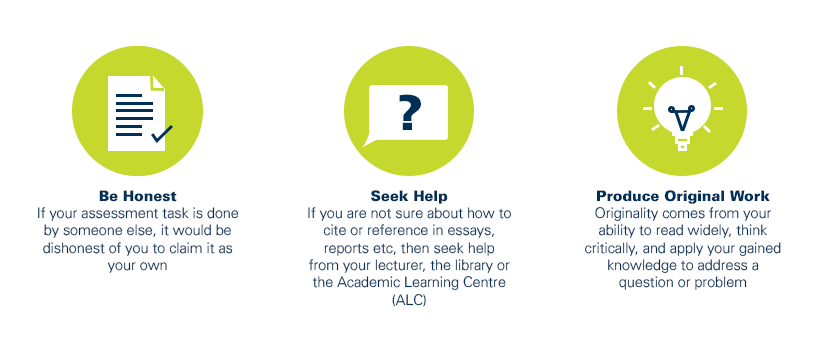
As a CQUniversity student you are expected to act honestly in all aspects of your academic work.
Any assessable work undertaken or submitted for review or assessment must be your own work. Assessable work is any type of work you do to meet the assessment requirements in the unit, including draft work submitted for review and feedback and final work to be assessed.
When you use the ideas, words or data of others in your assessment, you must thoroughly and clearly acknowledge the source of this information by using the correct referencing style for your unit. Using others’ work without proper acknowledgement may be considered a form of intellectual dishonesty.
Participating honestly, respectfully, responsibly, and fairly in your university study ensures the CQUniversity qualification you earn will be valued as a true indication of your individual academic achievement and will continue to receive the respect and recognition it deserves.
As a student, you are responsible for reading and following CQUniversity’s policies, including the Student Academic Integrity Policy and Procedure. This policy sets out CQUniversity’s expectations of you to act with integrity, examples of academic integrity breaches to avoid, the processes used to address alleged breaches of academic integrity, and potential penalties.
What is a breach of academic integrity?
A breach of academic integrity includes but is not limited to plagiarism, self-plagiarism, collusion, cheating, contract cheating, and academic misconduct. The Student Academic Integrity Policy and Procedure defines what these terms mean and gives examples.
Why is academic integrity important?
A breach of academic integrity may result in one or more penalties, including suspension or even expulsion from the University. It can also have negative implications for student visas and future enrolment at CQUniversity or elsewhere. Students who engage in contract cheating also risk being blackmailed by contract cheating services.
Where can I get assistance?
For academic advice and guidance, the Academic Learning Centre (ALC) can support you in becoming confident in completing assessments with integrity and of high standard.
What can you do to act with integrity?