Overview
In this unit you will explore the key social psychological concepts as they apply to mental illness, disability, sexuality and First Nations people. You will explore social psychological concepts from both mainstream and critical perspectives, including perspectives of First Nation Australians. In undertaking this unit, you will expand your understanding of yourself and others, enabling you to promote greater inclusiveness and ethical practice.
Details
Pre-requisites or Co-requisites
24 credit points and PSYC11010 or PSYC11009
Important note: Students enrolled in a subsequent unit who failed their pre-requisite unit, should drop the subsequent unit before the census date or within 10 working days of Fail grade notification. Students who do not drop the unit in this timeframe cannot later drop the unit without academic and financial liability. See details in the Assessment Policy and Procedure (Higher Education Coursework).
Offerings For Term 2 - 2026
Attendance Requirements
All on-campus students are expected to attend scheduled classes - in some units, these classes are identified as a mandatory (pass/fail) component and attendance is compulsory. International students, on a student visa, must maintain a full time study load and meet both attendance and academic progress requirements in each study period (satisfactory attendance for International students is defined as maintaining at least an 80% attendance record).
Recommended Student Time Commitment
Each 6-credit Undergraduate unit at CQUniversity requires an overall time commitment of an average of 12.5 hours of study per week, making a total of 150 hours for the unit.
Class Timetable
Assessment Overview
Assessment Grading
This is a graded unit: your overall grade will be calculated from the marks or grades for each assessment task, based on the relative weightings shown in the table above. You must obtain an overall mark for the unit of at least 50%, or an overall grade of 'pass' in order to pass the unit. If any 'pass/fail' tasks are shown in the table above they must also be completed successfully ('pass' grade). You must also meet any minimum mark requirements specified for a particular assessment task, as detailed in the 'assessment task' section (note that in some instances, the minimum mark for a task may be greater than 50%). Consult the University's Grades and Results Policy for more details of interim results and final grades.
All University policies are available on the CQUniversity Policy site.
You may wish to view these policies:
- Grades and Results Policy
- Assessment Policy and Procedure (Higher Education Coursework)
- Review of Grade Procedure
- Student Academic Integrity Policy and Procedure
- Academic Progression Policy and Procedure
- Student Refund and Credit Balance Policy and Procedure
- Complaints Policy and Procedure
- Information and Communications Technology Acceptable Use Policy and Procedure
This list is not an exhaustive list of all University policies. The full list of University policies are available on the CQUniversity Policy site.
Feedback, Recommendations and Responses
Every unit is reviewed for enhancement each year. At the most recent review, the following staff and student feedback items were identified and recommendations were made.
Feedback from SUTE comments report
Some students felt that the feedback on assessments did not match their grades or lacked specific guidance on where marks were lost.
Ensure the qualitative feedback on assessments remains aligned with the marking criteria and clearly identifies areas for student improvement.
Feedback from SUTE comments report. Peer feedback from within College
High‑quality videos, YouTube content, and production quality were consistently praised and seen as highly engaging and helpful for learning.
Continue to use high quality videos reflecting professional video production standards and create an additional resource to help students understand the reasoning behind the use of those standards.
Feedback from SUTE unit comments report
The spacing between Assessment 2 and 3 was seen as too short, creating pressure and limiting the usefulness of feedback.
Consult with the teaching team about re-mapping assignment due dates to reduce pressure on students and to improve the usefulness of feedback from Assessment 2 as formative input for Assessment 3.
- Articulate social and critical psychology concepts from both mainstream and diverse perspectives
- Identify the sociocultural contexts that influence individual differences in beliefs, values, and behaviour
- Evaluate social psychological concepts, research and theories from a critical perspective
- Explain how privilege, power, and oppression affects prejudice, discrimination, and inequity.
These learning outcomes reflect the Graduate Attributes of the Australian Undergraduate Psychology Program.
Alignment of Assessment Tasks to Learning Outcomes
| Assessment Tasks | Learning Outcomes | |||
|---|---|---|---|---|
| 1 | 2 | 3 | 4 | |
| 1 - Critical Review - 20% | ||||
| 2 - Learning logs / diaries / Journal / log books - 30% | ||||
| 3 - Written Assessment - 50% | ||||
Alignment of Graduate Attributes to Learning Outcomes
| Graduate Attributes | Learning Outcomes | |||
|---|---|---|---|---|
| 1 | 2 | 3 | 4 | |
| 1 - Communication | ||||
| 2 - Problem Solving | ||||
| 3 - Critical Thinking | ||||
| 4 - Information Literacy | ||||
| 5 - Team Work | ||||
| 6 - Information Technology Competence | ||||
| 7 - Cross Cultural Competence | ||||
| 8 - Ethical practice | ||||
| 9 - Social Innovation | ||||
| 10 - First Nations Knowledges | ||||
| 11 - Aboriginal and Torres Strait Islander Cultures | ||||
Textbooks
Social Psychology (Australia and New Zealand edition)
- (Australia and New Zealand edition) (2015)
- Authors: Kassin, S., Fein, S., Markus, H. R., McBain, K. A., & Williams, L. A.
- Cengage
- Melbourne Melbourne , Victoria , Australia
- ISBN: 9780170420563
Critical Social Psychology
- Edition: n/a (1997)
- Authors: Ibanez, T., & Iniguez, L.
- Sage
- London London , UK
- ISBN: 9780761952893
IT Resources
- CQUniversity Student Email
- Internet
- Unit Website (Moodle)
All submissions for this unit must use the referencing style: American Psychological Association 7th Edition (APA 7th edition)
For further information, see the Assessment Tasks.
p.duckett@cqu.edu.au
Week 1
Begin Date: 13 Jul 2026Module/Topic
Critical social psychology.
Chapter
Chapter 1 of prescribed text.
Selected reading provided on Moodle.
Events and Submissions/Topic
Week 2
Begin Date: 20 Jul 2026Module/Topic
Study support for Assessment 1.
Chapter
Read information on Assessment 1.
Events and Submissions/Topic
Week 3
Begin Date: 27 Jul 2026Module/Topic
The social self.
Chapter
Chapter 2 of prescribed text.
Events and Submissions/Topic
Week 4
Begin Date: 03 Aug 2026Module/Topic
Disabled people.
Chapter
Selected reading provided on Moodle.
Events and Submissions/Topic
Week 5
Begin Date: 10 Aug 2026Module/Topic
Mentally ill people.
Chapter
Selected reading provided on Moodle.
Events and Submissions/Topic
Mental Health Under Review: A Critical Audit of Organisational Practice Due: Week 5 Friday (14 Aug 2026) 1:00 pm AEST
Week 6
Begin Date: 17 Aug 2026Module/Topic
Stereotypes, prejudice and discrimination.
Chapter
Chapter 4 of prescribed text.
Events and Submissions/Topic
Vacation Week
Begin Date: 24 Aug 2026Module/Topic
Chapter
Events and Submissions/Topic
Week 7
Begin Date: 31 Aug 2026Module/Topic
Social influence.
Chapter
Chapter 6 of prescribed text.
Events and Submissions/Topic
Week 8
Begin Date: 07 Sep 2026Module/Topic
Gender and sexuality.
Chapter
Chapter 8 of prescribed text.
Events and Submissions/Topic
Week 9
Begin Date: 14 Sep 2026Module/Topic
Social relations.
Chapter
Chapters 9 and 10 of prescribed text.
Events and Submissions/Topic
Week 10
Begin Date: 21 Sep 2026Module/Topic
Relationships: First nations perspectives and experiences.
Chapter
Selected reading provided on Moodle.
Events and Submissions/Topic
Week 11
Begin Date: 28 Sep 2026Module/Topic
Critical community psychology.
Chapter
Reading from Ch 12 of prescribed text with supplementary reading provided on Moodle.
Events and Submissions/Topic
Week 12
Begin Date: 05 Oct 2026Module/Topic
Study support for Assessment 3.
Chapter
Continue working on assessment 3.
Events and Submissions/Topic
Exam Week
Begin Date: 12 Oct 2026Module/Topic
Chapter
Events and Submissions/Topic
Vacation/Exam Week
Begin Date: 19 Oct 2026Module/Topic
Chapter
Events and Submissions/Topic
1 Critical Review
David Rosenhan's paper 'Being Sane in Insane Places' has become highly influential in the field of critical social psychology and has made a major contribution to the Psychiatric Survivors’ Movement and other civil rights movements advocating for changes in how we think about mental illness and mental health. The Rosenhan study has also had a growing impact on mainstream approaches to mental health and mental illness, although these remain nascent in many ways.
This assessment is modelled on an Organisational Case Audit and Reform Proposal.
In this task, you will take on the role of a Workplace Mental Health Auditor. You have been contracted to conduct a critical review of an organisation’s mental health practices following employee concerns about stigma, misdiagnosis, and a lack of autonomy in support systems.
You have been asked to:
- Audit current mental health practices
- Identify potential risks or harms
- Provide clear, actionable recommendations
Your analysis must be informed by:
- Rosenhan’s (1973) findings on psychiatric labelling and institutional practices
- Critical social psychology perspectives
- Insights from the Psychiatric Survivors Movement, including lived experience, power, coercion, and autonomy
This task reflects real-world work in areas such as organisational consulting, policy auditing, workplace wellbeing, and human rights advocacy.
Your Task
You will analyse a hypothetical organisation (described in a briefing document provided to you), which outlines key features of its mental health practices (e.g., Employee Assistance Programs, reporting systems, HR policies).
Based on this, you will produce a Workplace Mental Health Audit Report (maximum 800 words), structured into three sections:
1. Present (approx. 150 words)
Provide a concise overview of Rosenhan’s paper and its broader impact on understandings of mental health, diagnosis, and institutional practices.
2. Relate (approx. 250 words)
Relate Rosenhan’s findings to mainstream psychological concepts and assumptions reflected in the organisation described in the briefing document.
3. Elaborate (approx. 400 words)
Analyse the implications of Rosenhan’s work for identifying risks within the organisation’s mental health practices.
You should clearly explain how these risks may impact employees’ workplace experiences.
Important information:
- The length of the assessment must not exceed 800 words.
- Your writing style should adopt a professional tone suitable for a non-academic audience: use simple, clear language that avoids jargon and overly complex sentences.
- Your assignment should be text-only, word-processed, and follow the APA style for layout.
- You should use Arial font and double spacing.
- You are not required to include citations, but if you do, a reference section must be included at the end of the assessment. References and citations should follow APA format.
Use of Generative AI:
Level of GenAI use allowed: Level 3: You may use Al to assist with specific tasks such as drafting text, refining and evaluating your work. You must critically evaluate and modify any Al-generated content you use.
For this assessment, you may elect to use Generative AI to help you:
- Supplement teaching resources provided on the unit to help you further understand the concepts discussed (such as those related to opposing views of mental illness) as well as finding and understanding background literature and resources related to the topic.
- Check the grammar, punctuation, and syntax of your written work.
- Enhance the vocabulary of your writing and submitted assessment.
- Manage the word count of the assessment.
You are not permitted to use Generative AI technology to:
- Summarise the Rosenhan paper.
- Relate the Rosenhan paper to policies and practices regarding employee mental health.
Rationale:
Generative AI tools are trained on broad datasets and tend to produce generalised responses. This assessment requires context-specific, critical application of Rosenhan’s work to a particular organisational setting. This involves careful judgement about workplace dynamics, policy implications, and institutional practices—skills that AI cannot reliably replicate.
In addition, Rosenhan’s work raises complex critiques of psychiatric labelling and institutional power. Applying these critiques to contemporary workplace mental health requires nuanced analysis that goes beyond standard summaries and avoids superficial or generic recommendations.
Week 5 Friday (14 Aug 2026) 1:00 pm AEST
Week 7 Friday (4 Sept 2026)
Marks and feedback will be returned approximately 2 to 3 weeks after submission.
The full marking criteria will be presented in a detailed marking rubric available on the Moodle site. The rubric is based on the three sections of the assignment, each aligning with the learning verbs present, relate, and elaborate, respectively.
Assessment Criteria by Section
Section 1: Present (10%)
In Section 1, you will be assessed on how well you present a clear and structured overview of Rosenhan’s study, including its key findings and its critique of psychiatric diagnosis and institutional practices. You should demonstrate an understanding of how the study aligns with critical psychology perspectives, particularly in relation to labelling, institutional power, and the construction of mental illness.
This section is designed to assess your ability to meet:
Learning Outcome 3: Evaluate social psychological concepts, research, and theories from a critical perspective
Weighting: 10%
Section 2: Relate (40%)
In Section 2, you will be assessed on how effectively you relate Rosenhan’s findings to the organisation described in the briefing document, as well as to broader mainstream psychological assumptions about workplace mental health.
You are expected to:
Clearly identify at least one mainstream psychological concept or assumption reflected in the organisation’s practices (e.g., diagnosis, individual responsibility, treatment-based models)
Relate this to Rosenhan’s critique of psychiatric labelling and institutional processes
Incorporate relevant insights from critical psychology and/or the Psychiatric Survivors Movement to deepen your analysis
This section requires you to demonstrate an ability to move between mainstream and critical perspectives, showing how they align or conflict in practice.
This section is designed to assess your ability to meet:
Learning Outcome 1: Articulate social and critical psychology concepts from both mainstream and diverse perspectives
Weighting: 40%
Section 3: Elaborate (50%)
In Section 3, you will be assessed on how well you elaborate on the implications of your analysis by identifying risks and proposing informed recommendations for the organisation’s mental health practices.
You should:
Analyse risks such as misdiagnosis, labelling, institutional bias, and power imbalances
Consider how these practices may affect employees’ wellbeing, autonomy, and workplace participation
Draw on Rosenhan’s findings, critical psychology, and Psychiatric Survivors Movement perspectives to support your evaluation
Provide clear, practical recommendations that promote psychological safety, reduce harm, and reflect more inclusive and ethical approaches to mental health
Your recommendations should go beyond simply repeating existing policy priorities and instead contribute new, critically informed insights.
This section is designed to assess your ability to meet:
Learning Outcome 3: Evaluate social psychological concepts, research, and theories from a critical perspective
Weighting: 50%
- Articulate social and critical psychology concepts from both mainstream and diverse perspectives
- Evaluate social psychological concepts, research and theories from a critical perspective
2 Learning logs / diaries / Journal / log books
Critical social psychology is an area of the discipline of psychology which offers us the opportunity to adopt a more subjective, reflexive relationship to theory and practice. In critical social psychology the objective, neutral stance of the psychologist is rejected in favour of a subjective, partisan stance. Assessment Two offers you an opportunity to develop or re-engage with those reflexive skills through the practice of diary keeping. Reflexivity is different from reflectivity. Reflective means thinking about one’s own thoughts, feelings and actions. Reflexive means thinking about one’s own thoughts, feelings and actions through the eyes of another. For this assessment, you will engage with reflexivity through the eyes of the various writers whose work we will discuss during the unit and through the perspectives of various interests groups impacted by the issues we cover.
For the first eight teaching weeks, you should maintain a weekly learning diary. The diary will consist of two sections. In the first section, you should summarize what you have learned each week (e.g., Week 1), including key ideas from teaching videos, required or suggested readings, and topics discussed during the online tutorial. This summary should be concise and the recommendation is that it should not exceed 125 words.
The second section will contain your critical reflections on the material, focusing on what you have learned about the role of sociocultural factors in psychology. You should examine how your understanding of social support and social power has either been reinforced or changed during the week, as well as identify any dilemmas or inconsistencies in psychology’s approach to particular social issues. Approach this task as an opportunity to evaluate your own thoughts, feelings, and actions through the lens of the different perspectives covered that week. The recommendation is that this section should not exceed 275 words.
Once you have completed eight weeks of diary entries (one entry per week for the first eight teaching weeks), you will select the two entries that best meet the marking criteria and submit these two entries in a single document. The remaining six entries should be included as an appendix in that same document but will not be assessed. The total word count for the assessment must not exceed 800 words (excluding the appendix).
- Text should be word-processed and follow APA 7 style for layout.
- Use Arial font and double spacing.
- You must include a reference section at the end of the assessment. Referencing and citations should be in APA 7 format.
Use of Generative AI
Level of GenAI use allowed: Level 3: You may use Al to assist with specific tasks such as drafting text, refining and evaluating your work. You must critically evaluate and modify any Al-generated content you use.
For this assessment, you may elect to use Generative AI to help you:
- Check the grammar, punctuation, and syntax of your written work.
- Enhance the vocabulary of your writing and submitted assessment.
- Manage the word count of the assessment.
You are not permitted to use Generative AI technology to:
- Summarise the content of a teaching week for your diary entry.
- Draw out the sociocultural context of a piece of mainstream psychological theory.
- Analyse the vested interests behind that mainstream psychological theory or practice.
These restrictions are in place because Gen AI generates responses based on patterns in text but lacks personal experience or the ability to make subjective interpretations. A diary entry requires individual reflexivity and a subjective engagement with nuanced ideas. This is something AI cannot authentically replicate. When summarising content related to culture and power, AI may reproduce dominant narratives rather than critically interrogate them. This means Gen AI cannot sufficiently capture the deeper ideological tensions that shape discussions of social power and mainstream institutions.
Week 9 Friday (18 Sept 2026) 1:00 pm AEST
Week 11 Friday (2 Oct 2026)
Marks and feedback will be returned approximately 2 weeks after submission.
The full marking criteria will be presented in a detailed marking rubric available on the Moodle site. The rubric is based on three learning verbs: review, interrogate and analyse.
In section 1 of your diary entry, you will be assessed on how well you review that teaching week through you providing a summarised overview of key mainstream psychological content relevant to that week. This is designed to assess your ability to meet Learning Outcome 2: Identify the sociocultural contexts that influence individual differences in beliefs, values, and behaviour and is weighted 30% of the assignment mark.
In section 2 of your diary entry you will be assessed on how well you both interrogate a sociocultural perpsective and analyse vested interests. The first part is about how well you interrogate the social and cultural context of a key piece of mainstream psychological theory or practice and relates to Learning Outcome 2 and is weighted 40% of the assignment mark. The second part is about how well you analyse the vested interests served by that piece of theory or practice. This relates to the Learning Outcome 4: Explain how privilege, power, and oppression affects prejudice, discrimination, and inequity and is weighted 30% of the assignment mark.
- Identify the sociocultural contexts that influence individual differences in beliefs, values, and behaviour
- Explain how privilege, power, and oppression affects prejudice, discrimination, and inequity.
3 Written Assessment
Essay writing is a foundational skill for critical social commentators. It provides a powerful medium to express and develop your critical thinking on important social issues. Throughout history, influential essayists have been catalysts for progressive social change—combining literary craft with analytical insight to challenge prevailing norms and inspire new ways of thinking. The essays of Gore Vidal contributed to the peace movement, James Baldwin’s writings shaped the Black civil rights movement, Simone de Beauvoir’s work supported the women’s movement, and Vic Finkelstein’s essays transformed public understanding of disability. In regards to anti-colonialism, the writings of Frantz Fanon exposed the psychological impacts of colonialism, Aileen Moreton-Robinson has critically examined Indigenous sovereignty and power in Australia, Linda Tuhiwai Smith has reshaped research through decolonising methodologies, and Chelsea Watego has challenged dominant narratives about Indigenous health and psychology in Australia.
Take inspiration from this tradition—writing an essay is not something to be feared, but an opportunity to engage in meaningful critique and communication.
As you build your skills, essay writing can help you discover your academic voice — a distinctive mode of argument that aligns with academic conventions while reflecting your personal experiences, perspective, and intellectual disposition. The expectations for this task include:
- Citing evidence to support your claims.
- Referencing literature appropriately using citations.
- Structuring your essay clearly with an introduction, body, and conclusion (do not include an abstract).
- Anticipating and addressing counterarguments to strengthen your position.
Your voice will emerge most strongly when you express your own ideas directly. Avoid over-reliance on long quotations, excessive paraphrasing, or Generative AI tools. These can flatten your style and limit your opportunity to grow as a writer. AI-generated texts often follow formulaic patterns that do not support the development of a nuanced, critical academic voice, particularly when engaging with decolonial and First Nations frameworks that challenge dominant knowledge systems.
Learning Outcomes
This assessment is designed to develop your ability to:
- Articulate social and critical psychology concepts from both mainstream and diverse perspectives, including Indigenous and decolonial frameworks.
- Identify the sociocultural contexts—especially colonial histories and contemporary structures—that influence individual and collective beliefs, values, and behaviour.
- Evaluate social psychological concepts, research, and theories from a critical perspective, particularly in relation to their limitations and biases.
- Explain how privilege, power, and oppression shape prejudice, discrimination, and inequity, with a focus on the experiences of First Nations peoples in Australia.
Assessment Overview
This assignment changes each term the unit is delivered. In this term, your task is to undertake a comprehensive examination of the role of Decolonial Studies in critiquing the discipline of psychology, with a particular emphasis on First Nations perspectives in Australia.
You are required to critically evaluate how psychological theories and practices have historically reinforced and reproduced colonial ways of knowing, and why these issues persist within the discipline.
Here is a breakdown of what this essay task entails:
- Coloniality and Knowledge Systems (LO1, LO2)
Demonstrate your understanding of core concepts from both mainstream psychology and decolonial perspectives.
- Examine how psychology has been shaped by Western, Eurocentric frameworks
- Contrast these with First Nations ways of knowing, being, and doing
- Identify the sociocultural and historical contexts that underpin these differences
- Critical Analysis (LO1, LO3)
Engage in in-depth critical analysis, not just description.
- Analyse how psychology has reproduced colonial assumptions
- Critically evaluate dominant theories and practices
- Draw on critical social psychology, decolonial theory, and First Nations scholarship
Examples may include:
- Pathologisation of First Nations peoples
- Marginalisation of Indigenous knowledges
- Application of Western psychological models in culturally inappropriate ways
- Historical Perspectives (LO2, LO3)
Situate your argument within the historical context of colonialism and psychology.
- Examine the role of psychology in colonial governance (e.g., assimilation policies)
- Identify key theories or practices that contributed to deficit-based narratives
- Evaluate how these histories continue to shape the discipline today
- Consequences and Implications (LO2, LO4)
Analyse the real-world effects of coloniality in psychology.
- Impact on First Nations peoples’ social and emotional wellbeing
- Reinforcement of systemic racism, inequality, and misrepresentation
- Limitations of mainstream psychology in addressing Indigenous experiences
This section should clearly demonstrate how sociocultural contexts influence lived experience.
• Analysis of Power (LO3, LO4)
Critically examine the role of power, privilege, and oppression.
- Analyse how Western knowledge systems have been privileged within psychology
- Examine institutional power (e.g., universities, clinical systems, research institutions)
- Explain how these power structures perpetuate inequity and resist change
You should explicitly connect your analysis to prejudice, discrimination, and structural inequality affecting First Nations peoples.
Overall Aim
This essay challenges you to:
- Integrate mainstream and critical/decolonial psychological perspectives (LO1)
- Contextualise psychological knowledge within colonial and sociocultural frameworks (LO2)
- Apply critical evaluation to psychological theories and practices (LO3)
- Analyse the role of power, privilege, and oppression in shaping inequity (LO4)
You are encouraged to centre First Nations perspectives in Australia and to critically examine how psychology can move toward more equitable and culturally informed approaches.
Important Information
Maximum length: 1200 words
Format: APA 7 style, Arial font, double spacing
Include a reference list in APA 7 format
Use of Generative AI
Level of GenAI use allowed: Level 3: You may use Al to assist with specific tasks such as drafting text, refining and evaluating your work. You must critically evaluate and modify any Al-generated content you use.
You may use AI to assist with:
- Understanding key concepts
Editing and refining your writing
Managing clarity and word count
You may not use AI to:
- Generate your critical arguments
Identify critiques of psychology
Analyse power, colonialism, or First Nations issues
Develop your evaluative or reflective content
Rationale for AI non use:
Decolonial and First Nations frameworks challenge dominant knowledge systems, which AI tools are primarily trained on. Developing your own critical engagement is essential for meeting the learning outcomes, particularly those related to critical evaluation (LO3) and analysis of power and oppression (LO4).
Week 12 Tuesday (6 Oct 2026) 1:00 pm AEST
Vacation/Exam Week Tuesday (20 Oct 2026)
Marks and feedback will be returned approximately 2 weeks after submission.
The full marking criteria will be outlined in a detailed rubric available on the Moodle site. The rubric is structured around the three sections of the assignment: introduction, main body, and conclusion. The assessment is based on four key learning verbs: identify, articulate, evaluate, and explain.
In the introduction, you will be assessed on how effectively you identify both historical and contemporary psychological approaches shaped by colonial frameworks, as well as the emergence of Decolonial Studies and First Nations scholarship as distinct and critical disciplinary spaces. You should demonstrate an understanding of the sociocultural and historical contexts, particularly colonialism in Australia, that have shaped psychological knowledge and practice.
This section is designed to evaluate your ability to meet Learning Outcome 2: Identify the sociocultural contexts that influence individual differences in beliefs, values, and behavior, and is weighted 25% of the assignment mark.
In the main body, you have two distinct areas of assessment:
First, you will be evaluated on how well you articulate the critiques that decolonial and First Nations perspectives have made against mainstream psychology. This includes demonstrating an understanding of both dominant psychological frameworks and alternative Indigenous ways of knowing, being, and doing, and how these perspectives challenge one another.
This aligns with Learning Outcome 1: Articulate social and critical psychology concepts from both mainstream and diverse perspectives and is weighted 10% of the assignment mark.
Second, you will be assessed on how well you critically evaluate the impact—whether actual or potential—of these decolonial critiques on psychology as a discipline. This may include evaluating the extent to which psychology has responded to these critiques, as well as the limitations or possibilities for meaningful change.
This aligns with Learning Outcome 3: Evaluate social psychological concepts, research, and theories from a critical perspective and is weighted 25% of the assignment mark.
In the conclusion, you will be assessed on how well you explain the trajectory, pace, and limitations of change in psychology in relation to colonialism and First Nations inclusion. You should provide a clear analysis of how privilege, power, and ongoing colonial structures have shaped—and continue to shape—psychology’s capacity (or failure) to change.
This section evaluates your ability to meet Learning Outcome 4: Explain how privilege, power, and oppression affect prejudice, discrimination, and inequity, and is weighted 40% of the assignment mark
- Articulate social and critical psychology concepts from both mainstream and diverse perspectives
- Identify the sociocultural contexts that influence individual differences in beliefs, values, and behaviour
- Evaluate social psychological concepts, research and theories from a critical perspective
- Explain how privilege, power, and oppression affects prejudice, discrimination, and inequity.
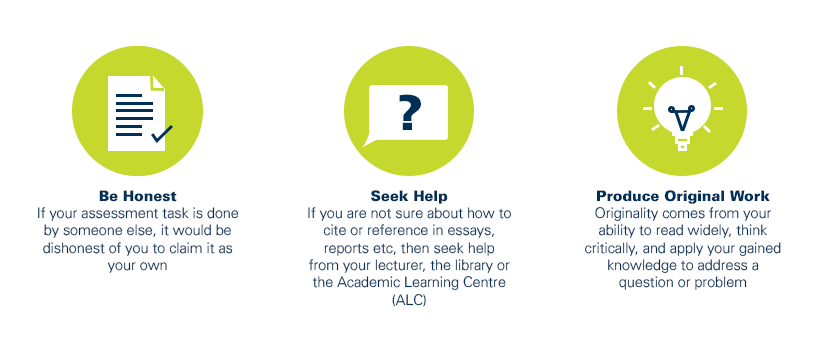
As a CQUniversity student you are expected to act honestly in all aspects of your academic work.
Any assessable work undertaken or submitted for review or assessment must be your own work. Assessable work is any type of work you do to meet the assessment requirements in the unit, including draft work submitted for review and feedback and final work to be assessed.
When you use the ideas, words or data of others in your assessment, you must thoroughly and clearly acknowledge the source of this information by using the correct referencing style for your unit. Using others’ work without proper acknowledgement may be considered a form of intellectual dishonesty.
Participating honestly, respectfully, responsibly, and fairly in your university study ensures the CQUniversity qualification you earn will be valued as a true indication of your individual academic achievement and will continue to receive the respect and recognition it deserves.
As a student, you are responsible for reading and following CQUniversity’s policies, including the Student Academic Integrity Policy and Procedure. This policy sets out CQUniversity’s expectations of you to act with integrity, examples of academic integrity breaches to avoid, the processes used to address alleged breaches of academic integrity, and potential penalties.
What is a breach of academic integrity?
A breach of academic integrity includes but is not limited to plagiarism, self-plagiarism, collusion, cheating, contract cheating, and academic misconduct. The Student Academic Integrity Policy and Procedure defines what these terms mean and gives examples.
Why is academic integrity important?
A breach of academic integrity may result in one or more penalties, including suspension or even expulsion from the University. It can also have negative implications for student visas and future enrolment at CQUniversity or elsewhere. Students who engage in contract cheating also risk being blackmailed by contract cheating services.
Where can I get assistance?
For academic advice and guidance, the Academic Learning Centre (ALC) can support you in becoming confident in completing assessments with integrity and of high standard.
What can you do to act with integrity?