Overview
In this unit you will learn how the brain provides the foundation for all psychological processes and behaviour. Specifically, you will study the structure and function of the central nervous system, and how structures in the brain contribute to adaptive information processing. You will gain an understanding of the biological basis of a range of human psychological processes and functions, including perception, language, learning and memory. You will also learn how to critically evaluate the empirical literature and key research methods employed in the field in relation to contemporary theories of cognitive function.
Details
Pre-requisites or Co-requisites
24 credit points including PSYC11010 or PSYC11008 or PSYC11009.
Important note: Students enrolled in a subsequent unit who failed their pre-requisite unit, should drop the subsequent unit before the census date or within 10 working days of Fail grade notification. Students who do not drop the unit in this timeframe cannot later drop the unit without academic and financial liability. See details in the Assessment Policy and Procedure (Higher Education Coursework).
Offerings For Term 1 - 2026
Attendance Requirements
All on-campus students are expected to attend scheduled classes - in some units, these classes are identified as a mandatory (pass/fail) component and attendance is compulsory. International students, on a student visa, must maintain a full time study load and meet both attendance and academic progress requirements in each study period (satisfactory attendance for International students is defined as maintaining at least an 80% attendance record).
Recommended Student Time Commitment
Each 6-credit Undergraduate unit at CQUniversity requires an overall time commitment of an average of 12.5 hours of study per week, making a total of 150 hours for the unit.
Class Timetable
Assessment Overview
Assessment Grading
This is a graded unit: your overall grade will be calculated from the marks or grades for each assessment task, based on the relative weightings shown in the table above. You must obtain an overall mark for the unit of at least 50%, or an overall grade of 'pass' in order to pass the unit. If any 'pass/fail' tasks are shown in the table above they must also be completed successfully ('pass' grade). You must also meet any minimum mark requirements specified for a particular assessment task, as detailed in the 'assessment task' section (note that in some instances, the minimum mark for a task may be greater than 50%). Consult the University's Grades and Results Policy for more details of interim results and final grades.
All University policies are available on the CQUniversity Policy site.
You may wish to view these policies:
- Grades and Results Policy
- Assessment Policy and Procedure (Higher Education Coursework)
- Review of Grade Procedure
- Student Academic Integrity Policy and Procedure
- Academic Progression Policy and Procedure
- Student Refund and Credit Balance Policy and Procedure
- Complaints Policy and Procedure
- Information and Communications Technology Acceptable Use Policy and Procedure
This list is not an exhaustive list of all University policies. The full list of University policies are available on the CQUniversity Policy site.
Feedback, Recommendations and Responses
Every unit is reviewed for enhancement each year. At the most recent review, the following staff and student feedback items were identified and recommendations were made.
Feedback from Student feedback
Some students found mind maps challenging to read
Additional efforts will be made to ensure students know how to access the alternate delivery formats (such as A4 notes and Power Point Slides) provided each week
Feedback from Teaching staff observation
Some students would benefit from additional support with the essay task.
Dedicate a workshop early in the term to the essay task. Review the task requirements and paragraph structures.
Feedback from Student feedback, HoC observation
Most students praised the exceptional teaching quality and excellent learning resources provided.
Maintain the positive changes made to the unit.
- Describe the structure and function of the central nervous system.
- Explain the neural bases of psychological processes and human behaviour, such as perception, language, learning and memory.
- Describe the features of key methods in physiological psychology, and how they are applied in empirical research.
- Critically evaluate empirical studies in psychophysiology.
This unit addresses Foundational Competencies as specified by the Australian Psychology Accreditation Council (APAC). The unit specifically aligns to the following APAC graduate competencies:
1.1 Comprehend and apply a broad and coherent body of knowledge of psychology, with depth of understanding of underlying principles, theories and concepts in the discipline, using a scientific approach, including the following topics: ii. individual differences in capacity, behaviour and personality; v. learning and memory; vi. cognition, language and perception; vii. motivation and emotion; viii. neuroscience and the biological bases of behaviour.
1.3 Analyse and critique theory and research in the discipline of psychology and communicate these in written and oral formats.
1.6 Demonstrate self-directed pursuit of scholarly inquiry in psychology.
Alignment of Assessment Tasks to Learning Outcomes
| Assessment Tasks | Learning Outcomes | |||
|---|---|---|---|---|
| 1 | 2 | 3 | 4 | |
| 1 - Online Quiz(zes) - 30% | ||||
| 2 - Written Assessment - 40% | ||||
| 3 - Take Home Exam - 30% | ||||
Alignment of Graduate Attributes to Learning Outcomes
| Graduate Attributes | Learning Outcomes | |||
|---|---|---|---|---|
| 1 | 2 | 3 | 4 | |
| 1 - Communication | ||||
| 2 - Problem Solving | ||||
| 3 - Critical Thinking | ||||
| 4 - Information Literacy | ||||
| 5 - Team Work | ||||
| 6 - Information Technology Competence | ||||
| 7 - Cross Cultural Competence | ||||
| 8 - Ethical practice | ||||
| 9 - Social Innovation | ||||
| 10 - First Nations Knowledges | ||||
| 11 - Aboriginal and Torres Strait Islander Cultures | ||||
Textbooks
The Student's Huide to Cognitive Neuroscience
- Edition: 4th (2019)
- Authors: Jamie Ward
- Routledge
- London London , London , UK
- ISBN: 9781138490543
IT Resources
- CQUniversity Student Email
- Internet
- Unit Website (Moodle)
All submissions for this unit must use the referencing style: American Psychological Association 7th Edition (APA 7th edition)
For further information, see the Assessment Tasks.
b.williams@cqu.edu.au
Week 1
Begin Date: 09 Mar 2026Module/Topic
Cell Structure and Communication
Chapter
2 (p19-p24: Section: "Structure and function of the neuron")
6 (p129-141: Section: "Nature and nurture of individual differences")
Events and Submissions/Topic
Week 2
Begin Date: 16 Mar 2026Module/Topic
The Brain: Development and Structure
Chapter
2 (p24 - 34. From section: "The gross organization of the brain" to end of chapter)
Events and Submissions/Topic
Week 3
Begin Date: 23 Mar 2026Module/Topic
Vision
Chapter
7
Events and Submissions/Topic
Week 4
Begin Date: 30 Mar 2026Module/Topic
Attention
Chapter
9
Events and Submissions/Topic
Quiz #1 Open: Monday (30 March 2026) 12:05am AEST and closes Friday (3 April 2026) 11:55pm AEST.
Week 5
Begin Date: 06 Apr 2026Module/Topic
Movement and Actions
Chapter
10
Events and Submissions/Topic
Week 6
Begin Date: 13 Apr 2026Module/Topic
Learning and Memory
Chapter
11
Events and Submissions/Topic
Vacation Week
Begin Date: 20 Apr 2026Module/Topic
Chapter
Events and Submissions/Topic
Week 7
Begin Date: 27 Apr 2026Module/Topic
Literacy and Language
Chapter
13
Events and Submissions/Topic
Week 8
Begin Date: 04 May 2026Module/Topic
Numeracy
Chapter
14
Events and Submissions/Topic
Week 9
Begin Date: 11 May 2026Module/Topic
Executive Functions
Chapter
15
Events and Submissions/Topic
Week 10
Begin Date: 18 May 2026Module/Topic
Social and Emotional Functioning
Chapter
16
Events and Submissions/Topic
Week 11
Begin Date: 25 May 2026Module/Topic
Consciousness
Chapter
Seth, A. K., & Bayne, T. (2022). Theories of consciousness. Nature Reviews.Neuroscience, 23(7), 439-452. https://doi.org/10.1038/s41583-022-00587-4
Events and Submissions/Topic
Week 12
Begin Date: 01 Jun 2026Module/Topic
Balancing the view: what have we learnt and where might it lead?
Chapter
Gerlich, M. (2025). AI Tools in Society: Impacts on Cognitive Offloading and the Future of Critical Thinking. Societies, 15(1), 6. https://doi.org/10.3390/soc15010006
Events and Submissions/Topic
Quiz #2 Open: Week 12 Monday (1 June) 12:05am AEST and closes Friday (5 June) 11:55pm AEST.
Exam Week
Begin Date: 08 Jun 2026Module/Topic
Chapter
Events and Submissions/Topic
Vacation/Exam Week
Begin Date: 15 Jun 2026Module/Topic
Chapter
Events and Submissions/Topic
1 Online Quiz(zes)
This assessment task comprises two (2) online quizzes to be completed and submitted via the PSYC12012 Moodle site. They will primarily assess the lecture and assigned readings; however tutorial content may also be included.
The first test in Week 4, Quiz#1 contains 30 multiple-choice questions and the second test in Week 12, Quiz#2 contains 50 multiple-choice questions.
Restrictions:
You have 40 minutes to complete Quiz#1 and 90 minutes to complete Quiz#2. Only one attempt is allowed on each quiz.
The 72-hour grace period does not apply to these assessments.
Examinable Topics:
The first quiz covers topics in weeks 1, 2, & 3. There will be 10 questions from each topic.
The second quiz covers topics from weeks 4 to 11. There will be approximately 6 questions from each topic.
Weighting:
The first quiz accounts for 10% of your final grade.
The second quiz accounts for 20% of your final grade.
Tips:
Learn the examinable materials before the quiz. On average, you have just over a minute for each question. Thus, there is limited time to go through notes or the textbook during the quiz.
Complete the quiz on a computer (not on a smart phone or an ipad) in a place free of distraction.
Ensure a reliable internet connection and power supply to your computer.
It is strongly recommended you complete the quiz well before the closing time in case of unexpected technical problems with your computer or internet access.
Acceptable use of AI:
Level 1: Your responses to the quiz questions must be your own work. It is not permissible to use Generative Artificial Intelligence (GenAI) tools to assist you with this task.
Quiz #1 open: Week 4 Monday (30 March 2025) 12:05am AEST, and will close Friday (3 April 2025) 11:55pm AEST. Quiz #2 Open: Week 12 Monday (1 June 2025) 12:05am AEST, and will close Friday (5 June 2025) 11:55pm AEST. The 72-hour grace period does not apply to these assessments.
Grades will be made available when the quiz is completed. However, a review of questions will not be available until after the quiz has closed for all students.
The online tests are graded by awarding full marks for selecting the single correct answer to each question. All questions will have equal weight. There are no penalties for wrong answers.
- Describe the structure and function of the central nervous system.
2 Written Assessment
You will write a 2000-word critical essay evaluating a current issue or theory in physiological psychology. You’ll choose one of two essay topics. A minimum of ten references is required, but more are encouraged. The essay topics will be made available on Moodle.
Objective
The essay topics are designed to assess your ability to critically evaluate and apply the concepts discussed throughout the unit, including in lectures, tutorials, and readings. Your response should demonstrate a deep understanding of the topic, going beyond merely summarising the referenced materials. The objective is to showcase your progress in using research skills to gather, analyse, and apply evidence effectively in support of your arguments, drawing on the relevant course content to address the questions provided.
Word limit
The word limit is 2000+/- 10% (i.e. between 1800-2200 words). There is no penalty for having less than 2000 words, but if your essay is much less than 1800 words, ensure that you have addressed the question in enough detail.
- The final word count should be stated clearly and accurately on your title page.
- The title page and reference list do not count towards the total.
- All other words are counted.
Presentation and style
Your referencing style must adhere to the American Psychological Association (APA) 7th edition. Your writing should be in appropriate academic style. Please refer to the APA guidelines (on Moodle) for information about basic presentation and formatting requirements (font, margins, & spacing).
Your essay should be presented with a title page as the first page, with the essay beginning from page two. The title page should include student name, ID number, unit code and title, (PSYC12012, Physiological Psychology), title of the essay, word count (excluding reference list and title page). The essay does not require an abstract.
Acceptable use of AI
Level 3: AI Collaboration. You may use AI to assist with specific tasks such as drafting text, refining and evaluating your work. You must critically evaluate and modify any AI-generated content you use.
If you decide to use AI, it is recommended that you use generative AI critically. Focusing on your own knowledge and skills gained through research of the topic will be beneficial. You may wish to limit your use of AI to:
- Supplement teaching resources provided on the unit to help you further understand the concepts discussed as well as finding and understanding background literature and resources related to the topic.
- Check the grammar, punctuation, syntax, and logic of your written work.
- Enhance the vocabulary of your writing and submitted assessment.
- Manage the word count of the assessment.
It is not recommended that you use Generative AI technology to:
- Generate a draft of your essay.
- Generate any of the arguments used in your assignment.
Week 9 Tuesday (12 May 2026) 11:55 pm AEST
The 72-hour grace period does apply to this assessment.
Marks and feedback for the essay will be available 2 - 3 weeks after the due date.
This assessment is worth 40% of the final grade. Your essay will be marked against the criteria specified in the marking and feedback sheet (available on Moodle) and will receive a mark out of 40.
The marking criteria include;
- Introduction (8 marks)
- Main body (narrative) (14 marks)
- Synthesis & conclusion (8 marks)
- Communication and Professional Voice (5 marks)
- Technical Literacy & Presentation (5 marks)
- Please refer to the marking rubric (available on PSYC12012 Moodle page) for more details.
Submissions exceeding the 2200-word limit will be subject to a 10% deduction (as a proportion of the total possible grade).
- Explain the neural bases of psychological processes and human behaviour, such as perception, language, learning and memory.
- Describe the features of key methods in physiological psychology, and how they are applied in empirical research.
- Critically evaluate empirical studies in psychophysiology.
3 Take Home Exam
Weighting
30% of your final grade.
Examinable content
Topics from weeks 1 to 11.
Format
The take home test will include 5 questions each requiring a short answer written response (300 words for each response). Responses will be worth six (6) marks each, with a total of thirty (30) for the test. Questions will cover content from lectures, weekly readings, and tutorial discussions.
The test paper and instructions will be made available on the PSYC12012 Moodle page in the first exam week (Monday, 8th June 2025, 12:05am AEST).
This test should be taken independently, without consulting with other students. Do not share or discuss anything related to this take-home test with anyone. Submissions will be processed through Turnitin as per normal assignments. Only one submission is allowed.
Answers for each question will not be longer than 300 words long (double line spacing and size 12 font). There is no penalty for writing less than 300 words. Submission exceeding the word count by 10% or more will be penalised by deducting 10% of the total marks for each question. We strongly encourage students to run a word count check on each response before submitting. No citations or references are needed.
The 72-hour grace period does not apply to this assessment.
Acceptable use of AI
Level 3: AI Collaboration. You may use AI to assist with specific tasks such as drafting text, refining and evaluating your work. You must critically evaluate and modify any AI-generated content you use.
For this assessment, tasks may include the following:
- Check the grammar, punctuation, syntax, and logic of your written work.
- Enhance the vocabulary of your writing and submitted assessment.
- Manage the word count of the assessment.
Exam Week Wednesday (10 June 2026) 11:55 pm AEST
The 72-hour grace period does not apply to this assessment.
Grades will be released before grade certification.
The questions will primarily involve knowledge-based questions designed to test your application and understanding of the material covered in the unit. As they are short answer questions, grades will primarily be awarded in terms of accurately addressing the specific questions posed and providing sufficient detail in answers. Students should use the available word limit to make clear and concise answers, including only information relevant to the question posed. Full marks can be achieved by using the available word limit to make the most relevant and accurate points supporting your answer to the question, expressed in appropriate academic style.
- Describe the structure and function of the central nervous system.
- Explain the neural bases of psychological processes and human behaviour, such as perception, language, learning and memory.
- Describe the features of key methods in physiological psychology, and how they are applied in empirical research.
- Critically evaluate empirical studies in psychophysiology.
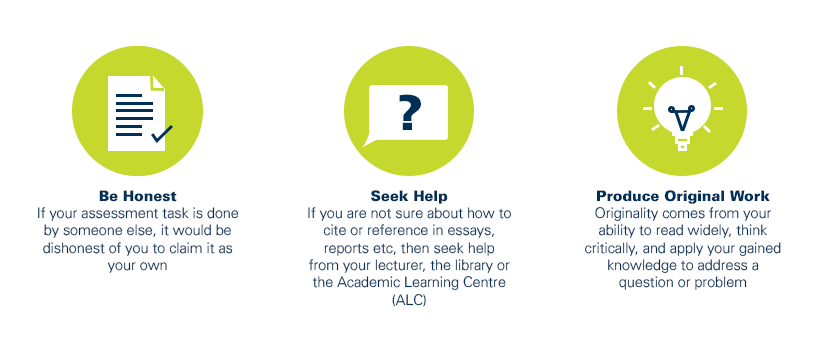
As a CQUniversity student you are expected to act honestly in all aspects of your academic work.
Any assessable work undertaken or submitted for review or assessment must be your own work. Assessable work is any type of work you do to meet the assessment requirements in the unit, including draft work submitted for review and feedback and final work to be assessed.
When you use the ideas, words or data of others in your assessment, you must thoroughly and clearly acknowledge the source of this information by using the correct referencing style for your unit. Using others’ work without proper acknowledgement may be considered a form of intellectual dishonesty.
Participating honestly, respectfully, responsibly, and fairly in your university study ensures the CQUniversity qualification you earn will be valued as a true indication of your individual academic achievement and will continue to receive the respect and recognition it deserves.
As a student, you are responsible for reading and following CQUniversity’s policies, including the Student Academic Integrity Policy and Procedure. This policy sets out CQUniversity’s expectations of you to act with integrity, examples of academic integrity breaches to avoid, the processes used to address alleged breaches of academic integrity, and potential penalties.
What is a breach of academic integrity?
A breach of academic integrity includes but is not limited to plagiarism, self-plagiarism, collusion, cheating, contract cheating, and academic misconduct. The Student Academic Integrity Policy and Procedure defines what these terms mean and gives examples.
Why is academic integrity important?
A breach of academic integrity may result in one or more penalties, including suspension or even expulsion from the University. It can also have negative implications for student visas and future enrolment at CQUniversity or elsewhere. Students who engage in contract cheating also risk being blackmailed by contract cheating services.
Where can I get assistance?
For academic advice and guidance, the Academic Learning Centre (ALC) can support you in becoming confident in completing assessments with integrity and of high standard.
What can you do to act with integrity?