Overview
This unit introduces you to fundamental aspects of physiotherapy practice, including physical examination, therapeutic exercise and utilising research skills to inform evidence-based practice. You will begin to acquire knowledge and skills in the assessment and prescription of resistance and aerobic training programs and develop skills in the observation, measurement and analysis of muscle and joint function. Your understanding of professional physiotherapy practice will be extended through undertaking an observational clinical placement.
Details
Pre-requisites or Co-requisites
To enrol in this unit, you must be enrolled in the CB85 Course and meet the following requisites: Prerequisites: PSIO11004: Foundations of Physiotherapy Practice 1
Important note: Students enrolled in a subsequent unit who failed their pre-requisite unit, should drop the subsequent unit before the census date or within 10 working days of Fail grade notification. Students who do not drop the unit in this timeframe cannot later drop the unit without academic and financial liability. See details in the Assessment Policy and Procedure (Higher Education Coursework).
Offerings For Term 2 - 2026
Attendance Requirements
All on-campus students are expected to attend scheduled classes - in some units, these classes are identified as a mandatory (pass/fail) component and attendance is compulsory. International students, on a student visa, must maintain a full time study load and meet both attendance and academic progress requirements in each study period (satisfactory attendance for International students is defined as maintaining at least an 80% attendance record).
Recommended Student Time Commitment
Each 6-credit Undergraduate unit at CQUniversity requires an overall time commitment of an average of 12.5 hours of study per week, making a total of 150 hours for the unit.
Class Timetable
Assessment Overview
Assessment Grading
This is a graded unit: your overall grade will be calculated from the marks or grades for each assessment task, based on the relative weightings shown in the table above. You must obtain an overall mark for the unit of at least 50%, or an overall grade of 'pass' in order to pass the unit. If any 'pass/fail' tasks are shown in the table above they must also be completed successfully ('pass' grade). You must also meet any minimum mark requirements specified for a particular assessment task, as detailed in the 'assessment task' section (note that in some instances, the minimum mark for a task may be greater than 50%). Consult the University's Grades and Results Policy for more details of interim results and final grades.
All University policies are available on the CQUniversity Policy site.
You may wish to view these policies:
- Grades and Results Policy
- Assessment Policy and Procedure (Higher Education Coursework)
- Review of Grade Procedure
- Student Academic Integrity Policy and Procedure
- Academic Progression Policy and Procedure
- Student Refund and Credit Balance Policy and Procedure
- Complaints Policy and Procedure
- Information and Communications Technology Acceptable Use Policy and Procedure
This list is not an exhaustive list of all University policies. The full list of University policies are available on the CQUniversity Policy site.
Feedback, Recommendations and Responses
Every unit is reviewed for enhancement each year. At the most recent review, the following staff and student feedback items were identified and recommendations were made.
Feedback from Unit evaluation data, direct student feedback, self-reflection.
Students reported that videos demonstrating practical skills would better support the practice of core assessment skills (range of motion, muscle strength, and length tests).
It is recommended that teaching staff develop demonstration videos for muscle strength, range-of-motion and muscle length assessments to support student learning and skills practice.
Feedback from Unit evaluation data, direct student feedback, self-reflection.
Students want case studies to support the contextual application of the physiotherapy assessments being taught in this unit to help reinforce their learning.
It is recommended to include simple, non-pathology case studies that relate to the practical assessment skills taught and assessed in this unit.
- Demonstrate an understanding of energy systems, muscle and cardiorespiratory physiology, components of physical function and principles of therapeutic exercise program design
- Apply principles of evidence-based practice and client-centred care through research and application of the International classification of Functioning, Disability and Health Framework (ICF)
- Demonstrate effective skills in patient communication and risk management
- Demonstrate theoretical and applied knowledge in the assessment, prescription, monitoring, evaluation and documentation of resistance and aerobic training programs
- Demonstrate theoretical and applied knowledge of physical examination, including observation, palpation, functional tasks, range of movement, muscle strength and muscle length
- Demonstrate professional and ethical behaviours consistent with a physiotherapy practitioner.
Learning outcomes and assessment tasks have been mapped against and aligned with the Physiotherapy Practice Thresholds in Australia and Aotearoa New Zealand.
Alignment of Assessment Tasks to Learning Outcomes
| Assessment Tasks | Learning Outcomes | |||||
|---|---|---|---|---|---|---|
| 1 | 2 | 3 | 4 | 5 | 6 | |
| 1 - In-class Test(s) - 35% | ||||||
| 2 - Group Work - 25% | ||||||
| 3 - On-campus Activity - 0% | ||||||
| 4 - Practical Assessment - 40% | ||||||
Alignment of Graduate Attributes to Learning Outcomes
| Graduate Attributes | Learning Outcomes | |||||
|---|---|---|---|---|---|---|
| 1 | 2 | 3 | 4 | 5 | 6 | |
| 1 - Communication | ||||||
| 2 - Problem Solving | ||||||
| 3 - Critical Thinking | ||||||
| 4 - Information Literacy | ||||||
| 5 - Team Work | ||||||
| 6 - Information Technology Competence | ||||||
| 7 - Cross Cultural Competence | ||||||
| 8 - Ethical practice | ||||||
| 9 - Social Innovation | ||||||
| 10 - First Nations Knowledges | ||||||
| 11 - Aboriginal and Torres Strait Islander Cultures | ||||||
Textbooks
Musculoskeletal assessment : joint motion and muscle testing
- Third edition (2013)
- Authors: Clarkson, Hazel M
- Wolters Kluwer Health/Lippincott Williams & Wilkins
- ISBN: 978-1609138165
Therapeutic exercise : foundations and techniques
- Seventh edition (2018)
- Authors: Carolyn Kisner, Lynn Allen Colby; John Borstad
- Philadelphia F.A. Davis Company
- Philadelphia Philadelphia , Pennsylvan , United States
- ISBN: 978-0803658509
IT Resources
- CQUniversity Student Email
- Internet
- Unit Website (Moodle)
- Zoom
All submissions for this unit must use the referencing style: American Psychological Association 7th Edition (APA 7th edition)
For further information, see the Assessment Tasks.
j.czencz@cqu.edu.au
Week 1
Begin Date: 13 Jul 2026Module/Topic
Unit Introduction
Foundational Concepts of Therapeutic Exercise
Chapter
Refer to Moodle for readings and additional resources
Events and Submissions/Topic
Group Work: Groups nominated to Unit Coordinator via email by Week 1 Friday (17 July 2026) 4:00 pm
Week 2
Begin Date: 20 Jul 2026Module/Topic
Aerobic and Resistance Exercise
Chapter
Refer to Moodle for readings and additional resources
Events and Submissions/Topic
Off-campus requirement: Gym visit
Refer to Moodle for your allocated gym visit time.
Week 3
Begin Date: 27 Jul 2026Module/Topic
Principles of Patient Management
Balance Exercise
Chapter
Refer to Moodle for readings and additional resources
Events and Submissions/Topic
Week 4
Begin Date: 03 Aug 2026Module/Topic
Range of Motion and Stretching Exercise
Chapter
Refer to Moodle for readings and additional resources
Events and Submissions/Topic
Week 5
Begin Date: 10 Aug 2026Module/Topic
Assessment
Aquatic Exercise
Chapter
Refer to Moodle for readings and additional resources
Events and Submissions/Topic
In-class Test 1 (15%): Week 5 Tuesday (11 Aug 2026) 9:00 am
Off-campus requirement: Pool visit - refer to Moodle for details
Week 6
Begin Date: 17 Aug 2026Module/Topic
Introduction to Physical Examination
Physical Examination: Range of Motion
Chapter
Refer to Moodle for readings and additional resources
Events and Submissions/Topic
Vacation Week
Begin Date: 24 Aug 2026Module/Topic
Chapter
Events and Submissions/Topic
Week 7
Begin Date: 31 Aug 2026Module/Topic
Physical Examination: Strength Assessment
Chapter
Refer to Moodle for readings and additional resources
Events and Submissions/Topic
Group Work (25%): Week 7 Friday (4 Sept 2026) 4:00 pm
Week 8
Begin Date: 07 Sep 2026Module/Topic
Physical Examination: Muscle Length Assessment
Chapter
Refer to Moodle for readings and additional resources
Events and Submissions/Topic
Week 9
Begin Date: 14 Sep 2026Module/Topic
Functional Deprivation and Facilitation
Chapter
Refer to Moodle for readings and additional resources
Events and Submissions/Topic
Week 10
Begin Date: 21 Sep 2026Module/Topic
Systematic Approach to the Physical Examination
Introduction to Clinical Reasoning
Chapter
Refer to Moodle for readings and additional resources
Events and Submissions/Topic
Observational Placement (P/F): Week 10 Friday (25 Sept 2026) 4:00 pm (Hurdle Assessment)
Week 11
Begin Date: 28 Sep 2026Module/Topic
Assessment
Mock Practical Assessment
Chapter
Refer to Moodle for readings and additional resources
Events and Submissions/Topic
In-class Test 2 (20%) Week 11 Tuesday (29 Sept 2026) 9:00 am
Week 12
Begin Date: 05 Oct 2026Module/Topic
Revision
Chapter
Refer to Moodle for readings and additional resources
Events and Submissions/Topic
Attendance (P/F) Week 12 Friday (9 Oct 2026) 4:00 pm (Hurdle Assessment)
Exam Week
Begin Date: 12 Oct 2026Module/Topic
Chapter
Events and Submissions/Topic
Practical Assessment (40%) This assessment will be scheduled in the Exam Week.
Vacation/Exam Week
Begin Date: 19 Oct 2026Module/Topic
Chapter
Events and Submissions/Topic
1 In-class Test(s)
In-class test(s) consists of two (2) tests worth 35% of the overall unit grade.
In-class Test 1 (15%) constitutes 15% of the overall grade. It will occur in week 5 and assess content from Weeks 1-4
inclusive. In-class Test 1 will consist of 30 questions (worth 40 marks) and will have a time limit of 60 minutes.
Due: Week 5 Tuesday (11 Aug 2026) at 9:00 am.
In-class Test 2 (20%) constitutes 20% of the overall grade. It will occur in Week 11 and assess content from Weeks
5-10 inclusive. In-class Test 2 will consist of up to 45 questions (worth 60 marks) and will have a time limit of 90 minutes.
Due: Week 11 Tuesday (29 Sept 2026) at 9:00 am.
The in-class tests are closed-book assessments, which will be supervised by a CQUniversity staff member and must be completed at the scheduled time on either the Bundaberg, Rockhampton, or Cairns campus. Access to any resources is prohibited (e.g., books, notes, electronic devices, or websites).
In-class tests 1 and 2 will consist of multiple question categories, including:
- Multiple choice questions
- True/ false questions
- Calculations
- Short answer questions
- Fill in the missing word(s) questions
Refer to Moodle for further information and additional resources.
Level of GenAI use allowed:
Level 1: No AI
The assessment is completed entirely without Al assistance in a controlled environment, ensuring that students rely solely on their existing knowledge, understanding, and skills.
You must not use Al at any point during the assessment. You must demonstrate your core skills and knowledge.
72 hour automatic extension:
The 72 hour grace period does not apply to this assessment.
In-class Test 1 must be completed Week 5 Tuesday (11 Aug 2026) at 9:00 am AEST. In-class Test 2 must be completed Week 11 Tuesday (29th Sept 2026) at 9:00 am AEST.
Results will be returned to students no later than two weeks after the completion of the in-class test.
Grading of Assessment
All questions will be marked numerically and an overall percentage mark awarded.
Late Arrival to Assessment
You should aim to arrive at least 15 minutes prior to the official assessment commencement time. In the extraordinary circumstance that you are late, you will be permitted late entry to your assessment of up to 10 minutes after the official
commencement time. The period of lateness will be deducted from your overall assessment time. If you are denied access to the assessment due to lateness (i.e. arriving beyond the permitted late entry period), you should make an application for deferred assessment, which may or may not be approved in line with CQU policy. If the application for deferred assessment is denied, you will receive a grade of zero percent (0%) for the assessment item.
- Demonstrate an understanding of energy systems, muscle and cardiorespiratory physiology, components of physical function and principles of therapeutic exercise program design
- Demonstrate theoretical and applied knowledge in the assessment, prescription, monitoring, evaluation and documentation of resistance and aerobic training programs
- Demonstrate theoretical and applied knowledge of physical examination, including observation, palpation, functional tasks, range of movement, muscle strength and muscle length
2 Group Work
The Group Work Assessment Task involves the creation of a Google site that will function as a digital therapeutic exercise manual. This assessment task is designed to develop your understanding of physical function, extend your skills in patient-centred care, and advance your skills in physiotherapy exercise prescription and documentation. This task will also develop introductory level skills in communication, problem solving, critical thinking, information literacy, teamwork, and information technology competence.
Task Overview
As a group, you are required to design an online exercise manual (presented as a Google site) for one of the following parameters of physical capacity:
- Aerobic fitness (indoor, outdoor)
- Muscle strength (shoulder, elbow/wrist/hand, hip/knee, ankle/foot)
- Muscle power (upper limb, lower limb)
- Muscle flexibility (upper limb, lower limb)
- Joint range of movement (shoulder, elbow/wrist/hand, hip, knee, ankle/foot)
- Balance retraining (sitting, standing)
Your group will collaborate to design the Google site, research your parameter, and present evidence-based information relating to your parameter background, training principles, safety considerations, exercise intervention, and resources. For the exercise intervention component, each group member will be individually responsible for selecting, prescribing, and documenting three unique exercises for your parameter. This component will be marked individually. For all remaining tasks, your group will need to collaborate to equally distribute the workload in an agreed upon timeframe for completion.
Audiovisual: Any pictures or videos included in the exercise manual must be your original work (i.e., you must take your own videos and photos). Using photos from online sources or exercise prescription software is not permitted.
Any group member who does not contribute equally in the agreed upon timeframe will be in breach of ethical academic practice. If this occurs, the group member will be required to have a conduct meeting with the unit coordinator with a first and final warning issued. If the conduct continues, the unit coordinator will either award the group member a grade of zero for the group work component or request the full assignment to be completed individually.
Exercise Manual Layout
Your exercise manual (Google site) will be designed as an educational resource for other student physiotherapists, and must include the following:
- Title page
- Construct
- Authors
- Background
- Definitions
- Effects of training
- Populations that benefit from this type of training
- Principles
- Indications for training
- Principles of training
- Program design
- Safety
- Precautions and contraindications
- Considerations to training
- Equipment requirements
- Intervention
- Therapist aim/s (professional language using anatomical terms)
- Patient aim/s (simple language with no jargon)
- Therapist instructions (clinic environment)
- Patient instructions (home environment)
- Exercise parameters (e.g., F.I.T.T.)
- One more advanced exercise
- One less advanced exercise
- Open vs closed chain
- Alternative patient positioning
- Alternative equipment (e.g., body weight vs external resistance)
- Targeted muscle contraction vs functional activity and/or integration into ADLs
- Exercise prescription
- Progressions / regressions
- Two exercise variations
- Resources
- Any additional resources
- Reference list
An example layout / template is available on Moodle.
Group and Topic Allocation
You will work in small groups of 3-4 students for this assignment. Each student is required to self-nominate themselves to one group topic via the group allocation function in Moodle by Week 1 Friday (17 July 2026) 4:00 pm. Students who have not allocated themselves to a group by 4 pm Friday Week 1, will be assigned to a group by the unit coordinator. Please refer to Moodle for the confirmed group sizes for each campus as this will be based on student enrolments.
Refer to Moodle for further information and additional resources.
Level of GenAI use allowed:
Level 3: AI COLLABORATION
Al may be used to help complete the task, including idea generation, drafting, feedback, and refinement. Students should critically evaluate and modify the Al suggested outputs, demonstrating their understanding.
You may use Al to assist with specific tasks such as drafting text, refining and evaluating your work. You must critically evaluate and modify any Al-generated content you use.
72hour automatic extension:
The 72-hour grace period does not apply to this assessment.
Therapeutic Exercise Program must be completed Week 7 Friday (4 Sept 2026) at 4:00 pm.
Results will be accessible on Moodle within two weeks of the due date.
The assessment rubric for this task is based on the Physiotherapy Practice Thresholds in Australia and Aotearoa New Zealand. This quality framework is mapped against the CQUniversity Graduate Attributes and is intended to give a holistic understanding of standards expected for the assessment task. The rubric for this assessment will be based on the following categories and weightings:
Assessment Rubric
Group work component:
- Visual - 10%
- Knowledge of exercise parameter and program considerations - 30%
Individual component:
- Exercise Prescription - 60%
Refer to Moodle for the assessment rubric.
- Demonstrate an understanding of energy systems, muscle and cardiorespiratory physiology, components of physical function and principles of therapeutic exercise program design
- Apply principles of evidence-based practice and client-centred care through research and application of the International classification of Functioning, Disability and Health Framework (ICF)
- Demonstrate effective skills in patient communication and risk management
- Demonstrate theoretical and applied knowledge in the assessment, prescription, monitoring, evaluation and documentation of resistance and aerobic training programs
3 On-campus Activity
There will be two (2) Hurdle Assessments.
Hurdle 1: Clinical Observational Placement Attendance
This unit includes up to four (4) hours of observational learning, offering you the first workplace learning experience of the physiotherapy course. This clinical observational placement is designed to give you the opportunity to observe practicing physiotherapists interacting with patients with a range of conditions. This observational placement will be scheduled outside of regular timetabled sessions (which may include the university break week) and held in any clinical facility across the spectrum of healthcare. All pre-clinical requirements must be completed prior to attending the observational clinical placement and attendance at the placement is mandatory. Placements are organised by our clinical education coordinator, and details will be provided to you once confirmed by the facility. Refer to Moodle for further information and additional resources.
You are not required to submit anything for this assessment task.
A satisfactory grade for the observational placement is required in order to be eligible to PASS this unit.
Results will be available once all clinical observational placements are completed and attendance is confirmed by the clinical educator coordinator.
Hurdle 2: Attendance
A minimum attendance rate of 85% for practical and tutorial sessions is required to PASS this unit, as recommended by the Australian Physiotherapy Council and integrated into the CB85 Physiotherapy course. If there is a genuine reason for being absent, you must inform the unit coordinator as soon as possible and submit a medical certificate or other supporting documentation via email within five days of missing the session.
Important Notes
- Legitimate absences, such as medical, compassionate, or exceptional circumstances, will be considered in accordance with the Assessment Policy and Procedure (5.21 and 5.22)
- Inform your tutor and unit coordinator by email as soon as possible if you are absent
- Submit a medical certificate or supporting documentation via email within five days of the missed session
- You will be notified by email by the unit coordinator when you reach the 85% threshold
- If prolonged absences exceed three sessions, a meeting with the unit coordinator and head of course is required to discuss your progression in the unit
Attendance rates for this hurdle will be calculated in Week 12.
Refer to Moodle for further information and additional resources.
Level of GenAI use allowed:
Level 1: No AI
The assessment is completed entirely without Al assistance in a controlled environment, ensuring that students rely solely on their existing knowledge, understanding, and skills.
You must not use Al at any point during the assessment. You must demonstrate your core skills and knowledge.
72 hour automatic extension:
The 72 hour grace period does not apply to this assessment.
Hurdle 1: Observational Placement must be completed Week 10. Hurdle 2: Attendance must be completed Week 12
Results will be accessible on Moodle within two weeks of the due date.
Hurdle 1
To PASS this hurdle you must attend your placement and exhibit professional behaviour through punctual arrival and departure, being attired in your full clinical uniform, adhering to infection control and confidentiality protocols, and demonstrating willingness to interact and learn with your clinical educator. You must PASS this hurdle in order to be eligible to PASS the unit.
Hurdle 2
An attendance rate of 85% at practical and tutorial sessions is required to PASS this hurdle. You must PASS this hurdle in order to be eligible to PASS the unit.
- Demonstrate professional and ethical behaviours consistent with a physiotherapy practitioner.
4 Practical Assessment
The Practical Assessment is intended to assess your theoretical knowledge and practical application of assessment techniques and will be scheduled for either Week 1 or Week 2 of the university's Term 2 examination period. The
weighting of the Practical Assessment is 40% of the overall unit grade, with each station weighted equally. All content from PSIO11003 is examinable in this assessment task. The Practical Assessment will include four (4) practical skills stations that are weighted equally:
- Joint Range of Movement (ROM)
- Muscle Length (ML)
- Muscle Strength (MMT)
- Exercise Prescription and Instruction (ExRx)
At each practical skills station of assessment (ROM, ML, MMT & ExRx), you be examined on one lower limb assessment and one upper limb assessment. Students will apply exercise prescription to a basic movement problem, demonstrating appropriate parameter selection and clear instruction.
The practical assessment will have a total time limit of 30 minutes (7.5 minutes per station). For each station, you are required to demonstrate applied knowledge and understanding of the assessment and perform the practical techniques as instructed. You are expected to demonstrate:
- Safe, effective, and efficient application of the techniques
- Good communication and professional and ethical behaviour
- Accurate physiotherapy documentation
You must come appropriately attired for the Practical Assessment (full clinical uniform). When acting as patient, please change into appropriate casual clothes.
A timetable for the Practical Assessment will be published on Moodle by the end of Week 11.
Refer to Moodle for further information and additional resources.
Level of GenAI use allowed:
Level 1: No AI
The assessment is completed entirely without Al assistance in a controlled environment, ensuring that students rely solely on their existing knowledge, understanding, and skills. You must not use Al at any point during the assessment. You must demonstrate your core skills and knowledge.
72 hour automatic extension:
The 72 hour grace period does not apply to this assessment.
This assessment will be scheduled in Review/Exam Week or Exam Week following confirmation of the centrally timetabled exam after Week 6.
Results will be accessible on Moodle within two weeks of the due date.
Grading of Assessment
The assessment rubric for this task is based on the Physiotherapy Practice Thresholds in Australia and Aotearoa New Zealand. This quality framework is mapped against the CQUniversity Graduate Attributes and is intended to give a holistic understanding of standards expected for the assessment task. The rubrics for this assessment will be based on the following categories and weightings:
- Safety, Risk Management, and Professional Behaviour (P/F)
- Communication (15% - 5% per station)
- Practical Application of Techniques (85% - 28.33% per station)
Refer to Moodle for the assessment rubric.
Late Arrival to Assessment
You should aim to arrive at least 15 minutes prior to the official assessment commencement time. In the extraordinary circumstance that you are late, you will be permitted late entry to your assessment of up to 10 minutes after the official commencement time. The period of lateness will be deducted from your overall assessment time. If you are denied access to the assessment due to lateness (i.e. arriving beyond the permitted late entry period), you should make an application for deferred assessment, which may or may not be approved in line with CQU policy. If the application for deferred assessment is denied, you will receive a grade of zero percent (0%) for the assessment item.
No submission method provided.
- Apply principles of evidence-based practice and client-centred care through research and application of the International classification of Functioning, Disability and Health Framework (ICF)
- Demonstrate effective skills in patient communication and risk management
- Demonstrate theoretical and applied knowledge of physical examination, including observation, palpation, functional tasks, range of movement, muscle strength and muscle length
- Demonstrate professional and ethical behaviours consistent with a physiotherapy practitioner.
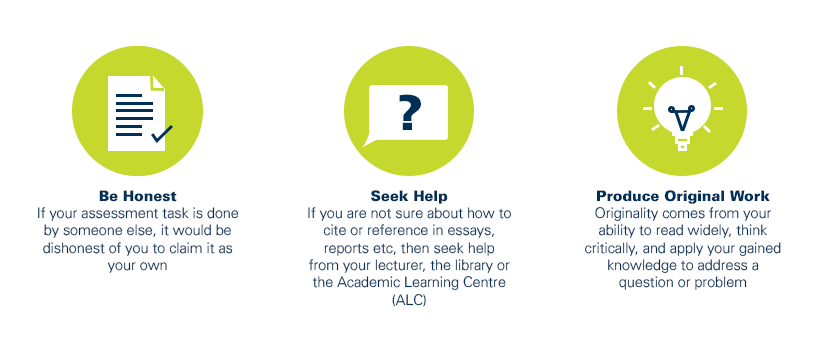
As a CQUniversity student you are expected to act honestly in all aspects of your academic work.
Any assessable work undertaken or submitted for review or assessment must be your own work. Assessable work is any type of work you do to meet the assessment requirements in the unit, including draft work submitted for review and feedback and final work to be assessed.
When you use the ideas, words or data of others in your assessment, you must thoroughly and clearly acknowledge the source of this information by using the correct referencing style for your unit. Using others’ work without proper acknowledgement may be considered a form of intellectual dishonesty.
Participating honestly, respectfully, responsibly, and fairly in your university study ensures the CQUniversity qualification you earn will be valued as a true indication of your individual academic achievement and will continue to receive the respect and recognition it deserves.
As a student, you are responsible for reading and following CQUniversity’s policies, including the Student Academic Integrity Policy and Procedure. This policy sets out CQUniversity’s expectations of you to act with integrity, examples of academic integrity breaches to avoid, the processes used to address alleged breaches of academic integrity, and potential penalties.
What is a breach of academic integrity?
A breach of academic integrity includes but is not limited to plagiarism, self-plagiarism, collusion, cheating, contract cheating, and academic misconduct. The Student Academic Integrity Policy and Procedure defines what these terms mean and gives examples.
Why is academic integrity important?
A breach of academic integrity may result in one or more penalties, including suspension or even expulsion from the University. It can also have negative implications for student visas and future enrolment at CQUniversity or elsewhere. Students who engage in contract cheating also risk being blackmailed by contract cheating services.
Where can I get assistance?
For academic advice and guidance, the Academic Learning Centre (ALC) can support you in becoming confident in completing assessments with integrity and of high standard.
What can you do to act with integrity?