Overview
This unit provides an introduction and overview of the field of practice known as complex project management. Complex project management is when a project has three characteristics. Firstly, complex projects are very complicated with lots of parts and interconnections. Secondly, there is a great deal of uncertainty. Finally, they are heavily time-constrained so there is little time to make decisions. In this unit you will explore these characteristics and how to manage them by undertaking assessments for complexity through analysis and systematic inquiry. You will investigate approaches to complexity by forecasting impacts and modelling outcomes. You will analyse the complexities of causes and effects, such as the role played by leaders, setting objectives, environmental and technological limitations and factors, and other constraints that increase complexity. In the unit you will be introduced to a number of examples of complex projects through case studies. You will be able to investigate and discuss the case studies with your peers and lecturers to increase your understanding and proficiency with the management of complex projects.
Details
Pre-requisites or Co-requisites
Students must have completed the CQUniversity Graduate Diploma of Project Management or equivalent Project Management qualification from another Institution in order to do this unit.
Important note: Students enrolled in a subsequent unit who failed their pre-requisite unit, should drop the subsequent unit before the census date or within 10 working days of Fail grade notification. Students who do not drop the unit in this timeframe cannot later drop the unit without academic and financial liability. See details in the Assessment Policy and Procedure (Higher Education Coursework).
Offerings For Term 1 - 2026
Attendance Requirements
All on-campus students are expected to attend scheduled classes - in some units, these classes are identified as a mandatory (pass/fail) component and attendance is compulsory. International students, on a student visa, must maintain a full time study load and meet both attendance and academic progress requirements in each study period (satisfactory attendance for International students is defined as maintaining at least an 80% attendance record).
Recommended Student Time Commitment
Each 6-credit Postgraduate unit at CQUniversity requires an overall time commitment of an average of 12.5 hours of study per week, making a total of 150 hours for the unit.
Class Timetable
Assessment Overview
Assessment Grading
This is a graded unit: your overall grade will be calculated from the marks or grades for each assessment task, based on the relative weightings shown in the table above. You must obtain an overall mark for the unit of at least 50%, or an overall grade of 'pass' in order to pass the unit. If any 'pass/fail' tasks are shown in the table above they must also be completed successfully ('pass' grade). You must also meet any minimum mark requirements specified for a particular assessment task, as detailed in the 'assessment task' section (note that in some instances, the minimum mark for a task may be greater than 50%). Consult the University's Grades and Results Policy for more details of interim results and final grades.
All University policies are available on the CQUniversity Policy site.
You may wish to view these policies:
- Grades and Results Policy
- Assessment Policy and Procedure (Higher Education Coursework)
- Review of Grade Procedure
- Student Academic Integrity Policy and Procedure
- Academic Progression Policy and Procedure
- Student Refund and Credit Balance Policy and Procedure
- Complaints Policy and Procedure
- Information and Communications Technology Acceptable Use Policy and Procedure
This list is not an exhaustive list of all University policies. The full list of University policies are available on the CQUniversity Policy site.
Feedback, Recommendations and Responses
Every unit is reviewed for enhancement each year. At the most recent review, the following staff and student feedback items were identified and recommendations were made.
Feedback from SUTE Survey - Students feedback
As this is a core subject, it would be effective to have it at university. As with other terms, lectures have a positive impact on Zoom sessions. But when it comes to the workshop, it is highly effective in an in-class workshop. Mainly because this subject had all group assignments, we didn't have the opportunity to interact in person, which made it difficult to adjust everyone's schedules. But if the workshop is at a university, everyone will attend, and we'll have an opportunity to interact and perform better in our assessments
While most students are satisfied with online teaching, a few prefer face-to-face learning. To maintain consistency in delivery across campuses and for online students, the unit will continue to be offered online. However, to enhance interactive learning, students will be encouraged to share more actively and to engage more fully in collaboration.
- Explain the causes, environments, and properties of complex projects.
- Identify different tools and techniques to aid a project manager manage complex projects.
- Critically analyse whether different projects cases are complex projects.
- Formulate, argue and defend a strategy that a project manager can apply to a complex project case study.
- In a team analyse the root causes of failure with a number of sample complex project cases.
Alignment of Assessment Tasks to Learning Outcomes
| Assessment Tasks | Learning Outcomes | ||||
|---|---|---|---|---|---|
| 1 | 2 | 3 | 4 | 5 | |
| 1 - Group Discussion - 40% | |||||
| 2 - Online Quiz(zes) - 10% | |||||
| 3 - Written Assessment - 50% | |||||
Alignment of Graduate Attributes to Learning Outcomes
| Graduate Attributes | Learning Outcomes | ||||
|---|---|---|---|---|---|
| 1 | 2 | 3 | 4 | 5 | |
| 1 - Knowledge | |||||
| 2 - Communication | |||||
| 3 - Cognitive, technical and creative skills | |||||
| 4 - Research | |||||
| 5 - Self-management | |||||
| 6 - Ethical and Professional Responsibility | |||||
| 7 - Leadership | |||||
| 8 - First Nations Knowledges | |||||
| 9 - Aboriginal and Torres Strait Islander Cultures | |||||
Alignment of Assessment Tasks to Graduate Attributes
| Assessment Tasks | Graduate Attributes | ||||||||
|---|---|---|---|---|---|---|---|---|---|
| 1 | 2 | 3 | 4 | 5 | 6 | 7 | 8 | 9 | |
| 1 - Group Discussion - 40% | |||||||||
| 2 - Online Quiz(zes) - 10% | |||||||||
| 3 - Written Assessment - 50% | |||||||||
Textbooks
Prescribed Aspects of Complexity: Managing Projects in a Complex World
- (2011)
- Authors: Terry Cooke-Davies
- Project Management Institute
- PA , USA
- ISBN: 9781935589303
Additional Textbook Information
IT Resources
You will need access to the following IT resources:
CQUniversity Student Email
Internet
Unit Website (Moodle)
Access to PMI resources online through PMI membership
Students are requested to join the Project Management Institute (PMI) and be a member of the PMI so they can download the textbook. It is the students' responsibility to get a copy of the textbook.
Online database Emerald and Science direct for journal articles
IT Resources
- CQUniversity Student Email
- Internet
- Unit Website (Moodle)
- Access to PMI resorces online through PMI membership
- Students are requested to join the Project Management Institute (PMI) and be a member of the PMI so they can download the text book. It is the students' responsibility to get a copy of the text book.
- Online database Emerald and Science direct for journal articles
All submissions for this unit must use the referencing style: Harvard (author-date)
For further information, see the Assessment Tasks.
m.bashir@cqu.edu.au
Week 1
Begin Date: 09 Mar 2026Module/Topic
Defining Complex Projects and Complex Project Management
Chapter
- Chapter 1 by Terry Cooke-Davies
- Additional readings and activities available on Moodle
Events and Submissions/Topic
- Workshop 1
- Icebreaking activities
- Discussion exercise on the weekly topic
Week 2
Begin Date: 16 Mar 2026Module/Topic
Managing Projects with High Complexity
Chapter
- Chapter 2 by Stephen Hayes and Daniel Bennett
- Additional readings and activities available on Moodle
Events and Submissions/Topic
- Workshop 2
- Discussion exercise on the weekly topic
- Group formations for Assessments 1 & 2
- Assessment 1 - Overview
Week 3
Begin Date: 23 Mar 2026Module/Topic
Tools for Complex Projects
Chapter
- Chapter 3 by Kaye Remington and Julien Pollack
- Additional readings and activities available on Moodle
Events and Submissions/Topic
- Workshop 3
- Discussion exercise on the weekly topic
- Group formations must be finalised
- Assessment 1 - Group work & discussion
Week 4
Begin Date: 30 Mar 2026Module/Topic
Strategic Management: Developing Policies and Strategies
Chapter
- Chapter 4 by Christopher Loch and Federick Payne
- Additional readings and activities available on Moodle
Events and Submissions/Topic
- Workshop 4
- Discussion exercise on the weekly topic
- Assessment 1 - Group work & discussion
Week 5
Begin Date: 06 Apr 2026Module/Topic
Project Complexity Assessment and Management Tools
Chapter
- Chapter 5 by Stephen Carver and Harvey Maylor
- Additional readings and activities available on Moodle
Events and Submissions/Topic
- Workshop 5
- Discussion exercise on the weekly topic
- Assessment 1 - Group work & discussion
Week 6
Begin Date: 13 Apr 2026Module/Topic
Impact of Complexity on Project Cost and Schedule Estimates
Chapter
- Chapter 6 by Dale Shermon
- Additional readings and activities available on Moodle
Events and Submissions/Topic
- Workshop 6
- Discussion exercise on the weekly topic
- Assessment 1 - Group work & discussion
- Assessment 2 &3 - Overview
Vacation Week
Begin Date: 20 Apr 2026Module/Topic
Vacation week
Chapter
Events and Submissions/Topic
Week 7
Begin Date: 27 Apr 2026Module/Topic
Beyond Competence: Developing Managers of Complex Projects
Chapter
- Chapter 7 by Lynn Crawford and Ed Hoffman
- Additional readings and activities available on Moodle
Events and Submissions/Topic
- Workshop 7
- Assessment 1 - Q&A
- Assessment 1 - Due this week
Week 8
Begin Date: 04 May 2026Module/Topic
Human Behaviour and Complexity
Chapter
- Chapter 8 by Terry Cook-Davies
- Additional readings and activities available on Moodle
Events and Submissions/Topic
- Workshop 8
- Discussion exercise on the weekly topic
- Assessment 3 - Group work & discussion
Week 9
Begin Date: 11 May 2026Module/Topic
Controlling Chaos: Value and Challenges of Applying Complexity Theory to Project Management
Chapter
- Chapter 9 by Kaye Remington and Roxanne Zolin
- Additional readings and activities available on Moodle
Events and Submissions/Topic
- Workshop 9.
- Discussion exercise on the weekly topic
- Assessment 3 - Group work & discussion
Week 10
Begin Date: 18 May 2026Module/Topic
Systems Thinking and Systems Movement
Chapter
- Chapter 10 by Peter Checkland and Terry Williams
- Additional readings and activities available on Moodle
Events and Submissions/Topic
- Workshop 10.
- Discussion exercise on the weekly topic
- Assessment 3 - Group work and Q&A
Week 11
Begin Date: 25 May 2026Module/Topic
Systems Engineering and Project Management
Chapter
- Chapter 11 by Andrew Daw
- Additional readings and activities available on Moodle
Events and Submissions/Topic
- Workshop 11
- Assessment 2 - Due this week
- Assessment 3 - Overview
Week 12
Begin Date: 01 Jun 2026Module/Topic
Toward Project Management 2.0, and Unit Review
Chapter
- Chapter 13 by Terry Cook-Davies
Events and Submissions/Topic
- Workshop 12
- Assessment 3 - Due this week
Exam Week
Begin Date: 08 Jun 2026Module/Topic
Chapter
Events and Submissions/Topic
Vacation/Exam Week
Begin Date: 15 Jun 2026Module/Topic
Chapter
Events and Submissions/Topic
PPMP20014 – Complex Project Management
This unit focuses on the management of complex projects operating in uncertain, dynamic, and multi-stakeholder environments. It equips students with advanced project management knowledge and practical skills, including systems thinking, governance, risk and uncertainty management, stakeholder engagement, and strategic decision-making. Learning activities emphasise real-world application through contemporary case studies and industry-relevant scenarios.
Unit Coordinator:
Dr Mohammed JK Bashir
Email: m.bashir@cqu.edu.au
Students should refer to this Term-Specific section for contact details and regularly check Moodle for unit announcements and updates throughout the term.
1 Group Discussion
This assessment item includes group submission and an individual reflection, with an overall weighting of 40% comprising:
- Part A: Group report (30%)
- Part B: Individual report (10%)
Purpose
- The primary purpose of this assessment item is to create an active learning environment so you can develop skills for undertaking research and translating, underpinning concepts about the important aspects of complex project management.
- The secondary purpose of this assignment is to give you the opportunity to enhance your analysis, and critical thinking skills when reflecting on different project domains and complex project management.
- You are expected to apply the tools you learned in estimating the wicked problem's complexity and forming a proper scope of work to handle it. This will make your learning more explicit as you translate your educational and personal experiences and share them with your peers.
Tasks
You are required to work in groups of 3-5 students with the consent and approval of unit coordinator. Groups must be finalised and emailed to the unit coordinator by the end of Week 3. Online students may be allowed to work individually with the approval of the unit coordinator. You are expected to actively participate, respond and engage with peers to maximise active learning. Your must also attend the workshops, actively engage with peers and academic staff, understand the case study, and work progressively. Part A requires you to submit a group report, investigating a wicked problem which will be provided on Moodle website. Part B requires you to submit a individual report about AI embedment in the context of the given wicked problem. You need to provide critical reflection on the use of generative AI, discussing its benefits, limitations, and overall impact on your learning. Further details will be provided on Moodle website.
AI ASSESSMENT SCALE - AI COLLABORATION: You may use Al to assist with specific tasks such as drafting text, refining and evaluating your work. You must critically evaluate and modify any Al-generated content you use. A reattempt of this assessment will not be permitted.
Assessment 1 - Due Monday, week 7
Assessment will be marked based on the extent and quality to which it meets each of the following criteria:
Part A: Group Report (Scaled to 30%)
- Introduce and demonstrate your understanding of the complexity context in the wicked problem (15 marks)
- Analyse and evaluate the complexity factors (10 marks)
- Discuss ICCPM outcomes and complexity factors (10 marks)
- Identify main external varieties- Ashby Law (15 marks)
- Identify the complexity factors and group them under the main four complexity types (20 marks)
- Link the complexity types with the desired project manager competencies (15 marks)
- Conclusion (5 marks)
- Quality of report, grammar, referencing, etc. (10 marks)
Part B: Individual Report (10%)
- Demonstrate critical thinking by thoroughly analysing the use of Generative AI, including its impact in the context of given wicked problem (5 marks)
- Provides insightful perspectives on the benefits, challenges, and overall influence of Generative AI on your learning (5 marks)
- Explain the causes, environments, and properties of complex projects.
- Identify different tools and techniques to aid a project manager manage complex projects.
- Formulate, argue and defend a strategy that a project manager can apply to a complex project case study.
- In a team analyse the root causes of failure with a number of sample complex project cases.
- Knowledge
- Communication
- Cognitive, technical and creative skills
- Research
- Self-management
- Ethical and Professional Responsibility
- Leadership
2 Online Quiz(zes)
This assessment item involves an online quiz worth 10% of the unit marks. The quiz will evaluate your knowledge and understanding of topics and material covered during the term.
- Only one attempt will be allowed.
- The quiz will be closed-book test.
- The quiz will be conducted under the supervisison of unit coordinator during the workshop in Week 11.
- The quiz will cover the content from Weeks 1 to 10 (lectures, tutorials, and recommended readings).
- When you attempt the quiz, questions will be randomly selected from a pool of questions based on the unit content.
- The quiz will consist of 20 questions (a combination of multiple-choice and true/false questions).
- Your attempt will have a time limit of 20 minutes. Once you start the quiz, the timer will begin to count down and cannot be paused. You must finish your attempt before it expires (Open attempts will automatically be submitted).
- The students, who are absent from the workshop in Week 11, will receive zero marks unless an extension has been granted.
- Any attempt to complete the quiz outside of workshop will also result in zero marks.
- You will be able to view your marks once the quiz has been closed.
- This assessment is exempted from the 72-hour submission grace period and must be completed during the workshop in Week 11.
- Reattempt of this assessment will not be permitted.
AI ASSESSMENT SCALE - NO AI: You must not use Al at any point during the assessment. You must demonstrate your core skills and knowledge.
The quiz must be completed during the workshop in Week 11
The online quiz will be marked by the Moodle computer program upon submission. Marks will be released after the quiz has been closed.
- All questions carry equal marks
- No penalty for incorrect answers
- Explain the causes, environments, and properties of complex projects.
- Identify different tools and techniques to aid a project manager manage complex projects.
- Knowledge
- Cognitive, technical and creative skills
- Research
3 Written Assessment
This assessment item includes a group submission and oral presentation, with an overall weighting of 50% comprising:
- Part A: Critical review report (35%) - Group work
- Part B: Oral presentation (15%) - Individual
Purpose
- The primary purpose of this assessment item is to help you to define your thinking and to classify the tools and techniques related to the complex project management field.
- The secondary purpose of this assignment is to give you the opportunity to enhance your teamwork skills, analysis, critical thinking, and written communication skills; particularly in the areas of argument development and academic writing.
Tasks
You are required to work in groups of 3-5 students. You can work within the same group as in Assessment 1 or may be able to change your group with the concent of unit coordinator. Online students may be allowed to work individually with the approval of the unit coordinator. You are expected to actively participate, respond and engage with peers to maximise active learning. Only one member needs to submit the critical review report and presentation slides on behalf of the group.
- The complexity aspects of the given case study, the uncertainties involved, the interconnectivity, and the wickedness of the problem;
- The stakeholders involved and their roles in magnifying the complexity level;
- The evaluation of the complexity level together with the size and the scale of the complexity;
- The four complexity types (structural, temporal, directional, and technical complexity);
- The evaluation of the complexity types and estimation of the relative weight of each complexity type using the various evaluation tools; and
- The various tools and techniques that might be useful to manage this complex project.
You should compile your discussion into a report while responding to the above points. You need to thoroughly study and understand the given case study in order to create a clear and succinct summary of the case. You need to illustrate the theories, tools, and techniques that might be relevant to manage such a complex case. You also need to use real evidence or examples from the case study to support your discussion. You are required to propose a management framework on how to address and reduce the complexity using the knowledge gained throughout the term.
Structure
- Your submission should follow the standard academic writing of a review report.
- The report should be a maximum of 3,000 words +- 50% (excluding references and appendices).
- The report should be structured as a review report with clear and coherent abstract, introduction, thorough literature review, methodology, results, and discussion.
- The abstract should summarise your findings in no more than 250 words.
- The introduction of the report which includes information about the case study as well as its aim and objectives.
- The literature should present the evidence you have collected to support your argument, detailing information about the case and relevant previous literature. It should highlight the complexity aspects, the uncertainties, and any other relevant information.
- The methodology should show what has been done to analyse this case and how you undertook the research/analysis.
- The results should present the findings and may include critical discussion. A conclusion section should also be included.
- Each member's contribution must be attached as a separate sheet in the Appendix section of the report.
AI ASSESSMENT SCALE - AI COLLABORATION: You may use Al to assist with specific tasks such as drafting text, refining and evaluating your work. You must critically evaluate and modify any Al-generated content you use. A reattempt of this assessment will not be permitted.
Submission Due: Monday, Week 12
Assessment marks will be released to the students on the day of confirmation of grades.
You will be assessed based on the extent and quality to which it meets each of the following criteria:
- A clear and coherent introduction that covers the rationale (the why) and a brief overview of the content;
- A clear understanding of the case study based on a thorough review of the case including its complexity aspects;
- An explanation of the causes, environment, and properties leading to complexity in this case study. A detailed description/analysis of the complexity types needs to be provided;
- Assessment of the level of complexity, providing relevant complexity radar diagram(s). This includes assigning relative weights, and justifications for the various complexity types;
- Analysing the potential stakeholders involved, their roles, interest, and importance together with a stakeholder matrix (for relevant stakeholders);
- A discussion of the tools and techniques to support the project manager in managing the complexities involved within the case study. Justifications should be provided as to why and how these tools could be useful;
- The submission should be structured in a correctly formatted academic report including abstract, introduction, literature review, methodology, results/discussion, and key findings/recommendations;
- A clear and concise conclusion including a summary of the main points and a reference list, with a minimum of 10 scholarly references;
- Your performance will be evaluated individually on your oral presentation and you will receive varying marks depending on your level of involvement, understanding, and contribution.
Part A: Critical Analysis Report (Scaled to 35%)
- Abstract and Introduction (10 marks)
- Literature Review and theoretical foundation (10 marks)
- Complexity factors (10 marks)
- Stakeholder matrix (10 marks)
- External varieties (5 marks)
- Complexity characteristics histogram and complexity level (20 marks)
- Structural/dynamic complexity matrix (5 marks)
- Dreyfuss model (5 marks)
- Butterfly effect (5 marks)
- Conceptual hurdles (5 marks)
- Conclusion (5 marks)
- Quality of report, grammar, referencing, etc. (10 marks)
Part B: Individual Presentation (Scaled to 15%)
- Preparation, Structure, and Professional Delivery (30 marks)
- Evidence of understanding and relevance of the presentation content (50 marks)
- Engagement and Timing During the Presentation (20 marks)
- Explain the causes, environments, and properties of complex projects.
- Identify different tools and techniques to aid a project manager manage complex projects.
- Critically analyse whether different projects cases are complex projects.
- Knowledge
- Communication
- Cognitive, technical and creative skills
- Research
- Self-management
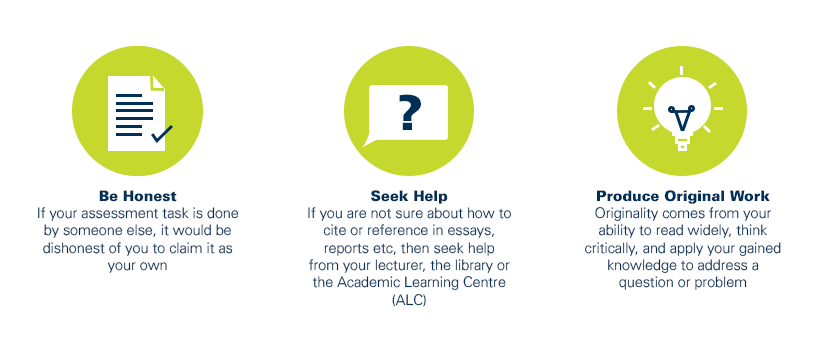
As a CQUniversity student you are expected to act honestly in all aspects of your academic work.
Any assessable work undertaken or submitted for review or assessment must be your own work. Assessable work is any type of work you do to meet the assessment requirements in the unit, including draft work submitted for review and feedback and final work to be assessed.
When you use the ideas, words or data of others in your assessment, you must thoroughly and clearly acknowledge the source of this information by using the correct referencing style for your unit. Using others’ work without proper acknowledgement may be considered a form of intellectual dishonesty.
Participating honestly, respectfully, responsibly, and fairly in your university study ensures the CQUniversity qualification you earn will be valued as a true indication of your individual academic achievement and will continue to receive the respect and recognition it deserves.
As a student, you are responsible for reading and following CQUniversity’s policies, including the Student Academic Integrity Policy and Procedure. This policy sets out CQUniversity’s expectations of you to act with integrity, examples of academic integrity breaches to avoid, the processes used to address alleged breaches of academic integrity, and potential penalties.
What is a breach of academic integrity?
A breach of academic integrity includes but is not limited to plagiarism, self-plagiarism, collusion, cheating, contract cheating, and academic misconduct. The Student Academic Integrity Policy and Procedure defines what these terms mean and gives examples.
Why is academic integrity important?
A breach of academic integrity may result in one or more penalties, including suspension or even expulsion from the University. It can also have negative implications for student visas and future enrolment at CQUniversity or elsewhere. Students who engage in contract cheating also risk being blackmailed by contract cheating services.
Where can I get assistance?
For academic advice and guidance, the Academic Learning Centre (ALC) can support you in becoming confident in completing assessments with integrity and of high standard.
What can you do to act with integrity?