Overview
This Contract and Procurement Management unit will equip you with the knowledge, skills, and techniques required for acquiring external products, results, and services to meet the needs of the company and to achieve the project goals. It also offers you the opportunity to identify, apply, and develop different negotiation strategies as well as assessing and responding to the potential risks encountered during the procurement. You will study contract types, procurement standards, legal and ethical aspects of commercial contracts as well as project tendering and awarding. On successful completion of this unit, you will have the capacity to apply the appropriate practices for managing contracts, conflicts, delays, claim, and disputes.
Details
Pre-requisites or Co-requisites
Co- requisites: PPMP20007
Important note: Students enrolled in a subsequent unit who failed their pre-requisite unit, should drop the subsequent unit before the census date or within 10 working days of Fail grade notification. Students who do not drop the unit in this timeframe cannot later drop the unit without academic and financial liability. See details in the Assessment Policy and Procedure (Higher Education Coursework).
Offerings For Term 1 - 2026
Attendance Requirements
All on-campus students are expected to attend scheduled classes - in some units, these classes are identified as a mandatory (pass/fail) component and attendance is compulsory. International students, on a student visa, must maintain a full time study load and meet both attendance and academic progress requirements in each study period (satisfactory attendance for International students is defined as maintaining at least an 80% attendance record).
Recommended Student Time Commitment
Each 6-credit Postgraduate unit at CQUniversity requires an overall time commitment of an average of 12.5 hours of study per week, making a total of 150 hours for the unit.
Class Timetable
Assessment Overview
Assessment Grading
This is a graded unit: your overall grade will be calculated from the marks or grades for each assessment task, based on the relative weightings shown in the table above. You must obtain an overall mark for the unit of at least 50%, or an overall grade of 'pass' in order to pass the unit. If any 'pass/fail' tasks are shown in the table above they must also be completed successfully ('pass' grade). You must also meet any minimum mark requirements specified for a particular assessment task, as detailed in the 'assessment task' section (note that in some instances, the minimum mark for a task may be greater than 50%). Consult the University's Grades and Results Policy for more details of interim results and final grades.
All University policies are available on the CQUniversity Policy site.
You may wish to view these policies:
- Grades and Results Policy
- Assessment Policy and Procedure (Higher Education Coursework)
- Review of Grade Procedure
- Student Academic Integrity Policy and Procedure
- Academic Progression Policy and Procedure
- Student Refund and Credit Balance Policy and Procedure
- Complaints Policy and Procedure
- Information and Communications Technology Acceptable Use Policy and Procedure
This list is not an exhaustive list of all University policies. The full list of University policies are available on the CQUniversity Policy site.
Feedback, Recommendations and Responses
Every unit is reviewed for enhancement each year. At the most recent review, the following staff and student feedback items were identified and recommendations were made.
Feedback from SUTE
Students felt that the Unit provides broad practical applicable learning on procurement strategies which is perceived as useful for future project managers.
More real-world case studies and industry examples will be incorporated into the curriculum, enforcing internalization of theoretical knowledge and improving industry-readiness in students.
Feedback from SUTE
Students deemed tutorial classes more effective and comprehensible than lectures.
More interactive learning opportunities will be incorporated into lectures, such as group discussions, case studies, and problem-solving exercises, to complement the theoretical content and foster greater student engagement, recognizing that tutorial activities are already aligned with active learning principles. Workshop format may be considered in future.
- Demonstrate an integrative understanding of the key theories and concepts underpinning buyer-contractor relationships as well as the concepts of project contracts and procurement standards
- Analyse different commercial negotiation strategies and demonstrate an ability to creatively negotiate project plans, conflicts, delays, and incentives in commercial projects
- Employ risk management planning and identification and assess the risk encountered over the procurement process
- Negotiate and analyse the principles of tendering, pricing and awarding techniques and to utilise the negotiation approaches in commercial contracts
- Evaluate and develop clear legal, financial and technical components of project contracts
- Develop a project budget and an expenditure forecast as control mechanisms and link time, cost and resources to the project framework.
Alignment of Assessment Tasks to Learning Outcomes
| Assessment Tasks | Learning Outcomes | |||||
|---|---|---|---|---|---|---|
| 1 | 2 | 3 | 4 | 5 | 6 | |
| 1 - Online Quiz(zes) - 10% | ||||||
| 2 - Practical Assessment - 40% | ||||||
| 3 - Group Work - 50% | ||||||
Alignment of Graduate Attributes to Learning Outcomes
| Graduate Attributes | Learning Outcomes | |||||
|---|---|---|---|---|---|---|
| 1 | 2 | 3 | 4 | 5 | 6 | |
| 1 - Knowledge | ||||||
| 2 - Communication | ||||||
| 3 - Cognitive, technical and creative skills | ||||||
| 4 - Research | ||||||
| 5 - Self-management | ||||||
| 6 - Ethical and Professional Responsibility | ||||||
| 7 - Leadership | ||||||
| 8 - First Nations Knowledges | ||||||
| 9 - Aboriginal and Torres Strait Islander Cultures | ||||||
Textbooks
There are no required textbooks.
IT Resources
- CQUniversity Student Email
- Internet
- Unit Website (Moodle)
- CQUniversity Library Resources
- Students are requested to join the Project Management Institute (PMI) and be a member of the PMI to download the materials.
- E-reading List
- Online databases (e.g. Emerald and ScienceDirect) for journal articles
All submissions for this unit must use the referencing style: Harvard (author-date)
For further information, see the Assessment Tasks.
e.anichenko@cqu.edu.au
Week 1 - INTRODUCTION TO PROCUREMENT
Begin Date: 09 Mar 2026Module/Topic
Outline
• Introduction to procurement
• Value for money (VFM)
• Procurement management plan
• Procurement strategies
Chapter
Readings
• To be provided on the Moodle website
Events and Submissions/Topic
Tutorial 1
• Icebreaker activity
• Overview of the unit
• Overview of assessments
• Introduction to the procurement plan
Week 2 - TRADITIONAL PROCUREMENT ROUTES
Begin Date: 16 Mar 2026Module/Topic
Outline
• Introduction to procurement routes
• Selection criteria for procurement
routes
• Design-Bid-Build (DBB) route
• Design-Build (Integrated) route
• Management (Packaged) route
• Comparison of procurement routes
Chapter
Readings
• To be provided on the Moodle website
Events and Submissions/Topic
Tutorial 2
• Case studies and exercises
• Illustrative material and videos
• Assessment 1 Part A - released
Week 3 - COLLABORATIVE PROCUREMENT ROUTES
Begin Date: 23 Mar 2026Module/Topic
Outline
• Multi Prime Contracting
• Design Sequencing
• Public-Private Partnerships
• Alliancing and Joint Ventures
Chapter
Readings
• To be provided on the Moodle website
Events and Submissions/Topic
Tutorial 3
• Case studies and exercises
• Illustrative material and videos
• Assessment 1 - discussion
• Assessment 3 - group formations commence
Week 4 - CONTRACTS AND CONTRACTING PRINCIPLES
Begin Date: 30 Mar 2026Module/Topic
Outline
• Introduction to contracts and
contract law
• Contracting strategies
• Fixed-price contracts
• Cost reimbursable contracts
• Change orders in contracts
• Client-contractor relationships
• Risks in contracting
Chapter
Readings
• To be provided on the Moodle website
Events and Submissions/Topic
Tutorial 4
• Case studies and exercises
• Illustrative material and videos
Week 5 - COST ESTIMATION AND BUDGETING
Begin Date: 06 Apr 2026Module/Topic
Outline
• Contract cost estimation
• Cost estimation methods
• Factors affecting the cost estimates
• Project budgeting
• Elements of project budget
• Developing project budget
• Evaluating project budget
Chapter
Readings
• To be provided on the Moodle website
Events and Submissions/Topic
Tutorial 5
• Case studies and exercises
• Assessment 3 - released
• Assessment 3 - group formations finalised
Week 6 - NEGOTIATIONS IN PROCUREMENT
Begin Date: 13 Apr 2026Module/Topic
Outline
• Introduction and principles of
negotiation
• Process and structure of negotiation
• Effective negotiation (BATNA and
ZOPA)
• Negotiation strategies
• Conflict resolution through
negotiation
• Negotiating with powerful suppliers
Chapter
Readings
• To be provided on the Moodle website
Events and Submissions/Topic
Tutorial 6
• Case studies and exercises
• Illustrative material and videos
Vacation Week
Begin Date: 20 Apr 2026Module/Topic
Mid-term break
Chapter
Events and Submissions/Topic
Week 7 - RISKS IN PROCUREMENT
Begin Date: 27 Apr 2026Module/Topic
Outline
• Main risks in procurement
• Managing procurement risks
• Risk management plan
• Identifying procurement risks
• Assessing and analysing procurement risks
• Controlling and mitigating procurement risks
Chapter
Readings
• To be provided on the Moodle website
Events and Submissions/Topic
Tutorial 7
• Case studies and exercises
• Illustrative material and videos
• Assessment 1 - due this week
Assessment 1 (40%): Written Report Due: Week 7 Friday (1 May 2026) 11:45 pm AEST
Week 8 - TENDERING, BIDDING AND CONTRACT AWARDING
Begin Date: 04 May 2026Module/Topic
Outline
• Introduction to tendering
• Tendering and bidding process
• Invitation for tenders
• Submission and opening of bids
• Technical and financial evaluation of bids
• Assessment of best-combined offer
• Contract awarding
Chapter
Readings
• To be provided on the Moodle website
Events and Submissions/Topic
Tutorial 8
• Case studies and exercises
• Illustrative material and videos
• Assessment 2 - Online quiz discussion
Week 9 - CHANGE ORDERS, CLAIMS, DISPUTES AND RESOLUTIONS
Begin Date: 11 May 2026Module/Topic
Outline
• Change orders (variations)
• Development of change orders
• Sources of claims
• Development of claims
• Minimising claims
• Causes of disputes
• Dispute resolution methods
Chapter
Readings
• To be provided on the Moodle website
Events and Submissions/Topic
Tutorial 9
• Case studies and exercises
• Illustrative material and videos
• Assessment 2 - In-class online quiz held this week
Assessment 2 (10%): In-class online Quiz Due: Week 9 Monday (11 May 2026) 11:45 pm AEST
Week 10 - OUTSOURCING
Begin Date: 18 May 2026Module/Topic
Outline
• Introduction to outsourcing
• Benefits of outsourcing
• Problems with outsourcing
• Types of outsourcing
• Supply matrix and strategies
• Risks in outsourcing
• Ethics in outsourcing
Chapter
Readings
• To be provided on the Moodle website
Events and Submissions/Topic
Tutorial 10
• Case studies and exercises
• Illustrative material and videos
• Assessment 3 - Q&A
Week 11 - ETHICS IN PROCUREMENT
Begin Date: 25 May 2026Module/Topic
Outline
• Ethics in procurement
• Ethical principles in procurement
• Types of unethical behaviours
• Ethical issues during procurement stages
• Ethical issues in contract management
• Spiral of ethical risks
• Detection and prevention of unethical practices
Chapter
Readings
• To be provided on the Moodle website
Events and Submissions/Topic
Tutorial 11
• Assessment 3B - Oral presentations
• The oral presentation will be given in the tutorial classes based on the agreed schedule.
The feedback from presentations is expected to be integrated into the Assessment 3A report.
Week 12 - EMERGING TRENDS IN SUSTAINABLE PROCUREMENT
Begin Date: 01 Jun 2026Module/Topic
Outline
• Introduction to sustainable procurement
• Principles of procuring sustainability
• Concepts in sustainable development
• Benefits of sustainable procurement
• Policy Context of the Australian Government
Chapter
Readings
• To be provided on the Moodle website
Events and Submissions/Topic
Tutorial 12
• Assessment 3A written group assessment due end of week 12
Exam Week
Begin Date: 08 Jun 2026Module/Topic
Chapter
Events and Submissions/Topic
Vacation/Exam Week
Begin Date: 15 Jun 2026Module/Topic
Chapter
Events and Submissions/Topic
1 Practical Assessment
Assessment Type
Practical Assessment
Task Description
You are required to submit an a written report responding to a specific tasks.
The assessment contains descriptions and the scope of work for a multi-component real-world case study. The case study and assessment requirements will be provided on the unit Moodle website.
Note:
- Assessment re-take is not allowed for this assessment.
You are required to submit a written report considering the followings:
- Critically analyse the case study and propose the most suitable procurement route for two (2) subcontract packages of your choice. The characteristics of the client, constraints, conditions, and available resources for each sub-project will be given.
- Justify the proposed procurement route for the packages and explain why this route is the most suitable to make the project successful.
- Propose the most suitable contract type for 2 subcontract packages for parties involved to
complement the procurement strategy of the main contract. - Discuss the associated risks and the key components which must be covered in the selected subcontracts.
- For one subcontract package, develop a hypothetical budget and an expenditure forecast as control mechanisms.
- Your report should evidence your understanding of the chosen procurement options in the context of the project, the program, and the main contract procurement strategy.
- This assessment is classified as AI Planning on the AI Assessment Scale. You may use AI for planning, idea development, and research. Your final submission must be your own work
Week 7 Friday (1 May 2026) 11:45 pm AEST
Week 9 Friday (15 May 2026)
Assessment criteria – Part A - Written Report
- The introduction clearly defines the aims of the report and identifies the sub-project objectives, explaining how the recommendations ensure value for money (2 marks)
- Characteristics of the project and subprojects are aligned with appropriate selection criteria to be considered for the best procurement strategy (4 marks)
- The chosen procurement strategy aligns with the needs of the chosen subprojects, and is reflected in a number of subproject aspects (10 marks)
- The proposed contract type for each sub-project is appropriate, and their contribution towards project success is explained. (10 marks)
- Identification, analysis and impact of the risks associated with the proposed contract types for each sub-project for both the owner and the contractor are listed (4 marks)
- A budgetary estimate for one (1) of the sub-projects is provided by listing main expense heads including assumptions (4 marks)
- A well structured closing statement is provided (min 150 words) summarizing the main points discussed and stating a personal conclusion (2 marks)
- Clarity of expression, grammar, spellings and references provided (4 marks)
- Demonstrate an integrative understanding of the key theories and concepts underpinning buyer-contractor relationships as well as the concepts of project contracts and procurement standards
- Analyse different commercial negotiation strategies and demonstrate an ability to creatively negotiate project plans, conflicts, delays, and incentives in commercial projects
- Evaluate and develop clear legal, financial and technical components of project contracts
- Develop a project budget and an expenditure forecast as control mechanisms and link time, cost and resources to the project framework.
2 Online Quiz(zes)
Assessment Type
In-class online Quiz
Task Description
This assessment item involves an online quiz which is worth 10% of the unit marks. The quiz will evaluate your knowledge and understanding of topics covering this assessment's learning outcomes.
- Only one attempt will be allowed.
- The quiz will consist of 20 questions.
- There will be a time limit of 30 minutes to complete the quiz.
- If the quiz is not submitted within 30 minutes, it will automatically be submitted after your attempt expires.
- The online quiz will be held in class during tutorial classes in Week 9.
- On-campus students must attend their tutorial class in Week 9 to complete the quiz whereas online students will be given a specific timeframe to complete the quiz.
- The online quiz will consist of multiple-choice questions which will be randomly selected from a pool of questions from the related topics.
- The online quiz will cover the content from the lectures, tutorials, and recommended reading material.
- Please note that this assessment is exempted from the 72-hour submission grace period and must be completed in-class during the tutorial session in Week 9.
- This assessment is classified as No AI on the AI Assessment Scale. You must not use AI tools at any stage of this assessment. Your submission must demonstrate your own skills and knowledge without AI assistance.
Week 9 Monday (11 May 2026) 11:45 pm AEST
Online quiz will be held in-class during the tutorial session.
Week 9 Monday (11 May 2026)
Marks will be released after online quiz has been closed.
Assessment Criteria
- Each question will carry equal marks, and there are no penalties for incorrect answers.
- The online quiz will be marked by the Moodle computer program upon submission.
- Analyse different commercial negotiation strategies and demonstrate an ability to creatively negotiate project plans, conflicts, delays, and incentives in commercial projects
- Employ risk management planning and identification and assess the risk encountered over the procurement process
- Negotiate and analyse the principles of tendering, pricing and awarding techniques and to utilise the negotiation approaches in commercial contracts
3 Group Work
Assessment Type
Group Work
Task Description
This is a group assignment comprising two parts:
- Part A (35%): You are required to submit a critical analysis report responding to the specific tasks about a real-life case study (submit by Friday, Week 12).
- Part B (15%): You are also required to give an oral presentation on your critical analysis report. On-campus students will present your critical report in Week 11 of in-class tutorial. Distance learning students will submit an online recording of their presentation in by Friday, Week 11.
Groups will be randomly formed by the unit coordinator and each group will consist of 3-4 members. A randomly formed group is part of this assessment to work in a new team and develop interpersonal and communication skills. The assessment will be based on a real-life case study (project) along with the description and scope of the work involved. The assessment specifications and information about the case study will be provided on the unit Moodle website.
Note:
- Assessment re-take is not allowed for this assessment.
Part A (35%): Critical Analysis Report:
You need to investigate and critically analyse a real-life case study by applying the knowledge gained throughout the term. The layout of the critical analysis report will be provided as part of the assessment documents. The tasks each group will undertake are:
- Understanding and analysis of the case study and applying the concepts of contract and procurement strategies.
- Mapping the factors and characteristics of the case study with the factors to be considered for the best procurement strategy.
- Analysis and evaluation of the procurement routes which include a detailed description of why specific routes were selected.
- Analysis and evaluation of the contract types which include a detailed description of why specific contract types were selected.
- Identification, analysis, assessment, and mitigation of the risks associated with the case study.
- Analysis of the tendering process, the pricing, and the negotiation approaches used.
- Evaluation of legal, financial, and technical components of project contracts.
- Understanding of the application of ethics in procurement relevant to the case study.
- Clarity of expression, language, format, presentation, in-text citations, and references.
Important notes:
- The report should contain around 4000 words +- 5% (excluding title page and references).
- Marks will be deducted for the reports exceeding the word limit by more than 5%.
- You need to discuss your progress every week with your tutor.
- Only one member of the group will submit the critical analysis report.
- Group members will be awarded the same marks for the critical analysis report.
- Part A of this assessment is classified as AI Planning on the AI Assessment Scale. You may use AI for planning, idea development, and research. Your final submission must be your own work.
Part B (15%): Presentation
You will give a presentation on key aspects of your critical analysis report. The presentation will give each individual team member a chance to reflect on his/her acquired knowledge and experiences throughout the teamwork and studying the unit while practicing good presentation and communication skills. All team members must attend and present an equal portion of work. Presentations should be seen as formative assessments, and comments made can be used to finalise the written assessment.
- For on-campus students presentations will be held during the Week 11 tutorial classes. Distance learning students are expected to submit a recording of the presentation by Friday, Week 11.
- The presentation should cover all aspects of the report in no more than 15 content slides.
- Too early and late finishes of the presentation result in reduced marks.
- Presentations will be graded individually.
- The duration of the presentation must be between 14-16 minutes followed by 5 minutes of questions and answers.
- If a student is absent from the presentation, he/she will be marked zero (0/15) for the presentation although he/she has submitted the PowerPoint slides.
- Please note that Part B of this assessment is exempted from the 72-hour submission grace period and must be completed in-class during the tutorial sessions in Week 11 and 12.
- Part B of this assessment is classified as AI Planning on the AI Assessment Scale. You may use AI for planning, idea development, and research. Your final submission must be your own work.
Note: Assessment 3A (critical report) is due in Week 12 (by Friday, 11:45pm). Assessment 3B (presentation) is due in Week 11 (presented in-class during tutorial. online submission for DST students only.).
Assignment marks will be released on the day of confirmation of grades.
The report will be assessed based on the quality of the work presented, the details, and the coherent analysis with the proper justifications of the proposed procurement routes, contract types, and the associated risks. Your submission should extend beyond the unit material and you are required to use online resources and any additional relevant information. The report will be assessed according to the following criteria:
Part A (35%): Critical Analysis Report
- 2 Benefits of the chosen procurement approach are given and it is explained how these benefits apply in the context of the project (6 marks)
- The procurement strategy, including its components, processes, and effectiveness, is analysed, 2 benefits derived from this analysis are identified and explained in the context of the project (6 marks)
- 2 examples of procurement risk from the case study are given and explained in the context of the project (5 marks)
- 2 examples from the case study are given that clearly demonstrate the benefits of NEC in risk management (5 marks)
- The alternative strategic procurement model is clearly articulated using a schematic diagram (4 marks)
- The alternative procurement strategy is described in a way that demonstrates understanding of strategic procurement principles (4 marks)
- One stand-alone NEC contract format is proposed for a chosen 'Work package' and reasons are stated (5 marks)
Part B (15%): Oral presentation:
- Students describe the procurement strategy used in the case study in a way that demonstrates understanding of strategic procurement principles (3 marks)
- Reasons given for the strategy used stand up to scrutiny and questions are answered in a meaningful way (3 marks)
- Students explain their alternative procurement strategy in a way that demonstrates understanding of strategic procurement principles (3 marks)
- Reasons given for the proposed alternative stand up to scrutiny and questions are answered in an meaningful way (3 marks)
- Reasons given for the choice of the proposed stand-alone NEC contract stand up to scrutiny and questions are answered in an meaningful way (3 marks)
- Demonstrate an integrative understanding of the key theories and concepts underpinning buyer-contractor relationships as well as the concepts of project contracts and procurement standards
- Employ risk management planning and identification and assess the risk encountered over the procurement process
- Negotiate and analyse the principles of tendering, pricing and awarding techniques and to utilise the negotiation approaches in commercial contracts
- Evaluate and develop clear legal, financial and technical components of project contracts
- Develop a project budget and an expenditure forecast as control mechanisms and link time, cost and resources to the project framework.
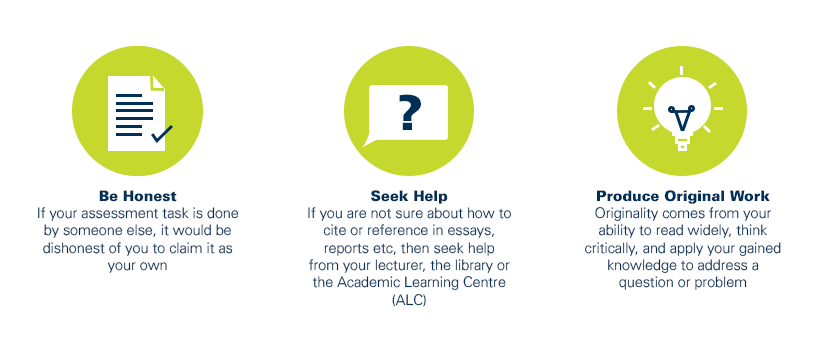
As a CQUniversity student you are expected to act honestly in all aspects of your academic work.
Any assessable work undertaken or submitted for review or assessment must be your own work. Assessable work is any type of work you do to meet the assessment requirements in the unit, including draft work submitted for review and feedback and final work to be assessed.
When you use the ideas, words or data of others in your assessment, you must thoroughly and clearly acknowledge the source of this information by using the correct referencing style for your unit. Using others’ work without proper acknowledgement may be considered a form of intellectual dishonesty.
Participating honestly, respectfully, responsibly, and fairly in your university study ensures the CQUniversity qualification you earn will be valued as a true indication of your individual academic achievement and will continue to receive the respect and recognition it deserves.
As a student, you are responsible for reading and following CQUniversity’s policies, including the Student Academic Integrity Policy and Procedure. This policy sets out CQUniversity’s expectations of you to act with integrity, examples of academic integrity breaches to avoid, the processes used to address alleged breaches of academic integrity, and potential penalties.
What is a breach of academic integrity?
A breach of academic integrity includes but is not limited to plagiarism, self-plagiarism, collusion, cheating, contract cheating, and academic misconduct. The Student Academic Integrity Policy and Procedure defines what these terms mean and gives examples.
Why is academic integrity important?
A breach of academic integrity may result in one or more penalties, including suspension or even expulsion from the University. It can also have negative implications for student visas and future enrolment at CQUniversity or elsewhere. Students who engage in contract cheating also risk being blackmailed by contract cheating services.
Where can I get assistance?
For academic advice and guidance, the Academic Learning Centre (ALC) can support you in becoming confident in completing assessments with integrity and of high standard.
What can you do to act with integrity?