Overview
This unit will equip you with the knowledge and skills necessary to effectively manage project execution and closure, ensuring that projects are completed on time, within budget, and to the satisfaction of stakeholders. You will learn about various activities involved in executing a project plan, such as managing project resources, monitoring project progress, and controlling project risks. You will learn about the importance of communication and collaboration among team members and stakeholders during the project execution phase. You will be able to identify the practical application of project monitoring, control systems, and the management of issues, such as scope creep, risk, quality, and baseline changes, arising during the execution. You will also learn about the importance of proper project closure, including finalizing deliverables, conducting post-project evaluations, and documenting project outcomes.
Details
Pre-requisites or Co-requisites
There are no requisites for this unit.
Important note: Students enrolled in a subsequent unit who failed their pre-requisite unit, should drop the subsequent unit before the census date or within 10 working days of Fail grade notification. Students who do not drop the unit in this timeframe cannot later drop the unit without academic and financial liability. See details in the Assessment Policy and Procedure (Higher Education Coursework).
Offerings For Term 2 - 2026
Attendance Requirements
All on-campus students are expected to attend scheduled classes - in some units, these classes are identified as a mandatory (pass/fail) component and attendance is compulsory. International students, on a student visa, must maintain a full time study load and meet both attendance and academic progress requirements in each study period (satisfactory attendance for International students is defined as maintaining at least an 80% attendance record).
Recommended Student Time Commitment
Each 6-credit Postgraduate unit at CQUniversity requires an overall time commitment of an average of 12.5 hours of study per week, making a total of 150 hours for the unit.
Class Timetable
Assessment Overview
Assessment Grading
This is a graded unit: your overall grade will be calculated from the marks or grades for each assessment task, based on the relative weightings shown in the table above. You must obtain an overall mark for the unit of at least 50%, or an overall grade of 'pass' in order to pass the unit. If any 'pass/fail' tasks are shown in the table above they must also be completed successfully ('pass' grade). You must also meet any minimum mark requirements specified for a particular assessment task, as detailed in the 'assessment task' section (note that in some instances, the minimum mark for a task may be greater than 50%). Consult the University's Grades and Results Policy for more details of interim results and final grades.
All University policies are available on the CQUniversity Policy site.
You may wish to view these policies:
- Grades and Results Policy
- Assessment Policy and Procedure (Higher Education Coursework)
- Review of Grade Procedure
- Student Academic Integrity Policy and Procedure
- Academic Progression Policy and Procedure
- Student Refund and Credit Balance Policy and Procedure
- Complaints Policy and Procedure
- Information and Communications Technology Acceptable Use Policy and Procedure
This list is not an exhaustive list of all University policies. The full list of University policies are available on the CQUniversity Policy site.
Feedback, Recommendations and Responses
Every unit is reviewed for enhancement each year. At the most recent review, the following staff and student feedback items were identified and recommendations were made.
Feedback from SUTE qualitative feedback
Students valued the use of short quizzes during lectures, noting that they kept the class engaged, encouraged active thinking, and made the sessions more interactive and enjoyable, while also reinforcing the material learned.
Continue to maintain short in-class quizzes as a regular engagement tool to reinforce learning. Could introduce gamified activities to engage students engagement
Feedback from SUTE qualitative feedback
Students expressed concern that uneven team contributions can unfairly affect individual grades and highlighted the importance of academic results for their long-term outcomes.
Use peer evaluation or individual reflection reports to recognize different levels of contribution within group projects. Schedule progress checkpoints or brief updates to help identify and address issues of non-participation early in the group assessment.
- Explain the processes applied during project executing and closing.
- Examine and apply project monitoring and control processes to ensure that the project is effectively managed, and status is accurately reported.
- Discuss and analyse project closure activities.
- Appraise the success of a project and provide recommendations to improve performance on future projects based on the lessons learned.
This unit will satisfy one of the core requirements for the Australian Computer Society (ACS) accreditation in the postgraduate Information and Communication Technology (ICT) courses. This unit is also part of an accreditation package granted by the ACS. The unit contributes to the required number of academic study units for students wishing to undertake professional certification with the Project Management Institute's (PMI) professional qualifications, such as CAPM or PMP.
The Australian Computer Society (ACS) recognises the Skills Framework for the Information Age (SFIA). SFIA is adopted by organisations, governments and individuals in many countries and provides a widely used and consistent definition of ICT skills. SFIA is increasingly being used when developing job descriptions and role profiles. ACS members can use the tool MySFIA to build a skills profile.
This unit contributes to the following workplace skills as defined by SFIA 8 (the SFIA code is included)
- Project Management (PRMG)
- Audit (AUDT)
- Risk Management (BURM)
- Governance (GOVN)
- Quality Management (QUMG)
- Stakeholder Relationship Management (RLMT)
- Change Control (CHMG)
Alignment of Assessment Tasks to Learning Outcomes
| Assessment Tasks | Learning Outcomes | |||
|---|---|---|---|---|
| 1 | 2 | 3 | 4 | |
| 1 - Practical Assessment - 40% | ||||
| 2 - Written Assessment - 40% | ||||
| 3 - Online Quiz(zes) - 20% | ||||
Alignment of Graduate Attributes to Learning Outcomes
| Graduate Attributes | Learning Outcomes | |||
|---|---|---|---|---|
| 1 | 2 | 3 | 4 | |
| 1 - Knowledge | ||||
| 2 - Communication | ||||
| 3 - Cognitive, technical and creative skills | ||||
| 4 - Research | ||||
| 5 - Self-management | ||||
| 6 - Ethical and Professional Responsibility | ||||
| 7 - Leadership | ||||
| 8 - First Nations Knowledges | ||||
| 9 - Aboriginal and Torres Strait Islander Cultures | ||||
Textbooks
There are no required textbooks.
IT Resources
- CQUniversity Student Email
- Internet
- Unit Website (Moodle)
- MS Teams
All submissions for this unit must use the referencing style: Harvard (author-date)
For further information, see the Assessment Tasks.
t.trinh@cqu.edu.au
Week 1 - Overview of project execution and closure
Begin Date: 13 Jul 2026Module/Topic
Outline
- Overview
- Assessments
- Project life cycle
- Governing a project
- Executing a project
- Closing a project or phase
- PMBOK vs PRINCE2
Chapter
Readings
- To be provided on the Moodle website
Events and Submissions/Topic
Lecture 1
The lecture starts with an overview of the unit and the assessments. It then covers the project life cycle, particularly the executing and closing phases.
Tutorial 1
After a brief overview of the lecture content, the tutor explains the unit expectations and students' pathways to success. The students also work on inquiry-based learning on a range of given scenarios and multi-choice questions and participate in interactive discussions.
Week 2 - Project performance management
Begin Date: 20 Jul 2026Module/Topic
Outline
- Project performance management
- Performance metrics - Directing PRINCE2
- Performance themes - Managing PRINCE2
- Project performance management - Process Groups PMI
- Project performance management - Kerzner
Chapter
Readings
- To be provided on the Moodle website
Events and Submissions/Topic
Lecture 2:
This lecture will focus on project performance management, exploring various approaches to managing project performance within different frameworks.
Tutorial 2:
After a brief review of the lecture content, the tutor will lead students in a class exercise. Students will also engage in inquiry-based learning by working through a range of scenarios, answering multiple-choice questions, and participating in interactive discussions.
Assessment 2: Students will begin forming their groups. The student's team must come from the same tutorial group.
Week 3 - Earned value management
Begin Date: 27 Jul 2026Module/Topic
Outline
- Earned value analysis (EVA)
- Earned value analysis - Process Groups PMI
- Earned value management (EVM) - Managing PRINCE2
- Earned value management - Australian Standards
Chapter
Readings
- To be provided on the Moodle website
Events and Submissions/Topic
Lecture 3:
This lecture will focus on earned value management (EVM) and its related concepts.
Tutorial 3:
After a brief review of the lecture content, the tutor will guide students through exercises on using EVM for project progress reporting. Students will also engage in inquiry-based learning by working on a variety of scenarios, answering multiple-choice questions, and participating in interactive discussions.
Week 4 - Project control systems
Begin Date: 03 Aug 2026Module/Topic
Outline
- Project control and control system
- Control scope, schedule, and costs - Process Groups PMI
- Integrated change control - Process Groups PMI
- Change theme - Managing PRINCE2
- Controlling a stage - Managing PRINCE2
- Control processes - Australian Standards
Chapter
Readings
- To be provided on the Moodle website
Events and Submissions/Topic
Lecture 4:
This lecture will cover the control systems used in project management, along with various change management approaches from key reference works.
Tutorial 4:
Following a brief overview of the lecture content, the tutor will present practical examples of how different project control systems are applied, followed by exercises for students to complete. Students will also engage in inquiry-based learning by working through scenarios, answering multiple-choice questions, and participating in interactive discussions.
Assessment 2: Group memberships must be finalized with tutor approval.
Week 5 - Project audits and quality management
Begin Date: 10 Aug 2026Module/Topic
Outline
- Project audit
- Project quality
- Manage and control quality - Process Groups PMI
- Quality management system and audits - Kerzner
- Quality theme and control - Managing PRINCE2
Chapter
Readings
- To be provided on the Moodle website
Events and Submissions/Topic
Lecture 5
The lecturer focuses on project audits, quality management processes, quality audits, etc. from various reference works.
Tutorial 5
After a brief overview of the lecture content, the tutor engages students in a class exercise. The students also work on inquiry-based learning on a range of given scenarios and multi-choice questions and participate in interactive discussions.
Week 6 - Project governance
Begin Date: 17 Aug 2026Module/Topic
Outline
- Project The students also work on inquiry-based learning on a range of given scenarios and multi-choice questions and participate in interactive discussionsThe students also work on inquiry-based learning on a range of given scenarios and multi-choice questions and participate in interactive discussionsgovernance
- Corporate and project governance
- Project governance principles, types and frameworks
- Governance of portfolios, programs and projects
- Governance of complex projects
Chapter
Readings
- To be provided on the Moodle website
Events and Submissions/Topic
Lecture 6:
The lecturer will focus on project governance, exploring the principles of good governance and the associated framework.
Tutorial 6:
After a brief review of the lecture content, the tutor will lead students in a situational class activity. Students will engage in inquiry-based learning, working through various scenarios and multiple-choice questions, and participate in interactive discussions.
Assessment 3, Quiz 1 (10%) - An online quiz will take place during Week 6.
All group conflicts must be resolved by the end of this week, as no changes to group members will be allowed afterward.
Vacation Week
Begin Date: 24 Aug 2026Module/Topic
This is a non-teaching week
Chapter
Events and Submissions/Topic
Week 7 - Project resource and procurement management
Begin Date: 31 Aug 2026Module/Topic
Outline
- Project resource management
- Acquire, and control resources - Process Groups PMI
- Acquire, develop, and manage teams - Process Groups PMI
- Project procurement management
- Conduct and control procurement - Process Groups PMI
- Contract types in procurement
Chapter
Readings
- To be provided on the Moodle website
Events and Submissions/Topic
Lecture 7:
The lecturer will cover the processes, tools, and techniques involved in managing project resources and procurement.
Tutorial 7:
Following a brief overview of the lecture content, the tutor will facilitate a group activity. Students will engage in inquiry-based learning, working on various scenarios and multiple-choice questions while also participating in interactive discussions.
Assessment 1: Practical assessment - Project Controls Reports Due (40% Individual)
Week 8 - Project communication and risk management
Begin Date: 07 Sep 2026Module/Topic
Outline
- Project stakeholder engagement
- Manage and monitor stakeholders - Process Groups PMI
- Project communications management
- Manage and monitor communications - Process Groups PMI
- Project risk management
- Monitor and control risks - Process Groups PMI
Chapter
Readings
- To be provided on the Moodle website
Events and Submissions/Topic
Lecture 8:
This lecture will cover topics related to stakeholder management and communication, as well as risk identification and assessment.
Tutorial 8:
Following a brief overview of the lecture content, students will work on exercises involving risk identification, analysis, stakeholder engagement, and communication, using a provided project document or research paper. Students will also engage in inquiry-based learning through various scenarios, multiple-choice questions, and interactive discussions.
Week 9 - Project work, delivery, and knowledge management
Begin Date: 14 Sep 2026Module/Topic
Outline
- Direct and manage project work - Process Groups PMI
- Monitor and control project work - Process Groups PMI
- Manage product delivery - Managing PRINCE2
- Project knowledge management
- Manage project knowledge - Process Groups PMI
Chapter
Readings
- To be provided on the Moodle website
Events and Submissions/Topic
Lecture 9:
This lecture will cover topics on monitoring and controlling project work, managing product delivery, and managing project knowledge and its transformation.
Tutorial 9:
Following a brief review of the lecture content, students will work on managing project work, delivery, and knowledge using a provided project document or research paper. They will also engage in inquiry-based learning through a variety of scenarios, multiple-choice questions, and interactive discussions.
Project Control Report Due: Week 9 Monday (14 Sept 2026) 9:00 am AEST
Week 10 - Project closure, reviews, and lessons learned
Begin Date: 21 Sep 2026Module/Topic
Outline
- Closing a project or phase - Process Groups PMI
- Authorising project closure - Directing PRINCE2
- Closing a project - Managing PRINCE2
- Project failure and success - Kerzner
- Project reviews and lessons learned
Chapter
Readings
- To be provided on the Moodle website
Events and Submissions/Topic
Lecture 10:
This lecture will explore the processes involved in closing a project or phase, including post-project reviews and capturing lessons learned.
Tutorial 10:
After a brief review of the lecture content, students will engage in exercises such as analyzing a provided project closure report to identify lessons learned. Additionally, they will participate in inquiry-based learning through various scenarios, multiple-choice questions, and interactive discussions.
Assessment 3, Quiz 2 (10%) - An online quiz will take place during Tutorial Week 10.
Online Quizzes Due: Week 10 Monday (21 Sept 2026) 11:45 pm AEST
Week 11 - Professional responsibilities of project managers
Begin Date: 28 Sep 2026Module/Topic
Outline
- Morality, ethics and corporate culture
- Professional responsibilities
- Professional ethics and code of conduct
- Industry codes of conduct
Chapter
Readings
- To be provided on the Moodle website
Events and Submissions/Topic
Lecture 11:
This lecture will discuss the professional responsibilities of project managers.
Tutorial 11:
No tutorial in week 11.
Assessment 2: Written Assessment (Group work) (40%) Due
Critical Analysis Report & Presentation Due: Week 11 Monday (28 Sept 2026) 9:00 am AEST
Week 12 - Unit review
Begin Date: 05 Oct 2026Module/Topic
Outline
- Summary and review of the topics covered during the term.
Chapter
Events and Submissions/Topic
Lecture 12:
This lecture will provide an overview of the topics covered throughout the term.
Tutorial 12:
No tutorial in week 12.
Exam Week
Begin Date: 12 Oct 2026Module/Topic
Chapter
Events and Submissions/Topic
Vacation/Exam Week
Begin Date: 19 Oct 2026Module/Topic
Chapter
Events and Submissions/Topic
1 Practical Assessment
This assessment item is an individual assignment and requires you to consider project event-driven and time-driven controls. You are required to examine and analyse a case study in a real-life context and produce the project control report. The templates for the project control report will be provided on the Moodle website, which conform to the project progress and control requirements outlined in project management standards. You will be graded based on your analysis, and quality of the project control report.
Purpose
The primary purpose of this assessment item is to help you develop skills in compiling project control report.
The secondary purpose of this assignment is to allow you to consider the role of project control report within a project life cycle.
The assignment will also allow you to enhance your analysis and written communication skills; particularly in the areas of structured assignment writing.
Structure
Your submission should be made using the supplied case study, and project control report template.
Please note that the re-attempt of this assessment task will not be allowed.
Using AI: You may use Al for planning, idea development, and research. Your final submission should show how you have developed and refined these ideas. Final submissions must be written by the student, and no direct AI-generated content should appear in the submission. Students are encouraged to briefly describe how they used AI during the planning phase.
Week 9 Monday (14 Sept 2026) 9:00 am AEST
Week 11 Monday (28 Sept 2026)
Assignment marks will be released based on CQU Policy
Your assignment will be assessed on the extent and quality to which it meets each of the following criteria:
A comprehensive Overview of the case study (project) and its objectives (10%)
A comprehensive evaluation of the project progress status using earned value management which includes (40%)
- Evaluation of the cost and schedule status using variance analysis
- Evaluation of project budget status using estimate at completion, to complete performance index, etc
- Evaluation of project schedule status using forecast completion date etc.
A comprehensive analysis of Escalation Recommendation (40%) including:
- Clear, specific issue that exceeds project tolerance identified using precise EVM data (e.g., SPI, CPI, EV, AC).
- Insightfully explains why the issue matters, referencing impact on time, cost, scope, or stakeholders.
- Provides 3 realistic solutions.
- Best option clearly selected and justified based on cost, time, and risk, and what is your recommendation and lessons learned.
Clarity of expression, grammar, spelling, references, etc. (10%)
The assessment is exempt from the 72-hour submission grace period and must be completed by the stated submission date/time.
- Explain the processes applied during project executing and closing.
- Examine and apply project monitoring and control processes to ensure that the project is effectively managed, and status is accurately reported.
- Appraise the success of a project and provide recommendations to improve performance on future projects based on the lessons learned.
2 Written Assessment
Purpose
The purpose of this assessment is to help you develop and demonstrate your understanding of project management concepts, principles, and theories, particularly related to project execution and closing phases. You are expected to apply your knowledge by analysing the real-world application of control systems and evaluating how their implementation can influence project outcomes. This task involves examining a real-life case study and producing a critical analysis report. You will be assessed based on the quality of your analysis, reflection, and written/oral communication.
Group Formation:
- Form a group of 3–5 students (ideally 4) within your tutorial.
- Distance education students may form remote groups or complete the task individually.
- Finalize your group by Week 4 with your tutor's approval.
Assessment Components:
(2A) Written Report (3500 words ±5%) – 30 marks :
Task 2A requires you to examine a significant real-life case study and produce a detailed report that forwards a critical analysis of project control approaches to ensure the project's successful completion and stakeholders’ influence. The report should include a demonstration of the range of control systems and an evaluation of their application and whether or not a poor application of the control systems and lack of stakeholders' management has contributed partially or fully to the project's failure. The report should also include recommendations to improve performance on future projects based on the lessons learned from the case study.
(2B) Oral Presentation – 10 marks: In addition, you are required to give an oral presentation about your written report. Students are required to record their presentations and upload the recordings online (e.g., using Zoom, YouTube, Echo360, etc.). Include the access link to your recorded presentation on the final slide of your submission in Moodle. Ensure that the recording is fully accessible (e.g., permissions set to allow viewing), as inaccessible recordings will not be graded.
Research Requirements
This assessment requires academic research and critical engagement with project management literature. You are expected to:
- Use the recommended textbooks and frameworks (e.g. PMBOK, PRINCE2);
- Cite peer-reviewed journal articles where relevant;
- Integrate academic evidence into your analysis and discussion.
Using AI: You may use Al for planning, idea development, and research. Your final submission should show how you have developed and refined these ideas. Final submissions must be written by the student, and no direct AI-generated content should appear in the submission. Students are encouraged to briefly describe how they used AI during the planning phase.
Please note that the re-attempt of this assessment task will not be allowed.
Week 11 Monday (28 Sept 2026) 9:00 am AEST
Vacation/Exam Week Monday (19 Oct 2026)
Written Report (Scaled to 30 marks)
The report will be generally assessed on the quality of the work presented, the extent and coverage of the key aspects, and the understanding of the issues involved. More specifically, your report will be assessed on the extent and quality to which it meets each of the following criteria:
- An executive summary or abstract of the report
- An introduction to the given real-life project and major issues it encountered
- An explanation of the range of control systems used to monitor and control the project cost, schedule, scope, risk, and quality
- An analysis of the reasons that explain the cost and/or time overruns or other discrepancies encountered during the project execution
- An analysis of the relationship between the problems and reasons you identified and the stakeholders’ needs and influences
- An analysis of the project management actions that could have been taken to better control the project and stakeholders in order to increase the chances for successful project delivery
- A conclusion that identifies the key lessons that project management can learn from the experience of the project and provides recommendations to improve performance on future projects
- Self-reflection by each group member for their contribution to the group assignment while researching, collecting, and analysing the data, and compiling the critical analysis report
- Clarity of expression, grammar, spelling, report format, and presentation, in-text citations, references, and referencing style
Oral Presentation (Scaled to 10 marks)
- Presentation duration will be 15 minutes +/- 10%, with each student delivering part of the presentation.
- Students are encouraged to research and practice how to deliver effective presentations.
- The presentation slides which include the access to the group presentation recording must be submitted along with the written report.
The assessment is exempt from the 72-hour submission grace period and must be completed by the stated submission date/time.
- Discuss and analyse project closure activities.
- Appraise the success of a project and provide recommendations to improve performance on future projects based on the lessons learned.
3 Online Quiz(zes)
This assessment consists of two online quizzes, together worth 20% of the total unit marks. Each quiz contributes 10%.
The quizzes are designed to evaluate your knowledge and understanding of the topics and materials covered throughout the term.
Only one attempt is allowed for each quiz.
Assessment 3 part 1: Quiz 1 (10%) - 20 minutes during Week 6: Covers the content from week 1 until week 5
Assessment 3 part 2: Quiz 2 (10%) - 20 minutes during Week 10: Covers the content from week 6 until week 10
Quiz Format:
- Each quiz will include 15–20 questions.
- Question types may include:Multiple-choice questions (MCQs)
- Case-based MCQs
- Ranking questions
- True/False questions, etc.
- Questions will be randomly selected from a large question pool covering each week’s content.
- As a result, it is unlikely that two students will receive the same set of questions.
Only one attempt is allowed per quiz.
Each quiz will be available during a specified time window in Week 6 and Week 10.
Your attempt will have a time limit of 20 minutes. Once you start the quiz, the timer will begin to count down and cannot be paused. You must finish your attempt before it expires (open attempts will automatically be submitted). You must complete your attempt within the allocated time.
The students will be able to review their attempts and view their marks once the quiz has been closed.
The re-attempt of this assessment task will not be allowed.
Assessment Submission
- This assessment is not eligible for the 72-hour grace period.
- All quizzes must be completed by the scheduled deadline.
- If you require an extension, you must submit a request before the quiz closes, via Moodle, in accordance with CQU policy.
Week 10 Monday (21 Sept 2026) 11:45 pm AEST
The quizzes must be attempted within a specified time window in Week 6 and Week 10 which will informed by the unit coordinator.
Week 11 Monday (28 Sept 2026)
The quiz results will be released when the quizzes are closed
Each question carries equal marks, and there are no penalties for incorrect answers.
The online quiz will be marked by the Moodle computer program upon submission.
- Explain the processes applied during project executing and closing.
- Examine and apply project monitoring and control processes to ensure that the project is effectively managed, and status is accurately reported.
- Discuss and analyse project closure activities.
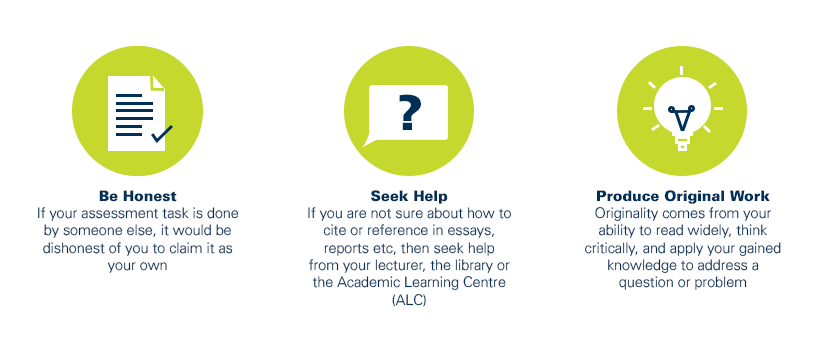
As a CQUniversity student you are expected to act honestly in all aspects of your academic work.
Any assessable work undertaken or submitted for review or assessment must be your own work. Assessable work is any type of work you do to meet the assessment requirements in the unit, including draft work submitted for review and feedback and final work to be assessed.
When you use the ideas, words or data of others in your assessment, you must thoroughly and clearly acknowledge the source of this information by using the correct referencing style for your unit. Using others’ work without proper acknowledgement may be considered a form of intellectual dishonesty.
Participating honestly, respectfully, responsibly, and fairly in your university study ensures the CQUniversity qualification you earn will be valued as a true indication of your individual academic achievement and will continue to receive the respect and recognition it deserves.
As a student, you are responsible for reading and following CQUniversity’s policies, including the Student Academic Integrity Policy and Procedure. This policy sets out CQUniversity’s expectations of you to act with integrity, examples of academic integrity breaches to avoid, the processes used to address alleged breaches of academic integrity, and potential penalties.
What is a breach of academic integrity?
A breach of academic integrity includes but is not limited to plagiarism, self-plagiarism, collusion, cheating, contract cheating, and academic misconduct. The Student Academic Integrity Policy and Procedure defines what these terms mean and gives examples.
Why is academic integrity important?
A breach of academic integrity may result in one or more penalties, including suspension or even expulsion from the University. It can also have negative implications for student visas and future enrolment at CQUniversity or elsewhere. Students who engage in contract cheating also risk being blackmailed by contract cheating services.
Where can I get assistance?
For academic advice and guidance, the Academic Learning Centre (ALC) can support you in becoming confident in completing assessments with integrity and of high standard.
What can you do to act with integrity?