Overview
Leading Lean Projects will develop your hard and soft skills in project management methodologies and core principles of the lean approach in project management. You will discover the evolving nature of lean principles and explore how project management concepts can be embedded in a continuous improvement initiative. You will learn about leadership competencies that are crucial for delivering successful projects. You will be presented with case studies that highlight the methodologies and lean principles and how they can affect project outputs and outcomes. You will familiarise yourself with the use of common management control systems to illustrate how to successfully lead and deliver lean transformations for projects.
Details
Pre-requisites or Co-requisites
There are no requisites for this unit.
Important note: Students enrolled in a subsequent unit who failed their pre-requisite unit, should drop the subsequent unit before the census date or within 10 working days of Fail grade notification. Students who do not drop the unit in this timeframe cannot later drop the unit without academic and financial liability. See details in the Assessment Policy and Procedure (Higher Education Coursework).
Offerings For Term 3 - 2026
Attendance Requirements
All on-campus students are expected to attend scheduled classes - in some units, these classes are identified as a mandatory (pass/fail) component and attendance is compulsory. International students, on a student visa, must maintain a full time study load and meet both attendance and academic progress requirements in each study period (satisfactory attendance for International students is defined as maintaining at least an 80% attendance record).
Recommended Student Time Commitment
Each 6-credit Postgraduate unit at CQUniversity requires an overall time commitment of an average of 12.5 hours of study per week, making a total of 150 hours for the unit.
Class Timetable
Assessment Overview
| Assessment Task | Part Weighting (% of assessment) |
Assessment Security Level | Gen AI Guidance Levels |
|---|---|---|---|
| 1. Case study report (40% of unit ) | |||
| Case study report (Written Assessment) | 100% of 40% | Low | AI-Assisted (Guided Collaboration) |
| 2. Lean transformation project (40% of unit · 2 parts ) | |||
| Part 1 – Project report (Written Assessment) | 40% of 40% | Low | AI-Assisted (Guided Collaboration) |
| Part 2 – Project presentation (Presentation) | 60% of 40% | High | No Gen AI Use |
| 3. Online Quiz (20% of unit ) | |||
| Online Quiz (Online Quiz(zes)) | 100% of 20% | High | Custom or Task-Specific AI Use |
Assessment Grading
This is a graded unit: your overall grade will be calculated from the marks or grades for each assessment task, based on the relative weightings shown in the table above. You must obtain an overall mark for the unit of at least 50%, or an overall grade of 'pass' in order to pass the unit. If any 'pass/fail' tasks are shown in the table above they must also be completed successfully ('pass' grade). You must also meet any minimum mark requirements specified for a particular assessment task, as detailed in the 'assessment task' section (note that in some instances, the minimum mark for a task may be greater than 50%). Consult the University's Grades and Results Policy for more details of interim results and final grades.
All University policies are available on the CQUniversity Policy site.
You may wish to view these policies:
- Grades and Results Policy
- Assessment Policy and Procedure (Higher Education Coursework)
- Review of Grade Procedure
- Student Academic Integrity Policy and Procedure
- Academic Progression Policy and Procedure
- Student Refund and Credit Balance Policy and Procedure
- Complaints Policy and Procedure
- Information and Communications Technology Acceptable Use Policy and Procedure
This list is not an exhaustive list of all University policies. The full list of University policies are available on the CQUniversity Policy site.
Feedback, Recommendations and Responses
Every unit is reviewed for enhancement each year. At the most recent review, the following staff and student feedback items were identified and recommendations were made.
Feedback from Student Evaluation Report
Students demonstrated a high level of teaching effectiveness, with a strong focus on student learning and engagement.
The unit delivery will continue to maintain teaching effectiveness by regularly seeking student feedback and incorporating innovative teaching methods to further boost engagement and learning outcomes.
Feedback from Student Evaluation Report
Students suggested that incorporating greater flexibility in the assessments would help them manage their workload more effectively based on their individual schedules.
While flexibility in submission deadlines can be incorporated where possible, the progressive nature of certain assessment components necessitates active student participation in tutorial sessions throughout the term.
Feedback from Student Evaluation Report
Students found it may be beneficial to replace the quiz with visual tools.
While engaging assessments are prioritised, quizzes are sometimes deemed essential to check individual students' understanding and knowledge. However, efforts are made to make the quizzes as interactive as possible.
- Review lean transformation framework by explaining lean approaches, project lifecycle and change management
- Compare and contrast project management methodologies
- Examine leadership competencies for successful delivery of projects
- Determine management control systems for lean process capabilities
- Explain the processes and techniques to acquire, develop and manage project teams.
- Business Analysis (BUAN),
- Project Management (PRMG),
- Stakeholder Relationship Management (RLMT),
- Systems Integration (SINT),
- Change Management (CHMG),
- Release and Deployment (RELM),
- IT Operations (ITOP),
- Problem Management (PBMG).
Alignment of Assessment Tasks to Learning Outcomes
| Assessment Tasks | Learning Outcomes | ||||
|---|---|---|---|---|---|
| 1 | 2 | 3 | 4 | 5 | |
|
1.
Assessment 1
(40% of unit )
Written Assessment
|
|||||
|
2.
Assessment 2
(40% of unit · 2 parts
)
Part 1 -
Written Assessment
Part 2 -
Presentation
|
|||||
|
3.
Assessment 3
(20% of unit )
Online Quiz(zes)
|
|||||
Alignment of Graduate Attributes to Learning Outcomes
| Graduate Attributes | Learning Outcomes | ||||
|---|---|---|---|---|---|
| 1 | 2 | 3 | 4 | 5 | |
| 1 - Knowledge | |||||
| 2 - Communication | |||||
| 3 - Cognitive, technical and creative skills | |||||
| 4 - Research | |||||
| 5 - Self-management | |||||
| 6 - Ethical and Professional Responsibility | |||||
| 7 - Leadership | |||||
| 8 - First Nations Knowledges | |||||
| 9 - Aboriginal and Torres Strait Islander Cultures | |||||
Textbooks
There are no required textbooks.
IT Resources
- CQUniversity Student Email
- Internet
- Unit Website (Moodle)
- CQUniversity Library Resources
- E-reading List
- Online databases (e.g. Emerald and ScienceDirect) for journal articles
All submissions for this unit must use the referencing style: Harvard (author-date)
For further information, see the Assessment Tasks.
a.f.kineber@cqu.edu.au
o.dawoud@cqu.edu.au
Week 1
Begin Date: 09 Nov 2026Module/Topic
Introduction to Lean Management
Chapter
Outline
• What is Lean?
• Lean concepts
• Why Lean?
• What is Six Sigma?
• Lean Six Sigma
Reading material
• To be provided on the Moodle website
Events and Submissions/Topic
• Ice breaking and unit details
• Expectations and overview
• Lecture 1
• Tutorial 1
Week 2
Begin Date: 16 Nov 2026Module/Topic
Lean Framework in Project Management
Chapter
Outline
• Lean concepts in project management
• Lean framework in project management
• Change management framework
Reading material
• To be provided on the Moodle website
Events and Submissions/Topic
• Lecture 2
• Tutorial 2
Week 3
Begin Date: 23 Nov 2026Module/Topic
Lean and Value Management
Chapter
Outline
• Understanding value
• The seven wastes
• Sources of waste
• Value stream mapping
• Process improvement
Reading material
• To be provided on the Moodle website
Events and Submissions/Topic
• Lecture 3
• Tutorial 3
Week 4
Begin Date: 30 Nov 2026Module/Topic
Lean Thinking and Project Life Cycles
Chapter
Outline
- What is Lean thinking?
- Lean thinking in project management
- Project management methodology
- What is project life cycle?
- Project life cycles and characteristics
- Project life cycle selection
Reading material
• To be provided on the Moodle website
Events and Submissions/Topic
• Lecture 4
• Tutorial 4
Week 5
Begin Date: 07 Dec 2026Module/Topic
Lean and Agile Project Management
Chapter
Outline
- Lean and Agile project management
- Agile manifesto
- Agile principles
- Agile life cycles
- Agile methods (Scrum, DSDM, Crystal, etc.)
- Kanban method
- Value stream mapping
Reading material
• To be provided on the Moodle website
Events and Submissions/Topic
• Lecture 5
• Tutorial 5
Week 6
Begin Date: 14 Dec 2026Module/Topic
Lean Six Sigma Approach and Tools
Chapter
Outline
• What is Lean Six Sigma?
• Six Sigma quality approach
• Principles of statistical quality control
• Lean Six Sigma journey
• A Lean tool: The Kanban system
Reading material
• To be provided on the Moodle website
Events and Submissions/Topic
• Lecture 6
• Tutorial 6
Assessment 1 (Weighting: 40%) - Case study report due Friday Week 6
Case study report Due: Week 6 Friday (18 Dec 2026) 8:00 pm AEST
Mid-Term Break
Begin Date: 21 Dec 2026Module/Topic
This is a non-teaching period (two weeks)
Chapter
Events and Submissions/Topic
Week 7
Begin Date: 04 Jan 2027Module/Topic
Quality Management for Lean Projects
Chapter
Outline
• What is quality?
• Quality management concepts
• The cost of quality
• Seven quality control tools
• The 5 Why's
• Kaizen events
• 5S technique
Reading material
• To be provided on the Moodle website
Events and Submissions/Topic
• Lecture 7
• Tutorial 7
Week 8
Begin Date: 11 Jan 2027Module/Topic
Leadership Competencies for Lean Projects
Chapter
Outline
• The role of a project manager
• Competencies of a project manager
• Differences between leadership and management
• Leadership styles
• Conflict management
Reading material
• To be provided on the Moodle website
Events and Submissions/Topic
• Lecture 8
• Tutorial 8
Week 9
Begin Date: 18 Jan 2027Module/Topic
Team Competencies for Lean-Agile Projects
Chapter
Outline
• Dynamics of team performance
• Situational leadership for teams
• Servant leader approach
• Team leader's role in Agile environment
• Team member's role in Agile environment
• Agile mindset
• Agile roles
• Agile terms
Reading material
• To be provided on the Moodle website
Events and Submissions/Topic
• Lecture 9
• Tutorial 9
Week 10
Begin Date: 25 Jan 2027Module/Topic
Risk Management for Lean Projects
Chapter
Outline
• What is risk?
• What is project risk?
• What is project risk management?
• Project risk management processes
• Risk management for Lean projects
• Risk management for Lean Six Sigma
• Failure mode effect analysis
Reading material
• To be provided on the Moodle website
Events and Submissions/Topic
• Lecture 10
• Tutorial 10
Assessment 2 (Weighting: 40%) - Project report and presentation slides due Friday Week 10
Project report Due: Week 10 Friday (29 Jan 2027) 8:00 pm AEST
Project presentation Due: Week 10 Friday (29 Jan 2027) 8:00 pm AEST
Week 11
Begin Date: 01 Feb 2027Module/Topic
Organisational Project Management (OPM)
Chapter
Outline
• What is OPM?
• Organisational benefits of OPM
• Organisational strategy and business change
• Organisational maturity and project success
• Best practices in OPM
• Readiness for implementing OPM
• OPM implementation framework
Reading material
• To be provided on the Moodle website
Events and Submissions/Topic
• Lecture 11
• Tutorial 11
Assessment 2 - Project presentations during tutorial classes
Week 12
Begin Date: 08 Feb 2027Module/Topic
Project Management Standards Overview
Chapter
Outline
- Project management standards
- PM principles (PMBOK)
- PM performance domains (PMBOK)
- PM principles (PRINCE2)
- PM themes (PRINCE2)
- PM processes (PRINCE2)
- Process Groups: A Process Guide (PMI)
Reading material
• To be provided on the Moodle website
Events and Submissions/Topic
• Lecture 12
• Tutorial 12
Assessment 3 (Weighting: 20%) - Online Quiz during tutorial classes in Week 12
Exam Week
Begin Date: 15 Feb 2027Module/Topic
Chapter
Events and Submissions/Topic
1. Case study report ( 40% of unit )
Written Assessment
This assessment item is an individual assignment worth 40% of the unit marks.
In this assessment you will apply Lean project management to a case scenario. You will identify and analyse waste, apply the Lean concepts covered in Weeks 1–5, and propose a Lean transformation project. You must answer a set of specific questions and explain the best practices used to achieve the case study outcomes. You will be marked on the coherence and relevance of your answers and on how critically you link theory to practice. All your work must be properly referenced. Further details about this assessment will be provided on Moodle.
GEN AI GUIDANCE LEVEL - AI-ASSISTED (GUIDED COLLABORATION): You may use AI to assist with specific tasks such as drafting text, refining and evaluating your work. You must critically evaluate and modify any AI-generated content you use. A reattempt of this assessment will not be permitted.
Week 6 Friday (18 Dec 2026) 8:00 pm AEST
Assessment marks and feedback will be returned to students in accordance with the CQUniversity Assessment Policy and Procedure
- The student identifies and explains value-added and non-value-added processes, incorporating the Voice of Customer for each process.
- The student identifies at least five wastes and supports their analysis with screenshots showing two examples, including visible timing.
- The student develops a Lean transformation project proposal that aligns with Lean thinking principles.
- The student provides a well-reasoned explanation for selecting either Waterfall or Agile project management, considering project needs and characteristics.
- The student creates a change management plan using the ADKAR model, addressing each component in relation to the project.
- The student reflects critically on their use of Generative AI in this assessment, including its benefits, its limitations and its effect on their learning.
- The student ensures all AI-generated and personal content is correctly referenced using Harvard style, with proper citation and formatting.
- Review lean transformation framework by explaining lean approaches, project lifecycle and change management
- Compare and contrast project management methodologies
2. Lean transformation project ( 40% of unit · 2 parts )
Part 1 - Written Assessment
This part of Assessment 2 is a group written report worth 40% of Assessment 2 (16% of the unit marks).
The purpose of this assessment is to help you develop and demonstrate your skills in the use of Lean management concepts, principles, and arguments. You are particularly required to apply Lean leadership principles on a case study (Lean transformation project) by using the concepts covered during the term. You are required to demonstrate how the Lean transformation would enable the shift from the current state to the future state using value stream mapping. You are also required to apply a quality control tool to illustrate how to successfully lead and deliver Lean transformations for projects. You will be assessed on how clearly you present and justify your solutions. You must reflect critically on how Lean theory applies in practice. All work must be properly referenced.
For this assessment, you will work in groups of 3-5 students within your tutorial class in consultation and approval of your tutor. Online students may collaborate with other online students or complete the assessment individually with the approval of unit coordinator. Groups must be finalised and emailed to your tutor by the end of Week 6. Further details will be provided on Moodle.
GEN AI GUIDANCE LEVEL - AI-ASSISTED (GUIDED COLLABORATION): You may use AI to assist with specific tasks such as drafting text, refining and evaluating your work. You must critically evaluate and modify any AI-generated content you use. A reattempt of this assessment will not be permitted.
Week 10 Friday (29 Jan 2027) 8:00 pm AEST
Assessment marks and feedback will be returned to students in accordance with the CQUniversity Assessment Policy and Procedure
- The students use a weighted decision matrix to determine the prioritised Lean transformation project.
- The students provide each group member biodata, schedule of group meetings and an initial digital Kanban board.
- The students provide evidence of the Kanban board from Weeks 7–10 by documenting project progress.
- The students apply Lean leadership principles effectively within the project context.
- The students provide current and future state value stream maps along with appropriate explanation.
- The students develop a Fishbone diagram and provide discussion on its relevance and effectiveness.
- The students reflect on their groupwork experience, including how the team collaborated, the challenges they faced and what they learned.
- The students ensure clarity of language and grammar, comprehensive coverage of the assessment criteria, and correct citations and referencing.
- Examine leadership competencies for successful delivery of projects
- Determine management control systems for lean process capabilities
Part 2 - Presentation
This part of Assessment 2 is a presentation worth 60% of Assessment 2 (24% of the unit marks).
You will present your Lean transformation project and respond to questions about your work. The presentation will assess your understanding of the Lean leadership principles and management control tools applied in your project, and your ability to explain and justify your project decisions.
GEN AI GUIDANCE LEVEL - NO GEN AI USE: You must not use AI at any point during the assessment. You must demonstrate your core skills and knowledge.
Week 10 Friday (29 Jan 2027) 8:00 pm AEST
Presentation slides are due in Week 10. Presentations will be conducted during the scheduled tutorial classes in Week 11. A separate Zoom session will be scheduled for distance learning students.
Assessment marks and feedback will be returned to students in accordance with the CQUniversity Assessment Policy and Procedure
- The student demonstrates a clear understanding of the Lean transformation project and the Lean principles and tools applied.
- The student explains and justifies project decisions and outcomes.
- The student responds effectively to questions about the work.
- The student presents clearly and keeps to the allocated time.
- Examine leadership competencies for successful delivery of projects
- Determine management control systems for lean process capabilities
3. Online Quiz ( 20% of unit )
Online Quiz(zes)
This assessment item involves an online quiz worth 20% of the unit marks. The quiz will evaluate your knowledge and understanding of topics and material covered during the term.
- Only one attempt will be allowed.
- The quiz will be closed-book test.
- The quiz will be conducted in Week 12.
- The quiz will cover the content from Weeks 1 to 11 (lectures, tutorials, and recommended readings).
- When you attempt the quiz, the questions will be randomly selected from a pool of questions based on each weekly topic and displayed to you.
- The quiz will consist of 40 questions (multiple-choice and/or true/false) with a time limit of 40 minutes.
- Once you start the quiz, the timer will begin to count down and cannot be paused. You must finish your attempt before it expires (Open attempts will automatically be submitted).
- This assessment is exempted from the 72-hour submission grace period and must be completed during Week 12.
- A reattempt of this assessment will also not be permitted.
GEN AI GUIDANCE LEVEL - CUSTOM OR TASK-SPECIFIC AI USE: You must not use Gen AI at any point during this assessment. You must demonstrate your core skills and knowledge.
For on-campus students, the quiz will be conducted in-class during the scheduled tutorial classes in Week 12. A separate Zoom session will be scheduled for distance learning students
The online quiz will be marked by the Moodle computer program upon submission. Marks will be released after the quiz has been closed.
- Each question carries equal marks.
- There are no penalties for incorrect answers.
- Review lean transformation framework by explaining lean approaches, project lifecycle and change management
- Compare and contrast project management methodologies
- Examine leadership competencies for successful delivery of projects
- Determine management control systems for lean process capabilities
- Explain the processes and techniques to acquire, develop and manage project teams.
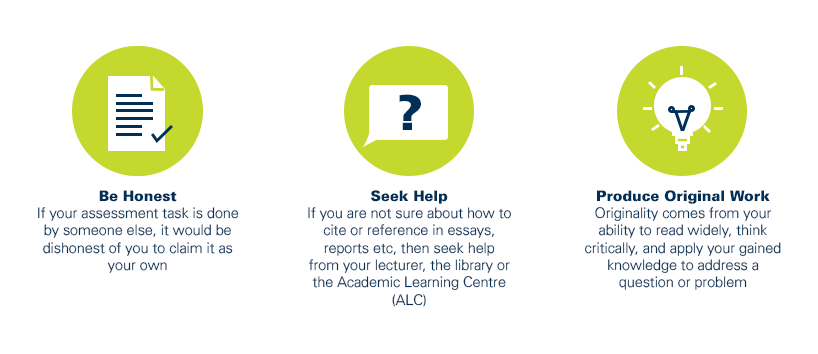
As a CQUniversity student you are expected to act honestly in all aspects of your academic work.
Any assessable work undertaken or submitted for review or assessment must be your own work. Assessable work is any type of work you do to meet the assessment requirements in the unit, including draft work submitted for review and feedback and final work to be assessed.
When you use the ideas, words or data of others in your assessment, you must thoroughly and clearly acknowledge the source of this information by using the correct referencing style for your unit. Using others’ work without proper acknowledgement may be considered a form of intellectual dishonesty.
Participating honestly, respectfully, responsibly, and fairly in your university study ensures the CQUniversity qualification you earn will be valued as a true indication of your individual academic achievement and will continue to receive the respect and recognition it deserves.
As a student, you are responsible for reading and following CQUniversity’s policies, including the Student Academic Integrity Policy and Procedure. This policy sets out CQUniversity’s expectations of you to act with integrity, examples of academic integrity breaches to avoid, the processes used to address alleged breaches of academic integrity, and potential penalties.
What is a breach of academic integrity?
A breach of academic integrity includes but is not limited to plagiarism, self-plagiarism, collusion, cheating, contract cheating, and academic misconduct. The Student Academic Integrity Policy and Procedure defines what these terms mean and gives examples.
Why is academic integrity important?
A breach of academic integrity may result in one or more penalties, including suspension or even expulsion from the University. It can also have negative implications for student visas and future enrolment at CQUniversity or elsewhere. Students who engage in contract cheating also risk being blackmailed by contract cheating services.
Where can I get assistance?
For academic advice and guidance, the Academic Learning Centre (ALC) can support you in becoming confident in completing assessments with integrity and of high standard.
What can you do to act with integrity?