Overview
The Initiating and Planning Project unit will equip you with the knowledge and skills required to effectively initiate and plan projects in challenging environments. You will study different standards, frameworks and practices with the opportunity to apply these by utilising relevant tools and techniques to enhance project initiation and planning. On successful completion, you will have prepared a range of project management artifacts that underpin effective initiation and planning of projects.
Details
Pre-requisites or Co-requisites
There are no requisites for this unit.
Important note: Students enrolled in a subsequent unit who failed their pre-requisite unit, should drop the subsequent unit before the census date or within 10 working days of Fail grade notification. Students who do not drop the unit in this timeframe cannot later drop the unit without academic and financial liability. See details in the Assessment Policy and Procedure (Higher Education Coursework).
Offerings For Term 3 - 2026
Attendance Requirements
All on-campus students are expected to attend scheduled classes - in some units, these classes are identified as a mandatory (pass/fail) component and attendance is compulsory. International students, on a student visa, must maintain a full time study load and meet both attendance and academic progress requirements in each study period (satisfactory attendance for International students is defined as maintaining at least an 80% attendance record).
Recommended Student Time Commitment
Each 6-credit Postgraduate unit at CQUniversity requires an overall time commitment of an average of 12.5 hours of study per week, making a total of 150 hours for the unit.
Class Timetable
Assessment Overview
| Assessment Task | Part Weighting (% of assessment) |
Assessment Security Level | Gen AI Guidance Levels |
|---|---|---|---|
| 1. Online Quiz (20% of unit ) | |||
| Online Quiz (Online Quiz(zes)) | 100% of 20% | Low | No Gen AI Use |
| 2. Case Report (30% of unit ) | |||
| Case Report (Reflective Practice Assignment) | 100% of 30% | Low | AI-Assisted (Guided Collaboration) |
| 3. Project Plan (50% of unit · 2 parts ) | |||
| Part 1 – Projet Plan (Written Assessment) | 40% of 50% | Low | Custom or Task-Specific AI Use |
| Part 2 – Presentation (Presentation) | 60% of 50% | Medium | No Gen AI Use |
Assessment Grading
This is a graded unit: your overall grade will be calculated from the marks or grades for each assessment task, based on the relative weightings shown in the table above. You must obtain an overall mark for the unit of at least 50%, or an overall grade of 'pass' in order to pass the unit. If any 'pass/fail' tasks are shown in the table above they must also be completed successfully ('pass' grade). You must also meet any minimum mark requirements specified for a particular assessment task, as detailed in the 'assessment task' section (note that in some instances, the minimum mark for a task may be greater than 50%). Consult the University's Grades and Results Policy for more details of interim results and final grades.
All University policies are available on the CQUniversity Policy site.
You may wish to view these policies:
- Grades and Results Policy
- Assessment Policy and Procedure (Higher Education Coursework)
- Review of Grade Procedure
- Student Academic Integrity Policy and Procedure
- Academic Progression Policy and Procedure
- Student Refund and Credit Balance Policy and Procedure
- Complaints Policy and Procedure
- Information and Communications Technology Acceptable Use Policy and Procedure
This list is not an exhaustive list of all University policies. The full list of University policies are available on the CQUniversity Policy site.
Feedback, Recommendations and Responses
Every unit is reviewed for enhancement each year. At the most recent review, the following staff and student feedback items were identified and recommendations were made.
Feedback from Feedback from the student evaluation survey
The lecturer was always available to provide useful and quick feedback on the unit and assessments criteria.
To ensure continuous and timely provision of feedback on all assessments to support ongoing student learning and development. Also, to encourage students to seek clarification when needed to reinforce understanding of the unit content and requirements.
Feedback from Feedback from the student evaluation survey
Class discussions and quiz really helped us to engage and understand the content better. These activities made the class more interesting and encouraged everyone to participate
To continue incorporating class discussions and quizzes to enhance student engagement and understanding.
Feedback from Lecturers' feedback and reflection
Although group formation was done early, some groups faced issues with non-contributing members who did not participate or attend tutorial discussions
The assessment structure has been designed to ensure both fair evaluation of teamwork and individual contribution. It consists of two components: Part A: A group-based submission Part B: final presentation, which is individually marked. This dual-component structure helps recognise collaborative efforts while also assessing each student’s individual understanding and input. To support effective group collaboration, student participation and engagement will be actively monitored during tutorials. Students will be encouraged to contribute meaningfully to discussions and group activities, and tutors will provide guidance and support when challenges arise.
- Analyse the underlying project need and justification
- Apply contemporary techniques to identify and analyse stakeholders
- Analyse, define and effectively decompose project scope
- Apply appropriate project estimation techniques
- Critically analyse and define actions to address project uncertainty.
This unit will satisfy one of the requirements for Australian Computer Society (ACS) accreditation in the postgraduate ICT courses.
The unit contributes to the required number of academic study units for students wishing to undertake profession certification with the Project Management Institute's (PMI) professional qualifications, such as CAPM or PMP.
The ACS recognises the Skills Framework for the Information Age (SFIA). SFIA is in use in over 100 countries and provides a widely used and consistent definition of ICT skills. SFIA is increasingly being used when developing job descriptions and role profiles. ACS members can use the tool MySFIA to build a skills profile at https://www.acs.org.au/professionalrecognition/mysfia-b2c.html
This unit contributes to the following workplace skills codes as defined by SFIA:
- Business Analysis (BUAN),
- Project Management (PRMG),
- Stakeholder Relationship Management (RLMT),
- Systems Integration (SINT),
- Change Management (CHMG),
- Release and Deployment (RELM),
- IT Operations (ITOP),
- Problem Management (PBMG).
Alignment of Assessment Tasks to Learning Outcomes
| Assessment Tasks | Learning Outcomes | ||||
|---|---|---|---|---|---|
| 1 | 2 | 3 | 4 | 5 | |
|
1.
Assessment 1
(20% of unit )
Online Quiz(zes)
|
|||||
|
2.
Assessment 2
(30% of unit )
Reflective Practice Assignment
|
|||||
|
3.
Assessment 3
(50% of unit · 2 parts
)
Part 1 -
Written Assessment
Part 2 -
Presentation
|
|||||
Alignment of Graduate Attributes to Learning Outcomes
| Graduate Attributes | Learning Outcomes | ||||
|---|---|---|---|---|---|
| 1 | 2 | 3 | 4 | 5 | |
| 1 - Knowledge | |||||
| 2 - Communication | |||||
| 3 - Cognitive, technical and creative skills | |||||
| 4 - Research | |||||
| 5 - Self-management | |||||
| 6 - Ethical and Professional Responsibility | |||||
| 7 - Leadership | |||||
| 8 - First Nations Knowledges | |||||
| 9 - Aboriginal and Torres Strait Islander Cultures | |||||
Textbooks
There are no required textbooks.
IT Resources
- CQUniversity Student Email
- Internet
- Unit Website (Moodle)
- Project management software such as MS Project
All submissions for this unit must use the referencing style: Harvard (author-date)
For further information, see the Assessment Tasks.
g.chaudhry@cqu.edu.au
o.dawoud@cqu.edu.au
Week 1 - Introduction to project initiation and planning
Begin Date: 09 Nov 2026Module/Topic
Outline
- Overview
- Assessments
- Projects, programs, and portfolios
- Project life cycle
- Project initiation and planning
- PMBOK vs PRINCE2
Chapter
Readings
- To be provided on the Moodle website
Events and Submissions/Topic
Workshop activities
The lecturer starts with an overview of the unit and the assessments, then covers the project life cycle, particularly the initiating and planning phases.
The teacher then explains the unit expectations and discusses the requirements of all assessments, then engages the students in class exercises.
Week 2 - Justifying a project and its organisation
Begin Date: 16 Nov 2026Module/Topic
Outline
- Organisational workflow
- Organisational structures
- Project management office
- Selecting the organisational form
- Project justification
- Project outputs, outcomes, and benefits
- Business case
Chapter
Readings
- To be provided on the Moodle website
Events and Submissions/Topic
Workshop activities
The lecturer discusses the different organisational structures from the project management perspective and explains the roles projects play in today's organisations.
The lecturer then engages students in a class exercise. The students also work on a short case study.
Assessment 3: The students start forming groups within their respective classes.
Week 3 - Initiating a project
Begin Date: 23 Nov 2026Module/Topic
Outline
- Project initiation processes
- Project initiation documents
- Statement of work
- Project charter
- Enterprise environmental factors
- Organisational process assets
- Introduction to project planning
Chapter
Readings
- To be provided on the Moodle website
Events and Submissions/Topic
Workshop activities
The lecturer explains the project initiation processes and documents. The lecturer also provides an introduction to project planning.
The lecturer then engages students to work on examples of project initiation documents. Students also work on several multiple-choice questions to prepare for the online quiz.
Week 4 - Identifying and engaging stakeholders
Begin Date: 30 Nov 2026Module/Topic
Outline
- Who are the stakeholders?
- Why stakeholder management?
- Stakeholder management processes
- Stakeholder identification
- Stakeholder engagement
- Manage communications
- Communication management plan
Chapter
Readings
- To be provided on the Moodle website
Events and Submissions/Topic
Workshop activities
The lecturer discusses the importance of stakeholder management in projects and covers various important topics including stakeholder management processes, stakeholder identification and analysis, stakeholder engagement, and communication plan.
The lecturer engages students to work on a stakeholder identification and analysis exercise.
Assessment 3: Groups must be finalised this week with the approval of the lecturer.
Week 5 - Scoping a project
Begin Date: 07 Dec 2026Module/Topic
Outline
- Scope management processes
- Collecting and analysing requirements
- Project scope statement
- Establishing project priorities
- Work breakdown structure (WBS)
- WBS dictionary
- Scope baseline
Chapter
Readings
- To be provided on the Moodle website
Events and Submissions/Topic
Workshop activities
The lecturer explains the importance of project scope management and introduces various processes to collect and analyse the requirements, establish project priorities, work breakdown structure (WBS), WBS dictionary, and scope baseline.
The students assigned to each Assessment 3 group will commence the assessment by undertaking a group charter development exercise during the workshop. Within the context of Assessment 3, the lecturer will assume the role of the client representative.
Week 6 - Scheduling a project
Begin Date: 14 Dec 2026Module/Topic
Outline
- Schedule management processes
- Schedule management plan
- Define activities
- Sequence activities
- Estimate activity durations
- Develop schedule
Chapter
Readings
- To be provided on the Moodle website
Events and Submissions/Topic
Workshop activities
The lecturer discusses important concepts, approaches, processes, tools, and techniques relevant to project schedule management.
The students will engage in a scheduling exercise. The lecturer will check the group work done for Assessment 3 and answer students' questions.
Assessment 1: The online quiz must be completed this week within the specified time frame.
Online Quiz Due: Week 6 Friday (18 Dec 2026) 6:00 pm AEST
Mid-Term Break
Begin Date: 21 Dec 2026Module/Topic
Chapter
Events and Submissions/Topic
Week 7 - Planning for project resources and costs
Begin Date: 04 Jan 2027Module/Topic
Outline
- Resource management processes
- Resource management plan
- Estimating activity resources
- Cost management processes
- Cost management plan
- Estimating cost
- Determining budget
Chapter
Readings
- To be provided on the Moodle website
Events and Submissions/Topic
Workshop activities
The lecturer discusses resource and cost management processes, resource and cost management plans, estimating activity resources, estimating the project cost, and determining the project budget.
The students will engage in a resource allocation exercise. The students will also practice with a cost baseline example. The lecturer will then check the group work done for Assessment 3 and answer students' questions.
Week 8 - Planning for project risks and uncertainties
Begin Date: 11 Jan 2027Module/Topic
Outline
- What is risk?
- Sources of uncertainty and risk
- Factors impacting risk management
- Risk management processes
- Risk identification
- Risk analysis
- Risk response planning
Chapter
Readings
- To be provided on the Moodle website
Events and Submissions/Topic
Workshop activities
The lecturer talks about various risk and uncertainty-related topics in project management. Students are also exposed to several simple but effective tools and techniques for risk identification and response planning.
The lecturer engages the students in a group activity with a risk-related case study. The students will need to develop a risk register during the workshop. The lecturer will then check the group work done for Assessment 3 and answer students' questions.
Week 9 - Planning for change in projects
Begin Date: 18 Jan 2027Module/Topic
Outline
- What is change?
- Change causes and effects
- Change management plan
- Prerequisite systems
- Change requests
- Performing integrated change control
- Change control board
- Process of making change
Chapter
Readings
- To be provided on the Moodle website
Events and Submissions/Topic
Workshop activities
The lecturer focuses on discussing the concept and importance of change management in projects. Students become familiar with integrated change control processes and learn how to prepare a change management plan.
The lecturer engages students in a situational class activity when a client forces a team to make a change. The students will discuss their approaches. The lecturer will then check the group work done for Assessment 3 and answer students' questions.
Assessment 2: Due this week
Case Report Due: Week 9 Monday (18 Jan 2027) 10:00 am AEST
Week 10 - Integrating a project management plan
Begin Date: 25 Jan 2027Module/Topic
Outline
- What is integration?
- Who is accountable?
- Tailoring considerations
- Integration as per PMBOK and Practice Guide
- Integration as per PRINCE2
- Why do plans fail?
Chapter
Readings
- To be provided on the Moodle website
Events and Submissions/Topic
Workshop activities
The lecturer provides a recap of many initiation and planning processes for integrating project management management. The lecturer also discusses the project manager's role in integration and project tailoring.
The remainder of the workshop will be primarily devoted to reviewing, refining, and finalising Assessment 3 (PMP), with guidance and verbal feedback provided by the lecturer.
Week 11 - Adaptive life cycle management
Begin Date: 01 Feb 2027Module/Topic
Outline
- Disruptive technologies
- Definable vs high-uncertainty work
- Agile manifesto
- Agile approaches
- Life cycle selection
- Different life cycle characteristics
- Value-driven delivery
- Agile mindset
Chapter
Readings
- To be provided on the Moodle website
Events and Submissions/Topic
Workshop activities
The lecturer discusses the differences between predictive and adaptive approaches in project management. Students will become familiar with the fundamentals of agile project management. Students will be exposed to topics such as agile mindset and value-driven delivery.
Assessment 3: Due this week
Oral presentations also start this week
Projet Plan Due: Week 11 Monday (1 Feb 2027) 10:00 am AEST
Presentation Due: Week 11 Monday (1 Feb 2027) 10:00 am AEST
Week 12 - Project manager as a leader
Begin Date: 08 Feb 2027Module/Topic
Outline
- The role of a project manager
- Project manager's competencies
- PMI talent triangle
- Leadership and management
- Leadership styles
- Situational leadership
Chapter
Readings
- To be provided on the Moodle website
Events and Submissions/Topic
Workshop activities
The last lecture will explore the role of the project manager as a leader. Students will become familiar with the leadership competencies of the project manager and explore PMI's talent triangle. The lecturer concludes the unit by demonstrating various leadership styles.
Oral presentations continue this week.
Review/Exam Week
Begin Date: 15 Feb 2027Module/Topic
Chapter
Events and Submissions/Topic
Exam Week
Begin Date: 22 Feb 2027Module/Topic
Chapter
Events and Submissions/Topic
1. Online Quiz ( 20% of unit )
Online Quiz(zes)
This assessment item involves an online quiz that is worth 20% of the unit marks. The quiz will evaluate your knowledge and understanding of topics and material covered during the first 5 weeks.
- Only one attempt will be allowed for the quiz.
- You will be given a specific timeframe to complete the quiz.
- The quiz will consist of 40 questions with a time limit of 40 minutes.
- The quiz will cover content from Weeks 1 to 5 and must be completed in Week 6.
- Once you start the quiz, the timer will begin to count down and cannot be paused.
- You must finish your attempt before it expires (open attempts will automatically be submitted).
- The quiz will cover the content from the weekly workshops, recommended readings, and MCQs.
- The quiz will be an open-book assessment, allowing you to refer to relevant learning material during the attempt.
- The quiz will consist of multiple-choice questions which will be randomly selected from a pool of questions from the related topics.
- The 72-hour grace period does not apply to this assessment; hence, the quiz must be completed within specified time frame.
- The reattempt of this assessment is not allowed.
Week 6 Friday (18 Dec 2026) 6:00 pm AEST
Marks will be released after online quiz has been closed.
- Each question carries equal marks, and there are no penalties for incorrect answers.
- The online quiz will be marked by the Moodle computer program upon submission.
- Analyse the underlying project need and justification
- Apply contemporary techniques to identify and analyse stakeholders
- Analyse, define and effectively decompose project scope
2. Case Report ( 30% of unit )
Reflective Practice Assignment
This assessment item is an individual assignment that is worth 30% of the total marks. You will be given a couple of case studies on project-related issues. A number of questions will be asked about the problems in the case studies which are related to the initiation and planning phases. You will be required to analyse the case studies, argue, and distill lessons learned. It is important for you to perform your research thoroughly, critically analyse the case studies, and answer the questions by making clear, relevant, and logical arguments using quality references.
The assessment must be delivered in a report format consisting of:
- Executive summary – Outline the purpose of the report, a summary of the analysis, key findings, and/or lessons learned.
- Introduction - Introduce the case studies
- Body – Critically analyse the case studies in the light of the asked questions while appropriately linking theory to case issues and findings.
- Conclusion - Summarise the identified issues, arguments, and lessons learned.
- Reference list – as per specified referencing style.
Notes:
- For each section of the report, a clear discussion of theory followed by a logical argument on case issues/problems is essential to secure a good mark.
- You must use quality academic references, journal articles, websites, books, etc., to demonstrate your understanding of the unit concepts.
- In-text citations must be provided within the report and a reference list.
- The report must be compiled and submitted as a Word document (.docx).
- The 72-hour grace period does not apply to this assessment; hence, submissions must be made on Moodle by the specified deadline.
- The reattempt of this assessment is not allowed.
Week 9 Monday (18 Jan 2027) 10:00 am AEST
Submission details will be provided on the Moodle website.
Assessment marks and feedback will be released in accordance with the University's Assessment Policy and Procedure.
The report will be assessed based on the quality of the work presented, the details, and the coherent analysis that contains proper justifications of the arguments based on quality references. Your submission should extend beyond the unit material, and you are requested to use available online resources and any additional relevant information.
Marks distribution (Scaled to 30 marks):
- Executive summary (5%)
- Introduction (5%)
- Appropriate, concise, and clear analysis and response to the questions (75%)
- Depth of Analysis (35%): In-depth and critical engagement with the questions, demonstrating thorough understanding and insight.
- Clarity and Coherence (25%): Well-structured, logically presented arguments with clear and effective communication.
- Relevance and Focus (15%): Focused and relevant analysis directly addressing the questions.
- Conclusion (5%)
- Clarity of expression, format, spelling, citations, references, etc. (10%)
- Apply appropriate project estimation techniques
- Critically analyse and define actions to address project uncertainty.
3. Project Plan ( 50% of unit · 2 parts )
Part 1 - Written Assessment
This component of Assessment 3 is a group work that accounts for 40% of Assessment 3 and contributes 20% towards the overall unit marks.
Client Representative
- The workshop activities are designed to assist you in developing the project plan. Hence, you must attend the weekly workshops, actively engage in the designed activities, and prepare a part of this assignment each week.
- Your tutor will play the role of client representative for your group.
- Your tutor will guide you by evaluating your weekly progress and giving you verbal feedback.
Group Formations
You will work in groups of 3-5 students within your own class in consultation and approval of your tutor. Online students may collaborate with other online students or complete the assessment individually with the approval of unit coordinator. Groups must be finalised by the end of Week 4. Further details will be provided on Moodle.
Group Charter
The students within each group will start their assignment work with a group charter exercise that will be held during the workshop in week 5. The group charter will be prepared to guide the group members in teamwork. The group charter will include sections, such as group members' biographies, group goal statement and approach, group ground rules, and conflict resolution plan. The group charter and minutes of at least three group meetings must be appended in the appendix section of the project plan. Any conflict within the group must be reported to the tutor as early as possible but not later than week 8. The conflict report must provide evidence and communication must include all the group members.
Project Plan
The project plan must contain the following sections:
- The project description and justification,
- The scope baseline,
- The schedule baseline,
- The cost baseline,
- The resource management plan,
- The risk management plan,
- The change management plan,
- The stakeholder and communication management plan,
- The group charter, task allocation, and meeting minutes, weekly progress reports (as an appendix).
Notes:
- The project plan must be prepared as a single Word document (.docx).
- For each section of the project plan, a clear and concise discussion of key features and assumptions is essential to secure good marks.
- In case you use any academic publication, online article, book, website, etc., you need to properly cite in the body of your project plan and provide a reference list as per the unit's referencing style.
- The 72-hour grace period does not apply to this assessment; hence, submissions must be made on Moodle by the specified deadline.
- The reattempt of this assessment is not allowed.
Week 11 Monday (1 Feb 2027) 10:00 am AEST
Assessment marks and feedback will be released in accordance with the University's Assessment Policy and Procedure.
Assessment Criteria
Your project plan will be assessed based on the quality, professionalism, thoroughness, consistency, and proper application of project management processes, tools, and techniques covered during the term.
Marks distribution (Scaled to 20 marks):
- The project description and justification - 5%
- The scope baseline -15%
- The schedule baseline - 10%
- The resource management plan - 10%
- The cost baseline - 10%
- The stakeholder management and communication plan - 10%
- The risk management plan - 10%
- The change management plan - 10%
- The group charter - 5%
- Minutes of the meetings, task allocation, weekly discussions, weekly progress reports, etc. - 5%
- Clarity of expression, grammar, spelling, report format and presentation, in-text citations, references, and referencing style - 10%
- Analyse the underlying project need and justification
- Apply contemporary techniques to identify and analyse stakeholders
- Analyse, define and effectively decompose project scope
- Apply appropriate project estimation techniques
- Critically analyse and define actions to address project uncertainty.
Part 2 - Presentation
This component of Assessment 3 is a group presentation that accounts for 60% of Assessment 3 and contributes 30% towards the overall unit marks.
As part of this assessment, each group is required to submit a set of presentation slides alongside the completed project plan. In addition, all group members must participate in an oral presentation that highlights the key aspects of the project plan.
The presentation is intended to provide each group member with an opportunity to demonstrate their understanding of project management concepts, reflect on the knowledge and skills developed throughout the term, and showcase effective presentation and communication skills. All group members are expected to contribute equally to the preparation and delivery of the presentation.
- On-campus students are required to deliver their presentations during the workshops in Weeks 11 and 12, while online students will present via Zoom.
- The presentation must cover all aspects of the project plan and be limited to 15 slides, excluding the title slide and reference list.
- All group members must attend the workshop and contribute equally to the presentation.
- The presentation should be 14 to 16 minutes in duration, followed by 5 minutes for questions and answers.
- Presentations that finish significantly under or over the allotted time may incur a mark deduction.
- Students who are absent from the oral presentation will receive zero marks for this assessment component.
- Oral presentations will be assessed and graded individually.
- The 72-hour grace period does not apply to this assessment; hence, submissions must be made on Moodle by the specified deadline.
- The reattempt of this assessment is not allowed.
Week 11 Monday (1 Feb 2027) 10:00 am AEST
Assessment marks and feedback will be released in accordance with the University's Assessment Policy and Procedure.
Presentation - Marks distribution (scaled to 30 marks):
- Quality and relevance of the presentation content (group marks) - 20%
- Quality of delivery and evidence of understanding of the presentation content (individual marks) - 50%
- Response to questions during Q & A (individual marks) - 20%
- Presentation manners: tone, eye contact, fluency, etc. (individual marks) - 5%
- Timing including Q&A (group marks) - 5%
- Analyse the underlying project need and justification
- Apply contemporary techniques to identify and analyse stakeholders
- Analyse, define and effectively decompose project scope
- Apply appropriate project estimation techniques
- Critically analyse and define actions to address project uncertainty.
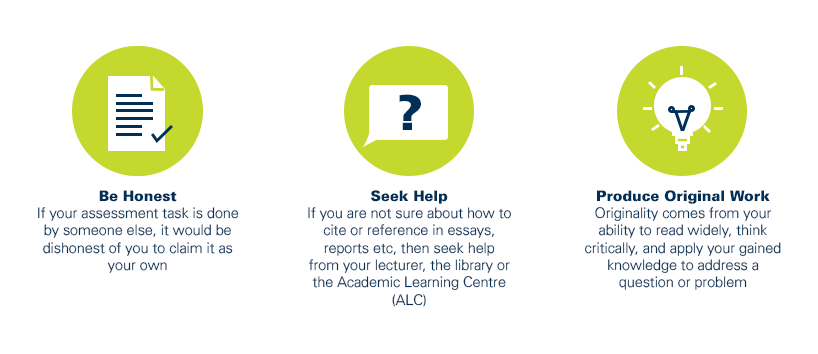
As a CQUniversity student you are expected to act honestly in all aspects of your academic work.
Any assessable work undertaken or submitted for review or assessment must be your own work. Assessable work is any type of work you do to meet the assessment requirements in the unit, including draft work submitted for review and feedback and final work to be assessed.
When you use the ideas, words or data of others in your assessment, you must thoroughly and clearly acknowledge the source of this information by using the correct referencing style for your unit. Using others’ work without proper acknowledgement may be considered a form of intellectual dishonesty.
Participating honestly, respectfully, responsibly, and fairly in your university study ensures the CQUniversity qualification you earn will be valued as a true indication of your individual academic achievement and will continue to receive the respect and recognition it deserves.
As a student, you are responsible for reading and following CQUniversity’s policies, including the Student Academic Integrity Policy and Procedure. This policy sets out CQUniversity’s expectations of you to act with integrity, examples of academic integrity breaches to avoid, the processes used to address alleged breaches of academic integrity, and potential penalties.
What is a breach of academic integrity?
A breach of academic integrity includes but is not limited to plagiarism, self-plagiarism, collusion, cheating, contract cheating, and academic misconduct. The Student Academic Integrity Policy and Procedure defines what these terms mean and gives examples.
Why is academic integrity important?
A breach of academic integrity may result in one or more penalties, including suspension or even expulsion from the University. It can also have negative implications for student visas and future enrolment at CQUniversity or elsewhere. Students who engage in contract cheating also risk being blackmailed by contract cheating services.
Where can I get assistance?
For academic advice and guidance, the Academic Learning Centre (ALC) can support you in becoming confident in completing assessments with integrity and of high standard.
What can you do to act with integrity?