Overview
This unit offers you the opportunity to explore project scope management and introduces you to the processes required to ensure the successful completion of a project. You will learn scope verification and validation techniques. The unit also offers you the opportunity to learn about the tools and methods to keep projects under control and the methods to undertake changes within a project context. You will also learn about project configuration management, as it is a necessary mechanism to ensure that such changes are handled in a managed and controlled way in order to keep the project on track.
Details
Pre-requisites or Co-requisites
There are no requisites for this unit.
Important note: Students enrolled in a subsequent unit who failed their pre-requisite unit, should drop the subsequent unit before the census date or within 10 working days of Fail grade notification. Students who do not drop the unit in this timeframe cannot later drop the unit without academic and financial liability. See details in the Assessment Policy and Procedure (Higher Education Coursework).
Offerings For Term 1 - 2026
Attendance Requirements
All on-campus students are expected to attend scheduled classes - in some units, these classes are identified as a mandatory (pass/fail) component and attendance is compulsory. International students, on a student visa, must maintain a full time study load and meet both attendance and academic progress requirements in each study period (satisfactory attendance for International students is defined as maintaining at least an 80% attendance record).
Recommended Student Time Commitment
Each 6-credit Undergraduate unit at CQUniversity requires an overall time commitment of an average of 12.5 hours of study per week, making a total of 150 hours for the unit.
Class Timetable
Assessment Overview
Assessment Grading
This is a graded unit: your overall grade will be calculated from the marks or grades for each assessment task, based on the relative weightings shown in the table above. You must obtain an overall mark for the unit of at least 50%, or an overall grade of 'pass' in order to pass the unit. If any 'pass/fail' tasks are shown in the table above they must also be completed successfully ('pass' grade). You must also meet any minimum mark requirements specified for a particular assessment task, as detailed in the 'assessment task' section (note that in some instances, the minimum mark for a task may be greater than 50%). Consult the University's Grades and Results Policy for more details of interim results and final grades.
All University policies are available on the CQUniversity Policy site.
You may wish to view these policies:
- Grades and Results Policy
- Assessment Policy and Procedure (Higher Education Coursework)
- Review of Grade Procedure
- Student Academic Integrity Policy and Procedure
- Monitoring Academic Progress (MAP) Policy and Procedure - Domestic Students
- Monitoring Academic Progress (MAP) Policy and Procedure - International Students
- Student Refund and Credit Balance Policy and Procedure
- Student Feedback - Compliments and Complaints Policy and Procedure
- Information and Communications Technology Acceptable Use Policy and Procedure
This list is not an exhaustive list of all University policies. The full list of University policies are available on the CQUniversity Policy site.
- Identify the impact of project scope management on the project schedule, cost, quality, and the desired project outcomes
- Develop a scope management plan that ensures the content of the scope statement and the successful completion
- Define the project scope and performance baselines to evaluate the success of a project through its life cycle
- Explain the methods, tools, and techniques to trace project requirements throughout the project's life cycle.
The learning outcomes of the proposed unit are all developed in line with the requirements of the two potential accreditation bodies, the Project Management Institute (PMI) and the Australian Institute of Project Management, for this course. Moreover, the learning outcomes are addressing the graduate attributes noted in the Engineers Australia Policy on Accreditation. (Engineers Australia policy on accreditation retrieved from https://www.engineersaustralia.org.au/sites/default/files/content-files/2016-12/110214_P02EA_Curr_Engineers_Australia_Policy_on_Accred_REV_0.PDF on 11/05/2021)
Alignment of Assessment Tasks to Learning Outcomes
| Assessment Tasks | Learning Outcomes | |||
|---|---|---|---|---|
| 1 | 2 | 3 | 4 | |
| 1 - Written Assessment - 40% | ||||
| 2 - Practical Assessment - 40% | ||||
| 3 - Online Test - 20% | ||||
Alignment of Graduate Attributes to Learning Outcomes
| Graduate Attributes | Learning Outcomes | |||
|---|---|---|---|---|
| 1 | 2 | 3 | 4 | |
| 1 - Communication | ||||
| 2 - Problem Solving | ||||
| 3 - Critical Thinking | ||||
| 4 - Information Literacy | ||||
| 5 - Team Work | ||||
| 6 - Information Technology Competence | ||||
| 7 - Cross Cultural Competence | ||||
| 8 - Ethical practice | ||||
| 9 - Social Innovation | ||||
| 10 - First Nations Knowledges | ||||
| 11 - Aboriginal and Torres Strait Islander Cultures | ||||
Textbooks
There are no required textbooks.
IT Resources
- CQUniversity Student Email
- Internet
- Unit Website (Moodle)
All submissions for this unit must use the referencing style: Harvard (author-date)
For further information, see the Assessment Tasks.
o.dawoud@cqu.edu.au
Week 1
Begin Date: 09 Mar 2026Module/Topic
Introduction to Project Scope Management
Chapter
The Standard for Project Management
- Section 1: Value Delivery System
- Section 2: Project Management Principles
Focus on: Value, Systems Thinking, Stakeholder Engagement
PMBOK® Guide – 7th Ed.
- Overview of Project Performance Domains
Events and Submissions/Topic
- What is project scope and why it matters
- Relationship between scope, time, cost, and quality
- Causes and consequences of poor scope management
Week 2
Begin Date: 16 Mar 2026Module/Topic
Scope in the Project Life Cycle
Chapter
PMBOK® Guide – 7th Ed.
- Development Approach and Life Cycle Performance Domain
Predictive vs Adaptive approaches
Agile Practice Guide
- Section 2: Life Cycles and Approaches
Events and Submissions/Topic
- Project life cycles (predictive, iterative, incremental, adaptive)
- Where scope decisions are made and locked
- Governance and phase gates
Week 3
Begin Date: 23 Mar 2026Module/Topic
Requirements Management
Chapter
PMBOK® Guide – 7th Ed.
- Stakeholder Performance Domain
- Planning Performance Domain
Requirements Management: A Practice Guide
- Chapter 2: Requirements Fundamentals
- Chapter 3: Elicitation Technique
Events and Submissions/Topic
- Stakeholder needs and expectations
- Requirements elicitation techniques
- Requirements documentation and prioritisation
Week 4
Begin Date: 30 Mar 2026Module/Topic
Scope Planning and Definition
Chapter
PMBOK® Guide – 6th Edition (used here for process clarity)
- Chapter 5: Project Scope Management
- Section 5.3: Define Scope
- Section 5.1: Plan Scope Management
PMBOK® Guide – 7th Ed.
- Planning Performance Domain (outcome focus)
Requirements Management: A Practice Guide
- Chapter 4: Planning Requirements Management
Events and Submissions/Topic
- Scope Management Plan
- Requirements Management Plan
- Planning for verification, validation, and control
- Project scope statement
- Assumptions, constraints, exclusions
- Product vs project scope
Week 5
Begin Date: 06 Apr 2026Module/Topic
Result-Oriented Work Breakdown Structure (WBS)
Chapter
PMBOK® Guide – 6th Ed.
Chapter 5:
- Section 5.4: Create WBS
PMI Practice Guide:
- Work Breakdown Structures
- Sections on decomposition & WBS dictionary
Events and Submissions/Topic
- Decomposition techniques
- WBS vs schedule
- WBS dictionary and scope baseline
Week 6
Begin Date: 13 Apr 2026Module/Topic
Scope Verification & Validation
Chapter
PMBOK® Guide – 6th Ed.
Chapter 5:
- Section 5.5: Validate Scope
Quality Management: A Practice Guide
- Section on inspection and acceptance
Events and Submissions/Topic
- Deliverable acceptance
- Validation vs verification
- Inspections and formal sign-off
Submission of Assessment 1A: Scope Management Plan
Vacation Week
Begin Date: 20 Apr 2026Module/Topic
Chapter
Events and Submissions/Topic
Week 7
Begin Date: 27 Apr 2026Module/Topic
Tools & Techniques for Scope Control
Chapter
Requirements Management: A Practice Guide
- Chapter 6: Requirements Traceability
PMBOK® Guide – 6th Ed.
- Monitoring & Controlling process group (overview)
Events and Submissions/Topic
Assessment
- Scope creep
- Integrated change control
- Configuration management systems
- Requirements Traceability Matrix (RTM)
- Configuration audits
- Control tools and reporting
Deadline for Assessment 1B: Oral Presentation
Assessment 1: Project Scope Management Plan Due: Week 7 Friday (1 May 2026) 11:45 pm AEST
Week 8
Begin Date: 04 May 2026Module/Topic
Rolling Wave Planning & Progressive Elaboration
Chapter
PMBOK® Guide – 7th Ed.
Planning Performance Domain
- Progressive elaboration concepts
Agile Practice Guide
- Section on progressive elaboration & uncertainty
Events and Submissions/Topic
- Planning under uncertainty
- Progressive elaboration
- Managing evolving scope while maintaining control
Week 9
Begin Date: 11 May 2026Module/Topic
Agile & Hybrid Scope Management
Chapter
Agile Practice Guide
- Section 3: Agile Project Life Cycle
- Section 5: Backlog and Scope Management
PMI Disciplined Agile Toolkit
- Overview of Hybrid Delivery Models
Events and Submissions/Topic
- Agile scope philosophy
- Product backlog, epics, user stories
- Hybrid governance models
- When agile is (and is not) appropriate
Week 10
Begin Date: 18 May 2026Module/Topic
Scope Management in AI Projects
Chapter
Material will be provided on Moodle
Events and Submissions/Topic
- Why AI projects challenge traditional scope definitions
- Problem framing vs solution specification
- Data scope vs model scope vs deployment scope
- Managing uncertainty, experimentation, and iteration
- Governance, ethics, and explainability as scope constraints
- Relationship between AI scope and business value
Submission of Assessment 2: Scope Control and Governance
Assessment 2: Scope Control and Governance Due: Week 10 Monday (18 May 2026) 11:45 pm AEST
Week 11
Begin Date: 25 May 2026Module/Topic
Portfolio Scope Management
Chapter
Reading Material to be provided on Moodle
Events and Submissions/Topic
How project scope decisions are governed, prioritised, and balanced across multiple projects within a portfolio, ensuring alignment with organisational strategy, value realisation, and capacity constraints.
Week 12
Begin Date: 01 Jun 2026Module/Topic
Contemporary Topics in Scope Management
Chapter
Reading Material to be provided on Moodle
Events and Submissions/Topic
- Scope management in digital and data-driven projects
- Sustainability, ESG, and social value as scope constraints
- Ethical considerations and responsible scope decisions
- Lessons learned from recent project failures and successes
Assessment 3: Online Test
Assessment 3: Online Test Due: Week 12 Monday (1 June 2026) 11:45 pm AEST
Exam Week
Begin Date: 08 Jun 2026Module/Topic
Chapter
Events and Submissions/Topic
Vacation/Exam Week
Begin Date: 15 Jun 2026Module/Topic
Chapter
Events and Submissions/Topic
1 Written Assessment
Task Description
Students will develop a Project Scope Management Plan for a given project scenario. The task requires students to define and document project scope elements and demonstrate how scope will be planned, defined, validated, and controlled throughout the project life cycle.
This is a group submission that involves two tasks:
Assessment 1A: Scope Management Plan (to be submitted on Week 6) (25%)
Assessment 1B: Oral Presentation (to be organized on Week 7) (15% marked as 5% for the group and 10% for individuals)
Required Components for the plan
- Scope Management Plan
- Project Scope Statement (including assumptions, constraints, exclusions)
- Scope Baseline explanation
- Requirements Traceability Matrix (summary)
Further details are provided on Moodle for the presentation requirements and assessment rubrics
Week 7 Friday (1 May 2026) 11:45 pm AEST
Week 9 Friday (15 May 2026)
Assessment Criteria:
Assessment 1A: Scope Management Plan (25%)
- Scope Management Plan (10%)
- Project Scope Statement (including assumptions, constraints, exclusions) (5%)
- Scope Baseline explanation (5%)
- Requirements Traceability Matrix (summary) (5%)
Assessment 1B: Oral Presentation (15%)
- Quality of Scientific Content (5%)
- Presentation Skills (5%)
- Response to Discussion and Questions (5%)
- Develop a scope management plan that ensures the content of the scope statement and the successful completion
- Define the project scope and performance baselines to evaluate the success of a project through its life cycle
- Explain the methods, tools, and techniques to trace project requirements throughout the project's life cycle.
2 Practical Assessment
Task Description
This assessment requires students to complete a practical, scenario-based exercise focused on controlling and governing project scope in dynamic environments with high uncertainty.
Using a provided case study, students will:
- Analyse scope changes and their impact on schedule, cost, and quality
- Apply scope control and change management techniques
- Consider governance challenges in AI-driven or multi-project / portfolio contexts
- Recommend appropriate responses to maintain alignment with project and organisational objectives
The task emphasises application and decision-making and governance tools, rather than theory.
This assessment is submitted and marked individually.
Further details are provided on Moodle for the report requirements
Week 10 Monday (18 May 2026) 11:45 pm AEST
Week 12 Monday (1 June 2026)
Assessment Criteria
- Identification and analysis of scope issues and impacts 30%
- Application of scope control and change management techniques 30%
- Decision-making and justification of proposed responses 20%
- Alignment with project and organisational objectives 10%
- Professional documentation 10%
No submission method provided.
- Identify the impact of project scope management on the project schedule, cost, quality, and the desired project outcomes
- Develop a scope management plan that ensures the content of the scope statement and the successful completion
- Explain the methods, tools, and techniques to trace project requirements throughout the project's life cycle.
3 Online Test
This is an individual assessment
Time: Week 12 ( During the tutorial session)
This assessment item involves an online test which is worth 20% of the unit marks.
- The quiz will evaluate your knowledge and understanding of topics and material covered in up to week 11.
- You may attempt the quiz twice and your highest score will be counted.
- The quiz will be administered during the respective tutorial classes under the supervision of the tutor.
- The quiz is considered a closed-book quiz, and seeking any form of assistance is prohibited. All electronic devices be left outside of the students' reach.
- All students must be present at the beginning of the session. Late attendance will impact your ability to complete the quiz.
- Being absent from the quiz without an approved request for an extension would result in a zero (0) mark.
- There will be forty (40) questions (a combination of multiple-choice and true/false questions).
- There will be a time limit of 40 minutes to complete the quiz. Your quiz will automatically be submitted after 40 minutes.
- When you attempt the quiz, the questions will be randomly selected from a pool of questions and displayed to you. It is very unlikely that will be presented with the same questions.
Week 12 Monday (1 June 2026) 11:45 pm AEST
Week 12 Friday (5 June 2026)
No Assessment Criteria
No submission method provided.
- Identify the impact of project scope management on the project schedule, cost, quality, and the desired project outcomes
- Develop a scope management plan that ensures the content of the scope statement and the successful completion
- Define the project scope and performance baselines to evaluate the success of a project through its life cycle
- Explain the methods, tools, and techniques to trace project requirements throughout the project's life cycle.
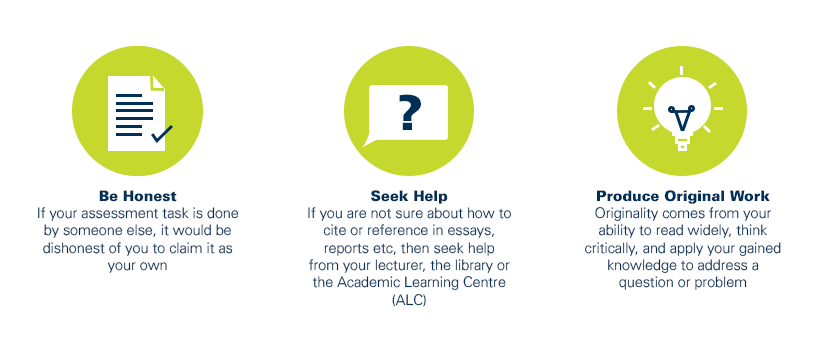
As a CQUniversity student you are expected to act honestly in all aspects of your academic work.
Any assessable work undertaken or submitted for review or assessment must be your own work. Assessable work is any type of work you do to meet the assessment requirements in the unit, including draft work submitted for review and feedback and final work to be assessed.
When you use the ideas, words or data of others in your assessment, you must thoroughly and clearly acknowledge the source of this information by using the correct referencing style for your unit. Using others’ work without proper acknowledgement may be considered a form of intellectual dishonesty.
Participating honestly, respectfully, responsibly, and fairly in your university study ensures the CQUniversity qualification you earn will be valued as a true indication of your individual academic achievement and will continue to receive the respect and recognition it deserves.
As a student, you are responsible for reading and following CQUniversity’s policies, including the Student Academic Integrity Policy and Procedure. This policy sets out CQUniversity’s expectations of you to act with integrity, examples of academic integrity breaches to avoid, the processes used to address alleged breaches of academic integrity, and potential penalties.
What is a breach of academic integrity?
A breach of academic integrity includes but is not limited to plagiarism, self-plagiarism, collusion, cheating, contract cheating, and academic misconduct. The Student Academic Integrity Policy and Procedure defines what these terms mean and gives examples.
Why is academic integrity important?
A breach of academic integrity may result in one or more penalties, including suspension or even expulsion from the University. It can also have negative implications for student visas and future enrolment at CQUniversity or elsewhere. Students who engage in contract cheating also risk being blackmailed by contract cheating services.
Where can I get assistance?
For academic advice and guidance, the Academic Learning Centre (ALC) can support you in becoming confident in completing assessments with integrity and of high standard.
What can you do to act with integrity?