Overview
This 12-credit point unit encompasses a clinical component (internal and external) and a research component. During clinic, you are required to demonstrate graduate competency in patient assessment, diagnostic decision-making, prevention, treatment and management of a wide range of podiatric patient presentations. You will also treat patients with conditions requiring minor surgical procedures. In addition, you shall also refine your skills in managing podiatric patients of differing ages, ethnic/cultural backgrounds, geographic locations, socioeconomic status and health profiles. This is the third and final unit in the formal requirements for completion of your honours research project. You are required to complete and submit your research project for evaluation. You are expected to present your research findings, during your presentation you are encouraged to consider both the strengths and limitations of your research.
Details
Pre-requisites or Co-requisites
Prerequisite: PODI14008 Podiatry Clinical Practice 4 and Corequisite: PODI14011 Complex Cases in Podiatry Practice
Important note: Students enrolled in a subsequent unit who failed their pre-requisite unit, should drop the subsequent unit before the census date or within 10 working days of Fail grade notification. Students who do not drop the unit in this timeframe cannot later drop the unit without academic and financial liability. See details in the Assessment Policy and Procedure (Higher Education Coursework).
Offerings For Term 2 - 2026
Attendance Requirements
All on-campus students are expected to attend scheduled classes - in some units, these classes are identified as a mandatory (pass/fail) component and attendance is compulsory. International students, on a student visa, must maintain a full time study load and meet both attendance and academic progress requirements in each study period (satisfactory attendance for International students is defined as maintaining at least an 80% attendance record).
Recommended Student Time Commitment
Each 12-credit Undergraduate unit at CQUniversity requires an overall time commitment of an average of 25 hours of study per week, making a total of 300 hours for the unit.
Class Timetable
Assessment Overview
Assessment Grading
This is a graded unit: your overall grade will be calculated from the marks or grades for each assessment task, based on the relative weightings shown in the table above. You must obtain an overall mark for the unit of at least 50%, or an overall grade of 'pass' in order to pass the unit. If any 'pass/fail' tasks are shown in the table above they must also be completed successfully ('pass' grade). You must also meet any minimum mark requirements specified for a particular assessment task, as detailed in the 'assessment task' section (note that in some instances, the minimum mark for a task may be greater than 50%). Consult the University's Grades and Results Policy for more details of interim results and final grades.
All University policies are available on the CQUniversity Policy site.
You may wish to view these policies:
- Grades and Results Policy
- Assessment Policy and Procedure (Higher Education Coursework)
- Review of Grade Procedure
- Student Academic Integrity Policy and Procedure
- Academic Progression Policy and Procedure
- Student Refund and Credit Balance Policy and Procedure
- Complaints Policy and Procedure
- Information and Communications Technology Acceptable Use Policy and Procedure
This list is not an exhaustive list of all University policies. The full list of University policies are available on the CQUniversity Policy site.
Feedback, Recommendations and Responses
Every unit is reviewed for enhancement each year. At the most recent review, the following staff and student feedback items were identified and recommendations were made.
Feedback from Staff feedback
The diversity of students Work-Integrated Learning may be enhanced by adjusting the ratio of internal and external clinical placement hours in this unit
It is recommended that the Unit Coordinator explores opportunities to offer students more diversity of placement experiences by replacing some internal Work-Integrated Learning hours with placements with external providers, where feasible.
- Demonstrate effective skills in the assessment and management of complex podiatric patient presentations including biomechanical, sport injuries, diabetes, rheumatology and high risk cases
- Demonstrate competency at a graduate standard of practice in clinical reasoning, execution of techniques and objective assessments, and delivery of programs to manage specific clinical problems
- Refine skills in analysing and improving ongoing clinical practice
- Demonstrate the ability to work effectively as an individual and as a member of a team
- Effectively communicate an advanced understanding of the specified research topic including a critical analysis and interpretation of the research topic.
The Learning Outcomes are linked to the Podiatry Board of Australia (AHPRA) Professional Capabilities for Podiatrists.
https://www.podiatryboard.gov.au/News/2021-09-01-new-professional-capabilities.aspx
Alignment of Assessment Tasks to Learning Outcomes
| Assessment Tasks | Learning Outcomes | ||||
|---|---|---|---|---|---|
| 1 | 2 | 3 | 4 | 5 | |
| 1 - Practical Assessment - 50% | |||||
| 2 - Project (research) - 30% | |||||
| 3 - Professional Practice Placement - 0% | |||||
| 4 - Presentation - 20% | |||||
Alignment of Graduate Attributes to Learning Outcomes
| Graduate Attributes | Learning Outcomes | ||||
|---|---|---|---|---|---|
| 1 | 2 | 3 | 4 | 5 | |
| 1 - Communication | |||||
| 2 - Problem Solving | |||||
| 3 - Critical Thinking | |||||
| 4 - Information Literacy | |||||
| 5 - Team Work | |||||
| 6 - Information Technology Competence | |||||
| 7 - Cross Cultural Competence | |||||
| 8 - Ethical practice | |||||
| 9 - Social Innovation | |||||
| 10 - First Nations Knowledges | |||||
| 11 - Aboriginal and Torres Strait Islander Cultures | |||||
Textbooks
There are no required textbooks.
IT Resources
- CQUniversity Student Email
- Internet
- Unit Website (Moodle)
- Zoom
All submissions for this unit must use the referencing style: American Psychological Association 7th Edition (APA 7th edition)
For further information, see the Assessment Tasks.
a.crutch@cqu.edu.au
b.peterson@cqu.edu.au
Week 1
Begin Date: 13 Jul 2026Module/Topic
External Clinical Placements
Various placement sites
Monday to Friday
8:00 am – 5:00 pm
Review pre-recorded lecture: Unit Overview
Chapter
Students should review the following prescribed materials in Week 1 and across the term, which are assessable throughout the assessments in PODI14012.
- CB86 Vascular Assessment Manual
- CB86 Biomechanical Assessment Manual
- CB86 Sports Practical Manual
- CB86 Exercise Prescription Manual
- CB86 Infection Control Manual
- Routine Neurovascular Assessment Presentation
- Skin and Nail Disorders Presentation
- Local Anaesthesia Presentation
- Notes on Clinical Record Keeping Presentation
Events and Submissions/Topic
Week 2
Begin Date: 20 Jul 2026Module/Topic
External Clinical Placements
Various placement sites
Monday to Friday
8:00 am – 5:00 pm
Review pre-recorded lecture:
Journal selection and submission criteria
Chapter
Events and Submissions/Topic
Week 3
Begin Date: 27 Jul 2026Module/Topic
External Clinical Placements
Various placement sites
Monday to Friday
8:00 am – 5:00 pm
Review pre-recorded lecture:
Putting it all together: Abstract, Intro, Method, Results, Discussion, Conclusion
Other documents required for selected journal submission: Cover letter, title page etc
What goes in my final presentation?
Chapter
Events and Submissions/Topic
Week 4
Begin Date: 03 Aug 2026Module/Topic
External Clinical Placements
Various placement sites
Monday to Friday
8:00 am – 5:00 pm
Chapter
Events and Submissions/Topic
Week 5
Begin Date: 10 Aug 2026Module/Topic
External Clinical Placements
Various placement sites
Monday to Friday
8:00 am – 5:00 pm
Chapter
Events and Submissions/Topic
Week 6
Begin Date: 17 Aug 2026Module/Topic
No PODI14012 class or clinical placements in Week 6.
Chapter
Events and Submissions/Topic
Vacation Week
Begin Date: 24 Aug 2026Module/Topic
Chapter
Events and Submissions/Topic
Week 7
Begin Date: 31 Aug 2026Module/Topic
Internal clinical placement block
CQUniversity Health Clinic
Wednesday and Thursday
8:00 am – 5:00 pm
Individual meetings with Honours supervisor(s) available by appointment.
Chapter
Events and Submissions/Topic
Week 8
Begin Date: 07 Sep 2026Module/Topic
Internal clinical placement block
CQUniversity Health Clinic
Wednesday and Thursday
8:00 am – 5:00 pm
Individual meetings with Honours supervisor(s) available by appointment.
Chapter
Events and Submissions/Topic
Week 9
Begin Date: 14 Sep 2026Module/Topic
Internal clinical placement block
CQUniversity Health Clinic
Wednesday and Thursday
8:00 am – 5:00 pm
Individual meetings with Honours supervisor(s) available by appointment.
Chapter
Events and Submissions/Topic
Week 10
Begin Date: 21 Sep 2026Module/Topic
Internal clinical placement block
CQUniversity Health Clinic
Wednesday and Thursday
8:00 am – 5:00 pm
Individual meetings with Honours supervisor(s) available by appointment.
Chapter
Events and Submissions/Topic
Week 11
Begin Date: 28 Sep 2026Module/Topic
Internal clinical placement block
CQUniversity Health Clinic
Wednesday and Thursday
8:00 am – 5:00 pm
Individual meetings with Honours supervisor(s) available by appointment.
Chapter
Events and Submissions/Topic
Week 12
Begin Date: 05 Oct 2026Module/Topic
Internal clinical placement block
CQUniversity Health Clinic
Wednesday and Thursday
8:00 am – 5:00 pm
Individual meetings with Honours supervisor(s) available by appointment.
Chapter
Events and Submissions/Topic
Professional Practice Placement (pass/fail) Due: Week 12 Friday (9 Oct 2026) 5:00 pm AEST
Practical Assessment (50%) Due: Week 12 Wednesday (7 Oct 2026) 9:00 am AEST
Exam Week
Begin Date: 12 Oct 2026Module/Topic
Chapter
Events and Submissions/Topic
Exam/Vacation Week
Begin Date: 19 Oct 2026Module/Topic
Chapter
Events and Submissions/Topic
1 Presentation
You will be required to provide a final and complete a live presentation of your research project. This presentation will be 25 minutes in duration with 5 minutes for Question and Answer. You are required to present your work in front of an audience.
After your presentation, you will be required to upload your PowerPoint slides on your Moodle site.
The 72-hour grace period does not apply to this assessment item.
Level of GenAI use allowed:
Level 2: AI planning. You may use AI for planning, idea development, and research. Your final submission should show how you have developed and refined these ideas. Participant data strictly must not be entered into any GenAI platform under any circumstances.
Week 9 Friday (18 Sept 2026) 9:00 am AEST
Presentations will be scheduled for 9am Friday Week 9, during internal clinical placement
Week 11 Friday (2 Oct 2026)
Feedback will be provided via Moodle
You will be assessed against a marking rubric specifically designed for this assessment task which will be made available at the beginning of the term.
- Effectively communicate an advanced understanding of the specified research topic including a critical analysis and interpretation of the research topic.
2 Project (research)
You are required to submit prepare your research paper in the form of a manuscript ready for submission to a journal. The journal should be agreed between you and your Honours project supervisor. You will be also be required to prepare documents such as cover letter, title page, and any other documents according to the journal submission guidelines.
Level of GenAI use allowed:
Level 2: AI planning. You may use AI for planning, idea development, and research. Your final submission should show how you have developed and refined these ideas. Participant data strictly must not be entered into any GenAI platform under any circumstances.
Week 12 Friday (9 Oct 2026) 11:59 pm AEST
Submit via the Assessment tab in Moodle
Vacation/Exam Week Friday (23 Oct 2026)
Feedback will be provided via Moodle
You will be assessed against a marking rubric specifically designed for this assessment task, which will be made available to you at the beginning of the semester via Moodle. Marking criteria will address components of your submission including but not limited to: Abstract, Background, Methods, Results, Discussion, and Conclusion, as well as adherance to journal formatting requirements.
- Effectively communicate an advanced understanding of the specified research topic including a critical analysis and interpretation of the research topic.
3 Practical Assessment
The practical assessment will be up to 120 minutes long and will assess your clinical knowledge, practical and assessment skills and clinical reasoning. Your practical assessment will include content covered in all units in your podiatry course until the end of Year 4 Term 2. Based on clinical scenarios you will be required to discuss and perform aspects of relevant history taking, diagnosis, assessment, treatment and overall management of the condition and/or clinical scenario presented and complete relevant patient documentation. All assessments may be video and/or audio-recorded for moderation purposes. You are expected to arrive at least 15 minutes before the allocated start time for the practical assessment and to wear full clinical uniform with enclosed shoes. The practical assessment is a closed book assessment task.
The 72-hour grace period does not apply to this assessment item.
Use of AI allowed:
Level 1 - You must not use AI at any point during the assessment. You must demonstrate your core knowledge and skills.
Week 12 Wednesday (7 Oct 2026) 9:00 am AEST
You will be assessed according to an assessment rubric made available to you via moodle during the term.
Week 12 Friday (9 Oct 2026)
Feedback will be provided via Moodle. Students will be contacted directly by Friday Week 12 as to whether they are required to undertake a re-sit for this assessment item.
You will be assessed according to an assessment rubric made available to you via moodle during the term. This is a must-pass assessment item. Students who do not pass this assessment item on their first attempt will be offered a re-attempt. Students who are required to undertake a re-attempt of this assessment item will be able to achieve a mark no higher than 50% (a passing grade) for this assessment item.
- Demonstrate effective skills in the assessment and management of complex podiatric patient presentations including biomechanical, sport injuries, diabetes, rheumatology and high risk cases
- Demonstrate competency at a graduate standard of practice in clinical reasoning, execution of techniques and objective assessments, and delivery of programs to manage specific clinical problems
- Refine skills in analysing and improving ongoing clinical practice
- Demonstrate the ability to work effectively as an individual and as a member of a team
4 Professional Practice Placement
Internal clinical placement
You will complete an internal professional placement at the CQUniversity Health Clinic, where you will provide a range of podiatric care to patients. The internal clinical placement will occur in Weeks 7-12.
Internal Clinical Placement will be Wednesday and Thursday from 8:00 am to 5:00 pm.
You will be required to complete Part A, Part B, and Part C of the Podiatry Practical Skills Logbook, including completion of a self-evaluation and reflective activity regarding students ongoing development of knowledge and skills toward delivering culturally responsive podiatry care when working with and for Aboriginal and Torres Strait Islander healthcare users. Your completed logbook needs to be uploaded on by Friday Week 12, 5 pm via SONIA and Moodle.
External clinical placement
The target dates for External Clinical Placement are the 13th July to 14th August, inclusive (weeks 1 to 5).
The placements occur Mondays to Friday 8:00 am to 5:00 pm, unless otherwise specified by your placement host and unit coordinator.
Please note that these dates are subject to change. In addition, external placement dates and location are dependent on the site's availability therefore placement dates may vary slightly for each student. Details of individual placement locations and dates will be provided to you during the term. External clinical placement may be located either in a metropolitan area or in a rural or remote area. Please note that you may need to travel at your own expense for your external placement.
You will be required to complete and submit your External Clinical Documentation by Monday 12th August 5 pm, via SONIA and Moodle.
The 72-hour grace period does not apply to this assessment item.
Use of AI allowed:
Level 1: You must not use AI at any point during the assessment. You must demonstrate your core knowledge and skills.
Week 12 Friday (9 Oct 2026) 5:00 pm AEST
Students must submit their internal and external clinical placement logbooks via Moodle by 5pm Friday Week 12.
Vacation/Exam Week Friday (23 Oct 2026)
Formative feedback will be provided at the mid-term and end-term assessments. Marks will be made available via Moodle.
Internal Clinical Placement: You must show evidence that you have met all the pre-clinical placement requirements (available on the Moodle site) prior to commencing placement. Failure to provide the required documentation will mean that you will be unable to attend any placement until the missing documentation has been supplied. You are required to wear the approved CQUniversity podiatry clinical uniform and to project a professional image at all times. Clinical placement is compulsory requiring 100% attendance rate. If you are absent, you will have to follow the "Absentee policy" set out in the internal Clinical Placement handbook.
The Mid and End of Term Assessment Criteria can be found in your Internal Clinical Placement Handbook that will be available on the Moodle site.
You will be required to be assessed as "Competent" for all criteria in the End of Term Assessment. You will also be required to satisfy sections A, B, and C of your internal clinical placement logbook. Failure to achieve this will result in a "Fail" grade for this assessment task and a "Fail" grade for this unit.
External Clinical Placement:
Before placement: The Learning Contract must be submitted 2 weeks (10 working days) prior to the allocated placement commencement. The student must submit this to the Clinical Placement Officer for review and sign-off at least two weeks prior to placement commencement.
After placement: The following documentation must be completed and submitted within 1 week after the placement has been completed: Learning Contract, Log Book Reflections, Time Sheet, Student Evaluation of the Clinical Placement and Clinical Supervisor Report . Students will be required to fill in their Learning Contract, Log Book Reflections, Time Sheet, and Student Evaluation of the Clinical Placement. External supervisors and other relevant academic staff will assess whether students have satisfactorily met the Professional Capabilities for Podiatrists during their external placement. This will be recorded in the Clinical Supervisor Report. Students must be scored as being competent (a score of '2') against each of the professional capabilities for Podiatrists in order to pass their external clinical placement.
External placement has a pass/fail requirement. Timely submission of ALL above documents are mandatory. Failure to submit any documents and failure to meet the competency standards will result in a "Fail" grade for this assessment task and a "Fail" grade for this unit.
- Demonstrate effective skills in the assessment and management of complex podiatric patient presentations including biomechanical, sport injuries, diabetes, rheumatology and high risk cases
- Demonstrate competency at a graduate standard of practice in clinical reasoning, execution of techniques and objective assessments, and delivery of programs to manage specific clinical problems
- Refine skills in analysing and improving ongoing clinical practice
- Demonstrate the ability to work effectively as an individual and as a member of a team
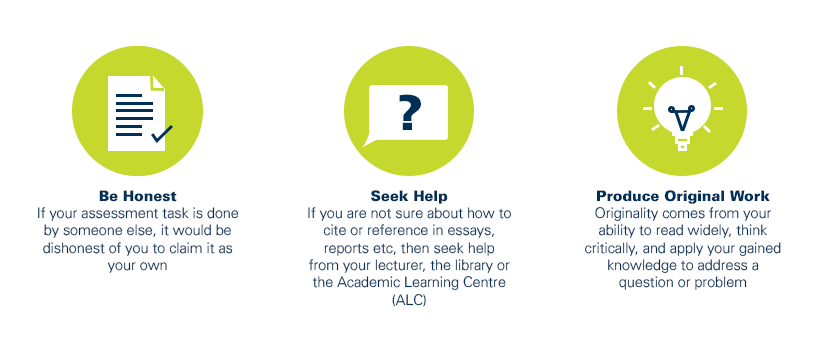
As a CQUniversity student you are expected to act honestly in all aspects of your academic work.
Any assessable work undertaken or submitted for review or assessment must be your own work. Assessable work is any type of work you do to meet the assessment requirements in the unit, including draft work submitted for review and feedback and final work to be assessed.
When you use the ideas, words or data of others in your assessment, you must thoroughly and clearly acknowledge the source of this information by using the correct referencing style for your unit. Using others’ work without proper acknowledgement may be considered a form of intellectual dishonesty.
Participating honestly, respectfully, responsibly, and fairly in your university study ensures the CQUniversity qualification you earn will be valued as a true indication of your individual academic achievement and will continue to receive the respect and recognition it deserves.
As a student, you are responsible for reading and following CQUniversity’s policies, including the Student Academic Integrity Policy and Procedure. This policy sets out CQUniversity’s expectations of you to act with integrity, examples of academic integrity breaches to avoid, the processes used to address alleged breaches of academic integrity, and potential penalties.
What is a breach of academic integrity?
A breach of academic integrity includes but is not limited to plagiarism, self-plagiarism, collusion, cheating, contract cheating, and academic misconduct. The Student Academic Integrity Policy and Procedure defines what these terms mean and gives examples.
Why is academic integrity important?
A breach of academic integrity may result in one or more penalties, including suspension or even expulsion from the University. It can also have negative implications for student visas and future enrolment at CQUniversity or elsewhere. Students who engage in contract cheating also risk being blackmailed by contract cheating services.
Where can I get assistance?
For academic advice and guidance, the Academic Learning Centre (ALC) can support you in becoming confident in completing assessments with integrity and of high standard.
What can you do to act with integrity?