Overview
This unit focuses on the management of chronic wounds of the foot. You will analyse the factors that enable identification of the high-risk foot. Prevalence of disorders that contribute to disease susceptibility will be considered, along with associated pathophysiological and neurological impacts. Biomechanical factors and client education associated with management and care of infection of the foot at risk for amputation/ulceration will also be considered in the context of prevention and ongoing client health.
Details
Pre-requisites or Co-requisites
Prerequisites: PODI13011 Podiatry Clinical Practice 3 and PODI13014 Diabetes in Podiatry Practice and Corequisites: PODI14008 Podiatry Clinical Practice 4 and PODI14009 Rheumatology and Musculoskeletal Medicine in Podiatry Practice. To be enrolled in this unit, students must be enrolled in CB86 Bachelor of Podiatry Practice (Honours) course.
Important note: Students enrolled in a subsequent unit who failed their pre-requisite unit, should drop the subsequent unit before the census date or within 10 working days of Fail grade notification. Students who do not drop the unit in this timeframe cannot later drop the unit without academic and financial liability. See details in the Assessment Policy and Procedure (Higher Education Coursework).
Offerings For Term 1 - 2026
Attendance Requirements
All on-campus students are expected to attend scheduled classes - in some units, these classes are identified as a mandatory (pass/fail) component and attendance is compulsory. International students, on a student visa, must maintain a full time study load and meet both attendance and academic progress requirements in each study period (satisfactory attendance for International students is defined as maintaining at least an 80% attendance record).
Recommended Student Time Commitment
Each 6-credit Undergraduate unit at CQUniversity requires an overall time commitment of an average of 12.5 hours of study per week, making a total of 150 hours for the unit.
Class Timetable
Assessment Overview
Assessment Grading
This is a graded unit: your overall grade will be calculated from the marks or grades for each assessment task, based on the relative weightings shown in the table above. You must obtain an overall mark for the unit of at least 50%, or an overall grade of 'pass' in order to pass the unit. If any 'pass/fail' tasks are shown in the table above they must also be completed successfully ('pass' grade). You must also meet any minimum mark requirements specified for a particular assessment task, as detailed in the 'assessment task' section (note that in some instances, the minimum mark for a task may be greater than 50%). Consult the University's Grades and Results Policy for more details of interim results and final grades.
All University policies are available on the CQUniversity Policy site.
You may wish to view these policies:
- Grades and Results Policy
- Assessment Policy and Procedure (Higher Education Coursework)
- Review of Grade Procedure
- Student Academic Integrity Policy and Procedure
- Academic Progression Policy and Procedure
- Student Refund and Credit Balance Policy and Procedure
- Complaints Policy and Procedure
- Information and Communications Technology Acceptable Use Policy and Procedure
This list is not an exhaustive list of all University policies. The full list of University policies are available on the CQUniversity Policy site.
Feedback, Recommendations and Responses
Every unit is reviewed for enhancement each year. At the most recent review, the following staff and student feedback items were identified and recommendations were made.
Feedback from SUTE qualitative feedback
Students queried the value and purpose of the 'Journal Club' component of the On-Campus Activity assessment item
It is recommended that the Unit Coordinator clearly articulates the mapping of the 'Journal Club' component of the On-Campus Activity assessment to the unit Learning Outcomes and the Professional Capabilities for Podiatrists in subsequent deliveries of this unit.
Feedback from SUTE qualitative feedback
Updates to the design of the Written Assessment were well-received by students
It is recommended that the updated design of the Written Assessment continues to be used in subsequent deliveries of this unit.
- Critically evaluate the issues impacting the identification of a high-risk foot.
- Implement active learning strategies (including evidence-based practice) for continually improving knowledge and skills specific to the high-risk foot and chronic wound care.
- Analyse the factors impacting on chronic wound management from both the patient and podiatrist perspective.
- Synthesise and analyse a safe management plan for patients with chronic wounds.
- Critically analyse the issues associated with behavioural interventions in the treatment of the high-risk foot.
Per NPC1309
Alignment of Assessment Tasks to Learning Outcomes
| Assessment Tasks | Learning Outcomes | ||||
|---|---|---|---|---|---|
| 1 | 2 | 3 | 4 | 5 | |
| 1 - On-campus Activity - 20% | |||||
| 2 - Written Assessment - 30% | |||||
| 3 - In-class Test(s) - 50% | |||||
Alignment of Graduate Attributes to Learning Outcomes
| Graduate Attributes | Learning Outcomes | ||||
|---|---|---|---|---|---|
| 1 | 2 | 3 | 4 | 5 | |
| 1 - Communication | |||||
| 2 - Problem Solving | |||||
| 3 - Critical Thinking | |||||
| 4 - Information Literacy | |||||
| 5 - Team Work | |||||
| 6 - Information Technology Competence | |||||
| 7 - Cross Cultural Competence | |||||
| 8 - Ethical practice | |||||
| 9 - Social Innovation | |||||
| 10 - First Nations Knowledges | |||||
| 11 - Aboriginal and Torres Strait Islander Cultures | |||||
Textbooks
There are no required textbooks.
IT Resources
- CQUniversity Student Email
- Internet
- Unit Website (Moodle)
- Zoom access for weekly meetings
All submissions for this unit must use the referencing style: American Psychological Association 7th Edition (APA 7th edition)
For further information, see the Assessment Tasks.
b.peterson@cqu.edu.au
z.lotfollahi@cqu.edu.au
Week 1 - Overview and epidemiology of high-risk foot complications
Begin Date: 09 Mar 2026Module/Topic
This week, you will be introduced to the high-risk foot and diabetes related foot disease (DFD). Information presented will build on the knowledge you already have around neurovascular assessment. Together, we will explore the national and global economic burden that the high-risk foot has on the health industry.
Chapter
Lazzarini PA, Raspovic A, Prentice J, Commons RJ, Fitridge RA, Charles J, Cheney J, Purcell N, Twigg SM, on behalf of the Australian Diabetes-related Foot Disease Guidelines & Pathways Project. 2021 Australian evidence-based guidelines for diabetes-related foot disease; version 1.0. Brisbane, Australia: Diabetes Feet Australia, Australian Diabetes Society; 2021.
International Working Group for the Diabetic Foot Guidelines (2023) available from: https://iwgdfguidelines.org/guidelines-2023/
Events and Submissions/Topic
Week 2 - Socioeconomic determinants of health
Begin Date: 16 Mar 2026Module/Topic
This week, we will explore the complex interface between high-risk foot development and management. We will explore the role of the podiatrist as part of the multidisciplinary team in the management of high-risk feet. We will also discuss social and structural determinants of health, in the context of the high-risk foot.
Chapter
West, M., Chuter, V., Munteanu, S. and Hawke, F. (2017), Defining the gap: a systematic review of the difference in rates of diabetes-related foot complications in Aboriginal and Torres Strait Islander Australians and non-Indigenous Australians. J Foot Ankle Res, 10: 48. https://doi.org/10.1186/s13047-017-0230-5
Events and Submissions/Topic
Journal Club 1 - contributes to Assessment 1 (On-campus activity, 20%).
Week 3 - Foot pathologies of the high-risk foot
Begin Date: 23 Mar 2026Module/Topic
This week, you will learn about infections of the high-risk foot including cellulitis and osteomyelitis. You will be expected to draw on your knowledge of systemic therapeutics from pharmacology studies.
Chapter
Readings or textbook chapters for each week will be posted in Moodle. Please note that information from readings may be assessed during the examination.
Events and Submissions/Topic
Journal Club 2 - contributes to Assessment 1 (On-campus activity, 20%).
Week 4 - The high-risk foot - Arterial complications
Begin Date: 30 Mar 2026Module/Topic
This week's focus will be on arterial complications of the foot and lower limb and the impact that arterial compromise has on foot health and wound development.
Chapter
Readings or textbook chapters for each week will be posted in Moodle. Please note that information from readings may be assessed during the examination.
Events and Submissions/Topic
Week 5 - Dermatological and venous complications in the high-risk foot setting
Begin Date: 06 Apr 2026Module/Topic
This week, you will learn about chronic venous insufficiencies/chronic venous disease including a risk factors, signs, symptoms, dermatological presentation and the associated management and its complexities.
This will be a pre-recorded lecture due to the Easter Monday public holiday.
Chapter
Lurie et al. (2020). The 2020 update of the CEAP classification system and reporting standards. Journal of Vascular Surgery: Venous and Lymphatic Disorders. https://doi.org/10.1016/j.jvsv.2019.12.075
NSW Agency for Clinical Innovation. Lymphoedema: A guide for clinical services. Chatswood: ACI; 2018. Available from: https://lymphoedemaeducation.com.au/wp-content/uploads/2019/03/lymphoedema-guide.pdf
Events and Submissions/Topic
PODI14010 Practical session Friday - Allied Health Lab ROK 7/1.15 or Building 14 Rockhampton Health Clinic.
You are required to attend a compulsory on-campus full day accommodative orthotic workshop. Further details around this will be made available to you at the commencement of term.
Week 6 - laboratory diagnostics and imaging pertinent to the high-risk foot
Begin Date: 13 Apr 2026Module/Topic
This week, we will extend on your knowledge from prior learning around laboratory diagnostics and imaging commonly encountered in the high-risk setting. We will explore Australian and international guidelines around this and learn to adapt this into everyday clinical practice.
Chapter
Cross, Heidi Huddleston MSN, RN, FNP-BC, CWOCN. Obtaining a wound swab culture specimen. Nursing 44(7):p 68-69, July 2014. | DOI: 10.1097/01.nurse.0000446645.33489.2e
Events and Submissions/Topic
Journal Club 3 - contributes to Assessment 1 (On-campus activity, 20%).
Vacation Week
Begin Date: 20 Apr 2026Module/Topic
No lectures this week.
Chapter
Events and Submissions/Topic
Week 7 - Assessment of the high-risk foot
Begin Date: 27 Apr 2026Module/Topic
This week, we begin a deep dive into wound assessments, classification systems and appropriate documentation.
Chapter
Readings or textbook chapters for each week will be posted in Moodle. Please note that information from readings may be assessed during the examination.
Events and Submissions/Topic
Journal Club 4 - contributes to Assessment 1 (On-campus activity, 20%).
Journal Club Due: Week 7 Friday (1 May 2026) 11:59 pm AEST
Week 8
Begin Date: 04 May 2026Module/Topic
Labour Day public holiday - there will be no lecture this week. Ensure you utilise this time to work on assessment items or revise learnt content.
Chapter
Events and Submissions/Topic
Week 9 - Management of the high-risk foot part 1
Begin Date: 11 May 2026Module/Topic
This week, will have a heavy focus on wound care. You will incorporate your knowledge on wound classification and determine appropriate wound management principles.
Chapter
Readings or textbook chapters for each week will be posted in Moodle. Please note that information from readings may be assessed during the examination.
Events and Submissions/Topic
Week 10 - Management of the high-risk foot part 2
Begin Date: 18 May 2026Module/Topic
This week, you will get to explore offloading modalities commonly utilised in the high-risk foot space including total contact casts and pressure relieving boots.
Chapter
Readings or textbook chapters for each week will be posted in Moodle. Please note that information from readings may be assessed during the examination.
Events and Submissions/Topic
Week 11 - Consolidation week
Begin Date: 25 May 2026Module/Topic
This week, you will have the opportunity to revise content taught across the term with your lecturer.
Written Assessment (Assessment 2, 30%) Due Monday Week 11.
Chapter
Events and Submissions/Topic
Week 12 - Self-directed revision
Begin Date: 01 Jun 2026Module/Topic
There is no class for PODI14010 this week. You should use the usual class time in Week 12 for self-directed revision.
Chapter
Events and Submissions/Topic
Exam Week
Begin Date: 08 Jun 2026Module/Topic
Chapter
Events and Submissions/Topic
Vacation/Exam Week
Begin Date: 15 Jun 2026Module/Topic
Chapter
Events and Submissions/Topic
1 On-campus Activity
You will be required to critically appraise four (4) separate journal articles relevant to your studies in this unit. Each journal article appraisal will equate to 5% of allocated marks, for a total of 20% assessment weighting across the four (4) tasks.
Further details and the journal articles will be made available to you on the PODI14010 Moodle site at the commencement of term.
Satisfactory completion of these journal activities on campus are integral to your achievement of learning outcomes and assessment of this unit and other units within the course. Participation in all journal reviews is required for you to satisfactorily PASS this unit and will be conducted during tutorial time in class. Journal appraisals will take place during tutorial time in week 2, 3, 6 and 7. Students must be in-attendance to the tutorial to be awarded marks for this assessment item. All four critical appraisals must be submitted by Friday Week 7.
Permitted use of GenAI: Level 1 - No AI. You must not use AI at any point during the assessment. You must demonstrate your core skills and knowledge.
The 72-hour grace period does not apply to this assessment item.
Week 7 Friday (1 May 2026) 11:59 pm AEST
All journal article appraisals must be submitted by the due date.
Week 9 Friday (15 May 2026)
Feedback will be returned to you within 2 weeks from submission.
This assessment item will be marked against a marking rubric specifically designed for this assessment task, made available to students via Moodle.
- Critically evaluate the issues impacting the identification of a high-risk foot.
- Implement active learning strategies (including evidence-based practice) for continually improving knowledge and skills specific to the high-risk foot and chronic wound care.
2 Written Assessment
Students will be required to critically evaluate the accuracy and appropriateness of an assessment and management plan elicited from Generative AI related to a case study. Students will also be required to analyse the case study provided and draw links, supported by the best current evidence, to analyse the factors impacting on chronic wound management from both the patient and podiatrist perspective as well as the issues associated with behavioural interventions in the treatment of the high-risk foot. Students will be provided with the full case study and the AI generated assessment and management plan.
Permitted use of GenAI: Level 2 - AI Planning. You may use AI for planning, idea development, and research. Your final submission should show how you have developed and refined these ideas.
Week 11 Monday (25 May 2026) 11:59 pm AEST
Students must submit the written assessment via Moodle by the due date.
Exam Week Monday (8 June 2026)
Results will be made available via Moodle within two weeks of the submission date.
This assessment item will be completed according to a specifically-designed assessment guide and marked against a specifically designed marking rubric which will be made available to you at the commencement of term.
- Critically evaluate the issues impacting the identification of a high-risk foot.
- Implement active learning strategies (including evidence-based practice) for continually improving knowledge and skills specific to the high-risk foot and chronic wound care.
- Analyse the factors impacting on chronic wound management from both the patient and podiatrist perspective.
- Synthesise and analyse a safe management plan for patients with chronic wounds.
- Critically analyse the issues associated with behavioural interventions in the treatment of the high-risk foot.
3 In-class Test(s)
The In-class test (50%) will be in a form of a closed book class test covering content from Week 1- 12. Students will be required to attend on-campus to complete this class test. The class test will be 120 minutes long. Details regarding the room location for the assessment will be made available to you closer to the date.
Permitted use of GenAI: Level 1 - No AI. You must not use AI at any point during the assessment. You must demonstrate your core skills and knowledge.
The 72-hour grace period does not apply to this assessment item.
Vacation/Exam Week Monday (15 June 2026) 9:00 am AEST
Room location will be made available to you prior to the assessment via Moodle.
Results will be made available within two-weeks of in-class test completion.
The in-class test will be marked according to a marking guide specifically designed for this assessment item.
- Analyse the factors impacting on chronic wound management from both the patient and podiatrist perspective.
- Synthesise and analyse a safe management plan for patients with chronic wounds.
- Critically analyse the issues associated with behavioural interventions in the treatment of the high-risk foot.
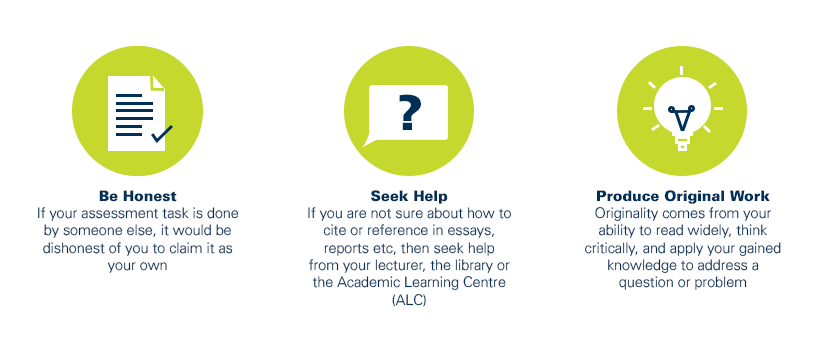
As a CQUniversity student you are expected to act honestly in all aspects of your academic work.
Any assessable work undertaken or submitted for review or assessment must be your own work. Assessable work is any type of work you do to meet the assessment requirements in the unit, including draft work submitted for review and feedback and final work to be assessed.
When you use the ideas, words or data of others in your assessment, you must thoroughly and clearly acknowledge the source of this information by using the correct referencing style for your unit. Using others’ work without proper acknowledgement may be considered a form of intellectual dishonesty.
Participating honestly, respectfully, responsibly, and fairly in your university study ensures the CQUniversity qualification you earn will be valued as a true indication of your individual academic achievement and will continue to receive the respect and recognition it deserves.
As a student, you are responsible for reading and following CQUniversity’s policies, including the Student Academic Integrity Policy and Procedure. This policy sets out CQUniversity’s expectations of you to act with integrity, examples of academic integrity breaches to avoid, the processes used to address alleged breaches of academic integrity, and potential penalties.
What is a breach of academic integrity?
A breach of academic integrity includes but is not limited to plagiarism, self-plagiarism, collusion, cheating, contract cheating, and academic misconduct. The Student Academic Integrity Policy and Procedure defines what these terms mean and gives examples.
Why is academic integrity important?
A breach of academic integrity may result in one or more penalties, including suspension or even expulsion from the University. It can also have negative implications for student visas and future enrolment at CQUniversity or elsewhere. Students who engage in contract cheating also risk being blackmailed by contract cheating services.
Where can I get assistance?
For academic advice and guidance, the Academic Learning Centre (ALC) can support you in becoming confident in completing assessments with integrity and of high standard.
What can you do to act with integrity?