Overview
In this unit, you will assess and manage complex musculoskeletal and inflammatory disorders common to the lower extremity. Rheumatology as it relates to the foot and associated arthropathies will be covered in detail with respect to aetiology, pathogenesis, clinical presentation, investigation, and management. You will learn how these disorders can be managed by different interventions, including the use of pressure reducing devices and footwear intervention.
Details
Pre-requisites or Co-requisites
Pre-requisite: PODI13011 Podiatry Clinical Practice 3. Co-requisite: PODI14008 Podiatry Clinical Practice 4.
Important note: Students enrolled in a subsequent unit who failed their pre-requisite unit, should drop the subsequent unit before the census date or within 10 working days of Fail grade notification. Students who do not drop the unit in this timeframe cannot later drop the unit without academic and financial liability. See details in the Assessment Policy and Procedure (Higher Education Coursework).
Offerings For Term 1 - 2026
Attendance Requirements
All on-campus students are expected to attend scheduled classes - in some units, these classes are identified as a mandatory (pass/fail) component and attendance is compulsory. International students, on a student visa, must maintain a full time study load and meet both attendance and academic progress requirements in each study period (satisfactory attendance for International students is defined as maintaining at least an 80% attendance record).
Recommended Student Time Commitment
Each 6-credit Undergraduate unit at CQUniversity requires an overall time commitment of an average of 12.5 hours of study per week, making a total of 150 hours for the unit.
Class Timetable
Assessment Overview
Assessment Grading
This is a graded unit: your overall grade will be calculated from the marks or grades for each assessment task, based on the relative weightings shown in the table above. You must obtain an overall mark for the unit of at least 50%, or an overall grade of 'pass' in order to pass the unit. If any 'pass/fail' tasks are shown in the table above they must also be completed successfully ('pass' grade). You must also meet any minimum mark requirements specified for a particular assessment task, as detailed in the 'assessment task' section (note that in some instances, the minimum mark for a task may be greater than 50%). Consult the University's Grades and Results Policy for more details of interim results and final grades.
All University policies are available on the CQUniversity Policy site.
You may wish to view these policies:
- Grades and Results Policy
- Assessment Policy and Procedure (Higher Education Coursework)
- Review of Grade Procedure
- Student Academic Integrity Policy and Procedure
- Academic Progression Policy and Procedure
- Student Refund and Credit Balance Policy and Procedure
- Complaints Policy and Procedure
- Information and Communications Technology Acceptable Use Policy and Procedure
This list is not an exhaustive list of all University policies. The full list of University policies are available on the CQUniversity Policy site.
Feedback, Recommendations and Responses
Every unit is reviewed for enhancement each year. At the most recent review, the following staff and student feedback items were identified and recommendations were made.
Feedback from Staff feedback
The radiology teaching materials in PODI14009 may benefit from an update to improve clarity and to scaffold effectively upon content delivered in pre-requisite units
It is recommended that the radiology teaching materials are reviewed and updated where required for clarity and for effective scaffolding upon what students have learned in prior units
- Recognise and appraise the pathophysiology and clinical pattern of common arthropathies and musculoskeletal disorders specific to the lower extremity
- Evaluate conservative therapies applicable to the patient with rheumatic diseases and implement an appropriate patient-centred management plan.
- Develop patient education strategies for optimum management of common lower extremity musculoskeletal and inflammatory disorders.
- Engage in active learning and apply an evidence based approach to rheumatology and musculoskeletal medicine in podiatry practice.
Per NPC1320
Alignment of Assessment Tasks to Learning Outcomes
| Assessment Tasks | Learning Outcomes | |||
|---|---|---|---|---|
| 1 | 2 | 3 | 4 | |
| 1 - Written Assessment - 20% | ||||
| 2 - In-class Test(s) - 50% | ||||
| 3 - On-campus Activity - 30% | ||||
Alignment of Graduate Attributes to Learning Outcomes
| Graduate Attributes | Learning Outcomes | |||
|---|---|---|---|---|
| 1 | 2 | 3 | 4 | |
| 1 - Communication | ||||
| 2 - Problem Solving | ||||
| 3 - Critical Thinking | ||||
| 4 - Information Literacy | ||||
| 5 - Team Work | ||||
| 6 - Information Technology Competence | ||||
| 7 - Cross Cultural Competence | ||||
| 8 - Ethical practice | ||||
| 9 - Social Innovation | ||||
| 10 - First Nations Knowledges | ||||
| 11 - Aboriginal and Torres Strait Islander Cultures | ||||
Textbooks
Neale's Disorders of the Foot and Ankle 9th Edition
- 9th Edition (2020)
- Authors: Gordon Burrow, Keith Rome, Nat Padhiar
- Elsevier
- ISBN: 978-0-7020-6233-0
IT Resources
- CQUniversity Student Email
- Internet
- Unit Website (Moodle)
- Zoom access for weekly meetings
All submissions for this unit must use the referencing style: American Psychological Association 7th Edition (APA 7th edition)
For further information, see the Assessment Tasks.
b.peterson@cqu.edu.au
a.bramley@cqu.edu.au
Week 1 - Introduction to rheumatology and musculoskeletal diseases
Begin Date: 09 Mar 2026Module/Topic
This week we will be outlining the expectations and layout of this unit and providing you with an introduction to rheumatology and musculoskeletal disease. We will also cover the complexities around pain and explore osteoarthritis.
Chapter
Readings or textbook chapters for each week will be posted in Moodle. Please note that information from readings may be assessable.
Events and Submissions/Topic
Week 2 - Imaging modalities and pathology in rheumatology
Begin Date: 16 Mar 2026Module/Topic
During this lecture we will be diving into the imaging modalities and laboratory investigations used in rheumatology.
Chapter
Readings or textbook chapters for each week will be posted in Moodle. Please note that information from readings may be assessable.
Events and Submissions/Topic
Week 3 - Sero-positive arthropathies
Begin Date: 23 Mar 2026Module/Topic
This week we will be exploring Sero-positive arthropathies including but not limited to rheumatoid arthritis, Systemic lupus erythematosus (SLE), Scleroderma and Sjorgen's syndrome.
Chapter
Readings or textbook chapters for each week will be posted in Moodle. Please note that information from readings may be assessable.
Events and Submissions/Topic
Week 4 - Sero-negative arthropathies
Begin Date: 30 Mar 2026Module/Topic
This week we will be exploring sero-negative arthropathies including but not limited to psoriatic arthritis, reactive arthritis, ankylosing spondylitis, enteropathic arthritis.
Chapter
Readings or textbook chapters for each week will be posted in Moodle. Please note that information from readings may be assessable.
Events and Submissions/Topic
Week 5 - Infectious and Crystal induced arthritis
Begin Date: 06 Apr 2026Module/Topic
This week we explore infectious and crystal induced arthritis such as septic arthritis, osteomyelitis, gout and pseudo-gout.
Chapter
Readings or textbook chapters for each week will be posted in Moodle. Please note that information from readings may be assessable.
Events and Submissions/Topic
Week 6 - Non-inflammatory acute and chronic arthritidies and pharmacology in rheumatology and musculoskeletal medicine
Begin Date: 13 Apr 2026Module/Topic
This week we will explore conditions such as torn ligaments, avascular necrosis and Charcot neuroarthropathy. We will also dive into the pharmacological management of Rheumatological and musculoskeletal conditions and the impacts this has on the body and the lower limb.
Chapter
Readings or textbook chapters for each week will be posted in Moodle. Please note that information from readings may be assessable.
Events and Submissions/Topic
Vacation Week
Begin Date: 20 Apr 2026Module/Topic
No delivery of lecture material this week.
Chapter
Events and Submissions/Topic
Week 7 - Biomechanical assessment and intervention in rheumatology
Begin Date: 27 Apr 2026Module/Topic
We will explore gait changes associated with Rheumatological and musculoskeletal disease and the associated management.
Chapter
Readings or textbook chapters for each week will be posted in Moodle. Please note that information from readings may be assessable.
Events and Submissions/Topic
Week 8 - Invasive and non-invasive management of rheumatological conditions pertinent to the lower limb
Begin Date: 04 May 2026Module/Topic
Together we will explore and discuss the conservative management of certain rheumatological and musculoskeletal conditions and when to refer for surgical opinion. We will also explore the surgical options and procedures available in the management of these conditions and when this is required.
Chapter
Readings or textbook chapters for each week will be posted in Moodle. Please note that information from readings may be assessable.
Events and Submissions/Topic
Practicum 9am to 5pm Scheduled for Friday Week 8 (contributes to Assessment 3 - On-campus activity, 30%).
Week 9 - Revision week
Begin Date: 11 May 2026Module/Topic
This week we will be focused on consolidating the prior weeks of learning and spending time revising content ready for the in-class test in week 10.
Chapter
Readings or textbook chapters for each week will be posted in Moodle. Please note that information from readings may be assessable.
Events and Submissions/Topic
Week 10 - In-class test
Begin Date: 18 May 2026Module/Topic
You will be undertaking assessment item 2 (in-class test, 50%) during normal scheduled class time.
Chapter
Events and Submissions/Topic
Week 11: In-class revision session and mock OSCE
Begin Date: 25 May 2026Module/Topic
Utilise this time to review the results of your in-class test and prepare for your upcoming OSCE.
Chapter
Events and Submissions/Topic
Week 12: OSCE
Begin Date: 01 Jun 2026Module/Topic
During normal lecture time this week, you will be required to undertake assessment item 3 - Objective Structured Clinical Examination (OSCE) which contributes to 30% of marks for this unit.
Chapter
Events and Submissions/Topic
Exam Week
Begin Date: 08 Jun 2026Module/Topic
Chapter
Events and Submissions/Topic
Vacation/Exam Week
Begin Date: 15 Jun 2026Module/Topic
Chapter
Events and Submissions/Topic
1 Written Assessment
You will be required to submit a written assessment relating to a rheumatological case study relevant to podiatry practice. You are required to review the literature in order to establish the current knowledge of rheumatology and musculoskeletal assessment in podiatry practice. You will then be required to demonstrate your knowledge regarding holistic assessment and management.
Approved use of artificial intelligence (AI): Level 2 - AI Planning. You may use AI for planning, idea development, and research. Your final submission should show how you have developed and refined these ideas.
Week 6 Friday (17 Apr 2026) 11:59 pm AEST
Submission via Moodle
Week 8 Friday (8 May 2026)
Feedback will be returned to you within 2 weeks from submission.
This assessment should be prepared, and will be marked, in accordance with the 'assessment overview and marking rubric' which will be provided via the unit Moodle page.
- Evaluate conservative therapies applicable to the patient with rheumatic diseases and implement an appropriate patient-centred management plan.
- Engage in active learning and apply an evidence based approach to rheumatology and musculoskeletal medicine in podiatry practice.
2 In-class Test(s)
You will be assessed in the form of a closed book, in-class test covering content from week 1 to week 9. This in-class test is scheduled for week 10, Tuesday 19th May, 2025. This will take place in your usual lecture time time and will have a duration of 120 minutes.
The 72-hour grace period does not apply to this assessment item.
Approved use of artificial intelligence (AI): Level 1 - No AI. You must not use AI at any point during this assessment. You must demonstrate your core skills and knowledge.
Week 10 Tuesday (19 May 2026) 2:00 pm AEST
In-Class test will be conducted in your usual lecture time slot in week 10 and will be conducted over 120 minutes inclusive of reading time. Ensure you arrive at least 10 minutes prior to start time.
Week 12 Friday (5 June 2026)
Results will be made available within two weeks after the in-class test.
The in-class test will be marked according to a marking guide developed specifically for this assessment task.
- Recognise and appraise the pathophysiology and clinical pattern of common arthropathies and musculoskeletal disorders specific to the lower extremity
- Develop patient education strategies for optimum management of common lower extremity musculoskeletal and inflammatory disorders.
3 On-campus Activity
You will be required to attend campus for a compulsory practicum Friday Week 8 (9:00am to 5:00pm) then attend an Objective Structured Clinical Examination (OSCE) on Tuesday Week 12 at 2:00pm, which is weighted at 30%. This assessment will allow students to demonstrate their clinical knowledge, skill and competence, in clinical scenarios. During this assessment, you will be tasked with multiple clinical stations/scenarios to demonstrate your clinical skill set. You will be made aware of the station topics and number of stations prior to the examination date. Included topic will be relating to all areas covered in PODI14009 until the end of year 4 term 1. Based on clinical scenarios, you will be required to discuss and perform aspects of relevant patient management and clearly articulate and demonstrate your knowledge and clinical skills. This will be a closed book on-campus assessment.
The 72-hour grace period does not apply to this assessment item.
Approved use of artificial intelligence (AI): Level 1 - No AI. You must not use AI at any point during this assessment. You must demonstrate your core skills and knowledge.
Week 12 Tuesday (2 June 2026) 2:00 pm AEST
The location of this assessment will be made available to you closer to the date.
Vacation/Exam Week Tuesday (16 June 2026)
Results will be made available within two weeks of assessment completion.
You will be assessed according to an assessment rubric made available to you via the PODI14009 Moodle site during the term.
- Recognise and appraise the pathophysiology and clinical pattern of common arthropathies and musculoskeletal disorders specific to the lower extremity
- Evaluate conservative therapies applicable to the patient with rheumatic diseases and implement an appropriate patient-centred management plan.
- Develop patient education strategies for optimum management of common lower extremity musculoskeletal and inflammatory disorders.
- Engage in active learning and apply an evidence based approach to rheumatology and musculoskeletal medicine in podiatry practice.
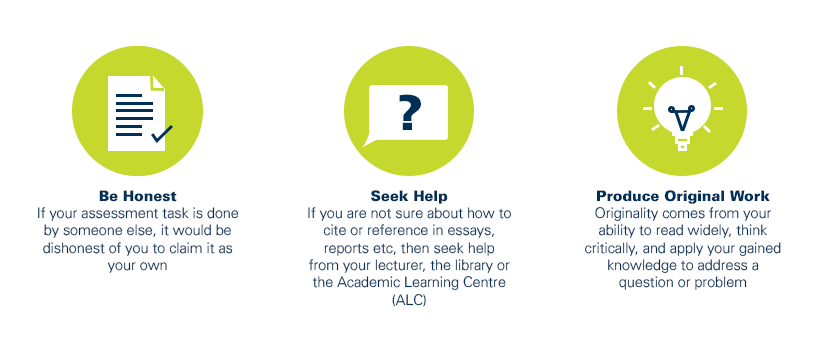
As a CQUniversity student you are expected to act honestly in all aspects of your academic work.
Any assessable work undertaken or submitted for review or assessment must be your own work. Assessable work is any type of work you do to meet the assessment requirements in the unit, including draft work submitted for review and feedback and final work to be assessed.
When you use the ideas, words or data of others in your assessment, you must thoroughly and clearly acknowledge the source of this information by using the correct referencing style for your unit. Using others’ work without proper acknowledgement may be considered a form of intellectual dishonesty.
Participating honestly, respectfully, responsibly, and fairly in your university study ensures the CQUniversity qualification you earn will be valued as a true indication of your individual academic achievement and will continue to receive the respect and recognition it deserves.
As a student, you are responsible for reading and following CQUniversity’s policies, including the Student Academic Integrity Policy and Procedure. This policy sets out CQUniversity’s expectations of you to act with integrity, examples of academic integrity breaches to avoid, the processes used to address alleged breaches of academic integrity, and potential penalties.
What is a breach of academic integrity?
A breach of academic integrity includes but is not limited to plagiarism, self-plagiarism, collusion, cheating, contract cheating, and academic misconduct. The Student Academic Integrity Policy and Procedure defines what these terms mean and gives examples.
Why is academic integrity important?
A breach of academic integrity may result in one or more penalties, including suspension or even expulsion from the University. It can also have negative implications for student visas and future enrolment at CQUniversity or elsewhere. Students who engage in contract cheating also risk being blackmailed by contract cheating services.
Where can I get assistance?
For academic advice and guidance, the Academic Learning Centre (ALC) can support you in becoming confident in completing assessments with integrity and of high standard.
What can you do to act with integrity?