Overview
In this unit you will be presented with common structural and functional variations of the lower limb as seen in podiatry practice. You will learn the aetiology, clinical diagnosis and management of common orthopaedic lower limb conditions. You will refine and develop your knowledge and skills in clinical gait analysis and biomechanical assessment which will be used to assess and diagnose biomechanical conditions of the lower limb. This will incorporate various motion analysis devices and medical equipment in the assessment and treatment of biomechanical conditions in a podiatric context.
Details
Pre-requisites or Co-requisites
Prerequisites: PODI12010 Advanced Anatomy and Podiatric Biomechanics. To be enrolled in this unit, students must be enrolled in CB86 Bachelor of Podiatry Practice (Honours) course. Co-requisites: PODI13007 Podiatry Clinical Practice 2 and PODI13010 Sports in Podiatry Practice.
Important note: Students enrolled in a subsequent unit who failed their pre-requisite unit, should drop the subsequent unit before the census date or within 10 working days of Fail grade notification. Students who do not drop the unit in this timeframe cannot later drop the unit without academic and financial liability. See details in the Assessment Policy and Procedure (Higher Education Coursework).
Offerings For Term 1 - 2026
Attendance Requirements
All on-campus students are expected to attend scheduled classes - in some units, these classes are identified as a mandatory (pass/fail) component and attendance is compulsory. International students, on a student visa, must maintain a full time study load and meet both attendance and academic progress requirements in each study period (satisfactory attendance for International students is defined as maintaining at least an 80% attendance record).
Recommended Student Time Commitment
Each 6-credit Undergraduate unit at CQUniversity requires an overall time commitment of an average of 12.5 hours of study per week, making a total of 150 hours for the unit.
Class Timetable
Assessment Overview
Assessment Grading
This is a graded unit: your overall grade will be calculated from the marks or grades for each assessment task, based on the relative weightings shown in the table above. You must obtain an overall mark for the unit of at least 50%, or an overall grade of 'pass' in order to pass the unit. If any 'pass/fail' tasks are shown in the table above they must also be completed successfully ('pass' grade). You must also meet any minimum mark requirements specified for a particular assessment task, as detailed in the 'assessment task' section (note that in some instances, the minimum mark for a task may be greater than 50%). Consult the University's Grades and Results Policy for more details of interim results and final grades.
All University policies are available on the CQUniversity Policy site.
You may wish to view these policies:
- Grades and Results Policy
- Assessment Policy and Procedure (Higher Education Coursework)
- Review of Grade Procedure
- Student Academic Integrity Policy and Procedure
- Academic Progression Policy and Procedure
- Student Refund and Credit Balance Policy and Procedure
- Complaints Policy and Procedure
- Information and Communications Technology Acceptable Use Policy and Procedure
This list is not an exhaustive list of all University policies. The full list of University policies are available on the CQUniversity Policy site.
Feedback, Recommendations and Responses
Every unit is reviewed for enhancement each year. At the most recent review, the following staff and student feedback items were identified and recommendations were made.
Feedback from Informal student feedback and unit coordinator reflection.
The implementation of the 'Podiatry Biomechanical Assessment Manual' was useful for guiding student's revision of practical skills.
It is recommended that use of the 'Podiatry Biomechanical Assessment Manual' in the PODI13007 teaching materials is continued in subsequent years of delivery.
Feedback from Unit coordinator reflection.
Students may benefit from additional learning experiences tailored toward preparation for the 'Written Assessment'.
It is recommended that additional learning activities tailored toward preparing students for the 'Written Assessment' be implemented in subsequent years of delivery.
- Assess podiatric cases involving clinical biomechanics of the lower limb, and interpret and analyse findings
- Develop, implement, and evaluate podiatric interventions for patients with common biomechanical pathologies of the lower limb
- Evaluate peer reviewed biomechanical literature to support decision making in podiatry practice.
Per NPC1304
Alignment of Assessment Tasks to Learning Outcomes
| Assessment Tasks | Learning Outcomes | ||
|---|---|---|---|
| 1 | 2 | 3 | |
| 1 - Written Assessment - 50% | |||
| 2 - Professional Practice Placement - 0% | |||
| 3 - On-campus Activity - 20% | |||
| 4 - Presentation - 30% | |||
Alignment of Graduate Attributes to Learning Outcomes
| Graduate Attributes | Learning Outcomes | ||
|---|---|---|---|
| 1 | 2 | 3 | |
| 1 - Communication | |||
| 2 - Problem Solving | |||
| 3 - Critical Thinking | |||
| 4 - Information Literacy | |||
| 5 - Team Work | |||
| 6 - Information Technology Competence | |||
| 7 - Cross Cultural Competence | |||
| 8 - Ethical practice | |||
| 9 - Social Innovation | |||
| 10 - First Nations Knowledges | |||
| 11 - Aboriginal and Torres Strait Islander Cultures | |||
Alignment of Assessment Tasks to Graduate Attributes
| Assessment Tasks | Graduate Attributes | ||||||||||
|---|---|---|---|---|---|---|---|---|---|---|---|
| 1 | 2 | 3 | 4 | 5 | 6 | 7 | 8 | 9 | 10 | 11 | |
| 1 - Written Assessment - 50% | |||||||||||
| 2 - Professional Practice Placement - 0% | |||||||||||
| 3 - On-campus Activity - 20% | |||||||||||
| 4 - Presentation - 30% | |||||||||||
Textbooks
Clinical Biomechanics of the Lower Extremities
- Edition: First
- Authors: Ronald L. Valmassy
- Mosby
- ISBN: 9780801679865
- Binding: Hardcover
Whittle's Gait Analysis
- Edition: Fifth
- Authors: David Levine, Jim Richards, Michael W Whittle
- Churchill Livingstone Elsevier
- ISBN: 9780702042652
- Binding: Paperback
IT Resources
- CQUniversity Student Email
- Internet
- Unit Website (Moodle)
- Zoom (both microphone and webcam capability)
All submissions for this unit must use the referencing style: American Psychological Association 7th Edition (APA 7th edition)
For further information, see the Assessment Tasks.
b.peterson@cqu.edu.au
Week 1 - Unit overview and introduction to podiatric biomechanics
Begin Date: 09 Mar 2026Module/Topic
Lecture - Unit overview and introduction to podiatric biomechanics:
- Introduction to unit
- Overview of assessments
- Review of biomechanical terminology
- Review of the human gait cycle
- Root theory of lower limb biomechanics
Tutorial:
- Requirements for Written Assessment (part 1)
Chapter
Whittle's Gait Analysis. Edition: Fifth. Authors: David Levine, Jim Richards, Michael W Whittle. Churchill Livingstone Elsevier. Chapter 2: Normal Gait. Pages 29-63.
Review Bachelor of Podiatry (Honours) Biomechanical Assessment Manual: Manual muscle testing (pages 4 to 14).
Events and Submissions/Topic
Week 2 - Biomechanics and pathomechanics of the forefoot; biomechanical assessment forms
Begin Date: 16 Mar 2026Module/Topic
Lecture - Biomechanics and pathomechanics of the forefoot:
- Biomechanics of the forefoot during the gait cycle
- Structural and functional hallux limitus and hallux rigidus
- Forefoot varus, forefoot supinatus, forefoot valgus, plantarflexed first ray, and dorsiflexed first ray
- Forefoot equinus
- Hallux abducto valgus
- Lesser digital deformities
- Introduction to the biomechanical assessment form
- Introduction to the orthotic prescription form
Tutorial:
- Requirements for Written Assessment (part 2)
Chapter
Review Bachelor of Podiatry (Honours) Biomechanical Assessment Manual: Assessment of the forefoot (pages 15 to 23).
Events and Submissions/Topic
Week 2 tutorial contributes toward on-campus activity (Assessment 3, 20%).
Week 3 - Biomechanics and pathomechanics of the midfoot and rearfoot; practicum session
Begin Date: 23 Mar 2026Module/Topic
Lecture - Biomechanics and pathomechanics of the midfoot and rearfoot:
- Open and closed kinetic chain movement of the subtalar joint
- Subtalar joint neutral position
- Subtalar joint and leg interrelationship
- Subtalar joint and midtarsal joint interrelationship
- Midtarsal joint locking mechanism
- Biomechanics and pathomechanics of the midfoot and rearfoot during gait
Tutorial - Other theories of lower limb biomechanics:
- Sagittal Plane Facilitation Theory
- Rotational Equilibrium Theory
- Tissue Stress Model
- Unified Theory
- Edwards Mechanical Fatigue Phenomenon
- Contemporary theories linking lower limb biomechanics to injury development
- Contemporary evidence and opinion challenging traditional biomechanical theory
Wednesday – Practicum 9am to 5pm
Chapter
Review before lecture and tutorial - Bachelor of Podiatry (Honours) Biomechanical Assessment Manual: Assessment of the midfoot and rearfoot (pages 24 to 39)
Review before practicum: Bachelor of Podiatry (Honours) Biomechanical Assessment Manual: Assessment of the ankle and leg, assessment of the knee and thigh, and assessment of the hip (pages 40 to 54)
Events and Submissions/Topic
Week 3 practicum contributes toward on-campus activity (Assessment 3, 20%).
Week 4 - Biomechanics and pathomechanics of the ankle
Begin Date: 30 Mar 2026Module/Topic
Lecture - Biomechanics and pathomechanics of the ankle:
- Review of functional anatomy of the ankle
- Open and closed chain movement of the ankle
- Biomechanics of the ankle during the gait cycle
- Pathomechanics of the ankle during the gait cycle and associated gait signs and interventions
- Foot slap
- Foot drop
- Ankle equinus
Tutorial:
• In-class preparation for Assessment 3 (written assessment, 50%)
Chapter
Review Bachelor of Podiatry (Honours) Biomechanical Assessment Manual: Assessment of the ankle and leg (pages 40 to 43)
Events and Submissions/Topic
Week 4 tutorial contributes toward on-campus activity (Assessment 3, 20%).
Week 5 - Biomechanics and pathomechanics of the leg and knee; dynamic gait analysis (part 1)
Begin Date: 06 Apr 2026Module/Topic
Lecture - Biomechanics and pathomechanics of the leg and the knee:
- Review of functional anatomy of the knee
- Biomechanics of the leg and the knee during the gait cycle
- Atypical frontal, sagittal, and transverse plane positioning of the leg and knee
- Hamstring contracture
Tutorial:
- Dynamic gait analysis part 1
Chapter
Review Bachelor of Podiatry (Honours) Biomechanical Assessment Manual: Assessment of the knee and thigh (pages 44 to 47)
Events and Submissions/Topic
Week 5 tutorial contributes toward on-campus activity (Assessment 3, 20%).
Week 6 - Biomechanics and pathomechanics of the lumbopelvic-hip complex; dynamic gait analysis (part 2); biomechanics clinical placement
Begin Date: 13 Apr 2026Module/Topic
Lecture - Biomechanics and pathomechanics of the lumbopelvic-hip complex:
- Review of functional anatomy
- The biomechanics and pathomechanics of the hip during the gait cycle
- Lumbopelvic-hip complex stability
- Proximal and distal influences of lower limb biomechanics
- Assessing hip joint stability and range of motion
Tutorial:
- Dynamic gait analysis part 2
Thursday – Biomechanics clinical placement
Chapter
Review Bachelor of Podiatry (Honours) Biomechanical Assessment Manual: Assessment of the hip (pages 48 to 54)
Events and Submissions/Topic
Week 6 tutorial contributes toward on-campus activity (Assessment 3, 20%).
Biomechanical placement day 1 - Thursday (Assessment 2, Professional Practice Placement, 0% (must-pass))
Vacation Week
Begin Date: 20 Apr 2026Module/Topic
No class during vacation week
Chapter
Events and Submissions/Topic
Week 7 - Clinical case studies
Begin Date: 27 Apr 2026Module/Topic
Lecture:
- Clinical case studies (interactive lesson)
Tutorial:
- Reflection and Q&A following biomechanical clinical placement day 1
Chapter
Events and Submissions/Topic
Week 8 - Running biomechanics
Begin Date: 04 May 2026Module/Topic
Lecture - Running biomechanics:
- Differences between walking gait and running gait
- Phases and events of running gait
- Kinematic and kinetic parameters relevant to running gait
- Running gait retraining
Tutorial:
- Walking and running biomechanics
Thursday – Biomechanics clinical placement
Chapter
These readings will enhance your understanding of biomechanics in the context of running-related injury and are examples of how biomechanical outcomes can be reported in systematic literature reviews:
Willwacher, S., Kurz, M., Robbin, J. et al. Running-Related Biomechanical Risk Factors for Overuse Injuries in Distance Runners: A Systematic Review Considering Injury Specificity and the Potentials for Future Research. Sports Med 52, 1863–1877 (2022). https://doi.org/10.1007/s40279-022-01666-3
Peterson, B., Hawke, F., Spink, M. et al. Biomechanical and Musculoskeletal Measurements as Risk Factors for Running-Related Injury in Non-elite Runners: A Systematic Review and Meta-analysis of Prospective Studies. Sports Med - Open 8, 38 (2022). https://doi.org/10.1186/s40798-022-00416-z
Anderson, L.M., Martin, J.F., Barton, C.J. et al. What is the Effect of Changing Running Step Rate on Injury, Performance and Biomechanics? A Systematic Review and Meta-analysis. Sports Med - Open 8, 112 (2022). https://doi.org/10.1186/s40798-022-00504-0
Events and Submissions/Topic
Biomechanical placement day 2 - Thursday (Assessment 2, Professional Practice Placement, 0% (must-pass))
Submission of on-campus activity (20%) worksheets due Friday 11:59pm AEST
On-campus activity Due: Week 8 Friday (8 May 2026) 11:59 am AEST
Professional Placement Due: Week 8 Thursday (7 May 2026) 11:59 pm AEST
Week 9 - Term review
Begin Date: 11 May 2026Module/Topic
Lecture:
- Term review
Tutorial:
- Assessment preparation and feedback
Chapter
Events and Submissions/Topic
Week 10 - Presentation (Assessment 3, 30%)
Begin Date: 18 May 2026Module/Topic
Presentation (Assessment 3, 30%) will occur during lecture time according to schedule available on Moodle.
Chapter
Events and Submissions/Topic
Week 11
Begin Date: 25 May 2026Module/Topic
No lecture or tutorial in Week 11. Students to use class time to prepare their Written Assessment (Assessment 4, 50%) for submission on Friday Week 12.
Chapter
Events and Submissions/Topic
Week 12
Begin Date: 01 Jun 2026Module/Topic
No lecture or tutorial in Week 12. Students to use class time to prepare their Written Assessment (Assessment 4, 50%) for submission on Friday Week 12.
Chapter
Events and Submissions/Topic
Written Assessment (Assessment 4, 50%) due Friday 11:59pm AEST
Written Assessment Due: Week 12 Friday (5 June 2026) 11:59 am AEST
1 On-campus Activity
During tutorials and practical sessions, students will be required to complete a range of activities, according to the 'on-campus activity schedule and checklist' available via Moodle. Students are required to complete the activities in-person, on-campus, and submit the completed activities via Moodle. Additional detail about this assessment task will be provided to students at the beginning of the term.
Permitted use of GenAI: Level 1 - No AI. You must not use AI at any point during the assessment. You must demonstrate your core skills and knowledge.
The 72-hour grace period does not apply to this assessment item.
Week 8 Friday (8 May 2026) 11:59 am AEST
Students are to upload their task sheets on their Moodle site
Week 10 Friday (22 May 2026)
Marks for this assessment will be made available via moodle
Students will be marked according to a task sheet specific to this assessment task.
- Assess podiatric cases involving clinical biomechanics of the lower limb, and interpret and analyse findings
- Communication
- Problem Solving
- Critical Thinking
- Information Literacy
- Team Work
2 Professional Practice Placement
Students are to complete two (2) days of biomechanical placement in Weeks 6 and 8. In order to be eligible for the PODI13008 clinical placement, students must have satisfied the pre-clinical requirements for PODI13007 and must attend their Practicum in Week 3 (see Assessment 3: 'on-campus activity').
During these two (2) days of biomechanical placements, students will assess and treat patients under supervision in the Rockhampton Health Clinic and will be required to demonstrate a threshold-level of capability to satisfy a clinical placement competency checklist. Students must submit the PODI13008 Clinical Placement Logbook via Moodle as evidence of completion of this assessment item.
During internal clinical placements, students must adhere to CQUniversity policies and procedures, including those outlined in the Podiatry Clinical Placement Handbook.
Students will receive feedback from the clinical supervisor during each session regarding areas that require improvement.
Permitted use of GenAI: Level 1 - No AI. You must not use AI at any point during the assessment. You must demonstrate your core skills and knowledge.
The 72-hour grace period does not apply to this assessment item.
Week 8 Thursday (7 May 2026) 11:59 pm AEST
Students are to upload their clinical skills log book by the due date as evidence of completion of this task.
Week 8 Friday (8 May 2026)
Feedback will be provided in-person by the clinical supervisor at the time of the assessment and marks will be made available via Moodle by Friday Week 8.
Students will be examined based on their assessment, presentation skills, and evaluation of their patient. During the course of the day, students will be required to present their assessment findings to the clinical supervisor. Students may be asked to demonstrate selected assessment components, and/or be posed questions regarding their presentation and evaluation. Students will be required to be at a competent level for every criteria and at an ‘Overall Competent’ level by the end of the 2 placement days. If students are assessed as ‘not competent’, they will be able to practice the skill again and request to be re-assessed within the same day.
- Assess podiatric cases involving clinical biomechanics of the lower limb, and interpret and analyse findings
- Develop, implement, and evaluate podiatric interventions for patients with common biomechanical pathologies of the lower limb
- Communication
- Problem Solving
- Critical Thinking
- Information Literacy
- Team Work
- Cross Cultural Competence
- Ethical practice
3 Presentation
Students will be required to provide a PowerPoint oral presentation worth 30% based on a biomechanical case study. The oral presentation will be up to 15 minutes long with a Question-and-Answer session of 5 minutes. Students can choose to present 'live' or play a pre-recorded video presentation. The student must be present to answer questions during the Question-and-Answer session This is an individual assessment task. Referencing (if any) should follow APA format.
Permitted use of GenAI: Level 1 - No AI. You must not use AI at any point during the assessment. You must demonstrate your core skills and knowledge.
The 72-hour grace period does not apply to this assessment item.
Week 10 Tuesday (19 May 2026) 9:00 am AEST
Students are required to submit their powerpoint slides or presentation on their Moodle site by 9am Monday Week 10. Students will then present their presentation during the week 10 lecture time.
Week 12 Tuesday (2 June 2026)
Feedback will be made available via moodle.
Students will be marked according to a purpose made marking rubric which will be available on the student's Moodle site. Criteria assessed will include: case history, selection and justification of biomechanical assessment methods, interpretation of biomechanical assessment methods, development and justification of an appropriate management strategy, and performance in the question-and-answer time.
- Develop, implement, and evaluate podiatric interventions for patients with common biomechanical pathologies of the lower limb
- Evaluate peer reviewed biomechanical literature to support decision making in podiatry practice.
- Problem Solving
- Critical Thinking
- Information Literacy
- Information Technology Competence
4 Written Assessment
Students will be required to submit a literature review (up to 2000 words) and a reflection (up to 200 words), evaluating peer-reviewed biomechanical literature. The instruction guide for this assessment task will be made available via moodle, and will require students to: identify relevant studies, report on the quality and the findings of the included studies, and formulate an introduction, method, results, discussion, conclusion, and reflection.
Permitted use of GenAI: Level 2 - AI Planning. You may use AI for planning, idea development, and research. Your final submission should show how you have developed and refined these ideas.
Week 12 Friday (5 June 2026) 11:59 am AEST
Students must submit their assessment via moodle by the due date
Vacation/Exam Week Friday (19 June 2026)
Results will be made available via Moodle
Your report will be assessed according to a purpose-made marking criteria available via the Moodle page, including: Introduction and methods, results, discussion and conclusion, and reflection.
Additionally, your assessment should include:
a) Cover Page: Assessment Title, student’s name, student number, unit code, unit title, unit lecturer’s name, due date of the assignment and word count.
b) Format:
a. Microsoft Word document only (.doc and .docx), or PDF.
b. Font size 12 (Times New Roman or Arial or reasonable default-type font such as Calibri)
c. Text double spaced
d. Pages numbered consecutively
e. Your student number must be clearly seen in the right side of the footer.
c) References:
a. APA format
b. Reference at least 10 primary sources of information
You will be marked according to a purpose made marking rubric which will be made available at the beginning of term.
- Evaluate peer reviewed biomechanical literature to support decision making in podiatry practice.
- Communication
- Problem Solving
- Critical Thinking
- Information Literacy
- Information Technology Competence
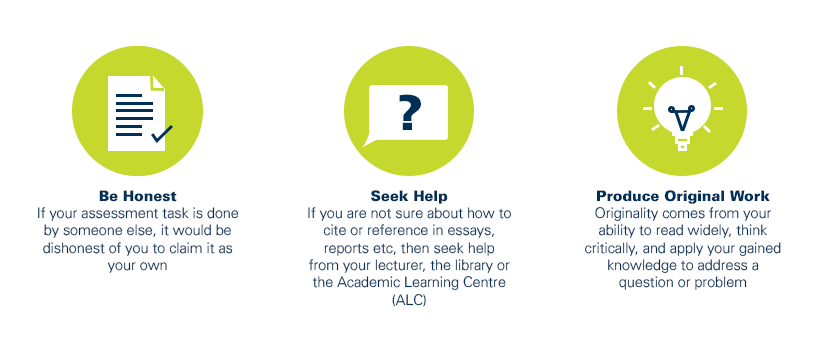
As a CQUniversity student you are expected to act honestly in all aspects of your academic work.
Any assessable work undertaken or submitted for review or assessment must be your own work. Assessable work is any type of work you do to meet the assessment requirements in the unit, including draft work submitted for review and feedback and final work to be assessed.
When you use the ideas, words or data of others in your assessment, you must thoroughly and clearly acknowledge the source of this information by using the correct referencing style for your unit. Using others’ work without proper acknowledgement may be considered a form of intellectual dishonesty.
Participating honestly, respectfully, responsibly, and fairly in your university study ensures the CQUniversity qualification you earn will be valued as a true indication of your individual academic achievement and will continue to receive the respect and recognition it deserves.
As a student, you are responsible for reading and following CQUniversity’s policies, including the Student Academic Integrity Policy and Procedure. This policy sets out CQUniversity’s expectations of you to act with integrity, examples of academic integrity breaches to avoid, the processes used to address alleged breaches of academic integrity, and potential penalties.
What is a breach of academic integrity?
A breach of academic integrity includes but is not limited to plagiarism, self-plagiarism, collusion, cheating, contract cheating, and academic misconduct. The Student Academic Integrity Policy and Procedure defines what these terms mean and gives examples.
Why is academic integrity important?
A breach of academic integrity may result in one or more penalties, including suspension or even expulsion from the University. It can also have negative implications for student visas and future enrolment at CQUniversity or elsewhere. Students who engage in contract cheating also risk being blackmailed by contract cheating services.
Where can I get assistance?
For academic advice and guidance, the Academic Learning Centre (ALC) can support you in becoming confident in completing assessments with integrity and of high standard.
What can you do to act with integrity?