Overview
This unit will consolidate relevant knowledge and values acquired through your own clinical practice and studies in this course, assisting you to transition to practice as a clinician in your new scope of practice. You will explore key concepts and principles in areas such as applying ethical principles, working in a multidisciplinary team, leadership and management. You will also learn the importance of ongoing professional development relevant to your own continuous improvement as well as the care you provide as a clinician.
Details
Pre-requisites or Co-requisites
There are no requisites for this unit.
Important note: Students enrolled in a subsequent unit who failed their pre-requisite unit, should drop the subsequent unit before the census date or within 10 working days of Fail grade notification. Students who do not drop the unit in this timeframe cannot later drop the unit without academic and financial liability. See details in the Assessment Policy and Procedure (Higher Education Coursework).
Offerings For Term 2 - 2026
Attendance Requirements
All on-campus students are expected to attend scheduled classes - in some units, these classes are identified as a mandatory (pass/fail) component and attendance is compulsory. International students, on a student visa, must maintain a full time study load and meet both attendance and academic progress requirements in each study period (satisfactory attendance for International students is defined as maintaining at least an 80% attendance record).
Recommended Student Time Commitment
Each 6-credit Postgraduate unit at CQUniversity requires an overall time commitment of an average of 12.5 hours of study per week, making a total of 150 hours for the unit.
Class Timetable
Assessment Overview
Assessment Grading
This is a graded unit: your overall grade will be calculated from the marks or grades for each assessment task, based on the relative weightings shown in the table above. You must obtain an overall mark for the unit of at least 50%, or an overall grade of 'pass' in order to pass the unit. If any 'pass/fail' tasks are shown in the table above they must also be completed successfully ('pass' grade). You must also meet any minimum mark requirements specified for a particular assessment task, as detailed in the 'assessment task' section (note that in some instances, the minimum mark for a task may be greater than 50%). Consult the University's Grades and Results Policy for more details of interim results and final grades.
All University policies are available on the CQUniversity Policy site.
You may wish to view these policies:
- Grades and Results Policy
- Assessment Policy and Procedure (Higher Education Coursework)
- Review of Grade Procedure
- Student Academic Integrity Policy and Procedure
- Academic Progression Policy and Procedure
- Student Refund and Credit Balance Policy and Procedure
- Complaints Policy and Procedure
- Information and Communications Technology Acceptable Use Policy and Procedure
This list is not an exhaustive list of all University policies. The full list of University policies are available on the CQUniversity Policy site.
Feedback, Recommendations and Responses
Every unit is reviewed for enhancement each year. At the most recent review, the following staff and student feedback items were identified and recommendations were made.
Feedback from Unit Coordinator reflections
Recent developments in Advanced Practice in Paramedicine and possible endorsement by the Australian Health Practitioner Regulation Agency (AHPRA) could impact this unit in the near future.
It is recommended that we continue to engage with the Paramedicine Board of Australia and implement necessary changes to the unit and course as required, once this information becomes available.
- Critically reflect upon ethical principles relevant to your applied scope of practice
- Formulate strategies for integration and functionality within a multidisciplinary team
- Appraise leadership and managerial skills relevant to your scope of practice
- Design a plan for ongoing professional development.
n/a
Alignment of Assessment Tasks to Learning Outcomes
| Assessment Tasks | Learning Outcomes | |||
|---|---|---|---|---|
| 1 | 2 | 3 | 4 | |
| 1 - Written Assessment - 30% | ||||
| 2 - Written Assessment - 40% | ||||
| 3 - Professional Practice Plans (learning plans) - 30% | ||||
Alignment of Graduate Attributes to Learning Outcomes
| Graduate Attributes | Learning Outcomes | |||
|---|---|---|---|---|
| 1 | 2 | 3 | 4 | |
| 1 - Knowledge | ||||
| 2 - Communication | ||||
| 3 - Cognitive, technical and creative skills | ||||
| 4 - Research | ||||
| 5 - Self-management | ||||
| 6 - Ethical and Professional Responsibility | ||||
| 7 - Leadership | ||||
| 8 - First Nations Knowledges | ||||
| 9 - Aboriginal and Torres Strait Islander Cultures | ||||
Textbooks
There are no required textbooks.
IT Resources
- CQUniversity Student Email
- Internet
- Unit Website (Moodle)
All submissions for this unit must use the referencing style: Harvard (author-date)
For further information, see the Assessment Tasks.
a.k.miles@cqu.edu.au
Week 1
Begin Date: 13 Jul 2026Module/Topic
Module 1: Transition to practice
Chapter
Events and Submissions/Topic
Week 2
Begin Date: 20 Jul 2026Module/Topic
Module 1: Transition to practice
Chapter
Events and Submissions/Topic
Week 3
Begin Date: 27 Jul 2026Module/Topic
Module 2: Applying ethical principles
Chapter
Events and Submissions/Topic
Week 4
Begin Date: 03 Aug 2026Module/Topic
Module 2: Applying ethical principles
Chapter
Events and Submissions/Topic
Term 2 Census Tuesday Week 4
Positionality Statement & Ethical Boundary Strategy Due: Week 4 Thursday (6 Aug 2026) 11:45 pm AEST
Week 5
Begin Date: 10 Aug 2026Module/Topic
Module 3: Working in a multi-disciplinary team
Chapter
Events and Submissions/Topic
Week 6
Begin Date: 17 Aug 2026Module/Topic
Module 3: Working in a multi-disciplinary team
Chapter
Events and Submissions/Topic
Mid-Term Break
Begin Date: 24 Aug 2026Module/Topic
Chapter
Events and Submissions/Topic
Week 7
Begin Date: 31 Aug 2026Module/Topic
Module 4: Leadership, management & mentoring
Chapter
Events and Submissions/Topic
Week 8
Begin Date: 07 Sep 2026Module/Topic
Module 4: Leadership, management & mentoring
Chapter
Events and Submissions/Topic
Week 9
Begin Date: 14 Sep 2026Module/Topic
Module 5: Professional development
Chapter
Events and Submissions/Topic
Week 10
Begin Date: 21 Sep 2026Module/Topic
Module 5: Professional development
Chapter
Events and Submissions/Topic
Week 11
Begin Date: 28 Sep 2026Module/Topic
Module 6: Applying basic business principles
Chapter
Events and Submissions/Topic
Week 12
Begin Date: 05 Oct 2026Module/Topic
Module 6: Applying basic business principles
Chapter
Events and Submissions/Topic
Standard Exam Period
Begin Date: 12 Oct 2026Module/Topic
Chapter
Events and Submissions/Topic
University Vacation
Begin Date: 21 Oct 2026Module/Topic
Chapter
Events and Submissions/Topic
1 Written Assessment
Overview
Every profession has an official Code of Ethics and/or Conduct. However, a code of conduct is just a piece of paper until it meets a real human being. In this assessment you will write a personal positionality statement and ethical boundary strategy. You will map your lived experiences, cultural background and personal values against the official code of conduct for your current or future health profession to identify where they align and where they might clash.
Pre-Task: Find your professional code
Locate and download the official Code of Conduct for your registered / regulated health profession. If your current or future career isn't clinical registered or self-regulated use the shared code of conduct from Ahpra (hyperlink above)
Step-by-Step Task Instructions
Your final submission must be structured into three distinct sections using the template below.
1. Identify and Origin Story (Approx. 400 words)
Introduce yourself, your cultural background, your upbring or your defining lived experiences.
- What core values did you inherit from your community, family, or personal history?
- How do those values influence how you view "right and wrong" as you enter or work in your chosen profession?
- Tips: Keep it safe, you do not need to share private trauma or deeply personal family history, focus on how the values you developed growing up influence your professional / workplace identity.
2. The Ethical Alignment Analysis (Approx. 600 words)
Compare your core values identified in part one against the official industry Code of Conduct you located in the pre-task. Identify how they align and map one potential area of tension or future challenge.
- What if your values align perfectly with the code? You do not need a dramatic ethical crisis. Instead analyse an area where the code is difficult to maintain in the real world. For example: The tech code demands data privacy (which you agree with), but the commercial market pressure forces companies to exploit data. How will/do you handle that systemic pressure?
- The line in the sand: Explicitly state what your absolute professional boundary is. What specific action will you refuse to take in your career, even if an employer or client pressures you to do it?
3. Proactive Boundary Strategy (500 words)
Formulate a realistic, practical and proactive strategy to navigate this tension throughout your career without compromising your integrity or burning out.
- How will you protect your personal boundaries while still remaining a functional, professional member of your industry / profession?
- Integrate two academic ethical frameworks to theoretically justify your decision-making strategy for when you hit gray areas.
Level of GenAI use allowed:
Level 2: You may use Al for planning, idea development, and research. Your final submission should show how you have developed and refined these ideas.
Week 4 Thursday (6 Aug 2026) 11:45 pm AEST
Week 6 Friday (21 Aug 2026)
This assessment will be graded in accordance with the rubric provided on the units Moodle site.
Marking Rubric Focus
Your submission will be assessed against the following criteria:
- Critical positionality
- Depth of ethical reflection
- Critical analysis of professional code
- Actionable strategy
- Authentic human voice
- Quality and integration of evidence
- Referencing skills (feedback only - no numeric grade)
- Critically reflect upon ethical principles relevant to your applied scope of practice
2 Written Assessment
Overview:
Generative AI is excellent at creating idealised, perfect-world project management plans. What AI cannot do is predict or manage the messy, unpredictable, and complex nature of real human beings working in multidisciplinary teams.
In this assessment, you will act as a manager. You will use an AI tool to generate a standard project and team plan tailored to your specific future profession. You will then stress test this plan by introducing realistic human constraints, appraising where the AI's leadership model fails, and formulating your own human-centered management strategy to ensure team functionality.
Task Instructions
This assessment is completed in three distinct phases.
Step 1: Generate the AI Baseline (Do this first)
Copy and paste the template below into an AI tool (e.g. Copilot). Fill the bracketed information based on your industry.
Copy-Paste AI Prompt Template:
"Act as an expert project manager in [insert your industry e.g. paramedicine, medicine, dentistry]. Create a basic 6-month project plan for a team consisting of [insert 3 distinct roles, e.g. paramedic, physiotherapist and a GP]. Provide a brief project objective, a communication schedule, and state the leadership style you will use to manage this team. Keep the total response under 500 words."
Action - Save this Transcript: You must include the exact prompt and AI output as an appendix. You will include this unedited into Appendix A at the very end of your assignment.
Step 2: Choose your Two Human Stressors
Select exactly two of the following human variables to introduce into your project scenario:
- Stressor A (Role Friction): Two team members refuse to collaborate due to a clash in professional boundaries / ethics.
- Stressor B (Burnout): An external delay causes the team to "quiet quit" and miss critical deadlines.
- Stressor C (Toxic Culture): One dominant discipline is actively ignoring or dismissing the input of another.
- Stressor D (Leadership Vacuum): The AI's proposed leadership style fails to provide direction during an unexpected crisis.
Your task: Write a critical appraisal evaluating why the AI's management plan is completely unequipped to handle these human disruptions. Map this appraisal against established leadership theories and organisational management frameworks.
Step 3: The Human-Centered Re-Design (The Solution)
Now, step in as the leader. Rewrite the management strategy to successfully resolve the disruptions and integrate your team. Your strategy must detail:
- Multidisciplinary Functionality: Clear strategies to establish cross-disciplinary respect, psychological bravery, and clear role boundaries.
- Managerial Action Plan: The exact leadership actions, communication protocols, and conflict resolution frameworks you will implement to steer the project back on track.
- Justification: Explicitly defend your management choices using relevant evidence from the academic literature and industry professional standards.
Universal Report Template (Use these exact headings)
Your final submission must follow this structural layout.
Title: [Insert Profession/Industry] Management Stress Test Report
1. Introduction (Approx. 200 words)
- Briefly state your own profession/scope of practice
- Outline the project objective and the 3 multidisciplinary team roles you selected.
2. The AI Critique & Stress Test (Approx. 800 words)
- Name your two chosen human stressors from Step 2.
- Critically analyse why the AI-generated plan (from Appendix A) fails to handle these tow human issues.
- Use at least 3 leadership or management theories taught in this unit to justify why the AI's model breaks down under human pressure.
3. Human-Centered Re-Design Strategy (Approx. 1,000 words)
Tip: You may use sub-headings, bullet points, or a table for this section.
Appendix A: AI Transcript (Does not count toward word limit)
- Paste your exact prompt and the AI's raw output here.
Level of GenAI use allowed:
Level 4: You may use AI extensively throughout your work as a specifically directed in your assessment. Focus on directing AI to achieve your goals while demonstrating your critical thinking.
Week 8 Thursday (10 Sept 2026) 11:45 pm AEST
Week 10 Friday (25 Sept 2026)
This assessment will be graded in accordance with the rubric provided on the units Moodle site.
Marking Rubric Focus
Your submission will be assessed against the following criteria:
- Critical appraisal skills
- Practical strategies
- Authentic context and professional alignment
- Academic and professional communication
- Quality and integration of evidence
- Referencing skills (feedback only - no numeric grade)
- Formulate strategies for integration and functionality within a multidisciplinary team
- Appraise leadership and managerial skills relevant to your scope of practice
3 Professional Practice Plans (learning plans)
Overview
Advancing your career whether through promotion, transitioning to extended or advanced practice role or leading a team requires more than just development of technical skills. True leadership requires a combination of advanced technical capabilities and behavioural resilience (emotional intelligence required to manage complex workplace dynamics). In this assessment you will design a formal, strategic professional practice plan. You will audit your current readiness for an advanced or promotional role, identify an internal behavioural barrier that impacts your leadership capacity, and build a practical development plan aligned with your profession / industry executive or advanced practice frameworks.
Task Instructions
Your final blueprint will be divided into three distinct sections using the headings below.
1. Self-Assessment (Approx 500 words)
Critically evaluate your readiness to transition into an advanced, extended scope of practice within your profession or leadership position across two categories:
- Technical Skills Gaps: Identify two specific technical skills required for your next career milestone or promotion
- Internal Leadership Barrier: Identify one internal, psychological habit or behavioural barrier that challenges your performance as a senior clinician or leader.
- Examples could include - Imposter feelings when managing senior stakeholders, conflict avoidance during performance management, difficulty delegating tasks, or systemic burnout management.
- Note: Clearly explain how this internal barrier impacts your capacity to lead or operate effectively within a multidisciplinary team environment.
2. Strategic CPD & Behavioral Action Plan (Approx. 600 words)
Formulate a structured, targeted timeline outlining exactly how you will achieve your promotional goals and manage your behaviour barrier over a 12–24-month period.
- For Technical Skill Gaps: Map out specific professional development activities (e.g. formal micro-credentials, industry recognised short courses or professional development courses, strategic committee placements, or executive mentoring)
- For Internal Leadership Barrier: Outline an evidence-based management strategy. Do not write a vague goal like "I will be more confident". Instead, leverage established professional development and reflective practice frameworks.
3. Professional Evaluation Metrics & Long-Term Governance (Approx. 400 words)
Detail how you will measure success of this practice plan and hold yourself professionally accountable.
- Define clear, realistic Key Performance Indicators (KPI) or career milestones that will prove you have overcome identified gaps.
- Outline how you will integrate this document into your annual professional registration CPD plan or corporate performance review.
Level of GenAI use allowed:
Level 2: You may use AI for planning, idea development and research. Your final submission should show how you have developed and refined these ideas
Week 12 Thursday (8 Oct 2026) 11:45 pm AEST
Vacation/Exam Week Friday (23 Oct 2026)
This assessment will be graded in accordance with the rubric provided on the units Moodle site.
Marking Rubric Focus
Your submission will be assessed against the following criteria:
- Authentic self-awareness
- Rigour of CPD design
- Authentic context and professional alignment
- Measurable professional metrics
- Quality and integration of evidence
- Academic and professional communication
- Executive Presentation
- Referencing skills (feedback only - no numeric grade)
- Design a plan for ongoing professional development.
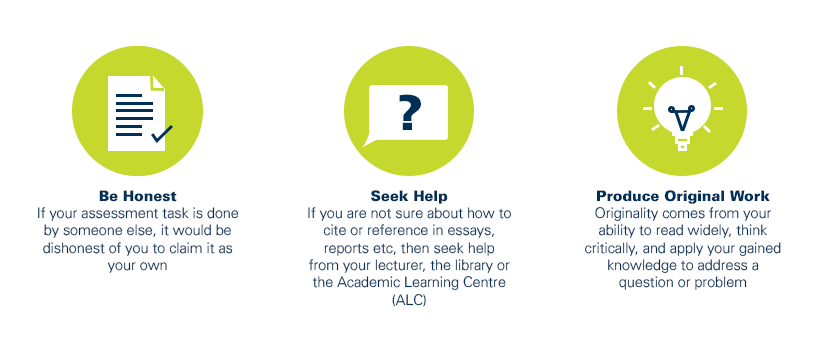
As a CQUniversity student you are expected to act honestly in all aspects of your academic work.
Any assessable work undertaken or submitted for review or assessment must be your own work. Assessable work is any type of work you do to meet the assessment requirements in the unit, including draft work submitted for review and feedback and final work to be assessed.
When you use the ideas, words or data of others in your assessment, you must thoroughly and clearly acknowledge the source of this information by using the correct referencing style for your unit. Using others’ work without proper acknowledgement may be considered a form of intellectual dishonesty.
Participating honestly, respectfully, responsibly, and fairly in your university study ensures the CQUniversity qualification you earn will be valued as a true indication of your individual academic achievement and will continue to receive the respect and recognition it deserves.
As a student, you are responsible for reading and following CQUniversity’s policies, including the Student Academic Integrity Policy and Procedure. This policy sets out CQUniversity’s expectations of you to act with integrity, examples of academic integrity breaches to avoid, the processes used to address alleged breaches of academic integrity, and potential penalties.
What is a breach of academic integrity?
A breach of academic integrity includes but is not limited to plagiarism, self-plagiarism, collusion, cheating, contract cheating, and academic misconduct. The Student Academic Integrity Policy and Procedure defines what these terms mean and gives examples.
Why is academic integrity important?
A breach of academic integrity may result in one or more penalties, including suspension or even expulsion from the University. It can also have negative implications for student visas and future enrolment at CQUniversity or elsewhere. Students who engage in contract cheating also risk being blackmailed by contract cheating services.
Where can I get assistance?
For academic advice and guidance, the Academic Learning Centre (ALC) can support you in becoming confident in completing assessments with integrity and of high standard.
What can you do to act with integrity?