Overview
This unit will provide you with advanced knowledge of all aspects of clinical pharmacology to allow you to function safely within the current and emerging critical care context. You will acquire advanced theoretical knowledge and develop advanced clinical judgement for competent critical care pharmacology practice.
Details
Pre-requisites or Co-requisites
Co-requisites PMSC20001 Advanced Clinical Assessment and Decision Making
Important note: Students enrolled in a subsequent unit who failed their pre-requisite unit, should drop the subsequent unit before the census date or within 10 working days of Fail grade notification. Students who do not drop the unit in this timeframe cannot later drop the unit without academic and financial liability. See details in the Assessment Policy and Procedure (Higher Education Coursework).
Offerings For Term 1 - 2026
Attendance Requirements
All on-campus students are expected to attend scheduled classes - in some units, these classes are identified as a mandatory (pass/fail) component and attendance is compulsory. International students, on a student visa, must maintain a full time study load and meet both attendance and academic progress requirements in each study period (satisfactory attendance for International students is defined as maintaining at least an 80% attendance record).
Recommended Student Time Commitment
Each 6-credit Postgraduate unit at CQUniversity requires an overall time commitment of an average of 12.5 hours of study per week, making a total of 150 hours for the unit.
Class Timetable
Assessment Overview
Assessment Grading
This is a graded unit: your overall grade will be calculated from the marks or grades for each assessment task, based on the relative weightings shown in the table above. You must obtain an overall mark for the unit of at least 50%, or an overall grade of 'pass' in order to pass the unit. If any 'pass/fail' tasks are shown in the table above they must also be completed successfully ('pass' grade). You must also meet any minimum mark requirements specified for a particular assessment task, as detailed in the 'assessment task' section (note that in some instances, the minimum mark for a task may be greater than 50%). Consult the University's Grades and Results Policy for more details of interim results and final grades.
All University policies are available on the CQUniversity Policy site.
You may wish to view these policies:
- Grades and Results Policy
- Assessment Policy and Procedure (Higher Education Coursework)
- Review of Grade Procedure
- Student Academic Integrity Policy and Procedure
- Academic Progression Policy and Procedure
- Student Refund and Credit Balance Policy and Procedure
- Complaints Policy and Procedure
- Information and Communications Technology Acceptable Use Policy and Procedure
This list is not an exhaustive list of all University policies. The full list of University policies are available on the CQUniversity Policy site.
Feedback, Recommendations and Responses
Every unit is reviewed for enhancement each year. At the most recent review, the following staff and student feedback items were identified and recommendations were made.
Feedback from Unit Evaluation Data
Useful Learning Materials
Review and update existing resources to enhance engagement and accommodate diverse learning styles and preferences. Continue collaborating with the learning design team to optimise content delivery and accessibility.
Feedback from Unit Evaluation Data
Useful Feedback
Continue providing timely, detailed, and constructive feedback on assessments to support student learning. Implement more formative feedback opportunities earlier in the term to help students improve progressively.
- Describe the indications, actions, routes of administration, contraindications, side effects and precautions of medications and fluids administered at a critical care level, and how you would evaluate the effects of administration
- Apply theoretical knowledge of pharmacokinetic and pharmacodynamic principles with regard to medications and fluids administered at a critical care level
- Investigate and justify the most effective pharmacological treatment options within the critical care context
- Communicate knowledge of clinical pharmacology, toxicology and toxinology within therapeutic relationships.
N/A
Alignment of Assessment Tasks to Learning Outcomes
| Assessment Tasks | Learning Outcomes | |||
|---|---|---|---|---|
| 1 | 2 | 3 | 4 | |
| 1 - Presentation and Written Assessment - 40% | ||||
| 2 - Case Study - 30% | ||||
| 3 - Online Test - 30% | ||||
Alignment of Graduate Attributes to Learning Outcomes
| Graduate Attributes | Learning Outcomes | |||
|---|---|---|---|---|
| 1 | 2 | 3 | 4 | |
| 1 - Knowledge | ||||
| 2 - Communication | ||||
| 3 - Cognitive, technical and creative skills | ||||
| 4 - Research | ||||
| 5 - Self-management | ||||
| 6 - Ethical and Professional Responsibility | ||||
| 7 - Leadership | ||||
| 8 - First Nations Knowledges | ||||
| 9 - Aboriginal and Torres Strait Islander Cultures | ||||
Textbooks
There are no required textbooks.
IT Resources
- CQUniversity Student Email
- Internet
- Unit Website (Moodle)
All submissions for this unit must use the referencing style: Harvard (author-date)
For further information, see the Assessment Tasks.
n.williams-claassen@cqu.edu.au
Week 1
Begin Date: 09 Mar 2026Module/Topic
Pharmacology review
Chapter
Events and Submissions/Topic
Week 2
Begin Date: 16 Mar 2026Module/Topic
Analgesia, anaesthetics, sedation & seizure management
Chapter
Events and Submissions/Topic
Week 3
Begin Date: 23 Mar 2026Module/Topic
Pharmacology for behavioural emergencies
Chapter
Events and Submissions/Topic
Week 4
Begin Date: 30 Mar 2026Module/Topic
Toxicology
Chapter
Events and Submissions/Topic
Week 5
Begin Date: 06 Apr 2026Module/Topic
Cardiovascular pharmacology 1
Chapter
Events and Submissions/Topic
Week 6
Begin Date: 13 Apr 2026Module/Topic
Cardiovascular pharmacology 2
Chapter
Events and Submissions/Topic
Vacation Week
Begin Date: 20 Apr 2026Module/Topic
No new content this week
Chapter
Events and Submissions/Topic
Week 7
Begin Date: 27 Apr 2026Module/Topic
Drugs affecting clotting
Chapter
Events and Submissions/Topic
Week 8
Begin Date: 04 May 2026Module/Topic
Blood products, fluids & tranexamic acid
Chapter
Events and Submissions/Topic
Week 9
Begin Date: 11 May 2026Module/Topic
Respiratory pharmacology
Chapter
Events and Submissions/Topic
Week 10
Begin Date: 18 May 2026Module/Topic
Metabolic & endocrine pharmacology
Chapter
Events and Submissions/Topic
Week 11
Begin Date: 25 May 2026Module/Topic
Pharmacology for infectious diseases & sepsis
Chapter
Events and Submissions/Topic
Week 12
Begin Date: 01 Jun 2026Module/Topic
Obstetric pharmacology
Chapter
Events and Submissions/Topic
Exam Week
Begin Date: 08 Jun 2026Module/Topic
Chapter
Events and Submissions/Topic
Vacation/Exam Week
Begin Date: 15 Jun 2026Module/Topic
Chapter
Events and Submissions/Topic
1 Presentation and Written Assessment
Pharmacology is forever evolving, resulting in health service providers consistently reviewing their drug therapy protocols to ensure that patient care is contemporary and evidence-based.
You are to select and research a drug used in critical care practice that you believe would add value to your clinical practice that you do not currently have access to within your scope of practice. As part of your research, you are to determine the indications for this drug's use (including a brief background on the clinical conditions that you would use it for), the action of the medication, route/s of administration, contraindications, precautions, side effects, presentation, and recommended dosing for adults, and if indicated, for paediatrics.
You may include other pertinent yet concise information.
This assessment involves two parts:
For Part 1, Level of GenAI use allowed: Level 3: You may use Al to assist with specific tasks such as drafting text, refining and evaluating your work. You must critically evaluate and modify any Al-generated content you use.
For Part 2, Level of GenAI use allowed: Level 1: You must not use Al at any point during the assessment. You must demonstrate your core skills and knowledge.
Part one will require you to write a supporting document that includes a synopsis of the primary and supporting literature on the pharmacology you selected. The word limit guide for this supporting document is approximately 2000 words (excluding references).
Your supporting document must be presented in an essay format and include:
Introduction
- Why you have selected the drug and clinical condition background/s.
Review of drug & synopsis of literature
- Indications for the drug
- Action/s of the drug
- Routes of administration
- Contraindications
- Precautions
- Side effects
- Presentation
- Recommended dosage (adult, and if indicated, paediatric)
- Other pertinent information if required.
- Recommendations for introducing this pharmacology.
Reference List
Part two will require you to utilise the information collected in Part One to create a presentation in either an audio podcast (MP3 format only) or a creative video (MP4 format only) aimed at your clinical peers. The information in Part Two must reflect that offered in Part One.
The podcast or creative video should be 5-7 minutes long. If the audio podcast or the creative video is less than 4 minutes and 30 seconds, you will be penalised at a rate of 5% per 15 seconds. On the other hand, information included after the 7-minute mark will not be reviewed and will not be marked as part of your presentation.
If you choose the podcast format:
The podcast must be styled as a typical audio podcast and include:
- An introduction.
- A logical presentation of your chosen topic
- A closing section.
The audio podcast's introduction and closing sections are entirely up to you. Be creative and have fun!
If you choose the creative video format:
Your creative video can take many forms. It is entirely up to you how you produce this video. For example, you could create a talk show a fire-side chat, or you may draw and explain the key areas you would like to present. It is, however, unacceptable to simply record your presentation, e.g. a voiced PowerPoint.
The creative video should include:
- An introduction.
- A logical presentation of your chosen topic.
- A closing section.
Week 6 Friday (17 Apr 2026) 11:45 am AEST
Week 8 Friday (8 May 2026)
or within 3 weeks of submission
Part One – The supporting document will be assessed on:
General presentation
- Organisation of supporting document.
- Writing mechanics.
- Word range.
- In-text referencing.
- Reference list.
Content
- Selected condition & pharmacology meets criteria; most current literature used.
- Introduction.
- Review of drug & synopsis of primary & supporting literature.
- Detailed pharmacological insight.
- Outline of recommendations.
Part Two – The presentation will be assessed on:
Required content
- Main points covered.
- Content reflects that of the supporting document.
Presentation
- Audio/visual engagement.
- Use of audio/visual elements.
- Timing.
- Overall presentation.
This assessment is worth 40% of your overall unit mark. The rubric used in marking this assessment task can be found on the unit’s Moodle page.
- Describe the indications, actions, routes of administration, contraindications, side effects and precautions of medications and fluids administered at a critical care level, and how you would evaluate the effects of administration
- Investigate and justify the most effective pharmacological treatment options within the critical care context
- Communicate knowledge of clinical pharmacology, toxicology and toxinology within therapeutic relationships.
2 Case Study
You'll need to complete a case study with a patient you assessed and treated during your recent clinical work. The intent of this case study is for you to consider in detail information on all three drug groups involved in the case (the patient's medication/the core pharmacology you administered/actual or potential critical care paramedic (CCP) medication) and contemplate any impacts of each of these groups on each other and/or the patient presentation. You should, therefore, select a case that allows you to explore these three drug groups in some detail. The format of your case study should be in an essay format (with tables if required). It must include:
- An introduction to the case, with a review of the patient presentation, including chief complaint, history, and physical examination.
- A review of the patient's medications, including details on each medication's indication, potential side-effects, and interactions, and how these medications may impact the patient's current condition and chief complaint.
- A summary of your non-pharmacological treatment of the patient.
- detailed assessment of the actual pharmacology you administered during the case:
- Core pharmacology used & why.
- Impact on patient's presentation.
- Potential interactions with patient medications.
- Discussion of actual or potential critical care pharmacological treatment of this patient, including:
- Relating the drug/s mechanism of action to the patient's condition & associated pathophysiology (that is, why the drug is indicated).
- Contraindications.
- Potential side effects & explanation of why they occur.
- Potential interactions with the patient's current medications or medications you have administered.
You must convey your comprehensive understanding of the patient's medication, core pharmacology, and critical care pharmacology. You will need to articulate insight into the complexities of pharmacology used in the delivery of care in the critical care context and consider issues such as side effects & interactions in the application of your clinical decision-making.
Level of GenAI use allowed: Level 3: You may use Al to assist with specific tasks such as drafting text, refining and evaluating your work. You must critically evaluate and modify any Al-generated content you use.
Week 10 Wednesday (20 May 2026) 11:45 am AEST
Week 12 Wednesday (3 June 2026)
or within 3 weeks of submission
There is a 2500-word limit for your case study. The case study will be assessed in accordance with the rubric provided on the unit's Moodle page.
The case study will be assessed on:
General presentation
- Organisation of case study.
- Writing mechanics.
- Word range.
- In-text referencing.
- Reference list.
Content
- Introduces the case thoroughly.
- Thoroughness of review of patient medications.
- Summary of non-pharmacological treatment.
- Summary of actual core pharmacology administered.
- Discussion of actual or potential critical care pharmacology.
- Summary of the case.
This case study is worth 30% of your overall unit mark. The rubric used in the marking of this assessment task can be found on the unit's Moodle page.
- Describe the indications, actions, routes of administration, contraindications, side effects and precautions of medications and fluids administered at a critical care level, and how you would evaluate the effects of administration
- Apply theoretical knowledge of pharmacokinetic and pharmacodynamic principles with regard to medications and fluids administered at a critical care level
- Investigate and justify the most effective pharmacological treatment options within the critical care context
- Communicate knowledge of clinical pharmacology, toxicology and toxinology within therapeutic relationships.
3 Online Test
This test will become available Week 12, Monday the 1st of June at 0800 AEST; you will need to complete this online test by Exam Week Monday the 8th of June 1145 AEST. You will have a specified time to complete it.
The test will consist of multiple-choice questions exploring content studied across the unit (Weeks 1-12), including lecture materials, online links & required readings. The test will assess your ability to identify & apply the foundations of critical care pharmacology, including pharmacokinetics, pharmacodynamics, mechanism of action, indications, interactions, contraindications & side effects. In addition, some questions in the test will explore your ability to demonstrate clinical decision-making for using pharmacology in the critical care context.
This is an individual assessment with no collaboration allowed.
Level of GenAI use allowed: Level 1: You must not use Al at any point during the assessment. You must demonstrate your core skills and knowledge..
Exam Week Monday (8 June 2026) 11:45 am AEST
Quiz opens Monday 1st of June 2026 0800 AEST, closes Monday 8th June 2026 1145 AEST.
Vacation/Exam Week Monday (15 June 2026)
You will be required to answer each question correctly to receive the full marks allocated to that question. Non-attempts will score a zero mark. This test is worth 30% of your overall unit mark. This assessment task must be completed by 1145hrs on the Monday of Exam Week. In the absence of an approved extension, there will be no opportunity to complete the task after this date, and there will be no opportunity to apply a late penalty of five percent per day.
The 72-hour grace period does not apply to this assessment
- Apply theoretical knowledge of pharmacokinetic and pharmacodynamic principles with regard to medications and fluids administered at a critical care level
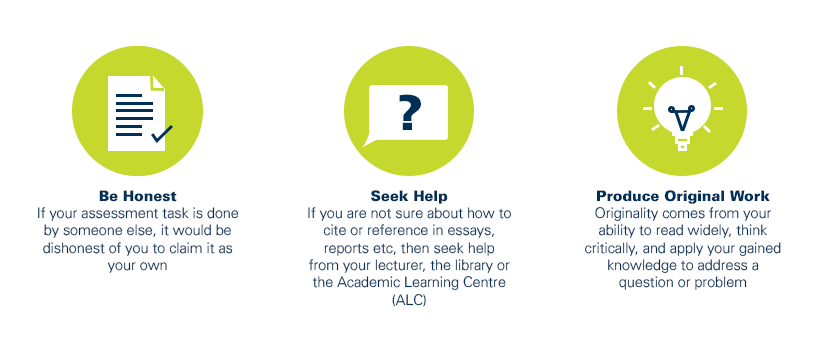
As a CQUniversity student you are expected to act honestly in all aspects of your academic work.
Any assessable work undertaken or submitted for review or assessment must be your own work. Assessable work is any type of work you do to meet the assessment requirements in the unit, including draft work submitted for review and feedback and final work to be assessed.
When you use the ideas, words or data of others in your assessment, you must thoroughly and clearly acknowledge the source of this information by using the correct referencing style for your unit. Using others’ work without proper acknowledgement may be considered a form of intellectual dishonesty.
Participating honestly, respectfully, responsibly, and fairly in your university study ensures the CQUniversity qualification you earn will be valued as a true indication of your individual academic achievement and will continue to receive the respect and recognition it deserves.
As a student, you are responsible for reading and following CQUniversity’s policies, including the Student Academic Integrity Policy and Procedure. This policy sets out CQUniversity’s expectations of you to act with integrity, examples of academic integrity breaches to avoid, the processes used to address alleged breaches of academic integrity, and potential penalties.
What is a breach of academic integrity?
A breach of academic integrity includes but is not limited to plagiarism, self-plagiarism, collusion, cheating, contract cheating, and academic misconduct. The Student Academic Integrity Policy and Procedure defines what these terms mean and gives examples.
Why is academic integrity important?
A breach of academic integrity may result in one or more penalties, including suspension or even expulsion from the University. It can also have negative implications for student visas and future enrolment at CQUniversity or elsewhere. Students who engage in contract cheating also risk being blackmailed by contract cheating services.
Where can I get assistance?
For academic advice and guidance, the Academic Learning Centre (ALC) can support you in becoming confident in completing assessments with integrity and of high standard.
What can you do to act with integrity?