Overview
Within this unit, you will review and explain the key concepts of traumatic conditions, enabling you to formulate and implement the safe management of individuals and populations with traumatic conditions in the paramedicine context. You will apply advanced knowledge of emergency medicine in a mass casualty or major incident event, and critically reflect on your paramedic practice concerning traumatic conditions, major incidents, and professional standards to ensure continual improvement.
Details
Pre-requisites or Co-requisites
Pre-requisite: PMSC13001 Mental Health for Paramedics. Co-requisite: PMSC12003 Special Populations in Paramedic Practice. Please note: Any student who has not successfully completed a PMSC residential school within the preceding 12 months or undertaken a clinical placement unit, should consult with the Head of Course to discuss completing a PMSC12001 refresher. This ensures currency with all contemporary skills and procedures in line with industry standards and professional capabilities
Important note: Students enrolled in a subsequent unit who failed their pre-requisite unit, should drop the subsequent unit before the census date or within 10 working days of Fail grade notification. Students who do not drop the unit in this timeframe cannot later drop the unit without academic and financial liability. See details in the Assessment Policy and Procedure (Higher Education Coursework).
Offerings For Term 1 - 2026
Attendance Requirements
All on-campus students are expected to attend scheduled classes - in some units, these classes are identified as a mandatory (pass/fail) component and attendance is compulsory. International students, on a student visa, must maintain a full time study load and meet both attendance and academic progress requirements in each study period (satisfactory attendance for International students is defined as maintaining at least an 80% attendance record).
Recommended Student Time Commitment
Each 6-credit Undergraduate unit at CQUniversity requires an overall time commitment of an average of 12.5 hours of study per week, making a total of 150 hours for the unit.
Class Timetable
Assessment Overview
Assessment Grading
This is a graded unit: your overall grade will be calculated from the marks or grades for each assessment task, based on the relative weightings shown in the table above. You must obtain an overall mark for the unit of at least 50%, or an overall grade of 'pass' in order to pass the unit. If any 'pass/fail' tasks are shown in the table above they must also be completed successfully ('pass' grade). You must also meet any minimum mark requirements specified for a particular assessment task, as detailed in the 'assessment task' section (note that in some instances, the minimum mark for a task may be greater than 50%). Consult the University's Grades and Results Policy for more details of interim results and final grades.
All University policies are available on the CQUniversity Policy site.
You may wish to view these policies:
- Grades and Results Policy
- Assessment Policy and Procedure (Higher Education Coursework)
- Review of Grade Procedure
- Student Academic Integrity Policy and Procedure
- Academic Progression Policy and Procedure
- Student Refund and Credit Balance Policy and Procedure
- Complaints Policy and Procedure
- Information and Communications Technology Acceptable Use Policy and Procedure
This list is not an exhaustive list of all University policies. The full list of University policies are available on the CQUniversity Policy site.
Feedback, Recommendations and Responses
Every unit is reviewed for enhancement each year. At the most recent review, the following staff and student feedback items were identified and recommendations were made.
Feedback from SUTE unit comment report.
Student satisfaction with the unit is high.
Continue to maintain the standard of content and assessment.
- Review and explain the key concepts of traumatic conditions in the paramedicine context
- Formulate and implement the safe management of individuals and populations with traumatic conditions in the paramedicine context
- Apply advanced knowledge of emergency medicine in a mass casualty or major incident event
- Critically reflect on your paramedic practice in relation to traumatic conditions, major incidents, and professional standards to ensure continual improvement.
The Paramedicine Board of Australia requires that units align with the Professional capabilities for registered paramedics, which consist of five (5) domains. The below section aligns the proposed learning outcomes with these domains. In addition, the learning outcomes have been aligned with the National Safety and Quality Health Service (NSQHS) Ambulance Health Service Standards.
Professional Capabilities for Registered Paramedics
| Standard/Attribute/Criteria | Learning Outcomes |
|
Domain 1: The professional and ethical practitioner: 1.1.4, 1.1.6, 1.1.9, 1.1.11, 1.2.2, 1.2.5 |
LO1, LO2 |
|
Domain 2: The communicator and collaborator: 2.1.1, 2.2.1, 2.2.2, 2.2.4 |
LO2 |
|
Domain 3: The evidence-based practitioner: 3.1.1, 3.2.2, 3.2.3, 3.2.5, 3.2.6, 3.3.3, 3.4.2 |
LO1, LO2, LO3, LO4 |
|
Domain 4: The safety and risk management practitioner: 4.1.2, 4.1.3, 4.1.4, 4.2.2, 4.2.3, 4.2.4, 4.3.2, 4.3.3, 4.5.2 |
LO2, LO4 |
|
Domain 5: The paramedicine practitioner: 5.3.4, 5.4.1, 5.4.2, 5.4.3, 5.4.4, 5.4.5, 5.5.1, 5.5.2, 5.5.3, 5.6.3, 5.6.4 |
LO1, LO2, LO3 |
National Safety and Quality Health Standards
| Standard | Learning Outcomes |
| Clinical Governance: 1.01b, 1.27a, 1.27b, | LO1, LO2, |
| Partnering with Consumers: | - |
| Preventing and Controlling Infections: 3.08a, 3.18b | LO1, LO2 |
| Medication Safety: | - |
| Comprehensive Care: 5.04b | LO1, LO2, LO3, LO4 |
| Communicating for Safety: | - |
| Recognising and Responding to Acute Deterioration: 8.06a, 8.06b, 8.06c, 8.06d, 8.06e, 8.08, 8.09, 8.10, 8.13 | LO1, LO2, LO3, LO4 |
Alignment of Assessment Tasks to Learning Outcomes
| Assessment Tasks | Learning Outcomes | |||
|---|---|---|---|---|
| 1 | 2 | 3 | 4 | |
| 1 - Written Assessment - 60% | ||||
| 2 - Online Test - 40% | ||||
| 3 - On-campus Activity - 0% | ||||
Alignment of Graduate Attributes to Learning Outcomes
| Graduate Attributes | Learning Outcomes | |||
|---|---|---|---|---|
| 1 | 2 | 3 | 4 | |
| 1 - Communication | ||||
| 2 - Problem Solving | ||||
| 3 - Critical Thinking | ||||
| 4 - Information Literacy | ||||
| 5 - Team Work | ||||
| 6 - Information Technology Competence | ||||
| 7 - Cross Cultural Competence | ||||
| 8 - Ethical practice | ||||
| 9 - Social Innovation | ||||
| 10 - First Nations Knowledges | ||||
| 11 - Aboriginal and Torres Strait Islander Cultures | ||||
Textbooks
There are no required textbooks.
Additional Textbook Information
IT Resources
You will need access to the following IT resources:
- CQUniversity Student Email
- Internet
- Unit Website (Moodle)
- Computer
IT Resources
- CQUniversity Student Email
- Internet
- Unit Website (Moodle)
- Computer - ability to access study materials, access Zoom application for meetings and view instructional videos.
All submissions for this unit must use the referencing style: American Psychological Association 7th Edition (APA 7th edition)
For further information, see the Assessment Tasks.
j.eastwood@cqu.edu.au
Week 1 - Introduction to Trauma
Begin Date: 09 Mar 2026Module/Topic
1.1 - Approach to trauma
1.2 - Critical thinking in trauma
1.3 - Vehicle extrication
1.4 - Culturally safe practice in trauma care
1.5 - Epidemiology of trauma
1.6 - Reflective practice
Chapter
e-Reading List
Events and Submissions/Topic
Week 1 Tutorial
Week 2 - Head, Face, Neck and Spinal Trauma
Begin Date: 16 Mar 2026Module/Topic
2.1 - Facial trauma
2.2 - Head injuries
2.3 - Pathophysiology of head injuries
2.4 - Head injury management
2.5 - Spinal trauma
2.6 - Selective spinal immobilisation
Chapter
e-Reading List
Events and Submissions/Topic
Week 2 Tutorial
Week 3 - Thoracic, Abdominal and Pelvic Trauma
Begin Date: 23 Mar 2026Module/Topic
3.1 - Fundamental concepts in chest Trauma
3.2 - Types of chest Injuries
3.3 - Management of chest Injuries
3.4 - Abdominal injuries
3.5 - Pelvic injuries
Chapter
e-Reading List
Events and Submissions/Topic
Week 3 Tutorial
Week 4 - Trauma in Special Populations
Begin Date: 30 Mar 2026Module/Topic
4.1 - Paediatric trauma
4.2 - Trauma in pregnancy
4.3 - Geriatric trauma
4.4 - Post tonsillectomy haemorrhage
Chapter
e-Reading List
Events and Submissions/Topic
Week 4 Tutorial
Week 5 - Extremity Trauma
Begin Date: 06 Apr 2026Module/Topic
5.1 - Extremity trauma 1
5.2 - Extremity trauma 2
5.3 - Splinting and management
Chapter
e-Reading List
Events and Submissions/Topic
Week 5 Tutorial
Week 6 - Burns
Begin Date: 13 Apr 2026Module/Topic
6.1 - Introduction to burns
6.2 - Types of burns
6.3 - Management of burns
Chapter
e-Reading List
Events and Submissions/Topic
Week 6 Tutorial
Written Assessment Due: Week 6 Friday (17 Apr 2026) 9:00 am AEST
Vacation Week
Begin Date: 20 Apr 2026Module/Topic
Chapter
Events and Submissions/Topic
Week 7 - Multisystem Trauma, Shock & Retrieval
Begin Date: 27 Apr 2026Module/Topic
7.1 - Multisystem trauma
7.2 - Damage control resuscitation
7.3 - Shock
7.4 - Trauma bypass and the role of HEMS
7.5 - External haemorrhage control
Chapter
e-Reading List
Events and Submissions/Topic
Week 7 Tutorial
Week 8 - Traumatic Cardiac Arrest and Special Circumstances
Begin Date: 04 May 2026Module/Topic
8.1 - Traumatic cardiac arrest
8.2 - Hanging
8.3 - Drowning
8.4 - Traumatic asphyxia
8.5 - Electrical Injury
Chapter
e-Reading List
Events and Submissions/Topic
Week 8 Tutorial
Week 9 - HAZMAT, CBR, Multicasualty, Penetrating & Blast
Begin Date: 11 May 2026Module/Topic
9.1 - Multi casualty
9.2 - HAZMAT & CBR
9.3 - Penetrating and blast injuries, conducted weapons Injuries, and active armed offender
Chapter
e-Reading List
Events and Submissions/Topic
Week 9 Tutorial
Week 10 - Environmental Presentations
Begin Date: 18 May 2026Module/Topic
10.1 - Hyperthermia
10.2 - Hypothermia
10.3 - Diving emergencies
10.4 - Altitude emergencies
Chapter
e-Reading List
Events and Submissions/Topic
Week 11
Begin Date: 25 May 2026Module/Topic
Reflective practice and further study
Chapter
e-Reading List
Events and Submissions/Topic
Week 12
Begin Date: 01 Jun 2026Module/Topic
Residential School - Revision
Chapter
e-Reading List
Events and Submissions/Topic
Exam Week
Begin Date: 08 Jun 2026Module/Topic
Chapter
Events and Submissions/Topic
Vacation/Exam Week
Begin Date: 15 Jun 2026Module/Topic
Chapter
Events and Submissions/Topic
1 Written Assessment
Written Assessment topic:
"Written Assessment: Review of key topics in prehospital trauma management”
For this essay, you are required to explore three critical topics in the field of paramedic trauma and emergency management, based on current peer-reviewed literature from the last 10 years. Your analysis should address the following:
1. What impact does prehospital antibiotic administration have in trauma care, for the management of open fractures, considering benefits, limitations, infection outcomes and patient morbidity?
2. How do needle decompression, finger/open thoracostomy and tube thoracostomy compare in terms of indications, effectiveness, complications, ongoing procedure monitoring. If initial chest decompression is unsuccessful, what should paramedics consider and do next to troubleshoot a tension pneumothorax and manage the patient?
3. Review and explain changes from traditional to contemporary pre-hospital C-spine management. Explain the impact that traditional spinal immobilisation techniques (rigid collars, hard boards, Taping heads, supine positioning) have on patients with a concurrent Traumatic Brain Injury (TBI) with consideration to the Monro-Kellie Doctrine.
Your essay should be structured as follows:
- Section 1: Prehospital Antibiotic use in trauma (for open fractures) (+/-600 words)
- Section 2: Tension pneumothorax management (+/-600 words)
- Section 3: Traditional spinal immobilisation effects on Traumatic Brain Injury management (+/-600 words)
- Conclusion: Summarize the findings from each section, highlight their implications for paramedic practice, and discuss any gaps in research or areas for future exploration. (200 - 400 words)
Your assessment should be professional and academic in tone.
Level of GenAI use allowed:
Level 2: You may use AI for planning, idea development, and research. Your final submission should show how you have developed and refined these ideas.
Any use of GenAI tools must be acknowledged in a statement on the submission.
Week 6 Friday (17 Apr 2026) 9:00 am AEST
Week 8 Friday (8 May 2026)
The minimum word count is 2000 words and the maximum word count is 2200 words. This does not include references.
The assessment should include a cover page (include your name and student number, the unit code (PMSC13014), the word count (excluding title page, in-text citations, and reference list))
Ambulance guidelines should not be used as sources; rely exclusively on peer-reviewed literature for your research. Ensure that each section is well-researched and properly cited using APA format for both in-text citations and the reference list.
The written assessment is worth 60% of your overall unit mark, you must achieve a minimum pass mark of 50% to pass this assessment. Please refer to the Moodle site for additional task information such as assignment marking rubric.
A 5% late penalty applies per day that the assignment is overdue (past the 72 -hour grace period).
- Review and explain the key concepts of traumatic conditions in the paramedicine context
2 On-campus Activity
During the compulsory residential schools, you are required to complete and achieve a pass in both Part A and Part B of the Residential school.
Part A: Consists of two objective structured clinical examinations (OSCE's). You will be assessed via two OSCE’s: one will involve assessment and management of a patient presenting with traumatic injuries, and one will involve application of knowledge and assessment of a multi-casualty incident.
Part B: Consists of a critical reflection. Following the OSCE's assessments, you will undertake a critical reflection of your performance.
The practical assessment will allow you to apply your theoretical learnings within a simulated practical environment. The practical assessment will evaluate your procedural and declarative knowledge of the various assessments, skills and pharmacology learned throughout this unit.
Residential Block A: 22nd – 25th May 2026. Assessment on 25th May 2026, Week 11. Residential Block B: 30th May – 2nd June 2026. Assessment on 2nd June 2026, Week 12
16th June 2026
The practical assessment will be assessed in line with the rubric provided on the unit Moodle page.
The practical assessment is a pass/fail assessment task. You must pass both Part A: (OSCEs) and Part B: (Critical reflection) to pass this assessment item and the overall unit.
Part A:
- One reattempt OSCE will be offered for the practical assessment if a single OSCE is failed upon first attempt.
- If both OSCEs are failed, no reattempts will be offered and a fail grade will be awarded for the practical assessment.
- You must pass this assessment item to pass the overall unit.
Part B:
- You are eligible for one reattempt of Part B only if you passed Part A on your first attempt.
- If Part A required a reattempt, no reattempt is available for Part B.
- If both the initial and reattempt critical reflections are failed, a "Fail" grade will be awarded for the practical assessment and the unit.
- You must pass this assessment item to pass the overall unit.
Assessments with unsafe practices will be moderated by the Unit Coordinator and therefore feedback will not be provided immediately at the completion of your assessment day or residential school.
Unsafe practice in this unit is classed as anything, by act or omission that: causes immediate harm or has the potential to cause harm to yourself, partner, patient or bystanders and/or any procedure/skill or pharmacology administered, that is performed outside your scope of practice.
Examples include
- Unsafe defibrillation
- Incorrect joules delivered during defibrillation
- Defibrillation of a non-shockable rhythm
- Failure to recognise a cardiac arrest within one (1) minute
- Failure to defibrillate a shockable rhythm within two (2) minutes
- Failure to perform a complete drug check
- Incorrect sharps disposal or unsafe practice with a sharp
- Performing a skill or procedure outside your scope of practice taught to you in all previous and current units
- Administering pharmacology outside your scope of practice, or administering an incorrect drug or drug dose
- Any grossly unsafe practice, as determined by the assessing academic.
During any form of assessment, if any examples of unsafe practice are witnessed the assessment will continue and be moderated. Upon review and confirmation of unsafe practice, no marks will be awarded for that assessment item.
In the absence of an approved extension, there will be no opportunity to complete this assessment after the compulsory Residential School for this unit.
The 72-hour grace period does not apply to this assessment.
Level of GenAI use allowed:
Level 1: You must not use Al at any point during the assessment. You must demonstrate your core skills and knowledge.
No submission method provided.
- Formulate and implement the safe management of individuals and populations with traumatic conditions in the paramedicine context
- Apply advanced knowledge of emergency medicine in a mass casualty or major incident event
- Critically reflect on your paramedic practice in relation to traumatic conditions, major incidents, and professional standards to ensure continual improvement.
3 Online Test
For this assessment task you will complete a 90-minute quiz on the Moodle website. The online test will assess your knowledge on the pathophysiology of trauma presentations, your capacity to effectively manage trauma cases and application of advanced knowledge of emergency medicine in a mass casualty or major incident event.
This assessment will comprise a mix of multiple-choice, short answer questions, and case management exercises related to the material in this unit
Once started, do not press BACK on your browser or REFRESH the page at any time; your work will be lost as responses are not saved until the quiz is submitted or the allotted time expires.
When the due date expires, any open attempts are automatically submitted; you must therefore start the quiz at least 90-minutes before that deadline, or you will not receive your full time period.
Exam Week Monday (8 June 2026) 9:00 am AEST
Quiz opens Monday 1st June 2026 0900 AEST, closes Monday 8th June 2026 0900 AEST.
22nd of June
You have 90 minutes to complete the quiz and you will only be given one attempt. When your time limit expires, any open attempts are automatically submitted. This quiz is worth 40% of your overall mark and you must achieve a minimum pass mark of 50% to pass this assessment. If you experience a technical issue you must notify the Unit Coordinator immediately. This is an INDIVIDUAL TASK and must not be collaboratively completed.
The quiz must be completed by 0900hrs AEST on the Monday 08/06/2026
The 72-hour grace period does not apply to this assessment.
Level of GenAI use allowed:
Level 1: You must not use Al at any point during the assessment. You must demonstrate your core skills and knowledge.
- Review and explain the key concepts of traumatic conditions in the paramedicine context
- Formulate and implement the safe management of individuals and populations with traumatic conditions in the paramedicine context
- Apply advanced knowledge of emergency medicine in a mass casualty or major incident event
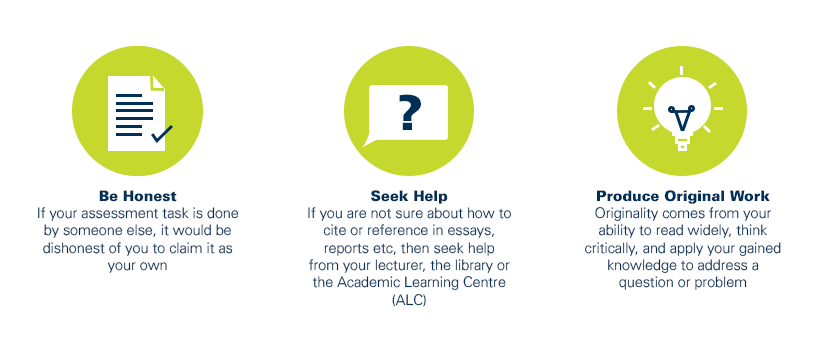
As a CQUniversity student you are expected to act honestly in all aspects of your academic work.
Any assessable work undertaken or submitted for review or assessment must be your own work. Assessable work is any type of work you do to meet the assessment requirements in the unit, including draft work submitted for review and feedback and final work to be assessed.
When you use the ideas, words or data of others in your assessment, you must thoroughly and clearly acknowledge the source of this information by using the correct referencing style for your unit. Using others’ work without proper acknowledgement may be considered a form of intellectual dishonesty.
Participating honestly, respectfully, responsibly, and fairly in your university study ensures the CQUniversity qualification you earn will be valued as a true indication of your individual academic achievement and will continue to receive the respect and recognition it deserves.
As a student, you are responsible for reading and following CQUniversity’s policies, including the Student Academic Integrity Policy and Procedure. This policy sets out CQUniversity’s expectations of you to act with integrity, examples of academic integrity breaches to avoid, the processes used to address alleged breaches of academic integrity, and potential penalties.
What is a breach of academic integrity?
A breach of academic integrity includes but is not limited to plagiarism, self-plagiarism, collusion, cheating, contract cheating, and academic misconduct. The Student Academic Integrity Policy and Procedure defines what these terms mean and gives examples.
Why is academic integrity important?
A breach of academic integrity may result in one or more penalties, including suspension or even expulsion from the University. It can also have negative implications for student visas and future enrolment at CQUniversity or elsewhere. Students who engage in contract cheating also risk being blackmailed by contract cheating services.
Where can I get assistance?
For academic advice and guidance, the Academic Learning Centre (ALC) can support you in becoming confident in completing assessments with integrity and of high standard.
What can you do to act with integrity?