Overview
In this unit, you will analyse Australia's healthcare systems, including service provision arrangements, healthcare structure, points of access, and the roles paramedics play within these systems. You will build on your learnings of the key values, principles and strategies for communicating and collaborating in a range of settings, with a particular emphasis on cultural safety for First Nations Peoples. You will explain the use of patient information management systems to ensure accurate and timely management of patient information and health records while adhering to legal and ethical requirements. In addition, you will explore approaches to evidence-based practice in paramedicine, incorporating critical thinking and reflective practice while being guided by standards such as the National Safety and Quality Health Service (NSQHS) standards and Quality Use of Medicines framework. Finally, to prepare you for professional practice, you will apply Workplace Health and Safety (WHS) principles and infection prevention and control to work safely in an operational environment and engage in continuous professional development.
Details
Pre-requisites or Co-requisites
Pre-requisites: PMSC11002 Foundations of Paramedicine A Co-requisites: PMSC12001 Applied Paramedic Practice
Important note: Students enrolled in a subsequent unit who failed their pre-requisite unit, should drop the subsequent unit before the census date or within 10 working days of Fail grade notification. Students who do not drop the unit in this timeframe cannot later drop the unit without academic and financial liability. See details in the Assessment Policy and Procedure (Higher Education Coursework).
Offerings For Term 2 - 2026
Attendance Requirements
All on-campus students are expected to attend scheduled classes - in some units, these classes are identified as a mandatory (pass/fail) component and attendance is compulsory. International students, on a student visa, must maintain a full time study load and meet both attendance and academic progress requirements in each study period (satisfactory attendance for International students is defined as maintaining at least an 80% attendance record).
Recommended Student Time Commitment
Each 6-credit Undergraduate unit at CQUniversity requires an overall time commitment of an average of 12.5 hours of study per week, making a total of 150 hours for the unit.
Class Timetable
Assessment Overview
Assessment Grading
This is a graded unit: your overall grade will be calculated from the marks or grades for each assessment task, based on the relative weightings shown in the table above. You must obtain an overall mark for the unit of at least 50%, or an overall grade of 'pass' in order to pass the unit. If any 'pass/fail' tasks are shown in the table above they must also be completed successfully ('pass' grade). You must also meet any minimum mark requirements specified for a particular assessment task, as detailed in the 'assessment task' section (note that in some instances, the minimum mark for a task may be greater than 50%). Consult the University's Grades and Results Policy for more details of interim results and final grades.
All University policies are available on the CQUniversity Policy site.
You may wish to view these policies:
- Grades and Results Policy
- Assessment Policy and Procedure (Higher Education Coursework)
- Review of Grade Procedure
- Student Academic Integrity Policy and Procedure
- Academic Progression Policy and Procedure
- Student Refund and Credit Balance Policy and Procedure
- Complaints Policy and Procedure
- Information and Communications Technology Acceptable Use Policy and Procedure
This list is not an exhaustive list of all University policies. The full list of University policies are available on the CQUniversity Policy site.
- Analyse Australia's healthcare systems, including service provision arrangements, healthcare structure, points of access, and the roles paramedics play within these systems
- Apply key values, principles and strategies for communicating and collaborating in a range of settings, with a particular emphasis on cultural safety for First Nations Peoples
- Explain the use of patient information management systems to ensure accurate and timely management of patient information and health records while adhering to legal and ethical requirements
- Examine approaches to evidence-based practice in paramedicine, incorporating critical thinking and reflective practice while being guided by standards such as the National Safety and Quality Health Service (NSQHS) standards and Quality Use of Medicines Framework
- Apply Workplace Health and Safety (WHS) principles and infection prevention and control to work safely in an operational environment and engage in continuous professional development.
The Paramedicine Board of Australia requires that units align with the Professional capabilities for registered paramedics, which consist of five (5) domains. The below section aligns the proposed learning outcomes with these domains. In addition, the learning outcomes have been aligned with the National Safety and Quality Health Service (NSQHS) Ambulance Health Service Standards.
Professional capabilities for registered paramedics
| Standard/Attribute/Criteria | Learning Outcomes |
| Domain 1: The professional and ethical practitioner 1.1.1, 1.1.3, 1.1.4, 1.1.5, 1.1.6, 1.1.7, 1.1.9, 1.1.10, 1.1.11, 1.2.1, 1.2.2, 1.2.3, 1.2.4, 1.2.5, 1.2.6, 1.3.1, 1.3.2, 1.3.3 | LO1, LO2, LO3, LO4 |
| Domain 2: The communicator and collaborator 2.1.1, 2.1.2, 2.1.3, 2.1.4, 2.1.5, 2.1.6, 2.1.7, 2.1.8, 2.2.1, 2.2.2, 2.2.3, 2.2.5, 2.2.6 | LO1, LO2 |
| Domain 3: The evidence-based practitioner 3.1.1, 3.2.1, 3.3.1, 3.3.2, 3.3.4, 3.4.1, 3.4.2 | LO2, LO3, LO4, LO5 |
| Domain 4: The safety and risk management practitioner 4.1.3, 4.1.4, 4.1.5, 4.2.1, 4.2.2, 4.2.3, 4.2.4, 4.3.2, 4.3.3, 4.4.1, 4.4.2, 4.4.3, 4.4.4, 4.5.1, 4.5.2, 4.7.6 | LO3, LO4, LO5 |
| Domain 5: The paramedicine practitioner 5.1.1, 5.1.2, 5.1.3, 5.1.4, 5.1.5 | LO3 |
National Safety and Quality Health Service (NSQHS) Standards
| Standard | Learning Outcomes |
| Clinical Governance: 1.01b, 1.01c, 1.06b, 1.16b, 1.17b, 1.17c, 1.20a, 1.20b, 1.20c, 1.20d, 1.27a, 1.27b | LO3, LO4, LO5 |
| Partnering with Consumers: 2.01a, 2.01b, 2.03a, 2.13 | LO2, LO3 |
| Preventing and Controlling Infections: 3.08a, 3.08b, 3.08g, 3.08i, 3.09a, 3.09b, 3.09c, 3.10a, 3.12, 3.13a, 3.13b, 3.13c, 3.14a, 3.14b, 3.14c, 3.14d, 3.14e | LO2, LO5 |
| Medication Safety: 4.14a, 4.14b, 4.14c | LO4 |
| Comprehensive Care: 5.08, 5.12 | LO3 |
| Communicating for Safety: 6.01a, 6.01b, 6.01c, 6.03a, 6.03b, 6.03c, 6.04a, 6.04b, 6.04c, 6.07a, 6.07b, 6.07c, 6.08a, 6.08b, 6.08c, 6.08d, 6.08e, 6.08f, 6.11a, 6.11b, 6.11c | LO2, LO3, LO5 |
| Recognising and Responding to Acute Deterioration: 8.04a, 8.04b, 8.04c | LO3 |
Alignment of Assessment Tasks to Learning Outcomes
| Assessment Tasks | Learning Outcomes | ||||
|---|---|---|---|---|---|
| 1 | 2 | 3 | 4 | 5 | |
| 1 - Written Assessment - 25% | |||||
| 2 - Case Study - 35% | |||||
| 3 - Reflective Practice Assignment - 40% | |||||
Alignment of Graduate Attributes to Learning Outcomes
| Graduate Attributes | Learning Outcomes | ||||
|---|---|---|---|---|---|
| 1 | 2 | 3 | 4 | 5 | |
| 1 - Communication | |||||
| 2 - Problem Solving | |||||
| 3 - Critical Thinking | |||||
| 4 - Information Literacy | |||||
| 5 - Team Work | |||||
| 6 - Information Technology Competence | |||||
| 7 - Cross Cultural Competence | |||||
| 8 - Ethical practice | |||||
| 9 - Social Innovation | |||||
| 10 - First Nations Knowledges | |||||
| 11 - Aboriginal and Torres Strait Islander Cultures | |||||
Textbooks
There are no required textbooks.
IT Resources
- CQUniversity Student Email
- Internet
- Unit Website (Moodle)
- Coggle to develop concept maps (https://coggle.it/)
All submissions for this unit must use the referencing style: American Psychological Association 7th Edition (APA 7th edition)
For further information, see the Assessment Tasks.
t.rablin@cqu.edu.au
Week 1
Begin Date: 13 Jul 2026Module/Topic
Australian Healthcare
Chapter
Refer to the unit Moodle page and e-reading list for all readings
Events and Submissions/Topic
Week 2
Begin Date: 20 Jul 2026Module/Topic
Healthcare Collaboration
Chapter
Refer to the unit Moodle page and e-reading list for all readings
Events and Submissions/Topic
Week 3
Begin Date: 27 Jul 2026Module/Topic
Communication in Healthcare
Chapter
Refer to the unit Moodle page and e-reading list for all readings
Events and Submissions/Topic
Week 4
Begin Date: 03 Aug 2026Module/Topic
Culturally Safe Communication
Chapter
Refer to the unit Moodle page and e-reading list for all readings
Events and Submissions/Topic
Week 5
Begin Date: 10 Aug 2026Module/Topic
Patient Information Systems and Records
Chapter
Refer to the unit Moodle page and e-reading list for all readings
Events and Submissions/Topic
Week 6
Begin Date: 17 Aug 2026Module/Topic
Healthcare Rights
Chapter
Refer to the unit Moodle page and e-reading list for all readings
Events and Submissions/Topic
Vacation Week
Begin Date: 24 Aug 2026Module/Topic
Chapter
Events and Submissions/Topic
Week 7
Begin Date: 31 Aug 2026Module/Topic
Professional Practice
Chapter
Refer to the unit Moodle page and e-reading list for all readings
Events and Submissions/Topic
Week 8
Begin Date: 07 Sep 2026Module/Topic
Healthcare Governance
Chapter
Refer to the unit Moodle page and e-reading list for all readings
Events and Submissions/Topic
Week 9
Begin Date: 14 Sep 2026Module/Topic
Scientific Enquiry and Continuing Professional Development
Chapter
Refer to the unit Moodle page and e-reading list for all readings
Events and Submissions/Topic
Week 10
Begin Date: 21 Sep 2026Module/Topic
Workplace Health and Safety
Chapter
Refer to the unit Moodle page and e-reading list for all readings
Events and Submissions/Topic
Week 11
Begin Date: 28 Sep 2026Module/Topic
Infection Prevention and Control
Chapter
Refer to the unit Moodle page and e-reading list for all readings
Events and Submissions/Topic
Week 12
Begin Date: 05 Oct 2026Module/Topic
Consolidation Week
Chapter
Refer to the unit Moodle page and e-reading list for all readings
Events and Submissions/Topic
Exam Week
Begin Date: 12 Oct 2026Module/Topic
Chapter
Events and Submissions/Topic
Vacation/Exam Week
Begin Date: 19 Oct 2026Module/Topic
Chapter
Events and Submissions/Topic
1 Written Assessment
In assessment task one, you will develop your understanding of the Australian healthcare system, through the analysis of the healthcare structure, service provision arrangements, points of access, and the roles paramedics play within these systems. Within Australia, paramedicine has evolved beyond the isolated response to medical emergencies. Paramedics operate at the intersection of a complex and multi-tiered healthcare system, involving multiple points of access. To provide effective patient-centred care, paramedics must look beyond the ambulance and emergency department, considering the broader healthcare system and the most appropriate transport or referral pathway. The knowledge gained from this assessment will support you in mapping local health networks, thereby supporting informed clinical decision making for the most appropriate patient disposition.
This assessment task is comprised of two parts: Part 1) Concept Map and Part 2) Reflective Narrative.
Part 1) Concept Map
In Part 1, you will develop a digital concept map using Coggle (https://coggle.it/), visualising the Australian healthcare landscape. The concept map must be centred around the specified location and demonstrate the healthcare pathways through various systems. The requirements for the concept map include:
- Location: Must be created for a patient located in Townsville, Queensland, Australia.
- Core Nodes: Must include Federal, State/Territory and Private sectors.
- Points of Access: Identify where a patient can enter the healthcare system.
- Paramedic Interface: Using a distinct colour, identify where paramedics can interact with corresponding nodes (e.g., inter-facility transfers, referral pathways, hospital handovers).
Part 2) Reflective Narrative
In Part 2, you are required to provide a reflective narrative building upon the developed concept map from Part 1. Your narrative should consider the real-world application of the mapped healthcare system, and the role paramedics play within this system. The requirements for the reflective narrative include:
- Role of Paramedics: Analyse the role of paramedics within the Australian healthcare system and how they can maintain patient-centred care through integrated healthcare. Your analysis should be supported with contemporary academic literature (<10 years old).
- Referencing: APA 7th Edition.
- Word Limit: 500 words.
Week 4 Friday (7 Aug 2026) 9:00 am AEST
Vacation Week Friday (28 Aug 2026)
Or within three weeks of submission.
The assessment criteria for this assessment task are contained within the rubric, that is available on the unit Moodle site. Broadly, you will be assessed on:
- Analysis of the Australian healthcare system.
- Analysis of healthcare service provisions, structure and points of access.
- Analysis of the role of paramedics within the Australian healthcare system.
- Presentation.
- Academic writing and referencing.
Level of GenAI Use Allowed:
Level 2: You may use AI for planning, idea development, and research. Your final submission should show how you have developed and refined these ideas.
Any use of GenAI tools must be acknowledged in a statement on the submission cover page.
Task Requirements:
- You must use the Assessment Task One Template, located in the Assessment Tile of the Unit Moodle site.
- You must provide the Coogle.it link to the developed concept map, within the Assessment Task One Template.
- You must submit the document as a Word file (.doc/.docx).
- Analyse Australia's healthcare systems, including service provision arrangements, healthcare structure, points of access, and the roles paramedics play within these systems
2 Case Study
In assessment task two, you will apply key values, principles and strategies for communicating and collaborating in a range of settings, including cultural safety for First Nations Peoples. These are some of the most important skills at the centre of paramedic practice, that can be observed as Domain 2 of the Professional capabilities for registered paramedics. You will also explain the use of patient information management systems, and the importance of accurate and timely management of patient information and health records, ensuring adherence to legal and ethical requirements.
This task requires you to write two narrative responses, addressing the discussion points provided in Part 1 and Part 2. Your responses should draw upon your findings from the provided case scenario.
Case Scenario:
During a busy afternoon shift, a two-person paramedic crew is dispatched to a regional sporting complex following reports of a “difficulty breathing” incident. On arrival, they find Mr Daniel Ngarra, a 68-year-old Aboriginal man, seated near the field and visibly distressed. He is accompanied by his daughter, who explains that he has a history of chronic obstructive pulmonary disease and type 2 diabetes, but she is unsure of his current medications.
Mr Ngarra is alert but breathless and has difficulty speaking in full sentences. Several family members and community members are nearby, and it is clear they are concerned and wish to remain involved in his care. One paramedic immediately begins asking rapid, closed questions using clinical language, while the other starts entering preliminary details into the electronic patient care record. Mr Ngarra appears uncomfortable and looks to his daughter before responding. When asked about his symptoms, he gives brief answers and avoids eye contact.
As the assessment continues, the crew becomes aware that Mr Ngarra recently attended the local Aboriginal Community Controlled Health Service, but no written documentation is available at the scene. His daughter states that he is “not keen on hospitals” because of a previous experience where he felt “talked over” and not listened to. She also asks whether the information given to the paramedics will be shared with the hospital and whether Mr Ngarra has to agree to that first.
The crew transport Mr Ngarra to the nearest emergency department. During handover, there is confusion about his date of birth and medication history. Later, the receiving hospital contacts the ambulance service because the electronic patient record contains incomplete observations and an incorrect allergy entry. The incident raises concerns about the accuracy of documentation, privacy and consent, and whether the paramedics communicated in a culturally safe and collaborative way.
Part 1) Communication and Collaboration:
In Part 1, you will provide a narrative response addressing the below requirements, related to the provided case study. Your narrative should demonstrate your knowledge of communication, collaboration and cultural safety within paramedicine, drawing upon contemporary peer-reviewed literature (<10 years old) and professional standards. The requirements for the narrative response include:
- Identify any issues with the applied values and principles for communication and collaboration.
- Discuss how culturally safe communication and collaboration should have been applied, when working with First Nations peoples.
- Recommend practical strategies for communication and collaboration, emphasising patient and cultural safety.
- Referencing: APA 7th Edition.
- Word Limit: 750 words.
Part 2) Patient Information Management Systems:
In Part 2, you will provide a narrative response addressing the below requirements, related to the provided case study. Your response should demonstrate your knowledge of patient information management systems, and the associated legal and ethical requirements, drawing upon contemporary peer-reviewed literature (<10 years old) and professional standards. The requirements for the narrative response include:
- Explain the role of patient information management systems in paramedic practice within the context of the case scenario.
- Explain how accurate, timely, and complete documentation supports continuity of care, clinical decision-making, and patient handover.
- Explain if the legal and ethical requirements for patient information management systems and healthcare records were maintained within this case scenario.
- Recommend strategies to reduce documentation errors and strengthen compliance with professional standards.
- Referencing: APA 7th Edition.
- Word Limit: 750 words.
Week 8 Friday (11 Sept 2026) 9:00 am AEST
Week 11 Friday (2 Oct 2026)
Or within three weeks of submission.
The assessment criteria for this assessment task are contained within the rubric, that is available on the unit Moodle site. Broadly, you will be assessed on:
- Application of values and principles for communication and collaboration in paramedicine.
- Application of communication and collaboration strategies for paramedicine, including cultural safe communication.
- Explanation of the use of patient information management systems in paramedicine.
- Explanation of the legal and ethical requirements for patient information and health records.
- Academic literacy and referencing.
Level of GenAI Use Allowed:
Level 2: You may use AI for planning, idea development, and research. Your final submission should show how you have developed and refined these ideas.
Any use of GenAI tools must be acknowledged in a statement on the submission cover page.
Task Requirements:
- You must use the Assessment Task Two Template, located in the Assessment Tile of the Unit Moodle site.
- You must submit the document as a Word file (.doc/.docx).
- Apply key values, principles and strategies for communicating and collaborating in a range of settings, with a particular emphasis on cultural safety for First Nations Peoples
- Explain the use of patient information management systems to ensure accurate and timely management of patient information and health records while adhering to legal and ethical requirements
3 Reflective Practice Assignment
In assessment task three, you will examine approaches to evidence-based practice in paramedicine, incorporating critical thing and reflective practice. Within Australia, healthcare practices are guided by the National Safety and Quality Health Service (NSQHS) standards and Quality Use of Medicines (QUM) Framework. You will use these standards to guide your approach to evidence-based practice. You will also reflect on the application of Workplace Health and Safety (WHS) principles and infection prevention and control to promote safe work in an operational environment. Finally, you will draw upon your reflections to identify learning goals and strategies for your continuing professional development (CPD).
This assessment requires you to critically analyse a video clinical case with a specific focus on how evidence-based practice is applied in paramedicine. Using a structured reflective model (Gibbs), you will examine how clinical decisions are informed by evidence, how that evidence is interpreted in practice, and how professional standards guide safe and effective care.
Your reflection must explicitly engage with:
- Approaches to evidence-based practice (e.g. use of guidelines, clinical reasoning, hierarchy of evidence, patient-centred decision-making)
- National Safety and Quality Health Service (NSQHS) Standards
- Quality Use of Medicines (QUM) Framework
- Workplace Health and Safety (WHS) principles
- Infection Prevention and Control
Instructions:
From the provided video of the clinical case, address the following:
- Case Overview (~200 words):
- Summarise the patient presentation and context
- Outline the key clinical decisions made by the paramedics and the case progression
- Evidence-Based Practice Analysis (~600 words):
- Discuss how evidence appears to have been used, misused, or omitted in the video
- Examine the limitations of solely relying on ambulance guidelines
- Reflect on how you would locate, appraise, and apply evidence for this clinical case
- Reflection and Analysis (~1,200 words):
- NSQHS Standards and Quality Use of Medicines:
- Identify at least two relevant NSQHS Standards that apply to the case
- Examine how the care demonstrated in the video supported or failed to support those standards
- Examine whether the medication used reflected the principles of the Quality Use of Medicines Framework
- Workplace Health and Safety:
- Identify any hazards or risks present in the operational environment show in the video
- Evaluate how effectively WHS principles were applied to protect the patient, paramedics and other at the scene
- Discuss what actions you would have taken to reduce or manage risks
- Infection Prevention and Control:
- Examine the infection prevention and control measures used in clinical case
- Discuss whether personal protective equipment (PPE) and other precautions were appropriate for the situation
- Explain how you would have maintained infection control and prevention
- Continuing Professional Development:
- Reflect on what this clinical case reveals about your own learning needs
- Identify your specific knowledge, skill, or judgement gaps that have been highlight by this clinical case
- Propose realistic strategies for improving your practices through continuing professional development
- NSQHS Standards and Quality Use of Medicines:
Week 12 Friday (9 Oct 2026) 9:00 am AEST
Vacation/Exam Week Friday (23 Oct 2026)
The assessment criteria for this assessment task are contained within the rubric, that is available on the unit Moodle site. Broadly, you will be assessed on:
- Examination of evidence-based practice approaches in paramedicine.
- Application of reflective practice and critical thinking.
- Examination of the NSQHS standards and QUM framework.
- Application of WHS principles and infection prevention and control.
- Application of continuing professional development.
Level of GenAI Use Allowed:
Level 2: You may use AI for planning, idea development, and research. Your final submission should show how you have developed and refined these ideas.
Any use of GenAI tools must be acknowledged in a statement on the submission cover page.
Task Requirements:
- You must use the Assessment Task Three Template, located in the Assessment Tile of the Unit Moodle site.
- You must submit the document as a Word file (.doc/.docx).
- Examine approaches to evidence-based practice in paramedicine, incorporating critical thinking and reflective practice while being guided by standards such as the National Safety and Quality Health Service (NSQHS) standards and Quality Use of Medicines Framework
- Apply Workplace Health and Safety (WHS) principles and infection prevention and control to work safely in an operational environment and engage in continuous professional development.
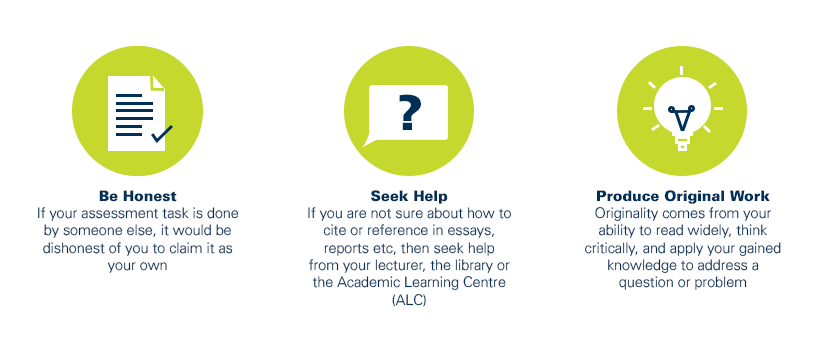
As a CQUniversity student you are expected to act honestly in all aspects of your academic work.
Any assessable work undertaken or submitted for review or assessment must be your own work. Assessable work is any type of work you do to meet the assessment requirements in the unit, including draft work submitted for review and feedback and final work to be assessed.
When you use the ideas, words or data of others in your assessment, you must thoroughly and clearly acknowledge the source of this information by using the correct referencing style for your unit. Using others’ work without proper acknowledgement may be considered a form of intellectual dishonesty.
Participating honestly, respectfully, responsibly, and fairly in your university study ensures the CQUniversity qualification you earn will be valued as a true indication of your individual academic achievement and will continue to receive the respect and recognition it deserves.
As a student, you are responsible for reading and following CQUniversity’s policies, including the Student Academic Integrity Policy and Procedure. This policy sets out CQUniversity’s expectations of you to act with integrity, examples of academic integrity breaches to avoid, the processes used to address alleged breaches of academic integrity, and potential penalties.
What is a breach of academic integrity?
A breach of academic integrity includes but is not limited to plagiarism, self-plagiarism, collusion, cheating, contract cheating, and academic misconduct. The Student Academic Integrity Policy and Procedure defines what these terms mean and gives examples.
Why is academic integrity important?
A breach of academic integrity may result in one or more penalties, including suspension or even expulsion from the University. It can also have negative implications for student visas and future enrolment at CQUniversity or elsewhere. Students who engage in contract cheating also risk being blackmailed by contract cheating services.
Where can I get assistance?
For academic advice and guidance, the Academic Learning Centre (ALC) can support you in becoming confident in completing assessments with integrity and of high standard.
What can you do to act with integrity?